

What do you think?

Downfall of the Gods
also appears in the collection The Father of Lies
If you visit the Temple and ask nicely for forgiveness, you might get it — assuming you aren't Lord Archias and you haven't killed the Goddess's favorite musician, Lysippus. But even goddesses are expected to follow certain rules, and as much as she wants to punish Lord Archias it seems her troublesome, all-powerful father forbids it. So the Goddess will just have to get around that by forgiving Lord Archias if he can manage some simple — or, rather, seemingly impossible — tasks. A Goddess has to do what a goddess has to do.
And in World Fantasy Award winner K.J. Parker's sharply inventive new novella Downfall of the Gods that means everything from soothing supernatural egos to accompanying the argumentative Lord Archias on an epic quest to save his soul... and get her own way. As the Goddess and her mortal charge make their way across the world to the Land of the Dead, a host of divine surprises await them. Could what they find at the end be the downfall of the gods themselves? Only time will tell. This is a story Parker fans won't want to miss.
Cover illustration by Vincent Chong
If you visit the Temple and ask nicely for forgiveness, you might get it — assuming you aren't Lord Archias and you haven't killed the Goddess's favorite musician, Lysippus. But even goddesses are expected to follow certain rules, and as much as she wants to punish Lord Archias it seems her troublesome, all-powerful father forbids it. So the Goddess will just have to get around that by forgiving Lord Archias if he can manage some simple — or, rather, seemingly impossible — tasks. A Goddess has to do what a goddess has to do.
And in World Fantasy Award winner K.J. Parker's sharply inventive new novella Downfall of the Gods that means everything from soothing supernatural egos to accompanying the argumentative Lord Archias on an epic quest to save his soul... and get her own way. As the Goddess and her mortal charge make their way across the world to the Land of the Dead, a host of divine surprises await them. Could what they find at the end be the downfall of the gods themselves? Only time will tell. This is a story Parker fans won't want to miss.
Cover illustration by Vincent Chong
110 pages, Hardcover
First published March 31, 2016
About the author
K.J. Parker
136 books1,791 followersK.J. Parker is a pseudonym for Tom Holt.
According to the biographical notes in some of Parker's books, Parker has previously worked in law, journalism, and numismatics, and now writes and makes things out of wood and metal. It is also claimed that Parker is married to a solicitor and now lives in southern England. According to an autobiographical note, Parker was raised in rural Vermont, a lifestyle which influenced Parker's work.
According to the biographical notes in some of Parker's books, Parker has previously worked in law, journalism, and numismatics, and now writes and makes things out of wood and metal. It is also claimed that Parker is married to a solicitor and now lives in southern England. According to an autobiographical note, Parker was raised in rural Vermont, a lifestyle which influenced Parker's work.
Ratings & Reviews
Friends & Following
Create a free account to discover what your friends think of this book!
Community Reviews
Displaying 1 - 30 of 80 reviews

February 1, 2018
British author Tom Holt (real-name) has written a book titled “Downfall of the Gods” as by K. J. Parker (pseudo-name). The title of the book is a bit misleading. The book is not about the Gods (or Goddesses) downfall, it’s more of a parable told in a snarky humorous voice concerning the all too human foibles that the higher powers exhibit.
The story is about the exploits of ‘The Goddess of the Moon’ whose father commands her to answer the prayer of one of her supplicants, Archias, to forgive him for killing musician and friend Lysippus. It seems Lysippus was caught in the act of ‘plucking’ Archia’s wife, and has now been doomed to reside in the land of the dead.
The Goddess and Archias depart on a quest to rescue Lysippus and do not have an easy time on their journey. A host of surprises await them and a Goddess has to do what a Goddess has to do.
This hardcover copy is numbered 762 of 1000 and is signed by K. J. Parker.
The story is about the exploits of ‘The Goddess of the Moon’ whose father commands her to answer the prayer of one of her supplicants, Archias, to forgive him for killing musician and friend Lysippus. It seems Lysippus was caught in the act of ‘plucking’ Archia’s wife, and has now been doomed to reside in the land of the dead.
The Goddess and Archias depart on a quest to rescue Lysippus and do not have an easy time on their journey. A host of surprises await them and a Goddess has to do what a Goddess has to do.
This hardcover copy is numbered 762 of 1000 and is signed by K. J. Parker.

February 1, 2016
Originally reviewed at Bookwraiths.
My rating is 2.5 stars. Please understand the review below will not be favorable to this novella.
Downfall of the Gods is a novella which attempts to be a clever and witty portrayal of the antics of a pantheon of gods; a pantheon which is very similar to the ancient Greco-Roman deities. No, the divine names are not the same as in the Greek myths, but it is fairly obvious who each divinity is here: their child-like petulance, mind-numbing mischief, and bipolar personalities giving them away. But while many immortal beings strut across the stage, the real star of this show is the musings of one goddess, detailing her philosophical journey of discovery regarding religion.
Artemis . . . (Ahh. Well, she isn’t ever called Artemis, but that is who she appears to be, so I’m going to call her that.) So, anyway, Artemis begins this story by walking into her temple after a long, hard day of being a prostitute and finds that a rather important member of her divine flock is prostrating himself before her huge statue, begging for forgiveness. It seems he has plotted and killed his close friend, who slept with his wife and constantly mistreated him, but now he has truly repented of his evil deed, wishes he could take it back and is begging for forgiveness. There is a problem: Artemis has no intention of forgiving him, because the murdered individual was her favorite musician!
Actually, I misspoke, because there is another, even more pressing, problem. You see, no matter her divinity, Artemis has rules she must abide by. Divine covenants forged between the gods and their human followers that provide for forgiveness upon repentance. And no god or goddess is above these rules, which is why Artemis is soon summoned before her father!
Needless to say, daddy Zeus isn’t happy with his headstrong daughter. Their discussion (and Artemis’ inner monologues) detailing what is expected of her, the serious drawbacks of godhood and the rather uselessness (at least, in Artemis’ eyes) of mankind’s devotion to god(s) in the first place.
Eventually, however, (after much philosophical arguments) a compromise between Zeus and Artemis is brokered: the goddess agreeing to grant forgiveness to her follower IF he completes a quest to the halls of the dead and brings back his victim’s soul. A journey which Artemis will accompany him on, providing her divine guidance and support — whenever she feels like it.
Thereafter, the tale zigs and zags between Artemis’s interactions with her divine family (Who appear to be about as worthless as she continues says they are.) and her human follower (Who is about as blindly devoted to her as anyone could be.) Each scene serving more to provide reasons to pontificate on the ridiculous of religion than to actually create a compelling narrative or develop realistic characters. In fact, nothing terribly exciting happening throughout (other than philosophical musings on religion) until the rather ironic ending is sprung like a mouse trap upon the unsuspecting (or, should I say, the suspecting) audience.
If one was to look for strengths and weakness in this novella, the strength would undoubtedly be the goddess character herself. She is a very fitting, well-crafted narrator, who muses upon and bitches about religion, faith, and the inherent limitations of any divinity upon the fate of the world. And through the uncovering of her personal inadequacies and her ridiculous arguments, the story develops from a rather quest oriented tale to a full blown religious satire, or religious parody, which does its best to encompass all religions in its virulent mockery.
As for the weakness, it would be the fact that this is a religious parody. Whether you are a believer in some form of religion or not, no doubt, we can all concede that the exercise of faith is a very personal experience which people become very attached to and do not enjoy being ridiculed. Anytime a person makes light of, mocks, or labels a person of religious belief as ignorant or illogical for feeling a certain way, I personally find it in poor taste. It really is the same as telling a joke about minorities or same sex couples or over weight people or anyone else, and to me, it isn’t clever or witty or funny in the least. And here, the author spends over a hundred pages making arguments regarding the idiocy of religion; every epiphany of the characters further espousing the useless of god(s) and the need for mankind to cast aside such illogical beliefs in divinities. Perhaps some part of the narrative in this vein could be understood, but after finishing this novella, I felt as if I’d spent an hour reading a sermon for atheism rather than a fantasy story.
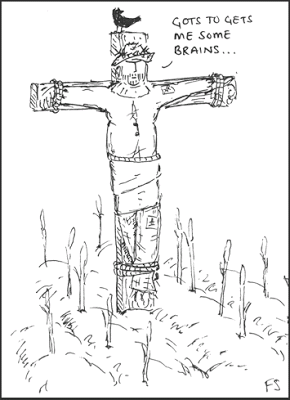
All in all, Downfall of the Gods is a fine read IF you undertake it understanding what it is. This is a religious satire, a religious parody, which definitely has an agenda to cast religion in all its myriad forms as illogical, adolescent, and ridiculous. Nothing wrong with that as long as you agree with that form of discrimination. If, however, you — like me — are searching for a rousing fantasy adventure story to excite and awe you, then this one is probably something you should skip.
I received this book from Subterranean Press and Netgalley in exchange for a fair and honest review. I’d like to thank both of them for allowing me to receive this review copy and inform everyone that the review you have read is my opinion alone.
My rating is 2.5 stars. Please understand the review below will not be favorable to this novella.
Downfall of the Gods is a novella which attempts to be a clever and witty portrayal of the antics of a pantheon of gods; a pantheon which is very similar to the ancient Greco-Roman deities. No, the divine names are not the same as in the Greek myths, but it is fairly obvious who each divinity is here: their child-like petulance, mind-numbing mischief, and bipolar personalities giving them away. But while many immortal beings strut across the stage, the real star of this show is the musings of one goddess, detailing her philosophical journey of discovery regarding religion.
Artemis . . . (Ahh. Well, she isn’t ever called Artemis, but that is who she appears to be, so I’m going to call her that.) So, anyway, Artemis begins this story by walking into her temple after a long, hard day of being a prostitute and finds that a rather important member of her divine flock is prostrating himself before her huge statue, begging for forgiveness. It seems he has plotted and killed his close friend, who slept with his wife and constantly mistreated him, but now he has truly repented of his evil deed, wishes he could take it back and is begging for forgiveness. There is a problem: Artemis has no intention of forgiving him, because the murdered individual was her favorite musician!
Actually, I misspoke, because there is another, even more pressing, problem. You see, no matter her divinity, Artemis has rules she must abide by. Divine covenants forged between the gods and their human followers that provide for forgiveness upon repentance. And no god or goddess is above these rules, which is why Artemis is soon summoned before her father!
Needless to say, daddy Zeus isn’t happy with his headstrong daughter. Their discussion (and Artemis’ inner monologues) detailing what is expected of her, the serious drawbacks of godhood and the rather uselessness (at least, in Artemis’ eyes) of mankind’s devotion to god(s) in the first place.
Eventually, however, (after much philosophical arguments) a compromise between Zeus and Artemis is brokered: the goddess agreeing to grant forgiveness to her follower IF he completes a quest to the halls of the dead and brings back his victim’s soul. A journey which Artemis will accompany him on, providing her divine guidance and support — whenever she feels like it.
Thereafter, the tale zigs and zags between Artemis’s interactions with her divine family (Who appear to be about as worthless as she continues says they are.) and her human follower (Who is about as blindly devoted to her as anyone could be.) Each scene serving more to provide reasons to pontificate on the ridiculous of religion than to actually create a compelling narrative or develop realistic characters. In fact, nothing terribly exciting happening throughout (other than philosophical musings on religion) until the rather ironic ending is sprung like a mouse trap upon the unsuspecting (or, should I say, the suspecting) audience.
If one was to look for strengths and weakness in this novella, the strength would undoubtedly be the goddess character herself. She is a very fitting, well-crafted narrator, who muses upon and bitches about religion, faith, and the inherent limitations of any divinity upon the fate of the world. And through the uncovering of her personal inadequacies and her ridiculous arguments, the story develops from a rather quest oriented tale to a full blown religious satire, or religious parody, which does its best to encompass all religions in its virulent mockery.
As for the weakness, it would be the fact that this is a religious parody. Whether you are a believer in some form of religion or not, no doubt, we can all concede that the exercise of faith is a very personal experience which people become very attached to and do not enjoy being ridiculed. Anytime a person makes light of, mocks, or labels a person of religious belief as ignorant or illogical for feeling a certain way, I personally find it in poor taste. It really is the same as telling a joke about minorities or same sex couples or over weight people or anyone else, and to me, it isn’t clever or witty or funny in the least. And here, the author spends over a hundred pages making arguments regarding the idiocy of religion; every epiphany of the characters further espousing the useless of god(s) and the need for mankind to cast aside such illogical beliefs in divinities. Perhaps some part of the narrative in this vein could be understood, but after finishing this novella, I felt as if I’d spent an hour reading a sermon for atheism rather than a fantasy story.
All in all, Downfall of the Gods is a fine read IF you undertake it understanding what it is. This is a religious satire, a religious parody, which definitely has an agenda to cast religion in all its myriad forms as illogical, adolescent, and ridiculous. Nothing wrong with that as long as you agree with that form of discrimination. If, however, you — like me — are searching for a rousing fantasy adventure story to excite and awe you, then this one is probably something you should skip.
I received this book from Subterranean Press and Netgalley in exchange for a fair and honest review. I’d like to thank both of them for allowing me to receive this review copy and inform everyone that the review you have read is my opinion alone.

January 13, 2016
KJ Parker is making a fan out of me!
Novellas are a tricky thing. You have a limited number of pages to grab your readers attention, make them care about the characters and produce a story without jumps, without gaps, without missing pieces. In Downfall of the Gods he does it with style!
Downfall of the Gods follows the goddess Artemis, who refuses to forgive Lord Archias for murdering her favorite musician Lysippus despite him coming to her temple, kneeling, saying a prayer and meaning it. That is until her father intervenes on Lord Archias' behalf. So Artemis comes up with a near impossible task to save Lord Archias from eternal damnation.
What could possibly go wrong?
I enjoyed the witty dialogue and the perspective of gods (and goddesses) on humanity, as well as humanity on gods. The characters grabbed my attention as well, and even though the book is so short, it was a pleasure to see their growth.
If a god falls to Earth, naturally you'd expect to find something rich and rare at ground zero. Everything the gods do, every trace they leave is wonderful and perfect; pure gold. It's the greed and folly of men that causes all the trouble.
It is definitely a unique book, definitely worthy of my first five stars of 2016.
Novellas are a tricky thing. You have a limited number of pages to grab your readers attention, make them care about the characters and produce a story without jumps, without gaps, without missing pieces. In Downfall of the Gods he does it with style!
Downfall of the Gods follows the goddess Artemis, who refuses to forgive Lord Archias for murdering her favorite musician Lysippus despite him coming to her temple, kneeling, saying a prayer and meaning it. That is until her father intervenes on Lord Archias' behalf. So Artemis comes up with a near impossible task to save Lord Archias from eternal damnation.
What could possibly go wrong?
I enjoyed the witty dialogue and the perspective of gods (and goddesses) on humanity, as well as humanity on gods. The characters grabbed my attention as well, and even though the book is so short, it was a pleasure to see their growth.
If a god falls to Earth, naturally you'd expect to find something rich and rare at ground zero. Everything the gods do, every trace they leave is wonderful and perfect; pure gold. It's the greed and folly of men that causes all the trouble.
It is definitely a unique book, definitely worthy of my first five stars of 2016.

January 8, 2016
Thematically, this novella works very well as a companion piece to KJ Parker's 'The Devil You Know,' (https://www.goodreads.com/review/show...) although it's not directly connected in any way. However, it's another philosophical, witty tale regarding the relationship between humans and deities.
In a faux-Grecian setting, a Goddess is technically supposed to grant clemency to her worshippers. However, Lord Archias has murdered one of her favorites - the talented musician Lysippus - and she's in no mood for forgiveness. Instead, she insists that he go on a long and dangerous quest. However, as she accompanies Archias on his arduous journey, her perspective on the matter may change just a bit - but she's still got a few tricks up her sleeve.
The portrayal of an Artemis-like goddess as an impulsive, rebellious being who very much occupies the place of a narcissistic teenager in her family/pantheon isn't something that immediately appeals to me - but I thought that Parker pulled it off very well. Archias isn't a terribly sympathetic character, either, but he did pull some sympathy from this fellow-human. I did very much enjoy the commentary on the nature of religion. I thought that the direct reference to the story of Job felt a little out-of-place and too-obvious, though, and the the latter half of the novella could've been tightened up a bit.
Overall, though, I'm continuing to love KJ Parker's writing.
Many thanks to Subterranean and NetGalley for the opportunity to read. As always, my opinions are solely my own.
In a faux-Grecian setting, a Goddess is technically supposed to grant clemency to her worshippers. However, Lord Archias has murdered one of her favorites - the talented musician Lysippus - and she's in no mood for forgiveness. Instead, she insists that he go on a long and dangerous quest. However, as she accompanies Archias on his arduous journey, her perspective on the matter may change just a bit - but she's still got a few tricks up her sleeve.
The portrayal of an Artemis-like goddess as an impulsive, rebellious being who very much occupies the place of a narcissistic teenager in her family/pantheon isn't something that immediately appeals to me - but I thought that Parker pulled it off very well. Archias isn't a terribly sympathetic character, either, but he did pull some sympathy from this fellow-human. I did very much enjoy the commentary on the nature of religion. I thought that the direct reference to the story of Job felt a little out-of-place and too-obvious, though, and the the latter half of the novella could've been tightened up a bit.
Overall, though, I'm continuing to love KJ Parker's writing.
Many thanks to Subterranean and NetGalley for the opportunity to read. As always, my opinions are solely my own.

September 24, 2022
Another solid outing into Parker's novellas. This one falls into the metaphysical, religious, philosophical category--one of the main two categories I've personally created for his novellas, though this one takes place in a land far away from the other ones we've seen: there are multiple gods and no one has ever heard of the Invincible Sun. The world feels like that of Greek mythology and there are plenty of references to heroes of myth like Hercules or Odysseus, though it seems even Saloninus has a name for himself over here.
This one feels different than the others because its MC is one of these gods, accompanying her chosen mortal on a quest to the Underworld, though, of course, she has something even bigger brewing. Typical brilliance in prose. It repeats variations of the refrain "for the gods, all things are possible" (but some things are more possible than others) or (but some things are better left undone because of the potential consequences) and it explores the concept of might, right, and justice.
This one feels different than the others because its MC is one of these gods, accompanying her chosen mortal on a quest to the Underworld, though, of course, she has something even bigger brewing. Typical brilliance in prose. It repeats variations of the refrain "for the gods, all things are possible" (but some things are more possible than others) or (but some things are better left undone because of the potential consequences) and it explores the concept of might, right, and justice.

January 29, 2016
"Why have I always got to be up to something?"Tom Holt/KJ Parker reminds me quite a lot of early Terry Pratchett: an amusing setup, tons of hilarious scenes, and with funny, acute, and thoroughly quotable reflections on the human condition scattered throughout. In general, I absolutely adore his short stories and have mixed feelings about his novels, so it's fitting that my feelings about this novella fall somewhere in between the two. Downfall of the Gods tackles--you guessed it-- religion.
"Good question."
The story takes place in a world where the gods--who are suspiciously similar to the Greek/Roman pantheon-- routinely walk the earth, mostly to stir up trouble. Our narrating goddess is the goddess of many different qualities, including the moon, mirth, and music, but her primary role seems to be as goddess of mischief. When a murderer asks for her forgiveness, she refuses; the dead man was one of her favourite musicians. But after some prodding from her father and brother, she decides to set him a task reminiscent of Orpheus's: if he retrieves the musician from the land of the dead, he'll be rewarded with her forgiveness, and, hopefully, her inattention. As he puts it:
"Play your games if you want to. It's all right. I know you'll save me. I have faith."As Parker clearly intended, the smug, egocentric Goddess annoyed the hell out of me, but even so, she was a vastly entertaining narrator. She has an amusing tendency of breaking the fourth wall:
"Do you now."
He nodded. "I know you want something from me. Yea, though I walk through the valley of the shadow of Death, if you want something from me, I know I'll be just fine."
"A mortal stands on the same hilltop every night and looks at the sky. To him, it appears that the stars are moving. All wrong, of course. The stars don't move; it's the earth. (Sorry, didn't you know that? Oops. Forget I spoke.)"as well as a breezy tendency to paraphrase the villains of literature:
"All gods are infinitely strong, but some gods are infinitely stronger than others."I may not have actually really empathized with either the Goddess or her victim, but I did enjoy their interactions:
"To the gods all things are possible," I said, "but there's stuff we can do that we don't because it would make things worse, not better. Counterproductive, I think is the word I'm groping for."
"I see," he said. "In other words, you're very powerful but hopelessly badly organized."
At the same time, Parker's characters are almost universally united by a single failing: they are uniformly, tragically static. Even the rare characters that manage a little self-reflection rarely apply it to their actions. I want characters to grow and change throughout the story, which may be why I prefer Parker's shorter works. The Goddess is understandably static; after all, one doesn't expect much change from immortal deities. In her case, the most memorable insights come from the conversations, from the parables Archias tries to tell, and from the Goddess's bald description of practical realities:
"Is what the strongest wants necessarily Right? Well, of course it is.Because in the end, what purpose to the gods serve other than a well-defined moral code? As the Goddess puts it,
To understand that, consider the meaning of the word Right. Doesn't take long to figure out that it doesn't actually mean anything. It's not like black or serrated or strawberry-flavoured; it has no objective meaning. 'Right' is just a shorthand way of saying 'what we think is right.'"
Without us, all they'll have is Right and Wrong. They'll get themselves in the most awful tangle.If you're looking for a short, lighthearted religious satire, Downfall of the Gods is definitely worth a look.
~~I received a copy of this ebook through Netgalley from the publisher, Subterranean Press, in exchange for my honest review. Quotes are taken from an advanced reader copy and while they may not reflect the final phrasing, I believe they capture the spirit of the book as a whole.~~
Cross-posted on BookLikes

January 7, 2016
Full review at my blog.
A real joy to read: Parker brought the Goddess near with all her pubertal, hilarious family-business. I was constantly tempted to google those Greekish names, but it is set in a different universe, though not far from our mythology. The narration reflects on right and wrong, honour and shame, true sources of power, and the real needs of Gods:
But when you're poor, dirt-poor as the gods when it comes to things of real value (meaning things you want and can't have for the asking), even the good opinion of mortals counts for something.
This superbly written page-turner is not only about pranks and God-talk but also about philosophy, and of course the Ragnarök, because the Goddess is always up to something.
Highly recommended!
A real joy to read: Parker brought the Goddess near with all her pubertal, hilarious family-business. I was constantly tempted to google those Greekish names, but it is set in a different universe, though not far from our mythology. The narration reflects on right and wrong, honour and shame, true sources of power, and the real needs of Gods:
But when you're poor, dirt-poor as the gods when it comes to things of real value (meaning things you want and can't have for the asking), even the good opinion of mortals counts for something.
This superbly written page-turner is not only about pranks and God-talk but also about philosophy, and of course the Ragnarök, because the Goddess is always up to something.
Highly recommended!

January 11, 2016
a riff on Greek Mythology from the perspective of Artemis, easy, fun, ironic and with a final twist that is a bit lame, but overall quite an entertaining read; as I much prefer the more serious and darker KJ Parker works this one won't rate as high as say Two of Swords which is awesome, but showing the lighter side of the author one can think of this as a collaboration between Tom Holt and KJ Parker...
recommended for an introduction to the wit and themes of the author in a much easier read than his usual darker stuff
recommended for an introduction to the wit and themes of the author in a much easier read than his usual darker stuff

September 22, 2019
Un racconto davvero delizioso!
In una terra lontana, abbiamo delle popolazioni che credono e vivono sotto lo sguardo di un gruppo di divinità plasmate sul modello di quelle greche, con tanto di progenitore sconfitto dall'attuale padre degli Dèi, di giganti imprigionati e di potenti catene per punire le divinità.
Come negli antichi miti greci, la popolazione conosce le proprie divinità, la preghiera è una comunicazione privilegiata con loro e non sono rare apparizioni, manifestazioni o anche solo segnali divini, in risposta alle preghiere.
Addirittura c'è una Convenzione, una sorta di patto tra umani e divinità in base al quale se una persona, seguendo un certo protocollo, prega con sincerità e con animo realmente pentito la divinità, ne otterrà il perdono sfuggendo così alla dannazione eterna, dopo la morte.
Però qui le divinità, dietro alle maschere ufficiali con cui sono conosciute, portano all'eccesso le caratteristiche mitologiche, fondendole con una visione più moderna di cosa possa significare essere tali divinità.
Completo potere sulla materia, assenza di un vero corpo fisico, la realtà che si piega al tuo volere.
Non avere bisogno di nulla, non desiderare nulla, e quindi non avere nulla.
L'unica cosa che può fornire una distrazione sono i mortali, e ciò che pensano delle divinità. Divinità in realtà frivole, leggere, abituate a vecchie convenzioni, pigre, onnipotenti ma incapaci di usare tali poteri.
La protagonista della storia, una di queste divinità, realizzerà tutto questo grazie a Archias, un suo fedele che chiede il suo perdono per un omicidio commesso. Lo chiede nella maniera corretta ed è sinceramente pentito, ma la dea non intende garantirglielo, contravvenendo agli accordi, perché l'ucciso è una persona che per quanto viscida e spregevole era anche un ottimo musicista, da lei apprezzato (e l'arte è una delle poche cose che sfuggono al controllo divino).
La reazione di Archias alla rivelazione divina la sorprende, e spronata dal Padre degli Dèi decide di sottoporre il mortale a una difficile prova perché si guadagni il perdono -anche qui ritirando in ballo la mitologia greca.
E decide di accompagnarlo in questa missione, per aiutarlo e per comprenderlo meglio.
Il viaggio sarà illuminante sia per la dea, che arriverà a conclusioni molto particolari sulle divinità, sia per lui, che potrà comprendere le entità che ha sempre venerato scoprendone i lati infantili, vendicativi, alieni.
Il tutto farcito da un'ironia splendida che fa volare queste cento pagine dedicate alle divinità, ai fedeli, alla mitologia e alla caduta degli dèi nella vita degli uomini.
In una terra lontana, abbiamo delle popolazioni che credono e vivono sotto lo sguardo di un gruppo di divinità plasmate sul modello di quelle greche, con tanto di progenitore sconfitto dall'attuale padre degli Dèi, di giganti imprigionati e di potenti catene per punire le divinità.
Come negli antichi miti greci, la popolazione conosce le proprie divinità, la preghiera è una comunicazione privilegiata con loro e non sono rare apparizioni, manifestazioni o anche solo segnali divini, in risposta alle preghiere.
Addirittura c'è una Convenzione, una sorta di patto tra umani e divinità in base al quale se una persona, seguendo un certo protocollo, prega con sincerità e con animo realmente pentito la divinità, ne otterrà il perdono sfuggendo così alla dannazione eterna, dopo la morte.
Però qui le divinità, dietro alle maschere ufficiali con cui sono conosciute, portano all'eccesso le caratteristiche mitologiche, fondendole con una visione più moderna di cosa possa significare essere tali divinità.
Completo potere sulla materia, assenza di un vero corpo fisico, la realtà che si piega al tuo volere.
Non avere bisogno di nulla, non desiderare nulla, e quindi non avere nulla.
L'unica cosa che può fornire una distrazione sono i mortali, e ciò che pensano delle divinità. Divinità in realtà frivole, leggere, abituate a vecchie convenzioni, pigre, onnipotenti ma incapaci di usare tali poteri.
La protagonista della storia, una di queste divinità, realizzerà tutto questo grazie a Archias, un suo fedele che chiede il suo perdono per un omicidio commesso. Lo chiede nella maniera corretta ed è sinceramente pentito, ma la dea non intende garantirglielo, contravvenendo agli accordi, perché l'ucciso è una persona che per quanto viscida e spregevole era anche un ottimo musicista, da lei apprezzato (e l'arte è una delle poche cose che sfuggono al controllo divino).
La reazione di Archias alla rivelazione divina la sorprende, e spronata dal Padre degli Dèi decide di sottoporre il mortale a una difficile prova perché si guadagni il perdono -anche qui ritirando in ballo la mitologia greca.
E decide di accompagnarlo in questa missione, per aiutarlo e per comprenderlo meglio.
Il viaggio sarà illuminante sia per la dea, che arriverà a conclusioni molto particolari sulle divinità, sia per lui, che potrà comprendere le entità che ha sempre venerato scoprendone i lati infantili, vendicativi, alieni.
Il tutto farcito da un'ironia splendida che fa volare queste cento pagine dedicate alle divinità, ai fedeli, alla mitologia e alla caduta degli dèi nella vita degli uomini.
January 9, 2016
Downfall of The Gods by K. J. Parker- I don't usually go in for much Fantasy, most of it all seems the same. And I loath most stories involving Gods and men interacting- incredibly boring and one-sided. So I was taken by surprise by K. J. Parker's "Downfall of The Gods". Written superbly and executed concisely, this novella was a joy to read. The narrator is a Goddess, who has lived for many a millennium but still acts and thinks like petulant teenager, always pushing at boundaries, real or imagined. A man prays for her forgiveness for a wrong he has done in a fit of passion. He goes through all the proper ministrations and is truly sorry, but this Goddess decides on the spur of the moment to deny him his salvation and damns him to eternity. The other Gods think she has made a mistake, and to rectify things, the man in question must travel to the Land of the Dead to seek absolution. The Goddess travels with him and there discourse and the events surrounding their travel are the basis for the story. Needless to say, all is not what it seems. Bits of humor, bits of introspection fall into place and make this a very enjoyable read. Kudos to K. J. Parker for making a believer out of me.

September 6, 2022
One of KJ Parker's more humorous reads, in my opinion, which says a lot of you enjoy Parker's particular style of dry British snarky wit that runs through all his books (and I definitely do).
There's always a twist at the end of almost all Parker's books which makes it impossible to predict how the story will resolve, and this book is no exception. The cleverness of KJ Parker, of course, is that he telegraphs that a twist is coming throughout his books, but it always happens in a way you can never guess or expect; yet, it always makes sense and rarely feels forced. The enjoyment comes from simply recognizing the author is cleverer than you, and any twist feels like a long-laid plan that we somehow missed along the way.
The very best of KJ Parker's writing seems to cut a little deeper to me, and go down into that extra little layer of depth, and this book doesn't quite cut to the "bone" as it is with it's theme (like his Purple and Black novella, or The Folding Knife). But some of that opinion is simply from taste of the subject matter too.
Overall a delightful little read that will make you snort with humor and puzzle some things out, and after you close the book you'll stare of in to space for a few minutes contemplating what you just read; a perfect way to spend a weekend, honestly.
There's always a twist at the end of almost all Parker's books which makes it impossible to predict how the story will resolve, and this book is no exception. The cleverness of KJ Parker, of course, is that he telegraphs that a twist is coming throughout his books, but it always happens in a way you can never guess or expect; yet, it always makes sense and rarely feels forced. The enjoyment comes from simply recognizing the author is cleverer than you, and any twist feels like a long-laid plan that we somehow missed along the way.
The very best of KJ Parker's writing seems to cut a little deeper to me, and go down into that extra little layer of depth, and this book doesn't quite cut to the "bone" as it is with it's theme (like his Purple and Black novella, or The Folding Knife). But some of that opinion is simply from taste of the subject matter too.
Overall a delightful little read that will make you snort with humor and puzzle some things out, and after you close the book you'll stare of in to space for a few minutes contemplating what you just read; a perfect way to spend a weekend, honestly.

January 22, 2016
I suppose it's possible that this is more of a four star book--it's a fun read, wry and witty and with a very interesting angle on the gods--but I was in such a book rut and this popped me right out of it.
How do gods live, how do they interact with mortals, and why do they care? It's a lot to take on, but mostly it's about one cheerful, kind of irritating goddess and the poor fellow she sends on a quest for absolution.
KJ Parker is truly delightful.
How do gods live, how do they interact with mortals, and why do they care? It's a lot to take on, but mostly it's about one cheerful, kind of irritating goddess and the poor fellow she sends on a quest for absolution.
KJ Parker is truly delightful.

January 21, 2016
When you kill someone and then beg forgiveness from the gods and do it correctly you expect forgiveness, you don’t expect the goddess you asked to come down and tell you to your face nope. But that is what happens in in this novella. Of course she gets in trouble and has to find a way to fix it since he did do everything correctly. What happens is becomes a bit of discussion about religion, responsibility, and consequences of actions. The is humor here but there are also some rather deep thoughts on religion here as well. A entertaining novella that is a bit weightier than its word count.
Digital review copy provided by the publisher through NetGalley
Digital review copy provided by the publisher through NetGalley
March 18, 2016
4.5 stars
Entertaining, intelligent, funny (with some of the most hilarious scenes I’ve read recently) and with two unforgettable main characters (a goddess and her protégé), this novella is a sheer pleasure to read. And although it’s an easy read, it’s not shallow at all, as it’s peppered with reflections on quite a few deep issues (religion, absolute power, the real meaning of “right” and “wrong”…).
I was a big fan of K. J. Parker before, but I’ve become a greater fan after reading this book. Highly recommended, both for fans of fantasy and humor.
Entertaining, intelligent, funny (with some of the most hilarious scenes I’ve read recently) and with two unforgettable main characters (a goddess and her protégé), this novella is a sheer pleasure to read. And although it’s an easy read, it’s not shallow at all, as it’s peppered with reflections on quite a few deep issues (religion, absolute power, the real meaning of “right” and “wrong”…).
I was a big fan of K. J. Parker before, but I’ve become a greater fan after reading this book. Highly recommended, both for fans of fantasy and humor.

January 7, 2016
Reseña en unas semanas en Sense of Wonder :)
Review in a few weeks in Sense of Wonder :)
Review in a few weeks in Sense of Wonder :)

February 2, 2016
*copy from Netgalley in exchange for a review*
Downfall of the Gods is a new novella by K.J. Parker. I’ve been getting through quite a few of these lately, mostly in the form of his serialised novel, Two of Swords. Downfall, though, is a bit different. It largely takes the form of a dialogue between a goddess, a member of a squabbling and largely petty pantheon, and one of her worshippers. Over the course of the text, we’re treated to examinations of faith, belief, the nature of humanity, and, perhaps more worryingly, the nature of the divine.
Parker gives us a fairly large patch of the world to play in for this one. Our protagonists are on a journey, you see. Nominally one of redemption, though it may have more nefarious or otherwise inscrutable motives. Along the way, they work their way across an ocean, deserts, the occasional mountain range, and a variety of villages and towns. These all serve as the backdrop for the ongoing interaction between the travellers, but they’re still present in the narrative, and in many cases, still vividly real. To be fair, there’s less focus on the geography here, but Parker’s trademark focus on detail stands him in good stead., There’s discussion of the customs of various regions, and those are fed into larger issues; one town has rather stringent laws on the passing of counterfeit coin, and this runs into a hilarious exchange on the validity of the rule of law, made whilst the divinity and her supplicant attempt to escape from justice. There’s a lot of inferred depth in this world, which is drawn with sparse, but precise brush strokes, leaving the reader with a framework that they can fill in with their imagination. It’s a world of kings, and gods, of violence, compassion, and divine cruelty. All of these are part of Parker’s world, and he makes it feel convincingly real.
The characters – well, the central focus here is, as above, on a goddess and one of her worshippers; the latter of whom is on a journey to prevent his eternal damnation, after accidentally irritating the former. In the dialogue between the two, we see the growth (and occasional decline) of their characters. Parker’s dialogue has always been top notch, and there’s no change here. The interaction between man and goddess goes about as well as you’d expect. To begin with, the divinity regards her worshipper on approximately the same level as a family pet that has accidentally soiled itself and the carpet, and the worshipper moves between dismissive condemnation for his potential damnation, and a sort of awe. Over the course of the text, however, they converge a little more; coming to understand each other slightly, if not actually enjoy each other’s company. There’s a solid amount of growth in particular for the non-divine side of the equation, as he moves through various stages of understanding about his faith, and the role of the divine in the world, as the journey goes on. Both characters absolutely sparkle – the dialogue has the clear rhythm of river rapids, and about as many sharp edges as the rocks underneath. The back and forth between the two is touching, intellectually challenging, and occasionally downright hilarious. By the end I’d say that the two are…well, not fully rounded, but perceivably real individuals.
The plot…well, as alluded to above, it’s a journey to the land of the dead, for reasons. The meat of the text is in the relationships and the dialogue above, and those have some serious oomph behind them. It’s a case of the journey being as important as the destination - though in this case, the destination has a few surprises in it too. Not to cause any spoilers, but this journey of man and god promises to have more than a few consequences.
Is it worth reading? Well, it’s no secret that I’m a big fan of K.J. Parker’s work. But this is still one of the better novellas in his selection. It approaches grand themes through lower level interactions, and does so with considerable elan. It’s a fascinating text, which can make you laugh whilst throwing open questions about the role of faith in the world. So yes, it’s absolutely worth your time.
Downfall of the Gods is a new novella by K.J. Parker. I’ve been getting through quite a few of these lately, mostly in the form of his serialised novel, Two of Swords. Downfall, though, is a bit different. It largely takes the form of a dialogue between a goddess, a member of a squabbling and largely petty pantheon, and one of her worshippers. Over the course of the text, we’re treated to examinations of faith, belief, the nature of humanity, and, perhaps more worryingly, the nature of the divine.
Parker gives us a fairly large patch of the world to play in for this one. Our protagonists are on a journey, you see. Nominally one of redemption, though it may have more nefarious or otherwise inscrutable motives. Along the way, they work their way across an ocean, deserts, the occasional mountain range, and a variety of villages and towns. These all serve as the backdrop for the ongoing interaction between the travellers, but they’re still present in the narrative, and in many cases, still vividly real. To be fair, there’s less focus on the geography here, but Parker’s trademark focus on detail stands him in good stead., There’s discussion of the customs of various regions, and those are fed into larger issues; one town has rather stringent laws on the passing of counterfeit coin, and this runs into a hilarious exchange on the validity of the rule of law, made whilst the divinity and her supplicant attempt to escape from justice. There’s a lot of inferred depth in this world, which is drawn with sparse, but precise brush strokes, leaving the reader with a framework that they can fill in with their imagination. It’s a world of kings, and gods, of violence, compassion, and divine cruelty. All of these are part of Parker’s world, and he makes it feel convincingly real.
The characters – well, the central focus here is, as above, on a goddess and one of her worshippers; the latter of whom is on a journey to prevent his eternal damnation, after accidentally irritating the former. In the dialogue between the two, we see the growth (and occasional decline) of their characters. Parker’s dialogue has always been top notch, and there’s no change here. The interaction between man and goddess goes about as well as you’d expect. To begin with, the divinity regards her worshipper on approximately the same level as a family pet that has accidentally soiled itself and the carpet, and the worshipper moves between dismissive condemnation for his potential damnation, and a sort of awe. Over the course of the text, however, they converge a little more; coming to understand each other slightly, if not actually enjoy each other’s company. There’s a solid amount of growth in particular for the non-divine side of the equation, as he moves through various stages of understanding about his faith, and the role of the divine in the world, as the journey goes on. Both characters absolutely sparkle – the dialogue has the clear rhythm of river rapids, and about as many sharp edges as the rocks underneath. The back and forth between the two is touching, intellectually challenging, and occasionally downright hilarious. By the end I’d say that the two are…well, not fully rounded, but perceivably real individuals.
The plot…well, as alluded to above, it’s a journey to the land of the dead, for reasons. The meat of the text is in the relationships and the dialogue above, and those have some serious oomph behind them. It’s a case of the journey being as important as the destination - though in this case, the destination has a few surprises in it too. Not to cause any spoilers, but this journey of man and god promises to have more than a few consequences.
Is it worth reading? Well, it’s no secret that I’m a big fan of K.J. Parker’s work. But this is still one of the better novellas in his selection. It approaches grand themes through lower level interactions, and does so with considerable elan. It’s a fascinating text, which can make you laugh whilst throwing open questions about the role of faith in the world. So yes, it’s absolutely worth your time.

November 20, 2017
This is the second novella I've picked up by this author and I was impressed yet again by the writing in this story. The characters and their motives were extremely interesting and I liked some of the philosophy and moral questions that were packed into this short book. Really love the influence of Roman/greek mythology in this as well and the short bits of comedy sprinkled throughout the story.
If there's anything that can be said about this novella, it's that the author really knows how to write an ending with a twist! I pretty much enjoyed this one all the way through.
If there's anything that can be said about this novella, it's that the author really knows how to write an ending with a twist! I pretty much enjoyed this one all the way through.

January 2, 2017
Another wry novella from Parker. The narrator is a goddess who is always five steps ahead of the other characters, much the way the author must plan these things out to be steps ahead of the reader. Very clever.

June 17, 2016
Mildly amusing, well-written story about an ancient but immature goddess helping a mortal get around her stuffy colleagues.

July 4, 2024
This novella is a fresh and tongue-on-cheek look at the whole concept of Gods, their relationship with us, notions about redemption and faith. Above all, it’s about the meaning of freedom.
Liked it. A lot.
Liked it. A lot.

December 12, 2017
Fun, different, quick, and full of insightful little quips, Downfall of the Gods is definitely worth a read if you can get your hands on a copy (it's a limited run novella).
A solid four stars.
A solid four stars.

May 13, 2018
4 - 4.5 This is all about the voice, and the bickering. It's funny, but I wish there were a bit more payoff plotwise.

December 31, 2023
I enjoyed this a lot

September 3, 2016
Let's get this little thing out of the way, so you know if you can be bothered to read my review or not: I really didn't like this book, and I can't recommend it to anyone, except people who don't really care what they read.
There are a few reasons for that, and I'll try to take you through them below.
The Setting
Honestly, I have no idea what the setting is. Is this a historical/mythical version of our own Earth, or is it a fantasy world that the author creates himself? He spends so little time to build a world around the gods and humans, perhaps because this is a novella set in a previously published world, but to a reader like me, who has no previous knowledge... it just feels incomplete.
The Narrator
The narrator of our story is a Goddess, a very selfish and childish goddess. I wouldn't have a problem with this, if I understood why she was this way, but we are given no reasons along the way, and in fact, the Goddess seem to change personality along the way. In the beginning she is much more aloof and arrogant, and around Achias, she becomes like a small child. One of her points along the way, is that gods are very different from the mortals, and I could totally agree with that, except that she doesn't feel any different and neither does many of the other gods.
The narrator of the story is without a doubt the weakest link of the story, and also the most important element, which is quite possibly why I can't seem to connect with the story.
The mortal human (Achias)
The author creates a mortal man by the name of Achias, a man who murdered an old friend of his who had an affair with Achias' wife. Achias is about to be sentenced to death, and decides to pray to the Goddess, for mercy. In a weird way, it seems like the mortals know more about these "rules" between the gods and mortals, and use them to their advantage without really truly believing in the gods, or even respecting them. I especially don't like the way that he continuously talk to her throughtout the novella. Had she been his daughter, it would have made sense, but this is the Goddess who has his fate in her hands.
This is one book that I will try to forget all about as quickly as possibly. In fact, if I had a list of the worst books I've ever read, it would certainly be in the top 10, if not top 5.
There are a few reasons for that, and I'll try to take you through them below.
The Setting
Honestly, I have no idea what the setting is. Is this a historical/mythical version of our own Earth, or is it a fantasy world that the author creates himself? He spends so little time to build a world around the gods and humans, perhaps because this is a novella set in a previously published world, but to a reader like me, who has no previous knowledge... it just feels incomplete.
The Narrator
The narrator of our story is a Goddess, a very selfish and childish goddess. I wouldn't have a problem with this, if I understood why she was this way, but we are given no reasons along the way, and in fact, the Goddess seem to change personality along the way. In the beginning she is much more aloof and arrogant, and around Achias, she becomes like a small child. One of her points along the way, is that gods are very different from the mortals, and I could totally agree with that, except that she doesn't feel any different and neither does many of the other gods.
The narrator of the story is without a doubt the weakest link of the story, and also the most important element, which is quite possibly why I can't seem to connect with the story.
The mortal human (Achias)
The author creates a mortal man by the name of Achias, a man who murdered an old friend of his who had an affair with Achias' wife. Achias is about to be sentenced to death, and decides to pray to the Goddess, for mercy. In a weird way, it seems like the mortals know more about these "rules" between the gods and mortals, and use them to their advantage without really truly believing in the gods, or even respecting them. I especially don't like the way that he continuously talk to her throughtout the novella. Had she been his daughter, it would have made sense, but this is the Goddess who has his fate in her hands.
This is one book that I will try to forget all about as quickly as possibly. In fact, if I had a list of the worst books I've ever read, it would certainly be in the top 10, if not top 5.

January 18, 2017
As far as cutesy fantasy stories go, ‘Downfall of the Gods’ is one of the better ones. If you are a fan of this genre, which I am definitely not, I’d recommend this novella, even more so if you are a fan of K.J. Parker. This is only the second piece I’ve read by Parker, the first being ‘A Small Price to Pay For Birdsong’ - which I found to be richer in almost every respect. That’s not entirely fair though, as they seek to achieve entirely different ends. While ‘Birdsong’ is a dark complex tale that requires some deep reading and pondering, ‘Downfall’ is a light hearted jab at mythology, and to some degree, all religion. The plot follows a noble, seeking forgiveness for murder, and a more capricious than usual goddess that refuses it. Together, they go on a journey defining/breaking/ridiculing/following/ignoring/etc. all the rules instructing gods and men. The writing style leads to quick reading and the characters and setting heavily borrow from Greek/Roman mythology, which assists in creating a humorous juxtaposition from the pompous expectations of their historical counterparts against the speech and mannerisms of contemporary western culture. Unfortunately, to dig really deep here looking for something groundbreaking is a mistake. There is no emotional twist in the tale. No moral lesson. There’s really just no zing. It’s simply a fun little story well told but nothing else. Perhaps it’s a world Parker intends to re-visit, and this is just an exploration, a sort of shallow end foray, if you will. Nonetheless, I would have enjoyed more of a challenge for these characters. And maybe a firmer stance for… something. Alas, the gods… they never learn. I had a good enough time though.

January 13, 2017
Gods squabble. It happens, especially in pantheons. Greek mythology shows us that they can have petty jealousies and vindictive hearts, but in Parker's hands, they squabble deliciously, with passive aggressive barbs and scathing wit. A common refrain in this story is, "To the gods all things are possible." This is, among other things, how one god can keep her temper when another is mouthing off at her.
Terry Pratchett kind of cornered the market on funny fantasy, but Parker takes it to another level that sets him apart. Pratchett's books are serious, with consequences, as are Parker's, but Parker's books are much darker. Like Pratchett, he looks beneath the banal parts of life and gives us a new perspective on them, but where Pratchett wants to reassure us, Parker wants us to see the futility of it all. He doesn't just use the tropes of fantasy; he brings them up to the front, spotlights them, and shows us how ridiculous they are.
Thematically, this story is similar to The Things We Do for Love, since it's about an all-powerful being insisting on staying with a mortal, even after he no longer wants her company. Here, though, Parker takes a hard, scathing look at religion. Gods are capricious and clueless (see: squabbling), and the title of the novella is, after all, Downfall of the Gods.
Parker's style may not be for everyone, but it touches my dark, sarcastic sense of humor like no other author can. I still don't know why it took me so long to discover this guy. I have a lot of reading to do.
Terry Pratchett kind of cornered the market on funny fantasy, but Parker takes it to another level that sets him apart. Pratchett's books are serious, with consequences, as are Parker's, but Parker's books are much darker. Like Pratchett, he looks beneath the banal parts of life and gives us a new perspective on them, but where Pratchett wants to reassure us, Parker wants us to see the futility of it all. He doesn't just use the tropes of fantasy; he brings them up to the front, spotlights them, and shows us how ridiculous they are.
Thematically, this story is similar to The Things We Do for Love, since it's about an all-powerful being insisting on staying with a mortal, even after he no longer wants her company. Here, though, Parker takes a hard, scathing look at religion. Gods are capricious and clueless (see: squabbling), and the title of the novella is, after all, Downfall of the Gods.
Parker's style may not be for everyone, but it touches my dark, sarcastic sense of humor like no other author can. I still don't know why it took me so long to discover this guy. I have a lot of reading to do.
August 8, 2016
She was at a temple with him - Lord Archias who had killed her favorite musician.He tries to make her go with him to the archbishop after he was done sincerely praying for forgiveness. But then she lets him see who she really is and he now knows she is the Goddess Artemis - the Lady Of The Moon, The Queen of Laughter and it was her temple they had went to. She then leaves and sees her brother Pol and she asks him to by her dinner for her not to tell his wife he was done on earth and having sex with mortal women.Pol and his wife already didn’t get along. Artemis's father intervened for Lord Archias so Artemis makes up a near impossible task to save Lord Archias. The task is to return the musician from the land of the dead.
I just could not get into this story . I tried but it just didn’t do anything for me. Also it talks alot of the mischief of the Gods that other stories have already told. The task eas to be near to impossible thats not new either . I just didn’t enjoy this.
I received an ARC of this story for an honest review.
I just could not get into this story . I tried but it just didn’t do anything for me. Also it talks alot of the mischief of the Gods that other stories have already told. The task eas to be near to impossible thats not new either . I just didn’t enjoy this.
I received an ARC of this story for an honest review.
April 6, 2016
The second novella from this author I've read this week that concerns man besting a holy or unholy creature, or vice versa, and while it's the better of the two I still can't enthuse. It has a jolly, light-hearted approach that always tries to break out into pure comedy, but never succeeds. It wants to have intrigue, as a god character takes a human character to the edge of the underworld to find the ghost of whom he murdered, but the plot still never really grips. Clearly written with a parallel, a message and so on to be taken from it, I still think it's a flippant little time-passer, and no more.

January 5, 2016
Fantastic novella with a great sense of humor and a witty plot. The author has became one of my favourites.
Review in english: http://dreamsofelvex.blogspot.com/201...
Review in spanish: http://dreamsofelvex.blogspot.com/201...
Review in english: http://dreamsofelvex.blogspot.com/201...
Review in spanish: http://dreamsofelvex.blogspot.com/201...
Displaying 1 - 30 of 80 reviews