Jump to ratings and reviews
Rate this book

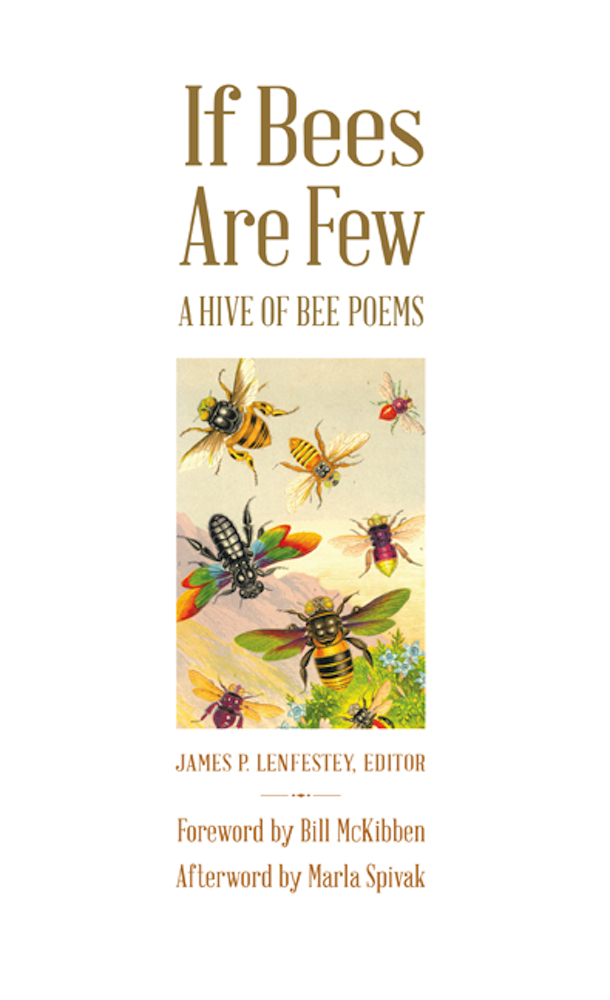
If Bees Are Few: A Hive of Bee Poems

Rate this book
It is said there are 20,000 species of bees, a genus 50 million years old, but in the fertile imagination of the world’s poets, there is no beginning or end to the bee buzz. Virgil wrote of bees, as did Rumi, Shakespeare, Burns, Coleridge, Emerson, Mandelstam, Neruda, Whitman—a lyrical hum heard well into the twentieth and twenty-first centuries in poems by Yeats, Lawrence, Plath, Mary Oliver, Carol Ann Duffy, Naomi Shihab Nye, and Sherman Alexie, among many others.

The title of this book is from Emily Dickinson: To make a prairie it takes a clover and one bee, / One clover, and a bee, / And revery. / The revery alone will do / If bees are few. Her conclusion resonates with a terrible poignancy today, as bees are indeed becoming few—hives collapsing, wild species disappearing. Amid this crisis, the poems collected here speak with a quiet urgency of a world lost if bees were to fall silent.

If anyone can save the bees, it is entomologist Dr. Marla Spivak and the hive of bee scientists and beekeepers at the Bee Lab at the University of Minnesota. A portion of the author proceeds from this anthology will be donated to support research at the Bee Lab.


300 pages, Hardcover

First published May 30, 2016

1 person is currently reading
364 people want to read

About the author

James P. Lenfestey

18 books5 followers

Ratings & Reviews

What do you think?
Rate this book

Friends & Following

Create a free account to discover what your friends think of this book!

Community Reviews

5 stars
19 (40%)
4 stars
21 (44%)
3 stars
3 (6%)
2 stars
2 (4%)
1 star
2 (4%)
Displaying 1 - 19 of 19 reviews
Profile Image for Sue.
1,437 reviews650 followers
June 24, 2016
Everyone experiences bees throughout their lifetime, positively or sometimes negatively due to stings or allergies. But our lives are oh so dependent on these hardworking little creatures. This collection of poems, ranging from prose poems to haiku, celebrates the bee's existence with works dating as far back as Virgil, and more "modernly" with Shakespeare, Dickinson, Rumi, Yeats, Whitman and Neruda. And on to the present day with poets such as Alexie. There are also many new-to-me poets that I would like to investigate further.

This is an eclectic collection and, as with all such, I found many poems that I truly loved, many that I quite liked and a few that I did not care for. But the overall purpose and essence rings through: the bees are integral to our existence, part of the essence of our natural world and we need to respect that. Bees are also endangered and slowly disappearing and that endangers much that we eat and so much that we find beautiful in out lives.

I do recommend this book and suggest a slow read, as I do for any poetry collection. I also remind potential readers that a portion of the proceeds supports research at the Bee Lab at the University of Minnesota which is researching bee hive collapse.

A copy of this book was provided by the publisher through NetGalley in return for an honest review.
Profile Image for Yodamom.
2,208 reviews216 followers
June 3, 2016
How do you review a book on poetry written by so many different people ? I loved a few poems, liked a few more was stumped by several, and disliked only a couple. I am not a poetry reader, I stretched my mind for the bees. Some of these I had to read slow and carefully, then think after finishing them to judge my feeling. Ouch, thinking is so rare in most of my books. LOL There were a few that I got right away, I felt something. This is a collection, not every poem is for every person.
The facts, educations and reality written in between the various poems was what I enjoyed the most. Bee's are a gift and a treasure to this world, one we can't live without. There are little pushes to plant flowers, keep the pesticides out of your gardens and live a bee friendly life. I agree we must alter our present path.
Did I love the book, no. I would buy it for friends who love poetry, for my bee keeper friends YES, it's the perfect gift. I was inspired by the little buzzers. I went out and bought a bee hive cake mold to serve for tea. Hint if you are looking for a gift this book with the cake mold, win win. :D
Thank you NetGalley for the chance to stretch my wings and review this
Profile Image for Rebecca.
4,181 reviews3,447 followers
June 7, 2016
(3.5) You’ll be amazed just how many poems there are out there that mention bees – enough to fill a 300-page anthology! The title is from a Dickinson poem, and these selections vary in form from haikus to prose poems and in author/time period from Coleridge and Burns to Lucille Clifton and Sherman Alexie. Unfortunately, I was already familiar with a few of the key poem sequences (by Sean Borodale, Carol Ann Duffy and Jo Shapcott), which felt like I’d kind of spoiled a surprise for myself. My favorite new-to-me poems were by Laure-Anne Bosselaar, Jill Breckenridge, Nancy Willard and Morgan Grayce Willow – I’ll have to seek out more work by each of them. I would advise reading this slowly over a long period of time; if you read too many bee poems in a sitting they start to feel repetitive because they draw from something of a limited metaphorical palette.
27 reviews1 follower
May 4, 2016
Calling all bee lovers! The University of Minnesota Press and Editor James P. Lenfestey have pulled together a collection of intimate, poignant and thought provoking poems, sonnets and proverbs of and about bees.

Poets have long loved this little dynamo of industry. Their existence linked intrinsically to man’s, to all of nature. An existence now in peril. The collection is a labor of love, a chance to spend a long lazy afternoon in the company of these magicians on wing. In these pages they are love personified, the maiden, the grand dame, the dowager, the warrior. They are spring, summer, autumn, winter, the life cycle, the body, the mind. They are life itself but as the poems remind us, they are perishing, their species in peril.

There is no denying their ecological importance in the cycle of life. But they are dying, moving away, forgetting their way home, disappearing daily from the landscape. Being black topped and poisoned into extinction. And as the bees go, so go we. This fine collection is a wake up call reminding us to pay attention to the small things in nature or ignore them at our own peril.

This book can be enjoyed at two levels, as it is, simply as a collection of beautiful poems. But also at a level as a clarion call, to shake us out of our self indulgent fugue. It is a grand and worthy effort. To see the humble bee through the eyes and voices of our most gifted poets. The collection spans many centuries and includes the works of Shakespeare, Yeats, Emerson, Lawrence, Dickinson, Coleridge, Neruda, Plath, Machado, Rumi and contemporary poets Thomas McCarthy, Max Lenfestey, Lisel Mueller, Mary Oliver, Aimee Nezhukumatathil and countless others.

Proceeds from the sale of this book will go towards assisting Dr. Marla Spivak, entomologist and McKnight Professor at the University of Minnesota and other entomologists in their work to educate and help halt the destruction of bee habitats and the decline of our bee population, www.beelab.umn.edu

I was generously provided an ARC copy of this book by the Minnesota University Press for my honest critique. I enthusiastically recommend this book. Five of five stars. Purchase and enjoy the book. I will, for myself and for my friends when the book is published on May 30, 2016.

As Dr. Spivak suggests, each of us can do more. We can all do our small part in making a difference by planting a garden of varied flowers for the bees, a banquet of pesticide free blooms for these amazing insects. Then sit back and enjoy the sound, the smell, the life on wing and maybe write your own poems of homage to the bee. There is no time to waste for as poet Brenda Hillman reminds us,

Hurry now, for the hive is ill….
Profile Image for Clare O'Beara.
Author 25 books371 followers
August 16, 2016
"We are bees then; our honey is language."
- Words Rising by Robert Bly.

Indeed humans are like bees, and we depend upon these industrious little pollinators.
Published to highlight the threat to the bees worldwide from colony collapse, insecticide, impoverished landscape and varroa mite, this diligently collected set of poems has something for everyone, young and old.

I noticed that some poems were principally about bees, but many more just mentioned bees as part of the scene they were depicting. Whether in an early line or a late one, the bee was shown as an indivisible part of the garden, field, hillside or farm. Coleridge's Inscription for a Fountain on a Heath, manages to mention bees in both the first and last lines.

Emily Dickinson describes bumblebees as well as honeybees. James Silas Rogers describes releasing a bumblebee from his basement. While Josephine Dickinson in B identifies herself, the beekeeper, with the queen bee. Carol Anne Duffy reminds us in Ariel that these days the bee may be sipping neonicotinoid insecticides. Emerson sums up the life of the humble-bee including hibernation. Tree Bernstein amusingly likens pollen panniers to tourists with bright orange fanny packs. Joan Nicholson has created an amusing alphabetical confection.

Some poems praise honey, others describe swarms or like Linda Pastan worry about empty hives and sick insects. And a couple of poems mention wasps instead, or non-colonising native bees, which is quite okay, because they pollinate flowers and are threatened by the same insecticides. From Shakespeare and Virgil to Yeats and Plath and works in translation, even a haiku, the scope is broad. Brief notes on the poets are given at the end. If you love nature, poetry or campaigning for bees, you will want this book on your shelf.

"We are bees then; our honey is language."

I downloaded an ARC from Net Galley for unbiased review.
Profile Image for Bonny.
1,012 reviews25 followers
September 6, 2019
I found If Bees Are Few on the table at the library and enjoyed the varied and diverse collection of poems contained within, especially this short and to-the-point one by Sherman Alexie:

The bees are gone.
We need new bees
Or we are fucked.

Profile Image for J. d'Merricksson.
Author 12 books50 followers
May 7, 2016
***This book was reviewed for Netgalley***

‘Forget not bees in winter, though they sleep.’
~Victoria Sackville-West

If Bees are Few.. is an anthology of poems about bees written by poets through the ages, and edited by James P. Lenfesty. Why a book of bee poems, you might ask? Bees are cornerstone creatures, critters that, by virtue of the work they do, support the underpinnings of the environment. If bees disappeared, as hives are doing at an increasingly alarming rate, it wouldn't be long before food chains became severely affected as many plant species rely on bees for propagation. No bees, plants start dying off, followed by the creatures that eat plants, and the predators that hunt them.

Proceeds from the book sales goes to the Bee Lab at the University of Minnesota, to help with continued research. I love that! Bees are so important to environment. If you’d like to learn more about the Bee Lab, visit www.beelab.umn.edu.

Not only are bees environmentally valuable, but they are important sacred animals to many groups, oftentimes representing communication and cooperation, and many of the poems gathered within these pages reflect those natures.

I love the quotes before ToC. They were so appropriate. Poems are listed within alphabetical by the author's last name. I really liked Sherman Alexie’s In the Matter of Human v. Bee, especially the ‘For the Beekeepers’ section. This was my first exposure to this poet’s work and I wasnt disappointed. Summer at the Orphanage by Laure-anne Bosselaar was a sad poem, touching in its simplicity.

I did notice that Emily Dickinson’s poems are not marked as such. There was no transition from Deppe’s poem to Dickinson's. It was a bit odd til I sussed it out.

Overall, though, this was a great collection, with work from Alexie to Whitman, and everywhere between. If you love the beauty of poetry, the majesty of bees, or better yet, both, check out If Bees are Few…. and remember, proceeds go to help bee research!
Profile Image for Amy.
299 reviews5 followers
April 2, 2016
With a title taken from an Emily Dickinson poem, this book is a collection of poetry highlighting the bee in culture, history, imagery, and daily life. This was a powerful read as we move back into spring in the Northeast and another summer where we all have responsibility for saving the bees our region needs. A portion of the proceeds of this book are donated to the University of Minnesota Bee Lab. Even more reason to love it!
Profile Image for Joseph Spuckler.
1,517 reviews33 followers
October 8, 2020
If Bees Are Few: A Hive of Bee Poems edited by James P. Lenfestey is a collection of poems title after an Emily Dickinson poem. After a career in academia, advertising, and journalism as an editorial writer at the Minneapolis Star Tribune, where he won several Page One awards for excellence, James P. Lenfestey has published poetry, reviews, and articles, plus a book of essays.

This collection covers centuries of poets and nearly every bee associated trait. From the pollinators, to colony collapse disorder, to fertility in general, bees or their mannerisms are examined. Lessons on hive life, the difference between hive and ground bees, and the unique bumble bee are given. Poets from modern to medieval contribute to this collection. Rumi contributes "When Grapes Turn to Wine. Emerson gives the reader "The Humble Bee":

Insect lover of the sun,
Joy of thy dominion!
Sailor of the atmosphere;
Swimmer through the waves of air;
Voyager of light and noon


James Silas Rogers tells of liberating a bumble bee from his basement and Lawrence Ferlinghetti tells of two bees trapped in his cabin and their different behaviors. The range of topics and views of the poets allow for a large number of poems on the same seemingly simple topic, bees, to seem fresh and not repetitious. The collection is listed as three hundred pages but the Kindle advance copy reads much more quickly. I would assume that the print edition will be illustrated. Regardless, the poetry is great and proceeds from the sale will go to the University of Minnesota Bee Lab and its efforts to help save the bees.

To make a prairie it takes a clover and one bee,
One clover, and a bee,
And revery.
The revery alone will do
If bees are few.


Emily Dickinson, XCVII
Profile Image for Anne-Marie.
536 reviews7 followers
July 30, 2021
I was really looking forward to reading some lovely bee poems that I received from Netgalley but this anthology had a sting in the tail. Some were lovely such as Emily Dickinson's
To make a prairie it takes a clover and one bee,
One clover, and a bee,
And revery.
The revery alone will do
If bees are few.
but some were shocking - in the sense of shockingly poorly written and shockingly offensive. Take the one by Sherman Alexie:
The bees are gone.
We need new bees
Or we are ******
Invective Against the Bumblebee by Diane Lockward was another one that was shocking and very anti-bee! I was disappointed.
Profile Image for Brian Wasserman.
204 reviews9 followers
July 20, 2018
a decent anthology, mostly read it to find new poets, the poems all coincide in their relevance but not in their craft, the editor would include 5 poems by the same author even when the poems are terrible.. those book could have been better if the editor had been more selective in their choices
Profile Image for Nikki.
1,756 reviews84 followers
July 1, 2016
I was hoping that this book would end up being a good mix for me as I sometimes enjoy poetry and I am a big believer in saving bees. Unfortunately I ended up disliking the majority of the poetry and feeling as though the book failed at its goal of helping bees. First of all, I was perhaps not in a poetry mood but that does not dismiss the fact that many of the poems included were dull, a bit too "out there" for my liking and some were even negative towards bees. Now tell me, how does a poem that threatens a bee and wants to kill it with a paper make it into a poetry anthology claiming to want to help bees survive?

Invective Against the Bumblebee
by Diane Lockward

Escapee from a tight cell, yellow-streaked,
sex-deprived sycophant to a queen,
you have dug divots in my yard
and like a squatter trespassed in my garage.

I despise you for you have swooped down
on my baby boy, harmless on a blanket of lawn,
his belly plumping through his orange stretch suit,
yellow hat over the fuzz of his head.
Though you mistook him for a sunflower,
I do not exonerate you,
for he weeps in my arms, trembles, and drools,
finger swollen like a breakfast sausage.
Now my son knows pain.
Now he fears the grass.

Fat-assed insect! Perverse pedagogue!
Henceforth, may flowers refuse to open for you.
May cats chase you in the garden.
I want you shellacked by rain, pecked by shrikes,
mauled by skunks, paralyzed by early frost.
May farmers douse your wings with pesticide.
May you never again taste the nectar
of purple clover or honeysuckle.
May you pass by an oak tree just in time
to be pissed on by a dog.

And tomorrow may you rest on my table
as I peruse the paper. May you shake
beneath the scarred face of a serial killer.
May you be crushed by the morning news.


The italic sections are my emphasis of actions against a poor bee that don't seem like material for this book.

In addition, the introductory aspect of the this anthology is sadly lacking. In order for the book to have done what it intended, there needed to be more information on what is impacting bees and what can be done about it. Terms were used, such as colony collapse disorder, that were never explained and left a reader potentially scratching their head. Now I know what the terms they used were and I know a great deal about the plight of bees across the world, but are they not in fact trying to reach people that do not know? So why did they not go into more detail? Why not make a case for bees rather than just leaving it to lackluster poetry? This poetry is supposed to inspire you to help bees? Seriously? It would be more likely to inspire someone to eat honey and swat a bee the next time one comes near.

In addition, the emphasis in the poetry on honey grew quite tiresome for this reader especially considering honey is food for the bees themselves and not humans. (And their replacement food from beekeepers is usually refined sugar and high fructose corn syrup, which have nowhere near the same level of nutrition. An added bonus? Bees frequently place the corn syrup with the honey so that honey you're eating is quite possibly not all honey.) And no, I do not consume honey as I am a strict vegan.

Overall I found this book to be a failure in both fulfilling its intended message and entertainment value.

Disclosure: ARC received from Netgalley & publisher in exchange for an honest review. (They may regret this.) Any and all quotes were taken from an advanced edition subject to change in the final edition.
253 reviews10 followers
May 30, 2016
If Bees Are Few

If Bees Are Few, edited by James P. Lenfestry, unapologetically lauds bees. If you have paid any attention to bee issues, you are probably aware of warnings that their numbers are seriously dropping. Approaching this book with a mindset of embarking on a sermon or didactic environmental treatise would be a mistake. The motivation would be correct, since putting their money where their mouth is, some proceeds from sales of the book will aid the Bee Lab in the Department of Entomology at the University of Minnesota in their search for ways to protect bees worldwide. Visit the website at www.beelab.umn.edu for more about the Bee Lab’s work and resources. The foreword by Bill McKibben points out that the bees play the role of sentinel in an increasingly toxic world, acting as a warning system that our world is out of kilter.
The front matter, brief and well worth reading, prefaces the fun to come. Poets range from current award winners like Sherman Alexie to those like Burns and Kipling studied in long ago English classes. I started to pick a few lines I really liked and wound up shortening a blog that became much too long. I had to include the first sample since it brought back memories of my grandfather harvesting honey from his own bees.

24th May: Collecting the Bees (Sean Borodale)
“He just wears a veil, this farmer, no gloves
and lifts open a dribbly wax-clogged
blackwood box.”

Boy with Honeybee Hair (Barry Blumenfeld)
. . . I came to say, He
said, it’s nothing to
Be afraid of, death. It’s a place you go to rest.

Summer at the Orphanage (Laure-Anne Bosselar)
I’d like to tell you that something happened then
– that there was an epiphany, that the bee
taught me something.
But it didn’t.

Of A’ the Airts the Wind Can Blaw (Robert Burns)
Blaw, blaw ye wastin winds, blaw soft
Among the leafy trees,
With gentle gale from hill and dale Bring hame
the laden bees.

The Language of Bees (Barbara Hamby)
This piece of amusing information rather than a poem begins by stating there are 76 distinct words of stinging, 39 words for queen, 22 for sunshine, and addressing the qualities of bee language before concluding “for it is eloquent and vulgar in the same mouth, and though its wound is sweet it can be distressing, as if words could not hurt or be meant to sting.”

Though the poems varied widely in style and substance, I failed to find a weak one. I will give a bit of advice on how to read the book. Choose one or two a day as you would select a couple of fine chocolates from a box and savor them. Truthfully, I could not do this any better than I do the chocolates. I kept reading “just one more.” At least, they didn’t make me gain weight.
Profile Image for Jane.
2,490 reviews73 followers
May 20, 2016
I enjoy poetry and am worried about the status of bees, so this anthology of poems about bees intrigued me. The fact that some of the proceeds will benefit the Bee Lab in the Department of Entomology at the University of Minnesota alone makes it a worthwhile endeavor.

Some of the poems are focused on bees; in other poems, the bees are merely background. Some poems are long and lyrical, and others are short and modern and to the point about vanishing bees. As usual with anthologies, some of the poems spoke to me and some did not. My three favorite poems were Two New World Bees by John Caddy, Bumblebee in the Basement by James Silas Rogers, and the pedigree of honey by Emily Dickinson:

The pedigree of honey
Does not concern the bee;
A clover, any time, to him
Is aristocracy.

If you enjoy reading poetry written by a variety of poets over thousands of years of human history, you might enjoy dipping in to If Bees Are Few. Be prepared to crave some honey!

I read a digital advance reader copy of If Bees Are Few.
Profile Image for Marylou (As the Page Turns).
265 reviews41 followers
November 17, 2016
I am not a big fan of poetry to be honest, but I do like bees =P
Netgalley was advertising a bunch of poetry books and I thought why not?
Unfortunately, this book didn't keep my interest...
This is a sample poem:
Honeybees prefer the nectar
of the youngest blossoms.
Ground bees delight in
ripened fruit on the grass.
The honeybee turns nectar to honey,
then dies and is pushed from the hive.
The ground bee dies sated
in the sugar of fallen fruit.
I just don't get it I guess...


Profile Image for Dawn Thomas.
1,094 reviews6 followers
September 26, 2023
If Bees Are Few: A Hive of Bee Poems by James P Lenfestey, Editor

300 Pages
Publisher University of Minnesota Press, Univ of Minnesota Press
Release Date: May 30, 2016

Nonfiction, Poetry, Insects, Environmental, Climate Change, Bees

The title of the book comes from a poem by Emily Dickinson. This is a lovely collection of poems related to bees, the people who help them, and the environment. There are many days when I sit outside and watch the bees after a seed pod opens on a palm tree. They dance among the flowers gathering nectar for the hive.

The editor recommends reading this book outside while enjoying the bees. I completely agree with him. If you love bees, and who doesn’t, and poetry, you may enjoy reading these poems.
Profile Image for Jane from B.C..
140 reviews
May 7, 2016
Thank you to NetGalley and the University of Minnesota Press for the opportunity to review and ARC of this book of poetry.

This is a wonderful anthology of bee related poems. It is something one can take out in the yard or to a park and read alongside the busy buzzing of bees.
Profile Image for Polly Krize.
2,134 reviews44 followers
June 3, 2016
I received an ARC of this book in exchange for an honest review.

Utterly enchanting! Such a comprehensive collection of bee literature throughout history. Engaging and charming, each and every one! These precious beings need to be protected for so many reasons. Recommended.
Profile Image for Lily.
1,160 reviews43 followers
April 30, 2017
Most of these are pretty cute, but I admit by the end I was like, yes I get it you can only repeat the same bee metaphors so many times.....
Displaying 1 - 19 of 19 reviews

Can't find what you're looking for?

Get help and learn more about the design.