

What do you think?
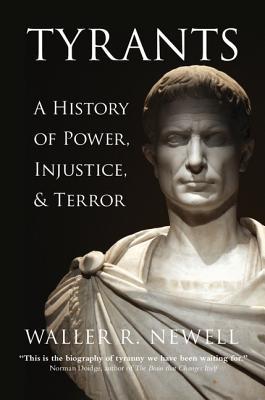
Tyrants: A History of Power, Injustice, and Terror
This book shows how the forces of freedom are everywhere challenged by a newly energized spirit of tyranny, whether it be Jihadist terrorism, Putin's imperialism, or the ambitions of China's dictatorship. It will show why tyranny is a permanent danger on the human landscape by following its strange career from Homeric Bronze Age warriors through the founding of the world empires of Alexander the Great and Rome, and the medieval struggle between the City of God and the City of Man, leading to the state-building despots of the Modern Age, including the Tudors and 'enlightened despots' such as Peter the Great. The book explores the psychology of tyranny from Nero to Gaddafi, and how the character of tyranny changes beginning with the Jacobin Terror into millenarian revolution. Written in an engaging, jargon-free style, it will appeal to anyone interested in the danger posed by tyranny and terror in today's world.
260 pages, Hardcover
Published June 1, 2016
Ratings & Reviews
Friends & Following
Create a free account to discover what your friends think of this book!
Community Reviews
Displaying 1 - 11 of 11 reviews

March 28, 2020
A maior crítica em relação a esse livro de Waller Newell "tiranos" é ele enumerar todos os tiranos desde os tempos antigos até os dias atuais ,mas se esquecer de criticar os regimes capitalistas ocidentais que influenciaram muito na criação dos tiranos do século 20. Outra crítica é a flexibilidade da palavra terror comparando a revolução Francesa com os jihadistas atuais. Concordo com o autor , Robespierre foi muito pior do que muitos terroristas e tiranos. Ele com seu grupo de fanáticos jacobinos, destruíram o idealismo da revolução francesa,e colocaram no lugar o terror, servindo de modelo para tiranos vindouros como Stalin e Hitler.
O autor divide os tiranos em três classes:
Tiranos da Variedade jardim; São tiranos que retém o poder, e sugam o estado e se aproveita dos benefícios do poder como se o país fosse sua propriedade particular, e não pensam duas vezes para parar seus povos por simples prazer. Podemos incluir aqui Bashar al-Assad e Robert Mugabe etc.
Tiranos reformadores: São tiranos que traziam vitórias e independências ao seus povos através da Guerra , bem como melhorias na área da legislação, e diminuição das desigualdades sociais. Aqui podemos incluir , Júlio César, César Augusto, Elizabeth I etc
Tiranos milenaristas: São tiranos que têm uma paixão por vingança e justiça querem uma revolução agora para poder usufruir no futuro um poder absoluto. Aqui podemos incluir Hitler, Robespierre, Lenin ,Stalin,Pol Por, Bin Laden etc
Só uma observação para o autor Vladimir Putin é o tirano atual que tem um pouco de cada uma das classes.
Aprendi muito com esse livro, a democracia apesar de seus defeitos , raramente permitirá o surgimento de tiranos, porque há sempre questionamentos e liberdade,e também pude conhecer esse terrorista sanguinário chamado Robespierre , que eu tinha como um herói.
O autor divide os tiranos em três classes:
Tiranos da Variedade jardim; São tiranos que retém o poder, e sugam o estado e se aproveita dos benefícios do poder como se o país fosse sua propriedade particular, e não pensam duas vezes para parar seus povos por simples prazer. Podemos incluir aqui Bashar al-Assad e Robert Mugabe etc.
Tiranos reformadores: São tiranos que traziam vitórias e independências ao seus povos através da Guerra , bem como melhorias na área da legislação, e diminuição das desigualdades sociais. Aqui podemos incluir , Júlio César, César Augusto, Elizabeth I etc
Tiranos milenaristas: São tiranos que têm uma paixão por vingança e justiça querem uma revolução agora para poder usufruir no futuro um poder absoluto. Aqui podemos incluir Hitler, Robespierre, Lenin ,Stalin,Pol Por, Bin Laden etc
Só uma observação para o autor Vladimir Putin é o tirano atual que tem um pouco de cada uma das classes.
Aprendi muito com esse livro, a democracia apesar de seus defeitos , raramente permitirá o surgimento de tiranos, porque há sempre questionamentos e liberdade,e também pude conhecer esse terrorista sanguinário chamado Robespierre , que eu tinha como um herói.

April 22, 2019
The problem with this book is multi fold.
It’s not that I learned nothing from this book, but I felt its arguments could be summed up in a well written 10 page essay. Instead Waller babbles on incoherently and says the same thing over and over again for 232 pages.
He fails to provide us first and foremost with a DEFINITION of tyranny. It seems he can get almost anything to fall under that category because he never qualified what it even meant.
He then utilizes this nebulous term to call what he wants tyrannical. He projects the light of the west as the force of good against the despotic regimes of the east. Simplistic much?
I don’t recommend reading this. His insights are poor, commonplace, and simplistic. That, by definition, means they are not insights.
He fails to recognize that even his beloved America’s democracy is fallible to tyranny. He argues that its checks and balances prevents tyrants from coming into power. Isn’t this the exact same system adopted by multiple southern American countries (eg Venezuela) and failed drastically?
Germany was one of the most democratic regimes and produced the greatest despot in history.
Rather than reading this endless diatribe, read How Democracies Die by Ziblatt & Levitsky for a much more interesting take on political systems.
It’s not that I learned nothing from this book, but I felt its arguments could be summed up in a well written 10 page essay. Instead Waller babbles on incoherently and says the same thing over and over again for 232 pages.
He fails to provide us first and foremost with a DEFINITION of tyranny. It seems he can get almost anything to fall under that category because he never qualified what it even meant.
He then utilizes this nebulous term to call what he wants tyrannical. He projects the light of the west as the force of good against the despotic regimes of the east. Simplistic much?
I don’t recommend reading this. His insights are poor, commonplace, and simplistic. That, by definition, means they are not insights.
He fails to recognize that even his beloved America’s democracy is fallible to tyranny. He argues that its checks and balances prevents tyrants from coming into power. Isn’t this the exact same system adopted by multiple southern American countries (eg Venezuela) and failed drastically?
Germany was one of the most democratic regimes and produced the greatest despot in history.
Rather than reading this endless diatribe, read How Democracies Die by Ziblatt & Levitsky for a much more interesting take on political systems.
February 25, 2016
Read the full prepublication review on CJLeger.com. Tyrants: A History of Power, Injustice and Terror comes to the table at a pivotal time where the United States election coverage is at an all-time high. Politics is currently being highlighted on all media sources online and in print publication; tyranny is running rampant in the Middle East, tensions are strengthening between the United States and Russia, and national threats, like North Korea's continuous actions, are also a concern. In terms of publishing timing, Cambridge University Press couldn't have chosen a better time to publish a book for political followers and World Watchers with engaging information and conceptual analytics that help decipher the world we live in today.
This book starts off by getting right to the point in its preface by stating that tyranny is a permanent part of human history - and a necessary evil that promotes democracy amongst educated and informed citizens, highlighting Vladimir Putin as the modern-day threat successor of yesterday's tyrants. Furthermore, the author makes it a point to address that tyranny is the driving force behind the defense of democracy and its growing popularity. As democracy and tyranny continue heated bouts in the fight for control and influence, the author also states that although history has shown that democracy triumphantly prevails over tyrannical regimes in many cases, in present times, democracies lack the ability to see tyranny for what it is in its infancy, causing the inevitable vicious cycle of “history” that author describes as the mistaken face of progress, hinting that all tyrannical regimes at one point fought on the side of “history” believing it would bring a better world for future generations.
Overall, it is a strong and compelling book with adequate political analysis by Waller R. Newell, a professor of Political Science & Philosophy at Carleton University. The author states in his book that the purpose of writing it was to provide a cure for the amnesia democracy often experiences when they're unable to see tyranny for what it is when it commences.
In terms of the book’s grammatical and literary prowess, although strong in tone, it's written with eloquent vocabulary and narrative when addressing settings and points outside of the direct subject, like Newell’s description of route to the Roman Emperor Tiberius’ summer villa on the Island of Capri - engaging and artfully written. Also artfully designed is the author's inclusion of past examples of tyrannical regimes including ancient Roman emperors, historical events at Marathon and Salamis, the efforts during Operation Desert Storm and worldwide efforts during World War II to preserve democracy.
Most intriguing is the author's depiction of the Roman Empire from its inception of seemingly innocent beginnings, donning an Emperor as a modest “First Citizen” and highly respected commander to Dominus et Deus (Lord of all mankind) by the end of 1 AD - a sure hint of how tyranny is often masked by the idea of freedom with limitations for all except for the First Family that often evolves into full blown dictatorships.
C.J. Leger’s Final Thoughts
Tyrants: A History of Power, Injustice and Terror is a well rounded political science book with the high concentration on historical accuracy and eloquence. It is a must have for the communities noted at the beginning of this review and a highly recommended book for political analysts and world history enthusiast. I believe this book will offer a lot of value to those following the current presidential election process that also follow world news broadcast stations and newspapers like BBC, al Jazeera and the Telegraph. As the information they offer on the current tyrannical threats progress, this book will really help viewers identify tyranny in its inception and understand the battle democracy faces today. We give this book 5 stars for its timing, analytics and originality.
CJLeger.com's first pre-publication review for the spring season is for Tyrants: A History of Power, Injustice, and Terror by Waller R. Newwell, CJLeger.com sends a special thanks to its publisher, Cambridge University Press, for awarding us a galley and allowing us to do a prepublication review on such short notice and so close to its publication date on March 15, 2016. We recommend this book to:
-Political followers
-Historical politics enthusiasts
-Political Science majors
-World news and world affairs journalists
-Sociologists
This book starts off by getting right to the point in its preface by stating that tyranny is a permanent part of human history - and a necessary evil that promotes democracy amongst educated and informed citizens, highlighting Vladimir Putin as the modern-day threat successor of yesterday's tyrants. Furthermore, the author makes it a point to address that tyranny is the driving force behind the defense of democracy and its growing popularity. As democracy and tyranny continue heated bouts in the fight for control and influence, the author also states that although history has shown that democracy triumphantly prevails over tyrannical regimes in many cases, in present times, democracies lack the ability to see tyranny for what it is in its infancy, causing the inevitable vicious cycle of “history” that author describes as the mistaken face of progress, hinting that all tyrannical regimes at one point fought on the side of “history” believing it would bring a better world for future generations.
Overall, it is a strong and compelling book with adequate political analysis by Waller R. Newell, a professor of Political Science & Philosophy at Carleton University. The author states in his book that the purpose of writing it was to provide a cure for the amnesia democracy often experiences when they're unable to see tyranny for what it is when it commences.
In terms of the book’s grammatical and literary prowess, although strong in tone, it's written with eloquent vocabulary and narrative when addressing settings and points outside of the direct subject, like Newell’s description of route to the Roman Emperor Tiberius’ summer villa on the Island of Capri - engaging and artfully written. Also artfully designed is the author's inclusion of past examples of tyrannical regimes including ancient Roman emperors, historical events at Marathon and Salamis, the efforts during Operation Desert Storm and worldwide efforts during World War II to preserve democracy.
Most intriguing is the author's depiction of the Roman Empire from its inception of seemingly innocent beginnings, donning an Emperor as a modest “First Citizen” and highly respected commander to Dominus et Deus (Lord of all mankind) by the end of 1 AD - a sure hint of how tyranny is often masked by the idea of freedom with limitations for all except for the First Family that often evolves into full blown dictatorships.
C.J. Leger’s Final Thoughts
Tyrants: A History of Power, Injustice and Terror is a well rounded political science book with the high concentration on historical accuracy and eloquence. It is a must have for the communities noted at the beginning of this review and a highly recommended book for political analysts and world history enthusiast. I believe this book will offer a lot of value to those following the current presidential election process that also follow world news broadcast stations and newspapers like BBC, al Jazeera and the Telegraph. As the information they offer on the current tyrannical threats progress, this book will really help viewers identify tyranny in its inception and understand the battle democracy faces today. We give this book 5 stars for its timing, analytics and originality.
CJLeger.com's first pre-publication review for the spring season is for Tyrants: A History of Power, Injustice, and Terror by Waller R. Newwell, CJLeger.com sends a special thanks to its publisher, Cambridge University Press, for awarding us a galley and allowing us to do a prepublication review on such short notice and so close to its publication date on March 15, 2016. We recommend this book to:
-Political followers
-Historical politics enthusiasts
-Political Science majors
-World news and world affairs journalists
-Sociologists

February 13, 2016
Well-researched and comprehensive. Only reason it didn't get 4 stars is because I found some sections a bit dry.
**I received this copy via NetGalley in exchange for an honest review**
**I received this copy via NetGalley in exchange for an honest review**

January 9, 2020
AUTHOR’S BIO
https://carleton.ca/bhum/people/walle...
WHO IS THE TARGET AUDIENCE?
Tyrants is a must read for all those studying political science.
SYNOPSIS
Tyrants, by Professor Waller Newell is an encyclopedic panoply of absorbing facts relating to despots from ancient history to present days autocrats. Waller categorizes the various kinds of tyrannical systems together with their characteristic methodologies and potential risks each poses to the society and the wider world. Tyrants spans over 2,000 years of anarchic insanity posing under the guise of political change. Professor Newell describes succinctly how tyrannical systems grow, often seeming to be ineffectual to their rise and through their inevitable fall. The pattern repeating itself again and again against the tapestry of human history. As time and technology progress the number of victims arising out of tyranny increases to terrifying levels. Newell mentions the usual suspects, Hitler, Stalin, and, Alexander the Great as well as those from the distant past.
From the onset I was surprised to observe the subject to be compelling, fascinating, and enthralling. I commend Professor Newell for taking a complex and sensitive subject and making it accessible and interesting. I felt that Newell argued well that tyrants represent an existential threat to the existence and continuation of democratic systems.
Professor Newell manages to take us from the tyrannical archetypes and through his extensive academic knowledge and skills to reveals the very heart of tyrants at their worst. Newell states from the beginning that his purpose is to prompt the current generation to realize that tyrants are not gone never to return. They are very much alive, well and living alongside us today and that they present a terrifying threat to societies across the globe.
The work is scholarly but not academic, and this is an excellent choice as it gives the greatest number of readers the opportunity to ingest this warning from history. Tyrants is particularly important due to the absence of literature covering this topic.
CONCLUSION
Tyrants is a primer for those who wish to read Professor Newell’s earlier masterpiece Tyranny. Both manuscripts will give the reader a superior knowledge of the danger that still exists in our world today; as well as the historic context against which to illuminate the cliff edge that faces civilization. This tome is concisely written and researched with inspirational interpretations throughout. I found it a compelling read even though the topic is serious. Tyrants by Professor Newell is the author at his best.
FURTHER READING
Poverty Isn’t the Root Cause of Jihadist Terrorism. Here’s What Is.
https://www.heritage.org/political-pr...
How Plato and Aristotle Help Us Understand the Tyranny of Bashar al-Assad
OTHER WORKS BY THIS AUTHOR
His books include Tyrants: A History of Power, Injustice and Terror (forthcoming from Cambridge University Press), Tyranny: A New Interpretation (Cambridge University Press), The Soul of a Leader: Character, Conviction and Ten Lessons in Political Greatness (Harper Collins 2009), The Code of Man: Love, Courage, Pride, Family, Country (Harper Collins, 2003), What Is A Man? 3000 Years of Wisdom on the Art of Manly Virtue (Harper Collins 2000), Ruling Passion: The Erotics of Statecraft in Platonic Political Philosophy (Rowman and Littlefield 2000) and Bankrupt Education: The Decline of Liberal Education in Canada (University of Toronto Press 1994, with Peter C. Emberley).
ACKNOWLEDGMENT
My sincere thanks go to: The Author, NetGalley, and the Publisher, for affording me the opportunity to review Tyrants.
https://carleton.ca/bhum/people/walle...
WHO IS THE TARGET AUDIENCE?
Tyrants is a must read for all those studying political science.
SYNOPSIS
Tyrants, by Professor Waller Newell is an encyclopedic panoply of absorbing facts relating to despots from ancient history to present days autocrats. Waller categorizes the various kinds of tyrannical systems together with their characteristic methodologies and potential risks each poses to the society and the wider world. Tyrants spans over 2,000 years of anarchic insanity posing under the guise of political change. Professor Newell describes succinctly how tyrannical systems grow, often seeming to be ineffectual to their rise and through their inevitable fall. The pattern repeating itself again and again against the tapestry of human history. As time and technology progress the number of victims arising out of tyranny increases to terrifying levels. Newell mentions the usual suspects, Hitler, Stalin, and, Alexander the Great as well as those from the distant past.
From the onset I was surprised to observe the subject to be compelling, fascinating, and enthralling. I commend Professor Newell for taking a complex and sensitive subject and making it accessible and interesting. I felt that Newell argued well that tyrants represent an existential threat to the existence and continuation of democratic systems.
Professor Newell manages to take us from the tyrannical archetypes and through his extensive academic knowledge and skills to reveals the very heart of tyrants at their worst. Newell states from the beginning that his purpose is to prompt the current generation to realize that tyrants are not gone never to return. They are very much alive, well and living alongside us today and that they present a terrifying threat to societies across the globe.
The work is scholarly but not academic, and this is an excellent choice as it gives the greatest number of readers the opportunity to ingest this warning from history. Tyrants is particularly important due to the absence of literature covering this topic.
CONCLUSION
Tyrants is a primer for those who wish to read Professor Newell’s earlier masterpiece Tyranny. Both manuscripts will give the reader a superior knowledge of the danger that still exists in our world today; as well as the historic context against which to illuminate the cliff edge that faces civilization. This tome is concisely written and researched with inspirational interpretations throughout. I found it a compelling read even though the topic is serious. Tyrants by Professor Newell is the author at his best.
FURTHER READING
Poverty Isn’t the Root Cause of Jihadist Terrorism. Here’s What Is.
https://www.heritage.org/political-pr...
How Plato and Aristotle Help Us Understand the Tyranny of Bashar al-Assad
OTHER WORKS BY THIS AUTHOR
His books include Tyrants: A History of Power, Injustice and Terror (forthcoming from Cambridge University Press), Tyranny: A New Interpretation (Cambridge University Press), The Soul of a Leader: Character, Conviction and Ten Lessons in Political Greatness (Harper Collins 2009), The Code of Man: Love, Courage, Pride, Family, Country (Harper Collins, 2003), What Is A Man? 3000 Years of Wisdom on the Art of Manly Virtue (Harper Collins 2000), Ruling Passion: The Erotics of Statecraft in Platonic Political Philosophy (Rowman and Littlefield 2000) and Bankrupt Education: The Decline of Liberal Education in Canada (University of Toronto Press 1994, with Peter C. Emberley).
ACKNOWLEDGMENT
My sincere thanks go to: The Author, NetGalley, and the Publisher, for affording me the opportunity to review Tyrants.

November 26, 2018
A book I read . . . for no particular reason . . . about the nature and history of tyranny, from the origins of the word in ancient Greek political theory, its use through the Roman empire, the more sinister modern fascist and totalitarian incarnations, and so on. The author is careful to point out that people may choose tyranny over freedom for a variety of reasons, and that it may well provide positive solutions to particular political problems at times (as the will of the people to defend their freedoms and make decisions can be slack, at an ebb tide), but that ultimately the nature of tyranny is harmful (which it seems should not even need to be argued). The only problem with this book is the rather dense typesetting - it can be a rather impenetrable wall of text, page after page after page - talk about tyranny!
September 15, 2019
Overall, I enjoyed it but it did have some flaws in my mind. The narrative didn't hold tight throughout the book and felt more like a literature review through the ages of Western thought. So a good, topical review of thinkers throughout history and useful to inspire further reading. The other issue I have is how he makes market-oriented, liberal democracies his benchmark for a form of governance without establishing why it is best. Most people would certainly pick democracy over the rule of many of the characters in the book but he could have at least done a section on the mini tyranies that can spring up in democracies.

October 4, 2019
I'm pretty certain I've read this book before. And honestly, reading though, the book ranges from two to five stars, based on what part you're in - it's dense, it's interesting, but it's somehow familiar and I don't know why. I've been reading a lot on the structure of tyranny and more, and I think that might be why it's familiar, and to be honest, this is a solid recap of all of my research that I've done and gave me more to consider, so that's positive.
A real reference piece if you're looking for the basis of understanding tyranny.
A real reference piece if you're looking for the basis of understanding tyranny.

September 10, 2019
Here's what I can guarantee you would happen when you read this book- you will have learned new terms, so your vocabulary would be way advanced than it was, and you'd have taken quite a trip down memory lane or delved into history and gotten an understanding of the effects of power, injustice and narratives.
Thanks Netgalley for the eARC. This is the kind of book anyone who loves history, rule, authority or power and then the advent of democracy would devour and argue on certain points.
Thanks Netgalley for the eARC. This is the kind of book anyone who loves history, rule, authority or power and then the advent of democracy would devour and argue on certain points.
November 17, 2016
Never so important than today.
January 7, 2020
Review available this evening.
Displaying 1 - 11 of 11 reviews