«Se non sappiamo custodire i soldi, che si vedono, come custodiamo le anime dei fedeli, che non si vedono?» Papa Francesco, dalla registrazione di un incontro riservato con gli alti vertici del Vaticano
«Abbiamo saputo che sta lavorando a un nuovo libro e ci piacerebbe poter rispondere a eventuali sue domande.» Email inviata dallo Ior a Gianluigi Nuzzi, 16 luglio 2015, tre mesi prima che la notizia dell’uscita di Via Crucis fosse ufficiale
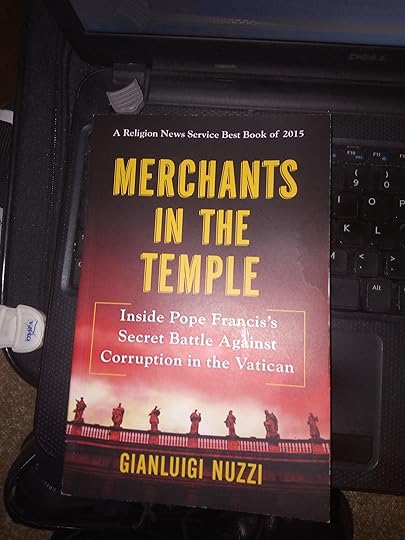
Dopo VATICANO SPA e SUA SANTITÀ, Gianluigi Nuzzi torna con una nuova, clamorosa inchiesta raccontando dall’interno la lotta che Francesco e i suoi fedelissimi stanno conducendo per riformare la Chiesa. Tutto a partire da REGISTRAZIONI E DOCUMENTI INEDITI. NON ERA MAI SUCCESSO che un giornalista potesse ascoltare la registrazione di diversi incontri riservati tra gli alti vertici del Vaticano e il papa. Ecco Francesco, nominato da poco più di tre mesi, mentre sferra un durissimo attacco contro la nomenclatura da anni a capo delle finanze della Santa sede, denunciando che “I COSTI SONO FUORI CONTROLLO. CI SONO TRAPPOLE...”. Bergoglio chiede trasparenza dopo aver preso visione dei bilanci non ufficiali che documentano sia la malagestione degli amministratori, sia operazioni di puro malaffare. Una situazione negativa mai conosciuta nel suo insieme, e qui svelata, che fa capire finalmente perché Benedetto XVI si è dimesso. I FASTI DEI CARDINALI e le regge a canone zero, la fabbrica dei santi, le offerte dei fedeli sottratte alla beneficenza, i furti e le truffe commerciali, il buco nero delle pensioni, le veline e i veleni di chi sabota la vigorosa rivoluzione del papa, tra spionaggio, scassinamenti e azioni di delegittimazione. Una vera GUERRA, qui ricostruita come in un giallo destinato a diventare un caso politico internazionale. In gioco è il futuro della Chiesa e la sua credibilità nel mondo. Questo libro è pubblicato contemporaneamente negli Stati Uniti, in Gran Bretagna, Francia, Svizzera, Austria, Germania, Brasile, Portogallo, Spagna, Sudamerica.
Popes may come and go but the Curia is always with us. Gianluigi Nuzzi’s Merchants in the Temple exposes the inner workings of the Roman Curia, the archaic and self-serving core of Catholic organisation.
While the specifics of his research and conclusions are topical, his underlying message is generic and essentially timeless. There is little essential difference today from the conditions which Martin Luther criticised in the 16th century or for that matter Paul of Tarsus identified in the 1st century. The picture Nuzzi provides is not just that the Catholic Church is organisationally corrupt. It is unmanageably corrupt and persistently self-destructive.
In other words, there is no clear means through which the centuries of Gormenghast-like tradition and structure can be cut through or improved by anyone, even the pope, to reach some effectively functioning heart. The question therefore arises: what makes it so intractable to improvement? Is there something peculiar about the Catholic Church that prevents it from embodying the ideals it espouses? I think there is, a sort of self-inflicted Achilles heel of arrogant self-regard that is the impediment to any serious reform.
All organisations spawn similar ills: careerism, fraud, cultivated ignorance and incompetence, exploitation of the weak by the strong, among many others. Religious organisations generate an additional set of malicious effects like hypocrisy, self-righteous rationalisation, and self-serving promotional activities among them.
But the Catholic Church goes all other organisations one better when it comes to organisational dysfunction by making itself virtually immune to the recognition much less the correction of problems through its doctrinal conceit. Dogmatically the Catholic Church is self-defined as a societas perfecta, that is it is a community which has everything it needs to perform its function in the world, namely the salvation of souls.
The origin of this idea of the societas perfecta isn't biblical but classical: Aristotle used it to describe the polis or civil state of ancient Greece. It was applied to the Church in the Middle Ages by Thomas Aquinas and promoted assiduously by 19th century popes who felt that the Church wasn't getting its due respect from the increasingly secular European states. In one papal encyclical of the period, the doctrine is stated thus:
It [the Catholic Church] is a perfect society of its own kind and in its own right, since it has everything necessary for its existence and its effectiveness in and of itself, in accordance with the will and power of the grace of its Founder. As the goal of the Church is more sublime, its power is always far superior, and it can therefore not be considered less than the Civil state, as to not be in a state of subordination to such a state.
Although the idea of the societas perfecta has been soft-pedalled since the Second Vatican Council in the 1960's, it is still on the books, as it were, in both formal pronouncements and in the fundamental attitudes of those who run the organisation, the pope, the bishops, the clerics, and many of the lay folk who work within it.
The effect of the doctrine is pernicious in at least two ways. First, if the Church has all it needs to perform its salvific function, one might enquire what it is precisely that are the necessary and sufficient organisational characteristics the doctrine is referring to. However, such an enquiry would be vain. The response of the Church is effectively: Well, what's there already, what you see is what is necessary and sufficient.
What everything? Rituals? Structures of authority? Historical decisions? Yes, everything. Of course there may be the odd bad apple priest-paedophile or the occasional dissolute pope, or even whole portions of the organisation that collectively make serious mistakes morally and doctrinally. But these things are the equivalent of pilot-error and have nothing to do with the air-worthiness of the great Zeppelin of the Christian enterprise.
In other words, what is essential in the Church can't be distinguished from what is in the Church - the ultimate in Whig history. The doctrine of societas perfecta implies, therefore, an extreme hyper-conservatism lest some necessary baby get thrown out with the dirty, smelly bathwater accumulated over centuries. Unlike any theory of civil society, there is no earthly sovereignty of 'the people', or any other regulator, to keep excess in check or periodically throw the bastards out.
The second problem with the doctrine is that it inhibits any external pressure toward self-reform within the Church. There is essentially a single telephone line from the top of the Church direct to the divine, a line which no one has yet to hack or tap.
The point of the encyclical Immortale Dei quoted above is to put civil authority in their place; it is outside and subordinate to the realm of the Church. The encyclical is an institutional 'Bugger Off' to anyone external to the Church who has the temerity to criticise any aspect of the Church's organisation.
When the US bishops complain, as they frequently have done in recent years, that the government of the United States is being anti-Catholic, what they mean is that legislation has been passed which in some way touches on their ecclesial authority. And they don't like it of course, just as the executives of General Motors or Goldman Sachs or California Power and Gas don't like regulation which limits dangerous design, financial scams and consumer gouging. The difference of course is that none of these other organisations have such a well-developed theory of immunity from prosecution for their harmful effects on the world.
There is another doctrine of the Church that proclaims that it is a mystery. That is certainly the case when it comes to fixing the things that are wrong in it, from sexual abuse, to the oppression of women, to the insanity of its sexual doctrines. But there is far less mystery about the source of many of these problems and the inability to address them effectively over centuries. The organisational hubris expressed in the abiding doctrine of societas perfecta and embodied in unaccountable structures of ecclesiastical power like the Roman Curia are where reform has to take place.
There is only one thing I take issue with in the book: its title. Its vaguely anti-Semitic character is probably unintended by the author. Nonetheless it is a typical example of the off-hand deniable slur against Judaism that has passed into general culture. A bit like adopting black-face in vaudeville. It should really stop.
"Merchants in the Temple" by Italian journalist Gianluigi Nuzzi is an exposé of the entrenched, morally suspect and financially unscrupulous culture of the Vatican. It's well known that power corrupts, that human nature can be self-serving, and that Church bigwigs are no angels....for many years they protected pedophile priests (as seen in the movie "Spotlight"). Still, I was shocked by the revelations in this story.
The Vatican
Inside the Vatican Museum
If Nuzzi is right, Pope Benedict XVI resigned in 2013 because he couldn't deal with the engrained, powerful, self-indulgent, sometimes criminal (money laundering) Cardinals that run the Vatican.
Pope Benedict XVI
Benedict's resignation led to the election of Pope Francis, who apparently has a stronger stomach than Benedict. Pope Francis is determined to clean house - which has proven to be extremely difficult.
Pope Francis
The book gives a detailed picture of financial shenanigans perpetrated by Cardinals and Vatican employees. I got a feel for what was going on but - there are so many people involved (with very long titles and names) and so much economic hocus pocus - it's very hard to understand the exact details and how it all works.
Cardinals in the Vatican
As far as I can tell the financial schemes and malfeasance in the Vatican involves: using donation money meant for poor parishes to bail out Vatican overspending; hiding money from auditors; laundering Mafia money; underwriting lavish apartments and lifestyles for Cardinals and other employees (food, wine, clothing, interior decorating, prostitutes/lovers, etc.); paying blackmail to keep Cardinals' sexual peccadillos out of the public eye (sexual liaisons are supposedly very common among the Catholic clergy); patronage and nepotism - hiring WAY too many employees and paying excessively high salaries; using overpriced outside printshops for Vatican publications, rather than the fully capable Vatican printers; hiring contractors without getting estimates, and allowing them to overspend....with no oversight; permitting pension funds to become nearly bankrupt; being financially ignorant and inept (Cardinals aren't usually economists or businessmen); and more.
According to Nuzzi, Pope Francis has brought in financial experts and auditors- both religious and lay people - to fix some of this mess.
Auditors were brought in to examine the Vatican's books
However, the Cardinals have no intention of giving up their power. They resist reform; refuse to cooperate; pretend to cooperate; wage secret - and not so secret - campaigns to discredit the reformers; perhaps commit murder (Pope John Paul I died 33 days after he was elected, allegedly just before he was going to remove some Cardinals from power); and more.
Pope John Paul I
Thus, Pope Francis might have to wait until the ensconced Cardinals reach mandatory retirement age (80) or die, and replace them with people he trusts. However, the 'power corrupts' problem might begin a new cycle of bad behavior (just my opinion)......
Pope Francis placing the red hat on a new cardinal
When I finished the book I admired Pope Francis but had very little respect for the Vatican. The self-serving Cardinals mentioned in the book apparently forgot what priests are supposed to do - minister to the Catholic people. In fact, the Catholic flock seems to be the last thing on their minds. (I'm not Catholic, btw.)
Overall, this is an interesting book, a real eye-opener - though perhaps a bit too detailed and confusing (though I admire the enormous amount of research Nuzzi must have done). In any case, I hope Pope Francis succeeds in his mission to 'fix' the Vatican and wish him luck.
Very interesting book about the financial corruption in the Vatican and how Pope Francis I attempting to reverse it and the resistance he has had. The Vatican was close to bankruptcy - no spending limits, hidden income, hiring many more employees then it needs, reduced rent to friends on the property the church owns etc. How the retirement fund is only 26% funded and is many millions in the hole. The book covers the attempts to stop this since Francis was elected.
POPE FRANCIS' LONG BATTLE AGAINST CORRUPTION IN THE VATICAN
It’s well known that the history of the Catholic Church is rife with tales of corruption and murder—and that internal conflicts roiling the Church continue today over pedophile priests, the role of women, divorce, and gay marriage as well as theology. What’s less well known are the particulars about long-running battles over money and power inside the Vatican. Those reports may have forced the resignation of Pope Benedict VI in 2013. And in Merchants in the Temple, a 2015 book about the Vatican, investigative journalist Gianluigi Nuzzi speculated that corruption might eventually induce Pope Francis to follow Benedict into retirement. Instead, Francis emerged unscathed from the Vatican leaks scandal. But as I write, the 88-year-old pope lies in a Roman hospital in critical condition with pneumonia. And the forces are gathering for the conclave of Cardinals that might soon follow to select his successor.
Long-standing rumors of corruption
Reports of old-fashioned corruption involving money and power have been swirling about the Vatican for decades. More than forty years ago rumors surfaced that long-standing corruption led to the murder of the last Italian Pope, John Paul I. He reigned for just 33 days in 1978 and was reportedly in good health. Some close observers believed that the radical Vatican reform proposal he brought forward caused his death because it would have forced out the greatest beneficiaries of the Vatican’s extensive financial operations. While most observers dismissed those rumors, there is extensive proof that the Vatican’s finances were in fact riddled with corrupt influence. In Merchants in the Temple, Nuzzi cites lengthy passages from internal Vatican documents—and even tape recordings of secret meetings involving Pope Francis—to update the tale of ecclesiastical corruption.
A hero pope, with many flaws
Francis emerges from the pages of this book as a hero, though a hero with faults of his own. Unlike his predecessors, who initiated reform measures but failed to follow up on them, Pope Francis was resolute since the moment of his investiture in 2013. Nuzzi details a series of bold and risky moves by the Pope to bring outsiders, including lay experts, into the Vatican to investigate its financial affairs. And he continued to support them vocally through the ensuing battles over the application of their recommendations. Francis went so far as to dismiss a number of cardinals from their posts, and no wonder.
Citing internal documents, Nuzzi describes the astonishing inefficiency, ineptitude, and embezzlement that runs rampant through the Church’s finances. What he reveals is shocking. billions of euros intended for the poor were misspent on luxuries for the Vatican hierarchy, funneled to outside vendors and financial institutions through sole-source contracts, or simply unaccounted for. And the Vatican bank has been used extensively for money-laundering.
Don’t shoot the messenger
However, Merchants in the Temple is not easy going for the reader. It appears that the book was written in haste and then poorly translated from the Italian. The chronology is confusing. The cast of characters is immense and disorienting. And Nuzzi never clearly explains the daunting Byzantine structure of the Vatican. (That may not be entirely his fault, however: there are two Vatican banks, not one, and a passel of “commissions” with vague-sounding names that compete with one another for money and power.)
Perhaps the old lament, “Don’t shoot the messenger,” should be applied here. Despite the book’s flaws, the message comes through clearly: the obvious need for radical change. And in fact Francis has instituted significant reforms. However, as Nuzzi writes, “Today the Vatican bank is still impenetrable in many respects, a world unto itself. . . Francis—the great, singular Pope—has to count the number of his friends every day to make sure he will not be left alone.” In many ways, it’s still business as usual in the Vatican.
About the author
The Wikipedia page for the author is just three sentences long. It reads as follows: “Gianluigi Nuzzi (born 3 June 1969) is an Italian journalist, writer, and television host. He is the author of His Holiness: The Secret Papers of Benedict XVI. He considers himself Roman Catholic.” In other words, it doesn’t even include a reference to the book I’ve reviewed here.
Nuzzi and a fellow investigative journalist went on trial in the Vatican after the publication of this book. They faced eight years in prison for their work. However, ultimately the two journalists were acquitted in what was widely known as the Vatican leaks scandal. Meanwhile, the men who were their sources were convicted of leaking the documents at issue.
I received this book in a Goodreads Giveaway. Ever wondered where the letters stolen from Pope Benedict's butler ended up? Well, in part, they ended up as the backbone of this book -- along with a lots of condemnation of almost all of the top Curial officials whom had become ensconced in their power during the decades-long papacies of Popes John Paul II and Benedict XVI. The author works hard to portray Pope Francis as a reformer, but oddly, despite the effort to do so, Pope Francis comes off as setting the ball in motion for changes, but little else. The Commission appointed by Pope Francis has unearthed shocking and vile misuse and loss of funds, but little has been done by Pope Francis to correct the abuse outside of demotions (many of which have to do more with personal dislike by the pope than correction of ills) and allowing the arrest of one money-laundering monsignor. Transparency is still almost non-existent despite banking laws which require it. Cardinal Bertone comes off as the mastermind of years of financial mismanagement -- and worse. But even now the simplest questions concerning financial malfeasance remain unanswered: Why do dead popes have open, personal bank accounts holding hundreds of thousands of euros? A surprising hero in the story is Cardinal Pell who was appointed in 2014 to oversee a new Secretariat of the Economy for the Vatican. Unliked by almost everyone, Pell took to his new job with glee and has been the driving force behind the few changes that have actually taken place -- shielding Pope Francis from the fray in every way possible. Pope Francis' visible animus against the Curia that is often on display makes much more sense after reading this book. Even his occasionally expressed paranoia about "those who are not his friends" can be better understood after a quick reading. However, a personal friend of Pope Francis is allowed to live with his family rent-free for life just blocks from the Vatican and this shadiness is seemingly excused by the writer because an "enemy of the pope" tried to make this known. Much corruption continues under Pope Francis despite the efforts of Cardinal Pell. Pope Francis is not the reformer one would have hoped... Book has good Notes, but no Index. A brief Chronology is offered at the start of the book.
This book was a very good source of information to help me get a different perspective on Pope Francis. Sometimes his actions and his documents puzzle me and/or anger me, while others I can’t but praise. He is always very hot or very cold for me. So, getting a completely different outlook from somebody else really helped me turn curb my own emotions on this controversial pope. It was a very beneficial read for me.
Goed geschreven non-fictie over intriges en fraude binnen de Vaticaanse muren, en de strijd van huidig paus Franciscus hiertegen.
Dat feiten de fictie soms overtreffen. Hier nog maar eens bewezen. Het gaat zover dat het soms ongeloofwaardig wordt. Maar de schrijver lijkt zich goed geïnformeerd te hebben. Dit leidt soms eens tot een opsomming en namedropping teveel. Ook legt hij soms iets teveel nadruk over welke documenten HIJ heeft ingezien.
Maar zeker naar het einde toe kan het boek concurreren met een goeie spionage roman.
I picked this book because I have read pieces in the past that criticized the Catholic Church for their accumulated riches in light of their poor constituents- I wanted to know more. The author presents the contradictions between the opaque (and possibly illegal) financial practices of The Curia, and the current Pope's fight for the poor. According to the author, the situation is out of control, and he presents troubling support to his arguments. By the end of this book, he alludes to the "old guard" of the Curia as a Mafia-like institution. I do not know enough about the Church to determine if his underlying thesis is mostly accurate, or overblown, but he does present a troubling picture. If I was a church-going Catholic, I would hesitate putting money in a donation plate after reading this book. The book did grow tiring after the first half, and probably would have been better presented as a long form piece of journalism.
1. Who'd have thought corruption in the Vatican would be so boring? 2. This book is clearly only meant for those already fluent in the politics of the Holy See. 3. Srsly don't bother.
This gets 5 stars because of the content. This would be a thrilling movie! It has crime and corruption, secret documents stolen, international impact, and more! I would like to say it was fantasy... BUT, sadly this is all true. I suspected a lot of this, but didn't know the depth of the problem.
An investigative report written about the financial situation at the Vatican. It discusses the mismanagement, fraud, and corruption as well as the measures under Pope Francis to rectify the situation. It names names.
I picked this one up from the library because it looked interesting - I like to read about financial misconduct, and I'm also interested in religious topics related to all kinds of religions (I'm Jewish).
It was a quick read, not overly long, and heavy on very revealing quotations from leaked internal documents. Owwww. Some of the stories were amazing, especially about real estate shenanigans, and how some high-ranking Church officials did everything (and I do mean EVERYthing) in their power to expand their living quarters, including breaking into empty apartments and knocking down walls. This is a small thing compared to the large-scale embezzlement, money laundering etc. that the documents demonstrated, but it is really revealing about the mindset of some of these people. It was also interesting to see how they were afraid they would be infiltrated by Freemasons, while at the same time they themselves proved to be their own worst enemy.
Sometimes there was a bit too much editorializing for my tastes, especially in the beginning, and there was absolutely no criticism of Pope Francis - though I think that here Pope Francis is not the person to be criticized first and foremost, but he can be criticized in relation to other things. This was especially striking given that the author did discuss criticisms of some of Pope Francis' closest allies in-depth. I don't know if the author is Catholic himself, but AFAIK, the papal infallibility doctrine only applies if a Pope is speaking ex cathedra, so I don't know if it was that, or the author simply thought the Pope had done everything right.
A small point: the book could've used an index of names, especially as there were two different and unrelated people with the same surname mentioned in two different chapters.
Overall this was an interesting read, and I'm glad I gave it a chance. Now I want to read more about the finances of the Vatican! ...That is quite an odd thought to have.
This is a fantastic review of the steps Pope Francis has addressed in removing the corruption in the Vatican. There is so much intrigue, corruption and scandal in the Vatican documented in this book, I can't wait for the movie. Pope Francis is to be commended for his commitment to God's work and to correcting the wrongs in the church. During his short tenure he has faced sexual and fiscal scandals, conspiracies among the cardinals, mafia threats, poisonous rumors, and obstructionism to virtually everything he stands for in correcting the course of the church. There are so many examples of corruption but the one that bothered me the most was the lack of accountability of the Peter' Pence--money collected for the poor. There is no record of how 30-40 Million Euros are being spent. There is no consolidated report of bank accounts, investments, real estate properties, etc and every indication that the Vatican is involved in money laundering bringing into question the need for tax exemption status. Kudos to the work of Pope Francis and his goal to set things right!
The first book I've read that exhausted me. So much so, that after finishing the last page, I set the book aside and said aloud to myself, "man, I'm glad that's over with."
The topic was beyond interesting, and one would expect some excitement in scandal, but the author spends too much time naming names. Yes naming names is a good thing, and needed in books like this, but when a whole page of a chapter is dedicated to naming organizations, titles, and priests, do you know how much you disengage the reader?
The style sounded like it would be suited more for a 5-6 part long article, than a full book, since it is very factual, and lacking in any movement.
Would I recommend? Only if you already have an extensive knowledge of the catholic faith and seek the truth about the vatican. If you are just a casual reader, looking to absorb some new knowledge, I'm sure there are other books that tell 'this' story much better.
I never knew that the cardinals of the Curia could be such..., well, mafiosi. But after an avalanche of dire facts and figures, we begin to realize they're resisting good administration practices imposed on them, simply because their system of grab-hide-and-spend all the Vatican income you can get, is providing them with extraordinary comfort and cardinalice glamour ; they're not real mafiosi, just very dangerous and very naïve (mis)managers. They've brought the Vatican to the brink of bankruptcy and yet, they resist and block all of the Pope's efforts to clean up their act. This book is a well-documented eye opener. And quite aside from divine intervention which he could also certainly use, the Pope desperately needs to hire an army of secular, professional accountants and administrators.
De financiële huishouding van het Vaticaan is niet bepaald op orde. De controle op de inkomende en uitgaande geldstromen is onvoldoende en de omvangrijke eigendommen, vooral onroerende zaken, zijn nauwelijks in kaart gebracht. Geen wonder dat Paus Franciscus een leger aan consultants en accountants aan het werk heeft gezet om duidelijkheid te verkrijgen. Zijn probleem is echter dat hij door de gevestigde orde van curiekardinalen en hun handlangers subtiel maar stevig wordt tegengewerkt. Daardoor komt er van de hervormingsplannen van de Paus niets terecht.
This book read like a text in many ways, but none the less grabbed my interest, quickly. Being a former Catholic, I was not initially surprised about the content. Soon, I found it staggering. Pope Francis will need all the divine help he can get to reform the Church. He may need the Second Coming of Christ to accomplish it. I enjoyed this book.
Never in my life have I finished a book, and afterwards said, "man, I'm glad that's over with." Learned a few new facts about the vatican, but the book was tough to get through..mainly because it read like a 200+ page article, and not an actual book.
I like this book but it was a tough read. It makes you question all the things you grow up thinking about priests and worse, those who are above priests (bishops, cardinals): that pursuit of holiness may not be what motivates them.
An important though controversial book dealing with scandals in the Vatican City and the of the Popes, especially Pope Francis to redress the situation.
Holy smokes! (literally). I knew Francis faced opposition and economic problems in the Vatican when he became Pope, but the scope of the problem is incredible. After 10 years, he still isn’t even close to cleaning it up, which is partially his own fault because in many cases he is waiting for the old guard to die or retire rather than just kicking them out. We’re not talking simple mismanagement here, we’re talking money laundering, slush funds, embezzlement, lack of budgets, swindling, accounting fraud, no auditing, huge shortfalls in the pension fund, and unbelievable spending by the religious on electronic gadgets, cars, tailored clothing, and apartment redecorating. Francis chastised them, “Both in Barcelona and on the outskirts of Rome there is widespread poverty, also afflicting children…. We cannot turn a blind eye to this and keep restoring monuments.” That fell on deaf ears. Money-making ventures were in high gear. Enormous sums of money were exchanging hands in return for beautifications. More than half (58%) of donations to Peter’s Pence, the fund for the poor that parishioners from around the world were contributing to, were being used to balance the shaky finances of the Holy See than for charitable work.
Under the previous popes, whistle-blowers, like the monsignor who told the Pontiff that outrageous sums were being spent on things like a 500,000 euro Christmas tree in St. Peter’s Square, found himself discredited and exiled to the US. People working to clean things up under Francis found electronic listening devices in their lodgings. On March 30, 2014, thieves, broke into the pontifical palaces. They entered the offices using a blowtorch, cracked open every safe and stole the money. “The thieves…knew where the safes were located, knew how to open them in the least time possible, and knew how to easily force any door they might come across…They also broke into the room that had several armored lockers. They pinpointed one locker in particular and forced it open. While from the outside the lockers looked identical, the criminals knew exactly which one to open.” And that one contained confidential documents about the internal investigations. The money theft was probably to disguise the real purpose in taking the documents.
I was floored, not only by the scope, but by how ineffective and slow change has been. The ring-leaders just ignore the Pope’s edicts. There is still a LOT to be done, but Francis might not live long enough to accomplish everything. Heaven forbid the next Pope may be like Benedict and just let everything go back to the way it was.
From a bestselling author with unprecedented access to Pope Francis, an investigative look at the recent financial scandals at the highest levels of the Vatican. Just incredible. Seldom do we have the opportunity to such insights based on actual exchange of notes and documents, as well as author's knowledge of internal mechanics of the Vatican. Simply amazing and very sad.
There is no question that there is corruption in the Vatican. So many aspects of this book mirror what is going on in many world governments. This was an interesting insight into Pope Francis (RIP) efforts that seem to indicate a lack of power/ability to hold people accountable.-possible due to threats/duress? Or a misplaced compassion for frailty? Considering the moral and ethical ramifications of this is shocking. The Cardinal Pell insights were noteworthy to me since I’ve also been reading his prison journals. I believe in the One true Church and that God will not allow evil to overcome it. Pray for the Church!
anyone ever waged warfare upon a sinister corrupted to the ninth-hilt monolith ought to read this gem. whether one won or, not, isn't of import.. what matters is the costly fight, the longstand.
Opus dei, the freemasons ; Black Friars' bridge; Calvi; Michel Sindona.. Calcagnao, the bloody characters.
Monsieur 500 kicks ass in monsignor's inimitable style.
the Argentine pontiff has staying power,, makes one wonder why predecessor German pontiff renounced the crown.
After reading this book, it is even more clear how corrupt the Catholic Church is, ruled like the rest of the world by money and power. The idea that 80% of the money collected around the world intended for the poor actually pays for the Curia and their greed is appalling! So much for what Jesus would do... they definitely don’t walk the walk and talk the talk. Basically, don’t give any money to the church. Ever. But give it to the poor directly, or at least to organizations that actually GET the money to the poor.
Nuzzi has inside scoop on the goings on within the Vatican and tracks the disfunction like a journalist bloodhound following a track. I found it tough at times to keep track of the many moving parts within the intrigue and nearly hopeless corruption within the Holy See and how Pope Francis has been trying to rein in those perpetuating the debacle before it crashes the entire church. If you are interested in the Catholic church, or even how corruption works, give it a read.
This book is painful to read. As a Catholic, I have heard of many of these claims, and can credit the author's sources, and it hurts me to see the institution that is supposed to carry the torch of enlightenment and faith fall under the same plague of corruption and materialism. The book is very well researched but it reads like a research document. I had to quit two thirds in because I started to lose focus. Still, the effort spent by the author is plausible.