Gaia: A New Look at Life on Earth proposed a revolutionary hypothesis which states that our planet is not just a collection of living things, but acts as a single organism itself. Now, in Healing Gaia, he explores the real effects of acid rain, deforestation, ozone depletion, and other hazards to the health of our planet, and enables us to put environmental concerns into a totally new perspective. Illustrated.
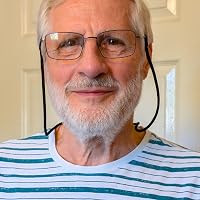
James Ephraim Lovelock, CH, CBE, FRS, is an independent scientist, author, researcher, environmentalist, and futurist who lives in Devon, England. He is known for proposing the Gaia hypothesis, in which he postulates that the Earth functions as a self-regulating system.
Healing Gaia is a great book. Despite its 1991 copyright, it is highly relevant today. The book uses the Gaia theory. Gaia’s theory proposes that Earth is a self-regulated superorganism, which James Lovelock proposed. Although some have laughed at it, it has proven to be an accurate and valuable Theory. With Gaia, Earth is an evolving system made up of all living things that co-evolved with the surface environment, the oceans, and crustal rock. How else could it have happened?
He notes that we are part of the Gaia system. However, we should be considered pathogens or neoplasms to Earth or Gaia. The end of this situation is the destruction of the host, destruction of the invader, chronic infection, or symbiosis. Symbiosis would be best because it would be a lasting, mutually beneficial relationship where we live in harmony with the Earth and all its other living organisms.
His suggestion is simple, regulate cows, cars, and chainsaws. As he notes many times, agriculture and raising cattle for food have been the most destructive force to Gaia. In essence, the food industry captures all parts. Chainsaws are used to destroy forests, which amounts to habitat destruction, for cattle to graze. Then cars or other forms of transportation burn fossil fuels to distribute that food. This is likely why he cites agriculture as the most destructive force to Gaia. As he documents, it is not just the direct harm caused by agricultural activities but how those efforts blunt Gaia’s ability to regulate itself with its trees, lands, and water.
Throughout the book, he provides simple, straightforward science, specifically how chemistry works, for the whole Earth system to become a self-regulating organism. It is very powerful. Interestingly, in reading Harrarri’s Sapiens, he notes that the combination of the religious and agricultural revolution changed Homo sapiens. He notes that before these 2 movements, people were animists and treated all living organisms as equal partners. However, after the agricultural revolution, animals and plants became property and were treated differently. It seems Lovelock is documenting that animists were more attuned to how our world works.
He suggests the current state of the science for healing Gaia is now akin to how medicine was for humans prior to the scientific revolution and antibiotics. With that understanding, he recommends regulating cars, cattle, and chainsaws. He indicates following this prescription can help develop symbiosis between humans and Earth, Gaia.
This is Lovelock's third book on his "Gaia" hypothesis, that the earth functions in key ways as a sort of living thing, and that the non-organic and organic parts of the earth evolve together in ways that allow for existing life to have regulatory effects on the earth.
This one is published in the early 1990s, not long after his second book Ages of Gaia, which I would recommend over Gaia: The Practical Science of Planetary Medicine. My low rating is not so much that I find the hypothesis too implausible - in fact, Lovelock I thought made a pretty good case in Ages - but that there is very little new here and I am not entirely sure what is justifying this book.
It is full of splashy diagrams and illustrations, which are not present in his previous work. As you read it, you will get the definite feel of a college textbook for a 100 level science course. But on the whole, these illustrations didn't improve my understanding of the thesis and almost all the material is already covered previously.
This would be fine I think if you were looking for a primer on Gaia, but if you already have a basic understanding of the idea, you can skip this one.
“I speak as the representative, the shop steward, of the bacteria and the less attractive forms of life who have few others to speak for them. My constituency is all life other than humans” p. 9, Introduction
- calls for a planetary medicine - hypochondria about the ‘doom’ of the planet - planet as illness - Gaia as a self-regulating system, like a thermostat - works with biologist Lynn Margulis
“In truth, real science is riddled with metaphor” p. 11
A well put together written & graphic/illustrated book explaining all the earth processes in unison from the perspective of a physician looking at its patient - planet earth.
Gaia - the self regulating planet. page 11. Gaia is the name of the Earth (name given by author) seen as a single physiological system, an entity that is alive at least to the extent that, like other living organisms, its chemistry and temperature are self-regulated at a state favourable for its inhabitants. (Not just humans, all it's inhabitants.)
Most Important Chapter: Chapter 6 Metabolism and Planetary Biochemistry pg 107 2nd Most Important: Chapter 4 Epigenesis (Birth of Gaia) pg 73
For me to remember: The Sulpher Cycle. pg 123. Marine algae die or are eaten produce DMS(aq) to DMS (gas). Onshore breezes carry the DMS inland where atmosphericic gases decompose it into a non-sea salt sulphate, NSS-SO2-4 aerosol comprised of sulphate and methane sulphonate. Deposited on ground, thereby enhancing the growth of land plants and also increasing the rate of rock weathering. The increase flow of nutrients to the oceans is of obvious benefit to marine organisms. Weathering releases more nutrients in the sea, SO2-4 taken up by marine algae. start the cycle over again. The sulpher cycle is perceived as both beneficial to both land and sea based ecosystems. Also pg 126 Climate Feedback Loop Dimethyl Sulphide (DMS) pg123 - showed that marine organisms emit vast quantities of DMS, particularly over "Desert" areas of the open oceans far away from the continetal shelves. .. that the rapid oxidation of DMS in the air over the ocean to form sulphuric acid droplets could provide the nuclei that are needed for the condensation of water vapours to form clouds....The oceans cover 2/3 of the earths surface, and anything that affects cloud cover over these could significantly affect global climate. Cloud-algae link. ... Betains
coccolithophores: marine algae that make their shells from calcim carbonate
I found this incredibly inspiring and very interesting. I was a bit skeptical at first but after reading the whole idea makes PERFECT sense. This is an old book and I am aware there has been revised versions and more research carried out, but the principle is sound. This book is written in a manner that is easy to read and follow but the science is also relatively convincing.
It's enlightened me a little and I like to think it provides just as much hope as a warning for climate change and how we look after the earth.
I shall have to read some of his later books to see if I'm right in believing his theory provides hope (although this doesn't seem promising as one is titled "The Revenge of Gaia" whilst a later book is called "The Vanishing Face of Gaia: A Final Warning").
I think that was probably my edition, which is so heavily illustrated and diagrammed - it felt like a 2nd year Geography textbook, I found the illustrations distracting and took my mind off the gist of the book - also, maybe, I knew too much to be excited. The theory is very familiar to me, I was hoping for fresh insights but in a book as old as this one, that was probably overly optimistic.
If you're totally new to the concept of Gaia; if the Earth and its cycles are unknown to you, this is a perfect primer. If you're already aware of all the above, you probably need something more challenging.
If only everyone would read this book, they would have a better understanding of the complexity, interaction and interrelation of life and the planet. We might then stand a chance of keeping this small world safe for our children.
that you can warm the earths atmosphere through the use of the chlorofluorocarbons contained within spray paints, etc. he later added a note that this is not a good idea, but it is plausible.
Some interesting points about the Gaia Hypothesis and how the Earth could be cured, I have a different approach myself, but if you are an environmentalist it is worth checking out.