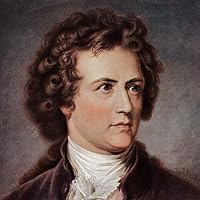
The writings collected here reflect the Madison who emerges from the best scholarship of the last thirty years--scholarship to which Ralph Ketcham, as editor of The Papers of James Madison and in many other ways, has made stunning contributions. Ketcham's Introduction, a brief chronology, the text of the Constitution, and an index further distinguish this collection.
James Madison, Jr. was an American politician and the fourth President of the United States (1809–1817), and one of the Founding Fathers of the United States. Madison was the last founding father to die. Considered to be the "Father of the Constitution", he was the principal author of the document. In 1788, he wrote over a third of the Federalist Papers, still the most influential commentary on the Constitution. As a leader in the first Congresses, he drafted many basic laws and was responsible for the first ten amendments to the Constitution (said to be based on the Virginia Declaration of Rights), and thus is also known as the "Father of the Bill of Rights". As a political theorist, Madison's most distinctive belief was that the new republic needed checks and balances to limit the powers of special interests, which Madison called factions. He believed very strongly that the new nation should fight against aristocracy and corruption and was deeply committed to creating mechanisms that would ensure republicanism in the United States.
As leader in the House of Representatives, Madison worked closely with President George Washington to organize the new federal government. Breaking with Treasury Secretary Alexander Hamilton in 1791, Madison and Thomas Jefferson organized what they called the republican party (later called the Democratic-Republican Party) in opposition to key policies of the Federalists, especially the national bank and the Jay Treaty. He secretly co-authored, along with Thomas Jefferson, the Kentucky and Virginia Resolutions in 1798 to protest the Alien and Sedition Acts.
As Jefferson's Secretary of State (1801-1809), Madison supervised the Louisiana Purchase, doubling the nation's size, and sponsored the ill-fated Embargo Act of 1807. As president, he led the nation into the War of 1812 against Great Britain in order to protect the United States' economic rights. That conflict began poorly as Americans suffered defeat after defeat by smaller forces, but ended on a high note in 1815, with the Treaty of Ghent, after which a new spirit of nationalism swept the country. During and after the war, Madison reversed many of his positions. By 1815, he supported the creation of the second National Bank, a strong military, and a high tariff to protect the new factories opened during the war.
A very good book, mostly because the author, James Madison, was an amazing intellect. I gained an appreciation for the struggles to balance so many competing demands of power in government. His commitment to religious freedom was rooted in the spirit of democracy, seeing that as the best course for the nation to thrive. A very good introduction to his writings and life as well.
The Selected Writings of James Madison gathers the work of a mind unusually disciplined by the problem of political permanence. Madison’s greatness lies in his refusal to treat liberty as a self-executing principle. He believed in self-government too seriously to sentimentalize the self. For him, republican government was an art of arrangement: faction enlarged until it could no longer easily tyrannize, ambition set against ambition, conscience placed beyond the magistrate’s reach, public opinion honored as sovereign yet watched as a force capable of fever.
The collection is most compelling when it lets us see Madison thinking at the seam where principle must become structure. His prose is seldom ornamental, yet its plainness has pressure. He qualifies because looseness would falsify the matter; he distinguishes because liberty itself depends upon discriminations—between power and right, zeal and conscience, majority will and public justice, popular authority and institutional appetite. At his best, the sentence performs the constitutional labor it describes: narrowing, balancing, reserving, counterpoising. What first appears dry gradually reveals itself as compression. The surface is spare because the intelligence beneath it is crowded with consequence.
Ketcham’s curation gives this intelligence proportion. The familiar Madison remains—the analyst of faction, the theorist of extended republicanism, the author of constitutional counterweights—but the selection also restores the broader moral and political range: Madison as defender of religious liberty, student of public opinion, critic of consolidation, and statesman alert to the slow exhaustion of forms once their animating habits have thinned. The edition’s value lies precisely here. It prevents Madison from becoming a handful of famous propositions and returns him to us as a mind working across pressure, contingency, and principle.
What emerges is no marble Founder, but a vigilant anatomist of republican peril. Madison saw that freedom’s most insidious threats often arise from within its own authorized energies: the citizen’s ardor, the legislature’s appetite, the majority’s confidence, the faction’s moral certainty, the officeholder’s incremental drift toward dominion. These are not corruptions imported into republican life. They are republican life under insufficient discipline. The task of constitutional government is to convert them into order without extinguishing the liberty that gives them motion.
Read slowly, then. Listen for the hinge that clicks before the sentence closes. A republic, Madison teaches, depends upon habits more fragile than its monuments and principles more exacting than its slogans. Constitutional language can survive the decline of constitutional discipline; institutions can remain visible after their inward restraints have weakened. Liberty is endangered not only by enemies who hate it, but by impulses that speak in its name. The measure of those impulses is Madison’s great subject. The urgency of that measure is still ours.