

What do you think?
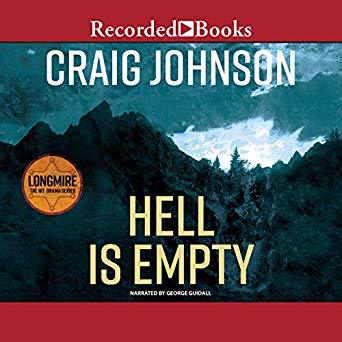
Walt Longmire #7
Hell Is Empty
Wyoming's favorite sheriff braves a frozen inferno as he races to capture an escaped murderer.
Well-read and world-weary, Sheriff Walt Longmire has been maintaing order in Wyoming's Absaroka County for more than thirty years, but in this riveting seventh outing, he is pushed to his limits. Raynaud Shade, an adopted Crow Indian, has just confessed to murdering a boy ten years ago and burying him deep within the Big Horn Mountains. After transporting Shade and a group of other convicted murderers through a snowstorm, Walt is informed by the FBI that the body is buried in his jurisdiction-and the victim's name is White Buffalo. Guided only by Indian mysticism and a battered paperback of Dante's Inferno, Walt pursues Shade and his fellow escapees into the icy hell of the Cloud Peak Wilderness Area, cheating death to ensure that justice-both civil and spiritual-is served.
Well-read and world-weary, Sheriff Walt Longmire has been maintaing order in Wyoming's Absaroka County for more than thirty years, but in this riveting seventh outing, he is pushed to his limits. Raynaud Shade, an adopted Crow Indian, has just confessed to murdering a boy ten years ago and burying him deep within the Big Horn Mountains. After transporting Shade and a group of other convicted murderers through a snowstorm, Walt is informed by the FBI that the body is buried in his jurisdiction-and the victim's name is White Buffalo. Guided only by Indian mysticism and a battered paperback of Dante's Inferno, Walt pursues Shade and his fellow escapees into the icy hell of the Cloud Peak Wilderness Area, cheating death to ensure that justice-both civil and spiritual-is served.
Audiobook
First published May 14, 2011
About the author
Craig Johnson
93 books5,099 followersLibrarian Note: There is more than one author in the Goodreads database with this name.
Craig Johnson is the New York Times bestselling author of the Longmire mysteries, the basis for the hit Netflix original series Longmire. He is the recipient of the Western Writers of America’s spur awards and the Owen Wister Award, the Will Rogers Medallion and Lariat Award, the Mountain & Plains Independent Booksellers Association’s Reading the West Book Award for fiction, as well as the Bouchercon 2025 Lifetime Achievement Award. His novella Spirit of Steamboat was the first One Book Wyoming selection. He lives in Ucross, Wyoming, population 26.
source: Amazon
Craig Johnson is the New York Times bestselling author of the Longmire mysteries, the basis for the hit Netflix original series Longmire. He is the recipient of the Western Writers of America’s spur awards and the Owen Wister Award, the Will Rogers Medallion and Lariat Award, the Mountain & Plains Independent Booksellers Association’s Reading the West Book Award for fiction, as well as the Bouchercon 2025 Lifetime Achievement Award. His novella Spirit of Steamboat was the first One Book Wyoming selection. He lives in Ucross, Wyoming, population 26.
source: Amazon
Ratings & Reviews
Friends & Following
Create a free account to discover what your friends think of this book!
Community Reviews
Displaying 1 - 30 of 1,524 reviews

December 21, 2014
Current self says, "Self, don't read this book. Skip it and go to the next Walt Longmire."
Past self says, "Self, it really bothers me to read a book out of order. What if I miss something? I have to complete them."
Current self: "Stop being so obsessive compulsive."
Past self: "I breathe, therefore I am."
Current self: "Just for that, I'm gonna slap you into next week."
Johnson tried, he really did. But there's no mystery here, only Walt chasing down escaped prisoners in the middle of a Wyoming snowstorm in May. One of the prisoners--the important one--is a sociopath who has played a trump card of identifying the burial site of a murdered Native American boy. The prisoners escape shortly after Walt drops them off with the Feds, but Walt gets an inkling something ain't right, and he's on their tail in two shakes of a dog's wet fur. So despite ice-slick roads, snowdrifts and fallen trees, Walt tracks them down to a lodge and then up into the Big Horn Mountain. Along the way he has a mystical journey, encounters lions, tigers and bears (oh my!) and Virgil White Buffalo.
Forget the plot. There isn't much; it's a straight-out Fugitive, with a mysticism bonus. I could forgive the wild coincidences and forced scenarios, but what I can't forgive is Walt's feeble reasons for the chase in the first place: "it's my job." No, it isn't. Secondary reasons are flimsy (perhaps there are hostages, although they may be helping the fugitives) and flat-out stupid, particularly in light of prior life-and-death experiences when Walt was motivated by family and love. There's not enough pretense to hang my hat on here.
And the storytelling--good heavens. It stumbles like a drunk cowboy trying to find the gents' room, bouncing off patrons and doorways, spilling beer on the way. It vacillates from a whole lot of telling to forced metaphors about journeys to scenes that sound like Jack London on a bender. We learn the prisoners Longmire is transporting to the feds are awful people through dialogue lifted from Law & Order. Later there's a dream sequence/flashback of the murdered child as he was being abducted (which show is that? Criminal Intent? I can't keep all these devices straight). We have Deputy Santiago reading literature to broaden his mind or something, and while feeding the prisoners at the diner (!) he's reading (!) Dante's Inferno, (I find reading Dante less surprising then stopping at a restaurant to give handcuffed prisoners a meal and reading a book while one does it) which will conveniently be placed in the survival pack Santiago gives Walt. Then we have long landscape-gazing sequences where Walt climbs mountains, travels across icy lakes and gazes at beetle-destroyed pines. Foreshadowing isn't so much heavy as it is crushing as it compares Walt's journey to Dante's and warns him about traitors, death and etc. (although I don't believe sin was discussed).
The ending proved fairly unsatisfying, particularly as Walt persists in failing to discuss the spirits with best friend and Native warrior Henry, and as he persists in failing to acknowledge their influence on his life. I did like Virgil, his stories, and the mountain lion, so I guess that's something. I was also glad for Hector the prisoner and his unselfconscious, sporadic phone calls providing a few laughs, sadly out of tone with the rest of the story.
My favorite paragraph in the book came after Virgil's story about the Long Otters eating the young Thunderbirds and the Crow warrior who helped them:
"I nodded my head. 'And the moral of the story is?'
He raised an eyebrow, and it was as if the dent in his forehead was looking to dig deeper. 'What is it with you white people and morals? Maybe it's just a story about what happened.'"
Now there was a story.
Past self says, "Self, it really bothers me to read a book out of order. What if I miss something? I have to complete them."
Current self: "Stop being so obsessive compulsive."
Past self: "I breathe, therefore I am."
Current self: "Just for that, I'm gonna slap you into next week."
Johnson tried, he really did. But there's no mystery here, only Walt chasing down escaped prisoners in the middle of a Wyoming snowstorm in May. One of the prisoners--the important one--is a sociopath who has played a trump card of identifying the burial site of a murdered Native American boy. The prisoners escape shortly after Walt drops them off with the Feds, but Walt gets an inkling something ain't right, and he's on their tail in two shakes of a dog's wet fur. So despite ice-slick roads, snowdrifts and fallen trees, Walt tracks them down to a lodge and then up into the Big Horn Mountain. Along the way he has a mystical journey, encounters lions, tigers and bears (oh my!) and Virgil White Buffalo.
Forget the plot. There isn't much; it's a straight-out Fugitive, with a mysticism bonus. I could forgive the wild coincidences and forced scenarios, but what I can't forgive is Walt's feeble reasons for the chase in the first place: "it's my job." No, it isn't. Secondary reasons are flimsy (perhaps there are hostages, although they may be helping the fugitives) and flat-out stupid, particularly in light of prior life-and-death experiences when Walt was motivated by family and love. There's not enough pretense to hang my hat on here.
And the storytelling--good heavens. It stumbles like a drunk cowboy trying to find the gents' room, bouncing off patrons and doorways, spilling beer on the way. It vacillates from a whole lot of telling to forced metaphors about journeys to scenes that sound like Jack London on a bender. We learn the prisoners Longmire is transporting to the feds are awful people through dialogue lifted from Law & Order. Later there's a dream sequence/flashback of the murdered child as he was being abducted (which show is that? Criminal Intent? I can't keep all these devices straight). We have Deputy Santiago reading literature to broaden his mind or something, and while feeding the prisoners at the diner (!) he's reading (!) Dante's Inferno, (I find reading Dante less surprising then stopping at a restaurant to give handcuffed prisoners a meal and reading a book while one does it) which will conveniently be placed in the survival pack Santiago gives Walt. Then we have long landscape-gazing sequences where Walt climbs mountains, travels across icy lakes and gazes at beetle-destroyed pines. Foreshadowing isn't so much heavy as it is crushing as it compares Walt's journey to Dante's and warns him about traitors, death and etc. (although I don't believe sin was discussed).
The ending proved fairly unsatisfying, particularly as Walt persists in failing to discuss the spirits with best friend and Native warrior Henry, and as he persists in failing to acknowledge their influence on his life. I did like Virgil, his stories, and the mountain lion, so I guess that's something. I was also glad for Hector the prisoner and his unselfconscious, sporadic phone calls providing a few laughs, sadly out of tone with the rest of the story.
My favorite paragraph in the book came after Virgil's story about the Long Otters eating the young Thunderbirds and the Crow warrior who helped them:
"I nodded my head. 'And the moral of the story is?'
He raised an eyebrow, and it was as if the dent in his forehead was looking to dig deeper. 'What is it with you white people and morals? Maybe it's just a story about what happened.'"
Now there was a story.

November 24, 2015
The Hook - Needed an afternoon with a friend and knew Longmire would not disappoint.
The Line Walt borrow this quotation, attributing it to his late wife:
”Cigarettes are killers that travel in packs.”
Mary S. Ott, Bartlett's Unfamiliar Quotations (Leonard Louis Levinson), Source: Bloomsbury book of quotations.
The Sinker Hell Is Empty is truly a superior blend of fact, Indian lore, and literature. If you haven’t read this series treat yourself. Begin at the beginning The Walt Longmire Series.
The Line Walt borrow this quotation, attributing it to his late wife:
”Cigarettes are killers that travel in packs.”
Mary S. Ott, Bartlett's Unfamiliar Quotations (Leonard Louis Levinson), Source: Bloomsbury book of quotations.
The Sinker Hell Is Empty is truly a superior blend of fact, Indian lore, and literature. If you haven’t read this series treat yourself. Begin at the beginning The Walt Longmire Series.

August 2, 2014
One reason I am so fond of the Walt Longmire series is that I don't realy know what to expect in terms of plot from any new issue I pick up. The first book was about chasing a serial killer, the second about investigating a murder 40 years old, the next moved to Philadelphia from some big city action, another did some extended flashback to the Vietnam War or dealt with crime in a ghost town. Some volumes are built on teamwork, others on solitary efforts by Sheriff Walt. Some are based in Absaroka County, others go visiting neighboring cities, or move even farther afield. As an opposite example, I sometimes feel like every Dick Francis mystery I read is a repetition of the first, with only cosmetic changes in the names of characters and their primary occupation, the basic plot remaining unchanged.
With this introduction over, I think I would sum up Hell Is Empty as the largely succesful attempt on the part of Craig Johnson to write a Die Hard script with Walt Longmire cast as the unstoppable John McClane and with the Bighorn Mountains as the closed environment in which the hero and his deranged killer archenemy chase each other (*see endnote). In order to give the text a more highbrow literary flavor, the novel also makes frequent references to Dante's Inferno, mirroring some of the spiritual struggles Walt must face as his physical body fights an unseasonal blizzard and volleys of bullets from his adversaries. Here's an extract I would pick for the back cover blurb. It's a phone conversation between Walt and his dispatcher Ruby:
I dialed 911.
"Absaroka County Sheriff's Department."
"I'd like to report a storm in Maybruary."
"Where are you!?"
"Nestled in the heart of the Bighorn Mountains"
"Where exactly?"
"Deer Haven Lodge at the cutoff to West Tensleep Lake."
"What are you doing there?"
"Hell is empty, and all the devils are here."
The devils Walt/McLane is chasing are group of escaped convicts led by a halfblood Indian from Canada wanted for multiple homicides. The federal government is involved at some point, also a number of hostages, but the reason the leader of the pack is going straight for the highest peak in the mountains in the middle of a late spring snowstorm is left too vague even for my easily suspended disbelief. The connection seems to be the murder of relative of a character from a previous novel, whose name fits right into the Dante story angle:
"Who is Virgil?"
"He's the Crow Indian who was with me. I don't suppose you've seen a seven-and-a-half-foot man wearing a grizzly-bear headress and bear cloak roaming around here anyplace?"
With Virgil and his native American ancestry we come back to a theme introduced in the first book in the series (Best Served Cold) : Walt has a special affinity for communicating with the ghosts of long dead Indians. It sounds tacy and inappropriate in a high adrenaline chase with high powered guns, motorized snowplugs and even some military armoured carriers, but Craig Johnson makes it work, just like he did in the first book.
Another returning device is another of those powerful and ancient .45-70 Sharps rifles that have been used agains General Custer's cavalry at Little Big Rock. Every Longmire book has a reference to firearms at some point in the text, and this one could be no exception. On the contrary, 'Hell' may be a candidate for the highest number of shots fired and the highest bodycount. Absaroka County is once again determined to climb up in the national violent crime lists.
- Best thing for me in the present novel : Nature unleashed, more powerful than guns and modern vehicles, the main adversary to Walt as he fights hypotermia, exhaustion, flash fires in the middle of a snow storm (!!???!!), lack of air and visibility. The presence of Virgil, the Crow Indian becomes partially explainable to those who must argue against the supernatural as the ramblings of an overextended brain who hallucinates freely based on past events and stanzas read from a battered copy of the Inferno.
"Maybe it was like Virgil's statements about the Inferno, that all horrors are horrors of the mind. We summon up the devils we need to punish us for the things that we've done."
.. and in another place another reason why the Bighorns ressemble Hell:
Most thought that Dante's Hell was a flaming, superheated place, which was true for part of the Florentine's journey, but in the Inferno, the real hell was an arctic, glaciated, and windblown place far from the warmth of God.
- My least favorite aspects: I didn't realy buy into the psychopatic nature of the main adversary and his reasoning seemed too contrived .
- A second grumble: product placement. I have noticed before how Johnson is always careful to mention his sponsors, but in this latest novel I believe it was made less elegantly than usual. For example I like Cordura fabric for my backsack, and my favorite jacket is a NorthFace GoreTex, and I liked to find them mentioned here, but it made me feel cheap and used with the unnecessary repetition of brand names. A minor point for sure, but liable to pull me out of the story.
Overall though, I believe Hell to be one of the best Longmire books in terms of action scenes, capturing the feel of the place and introducing more serious undertones behind the immediate thrills of the chase. I look forward to continuing with the series.
(*endnote) The film's title and its story of a lone hero battling a multitude of single-minded opponents in an isolated setting also became a common descriptor for later action films: "Die Hard on a _____" became a simple and easy way to define the plot of many action films that came in its wake. For example, the 1992 film Under Siege was referred to as "Die Hard on a battleship", the 1992 film Passenger 57 was nicknamed "Die Hard on a plane", the 1994 film Speed was called "Die Hard on a bus", the 1996 film The Rock was dubbed "Die Hard on an island". the 2013 film Olympus Has Fallen was dubbed "Die Hard in The White House, and even television shows, such as the Star Trek: The Next Generation episode Starship Mine was described as "Die Hard in space" from Wikipedia
One final word of praise for the way the author engages with his fans and makes some interactive proposals in the text. The Dante book appeared in the story as one of the books recommended by one of his Absaroka friends to Deputy Saizarbitoria when he confessed that he doesn't much care for books or see the sense in spending a lot of time reading. The choices reflect not only the preferences of the giver, but also take into the equation the personality of the young Basque officer:
- From Walt: The Grapes of Wrath, Les Miserables, To Kill A Mockinbird, Moby-Dick, The Ox-Bow Incident, A Tale of Two Cities, The Adventures of Huckleberry Finn, The Three Musketeers, Don Quixote, The Complete Works of William Shakespeare, anything by Anton Chekhov.
- From Henry: Bury My Heart at Wounded Knee, Cheyenne Autumn, War and Peace, The Things They Carried, Catch-22, The Sun Also Rises, The Blessing Way, Beyond Good and Evil, The Teachings of Don Juan, Heart of Darkness, The Human Comedy, The Art of War
From Vic: Justine, Concrete Charlie, Medea, The Kama Sutra, Henry and June, The Onion Field, Fear and Loathing in Las Vegas, Zorba the Greek, Madame Bovary, Richie Ashburn's Phillies Trivia
From Ruby: The Holy Bible (The New Testament), The Pilgrim's Progress, Inferno, Paradise Lost, My Antonia, The Scarlet Letter, Walden, Poems of Emily Dickinson, My Friend Flicka, Our Town
From Dorothy: The Gastronomical Me, The French Chef Cookbook, Last Suppers: Famous Final Meals From Death Row, The Bonfire of Vanities, The Scarlet Pimpernel, Something Fresh, The Sound and The Fury, The Maltese Falcon, Pride and Prejudice, Brideshead Revisited.
From Lucian: Thirty Seconds Over Tokyo, Band of Brothers, All Quiet On The Western Front, The Virginian, The Basque History of the World, Hondo, Sackett, The Man Who Shot Liberty Valance, Bobby Fisher: My 60 Memorable Games, The Rise and Fall of the Third Reich, Quartered Safe Out Here
From Ferg: Riders of the Purple Sage, Kiss Me Deadly, Lonesome Dove, White Fang, A River Runs Through It, Kip Carey's Official Wyoming Fishing Guide
I really like the postscript listing of these books, and I decided to try my hand at this game, looking for something to do with mountains, outdoors and great prose. And for titles not already mentioned by Johnson. Here's what I came up with:
The Ice Palace (Tarjei Vesaas), The Book of Ebenezer le Page (G B Edwards), Butcher's Crossing (John Edward Williams), Trustee From the Toolroom (Nevil Shute), The Prince of Tides (Pat Conroy), High Fidelity (Nick Hornby), The Shipping News ( Annie Proulx), Far Far The Mountain Peak (John Masters), Himalaya Tigers (Fritz Rudolph), an Ansel Adams photo album
What would you recommend to Sancho Saizarbitoria to get him out of his literary funk?

May 17, 2021
I never paid attention to The Inferno. I will read it. I love the author connected it with the story. This book is a series reflection of choices a person makes. I will read again when I buy this down the road.
My second favorite book of this series.
Not sure when in April I finished.
I truly savor the questions at the end.
🇺🇸🦋🐼💀
My second favorite book of this series.
Not sure when in April I finished.
I truly savor the questions at the end.
🇺🇸🦋🐼💀

August 26, 2017
As I continue my Longmire series read, full disclosure requires that I openly admit I am a devoted fan of the Longmire television show (on A/E and now Netflix) and have enjoyed reading the previous books in the Longmire book series that inspired that show even more. With that said, I am still doing my best to provide objective and an honest review.
“Hell is Empty” is the seventh book in the “Longmire” mystery series, continuing the fictional adventures of Walt Longmire, Sheriff of Absaroka County, Wyoming; his daughter, Cady, the world’s greatest lawyer; his best friend, Henry Standing Bear; his loyal and outspoken deputy, Vic Moretti; his loyal and less outspoken deputy, Santiago Saizarbitoria; and Dog, his faithful animal companion. is offstage again during this adventure, planning her upcoming wedding to Vic’s brother.
One of the strengths of this series is that the author doesn’t repeat himself with his plotlines. Each story is told differently and in creative ways that grow and develop Walt’s character and view on what’s important in life. This outing marks a distinctively turn from the previous adventures. Several of his book titles come from lines of classic books and plays, and this time Johnson uses Dante’s inferno to draw parallels to Walt’s own personal vision quest of personal discovery.
The story begins with Walt and his deputy, Sancho Saizarbitoria, transporting several prisoners, including Rynaud Shade, an adopted Crow Indian and a dangerous sociopath. Rynaud has confessed to murdering a 10-year old boy and burying him in the nearby Bighorn Mountain range. What starts out as a handoff at the murder site to federal officials turns into a violent escape by Rynaud and the prisoners, leaving Longmire mostly on his own to track them down in an oncoming winter blizzard. When Walt discovers the identity of the dead boy, his manhunt turns personal in seeking justice.
This is the most physically challenging event that Walt has faced, and Johnson uses the locations to make you feel as if you are struggling right beside Walt in his trek, one step at a time. Although the usual cast of Henry, Vic, and Cady are only in a few scenes, a couple of secondary characters make joyful and sad reappearances. The focus is on Walt’s physical and emotional quest to capture Rynaud and provide justice for the boy he killed.
What makes this outing so strong is how well Johnson uses Indian mysticism and parallels to Dante’s Inferno to make Longmire’s journey remarkable and personal to the reader. In the first book, "The Cold Dish", Walt had a special mystical experience in the same mountain area. Johnson uses that to build on in this book along with several well delivered allegories to Dante’s tour of hell where the lowest level is not fire, but rather an icy cold chamber for traitors. I found myself having to go back and reread some parts again to make sure I understood what was happening. I will not ruin what happens for those who haven’t read this book yet, but it is special, leaving the reader to ponder what is real, what is not real, and what is both.
Seven books into the Longmire series, I am surprised at how well he finds different ways to tell stories that link so well to his characters and their challenges in life and philosophy. If Longmire lives long enough (because these books are killing him physically) it will be an enjoyable journey. One of my favorite moments in this book involves the information that Walt is given about his daughter and the ensuing conversation it sparks. For me, it was a classical moment between a father and daughter who share a bond of love for one another.
Overall, “Hell is Empty” shares a personal physical and emotional journey about family and love. It is one of the best in the series.
“Hell is Empty” is the seventh book in the “Longmire” mystery series, continuing the fictional adventures of Walt Longmire, Sheriff of Absaroka County, Wyoming; his daughter, Cady, the world’s greatest lawyer; his best friend, Henry Standing Bear; his loyal and outspoken deputy, Vic Moretti; his loyal and less outspoken deputy, Santiago Saizarbitoria; and Dog, his faithful animal companion. is offstage again during this adventure, planning her upcoming wedding to Vic’s brother.
One of the strengths of this series is that the author doesn’t repeat himself with his plotlines. Each story is told differently and in creative ways that grow and develop Walt’s character and view on what’s important in life. This outing marks a distinctively turn from the previous adventures. Several of his book titles come from lines of classic books and plays, and this time Johnson uses Dante’s inferno to draw parallels to Walt’s own personal vision quest of personal discovery.
The story begins with Walt and his deputy, Sancho Saizarbitoria, transporting several prisoners, including Rynaud Shade, an adopted Crow Indian and a dangerous sociopath. Rynaud has confessed to murdering a 10-year old boy and burying him in the nearby Bighorn Mountain range. What starts out as a handoff at the murder site to federal officials turns into a violent escape by Rynaud and the prisoners, leaving Longmire mostly on his own to track them down in an oncoming winter blizzard. When Walt discovers the identity of the dead boy, his manhunt turns personal in seeking justice.
This is the most physically challenging event that Walt has faced, and Johnson uses the locations to make you feel as if you are struggling right beside Walt in his trek, one step at a time. Although the usual cast of Henry, Vic, and Cady are only in a few scenes, a couple of secondary characters make joyful and sad reappearances. The focus is on Walt’s physical and emotional quest to capture Rynaud and provide justice for the boy he killed.
What makes this outing so strong is how well Johnson uses Indian mysticism and parallels to Dante’s Inferno to make Longmire’s journey remarkable and personal to the reader. In the first book, "The Cold Dish", Walt had a special mystical experience in the same mountain area. Johnson uses that to build on in this book along with several well delivered allegories to Dante’s tour of hell where the lowest level is not fire, but rather an icy cold chamber for traitors. I found myself having to go back and reread some parts again to make sure I understood what was happening. I will not ruin what happens for those who haven’t read this book yet, but it is special, leaving the reader to ponder what is real, what is not real, and what is both.
Seven books into the Longmire series, I am surprised at how well he finds different ways to tell stories that link so well to his characters and their challenges in life and philosophy. If Longmire lives long enough (because these books are killing him physically) it will be an enjoyable journey. One of my favorite moments in this book involves the information that Walt is given about his daughter and the ensuing conversation it sparks. For me, it was a classical moment between a father and daughter who share a bond of love for one another.
Overall, “Hell is Empty” shares a personal physical and emotional journey about family and love. It is one of the best in the series.

July 22, 2015
Abandon Hope all ye who enter here: Much sarcasm and spoilers ensue.
After all that romance, I needed little testosterone. Just a dab. Where can a girl go for good old fashioned machismo? Not Jack Reacher. That will leave hair on a girl's chest. Sweet, self-deprecating Walt Longmire patrolling the wilds of Wyoming seemed just the thing.
Unfortunately, this novel was heavy on psychology and short on mystery. Not enough of the Walt who I love or the relationship he has with the secondary characters. The chivalrous lawman becomes a parody of himself as he plunges on despite the danger. Some might call it intrepid, perhaps even heroic. Mostly it looked like this:
Sancho: Hey Walt, maybe you shouldn't go after those fugitives in the mountains with a blizzard coming.
Walt: I must go. After all, my job stands for truth, justice, and the Walt Longmire way.
*snow, snow, snow, snow, snow, snow*
Wounded Deputy Groedner: Hey Walt, those guys are dangerous and even more snow is coming. Maybe you shouldn't go after them.
Walt: I must go. After all, my job stands for truth, justice, and the Walt Longmire way.
*snow, snow, snow, hungry mountain lion, snow, snow, snow*
Wounded Fugitive and Drunk Cabin Owner: Hey Walt, it would be crazy to go after that fugitive. He's killed tons of peeps.
Walt: I must go. After all, my job stands for truth, justice, and the Walt Longmire way.
*snow, snow, warmer clothes, some booze, Dante's Inferno, gunshots, bear snow, snow*
Henry, Joe, Vic--Walt's Collective Back Up: Hey Walt, why don't you wait for us.
Walt: I must go. After all, my job stands for truth, justice, and the Walt Longmire way.
*snow, snow, snow, gunshots, forest fire, near drowning, snow, snow, snow*
Virgil White Buffalo: Hey Walt, you've almost died 3 times. Maybe you should wait for back up.
Walt: I must go. After all, my job stands for truth, justice, and the Walt Longmire way.
*snow, snow, gunshots, more dead fugitives, snow, hallucinations of Indians, snow, snow*
Killer: Hey Walt, you're getting weak and I could kill you easy peasy. Maybe you should give up.
Walt: I must go. After all, my job stands for truth, justice, and the Walt Longmire way.
*snow, snow, snow, gunshots, gunshots, hallucinations of dead indians, snow, snow snow*
Seriously. SERIOUSLY. SER.IOUS.LY. Seriously.
Are men that stupid?
Will I go and do foolishly dangerous things now that I've spent 5 hours with Walt Longmire and his foolhardy idealism?
I don't even want to talk about the heavy handed metaphor. It was like having a hand on the back of the neck forcing me to swallow the imagery and allegory. Pun intended.
Oh, and the plot twist will be obvious as hell to anyone who has heard Wall of Voodoo's song, "Camouflage," or who has read any urban legend EVER.
Thank goodness Johnson is, at least, an entertaining writer. I can't even imagine if Laurell K. Hamilton tried to write that.
After all that romance, I needed little testosterone. Just a dab. Where can a girl go for good old fashioned machismo? Not Jack Reacher. That will leave hair on a girl's chest. Sweet, self-deprecating Walt Longmire patrolling the wilds of Wyoming seemed just the thing.
Unfortunately, this novel was heavy on psychology and short on mystery. Not enough of the Walt who I love or the relationship he has with the secondary characters. The chivalrous lawman becomes a parody of himself as he plunges on despite the danger. Some might call it intrepid, perhaps even heroic. Mostly it looked like this:
Sancho: Hey Walt, maybe you shouldn't go after those fugitives in the mountains with a blizzard coming.
Walt: I must go. After all, my job stands for truth, justice, and the Walt Longmire way.
*snow, snow, snow, snow, snow, snow*
Wounded Deputy Groedner: Hey Walt, those guys are dangerous and even more snow is coming. Maybe you shouldn't go after them.
Walt: I must go. After all, my job stands for truth, justice, and the Walt Longmire way.
*snow, snow, snow, hungry mountain lion, snow, snow, snow*
Wounded Fugitive and Drunk Cabin Owner: Hey Walt, it would be crazy to go after that fugitive. He's killed tons of peeps.
Walt: I must go. After all, my job stands for truth, justice, and the Walt Longmire way.
*snow, snow, warmer clothes, some booze, Dante's Inferno, gunshots, bear snow, snow*
Henry, Joe, Vic--Walt's Collective Back Up: Hey Walt, why don't you wait for us.
Walt: I must go. After all, my job stands for truth, justice, and the Walt Longmire way.
*snow, snow, snow, gunshots, forest fire, near drowning, snow, snow, snow*
Virgil White Buffalo: Hey Walt, you've almost died 3 times. Maybe you should wait for back up.
Walt: I must go. After all, my job stands for truth, justice, and the Walt Longmire way.
*snow, snow, gunshots, more dead fugitives, snow, hallucinations of Indians, snow, snow*
Killer: Hey Walt, you're getting weak and I could kill you easy peasy. Maybe you should give up.
Walt: I must go. After all, my job stands for truth, justice, and the Walt Longmire way.
*snow, snow, snow, gunshots, gunshots, hallucinations of dead indians, snow, snow snow*
Seriously. SERIOUSLY. SER.IOUS.LY. Seriously.
Are men that stupid?
Will I go and do foolishly dangerous things now that I've spent 5 hours with Walt Longmire and his foolhardy idealism?
I don't even want to talk about the heavy handed metaphor. It was like having a hand on the back of the neck forcing me to swallow the imagery and allegory. Pun intended.
Oh, and the plot twist will be obvious as hell to anyone who has heard Wall of Voodoo's song, "Camouflage," or who has read any urban legend EVER.
Thank goodness Johnson is, at least, an entertaining writer. I can't even imagine if Laurell K. Hamilton tried to write that.

June 15, 2011
First Sentence: “Didn’t your mother ever tell you not to talk with your mouth full?”
What started as a routine hand-off of prisoners quickly became anything but routine. Sociopath and child-killer Raynaud Shade escapes along with two other prisoners and two FBI hostages into the rugged mountains of Wyoming. Also headed that way is a major spring blizzard. Sheriff Walt Longmire, with a Colt .45, a Sharpe’s rifle, a copy of “Dante’s Inferno”, and Indian mysticism heads into the mountains, and the storm, to save the hostages and bring the killers to justice.
Normally, a book of this caliber prompts a long, detailed review. “Hell is Empty,” however, is so well written and memorable, it’s a book to be read rather than talked about.
The trademarks of Johnson’s writing are very much in evidence. From the first sentence, you are drawn into the characters and the environment. Not only are the white-hat characters interesting and people you’d want on your side, and Walt is a true white-hat character. He is intelligent, imperfectly human and has a drive for justice that is reminiscent of Robert Parker’s Spenser at his best.
Readers new to the series need have no fear of feeling they’ve been dropped in without reference as Johnson quickly and succinctly provides their frame and fleshes them out. But it takes a real skill to create villains who are interesting and multi-dimensional as well. One of Johnson’s most intriguing characters is Virgil White Buffalo. At over 7 feet tall, and the grandfather of the murdered boy, Virgil is a criminal, vessel of Indian mythology and philosopher. Referring to “Dante’s Inferno”, Virgil observes that “All the horrors in this book are the horrors of the mind, and they are the only ones that can truly harm us.”
Evocative descriptions create a very strong, almost painfully so, sense of place. Whether sitting in a café, trying to avoid freezing from a storm or burning in a fire, you are walking along side with Walt, trying to stay alive and, sometimes, looking at death.
Johnson’s writing and dialogue are effective and peppered with wry humor. Walt, in a particularly perilous moment, thinks “I couldn’t die—I had too many women who would kill me.” Just when you think you know where the plot is going, Johnson changes direction and, sometimes, your perceptions of events. What could have been a stereotypical hard-boiled action story, is so much more. The literary references enhance both the story and the characters without ever feeling forced or contrived.
If anyone knows how to tell a story, it’s Craig Johnson, and “Hell is Empty” is one of his best.
HELL IS EMPTY (Pol Proc-Sheriff Walt Longmire-Wyoming-Cont) – Ex
Johnson, Craig – 7th in series
Viking, ©2011, AUP – Hardcover ISBN: 9780670022779
What started as a routine hand-off of prisoners quickly became anything but routine. Sociopath and child-killer Raynaud Shade escapes along with two other prisoners and two FBI hostages into the rugged mountains of Wyoming. Also headed that way is a major spring blizzard. Sheriff Walt Longmire, with a Colt .45, a Sharpe’s rifle, a copy of “Dante’s Inferno”, and Indian mysticism heads into the mountains, and the storm, to save the hostages and bring the killers to justice.
Normally, a book of this caliber prompts a long, detailed review. “Hell is Empty,” however, is so well written and memorable, it’s a book to be read rather than talked about.
The trademarks of Johnson’s writing are very much in evidence. From the first sentence, you are drawn into the characters and the environment. Not only are the white-hat characters interesting and people you’d want on your side, and Walt is a true white-hat character. He is intelligent, imperfectly human and has a drive for justice that is reminiscent of Robert Parker’s Spenser at his best.
Readers new to the series need have no fear of feeling they’ve been dropped in without reference as Johnson quickly and succinctly provides their frame and fleshes them out. But it takes a real skill to create villains who are interesting and multi-dimensional as well. One of Johnson’s most intriguing characters is Virgil White Buffalo. At over 7 feet tall, and the grandfather of the murdered boy, Virgil is a criminal, vessel of Indian mythology and philosopher. Referring to “Dante’s Inferno”, Virgil observes that “All the horrors in this book are the horrors of the mind, and they are the only ones that can truly harm us.”
Evocative descriptions create a very strong, almost painfully so, sense of place. Whether sitting in a café, trying to avoid freezing from a storm or burning in a fire, you are walking along side with Walt, trying to stay alive and, sometimes, looking at death.
Johnson’s writing and dialogue are effective and peppered with wry humor. Walt, in a particularly perilous moment, thinks “I couldn’t die—I had too many women who would kill me.” Just when you think you know where the plot is going, Johnson changes direction and, sometimes, your perceptions of events. What could have been a stereotypical hard-boiled action story, is so much more. The literary references enhance both the story and the characters without ever feeling forced or contrived.
If anyone knows how to tell a story, it’s Craig Johnson, and “Hell is Empty” is one of his best.
HELL IS EMPTY (Pol Proc-Sheriff Walt Longmire-Wyoming-Cont) – Ex
Johnson, Craig – 7th in series
Viking, ©2011, AUP – Hardcover ISBN: 9780670022779

November 8, 2013
The latest in a series about Wyoming sheriff Walt Longmire, this is the first Johnson novel I’ve read, and the first adult mystery I’ve read in quite a while. I’m not sure what attracted me to the book – probably the title, and the premise of following a psychotic killer into the wilderness. Hey, we’ve all been there, right? Normally I’d start a series at the beginning, but I had no trouble following the action. I like Walt Longmire’s character. He’s a widower, a father, an older man who can’t always chase down the crooks like he used to – and yet he treks into the freezing Big Horn Mountains alone rather than waiting for backup to save two hostages who have been abducted by a fugitive prisoner. Walt’s a good man and a good narrator, and although most of this book is Walt adventuring on his own, I can tell he’s got a great cast of supporting characters. Vic, Omar and the Cheyenne Nation (yes, that’s a character) are my favorites. Even characters that were created for this volume alone really pop.
Johnson knows his territory. He writes vividly and lovingly about Wyoming. I’ve never been there, but now I can picture it clearly. This is one of those books that lets you travel in your imagination. There is a fair amount of mysticism in the story – or ‘woo-woo’ if you wish. The book is overtly designed to parallel Dante’s Inferno, right down to the Native American guide Virgil who helps Walt through the mountains. We’re not always sure what Walt is seeing and what he is imagining. Are there spirits at work, or is Walt suffering from his head injuries? These elements didn’t bother me, but it’s not everyone’s cup of tea, so I thought I’d mention it. As for me, I really enjoyed my time with Walt and will definitely be buying the earlier books in Craig Johnson’s series. If you’re a mystery fan, check them out!
Johnson knows his territory. He writes vividly and lovingly about Wyoming. I’ve never been there, but now I can picture it clearly. This is one of those books that lets you travel in your imagination. There is a fair amount of mysticism in the story – or ‘woo-woo’ if you wish. The book is overtly designed to parallel Dante’s Inferno, right down to the Native American guide Virgil who helps Walt through the mountains. We’re not always sure what Walt is seeing and what he is imagining. Are there spirits at work, or is Walt suffering from his head injuries? These elements didn’t bother me, but it’s not everyone’s cup of tea, so I thought I’d mention it. As for me, I really enjoyed my time with Walt and will definitely be buying the earlier books in Craig Johnson’s series. If you’re a mystery fan, check them out!

August 22, 2015
I really enjoyed reading this book and rate it 4.5 out 5 stars. This book 7 in the series, which I started reading after watching the tv series. I have been reading the books in order. The characters are well developed and grow with each book. This book has Walt Longmire, Sheriff of Absaroka county, Wyoming, chasing escaped convicts in the middle of a ferocious Wyoming mountain blizzard.
I enjoyed the humor in the book including one conversation that he has with Virgil White Buffalo over which one of them is dead.
Some quotes: "Hell is empty and all the devils are here."
"Perhaps the voices were of the mountains themselves, whispering in our ears just how inconsequential and transient we really are."
I enjoyed the humor in the book including one conversation that he has with Virgil White Buffalo over which one of them is dead.
Some quotes: "Hell is empty and all the devils are here."
"Perhaps the voices were of the mountains themselves, whispering in our ears just how inconsequential and transient we really are."

September 1, 2025
4.5 Stars for Hell is Empty: Walt Longmire, Book 7 (audiobook) by Craig Johnson read by George Guidall.
The sheriff is walking into an ice inferno surrounded by murders this time. He’s in the mountains during a blizzard and his only help may not be from this world. But he will test his limits as he doles out his justice and attempts to find peace for others.
The sheriff is walking into an ice inferno surrounded by murders this time. He’s in the mountains during a blizzard and his only help may not be from this world. But he will test his limits as he doles out his justice and attempts to find peace for others.

November 10, 2018
Sheriff Walt Longmire finds himself in survival mode as he pursues escaped convicts and their hostages through a debilitating blizzard in the Bighorn mountains. He not only finds himself with a battered copy of Dante’s Inferno but he meets up with his Dante-like, chess playing, Crow Indian friend, Virgil, who guides Walt through his cold hell. Walter is disoriented from the storm, the cold, and his injuries and as he travels closer to the top he is not sure what he sees or what he hears. There are many references and quotes from various literary works (because mountain men read too). The parallel lines with Inferno are more than I can recognize but googling went a long way in familiarizing myself with it.
This audio rounded up from 3.75 because Craig Johnson has created characters that are withstanding the test of time in this series.
This audio rounded up from 3.75 because Craig Johnson has created characters that are withstanding the test of time in this series.

March 17, 2022
Oh Walt! What are we going to do with you? Your near death experiences are killing me slowly! I thought this was a great book. I have lived through some very cold Wyoming winters as a kid and I can’t even imagine tromping through the mountains in a blizzard. Walt is a special kind of crazy but his character is so endearing. The narrator for this series is so perfect for this. The audiobooks are amazing. And I personally love the Native American Spiritual aspect and mysticism in these books. I think Walt might just be an honorary Indian. Love these books. And this one was pretty emotional overall. Debating between 4 and 5 stars but honestly it has to get 5 stars for the sheer power of Walt’s experience on that mountain. And his damn stubbornness. 😃
January 22, 2024
As the first line of the summary at the top of this Goodreads page suggests, most of this novel features Sheriff Walt Longmire on a solitary mission of pursuit and rescue at high altitude in the Big Horn mountains of Wyoming under life-threatening conditions of heavy May snowfall. The summary picks out some of the key points of the plot, but it may help to fill it out a bit while avoiding spoilers.
The story begins high in those mountains at a point where three counties' borders come together, and it's a meeting of the sheriffs of each county, summoned by the FBI; present besides the sheriffs and the FBI special agents are U.S. Marshals and a private prisoner transport vehicle containing several convicts, not just Raynaud Shade. They're there to determine jurisdiction in the upcoming search, in which Shade promised to lead them to the body of the boy he killed and buried in the wilderness. As you'd expect, it's in Walt's Absaroka County, but the other sheriffs figure to an extent in the story.
So a trivial correction: it's not just Walt who transports only Shade through the snowstorm--the first scenes involve quite a number of players. And as the summary tells us, there's a major escape; I don't think it's really a spoiler (it's on page 53 in my edition) that the convicts kill some agents and take others with them as hostages. That title? The full quote: Hell is empty; all the devils are here.
And then, as the wording of the summary implies, Walt sets off on his own, to find the convicts and rescue their hostages if he can. So much for teamwork in law enforcement! You may well object that the rest of the book is based on a singularly ill-advised decision by Walt (see carol.'s review above, for example). All the other characters agree and tell him so.
Yes, I get that it's the dangerous combination of Walt's go-ahead personality and the time pressure of tracking through heavily falling snow--but it's soon clear that the escapees are heading farther into the wilderness, away from alternate routes out of the mountains. The whole premise made me uneasy, following Walt's first-person narration as he pushes on with radio contact that's only in and out.
Then, halfway through the book, there's a major change that affects the rest of the story, and I wish it had been included in the summary so I wouldn't have to put it in a spoiler tag like this one . In that last half of the book, though, some of the time Walt has an unusual traveling companion , whom we met in a previous instalment, so there's at least a little bit of dialogue to relieve what seems like an endless physical and psychological slog.
As usual, the physical descriptions are compelling, and they certainly put me on a high mountain in a blizzard. The events along the way are told in a well-designed manner to make a reader wonder about Walt's grip on reality--he wonders too but maybe not often enough.
The interactions among new and familiar characters, which is what I enjoy most in this series, were fun to read but limited mainly to those first chapters. I missed them terribly after that. It's a grim story too, with lots of killing both present and past, so the suspense works. (Those little dream sequences don't work for me at all, though). Overall, there was enough to like to bring it up to three stars.
The story begins high in those mountains at a point where three counties' borders come together, and it's a meeting of the sheriffs of each county, summoned by the FBI; present besides the sheriffs and the FBI special agents are U.S. Marshals and a private prisoner transport vehicle containing several convicts, not just Raynaud Shade. They're there to determine jurisdiction in the upcoming search, in which Shade promised to lead them to the body of the boy he killed and buried in the wilderness. As you'd expect, it's in Walt's Absaroka County, but the other sheriffs figure to an extent in the story.
So a trivial correction: it's not just Walt who transports only Shade through the snowstorm--the first scenes involve quite a number of players. And as the summary tells us, there's a major escape; I don't think it's really a spoiler (it's on page 53 in my edition) that the convicts kill some agents and take others with them as hostages. That title? The full quote: Hell is empty; all the devils are here.
And then, as the wording of the summary implies, Walt sets off on his own, to find the convicts and rescue their hostages if he can. So much for teamwork in law enforcement! You may well object that the rest of the book is based on a singularly ill-advised decision by Walt (see carol.'s review above, for example). All the other characters agree and tell him so.
Yes, I get that it's the dangerous combination of Walt's go-ahead personality and the time pressure of tracking through heavily falling snow--but it's soon clear that the escapees are heading farther into the wilderness, away from alternate routes out of the mountains. The whole premise made me uneasy, following Walt's first-person narration as he pushes on with radio contact that's only in and out.
Then, halfway through the book, there's a major change that affects the rest of the story, and I wish it had been included in the summary so I wouldn't have to put it in a spoiler tag like this one . In that last half of the book, though, some of the time Walt has an unusual traveling companion , whom we met in a previous instalment, so there's at least a little bit of dialogue to relieve what seems like an endless physical and psychological slog.
As usual, the physical descriptions are compelling, and they certainly put me on a high mountain in a blizzard. The events along the way are told in a well-designed manner to make a reader wonder about Walt's grip on reality--he wonders too but maybe not often enough.
The interactions among new and familiar characters, which is what I enjoy most in this series, were fun to read but limited mainly to those first chapters. I missed them terribly after that. It's a grim story too, with lots of killing both present and past, so the suspense works. (Those little dream sequences don't work for me at all, though). Overall, there was enough to like to bring it up to three stars.

January 29, 2022
This was a cold winter read which had me immediately invested with its Wyoming weather descriptions. I found the setup to be so scary that I deferred reading until morning--fewer nightmares that way. The epilogue left me quite unsettled--there's no cliffhanger as it's wrapped up with the bad guys but some premonitions of Walt's personal life are still unsolved. Next please!

March 2, 2016
This book had me worried beforehand as I read the varied reviews that were for a change not generally complimentary. That said this is the one book that should be read as a part of the series and is perhaps less of a standalone.
Sheriff Longmire is doing the escorting of some seriously scary prisoners towards a place were one of them will be showing the feds a corpse of a little child, or at least its remains. When the feds take charge and Longmire goes home everything goes wrong.
Walt Longmire is the one going into pursuit in the dead of winter straight into the mountains of Wyoming chasing one deadly Indian convict that has taken hostages. This Indian is very aware of Longmire and his experiences on the mountain when he saved Henry Standing Bears' live at an earlier occasion.
This book is not a whodunit or even a brilliant thriller, it is Walt Longmire's journey through life, death and perhaps some Ghostly Indian stuff. As Walt does chase this, for a better word crazy, Indian way beyond the point of normal human endurance he encounters a friend, who may or may not be there, but his being there matters.
Vic & Henry Standing Bear are only left the job chasing Longmire's steps up the mountain and try and save their friends life.
I found this easily the best of the Longmire books so far and while it was no regular crime book it was very hard to lay down. And afterward it took me some time to think about the book and Longmire. Really excellent reading well worth your while but only to be really enjoyed if you have followed Walts footsteps through his books, preferably in correct order. Which is the best way to read these books.
Sheriff Longmire is doing the escorting of some seriously scary prisoners towards a place were one of them will be showing the feds a corpse of a little child, or at least its remains. When the feds take charge and Longmire goes home everything goes wrong.
Walt Longmire is the one going into pursuit in the dead of winter straight into the mountains of Wyoming chasing one deadly Indian convict that has taken hostages. This Indian is very aware of Longmire and his experiences on the mountain when he saved Henry Standing Bears' live at an earlier occasion.
This book is not a whodunit or even a brilliant thriller, it is Walt Longmire's journey through life, death and perhaps some Ghostly Indian stuff. As Walt does chase this, for a better word crazy, Indian way beyond the point of normal human endurance he encounters a friend, who may or may not be there, but his being there matters.
Vic & Henry Standing Bear are only left the job chasing Longmire's steps up the mountain and try and save their friends life.
I found this easily the best of the Longmire books so far and while it was no regular crime book it was very hard to lay down. And afterward it took me some time to think about the book and Longmire. Really excellent reading well worth your while but only to be really enjoyed if you have followed Walts footsteps through his books, preferably in correct order. Which is the best way to read these books.
July 2, 2018
A much more dark and harrowing book than the usual Longmire novels. It still has its' wisecracks and humorous situations, but this one is unusually intense. There is less of Vic and less of the Cheyenne Nation, but that is explained by the story. If you don't get cold following Walt's trek up the mountain during the blizzard you must not be normal. Highly recommended.

August 18, 2024
Whiteout
Walt Longmire und sein Kollege Sancho überwachen einen ungewöhnlichen Gefangenentransport. Letztlich stellt sich heraus, dass es sich eigentlich um den verurteilten Mörder Shade geht. Dieser behauptet, er könne die Beamten zu der Leiche eines kleinen Jungen führen. Vor zehn Jahren will er diesen Mord begangen haben. Das Opfer wird tatsächlich in Walts Jurisdiktion gefunden und er soll die Leute vom FBI weiter unterstützen. Ein Schneesturm zieht auf und in den Bergen wird es richtig ungemütlich. Da ist die Nachricht, dass Shade seine Bewacher überwältigt hat und mit Geiseln geflohen ist, alles andere als erfreulich.
Dies ist der siebte Western-Krimi um Walt Longmire. Privat beschäftigen Walt immer noch die Gedanken an Cadys bevorstehende Hochzeit. Doch für diese Gedanken bleibt nach Shades Fleucht kaum noch Zeit. Wie hat der Gefangene es geschafft, seine Bewacher zu überwältigen? Und was will er in den Bergen auf einer Straße, die im Nichts endet? Und das in einer Kälte und einer Wetterfront, die einen ziemlich extremen Schneesturm verspricht. Walt wäre nicht er selbst, wenn er nicht dem Verbrecher folgen würde. Entgegen aller guten Ratschlage macht er sich auf den Weg. Sein vermeintlicher Vorteil: er kennt sich in den Bergen einigermaßen aus.
Jedesmal wenn man von Sheriff Walt Longmire liest, freut man sich über seinen hintergründigen Huumor. Hier lernt man nun, dass Walt auch sehr belesen ist. Diesmal beschäftigt er sich nicht zum ersten Mal mit Dantes Inferno. Und ein Inferno ist auch dieser Schneesturm. Richtig schlau kommt es einem nicht vor, bei wirklich unwirtlichen Wetter in den Bergen rumzukraxeln. Aber wie man Walt kennt, er kann einfach nicht lockerlassen, schon garnicht, wenn so ein gemeingefährlicher Killer auf der Flucht ist. Und in den Bergen wird es mystisch. Glaubt man das? Vielleicht nicht, aber es ist so gut und packend geschrieben, dass der Roman recht schnell gelesen ist. Bei dieser Reihe erscheint es wirklich schade, dass sie nicht komplett übersetzt ist. Hier jedenfalls liegt der nächste Longmire schon bereit.
Walt Longmire und sein Kollege Sancho überwachen einen ungewöhnlichen Gefangenentransport. Letztlich stellt sich heraus, dass es sich eigentlich um den verurteilten Mörder Shade geht. Dieser behauptet, er könne die Beamten zu der Leiche eines kleinen Jungen führen. Vor zehn Jahren will er diesen Mord begangen haben. Das Opfer wird tatsächlich in Walts Jurisdiktion gefunden und er soll die Leute vom FBI weiter unterstützen. Ein Schneesturm zieht auf und in den Bergen wird es richtig ungemütlich. Da ist die Nachricht, dass Shade seine Bewacher überwältigt hat und mit Geiseln geflohen ist, alles andere als erfreulich.
Dies ist der siebte Western-Krimi um Walt Longmire. Privat beschäftigen Walt immer noch die Gedanken an Cadys bevorstehende Hochzeit. Doch für diese Gedanken bleibt nach Shades Fleucht kaum noch Zeit. Wie hat der Gefangene es geschafft, seine Bewacher zu überwältigen? Und was will er in den Bergen auf einer Straße, die im Nichts endet? Und das in einer Kälte und einer Wetterfront, die einen ziemlich extremen Schneesturm verspricht. Walt wäre nicht er selbst, wenn er nicht dem Verbrecher folgen würde. Entgegen aller guten Ratschlage macht er sich auf den Weg. Sein vermeintlicher Vorteil: er kennt sich in den Bergen einigermaßen aus.
Jedesmal wenn man von Sheriff Walt Longmire liest, freut man sich über seinen hintergründigen Huumor. Hier lernt man nun, dass Walt auch sehr belesen ist. Diesmal beschäftigt er sich nicht zum ersten Mal mit Dantes Inferno. Und ein Inferno ist auch dieser Schneesturm. Richtig schlau kommt es einem nicht vor, bei wirklich unwirtlichen Wetter in den Bergen rumzukraxeln. Aber wie man Walt kennt, er kann einfach nicht lockerlassen, schon garnicht, wenn so ein gemeingefährlicher Killer auf der Flucht ist. Und in den Bergen wird es mystisch. Glaubt man das? Vielleicht nicht, aber es ist so gut und packend geschrieben, dass der Roman recht schnell gelesen ist. Bei dieser Reihe erscheint es wirklich schade, dass sie nicht komplett übersetzt ist. Hier jedenfalls liegt der nächste Longmire schon bereit.

June 7, 2020
The Walt Longmire series is one of my favorites. I'm reading through the books slowly, savoring each story. I like the characters, the setting and the plots. I was a huge fan of the television show, but I like the books even more. The characters are a bit different and the plots are richer. I view the show and the books as two different visions of the same characters/plots and enjoy each for what they are.
Hell is Empty is the 7th book in the series. Three dangerous convicts escape from custody. One of them confessed to killing a 10-year old boy years before and burying the body in the surrounding Big Horn Mountains. The convicts disappear into the mountains during a snowstorm, forcing Longmire to track them into the Cloud Peak Wilderness Area. The final showdown just might be Longmire's last....
Another great book in the Longmire series! The plot is a little bit similar to a previous book (Longmire trapped in a life-or-death situation in the snow and aided by tribal spirits), but I didn't mind. The situation was different enough that it didn't seem like a needless plot recycle. I loved the ending. The showdown with the bad guys was awesome....and the little supernatural nuances added to the suspense.
I listened to the audio version of this book. George Guidell always gives an outstanding performance! He voices Longmire perfectly...and gives Vic the proper attitude. The audio is just over 8.5 hours long and a great listening experience!
I'm reading and listening my way through this series slowly so I can savor each book. I was so sad when the television series ended, so I'm avoiding catching up with the author on this series. I don't want to have to wait a year or more for a Longmire fix....I prefer to have a trip to Absaroka County available on-demand. So taking my time. :) I'm glad I am not impatient. This series is great....so there is always a waiting list for each audio book on my library's digital site. I finish one...and then put the next book on hold. It all works out! :)
Hell is Empty is the 7th book in the series. Three dangerous convicts escape from custody. One of them confessed to killing a 10-year old boy years before and burying the body in the surrounding Big Horn Mountains. The convicts disappear into the mountains during a snowstorm, forcing Longmire to track them into the Cloud Peak Wilderness Area. The final showdown just might be Longmire's last....
Another great book in the Longmire series! The plot is a little bit similar to a previous book (Longmire trapped in a life-or-death situation in the snow and aided by tribal spirits), but I didn't mind. The situation was different enough that it didn't seem like a needless plot recycle. I loved the ending. The showdown with the bad guys was awesome....and the little supernatural nuances added to the suspense.
I listened to the audio version of this book. George Guidell always gives an outstanding performance! He voices Longmire perfectly...and gives Vic the proper attitude. The audio is just over 8.5 hours long and a great listening experience!
I'm reading and listening my way through this series slowly so I can savor each book. I was so sad when the television series ended, so I'm avoiding catching up with the author on this series. I don't want to have to wait a year or more for a Longmire fix....I prefer to have a trip to Absaroka County available on-demand. So taking my time. :) I'm glad I am not impatient. This series is great....so there is always a waiting list for each audio book on my library's digital site. I finish one...and then put the next book on hold. It all works out! :)

April 14, 2014
Craig Johnson manages to do something different with every new addition to his Walt Longmire series, and in the case of Hell is Empty, he's created one of his most memorable and meaningful novels yet. The majority of the novel follows Walt's one-man hunt for the convicted and escaped murderer Raynaud Shade in the icy hell of the Cloud Peak Wilderness Area at 13,000-foot elevation during a winter blizzard. This cat-and-mouse pursuit unfolds as an extended reimagining and commentary on Dante's Inferno, complete with its own Virgil -- that is, the return of Virgil White Buffalo from Another Man's Moccasins, who happens to be the grandfather of one of Shade's victims, and who may or may not be dead at the time he helps Walt on his quest.
Suffering from a concussion, hypothermia, exhaustion, and the effects of high elevation, Longmire is hardly a reliable narrator, and Johnson satisfyingly offers both mystical and medical explanations for (most of) what happens in the mountains during Longmire's long night of the soul. This seventh Longmire novel transcends traditional man vs. man and man vs. wilderness conflicts to achieve an introspective, philosophical, spiritual tale worthy of Dante (seasoned with plenty of Homer for extra flavor). I completed this with breathless relish.
Suffering from a concussion, hypothermia, exhaustion, and the effects of high elevation, Longmire is hardly a reliable narrator, and Johnson satisfyingly offers both mystical and medical explanations for (most of) what happens in the mountains during Longmire's long night of the soul. This seventh Longmire novel transcends traditional man vs. man and man vs. wilderness conflicts to achieve an introspective, philosophical, spiritual tale worthy of Dante (seasoned with plenty of Homer for extra flavor). I completed this with breathless relish.

February 11, 2012
I made the mistake of reading a few reviews of this book before I jumped in. One hit me, saying that they felt (Jen!) that it's becoming difficult to believe any human being would be so hard-headed to continue time after time to put themselves in such reckless situations. Having not yet read this new book I reflected upon Walt's previous encounters, and felt that although he was sometimes a stubborn ass and often refused backup, I had mostly gone along quite easily with his encounters.
But as I got into Hell Is Empty Jen's words rang in my ears. NO ONE WOULD DO THIS. No one. No one would continue on, continue to push. No sane cop or Sheriff could be respected if they acted this way. I know this is a story, one that must be dramatic and wild to be entertaining, and he needed to be alone in the wilderness for the story to carry out in this way, but it was hard for me to shake those comments as the story got more extreme and then downright unbelievable.
In the end I love Craig Johnson and his hard-headed ass of a hero Walt, but I have to admit that I hope in his next book there's just a smidge more restraint. If he continues on this path Walt will be jumping off mountains next and we'll all be scratching our heads.
But as I got into Hell Is Empty Jen's words rang in my ears. NO ONE WOULD DO THIS. No one. No one would continue on, continue to push. No sane cop or Sheriff could be respected if they acted this way. I know this is a story, one that must be dramatic and wild to be entertaining, and he needed to be alone in the wilderness for the story to carry out in this way, but it was hard for me to shake those comments as the story got more extreme and then downright unbelievable.
In the end I love Craig Johnson and his hard-headed ass of a hero Walt, but I have to admit that I hope in his next book there's just a smidge more restraint. If he continues on this path Walt will be jumping off mountains next and we'll all be scratching our heads.

January 4, 2023
Most excellent! Walt Longmire is back and on the trail of a seriously bad dude. Almost esoteric in nature, it touches upon Crow and Cheyenne culture, Dante, and just how far a sociopath might go to achieve his end goal. Set against the Big Horn mountains in winter, the landscape is both merciless and beautiful.

June 10, 2020
In 'Hell Is Empty' Craig Johnson has attempted something very ambitious and done it pretty well but I hope he doesn't feel the need to do it again.
Unlike its predecessors, 'Hell Is Empty' doesn't have a mystery at its heart. We know from the beginning who the bad guys are, even if we don't know exactly why they're doing what they're doing. The FBI have, for various plausible reasons that they'll kick themselves for later, transported some very bad men into the Wyoming mountains just before a major ice storm (Hey, it's May, what did you expect at that altitude?). Of course, things go wrong, people die and the rest of the book is about Walt's relentless, lone pursuit of the men up the mountain in the storm.
At the beginning, this reads like a relatively normal hunt-the-bad-guys plot, with Walt at the centre bringing his unique mix of dry wit, erudite commentary, dogged determination and decisive action to the chase.
Then, as Walt gets tired, the altitude climbs and the weather gets worse, we move into something that feels more like a Vision Quest. It's not clear whether Walt is being guided by a real person (a character we met in a previous book) or by a spirit guide appearing as that person or whether Walt is just hallucinating as his refusal to give up bumps into the physical effects of hypothermia.
I think Craig Johnson does a splendid job of walking this is it real or isn't it line while keeping the tension high, the action constant and still finding time for to share Walt's reflections on Dante's 'inferno' and the idea that the worst hell is in the mind and Walt's deep understanding of how a monster like the man he is chasing is created and the terrible harm that he does.
The final scene at the top of the mountain is beautifully done. It's dramatic, visually stunning and works as a conclusion to both the mystical and the material explanations of Walt's quest.
The epilogue was also very distinctive. It went beyond the 'let's wrap up the loose ends and finish on a positive note' scope of the traditional epilogue and showed that Walt can't just shrug off his experience and step back into his old life. That rang true to me and I admired it.
BUT...
Although I could see that this was both a bold book to write and that it was well written, it wasn't as much fun as usual. Walt's head is a fascinating place to visit but an exhausting place to live in. In the books so far, Walt has been supported by a cast of interesting characters who aid or obstruct him in solving mysteries and bringing the bad guys to justice. In 'Hell Is Empty' we have nearly half a book that is Walt all the time and I found it tiring.
So, I'm hoping book eight, 'As The Crow Flies' brings me back to more familiar, less ambitious territory that's easier for me to enjoy.
Still, I recognise that, as is the way with Spirit Quests, the Walt who came down the mountain is not the same Walt who went up it and I'm intrigued to see how that change will manifest in future stories.
Unlike its predecessors, 'Hell Is Empty' doesn't have a mystery at its heart. We know from the beginning who the bad guys are, even if we don't know exactly why they're doing what they're doing. The FBI have, for various plausible reasons that they'll kick themselves for later, transported some very bad men into the Wyoming mountains just before a major ice storm (Hey, it's May, what did you expect at that altitude?). Of course, things go wrong, people die and the rest of the book is about Walt's relentless, lone pursuit of the men up the mountain in the storm.
At the beginning, this reads like a relatively normal hunt-the-bad-guys plot, with Walt at the centre bringing his unique mix of dry wit, erudite commentary, dogged determination and decisive action to the chase.
Then, as Walt gets tired, the altitude climbs and the weather gets worse, we move into something that feels more like a Vision Quest. It's not clear whether Walt is being guided by a real person (a character we met in a previous book) or by a spirit guide appearing as that person or whether Walt is just hallucinating as his refusal to give up bumps into the physical effects of hypothermia.
I think Craig Johnson does a splendid job of walking this is it real or isn't it line while keeping the tension high, the action constant and still finding time for to share Walt's reflections on Dante's 'inferno' and the idea that the worst hell is in the mind and Walt's deep understanding of how a monster like the man he is chasing is created and the terrible harm that he does.
The final scene at the top of the mountain is beautifully done. It's dramatic, visually stunning and works as a conclusion to both the mystical and the material explanations of Walt's quest.
The epilogue was also very distinctive. It went beyond the 'let's wrap up the loose ends and finish on a positive note' scope of the traditional epilogue and showed that Walt can't just shrug off his experience and step back into his old life. That rang true to me and I admired it.
BUT...
Although I could see that this was both a bold book to write and that it was well written, it wasn't as much fun as usual. Walt's head is a fascinating place to visit but an exhausting place to live in. In the books so far, Walt has been supported by a cast of interesting characters who aid or obstruct him in solving mysteries and bringing the bad guys to justice. In 'Hell Is Empty' we have nearly half a book that is Walt all the time and I found it tiring.
So, I'm hoping book eight, 'As The Crow Flies' brings me back to more familiar, less ambitious territory that's easier for me to enjoy.
Still, I recognise that, as is the way with Spirit Quests, the Walt who came down the mountain is not the same Walt who went up it and I'm intrigued to see how that change will manifest in future stories.

August 26, 2013
In this seventh book in Walt Longmire series he is assigned to transport four dangerous prisoners into the hands of the FBI in the next county. After the exchange and while on his way home he discovers a bobby-pin in his sandwich. Earlier that day they had stopped for a predetermined, scheduled lunch where they all received sandwiches. Evidently there was a leak of their commute schedule and one of the prisoners girlfriend, in order to aid in their planned escape, had positioned herself as an employee at the diner. Before he can get back to where the exchange transpired, all of the agents have been shot except for the two that the convicts took with them into the snow.
Walt is not one to wait for backup so he takes off after the fugitives. The escaped prisoners, two hostages and the woman that planted the bobby pins are all headed up the face of one of the tallest mountains in Wyoming, during of course, a full blown blizzard. Walt takes one of the satellite phones with him from the scene and contacts Vic, Henry and the local police for assistance. Because of the blizzard they are all going to have a hard time getting there, so Walt is basically on his own.
In this addition to the series there is not as much interaction between the reoccurring characters, but a new, mysterious ex-convict, who is also after the group for his own reasons, ends up joining Walt for this treacherous trek. They encounter many obstructions; wild animals, impassible terrain, uncrossable rivers, the occasional bullet, all in white out conditions. Needless to say Walt is in for quite an adventure. Another Great story from Craig Johnson and an unequaled narration from George Guidall, I never get tired of this fantastic series.
Walt is not one to wait for backup so he takes off after the fugitives. The escaped prisoners, two hostages and the woman that planted the bobby pins are all headed up the face of one of the tallest mountains in Wyoming, during of course, a full blown blizzard. Walt takes one of the satellite phones with him from the scene and contacts Vic, Henry and the local police for assistance. Because of the blizzard they are all going to have a hard time getting there, so Walt is basically on his own.
In this addition to the series there is not as much interaction between the reoccurring characters, but a new, mysterious ex-convict, who is also after the group for his own reasons, ends up joining Walt for this treacherous trek. They encounter many obstructions; wild animals, impassible terrain, uncrossable rivers, the occasional bullet, all in white out conditions. Needless to say Walt is in for quite an adventure. Another Great story from Craig Johnson and an unequaled narration from George Guidall, I never get tired of this fantastic series.

November 5, 2020
4.5 stars. I love this series so much. Every character feels like an old friend and Absaroka County feels as familiar to me as home does.
As far as things happening in the story, honestly, not much does, if you're looking at the other cases Walt has been involved in. Walt is escorting prisoners to the Feds, he hands them off, the prisoners manage *with some help* to kill everybody and escape, and Walt chases them into the Bighorn mountains with a blizzard imminent. Most of the story is the chase into the mountains.
I had seen a few reviews complaining that nothing much happens in this book but though Walt is alone *maybe* chasing the escapees, plenty happens. Though exactly what is left open to interpretation, for both the reader and Walt's friends and family. What did happen, as always for Walt and company, broke my heart a little.
As always, the absolutely brilliant voice performance of George Guidall makes listening like visiting well loved friends. This is a truly outstanding audio series I definitely plan on listening to again. ❤️
As far as things happening in the story, honestly, not much does, if you're looking at the other cases Walt has been involved in. Walt is escorting prisoners to the Feds, he hands them off, the prisoners manage *with some help* to kill everybody and escape, and Walt chases them into the Bighorn mountains with a blizzard imminent. Most of the story is the chase into the mountains.
I had seen a few reviews complaining that nothing much happens in this book but though Walt is alone *maybe* chasing the escapees, plenty happens. Though exactly what is left open to interpretation, for both the reader and Walt's friends and family. What did happen, as always for Walt and company, broke my heart a little.
As always, the absolutely brilliant voice performance of George Guidall makes listening like visiting well loved friends. This is a truly outstanding audio series I definitely plan on listening to again. ❤️

May 22, 2013
Update:
My admiration for this series escalates with each book in the series. Hell is Empty takes Walt back to the high plains in his hunt for a child killer who defying all logic deliberately leads Walt to the highest point in the range and at about 13,000 feet, in a monumental winter storm, faces Walt knowing there's no way out.
The fog and snow was level with the top of the mountain, and it was as if I were resting on a plain of clouds stretching out forever.
Aided by a beast, a mountain lion; guided by an apparition molded from man and grizzly; guided by mystical indian ghosts that may be cleverly attributed to the hallunications of a dehydrated, and frost bitten and dying Walt; aided by (of all things!) Dante's Inferno this is a mano-to-mano struggle unlike anything I could imagine. Awesome stuff!
-------------------------------------------------------------------
Craig Johnson has written nine novels in his Walt Longmire series. Formerly a police officer; he has also worked as a educator, cowboy and longshoreman. Awards include Tony Hillerman Award, Wyoming Historical Society Award, Wyoming Councl for the Arts Award, as well as numerous starred awards. Johnson was also a board member of the Mystery Writers' of America.
Craig Johnson as an artist, as a man who paints with words ascribes to the essential characteristic of what makes art different from anything else: only it can portray the world as the artist thinks it ought to be as opposed to how it is. "Now a days, it's really hard to distinguish the good guys from the bad guys..." he says in an interview. "But Walt's a pretty good guy...the kinda guy if my car slithered off the road on I-80 in a blizzard, he's the guy I'd want to help me out." Johnson admits to portraying Walt Longmire, the hero in this award-winning series, as "The kinda guy my wife says I want to be in about 10 years."
Starting from his choice of book title all the way to the final period at the end of the book Johnson's prose fills the reader's soul with a longing for the good. And where else is one to find it but in the fictional county of Absaroka, Wyoming and it's Sheriff Walt Longmire. As with the work of William Kent Krueger Johnson introduces readers to the Western concept of cowboys and indians. Growing up in the Netherlands, I read till late in the night the wildly popular series Winnetou and Old Shatterhand (not available in the States). When playing outside 6000 miles away from American soil, it wasn't cops and robbers we played, it was cowboys and indians. It was this image of America I held in my mind as a 12 year old boy standing on the deck of the U.S.S. Rotterdam as we sailed into New York Harbor and waited in the lines of Ellis Island to be granted access to my boyhood dreams.
Unlike older western novels, however, Johnson brings this cultural diversity into the 20th century and without delving into multi-culturalism brings us to that mystical nether region between the two where native american and white man meet each other half-way. Johnson's aim is at portraying a fictional world as it should be and this includes diversity. Henry, a native american is Walt's best friend. The indian community stands ready to aid the law, helps the white man bring justice regardless of race, color or creed. Walt Longmire, in a hallucinatory fit, dances with the Cheyenne spirits who guide him to safety in the midst of a devastating blizzard even though the unconscious man slung over his shoulders is a perpatrator against a Native American woman. Walt does not question his sanity afterwards. Craig Johnson's world is one we might all long for...and isn't that the purpose of art?
Too often I read book reviews where the reviewers seem to place verisimilitude above fiction. In my opinion, if you want reality, if you want to read about the way things are, then view a documentary, read a biography, check out reality TV. This is fiction, and if an author changes reality to suit his notion for the book, so be it...
For some, the first in the series moves along a bit slowly...but to them I would say: give this writer time to paint his world as he sees fit. Books that concentrate on rural settings often have the advantage of highlighting the human condition in startling clarity. Distractions such as are found in urban settings removed, we see good and evil and compassion in a more profound way. Wyoming's Absaroka County gives us this magnifying glass. I found the plot intriguing and the ending second-to-none. Truly, the titles are well chosen in these novels.
There's a huge fan base for Johnson's work out there. A fan base that is after values, the good kind. I'm reminded of my daughter's fascination with Taylor Swift, whose millions of fans adulate her for precisely the same reason: her vision of 'the good'. There is a Renaissance occurring in a real world that at best can be portrayed as lost in the grey fog of compromised values; a Renaissance that has caught the attention of not only our youth, but all ages. And they are telling us what they want.
There's a reason A&E's Longmire series has been approved for Season #2. The first season sported A&E's #1 original-series premier of all time with 4.1 million total viewers. I plan to read this entire series and after that, I plan to view the A&E series (hopefully on Netflix where it is not yet available for down-streaming). Johnson, remarking on the television series agrees that he is 100% on board as the televised version is keeping very close to the books.
Unless there is a drastic divergence in subsequent Longmire novels, this review will be the same for all the Walt Longmire books.
Enjoy!

June 4, 2011
A couple of years ago I wrote that it takes a brave man to create a novel that parallels and paraphrases the greats like Shakespeare and Dante. But Johnson takes it on handily: everybody in this new addition to his Sheriff Longmire series reads Dante—a paperback copy makes its way through backpacks and winter whiteouts to mountain peaks and cabin hideouts. It makes me want to go back and wrassle with
The Inferno
some more. FBI agents, Indians, cops, murderers and gang-bangers--everyone finds something in Dante to quote and apply to their own situation. It helps, I suppose, to have created a long-running character called Virgil, but Johnson also gave us a Beatrice. Perhaps Johnson is letting us in on his grand scheme when he created such memorable characters in this series in the first place.
There is a Homer, too. Homer doesn’t have a starring role, but comes back in with a refrain now and again—a friendly voice with words of warning for Sheriff Longmire who was tasked with turning over a group of misanthropes to a team of FBI taking them to jail sentences far from Wyoming. The turnover goes wrong, a winter storm closes the mountain pass, the convicts escape, and hostages are taken. Hell, it turns out, is not hot, but cold, just as Dante tells us.
Johnson has created characters in this series that make one so glad that we have a west so very different from our eastern shores. Lawmen, Indians, horses, wild animals—Johnson makes trekking big mountains palpable, and we wish, really wish, that we could actually meet people with such depths of compassion and friendly openness as we meet in his books. In this way, he reminds me of Maeve Binchy, who is one of the greats for translating everyday life into conversation. Both Binchy and Johnson write fiction that hints at romance, simply because we know it cannot be true, or real, but we wish it were so. Would it sound silly if I said he makes me proud to be American? Proud, not in the political sense, but in the sense that he has created people and a place and a history that I am glad I can claim is at least partly mine, if only because I am American, too. And I can go to Wyoming whenever I want.
I listened to this audiobook with great pleasure. Narrated by George Guidall, it seems a perfect vehicle for his voice. The reading is a perfect pairing of great writing and great reading.
There is a Homer, too. Homer doesn’t have a starring role, but comes back in with a refrain now and again—a friendly voice with words of warning for Sheriff Longmire who was tasked with turning over a group of misanthropes to a team of FBI taking them to jail sentences far from Wyoming. The turnover goes wrong, a winter storm closes the mountain pass, the convicts escape, and hostages are taken. Hell, it turns out, is not hot, but cold, just as Dante tells us.
Johnson has created characters in this series that make one so glad that we have a west so very different from our eastern shores. Lawmen, Indians, horses, wild animals—Johnson makes trekking big mountains palpable, and we wish, really wish, that we could actually meet people with such depths of compassion and friendly openness as we meet in his books. In this way, he reminds me of Maeve Binchy, who is one of the greats for translating everyday life into conversation. Both Binchy and Johnson write fiction that hints at romance, simply because we know it cannot be true, or real, but we wish it were so. Would it sound silly if I said he makes me proud to be American? Proud, not in the political sense, but in the sense that he has created people and a place and a history that I am glad I can claim is at least partly mine, if only because I am American, too. And I can go to Wyoming whenever I want.
I listened to this audiobook with great pleasure. Narrated by George Guidall, it seems a perfect vehicle for his voice. The reading is a perfect pairing of great writing and great reading.

January 29, 2014
One of the things I most enjoy about the Longmire books (and one reason they garner comparisons to Tony Hillerman's work) is that Craig Johnson is not afraid to veer away from the straight and narrow path of mysteries into more abnormal territory.
In almost every book in the series (so far) Sheriff Walt Longmire has perceived, or nearly perceived, things that may or may not be there. He calls them The Old Cheyenne, we, the readers, might call them ghosts, or spirits, or hallucinations. Whatever they are in truth, they have helped Longmire overcome long obstacles in pursuit of his goal. Even if they are just a figment of his imagination, as he himself sometimes suspects.
Book 7 sees these ghostly presences come fully into the forefront of the story. Walt is chasing some bad, bad guys through the forests on top of a mountain, in a storm, on his own. Again. He is aided in this by one-time wrongfully arrested Indian, Virgil. The huge man provides shelter, assistance in tracking, and a moral compass for Longmire as he struggles up the mountain. He may also be an hallucination brought on by fatigue and cold and altitude.
We, as readers, are never sure. Neither is Walt.
It's an interesting take on a series that has taken determination and a refusal to give up as its mantra and one that I haven't fully taken on board yet. But, like always, the story is great, the writing it tight and fast, and the characters at once likable and recognizable.
Highly recommended, but beware that this novel is not as straightforward as some of those that have preceded it.
In almost every book in the series (so far) Sheriff Walt Longmire has perceived, or nearly perceived, things that may or may not be there. He calls them The Old Cheyenne, we, the readers, might call them ghosts, or spirits, or hallucinations. Whatever they are in truth, they have helped Longmire overcome long obstacles in pursuit of his goal. Even if they are just a figment of his imagination, as he himself sometimes suspects.
Book 7 sees these ghostly presences come fully into the forefront of the story. Walt is chasing some bad, bad guys through the forests on top of a mountain, in a storm, on his own. Again. He is aided in this by one-time wrongfully arrested Indian, Virgil. The huge man provides shelter, assistance in tracking, and a moral compass for Longmire as he struggles up the mountain. He may also be an hallucination brought on by fatigue and cold and altitude.
We, as readers, are never sure. Neither is Walt.
It's an interesting take on a series that has taken determination and a refusal to give up as its mantra and one that I haven't fully taken on board yet. But, like always, the story is great, the writing it tight and fast, and the characters at once likable and recognizable.
Highly recommended, but beware that this novel is not as straightforward as some of those that have preceded it.

February 18, 2025
Not my favorite so far. Not really a mystery and Walt is actually a little ridiculous venturing out into a blizzard. I am listening to this series, but finally had to read the last 2 chapters because I couldn't wait for the end.
Walt follows a sociopath killer up into the mountains in a blizzard. Along the way he meets Virgil White Buffalo, whose grandson the killer has killed.
Walt leaves a trail of bodies, some dead, some simply handcuffed. He is like Ahab following the White whale. Or descending into Dante's Inferno. Whatever the metaphor, there is a lot of philosophy and Indian lore.
I truly don't know how Walt stayed alive, or at least lost more than a part of his ear. I missed all the characters as this was mainly a Walt and Virgil story.
I hate the cold and this book made me very uncomfortable as Walt trudged through the snow. On to the next book.
Walt follows a sociopath killer up into the mountains in a blizzard. Along the way he meets Virgil White Buffalo, whose grandson the killer has killed.
Walt leaves a trail of bodies, some dead, some simply handcuffed. He is like Ahab following the White whale. Or descending into Dante's Inferno. Whatever the metaphor, there is a lot of philosophy and Indian lore.
I truly don't know how Walt stayed alive, or at least lost more than a part of his ear. I missed all the characters as this was mainly a Walt and Virgil story.
I hate the cold and this book made me very uncomfortable as Walt trudged through the snow. On to the next book.

April 24, 2024
Bittersweet. Virgil White Buffalo plays a huge role in this one. *sob*
This one is high-action, starting with Sheriff Walt Longmire and one of his deputies transporting three felons through a snowstorm. The handoff itself goes smoothly, but on the way back to Absaroka County, Walt can't reach the officers who took custody on the radio. Getting a bad feeling, he turns the SUV around and heads back into the Bighorn Mountains - and into the heart of the worst blizzard in decades.
Almost this entire book is a manhunt - menhunt? - as Walt bundles up and with a few supplies in a knapsack, trudges up the mountains ON FOOT. Total edge-of-your-seat reading, and like I mentioned, Virgil plays a huge role in the story. Very touching and bittersweet.
Four out of the last five novels have been a hit, and Craig Johnson is in his stride now. I can't wait to see what Longmire gets into next, in As the Crow Flies.
This one is high-action, starting with Sheriff Walt Longmire and one of his deputies transporting three felons through a snowstorm. The handoff itself goes smoothly, but on the way back to Absaroka County, Walt can't reach the officers who took custody on the radio. Getting a bad feeling, he turns the SUV around and heads back into the Bighorn Mountains - and into the heart of the worst blizzard in decades.
Almost this entire book is a manhunt - menhunt? - as Walt bundles up and with a few supplies in a knapsack, trudges up the mountains ON FOOT. Total edge-of-your-seat reading, and like I mentioned, Virgil plays a huge role in the story. Very touching and bittersweet.
Four out of the last five novels have been a hit, and Craig Johnson is in his stride now. I can't wait to see what Longmire gets into next, in As the Crow Flies.

August 17, 2015
I saw a variation of this story on the excellent Longmire TV series (well, it has sort of jumped the shark recently), so I was prepared for having a basic idea of what was going to happen. Wrong. Very different. No problem, the books are always good.
Walt takes off after a gang of escaped convicts in the middle of a snowstorm. There’s a marvelous scene up in the mountains where Virgil White Buffalo, the huge Indian and Vietnam veteran from a previous book, and Walt hunker down during a snowstorm and discuss the Aeneid and play chess using some pebbles and rocks. The question is, did it happen?
I questioned the motivations of the bad guy and certainly the apparitions, but Johnson always delivers a good story.
Walt takes off after a gang of escaped convicts in the middle of a snowstorm. There’s a marvelous scene up in the mountains where Virgil White Buffalo, the huge Indian and Vietnam veteran from a previous book, and Walt hunker down during a snowstorm and discuss the Aeneid and play chess using some pebbles and rocks. The question is, did it happen?
I questioned the motivations of the bad guy and certainly the apparitions, but Johnson always delivers a good story.
Displaying 1 - 30 of 1,524 reviews