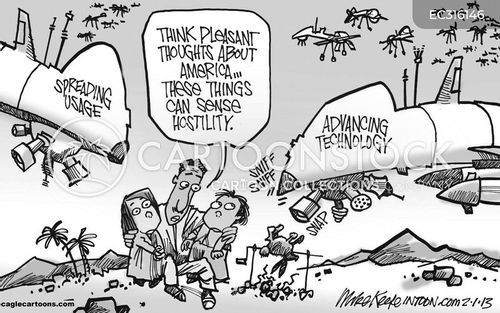
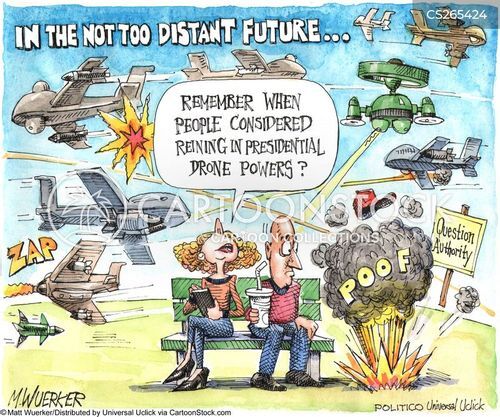
Drones quite possibly represent the most transformative military innovation since jet engines and atomic weaponry. No longer do humans have to engage in close military action or be in the same geographical vicinity as the target. Now, through satellite imaging and remote technology, countries such as the United States can destroy small targets halfway around the world with pinpoint accuracy.
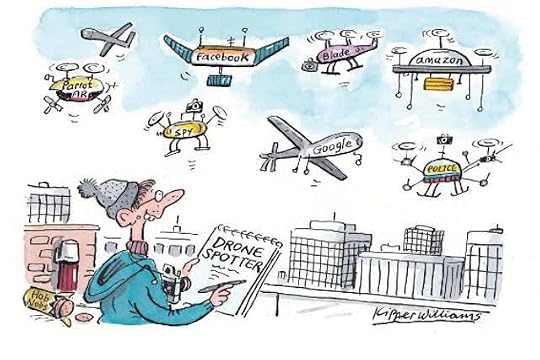
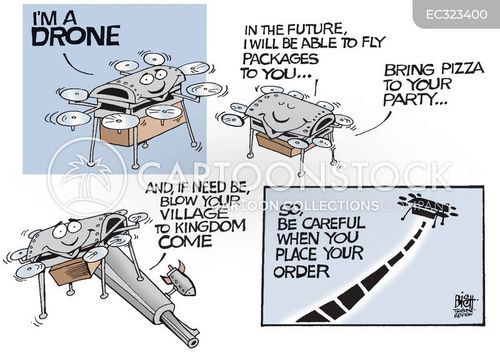
In the last several years, many of the military advancements have been rivaled by those in the commercial realm. Civilian industries have clamored to acquire drones for everything from monitoring crops to filming Hollywood movies to delivering packages. Not surprisingly, the use of drones has generated a lively debate, but no book thus far has engaged the range of themes surrounding drones. How do drones work? To what extent has the technology proliferated to other nations outside the US? How can they be used on the ground and in maritime environments? How are they being integrated into both military and civilian life?
In What Everyone Needs to Know, the international relations scholar (and former air force officer) Sarah E. Kreps provides a concise synthesis of the topic. The book explains how they and the systems associated with them work, how they are being used today, and what will become of the technology in the future. What readers need now is a more practical guide to how this technology is reshaping both military and civilian life; this book is that guide. The drone revolution has already changed warfare, and will soon become a commonplace tool in a civilian context too. It is clear that drone technology is here to stay. What Everyone Needs to Know explains how the revolution happened, what its current contours are, and where we might be headed next.
Sarah Kreps is an Associate Professor of Government and Adjunct Professor of Law at Cornell University. She is also a Faculty Fellow in the Milstein Program in Technology and Humanity at the Cornell Tech Campus in New York City. In 2017-2018, she was an Adjunct Scholar at the Modern War Institute (West Point). She has a BA from Harvard, MSc from Oxford, and PhD from Georgetown.
This is an example of a book that tries to be as objective as possible that its almost encyclopedic in its presentation. It is in many ways a work of science communication that explains everything from the typology and history of drones to operational advantages and tactical deployments in modern warfare. However, the topic of war and the regulation and use of a new technology such as drones within it, is inherently political. By trying to remain objective and unbiased, the book doesn't really challenge the status quo and thus ends up being liberal at best and conservative most of the time in terms of its political subtext.
The book is at its strongest when it is dealing with hard facts, for it really explains them well and there isn't much room for bias there. Specifically, when it comes to describing the different categories of drones: Mini (hand-launched like the Raven), Tactical (short-range like the Shadow), and Strategic (high altitude and long endurance platforms like the Global Hawk). Chapter 4 even covers non-airborne drones, as in those deployed in the ground and sea. Unmanned Ground Vehicles are used for support functions such as ordnance disposal (PackBot) or border surveillance (Israel's notorious Guardium). Unmanned Undewater Vehicles are used for similar support functions as well. The book is also very informative and comprehensive in explaining the deployment tactics and strategies of these different types of drones. Some of the operational benefits such as zero risk to pirates are common sense, but some others would have been harder to guess, such as loiter time (the ability of an aircraft to hover over an area for extended periods). The book does also cover civilian and commercial uses in a later chapter. Package delivery networks established by Amazon and DHL seem to be the biggest mass use outside of military applications. Adoption by the movie making industry, journalism and sports coverage seems to be mainstream at the moment. There are tons of other specific applications that I never really considered such as its use in agricultural mapping and precision harvesting/seeding, or for humanitarian uses in disaster and environmental aid. Particularly interesting is the deployment for anti-poaching wildlife patrols.
The biggest question that pops into the reader's mind constantly, is how is this stuff regulated. The short answer is that for a lot of these applications, there is really no unified or universal laws yet that protect us in terms of security or privacy. Questions about security are straightforward and probably come to mind first whenever we hear the word drone, we think of drone strikes. It is difficult within the existing framework of international law to cover things such as the right of a drone to self-defense or in distinctions of proportionality. While a combatant for example can shoot back to defend himself from a civilian, can a drone? Or if a drone is shut-down by a resistant group does this allow for a retaliatory strike by the drone-owner? Sadly, these grim questions will only grow with time as fully autonomous weaponry becomes more standard across all tactical areas and sides of conflicts. As in, with the rising affordability of some types of drones, its possible use for asymmetrical and guerilla warfare grows but also more complex Strategic systems with permanent or semi-permanent deployments (yikes). The book does discuss some of these questions and deeper more philosophical questions about the moral hazard surrounding the use of drone technology in warfare contexts. Primarily the problem of major concern here is the lowered risk threshold here for entering conflicts. If a belligerent country has an access to a horde of drones that can act to replace all standard or modern parts of a military without huge financial or human risks, doesn't that allow it to enter skirmishes without fear?
The question of privacy is an even more concerning one from a certain perspective. As bad and scary is its use in war, military deployments and their casualties are not as prevalent as its growing use by internal agencies, law enforcement and even corporate applications. What I find deeply concerning is the growing research into hardware miniaturization to create micro/nano drones (RoboBee,Black Hornet, etc.) that will allow really covert surveillance. Especially, when coupled with external service broadcast thus eliminating the need for internal storage and/or allowing multiple angle and or mapping applications all at once. Imagine cops powered with the ability to have tiny little bee-sized drones zooming around your backyard or in your house powered with everything from thermal mapping to infrared vision 24/7 with semi-infinite recording storage. Couple this with increasing investment into face-recognition and pattern-algorithm AI that can sift through this big data to flag any content to the desire of the drone's deployer. Truly the stuff of dystopia and sci-fi stories.
The book does shy away from explicitly attacking or blaming singular nations for their use and spread of the technology, or for their intentional blocking of any kind of regulation. Yes it is the usual culprits, the US, of course. Israel? Of course. Russia? Of course. And so on. But, the book does not really link the technology to comment on or critique border imperialism and neocolonialism. Specifically, the book legitimizes and normalizes the use of drones against "terrorists and insurgents" by treating US empire, state counterinsurgency, targeted killings, and global military interventions as neutral, permanent baselines of international relations. Quoting a drone pilot: "'There is an honorable element. We do good work. We produce tactical effects for combatant commanders. We kill enemies and save friends.'" Many quotes like this are present in the book, problematic of course because its allowing what essentially amounts to war criminals to justify and frame their horrific acts as ordinary and essential. Are there quotes from the families or victims of these drone strikes? You can guess. Although, it is easy to guess that the author is probably a liberal of some kind, their US chauvinism and acceptance of militarization are clear biases here that consistently pierce through the mask of objectivity. Do you really think adding a few bylaws or sections to codes of military conduct will help the middle east from being droned? Do you think long debates over these bureaucratic councils and court proceedings will halt imperialism? Ultimately, this technology is not going anywhere and this is a good source to read to understand this. However, just remember that in terms of its politics you will find it infuriating or completely lacking in potency most of the time.
I thought drones was an interesting book to read. One of the things it made me think about was the use of drones in other countries. I had never thought about that before. I thought that was interesting. I also liked the chapter about other types of drones. Like ground drones or sea drones. I have never given those much thought.
I have never flown a drone and don't own a drone. Though I do want to own a drone. I have never given the privacy concerns about the use of drones much thought.
Probable my only thoughts about drones where that I want to fly a drone. So Drones gave me some things to think about.
I wish I remembered more of the information in books I read. I wish I could remember every word. I try my best and that is all I can do.
So I thought Drones was an OK book. I am more interested in how to build drones than in drone policy. Though I think it was worth the time to read Drones.