Many of us want to increase our self-sufficiency, but few have access to the ideal five sunny, gently sloping acres of rich, loamy, well-drained soil. Jenni Blackmore presents a highly entertaining, personal account of how permaculture can be practiced in adverse conditions, allowing anyone to learn to live more sustainably in a less-than-perfect world. With a rallying cry of "If we can do it, you can too," she distills the wisdom of twenty years of trial and error into a valuable teaching tool.
The perfect antidote to dense, high-level technical manuals, "Permaculture for the Rest of Us" presents the fundamental principles of this sometimes confusing concept in a humorous, reader-friendly way. Each chapter focuses on a specific method or technique, interspersing straightforward explanations with the author's own experiences. Learn how to successfully retrofit even the smallest homestead using skills such
No-till vs. till gardening, composting, and soil-building Natural pest control and integrating small livestock Basic greenhouse construction Harvesting, preservation, and more
Ideal for urban dreamers, suburbanites and country-dwellers alike, this inspirational and instructional "encouragement manual" is packed with vibrant photographs documenting the author's journey from adversity to abundance.
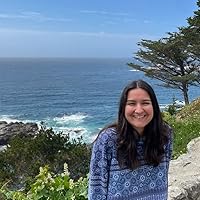
Jenni Blackmore is a farmer, artist, writer and certified Permaculture Design Consultant who built her house on a rocky, windswept island off the coast of Nova Scotia almost twenty-five years ago and has been stumbling along the road to self-sufficient living ever since. A successful micro-farmer, she produces most of her family's meat, eggs, fruit, and vegetables, in spite of often-challenging conditions."
This book is great for the person who has never heard of permaculture and for the person just started down the road of permaculture. I have been learning about permaculture for a year now, and I still took away some great ideas from this book. For instance, the idea of what to do with fallen trees and other recyclables.
Permaculture "employs naturally existing systems to produce maximum yield with minimum expenditure... ." That is what I love about permaculture, it uses nature as an ally, rather than working against nature, which is an uphill battle.
I would recommend this book to anyone who wishes to reduce their carbon footprint and wish to make the world more sustainable.
I read about half and then decided I couldn’t be bothered with the rest. Not a bad book, the writing style was casual but that was fine. My review is based on the book not being what I needed or wanted from it. If it had been a more descriptive memoir-ish kind of book I might’ve finished, or if it had addressed my version of “the rest of us” I might’ve kept skimming as a reference book. But “on less than an acre” really meant “on about an acre or more” not the small city lot I live on. I don’t have a space to put 3 compost piles or 2 spinners if I also want a garden, there is no part of my yard I can give over to the magical comfrey in perpetuity unless I give it my whole back or front yard (good to know), I would love chickens or ducks, but again, that’s not realistic for me, which cuts out a major piece of the system - the free nutrients. I realize there are guides for creating urban gardens that talk about things like finding extra land or that concede that I might have to grow the fruit while a neighbor grows the veg and another neighbor keeps chickens. This wasn’t that book and maybe I should’ve realized that before I started. Anyway, it’s a quick read and maybe a good starting point for someone who has about an acre or aspires to have a decent sized piece of land. The basic ideas were good: use what you’ve got (in her case seaweed, but she did mention bags of leaves and tree branches which most people could source), learn about what you’re planting, encourage things that give you multiple benefits (plants that bring up nutrients, animals that turn waste into nutrients and maybe also give you food), and the primary lesson that you can build great soil even on terrible land. I think I’m going to give up on reading these permaculture books and concentrate on growing lavender, dahlias and tomatoes I can trade with other gardeners.
Not a long book, but very informative. It's a great, gentle introduction to permaculture by someone who isn't afraid to admit her mistakes. For me, the best part is the fact that the author lives in Nova Scotia, so she has to deal with a shorter growing period. The style of writing is quite friendly, as if you were sitting in her kitchen being regaled with her adventures of learning to live in harmony with her land. I would definitely recommend this book to anyone looking for a non-overwhelming introduction to the concepts of permaculture.
This book is great for what it aimed to do, which is to present an easy introductory look at permaculture in a northern temperate zone. This book is presented in a conversational tone, full of anecdotes from the author's experience. it is easy to read and gives you a good sense of the flavor of permaculture without getting bogged down in charts and tables and jargon.
That being said, if you are already familiar with permaculture principles you probably won't come out of this book with much new knowledge. If you've read and enjoyed Bill Mollison, Toby Hemenway, or Sepp Holzer this book probably isn't necessary. But if biggish books full of charts and lists and maps and talk of sectors and zones are too intimidating to start with, this might be the book you've been looking for.
Permaculture for the Rest of Us isn't trying to be an all-inclusive guide to anything, and the author states that plenty of times. The writing style is easy to follow, the photos are charming, and to me it almost straddles the line between a permaculture intro and a farmoir.
Not exhaustive by any means, but the author doesn’t aim to make it exhaustive. It’s really a fun, playful overview of one micro farmer’s observations about permaculture farming. It’s written more of a “playing by ear” approach than following the sheet music—although she has done her homework, she speaks from experience and admits her own tendencies to struggle with organization (same here, Jenni, same here). The list of suggested reading was a great help to push me onwards onto the learning journey! Well worth the read!
A solid overview of permaculture, though it was centered around the author's experience in Nova Scotia, a very different climate than mine. But most principles still apply, even if the approach is different.
There’s a whole lot of useful information in here no matter where you are gardening. I recommended it to my daughter who is just getting started and she found it very helpful.
I did rather enjoy the book and I think it gave me some new information. It was kind of fun hearing information that I figured out about 20 years ago on my own or maybe I was influenced by growing up with mother Earth news magazine in the 70s.
I am not sure what the author meant by fair distribution, but it’s sort of doesn’t sound right to me.
Author said, “Encourage what wants to stay and let the rest go away!” That has been my motto for over 20 years!
In chapter 10, the author seems equate a lack of diversity in society with a lack of diversity in a monocrop. The two do not equate. I would agree that a monocrop is a bad thing and that a completely homogenous society can be a bad thing, but I’m pretty sure the kind of diversity she’s talking about is not what I would be talking about. Learning of other cultures and trying other foods is great and I’m all for that but if it translates to losing one’s own distinctions then that’s not necessarily good.
It is good that people learn to grow their own food when they can, and to do it in such a way that is along the lines of what is called Permaculture.
I appreciate that the author lives in Nova Scotia and deals with many climatic conditions I can relate too. I was drawn in immediately by the introduction but as other reviewers have mentioned the writing style is very conversational which makes this more of sit-down and read through for pleasure kind of book and less of a reference book. Also for a book about permaculture the author focuses a lot on how to grow annual vegetables. While appreciate that annual veggies are important to any food garden (including my own), I was hoping for a little more insight into possibilities for perennial vegetables that can be grown in Nova Scotia. (Disclaimer: I returned to the library before finishing. If there are awesome tips on perennial vegetables in this book please someone let me know and I will check it out again!)
Blackmore chats about permaculture gardening, and producing a significant portion of her family's food, in a really difficult spot: a rocky, windswept island off the coast of Nova Scotia. The book's small size demanded a sharper focus. This isn't going to be anyone's only gardening book, because it doesn't have room for which seeds should be started outdoors as soon as the soil can be worked, and which need to get a good headstart inside first. Really, any information that you can find print on the seed packet could be omitted. Fortunately, Blackmore spends most of the book on details that are particular to her: what difficulties her land presented for a particular permaculture practice, how she approached those difficulties, and what rewards she reaped.
A really easy read and basic introduction to permaculture. I'm not writing anything that hasn't been written in other reviews here, and the author herself admits that her book is basic. It's a book for someone like me who dreams of a life on a piece of land without getting too technical. Like me, the author is Canadian, so that's relevant to me, but lives on the east coast (not like me) so that's less useful. Nonetheless, an enjoyable and easy read, which is exactly what I was looking for.
The author supplies a reading list, for those who want to get into the more technical aspects of permaculture.
Interesting but not terribly informative. I tried finding a copy of the original permaculture books written by an Aussie because it would be more relevant to me, but no luck. This author was very conversational, which was great but she did waffle on. I stand by my bible of Stephanie Alexander's Kitchen Garden Companion - It has actual compost and garden bed recipes, which is more than this book about permaculture has.
I like the author's message, but this book is very specific to farming on the Canadian coast. No, I don't have access to large quantities of kelp. Yes, I know I can buy something at the store that mimics it, but you said permaculture for the rest of us. I assumed by 'us' you meant people trying to farm on a budget. Good idea and the writing is fine, but the area described is too specific to help most of us.
I've been reading a bit about permaculture recently and Jenni is the first one to make it sound fun and approachable. Having read some of the more theory based books, I loved her approach of sharing her own life experiences and giving a big picture overview at the same time.
If you're looking for a fun, quick read to get a feel for permaculture (and gardening in Nova Scotia!), you'll love this book.
Jenni Blackmore’s Permaculture for the Rest of Us takes a refreshing, highly accessible approach to sustainable living, stripping away the intimidating jargon and rigid dogma often associated with permaculture design. Drawing directly from her own trial-and-error experiences transforming a rocky, windswept lot in Nova Scotia into a thriving micro-homestead, Blackmore offers a practical guide tailored for real-world backyard gardeners. The book shines brightest in its down-to-earth advice on low-cost solutions, small-scale composting, companion planting, and creative animal husbandry like keeping ducks and chickens. Her encouraging tone serves as a great entry point for beginners who want to embrace eco-friendly principles without feeling overwhelmed by complex technical design frameworks. However, while its personal anecdotes and DIY ethos are undeniably engaging, the book occasionally sacrifices depth for accessibility. Readers looking for comprehensive, step-by-step schematics or advanced permaculture design methodologies might find the material a bit too surface-level and conversational. Certain chapters lean heavily into specific personal projects that may not translate seamlessly to different climates, soil types, or larger homestead layouts. Ultimately, it functions well as a light, inspiring primer for suburban or small-scale growers looking to dabble in sustainable design, but it lands right in the middle as a complete instructional manual. This goes into my reference books section to help build my own homestead.
Really enjoyed it as a casual intro to permaculture! I was listening to the audiobook as background at work so speaking more to how it’s experienced that way instead of how well it delivered a helpful starter guide to permaculture but that being said, this book has aura - it’s all the author sharing lessons from the establishment of her permaculture garden on the coast where she uses seaweed as compost and has beef with snails and I imagine is always surrounded by lots of fog. It did teach me a lot of new stuff about planting techniques and what the hell yall are not ready for how expeditiously I’m going to plant a hugelkukture garden and establish my own compost pile once I have enough outdoor space
You're not going to learn a helluva lot from this book, but you will feel better after reading it. It's a semi-memoirish semi-didactic piece on how to make the most of what you have with some basic permaculture ideas simplified and explained for the layperson. As someone who has picked up and put down several permaculture tomes in the past year, I can readily say that this book accomplishes its goal. It's readable, it's approachable, and it makes you feel more ready to tackle the other books again. (I won't, but I feel like I could.)
I really enjoyed this book. I have gardened and had livestock for years. Although I knew a lot of the information already I loved the way it fit into a Permaculture lifestyle. I am well on my way to permaculturist but only just learned so. This book was great in that it opened my eyes to a group of people like me that I didn’t know existed.
I learned some incredible techniques for gardening that I will be using in the future. I have a pile of tree limbs that will now have a purpose and not have to be hauled away.
Great book, fantastically entertaining & informative... Not fully comprehensive as the author willingly notes that many, many other books already exist that do so. She speaks of her own experience in a delightful and informal way. I laughed, smiled and enjoyed the author's honest personal experience & tips. She showed how starting permaculture is done by paying attention to the land you're living on, and enjoying the ride.
Very approachable, enjoyable weekend read. Although it scratches only the surface, it's thorough and offers several nuggets of advice and information. I really appreciate that her land is in Nova Scotia, as the climate factor is a huge worry for me in my plans and progress. Would definitely read it again.
Enjoyable and inspiring. Unfortunately, the author focuses on growing annuals—veggies like tomatoes, zucchini, chard, and pumpkin—rather than on the perennial permaculture options. There is also little discussion about using nitrogen-fixing plants to maintain or improve soil quality, as the author seems to rely instead on using her livestock to provide fertilizer via manure.
Easy reading. Lots of helpful ideas. Light-hearted look at a complicated system of self sustaining life. Jenni’s relaxed style made me want to get started in my backyard and so what if I make a few mistakes. It’s worth it.
Entry level conversationally written intro to permaculture and to some extent homesteading. Enough science and method to make it useful, and enough personal farm anecdotes/stories of experience to make it easy to absorb. Worthwhile!!
As Blackmore states several times in this book, it's not meant to be used as a guide, but more as an encouragement, and perhaps a way to avoid a few mistakes early on. I found it informative and entertaining in equal measure, and it is definitely worth the read!
A quick and informative read, not to mention full of personality! I really enjoyed reading about another's experience using a permaculture mindset in their garden. She inspired me to thoroughly think through the way I'm setting up my own permaculture homestead.
The subject matter is vital to any sort of regenerative future for our planet. This is by like “Permaculture for Dummies” said nicely. Important introduction to principles of permaculture presented in an assessable way if you enjoy the tone of the author.