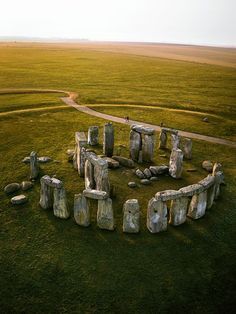
From New York Times bestselling author Bernard Cornwell, the tale of three brothers and of their rivalry that created the mysterious Stonehenge.One summer’s day, a dying stranger carrying great wealth in gold comes to the settlement of Ratharryn.The three sons of Ratharryn’s chief each perceive the great gift in a different way. The eldest, Lengar, the warrior, harnesses his murderous ambition to be a ruler and take great power for his tribe. Camaban becomes a great visionary and feared wise man, and it is his vision that will force the youngest brother, Saban, to create the great temple on the green hill where the gods will appear on earth. Saban’ s love for Aurenna, the sun bride whose destiny is to die for the gods, finally brings the rivalries of the brothers to a head. But it is also his skills that will build the vast temple, a place for the gods, certainly, but also a place that will confirm for ever the supreme power of the tribe that built it.
Cornwell was born in London in 1944. His father was a Canadian airman, and his mother, who was English, a member of the Women's Auxiliary Air Force. He was adopted and brought up in Essex by the Wiggins family, who were members of the Peculiar People, a strict Protestant sect who banned frivolity of all kinds and even medicine. After he left them, he changed his name to his birth mother's maiden name, Cornwell.
Cornwell was sent away to Monkton Combe School, attended the University of London, and after graduating, worked as a teacher. He attempted to enlist in the British armed services at least three times but was rejected on the grounds of myopia.
He then joined BBC's Nationwide and was promoted to become head of current affairs at BBC Northern Ireland. He then joined Thames Television as editor of Thames News. He relocated to the United States in 1980 after marrying an American. Unable to get a green card, he started writing novels, as this did not require a work permit.
As a child, Cornwell loved the novels of C.S. Forester, chronicling the adventures of fictional British naval officer Horatio Hornblower during the Napoleonic Wars, and was surprised to find there were no such novels following Lord Wellington's campaign on land. Motivated by the need to support himself in the U.S. through writing, Cornwell decided to write such a series. He named his chief protagonist Richard Sharpe, a rifleman involved in most major battles of the Peninsular War.
Cornwell wanted to start the series with the Siege of Badajoz but decided instead to start with a couple of "warm-up" novels. These were Sharpe's Eagle and Sharpe's Gold, both published in 1981. Sharpe's Eagle was picked up by a publisher, and Cornwell got a three-book deal. He went on to tell the story of Badajoz in his third Sharpe novel, Sharpe's Company, published in 1982.
Cornwell and wife Judy co-wrote a series of novels, published under the pseudonym "Susannah Kells". These were A Crowning Mercy, published in 1983, Fallen Angels in 1984, and Coat of Arms (aka The Aristocrats) in 1986. (Cornwell's strict Protestant upbringing informed the background of A Crowning Mercy, which took place during the English Civil War.) In 1987, he also published Redcoat, an American Revolutionary War novel set in Philadelphia during its 1777 occupation by the British.
After publishing eight books in his ongoing Sharpe series, Cornwell was approached by a production company interested in adapting them for television. The producers asked him to write a prequel to give them a starting point to the series. They also requested that the story feature a large role for Spanish characters to secure co-funding from Spain. The result was Sharpe’s Rifles, published in 1987, and a series of Sharpe television films staring Sean Bean.
A series of contemporary thrillers with sailing as a background and common themes followed: Wildtrack published in 1988, Sea Lord (aka Killer's Wake) in 1989, Crackdown in 1990, Stormchild in 1991, and Scoundrel, a political thriller, in 1992.
In June 2006, Cornwell was made an Officer of the Order of the British Empire in the Queen's 80th Birthday Honours List.
Cornwell's latest work, Azincourt, was released in the UK in October 2008. The protagonist is an archer who participates in the Battle of Agincourt, another devastating defeat suffered by the French in the Hundred Years War. However, Cornwell has stated that it will not be about Thomas of Hookton from The Grail Quest or any of his relatives.
It really has me baffled that some people don't like this book. I found it enthralling and captivating. There was something about Bernard Cornwell's version of these bronze age people and their mystical and monolithic Stonehenge, that captured my imagination and I felt stirred by both them and their pristine, unpolluted environment. They were innocent and gullible, ignorant and sweet, yes, even at their deadliest or maddest. They are unblemished by a modern world. Their existence is aligned in every way with nature and the elements. Everything was an omen or an augury. If a bird lit from a tree, they watched it to see where it headed, if a swan lifts from the waterway into the sky, they stop to watch it's direction in hopes of anticipating the future. They wear 'sea monsters' teeth on sinew around their necks, and dress their ring ditches with animal and human skulls to ward off people and spirits alike. They are a deep and cerebral people. While this life may sound restrictive to you and I, everything has a meaning and a meaning in everything, I think it was beautiful to read about and I felt more connected to pre history than I have ever been before. And all this due to the wizened hand of a master author? I had some trepidation going into this book because of the mixed reviews on Goodreads, but I should have known Cornwell would not let me down, he hasn't yet after all, why should he now? Reading this book was an experience for me and I wish I had not put it off for as long as I had. Thankyou Bernard Cornwell.
Excellent writing and storytelling as always by Bernard Cornwell! Stonegenge had this authentic feel that I love so much when reading historical fictions and that always accompanies Bernard Cornwell's novels. He made prehistoric times come alive for me and I enjoyed this story immensely.
Dr Phil would have loved to get his teeth into these boys - the perfect dysfunctional Bronze Age tribal family!
Three brothers - Camaban, the all but insane sorcerer born a cripple who dreams of re-uniting the sun god and the moon goddess in his perfect temple; Lengar, the brutally sadistic, power hungry warrior who kills his own father to take over the position of chief of the tribe; and Saban, the quiet cerebral type who achieves the impossible by staying alive despite his brothers' efforts and completing the near impossible engineering feat of erecting Stonehenge, a never before dreamed of monolithic temple on the Salisbury Plains.
STONEHENGE is a magnificent hypothetical tale set in the second millennium BC, Bronze Age England. As enormous in conception and as dramatic in the writing as Ken Follett's PILLARS OF THE EARTH, Cornwell has treated his readers to a magnificent epic rich with sorcery, pagan ritual, ambition, tribal warfare, family rivalries, mythology and bronze age culture that hypothesizes a possible backdrop to the completion of that enigmatic monolithic structure, Stonehenge.
But he also did much more than merely tell a story that all readers of historical fiction will thoroughly enjoy. He also provided some absolutely fascinating sidebars and essays on the probable state of Bronze Age science - medicine, astronomy, weaponry, warfare, engineering - and indulged himself in some musings on what might have been tribal mythology, philosophy and theology.
A thoroughly engrossing read from first page to last. Highly recommended.
The key to being a successful historical fiction author is the ability to open a window into the place and era in which you write. Bernard Cornwell does this seamlessly. Cornwell tells a completely imagined story revolving around mystical Stonehenge that made me believe the events could have actually taken place in the distant past. Within the “Historical Notes” section at the back of the book, he even states that the names for the gods and goddesses were completely made up, yet everything felt authentic.
What a story! Though I rated this one 5 stars, I will say that the story builds slowly, but the pay-off at the end was worth it. Much of this book details how pre-Bronze Age people actually managed to move and shape the massive stones that made Stonehenge … so if that kind of detail bores you, then this one probably isn’t for you ... in which case I'd recommend you go kick some rocks. Though it dealt with a completely different era and story, Stonehenge reminded me of Ken Follett’s Pillars of the Earth, which I also loved. If you enjoyed Pillars, then I would bet that you would enjoy this as well.
Stonehenge was an interesting glimpse into a sparsely covered period of historical fiction. Like the gods upon the great temple’s completion, I am pleased with this momentous effort.
Very little is known about Stonehenge. The author draws a tale of adventure explaining how and why the stones came to be placed as they are. The story drawn is a tale of war between competing tribes at the beginning of the Bronze Age. It is a story about three half-brothers, very different in personality, and ultimately their battle for the supremacy of that god each gives their allegiance to. The eldest is a warrior. The middle brother has a clubfoot, stutters and is viewed as being crazy. The youngest is he who becomes the builder of the “sun temple”.
The story we are told could p-e-r-h-a-p-s have elements of truth. Maybe……..
Regardless, I dislike immensely how the story is told. The story is one of violence, every step of the way. Rape and murder, starvation, slaughter of animals, as well as men, women and children--all of this is drawn in excessively gory detail. We do not know if the violence drawn is accurate—so why draw it this way? To revel in blood and gore and grisly descriptions is not for me! I can deal with such only when it is a depiction of an event that is known to have actually occurred.
Dogs pee on an object to show their dominance and rank. In Cornwell’s book, men pee on the dead and the living. Is such behavior recorded in history?! Or is this written for the sole purpose of making readers draw back in disgust. I mention this as one example of many to give readers a feel for what lies in store. Much is revolting and not backed by fact.
Jonathan Keeble narrates the audiobook. I am fine with his reading when not doing dialogues. The dialogues are atrocious. There is a lot of screaming and it is horrid to listen to. Men scream, women scream and they sound exactly the same. There is no differentiation between them, and it is extremely unpleasant to listen to. The listening experience is not OK; it is terrible. One star for the narration. I have listened to other audiobooks read by Keeble and thought they were very good—this was a big disappointment. In this book, Keeble over-over-over-dramatizes.
Nope, I do not like this at all. I refuse to revel in filth and muck ad violence that is imaginary.
I read this book when it first came out and loved it. It is a long book set around prehistory - 2000 BC. If the origins of Stonehenge interests you this is Bernard Cornwell's personal take and I found it a powerful and fascinating story with strong characters and many exciting dramas going on between them all. An exciting book but you need a fair bit of spare time to get through it. It is definitely on my personal list to re-read if I ever get through all the unread novels on my shelves still waiting to be explored.
I can't really say that I would recommend this book to anyone.
Set in the times of the building of Stonehenge, this story doesn't portray females in a particularly good light. I found the characters to be extremely shallow and unlikable, and the story seemed to jump around rather than flow smoothly. Most of the time seemed to be spent describing the transportation and carving of the stones to construct Stonehenge, which may well be historically accurate but I could have read about that in a history book.
The other things that happened in the book were; a great deal of inter-family violence and a whole lot of superstitious hocus-pocus that passed for magic and religion in the dark ages.
Séculos passaram desde a sua construção e Stonehenge continua a guardar os seus mistérios. Mais de 500 páginas de labuta, ladeira abaixo, ladeira a cima, a rebocar pedregulhos regados com sangue derramado em sacrifícios inúteis, e Stonehenge permanece tão misterioso como sempre.
Cornwell writes in his endnote to this novel that "it is surely obvious that every character and deity in the novel is fictitious." But he did use archaeological records as a basis for much of the novel. This includes where the massive stones from Stonehenge originated (some came from over 150 miles away in Wales), the various stages of building the monument, artifacts and burials found at the site, and the lifestyles of the people of Britain's Bronze Age over 5,000 years ago.
But then Cornwell spins a very interesting and compelling story of a family who were instrumental in the eventual construction of the monument. The main protagonist is Saban who had two brothers, Lengar and Camaban. Lengar is a traitorous warlord who rises to power by killing his father. Camaban was born with a club foot and was considered mentally deficient but later rises to become high priest of Ratharryn, the city responsible for building Stonehenge. The novel is full of pagan ritual, sacrifice, sorcery, love and death, greed and intrigue. Cornwell paints a vivid picture of a religion that embodied the sun and the moon as gods and made the construction of the monument coincide to these religious beliefs. He also makes a believable case for how the monument was constructed and why. Again, this is a work of total fiction but it is also a very compelling adventure packed with drama and betrayal. Overall, I did enjoy this one. It's the first novel I have read by Cornwell and at some point I hope to read more by him.
One summer's day a stranger carrying great wealth in gold comes to the settlement and is murdered by one of the chief's three sons in the old temple. The mysterious gold, thought by some to be a gift from the gods, causes great dissension within the tribe but the three brothers all share one dream, to build a vast temple to the gods. Lengar, the eldest and a warrior, wants to use the temple to fuel his ambition to be a great ruler by force of arms. Camaban, wants to create a place that will bring the gods together to ends all pain and suffering. But it is the third and youngest son, Saban, a man of peace, who will become the master-builder of the 'Temple of Shadows'.
Now I should point out that I'm a great fan of Cornwell's Arthurian novels and this book is quite different from most of the author's other books that I've read. This isn't a thrilling rollercoaster ride but an epic story of determination, betrayal, love and war that is also thought provoking in its own way if perhaps a little overly long.
The story follows the main character Saban and although he is a little naive, he is also believable and one that I could empathise with. The novel is also liberally peppered with some interesting minor characters, some good some bad.
Although there are some fighting scenes the main empathise of this book is most definitely the building of the temple and it's apparent that he has also done his research into the artefacts that have since been uncovered. I really enjoy reading about paganism, worshipping the sun and the moon seems to make a lot of sense.
Overall, I found this an interesting if rather methodical read. One of the great things about writing about a time some 4000 years ago is that it is really open to interpretation as no one really knows what was happening back then. There are loads of different theories and this is simply Cornwell's own interpretation of how these Bronze aged people lived, why they built this temple and most importantly how it was built. How it was built is probably the one thing that everyone who has seen it thinks about and Cornwell gives a plausible explanation.
Was Stonehenge built in a lifetime? Did they move the stones using boats and sledges? Did bronze age people use the temple for other purposes, marriages, funerals, coronations we can only speculate but I like to think that the person who thought of the design saw it finished.
Cornwell catches us up in a fascinating page turning historical novel with science fantasy elements, in this elecrtic epic set in the Britain of 4000 years ago. Cornwell creates an eventful, vivid, gory, gripping and spellbinding tale of love and loss, sorcery, hatred, jealousy, greed, ambition and pagan theology.
Traces the story of three brothers, the evil and savage killer, Lengar, the cunning cripple turned sorcerer, Camaban, who ruthlessly sheds blood to build a new stone temple that will usher in new age free of suffering and death-the ruthless idealism of causes massive death and suffering for a utopian ideal, that was a hallmark of the twentieth century CE, and Saban, an intelligent but somewhat naive third brother who is caught in the machinations of his malignant older brothers.
Derewynn, who is the bride of Saban who is then raped and enslaved by Lengar and his friends, before becoming a formidable sorceress and chieftainess, and Aurenna the priestess and second bride of Saban, to be the disciple and high priestess of Camaban. One thing that was absent that would have been helpful would have been a map showing where the places named are today in modern Britain. Ultimately about the author's story of how Stonehenge came to be in his imagination. Another page-turning Cornwell historical thriller, which you will want to add to your collection.
abandoned the 2024 reread about a third of the way thru.
will leave the previous 3 star rating as it is for now... tho that's probably for maybe liking it abit more the first. time around? tho not entirely sure that I did! but I remember some interesting astronomical/solar standing stone alignments 🌞🪨🌟
Well, I'm throwing in the towel and moving on to something else. I began this book in June, and haven't picked it up since August. I seldom fail to finish a book, but I just can't carry on with this one. Not my cup of tea, I guess.
A good story, well-written, but not up to what I expect from Bernard Cornwell. He builds on John North's Stonehenge: Neolithic Man and the Cosmos to include a plausible explanation of what little we know about this wonder of the ancient world, contemporaneous with the Great Pyramids of Egypt.
But the book doesn't connect. For one thing it lacks the humor which leavens the drama and gore of his Wessex series. (I assume Sharpe has his humorous moments, too.) I never grew to care for Saban as I should for a flawed hero.
Also, the rate of action seems totally beyond what an early Bronze Age community should be capable. The biggest oak they can find is cut down in a day? With stone, flint and bronze tools?
Still, so far as I know, there are no historical howlers, and it was a good read. Had a lessor author written it, I might have rated it with four stars.
I was hoping to have posted this review earlier this week. It is the perfect timing to discuss Stonehenge by Bernard Cornwell. I have developed quite an addiction to Bernard Cornwell’s work. He has become one of my favorite historical fiction authors. You all know how much I loved The Saxon Stories series, (or The Last Kingdom for the Netflix fans) and Agincourt was absolutely brilliant. I have his Grail Quest Series and Sharpe series on my TBR list as well. But Stonehenge stands out. It does take place in England but during a time where facts are sparse. Four thousand years ago, tribes inhabited England. The Tribe of Ratharryn is led by Hengall, who has three sons. Lengar is the oldest and will do anything to obtain full power. Camaban is the middle child but is deformed and therefore thrown out of their society and he becomes a sorcerer. Then the youngest is Saban, their Father’s favorite. A stranger who dies at the Old Temple carries enough gold to change the course of any tribe. But does the gold belong to the gods? Or to the tribe of the man who died? The gods can be cruel to those who betray them, so the tribes rely on priests to translate the words of the gods. Lengar refuses to let that gold go to waste and kills his father and sends Saban into slavery. Camaban becomes powerful in his own way and is determined to have a temple built for the gods himself–but it is Saban who will actually build it.
It is rare to find truly believable and immersive ancient historical fiction. Stonehenge is a monument that is recognizable to almost everyone and one of the most puzzling monuments to exist because of the little information we have surrounding its construction. We do know that it wasn’t built in one time period and that it was built over a period of various stages in history. In this novel, there are the beginnings of the temple and it is mentioned that it has been there longer than the characters could comprehend. So the temple already has a history when this book begins. I love how he creates a tale of war and betrayal around these stones and how it almost seemed impossible to complete. While the characters are from the Bronze Age period, we can still recognize the human condition even though 4,000 years separate us. Betrayal is a huge theme in this story. It pits father against son, brother against brother, husband against wife, and gods against man. The second major theme is greed. Greed is the cause of this betrayal and even though this is not a modern time period, we who live in more modern times can still relate to this on a daily basis. The fact that Cornwell can connect us to individuals from 4,000 years ago but keeping this historical setting is utterly brilliant.
Yes, Cornwell had to fill in the gaps but he made it realistic. Stonehenge has always been very mystical and he connects to that mysticism in his writing. I loved every moment of this book and once again Bernard Cornwell has not let me down. 5 out of 5 stars.
This book was one of about five books that my 14 year old son gave me for my birthday - all sourced from a bargain bin! I have honestly been doing my best to read some of them and have only given two away to the school fair without even opening the covers . And in fact, I actually thought that I might enjoy this one. Unfortunately not.
I have never read any books by Bernard Cornwell before and won't be back for more. The book started out promisingly enough but somewhere around the middle I was bored to tears and forced myself to finish. It did get better again towards the end and my eyes stopped glazing over while reading but that's not saying much.
The book tells the story of events that could have led to the building of Stonehenge. Lengar, Camaban and Saban are three brothers whose lives are inextricably bound with the temple. Camaban, the crippled outcast son born with a club foot transforms himself into a powerful sorcerer and designs the massive temple. Saban his younger brother has the engineering skills to move the leviathan stones and make Camaban's design a reality. Lengar the older brother is a bitter rival who tries to destroy Camaban.
So all the ingredients are right there for a great story. Greed, ambitition, revenge, rivalry, hatred, betrayal. Add goddesses, religious tension, blood sacrifice and a few beautiful women and this should have been a riveting story. Instead the plot moved as slow and ponderously as the building of Stonehenge itself. The characters remained one dimensional and mostly unlikeable and by midway through the book I really didn't care what happened to any of them. It was slightly interesting to read about the way people may have lived back in 2000BC, but not worth wading through 580 pages for.
I can't say that I enjoyed this book. It has a dry, spare style that feels almost like a list in some places. There are lengthy passages to do with the details of moving the stones that aren't particularly well done or interesting. The characters are hard to identify with, though I'm not of the opinion that you have to identify with characters in order to enjoy a book, it is often helpful. It takes a grim and brutal view of human nature which isn't necessarily a bad thing but presented in this humorless manner is not particularly enjoyable.
The book tries to envision what would drive people to build a structure like Stonehenge. There is madness, self-delusion and many battles of will. While I am interested in what drives people to do crazy/epic/impossible things the way the story was told was not of particular interest to me. The protagonist was the most likable, yet least interesting character who really had no agency and whose life and destiny was in thrall to his stronger-willed brothers. The brothers were more interesting but also horrible. I liked the idea of the crippled brother trying to make the world straight but, again, it was not done in a way that resonated for me. The role of the female characters was problematic as women were second rate yet some had much power. Again, this could have been compelling but not the way it was done here. Perhaps the most interesting part of the book was the author's note at the end. I have no doubt that this was painstakingly researched but the storytelling was somehow lacking.
Bernard Cornwell is one of my favorite authors, and I have been looking forward to reading this for some time. But with all that I am still surprised on how good the book is.
This story is a bit different from the usual Cornwell yarn. From the books I have read by him, it is apparent he likes to write about war, and is probably one of the best writers out there in describing battle scenes. There is battles in this book too, but the are few and far between. This is more about primitive man, and their relationship with their gods.
This is about three brothers, and events surrounding them that brings about the creation of Stonehenge. Little is known about Stonehenge, but Cornwell incorporates the littliest things into his story, making it a pleasure to read.
This novel really draws you in, making you feel like you are there in the distant past, making you the characters struggles and their hopes in building Stonehenge. I loved the characters in the story. Camadan and Saban really stood out.
The story went by to fast, and left me wanting more. Signs of a great novel.
It's a very detailed story about the pre-historic tribes that lived in England around 5000 years ago. The book tells of war, community, druid magic, and has times where you will laugh, and times where you become caught up in the emotions felt by the characters. There are many characters here, and they are all very developed. It's the kind of book where when you're not reading you get the distinct feeling the characters are mad at you for not paying attention to them. It follows the years of the main characters from the time of their early teens until middle age, when Stonehenge is completed by them. I'm not normally a fan of books this long, but I really enjoyed this one. Probably the best book I've read all year.
I almost didn't read (listen) to this because of the mixed reviews but I'm glad I did. I found it absolutely fascinating! I'd never read anything about Stonehenge! I wish there was a part two. I absolutely loved Saban! Such a wonderful character who went through trials and tribulations yet still remained true to himself. There were so many twists and turns... I felt myself on the edge of my seat during many moments. If you love different reads and are on the fence about this one, give it a try. The narration was awesome as well!
No matter how you slice it, the book is about how to build a stone temple in ancient times. There is a story behind this, an interesting and complex tale of people from all over present-day England, surrounding three brothers, sons of a chieftan, and their aspirations, plottings, dreams and failures. There is travel throughout the ancient island with Cornwell's requisite description of place and people, but it still comes back to building the stone temple; so the title suggests, so the book goes...
This is not, in my humble opinion (and I am a big fan of Cornwell), Bernard's best work. It is interesting enough. There is treachery, murder, rivalry, betrayal, lust, insanity, god-worship, slavery, battle, bravery, courage and cowardice, but all offered in less heaping helpings than usually offered from Cornwell.
Surely, it was no small task for our neolithic ancestors to collect the stones, shape them, move them and stand them so precisely, but the description of such consumes probably 75-80% of the book. Cornwell does his best to make this description interesting, but I believe that where this book really falls short is in its length. The tale could have been told in fewer pages with fewer people and less outside storylines.
The back-story is sufficient, but nothing outstanding. To be honest, I'm a bit surprised by the praise offered by the "experts"; people that get paid to review. I think the experts failed us on this one. This is an average read with Cornwell's exceptional ability to lay out the scene bringing the rating up slightly.
This is certainly an interesting read for anyone that is interested in ancient history, but I don't think that the average historical fiction reader will find much to be excited about here. The battles are weak in comparison to Cornwell's usual epic warfare storytelling. There is no real mystery, though the book does not promise this; I have just come to expect this from Cornwell so I offer it as an aside.
I am very interested in anything prehistoric/ancient and I did enjoy reading about the tools, processes, people and lifestyles of our forefathers, but I realize that some may not take so much enjoyment from the tale.
***I give 4 stars, my personal rating, understanding full well that some may disagree and so also offer the reasons why I believe some may not be quite so interested. Overall, I would rate this a 3+, rounding up to 4 because Cornwell can make even the grinding and standing of stones sound interesting. But some may want to skip this one and move on to a more involving tale.***
This was a solid and engaging historical fiction standalone that reads like a fantasy novel. It was full of immersive worldbuilding, suspenseful plotting, and the kinds of colorful characters Cornwell seems to be able to write in his sleep. It is not particularly action-packed for a Cornwell book, but he instead delivers lots of impactful tribal, family, and personal drama, and I was riveted to the page as we followed the long and arduous process that led to the building of the impossible stone temple.
Fans of the Warlord Chronicles (and the stupendous Jonathan Keeble for audiobookers) might especially enjoy it since the writing has the same kind of general feel with Cornwell dreaming up the Bronze Age society of 2000 BC southern Britain that built Stonehenge. As in that trilogy, Cornwell delivers some beautiful prose with an emotional weight that will pluck at your heartstrings with scenes of tenderness before he then rips that heart out and stomps on it until it's pulverized to bits, and then maybe gathers up some of the pieces to put it partly back together. 2000 BC was a brutal time to be alive and Cornwell can be vicious, so this one is not for the faint of heart. If the idea of a village using their officially dubbed "Kill-Child" giant animal bone to club kids to death doesn't seem like something you want to be envisioning, this one is not going to be for you.
The perspective isn't fixed and can be omniscient at times, but mostly we stay with good-hearted and clever Saban, whose family is at the heart of the tale. Following the twists and turns of his life and tracking his gradual growth/changing was a highlight of the read, as was spending time with the various female main and side characters who really stood out with their strong and distinctive personalities. Cornwell made me so believe I was living there in these Bronze Age villages, where life was dominated by both a tribe's practical survival needs alongside their obsessive religious superstitions (at least in Cornwell's estimation, which seems like as great a guess as any).
I didn't get as fully engaged and invested to the level I would usually feel for my 5-star reads, so this is more like a 4.5-star read for me (can GR let us do half-stars?!?!), but I'm very happy I read it and I think it will be a memorable one on my journey through all of Cornwell's works. I now have quite the yearning to see the remains of Stonehenge for myself, and even though I'll be imagining an entirely fictional story behind it when I do hopefully get to see it someday, it'll feel no less real to me for all that.
Read this book in 2005, and its a standalone novel as the title suggests about Stonehenge.
One of the first books I've read by Bernard Cornwell and one that is very much worth reading.
Its about Stonehenge and how it came to be build by a tribe who lived in the south of Britain.
This tribe living in the settlement of Ratharryn, with the Chief and his three sons, the oldest and warrior, Lengar, the second and outcast and visionary, Camaban, and the youngest and builder, Saban.
When a stranger carries wealth to the tribe and dies in the old temple, the brothers wants to use that wealth, Lengar to increase his power as warrior within the tribe, but its a vision by Camaban that will force his youngest brother, Saban, to create this new temple.
After completing this enormous task and mysterious creation Saban must decide between the gods and temple and his family, a decision that will cost him much consideration.
Really recommended, for the author brings the legendary and mythical Stonehenge very much alive with this very pleasant tale, and that's why I like to call this book: "A Very Enjoyable Stonehenge Read"!
"Oh," says I, with a lofty wave of the hand, "violence is all right. I can handle THAT."
Turns out, Dad knew what he was talking about. This book was far, far grittier than my usual fare, and there were several times where I had to put it aside and read something as cheery as "Howl's Moving Castle" to settle the emotions. It is not a difficult book stylistically, but the weight of darkness and paganism was so great that it took me over a month to plow through to the end. Cornwell doesn't skimp on the brutal details of life in Britain two thousand years before the birth of Christ, and he certainly doesn't try to present the newfangled idea of innocent, ignorant people who lived in communion with nature. In fact, he directly repudiates such notions in his Historical Note. Archeological evidence shows pretty clearly that the lives of these men and women revolved around death - early deaths, sacrificial deaths, violent deaths - and so does this novel. That hardly makes for a light and cheery read.
The novel is also intriguing, however, which was what kept me reading. There are really no "likeable" characters; pitiable, yes, and sometimes even sympathetic, but not likeable or heroic. I certainly didn't keep reading for them. But I wanted to know how it would end, and, perhaps like Saban himself, I wanted to see Stonehenge completed. I also respect his ability to incorporate, or rather weave a story around, historical details and archaeological finds; it was very nice to be able to say, "Oh! Oh! I know that archer's cuff! I got that reference!" That is the best sort of historical fiction.
So I got through, and while I can hardly say I'll be reading more of Cornwell's works due to the sheer grittiness of them, I do appreciate his ability to craft an anachronism-free work and to hold the reader to the end..
I probably would have been captivated by this book, if my extensive research into British prehistory hadn't ruined it for me. I hate to make a harsh criticism, but prehistoric Britons were far more advanced than portrayed in this novel.
Bernard Cornwell reutiliza em seus textos alguns elementos. A presença do personagem em território "inimigo", uma figura religiosa/feiticeira com personalidade forte/difícil, inimigos com sede de vingança, personagens invariavelmente detestável, personagens invariavelmente honrados/heróicos, mulheres que precisam provar seu valor em um mundo dominado por homens e que frequentemente fazem isso se tornando dúbias ou até mesmo cruéis, disputa religiosa. e isso é só pra citar alguns dos tropos que você pode esperar encontrar em praticamente todos os livros de Cornwell. Nas mãos de um autor menos habilidosos tudo isso teria virado fórmula barata, variações de uma mesmo livro/formato. Nas mãos de Cornwell funcionam como "características do autor", algo pelo qual você espera ao ler um livro. Este é o 8º livro do autor que leio, e as primeiras páginas tinham esse cheiro familiar, cheguei a me perguntar "será que pela primeira vez vou ler algo do Cornwell do qual não gosto?". Felizmente, não foi o caso. Aqueles elementos recorrentes nas obras de Cornwell vez ou outra até podem parecer repetição, uso extensivo da mesma fórmula de escrita, mas na prática isso acaba não atrapalhando a leitura por uma razão. A mesma razão pela qual Cornwell é Cornwell: a ambientação. A pesquisa histórica é sempre algo magnífico, as palavras nos transportam para outra época e cultura como se estivéssemos lá. Conforme avançamos as páginas entendemos o que os personagens acreditam, pelo que lutam, quais são seus costumes e podemos até prever um conflito em determinadas situações onde essa mesma cultura é desrespeitada. Isso tudo sem que o texto precise explicar nada, tudo é feito para que você aprenda conforme lê. Nesse mesmo sentido, Stonehenge é um dos melhores trabalhos de Cornwell porque se propõe a imaginar a história por trás de uma das construções mais famosas e misteriosas da antiguidade. Em termos históricos/arqueológicos sabemos muito pouco, quase nada sobre Stonehenge. Era fácil que este livro soasse somo uma fábula ou uma fantasia, o que poderia frustrar leitores de ficção histórica. Nenhum personagem é real, nenhuma das divindades citadas um dia existiram ou foram cultuadas, no entanto, tudo é tão verossímel que cheguei ao final da leitura achando a versão de Cornwell para a construção de Stonehenge a coisa mais plausível que já vi sobre o assunto. É claro que tudo isso é desconstruído pelo próprio autor na seção de comentário histórico, no final do livro. A seção, aliás, é um atrativo à parte para os fãs de ficção histórica. Cornwell é claro e direto: "não sabemos e provavelmente nunca saberemos nada sobre a origem de Stonehenge", e justamente por isso este livro é uma das melhores coisas de Cornwell que já li, se equiparando as crônicas de Artur em qualidade de ambientação e controle narrativo.
Finally plowed all the way through this, for two reasons. One: we wanted to see the darn thing built. No spoiler there. You know the thing does get built.
How they raised the lintels is always a matter of controversy and as a warning for some Chariots of the Gods fans, there are no aliens involved, which is good thing. Give the humans some credit for the emergence of intelligence, and application of brute force which would have been their strength in that era.
It's a plausible-sounding method I hadn't heard of as a possibility. It does not involve building earthen ramps as has been proposed, due to -- as one of the characters points out -- a thin top soil layer over the chalk bedrock of the area; there might not have been enough earth to gather for ramps with reasonable effort. We won't give the lintel-lifting method away. If it interests you then you are the reader the author is looking for.
The other reason we wanted to see this book through to the end was, without even peeking, we sensed there would be an afterward where the author talks about the research on which the book was based. We were looking forward to that and was not disappointed.
The author's strength is in the knowledge -- no, complete mastery - of the subject exhibited in that Historical Note afterward. He admits at the outset of the Historical Note that nothing of the plot, characters or action are anything but fiction.
Limitation of the narrative, in fact, prevents some of the more interesting findings on the site from being included, such as the fact that there are painted circles in the parking lot at Stonehenge that mark the locations of ancient post holes from 8000 BC, 5000 years prior to the start of the Neolithic Stonehenge construction.
In the story, a political/religious conflict involving early Bronze Age villages is conjured up, and all of it struggles to reach the level of contrivance. At the root of it, you find out early, is gold. In the afterward is a mention that a body had been found that had been buried with gold piece artifacts just like those in the story.
The hero, Saban, is not all that heroic, letting events wash over him pretty much exactly like a hero isn't supposed to do, and at times, indeed, allowing himself to be pushed around and knocked about. At one point the line "Seize him!" is actually spoken. Enough said.
All in all a run-of-the-mill impetus to a plodding build-up to the construction of one of humankind's earliest engineering achievements. Read it for the account of the gathering, transportation and placement of the stones, but don't expect much from the surrounding story.
Great for folks who wonder HOW Stonehenge was build. Not so good on the WHY of it all.
I listened to this book on tape. It took me a long time to get through it. My overall impression of the book is that it was OK, but definitely in the "borrow it from the library" category, NOT the "go out and buy it NOW" category. The sense of place and time was strong & to my ear, realistic. But I found the details involved in the building of Stonehenge became tedious and overwhelming (though this could be more pronounced in the audio version- you could skim over the slow bits in print, harder to do in audio) I liked the day to day details of the characters lives but struggled with Cornwell's version of the characters religion/motivation: he vacillates between treating it with respect & subtly mocking it from a modern perspective. (Spoiler alert coming up) The author's basic premise is that Stonehenge was built draw the lunar year into sync with the solar one. As a pagan & someone who has a passionate interest in European pre-history, that motivation seems patronizing and well, stupid. I could go on about this at length, but i'll leave it at that. I found the characters in this book very two dimensional- lots of stereotypical good & bad guys. And don't get me started on his female characters- I've never seen them as a strong suit in any of the Cornwell books i've read.
Basic summary: a cool book for flavor, time & place and great for anyone who wonders "HOW did they build that". But the author's answer for WHY Stonehenge was build didn't work at all for this reader.
I dare to say that it's the best historical fiction novel I've ever read in my life. Actually, this is the one that made me fan of the genre so much, with its fascinating story and the great characters. I can imagine this tale to be a great movie one day, if a director ever decided to dream it on to screen. I could hardly put this book down, finished within a short time and it's still among my all-time favorites.
Stonehenge which means "standing" stones was described by Cornwell more as a fantasy book than from an historical point of view. In any case, I wasn't convinced about this version of the legend surrounded on Stonehenge.
According to Cornwell, there is an interesting book Stonehenge by R.J.C. Atkinson on this same subject.
Sorry Cornwell but I do prefer your Saxon Stories.