

What do you think?

The Horus Heresy #Short Story
The Last Church
As the unification of Terra draws to a close, the priest of the world's last church plays host to a visitor who questions his every belief. Who is the stranger, and what does his visit portend?
Terra stands upon the brink of Unity. The armies of the self-proclaimed Emperor of Mankind have waged their bloody wars to bring the whole planet under his rule, crushing all traces of outlawed religion and worship from the face of this now secular utopia. But even the mighty Thunder Warriors cannot cow Uriah Olathaire, last priest of the Church of the Lightning Stone, as he goes about his empty, hollow rituals – and only one last and thoroughly unexpected visitor can bring any hope of a possible reconciliation.
It's a story like no other, as the custodian of Terra's last place of worship comes face to face with a being who challenges his every belief... and has the power to back up his own.
Running time: 1 hour, 29 minutes
Narrated by Jonathan Keeble
Written by Graham McNeill
Terra stands upon the brink of Unity. The armies of the self-proclaimed Emperor of Mankind have waged their bloody wars to bring the whole planet under his rule, crushing all traces of outlawed religion and worship from the face of this now secular utopia. But even the mighty Thunder Warriors cannot cow Uriah Olathaire, last priest of the Church of the Lightning Stone, as he goes about his empty, hollow rituals – and only one last and thoroughly unexpected visitor can bring any hope of a possible reconciliation.
It's a story like no other, as the custodian of Terra's last place of worship comes face to face with a being who challenges his every belief... and has the power to back up his own.
Running time: 1 hour, 29 minutes
Narrated by Jonathan Keeble
Written by Graham McNeill
1 pages, Audiobook
First published January 1, 2015
About the author
Graham McNeill
326 books969 followersHailing from Scotland, Graham McNeill narrowly escaped a career in surveying to work for Games Workshop as a games designer. He has a strong following with his novels Nightbringer, Warriors of Ultramar, Dead Sky, Black Sun and Storm of Iron.
Ratings & Reviews
Friends & Following
Create a free account to discover what your friends think of this book!
Community Reviews
Displaying 1 - 30 of 95 reviews

June 14, 2026
This might just have been my official induction into the universe of WH40K, and I'm grateful it started with this.
It's fascinating to watch the inevitable corruption of absolute power: you don't abolish the god figure—you simply fill the vacancy yourself.
That magnificent final description only proves that vision.
One question: why was it so short though?!
It's fascinating to watch the inevitable corruption of absolute power: you don't abolish the god figure—you simply fill the vacancy yourself.
That magnificent final description only proves that vision.
One question: why was it so short though?!

January 11, 2025
And so begins my journey into the Warhammer 40k universe!
I was told to read this short story from the Horus Heresy before anything else and I am definitely not regretting it. Though I have to admit that I already know a bit about this universe because of the many Youtube videos, trailers and game snippets I've seen and the conversations I've had with Sud (he has played games, read books and seen videos and such).
The story takes place during the so-called Unification War (or, rather, at its end) and is that of Uriah, a priest in the titular last church on Earth. For the Emperor of Mankind is eradicating religion of any kind. Considering what I know about this universe, I can only cackle madly. ;)
One day, there is a visitor meeting Uriah and having a battle of wits, if you will, or a philosophical debate with him.
What Uriah might not be aware of is who that visitor (with a less than incognito name) actually is: the Emperor himself, the very "man" who is killing everything religious. Considering how observant Uriah is, he might not be as clueless as he pretends to be. ;P
Who is right? Well, that is for the reader to decide, as usual. It's also less about who is right and who is wrong. Instead, it's about laying the groundwork of why certain things are as they are later.
A highly interesting look at the Emperor and what he was like before later events (some of which I know about). However, Uriah was a worthy "opponent".
The writing in this short story was top notch as was the narration of the audiobook! That is the one thing I'm a bit worried about: the standard is set now and almost every book in the series is penned by a different author so I hope there will not be too many duds?!
Oh well, this was highly enjoyable and even managed to stir deep emotions (never easy in short stories) so here's to hoping that the others will be just as good.
I was told to read this short story from the Horus Heresy before anything else and I am definitely not regretting it. Though I have to admit that I already know a bit about this universe because of the many Youtube videos, trailers and game snippets I've seen and the conversations I've had with Sud (he has played games, read books and seen videos and such).
The story takes place during the so-called Unification War (or, rather, at its end) and is that of Uriah, a priest in the titular last church on Earth. For the Emperor of Mankind is eradicating religion of any kind. Considering what I know about this universe, I can only cackle madly. ;)
One day, there is a visitor meeting Uriah and having a battle of wits, if you will, or a philosophical debate with him.
What Uriah might not be aware of is who that visitor (with a less than incognito name) actually is: the Emperor himself, the very "man" who is killing everything religious. Considering how observant Uriah is, he might not be as clueless as he pretends to be. ;P
Who is right? Well, that is for the reader to decide, as usual. It's also less about who is right and who is wrong. Instead, it's about laying the groundwork of why certain things are as they are later.
A highly interesting look at the Emperor and what he was like before later events (some of which I know about). However, Uriah was a worthy "opponent".
The writing in this short story was top notch as was the narration of the audiobook! That is the one thing I'm a bit worried about: the standard is set now and almost every book in the series is penned by a different author so I hope there will not be too many duds?!
Oh well, this was highly enjoyable and even managed to stir deep emotions (never easy in short stories) so here's to hoping that the others will be just as good.
May 13, 2020
I'm rarely convinced with this sort of debates because, all too often, the authors pick a side. This will colour the text itself and will lead to the character they identify with - and want to win - getting to make good and compelling points, while the other side struggles to reply. It's quite obvious here whom Graham is rooting for.
Maybe you should try and pick the other guy's side for a change? Play the Devil's Advocate for a while - let them argue for their side with all the spirituality and intelligence you can possibly grant them. Let them try convince not just the other character (the one with whom you'd really agree with), but also the author. I do that. It's quite fun and often educational.
Maybe you should try and pick the other guy's side for a change? Play the Devil's Advocate for a while - let them argue for their side with all the spirituality and intelligence you can possibly grant them. Let them try convince not just the other character (the one with whom you'd really agree with), but also the author. I do that. It's quite fun and often educational.

March 3, 2017
I actually listened to an amateur recording by Adam Nicol here. His rendition of the Emperor's voice was perfect! Online commentary has criticized the Emperor for simply regurgitating edgy teens on the r/atheist subreddit, but I suspect that was the point. The Master of Mankind is a megalomaniac completely blind to his own faults and hypocrisies (
If the Emperor Had a Text-to-Speech Device
does a great job satirizing this), placing the blame of every historical atrocity on religious belief yet slaughtering billions in the name of secular humanism. Such people don't tend to do nuance very well. Extra points for bullying a lonely and humble old man, asshole.
I used to feel very sorry for Empy stuck on the Golden Throne as his glorious Imperium degenerated into precisely the superstitious madness he hated so much; now, it looks like irony and karma caught up to him in the best way possible. The violence and brutality glimpsed by Uriah was the Imperium's original sin. You can't build a utopia of reason and enlightenment out of humanity's worst impulses. The Emperor himself laid the foundation for what later became of the Imperium. Someone should write a Trek/40K crossover fanfic solely so Captain Sisko can punch him.
I also enjoyed the evocative setting and the mood set by Uriah and the Emperor's recounts of the wars and Terra's ruined yet rising society.
I used to feel very sorry for Empy stuck on the Golden Throne as his glorious Imperium degenerated into precisely the superstitious madness he hated so much; now, it looks like irony and karma caught up to him in the best way possible. The violence and brutality glimpsed by Uriah was the Imperium's original sin. You can't build a utopia of reason and enlightenment out of humanity's worst impulses. The Emperor himself laid the foundation for what later became of the Imperium. Someone should write a Trek/40K crossover fanfic solely so Captain Sisko can punch him.
I also enjoyed the evocative setting and the mood set by Uriah and the Emperor's recounts of the wars and Terra's ruined yet rising society.
February 19, 2018
The book was good but it has one major problem. It depics a clash between a man of faith and an atheist,but is written by a person who already won this argument in his own head with himself alone. It was a very one sided conversation,and if you ever talked to a real priest (like I did while being an atheist) you know they have an answer for everything faith and church history related,and the man of faith failed to bring up a single good thing in religion as a real argument (he didn't really tried this hard either).

September 26, 2023
CW Sexual Assault
April 2024 Re-Read using the Horus Heresy Omnibus Project Reading Order Omnibus XVIII Omnissiah II End of Empires (https://www.heresyomnibus.com/omnibus...) as part of my Oath of Moment to complete the Horus Heresy series and extras.
I have read this story countless times since it was first published. I've listened to the wonderful Jonathan Keeble narration, which is what I listened to earlier in the week, before being left more confused than ever, so then I listened to the incredible amateur narration by Adam Nicol of the Fluffenhammer podcast and felt I gained a greater perspective. But today I finally watching the Tyber Portoghese animation of The Last Church, which is phenomenal and apparently well-known, I just hadn't heard of it before it suffered at the hands of the Games Workshop fan works apocalypse a few years back and I never realised one glaring golden element that seems so very obvious for now seeing it...
Honestly, I feel rather silly and absolutely mind blown by this one detail, not to mention just astounded at the magnificence of Tyber Portoghese's animation and subtly changed script, along with the incredible music composed by Aaron Weatherford.
Obviously, I'm late to the party on the animation and a certain reading of the story, which has varying impact depending on your perspective.
For me, having read many times over the years, twice almost back to back the other day, and now watching this animation of it, I feel I have come full circle on this story, but I have come back to the start with a different perspective and appreciation for the story.
It doesn't matter whether the version of Christianity in the Dark Millennia is based in fact or not. It doesn't matter if the priest found faith in religion after a concussed viewing of the Emperor in all his glory. The priest makes his own arguments and statements of about belief, even if he were to take Revelation's premise. The Emperor's vision, The Imperial Truth, is as much a matter of faith and religion by another name, as anything else. Coming on the back of reading The Outcast Dead and the Master of Mankind, I'm more convinced than ever that the Emperor is the apotheosis of a supervillain; he has unshakable belief in both the righteousness and correctness of his perspective, the unstoppable means to enact it, and the implacable will to see it done or die trying.
For all the Emperor's aeons of life and rumination, his faith is more zealous and fanatical than anyone, and all the more destructive and ignorant for it. While the Priest's faith gave his life meaning, he did good with it, and he is able to hold the value of it sacred even in the face of it perhaps being proven to be a lie or based on a chanced mistake of perception.
I'm really starting to think this story doesn't have the sympathy for the Emperor and his viewpoint and isn't McNeill speaking through the Emperor at all. That's just where my thinking is right now.
The hegemonous Western male perspective of it all is still a thing, as I've discussed before.
I still don't know. But I do know that I think this story is incredibly impressive and I've come back round to an absolutely not perfect, but significantly awesome and impactful full marks.
I thoroughly recommend checking out the Tyber Portoghese animation and the Adam Nicol narration. Both can be found easily online.
I linked the narration below and I'm only not linking to the animation as Tyber took the original down themself and I only realised after I started watching it that the reupload was hosted by people of the 'go woke, go broke', losing their minds at the idea of Astartes or Custodes of any other sex or gender than male (you know, because of the magic organs and process that has never ever been altered or updated across decades of canon or anything...), so I don't want to necessarily drive traffic their way.
***
Second review 4/5
After listening to the Keeble narration of this story that I've read and listened to so many times over the years with vacillating reactions and interpretations, and coming away more perplexed than ever, especially after reading a few strongly divided reviews, I decided to give it another listen.
This time I listened to the phenomenal amateur recording by Adam Nicol of the Fluffenhammer Podcast (https://youtu.be/qg1MrCyCmNU?si=0zOU7...) that many have recommended, and now in turn I encourage folx to give it a try and will be making more of an effort to seek out other readings of stories.
The last time I listened I found myself, like many others, particularly fixated on the Revelation's rebuttal of religion. I wonder if so many of us are poisoned by the unbearable obnoxiousness New Atheist movement and hateful demagogues like Ricky Gervais that the Emperor's words cleave so close to that in our minds that it becomes difficult to not see McNeill placing himself in the position of agreeing with and speaking through the Emperor. I don't think this is helped by a certain level of smugness in this story that feels, at least for me, so hard to not feel is being at least in part by McNeill.
I also think this second part stands out so much because of the inescapable fact that, as disparate as their stations are, this is a story of two Great Men, embodying reason and faith locked in conflict with one another, from a particularly 'Western' hegemenous perspective whose justification and basis blur and shift between these two seeming dichotomies. A perspective that colours the story in ways I don't think McNeill necessarily intends and adds a different energy to Revelations stories. In this vein it is also notable that there isn't a single woman who is anything but a conquest or a victim, with the only three women given barely more than a passing reference, the unnamed official of the Emperor, Uriah's mother and his sister, are all described as being assaulted and murdered, with it being made explicit that Uriah's mother and sister were sexually assaulted as a method of torturing his father into revealing the location of his valuables.
Revelation is acting upon Uriah and his church with violence and disputing his faith, so the reader naturally feels more defensive of the priest, but they are both flawed. Their is a derision and dismissal of youth and opposition to authority that I see as the baby being thrown out with the bathwater of headstrong impetuousness. The priest reflects on his behaviour and perspective, but not on his treatment of anyone else. He has the self-centred focus of reason when applied to himself, just as the Revelation's surety can certainly be viewed as faith. We will never know what they believed they knew or truly knew, but we know the reality of the the 31st and 41st Millennia do not align with his statements here. Depending on how it is interpreted, it could well be said that Revelation tells at least one lie the reader knows to untrue because of the nature of metaphysics and the warp in the galaxy. I would argue that at the time this is set and the future plans that Revelation speaks of, he is well aware that he is lying or at the very least bending the truth.
Many point out that Uriah does an impressive job of arguing his own case and simply by being able to stand up to Revelation is a titanic feat in itself, which is absolutely true. I would also say that the priest's faith stays strong, while momentarily wavering, and his ultimate fate can be read as a victory and embodiment of his total faith. It could also be an abdication and refusal to leave in this new world. It can also be both.
This story is undoubtedly beautifully written and utterly replete with imagery that I'm sure people with more knowledge and energy have written and made videos about, and I might check some of them out. I think the fact it divides people, both of faith and not, sometimes differently and at different times and reads, means there's something more to this than is fair to wrote off as atheist reddit posting, something I freely admit to being guilty of.
I think there's more than people like myself have given it credit it for, as well as being issues and flaws that aren't always as obvious or get lost in arguing the headline issues. But damnnit if it ain't art, regardless of how much you like it or not.
I still don't know any more than I did below, but listening to it again and a different reading definitely gave me a new perspective and appreciation for this story. It's absolutely not perfect, but it really is something!
***
First listen this evening 3/5
It's rare I read one of my old reviews before starting this ridiculous reading marathon and I don't feel my toes curling with absolute cringe, and there's a little here, but I have to say I think I feel the same way about this one, which is decidedly divided.
A man who calls himself Revelation visits the assumed last church on Terra and spends a night sharing stories back and forth with a somewhat bewildered old priest who once faced the Emperor in what was thought to be one of the last Great stands against him...
It cannot be denied that McNeill writes with skill and craft, but does he always write well and is this good?
I honestly don't know.
The thing that is somewhat a credit to the Black Library and its authors, but very much a double edged sword, is the indefinability of the Emperor. It's incontrovertible that he perpetuates, enables, and condones atrocities and the suffering and deaths of untold beings across the Dark Millennia, but his own perspective, morals, ethics, and rationalisation, beyond those set out in the Imperial Truth, an admittedly false creed as Malcador has attested, is unknown. That's part of the beauty of Warhammer and the grand mythos of it all. It's like trying to apply any form of modern ethics to the Hellenistic pantheon or the cliché about cancelling Achilles. Zeus was a bastard and throwing a strop because the king stole your slave is at the very least questionable behaviour, but legends and myths and beliefs are allegorical and larger than life. Stories need people to do bad and silly things to cause conflict and drama, and it's completely OK to feel incredible empathy for figures who would be utter monsters were they real life people doing the things they do in stories right here, right now.
The problem arises when you have an unknowable godlike figure having a very human interaction with a human in a story written by a human that makes a lot of explicit and very obvious references to both actual events and stories from real life in which the human writing the story seems to be writing from the perspective of, sharing that perspective, and/ or putting their own views or at least possibly colouring the perspective of this mythical being with their own. It is also a problem that Games Workshop and Black Library fall into with the 'passive' default voice of the Dark Millennia being the Imperium and the issues that arise from presenting that in a way that doesn't necessarily give enough context.
I don't know McNeill's views. I don't know how he feels about the Emperor. I am not sure how he wants me to feel about this story or the characters in it. The Emperor seems to have a lot of answers and New Atheist style zingers and references that draw from real life that are presented devoid of context. He doesn't seem to be portrayed as much of a monster as I might view him.
I just don't know.
I am feeling really rough today and this is the second thing I've finished today whose review required more brainpower than usual and far more than I had in the tank today.
All I know is that when I first read this a long time ago I thought it was absolute genius and now I think it might think that it is absolute genius, but might just be a very well written reddit post that got crossposted from r/atheism to r/40kLore, and I just don't know.
The best I've got right now is that I think it doesn't make me feel good in a way that I don't think was what the author intended, maybe?
Through using the Horus Heresy Omnibus Project (www.heresyomnibus.com) and my own choices, I have currently read 36 Horus Heresy novels (including 1 repeat and 3 anthologies), 22 novellas (including 2 repeats), 113 short stories/ audio dramas (including 6 repeats), as well as the Macragge's Honour graphic novel, All 17 Primarchs novels, 4 Primarchs short stories/ audio dramas, 2 Characters novels, and 2 Warhammer 40K further reading novels and 1 short story...this run, as well as writing 1 short story myself (https://docs.google.com/document/d/1t...). I can't say enough good about the way the Horus Heresy Omnibus Project suggestions. I'm loving it! Especially after originally reading to the releases and being so frustrated at having to wait so long for a narrative to continue.
***
Initial Review 3/5
This was a tricky one to rate because it has a lot going for it with McNeil's skill in crafting dynamic encounters around a simple dialogue that reminded me of why I used to hold him in such esteem until the last time I started a Horus Heresy re-read and was faced with the bioessentialist, misogynistic, men writing women that is the true horror of Fulgrim far and above the Dark Prince's cacophonous imrov troupe, the fact it is a genuinely significant and still so simple and contained a moment in the timeline of Warhammer +/- 40K, and a nice grounding on lore with references to the Unification Wars, Thunder Warriors, and the often quaint and rather silly real world analogues to our own Terra.
The problem is that as much as I was initially drawn in by the conversation and theological philosophising, it quickly becomes an exercise in the insufferable arguments and pomposity ripped straight from the New Atheist movement of the 2000s. Being reminded of my brush with that religiously intolerant, fart sniffing smugness isn't pleasant and neither is McNeil showing nary of a wink of self awareness beyond the obvious ironies of the Imperial Creed and the Inquisition -- this mention is played so straight and clangy that it just came across as painfully on the nose. I know a lot of Warhammer fans forget or are new enough to have never known, but remember when 40K was a parody and the Imperium of Man a send up of the British Empire and Thatcher's draconian malevolence? I enjoy the epic mythos of the Horus Heresy as much as the next gal, but it doesn't have to be this dry.
The allusions to real world cultures also gets into some really dicey territory, playing into the colonial, orientalist 'Western' view of the practices of the cultures of the Global South and Middle East, boiling them down into exoticsed caricatures and fetishising the parts that can be sensationalised without regard for the span of time and breadth of people that are bundled into these generalisations. I enjoy a lot of works of the Black Library, but they consistently need to check themselves when dealing with cultures beyond the UK and USA, BIPOC, and gender. This might not be the most egregious, but it's unfortunately a thing.
We got one of the Horus Heresy magic words: actinic. Sadly, there was no charnel house in sight.
All in all, this is still a pretty decent audio drama that gets into the lore and philosophy of the Horus Heresy and the Emperor, but it does make clear to me that irony, vibes, and over 9000 Internet IQ philosophy aren't enough to make a truly top year grimdark tale.
Jonathan Keeble does a smashing job as always.
April 2024 Re-Read using the Horus Heresy Omnibus Project Reading Order Omnibus XVIII Omnissiah II End of Empires (https://www.heresyomnibus.com/omnibus...) as part of my Oath of Moment to complete the Horus Heresy series and extras.
I have read this story countless times since it was first published. I've listened to the wonderful Jonathan Keeble narration, which is what I listened to earlier in the week, before being left more confused than ever, so then I listened to the incredible amateur narration by Adam Nicol of the Fluffenhammer podcast and felt I gained a greater perspective. But today I finally watching the Tyber Portoghese animation of The Last Church, which is phenomenal and apparently well-known, I just hadn't heard of it before it suffered at the hands of the Games Workshop fan works apocalypse a few years back and I never realised one glaring golden element that seems so very obvious for now seeing it...
Honestly, I feel rather silly and absolutely mind blown by this one detail, not to mention just astounded at the magnificence of Tyber Portoghese's animation and subtly changed script, along with the incredible music composed by Aaron Weatherford.
Obviously, I'm late to the party on the animation and a certain reading of the story, which has varying impact depending on your perspective.
For me, having read many times over the years, twice almost back to back the other day, and now watching this animation of it, I feel I have come full circle on this story, but I have come back to the start with a different perspective and appreciation for the story.
It doesn't matter whether the version of Christianity in the Dark Millennia is based in fact or not. It doesn't matter if the priest found faith in religion after a concussed viewing of the Emperor in all his glory. The priest makes his own arguments and statements of about belief, even if he were to take Revelation's premise. The Emperor's vision, The Imperial Truth, is as much a matter of faith and religion by another name, as anything else. Coming on the back of reading The Outcast Dead and the Master of Mankind, I'm more convinced than ever that the Emperor is the apotheosis of a supervillain; he has unshakable belief in both the righteousness and correctness of his perspective, the unstoppable means to enact it, and the implacable will to see it done or die trying.
For all the Emperor's aeons of life and rumination, his faith is more zealous and fanatical than anyone, and all the more destructive and ignorant for it. While the Priest's faith gave his life meaning, he did good with it, and he is able to hold the value of it sacred even in the face of it perhaps being proven to be a lie or based on a chanced mistake of perception.
I'm really starting to think this story doesn't have the sympathy for the Emperor and his viewpoint and isn't McNeill speaking through the Emperor at all. That's just where my thinking is right now.
The hegemonous Western male perspective of it all is still a thing, as I've discussed before.
I still don't know. But I do know that I think this story is incredibly impressive and I've come back round to an absolutely not perfect, but significantly awesome and impactful full marks.
I thoroughly recommend checking out the Tyber Portoghese animation and the Adam Nicol narration. Both can be found easily online.
I linked the narration below and I'm only not linking to the animation as Tyber took the original down themself and I only realised after I started watching it that the reupload was hosted by people of the 'go woke, go broke', losing their minds at the idea of Astartes or Custodes of any other sex or gender than male (you know, because of the magic organs and process that has never ever been altered or updated across decades of canon or anything...), so I don't want to necessarily drive traffic their way.
***
Second review 4/5
After listening to the Keeble narration of this story that I've read and listened to so many times over the years with vacillating reactions and interpretations, and coming away more perplexed than ever, especially after reading a few strongly divided reviews, I decided to give it another listen.
This time I listened to the phenomenal amateur recording by Adam Nicol of the Fluffenhammer Podcast (https://youtu.be/qg1MrCyCmNU?si=0zOU7...) that many have recommended, and now in turn I encourage folx to give it a try and will be making more of an effort to seek out other readings of stories.
The last time I listened I found myself, like many others, particularly fixated on the Revelation's rebuttal of religion. I wonder if so many of us are poisoned by the unbearable obnoxiousness New Atheist movement and hateful demagogues like Ricky Gervais that the Emperor's words cleave so close to that in our minds that it becomes difficult to not see McNeill placing himself in the position of agreeing with and speaking through the Emperor. I don't think this is helped by a certain level of smugness in this story that feels, at least for me, so hard to not feel is being at least in part by McNeill.
I also think this second part stands out so much because of the inescapable fact that, as disparate as their stations are, this is a story of two Great Men, embodying reason and faith locked in conflict with one another, from a particularly 'Western' hegemenous perspective whose justification and basis blur and shift between these two seeming dichotomies. A perspective that colours the story in ways I don't think McNeill necessarily intends and adds a different energy to Revelations stories. In this vein it is also notable that there isn't a single woman who is anything but a conquest or a victim, with the only three women given barely more than a passing reference, the unnamed official of the Emperor, Uriah's mother and his sister, are all described as being assaulted and murdered, with it being made explicit that Uriah's mother and sister were sexually assaulted as a method of torturing his father into revealing the location of his valuables.
Revelation is acting upon Uriah and his church with violence and disputing his faith, so the reader naturally feels more defensive of the priest, but they are both flawed. Their is a derision and dismissal of youth and opposition to authority that I see as the baby being thrown out with the bathwater of headstrong impetuousness. The priest reflects on his behaviour and perspective, but not on his treatment of anyone else. He has the self-centred focus of reason when applied to himself, just as the Revelation's surety can certainly be viewed as faith. We will never know what they believed they knew or truly knew, but we know the reality of the the 31st and 41st Millennia do not align with his statements here. Depending on how it is interpreted, it could well be said that Revelation tells at least one lie the reader knows to untrue because of the nature of metaphysics and the warp in the galaxy. I would argue that at the time this is set and the future plans that Revelation speaks of, he is well aware that he is lying or at the very least bending the truth.
Many point out that Uriah does an impressive job of arguing his own case and simply by being able to stand up to Revelation is a titanic feat in itself, which is absolutely true. I would also say that the priest's faith stays strong, while momentarily wavering, and his ultimate fate can be read as a victory and embodiment of his total faith. It could also be an abdication and refusal to leave in this new world. It can also be both.
This story is undoubtedly beautifully written and utterly replete with imagery that I'm sure people with more knowledge and energy have written and made videos about, and I might check some of them out. I think the fact it divides people, both of faith and not, sometimes differently and at different times and reads, means there's something more to this than is fair to wrote off as atheist reddit posting, something I freely admit to being guilty of.
I think there's more than people like myself have given it credit it for, as well as being issues and flaws that aren't always as obvious or get lost in arguing the headline issues. But damnnit if it ain't art, regardless of how much you like it or not.
I still don't know any more than I did below, but listening to it again and a different reading definitely gave me a new perspective and appreciation for this story. It's absolutely not perfect, but it really is something!
***
First listen this evening 3/5
It's rare I read one of my old reviews before starting this ridiculous reading marathon and I don't feel my toes curling with absolute cringe, and there's a little here, but I have to say I think I feel the same way about this one, which is decidedly divided.
A man who calls himself Revelation visits the assumed last church on Terra and spends a night sharing stories back and forth with a somewhat bewildered old priest who once faced the Emperor in what was thought to be one of the last Great stands against him...
It cannot be denied that McNeill writes with skill and craft, but does he always write well and is this good?
I honestly don't know.
The thing that is somewhat a credit to the Black Library and its authors, but very much a double edged sword, is the indefinability of the Emperor. It's incontrovertible that he perpetuates, enables, and condones atrocities and the suffering and deaths of untold beings across the Dark Millennia, but his own perspective, morals, ethics, and rationalisation, beyond those set out in the Imperial Truth, an admittedly false creed as Malcador has attested, is unknown. That's part of the beauty of Warhammer and the grand mythos of it all. It's like trying to apply any form of modern ethics to the Hellenistic pantheon or the cliché about cancelling Achilles. Zeus was a bastard and throwing a strop because the king stole your slave is at the very least questionable behaviour, but legends and myths and beliefs are allegorical and larger than life. Stories need people to do bad and silly things to cause conflict and drama, and it's completely OK to feel incredible empathy for figures who would be utter monsters were they real life people doing the things they do in stories right here, right now.
The problem arises when you have an unknowable godlike figure having a very human interaction with a human in a story written by a human that makes a lot of explicit and very obvious references to both actual events and stories from real life in which the human writing the story seems to be writing from the perspective of, sharing that perspective, and/ or putting their own views or at least possibly colouring the perspective of this mythical being with their own. It is also a problem that Games Workshop and Black Library fall into with the 'passive' default voice of the Dark Millennia being the Imperium and the issues that arise from presenting that in a way that doesn't necessarily give enough context.
I don't know McNeill's views. I don't know how he feels about the Emperor. I am not sure how he wants me to feel about this story or the characters in it. The Emperor seems to have a lot of answers and New Atheist style zingers and references that draw from real life that are presented devoid of context. He doesn't seem to be portrayed as much of a monster as I might view him.
I just don't know.
I am feeling really rough today and this is the second thing I've finished today whose review required more brainpower than usual and far more than I had in the tank today.
All I know is that when I first read this a long time ago I thought it was absolute genius and now I think it might think that it is absolute genius, but might just be a very well written reddit post that got crossposted from r/atheism to r/40kLore, and I just don't know.
The best I've got right now is that I think it doesn't make me feel good in a way that I don't think was what the author intended, maybe?
Through using the Horus Heresy Omnibus Project (www.heresyomnibus.com) and my own choices, I have currently read 36 Horus Heresy novels (including 1 repeat and 3 anthologies), 22 novellas (including 2 repeats), 113 short stories/ audio dramas (including 6 repeats), as well as the Macragge's Honour graphic novel, All 17 Primarchs novels, 4 Primarchs short stories/ audio dramas, 2 Characters novels, and 2 Warhammer 40K further reading novels and 1 short story...this run, as well as writing 1 short story myself (https://docs.google.com/document/d/1t...). I can't say enough good about the way the Horus Heresy Omnibus Project suggestions. I'm loving it! Especially after originally reading to the releases and being so frustrated at having to wait so long for a narrative to continue.
***
Initial Review 3/5
This was a tricky one to rate because it has a lot going for it with McNeil's skill in crafting dynamic encounters around a simple dialogue that reminded me of why I used to hold him in such esteem until the last time I started a Horus Heresy re-read and was faced with the bioessentialist, misogynistic, men writing women that is the true horror of Fulgrim far and above the Dark Prince's cacophonous imrov troupe, the fact it is a genuinely significant and still so simple and contained a moment in the timeline of Warhammer +/- 40K, and a nice grounding on lore with references to the Unification Wars, Thunder Warriors, and the often quaint and rather silly real world analogues to our own Terra.
The problem is that as much as I was initially drawn in by the conversation and theological philosophising, it quickly becomes an exercise in the insufferable arguments and pomposity ripped straight from the New Atheist movement of the 2000s. Being reminded of my brush with that religiously intolerant, fart sniffing smugness isn't pleasant and neither is McNeil showing nary of a wink of self awareness beyond the obvious ironies of the Imperial Creed and the Inquisition -- this mention is played so straight and clangy that it just came across as painfully on the nose. I know a lot of Warhammer fans forget or are new enough to have never known, but remember when 40K was a parody and the Imperium of Man a send up of the British Empire and Thatcher's draconian malevolence? I enjoy the epic mythos of the Horus Heresy as much as the next gal, but it doesn't have to be this dry.
The allusions to real world cultures also gets into some really dicey territory, playing into the colonial, orientalist 'Western' view of the practices of the cultures of the Global South and Middle East, boiling them down into exoticsed caricatures and fetishising the parts that can be sensationalised without regard for the span of time and breadth of people that are bundled into these generalisations. I enjoy a lot of works of the Black Library, but they consistently need to check themselves when dealing with cultures beyond the UK and USA, BIPOC, and gender. This might not be the most egregious, but it's unfortunately a thing.
We got one of the Horus Heresy magic words: actinic. Sadly, there was no charnel house in sight.
All in all, this is still a pretty decent audio drama that gets into the lore and philosophy of the Horus Heresy and the Emperor, but it does make clear to me that irony, vibes, and over 9000 Internet IQ philosophy aren't enough to make a truly top year grimdark tale.
Jonathan Keeble does a smashing job as always.

February 2, 2025
My very first and go to Warhammer 40000 which I don't have the slickest idea what all of this is about!
I am still not sure which part of the Warhammer world, or whatever you named it, was this, or who the character is exactly, but it was still a nice conversation. Here are the quotes:
‘This is a sublime work whether any higher power exists or not. It does notprovethe existence of anything. No gods ever created art.’
‘In an earlier age, some might have considered such a sentiment blasphemy.’
‘Blasphemy,’ said Revelation with a wry smile, ‘is a victimless crime.’
*****
‘It is faith,’ pointed out Uriah.
‘Faith,’ snorted Revelation. ‘A willing belief in the unbelievable without proof…’
‘What makes faith so powerful is that it requires no proof. Belief is enough.’
Revelation laughed. ‘I see now why the Emperor wants rid of it then. You call faith powerful, I call it dangerous. Think of what people in the grip of faith have done in the past, all the atrocities committed down the centuries by people of faith. Politics has slain its thousands, yes, but religion has slain its millions.’
*****
‘Young and foolish.’
‘Hardly a prime candidate for divine attention,
*****
‘This is my faith you are talking about,’ said Uriah. ‘Show some damned respect!’
‘Why should I?’ said Revelation. ‘Why does your faith require special treatment? Is it not robust enough to stand some questioning? No one else on this world enjoys such protection from scrutiny, so why should you and your faith be singled out for special treatment?’
*****
‘Just because you believe a thing to be true does not make it so.’
*****
‘Maybe the universe decided we’d had our chance and our time was up.’
‘Nonsense. The universe cares not a whit for our actions or us. Our fate is wrought by our own hands.’
*****
Humanity was heading for species doom
*****
The record of human experience shows that where religion is strong, it causes cruelty. Intense beliefs produce intense hostility. Only when faith loses its force can a society hope to become humane.
*****
‘Religion’s power to console gives it absolutely no more credence or validity. It might very well be a comfort to a dying man to believe that he will go to some bountiful paradise of endless joy, but even if he dies with a wonderful smile on his face, it means nothing in the grand scheme of things as far as the truth of the matter is concerned.’
I am still not sure which part of the Warhammer world, or whatever you named it, was this, or who the character is exactly, but it was still a nice conversation. Here are the quotes:
‘This is a sublime work whether any higher power exists or not. It does notprovethe existence of anything. No gods ever created art.’
‘In an earlier age, some might have considered such a sentiment blasphemy.’
‘Blasphemy,’ said Revelation with a wry smile, ‘is a victimless crime.’
*****
‘It is faith,’ pointed out Uriah.
‘Faith,’ snorted Revelation. ‘A willing belief in the unbelievable without proof…’
‘What makes faith so powerful is that it requires no proof. Belief is enough.’
Revelation laughed. ‘I see now why the Emperor wants rid of it then. You call faith powerful, I call it dangerous. Think of what people in the grip of faith have done in the past, all the atrocities committed down the centuries by people of faith. Politics has slain its thousands, yes, but religion has slain its millions.’
*****
‘Young and foolish.’
‘Hardly a prime candidate for divine attention,
*****
‘This is my faith you are talking about,’ said Uriah. ‘Show some damned respect!’
‘Why should I?’ said Revelation. ‘Why does your faith require special treatment? Is it not robust enough to stand some questioning? No one else on this world enjoys such protection from scrutiny, so why should you and your faith be singled out for special treatment?’
*****
‘Just because you believe a thing to be true does not make it so.’
*****
‘Maybe the universe decided we’d had our chance and our time was up.’
‘Nonsense. The universe cares not a whit for our actions or us. Our fate is wrought by our own hands.’
*****
Humanity was heading for species doom
*****
The record of human experience shows that where religion is strong, it causes cruelty. Intense beliefs produce intense hostility. Only when faith loses its force can a society hope to become humane.
*****
‘Religion’s power to console gives it absolutely no more credence or validity. It might very well be a comfort to a dying man to believe that he will go to some bountiful paradise of endless joy, but even if he dies with a wonderful smile on his face, it means nothing in the grand scheme of things as far as the truth of the matter is concerned.’

February 2, 2019
After hearing a great deal about this short I finally got around to reading it and what a huge disappointment it is. I had hoped it would be a thought provoking story about two intellectuals debating their points of view. Instead of this, the author does little more than channel his own real world views into a one sided argument that makes the Emperor come across more as an arrogant twat than a wise and immortal ruler. I expect better from this series.
Clear parallels are drawn between the fictitious church of the Lightning Stone and many of our own churches that one will find here in the West, with the former maintaining many physical and practical similarities with the latter. This goes on until around half way through where suddenly all pretence is dropped, with references to The Crusades and the formations of the Inquisition from our own history being tied to that of the last church in this story. During this the Emperor is depicted as often interacting with the priest in a chiding and mocking manner that makes Leman Russ look more mature by comparison.
Several of these examples maintain valid points while also missing out crucial details that someone as immortal and wise as the emperor would otherwise know.... It is almost as if this were written by someone in the 21st century with a lack of historical knowledge.....
Of course one could argue that this is the Emperor's way of hammering his point across, by omitting details to make his argument more valid. This flaw could have easily have been remedied if the priest was ever able to come up with a well thought out retort that makes the debate come across as interesting but he never does! In fact, priest comes across a lot like a priest who is being characterised by an author who's only interactions with a religious figure is through Hollywood; which in turn have often been written by other people who have likewise also never conversed with a religious figure.
This story is important as it is ironic, given the Emperors future ascension to God status and his fundamental misunderstanding of humanity as a whole, as well as establishing his evident arrogance which comes back to bite him. it serves as an important foreshadowing as well as a fundamental bedrock for the events to come while also showing us a rare glimpse of the Emperors character..... And quite frankly, not impressed.
Credit where credit is due, the pros and well written and the little character moments of pondering and interactions carried weight and well, character! That make us feel the weight of some of the smaller moments in the story.
Ultimately, this story essentially serves as confirmation bias for people with certain world views rather than an escape to two individuals in fiction, both of whom have two well thought out debates with regard to areas of their expertise. As another reviewer (Guy) has already written, it comes across as a story written by someone who has already won this argument in his own head.
Clear parallels are drawn between the fictitious church of the Lightning Stone and many of our own churches that one will find here in the West, with the former maintaining many physical and practical similarities with the latter. This goes on until around half way through where suddenly all pretence is dropped, with references to The Crusades and the formations of the Inquisition from our own history being tied to that of the last church in this story. During this the Emperor is depicted as often interacting with the priest in a chiding and mocking manner that makes Leman Russ look more mature by comparison.
Several of these examples maintain valid points while also missing out crucial details that someone as immortal and wise as the emperor would otherwise know.... It is almost as if this were written by someone in the 21st century with a lack of historical knowledge.....
Of course one could argue that this is the Emperor's way of hammering his point across, by omitting details to make his argument more valid. This flaw could have easily have been remedied if the priest was ever able to come up with a well thought out retort that makes the debate come across as interesting but he never does! In fact, priest comes across a lot like a priest who is being characterised by an author who's only interactions with a religious figure is through Hollywood; which in turn have often been written by other people who have likewise also never conversed with a religious figure.
This story is important as it is ironic, given the Emperors future ascension to God status and his fundamental misunderstanding of humanity as a whole, as well as establishing his evident arrogance which comes back to bite him. it serves as an important foreshadowing as well as a fundamental bedrock for the events to come while also showing us a rare glimpse of the Emperors character..... And quite frankly, not impressed.
Credit where credit is due, the pros and well written and the little character moments of pondering and interactions carried weight and well, character! That make us feel the weight of some of the smaller moments in the story.
Ultimately, this story essentially serves as confirmation bias for people with certain world views rather than an escape to two individuals in fiction, both of whom have two well thought out debates with regard to areas of their expertise. As another reviewer (Guy) has already written, it comes across as a story written by someone who has already won this argument in his own head.
Read
December 19, 2022"God's Not Dead" for redditors

March 1, 2024
Very distressing to learn that the Emperor is a teenage edgelord.


May 3, 2019
Fedora tipping atheism, but still a nice origin story.

February 29, 2020
The following review was originally published in the online newspaper The Orkney News in April 2020. Link here. https://theorkneynews.scot/2020/04/05...
The Last Church by Graham McNeil – Warhammer: The Horus Heresy Short Story
Nephrite’s Month Of Heresies
“My name is not important.” Said the man. “But if you wish to call me something, you may call me Revelation.”
“Oh! An unusual name for one who professes a dislike of priests.”
“Perhaps. But one that suits my purpose for the time being.”
We exit the warp somewhere unusual for myself this time do we not? Rather than appearing during The Horus Heresy itself or the period shortly before, we have appeared during the dying days of The Age Of Strife. When The Emperor decided enough was enough and began the removal of the Terran warlords using powerful warriors. But they were not the Adeptus Astartes that my readers will be familiar with. Shall you be the one to enlighten our readers regarding the Thunder Warriors, my chaotic companion?
*Ah yes their predecessors, a group which once they served their purpose were left to die. Make a claim of some flaw in them as much as you can but with the power of your Emperor could it not have been possible to save them? Perhaps it was always his intention to kill them. Perhaps even the same could be said of their successors.*
Indeed. It is rather sad what became of the Thunder Warriors. However we don’t want to get too distracted now do we?
I see it up on that mountain. The Last Church on Old Terra. Our story begins with a faithful priest. An old priest. Uriah Olathaire. Believer in the faith of The Church Of The Lightning Stone. As he prepared for his usual midnight services the priest was joined by a man in crimson robes. A man by the name of ‘Revelation’. This night was of great importance, for it was time for a discussion. The last philosophical debate on Terra before the dawning of the future Great Crusade that was to come. However much more was to occur on this night.
The Last Church by Graham McNeil (author of False Gods as well as one of the other tomes under discussion in this upcoming Month Of Heresies) is somewhat different to usual Warhammer material. Rather than being a story of mighty Primarchs battling Chaos incursions, Imperial Guard standing firm to the best of their ability against alien xenos or something similar, we have here an attempt made by ‘Revelation’ to debate Uriah on matters of religion and politics. And by extension the rightness or wrongness of the Emperor’s Imperial Truth and his underlying goals. It must make interesting listening for one of Chaos? Considering all that has happened since?
*Uriah he was a good man. I would argue a much wiser man than ‘Revelation’ was. I wonder, for all the Emperor’s claims about not wanting to be a god, could he not have wanted such a title? He makes claims against such things here and elsewhere but…even before Horus he didn’t do such a good job of stopping the notion. He just used violence…and they call us monsters.*
This story counts as a two hander since although other characters and places are implied in the narrative or are put under discussion – such as the Battle of Gaduare – only Uriah and ‘Revelation’ actually take part in the debate.
I don’t wish to give away anything more than I have to as The Last Church is a story that has much meaning and symbolism and every listener and reader’s reaction to it will be different. However I will say that both Uriah and ‘Revelation’ are characterised very well and put forward their personal beliefs strongly. It is clearly shown that both men have certain flaws – be they in personality or in argumentation.
The story was originally published in a collection of short stories in book 10 of the Horus Heresy known as Tales of Heresy which is now available in audio. However it is also available separately as its own individual release. The narrator for this audio recording is none other than Johnathan Keeble who was the narrator for Helsreach as well as part of the team that narrated The First Prince. This particular recording is one I absolutely cherish! Keeble does a perfect job of bringing Uriah Olathaire and ‘Revelation’ to life. Their debate – taking place as it does over wonderfully aged alcohol – is performed beautifully by Keeble’s silken tones. As well as giving voice to the intellectual aged priest and the powerful warrior, he matches the tone of McNeill’s elegant prose wonderfully. McNeil on this occasion is at the height of his powers and harnesses the power of the short story to tell a tale that could only take place in this format. It is stories like The Last Church and A Thousand Sons that make me consider McNeil one of the greatest authors in the Black Library.
I honestly hope we can persuade some of you to listen to or read this glorious story. One argument I’ve heard against this story which I disagree with is the belief of some readers that one side or the other of this debate – I won’t say which – comes away the clear ‘winner’ of the discussion. I disagree chiefly because of the fact that the discussion that takes place in the narrative can itself never have a true winner and each listener or reader’s personal beliefs will affect how they see the discussion between Uriah and ‘Revelation’ and how they take the ending.
*Such a wonderful tale, think back to the tale of The First Heretic, do you not see? The Imperium was flawed to begin with. Their Emperor destroyed all faith while parading as though he was a god himself. When the people make the logical decision to fill the void he left by worshiping him, he acts out. We were there with open arms for all those lives he left empty, he threw them to us and we welcomed all who came, not with anger or repression but with love, a love he would never give.*
Does my Chaos companion have anything they wish to say or perhaps debate with myself on before we leave to our next destination? I believe you said we were to head deep into the Heresy? The home territory of Malcador The Sigillite? Malcador the Hero?
*Ah yes Malcador we know of that name too. Some whisper of him being the true architect of your Imperium although even we know that question is up for debate.*
Sayonara!
Nephrite and Sgathiach
The Last Church by Graham McNeil – Warhammer: The Horus Heresy Short Story
Nephrite’s Month Of Heresies
“My name is not important.” Said the man. “But if you wish to call me something, you may call me Revelation.”
“Oh! An unusual name for one who professes a dislike of priests.”
“Perhaps. But one that suits my purpose for the time being.”
We exit the warp somewhere unusual for myself this time do we not? Rather than appearing during The Horus Heresy itself or the period shortly before, we have appeared during the dying days of The Age Of Strife. When The Emperor decided enough was enough and began the removal of the Terran warlords using powerful warriors. But they were not the Adeptus Astartes that my readers will be familiar with. Shall you be the one to enlighten our readers regarding the Thunder Warriors, my chaotic companion?
*Ah yes their predecessors, a group which once they served their purpose were left to die. Make a claim of some flaw in them as much as you can but with the power of your Emperor could it not have been possible to save them? Perhaps it was always his intention to kill them. Perhaps even the same could be said of their successors.*
Indeed. It is rather sad what became of the Thunder Warriors. However we don’t want to get too distracted now do we?
I see it up on that mountain. The Last Church on Old Terra. Our story begins with a faithful priest. An old priest. Uriah Olathaire. Believer in the faith of The Church Of The Lightning Stone. As he prepared for his usual midnight services the priest was joined by a man in crimson robes. A man by the name of ‘Revelation’. This night was of great importance, for it was time for a discussion. The last philosophical debate on Terra before the dawning of the future Great Crusade that was to come. However much more was to occur on this night.
The Last Church by Graham McNeil (author of False Gods as well as one of the other tomes under discussion in this upcoming Month Of Heresies) is somewhat different to usual Warhammer material. Rather than being a story of mighty Primarchs battling Chaos incursions, Imperial Guard standing firm to the best of their ability against alien xenos or something similar, we have here an attempt made by ‘Revelation’ to debate Uriah on matters of religion and politics. And by extension the rightness or wrongness of the Emperor’s Imperial Truth and his underlying goals. It must make interesting listening for one of Chaos? Considering all that has happened since?
*Uriah he was a good man. I would argue a much wiser man than ‘Revelation’ was. I wonder, for all the Emperor’s claims about not wanting to be a god, could he not have wanted such a title? He makes claims against such things here and elsewhere but…even before Horus he didn’t do such a good job of stopping the notion. He just used violence…and they call us monsters.*
This story counts as a two hander since although other characters and places are implied in the narrative or are put under discussion – such as the Battle of Gaduare – only Uriah and ‘Revelation’ actually take part in the debate.
I don’t wish to give away anything more than I have to as The Last Church is a story that has much meaning and symbolism and every listener and reader’s reaction to it will be different. However I will say that both Uriah and ‘Revelation’ are characterised very well and put forward their personal beliefs strongly. It is clearly shown that both men have certain flaws – be they in personality or in argumentation.
The story was originally published in a collection of short stories in book 10 of the Horus Heresy known as Tales of Heresy which is now available in audio. However it is also available separately as its own individual release. The narrator for this audio recording is none other than Johnathan Keeble who was the narrator for Helsreach as well as part of the team that narrated The First Prince. This particular recording is one I absolutely cherish! Keeble does a perfect job of bringing Uriah Olathaire and ‘Revelation’ to life. Their debate – taking place as it does over wonderfully aged alcohol – is performed beautifully by Keeble’s silken tones. As well as giving voice to the intellectual aged priest and the powerful warrior, he matches the tone of McNeill’s elegant prose wonderfully. McNeil on this occasion is at the height of his powers and harnesses the power of the short story to tell a tale that could only take place in this format. It is stories like The Last Church and A Thousand Sons that make me consider McNeil one of the greatest authors in the Black Library.
I honestly hope we can persuade some of you to listen to or read this glorious story. One argument I’ve heard against this story which I disagree with is the belief of some readers that one side or the other of this debate – I won’t say which – comes away the clear ‘winner’ of the discussion. I disagree chiefly because of the fact that the discussion that takes place in the narrative can itself never have a true winner and each listener or reader’s personal beliefs will affect how they see the discussion between Uriah and ‘Revelation’ and how they take the ending.
*Such a wonderful tale, think back to the tale of The First Heretic, do you not see? The Imperium was flawed to begin with. Their Emperor destroyed all faith while parading as though he was a god himself. When the people make the logical decision to fill the void he left by worshiping him, he acts out. We were there with open arms for all those lives he left empty, he threw them to us and we welcomed all who came, not with anger or repression but with love, a love he would never give.*
Does my Chaos companion have anything they wish to say or perhaps debate with myself on before we leave to our next destination? I believe you said we were to head deep into the Heresy? The home territory of Malcador The Sigillite? Malcador the Hero?
*Ah yes Malcador we know of that name too. Some whisper of him being the true architect of your Imperium although even we know that question is up for debate.*
Sayonara!
Nephrite and Sgathiach

March 10, 2025
The reason I read this book: *inhales, screams* ALLBECAUSEILIKEDABOYYY
But in all seriousness, I enjoyed the fantastical descriptions and the discussions on faith. The latter really got me thinking about faith in general which I didn’t expect to happen while reading this book.
“You think that the way you perceive the world is the way it actually is, but you cannot perceive the external world directly, none of us can. Instead, we know only our ideas or interpretations of objects in the world. The human brain is a marvellously evolved organ, my friend, and it is especially good at constructing images of faces and voices from limited information.”
“What makes faith so powerful is that it requires no proof. Just belief.”
Now I’m thinking of walnut cupboards.
But in all seriousness, I enjoyed the fantastical descriptions and the discussions on faith. The latter really got me thinking about faith in general which I didn’t expect to happen while reading this book.
“You think that the way you perceive the world is the way it actually is, but you cannot perceive the external world directly, none of us can. Instead, we know only our ideas or interpretations of objects in the world. The human brain is a marvellously evolved organ, my friend, and it is especially good at constructing images of faces and voices from limited information.”
“What makes faith so powerful is that it requires no proof. Just belief.”
Now I’m thinking of walnut cupboards.

December 3, 2024
Delve into the last bastion of hope amidst encroaching darkness. It is a story of struggle between belief and despair. McNeil vividly illustrates themes of belief, sacrifice, and the enduring spirit of those who refuse to surrender. The atmosphere created is rich with detail, making readers feel as though they are navigating this universe.

February 9, 2024
A incredible short story, i would give six stars if a could, the end even had me tearing up a bit, as it is really unexpected

June 3, 2026
First appearance of The Emperor as a character. Cool one.

March 7, 2019
A man of science and a man of faith.
This short had me fascinated throughout and I couldn't stop reading. I'm so happy that I decided to give this a read and to see such an early moment in the lore of 40k (technically 30k I think at this point.) was very entertaining and eye opening.
I'd like to give special mention to the final line of the story, which was so perfectly done. The nerd in me couldn't help but internally squeal with glee.
This short had me fascinated throughout and I couldn't stop reading. I'm so happy that I decided to give this a read and to see such an early moment in the lore of 40k (technically 30k I think at this point.) was very entertaining and eye opening.
I'd like to give special mention to the final line of the story, which was so perfectly done. The nerd in me couldn't help but internally squeal with glee.

March 17, 2023
So I am a newcomer to 40K. Husband chose this short story as my introduction to the world, and it was fascinating. This story pits the world’s last remaining priest—a man of faith—against a violent general-turned-cynic who has been sent to the church to convince the priest that his old worldview is no longer necessary for humanity’s survival. It’s fascinating and thoughtful, and I enjoyed it immensely.
Want to Read
September 15, 2024I watched a adaptation of the Last Church on YouTube and if there is to be a movie or a tv series, then this is the tone, a foundation, on which we can engage and empathise with the characters. The Warhammer universe is a horrific place where humanity is literally fighting for its own existence as a species, where they face civilisations that are biologically and technologically different from their own, and have a longer history with the more dangerous phenomenon of the Universe.
The Last Church is more than cliched rhetoric, it is about what matters at the core of the nature of being human. What do we really fight for when the very essence at the core of our humanity is under threat. In the greater scheme of things, what will save humanity when it is at the very edge of annihilation.
The Emperor of Mankind was curious about why the old priest Uriah, would want to keep running an empty Church, where no one without any inclination for any belief would ever to step foot in.
It is clear that Uriah has a great faith, which I very much respect, because he has created the need he feels people will on day have in times of great crisis, when there is no answer or understanding of why crisis happen.
The Emperor of Mankind is not against the idea of the divine, but he wants to control that sense of being, that moment of being centred, which left to its own devices would create subjective meaning. Such meanings from the prospective of the Emperor, leads to freedom of thought and artistic expression, which to a galactic despot means chaos.
Uriah was rebellious in his youth and so it is not surprising that even in his faith, he has no time for the Emperor's scepticism and atheism. For Uriah his Faith is personal, for the Emperor the relegation of religion, is an act of intellectual and despotic Authority.
I have been looking for this book for ages, and I found out about it by watching the YouTube adaptation, which I recommend everyone it is that good. I asked about it but I don't think the book was published the last time I looked.
This is fundamentally about the authority between religion and Science, both which are ironically two sides of the same coin.
Despite the Emperor's despotism, I believe that he is sincere in his curiosity about an old Priest's unwavering faith, even in the face of intellectual extinction.
"Faith is eternal" quotes the Emperor, which betrays his admiration for the idea of religion, and understand its sublimity, but Uriah through his backstory understands that faith is a journey that everyone goes through and his faith has centred him to regret the foolish things he had done and deal with the trauma of the atrocities he had seen and been through, and his desire to embrace those experiences and forgive himself.
I myself describe myself as an Agnostic/Atheist, and the Last Church did not insult my intelligence or sensibilities.
I just wish if we learned to have the kinds of discussions that Uriah and the Emperor were having we'd all be in a better place, with glass of beer or glass of white wine.:)
The Last Church is more than cliched rhetoric, it is about what matters at the core of the nature of being human. What do we really fight for when the very essence at the core of our humanity is under threat. In the greater scheme of things, what will save humanity when it is at the very edge of annihilation.
The Emperor of Mankind was curious about why the old priest Uriah, would want to keep running an empty Church, where no one without any inclination for any belief would ever to step foot in.
It is clear that Uriah has a great faith, which I very much respect, because he has created the need he feels people will on day have in times of great crisis, when there is no answer or understanding of why crisis happen.
The Emperor of Mankind is not against the idea of the divine, but he wants to control that sense of being, that moment of being centred, which left to its own devices would create subjective meaning. Such meanings from the prospective of the Emperor, leads to freedom of thought and artistic expression, which to a galactic despot means chaos.
Uriah was rebellious in his youth and so it is not surprising that even in his faith, he has no time for the Emperor's scepticism and atheism. For Uriah his Faith is personal, for the Emperor the relegation of religion, is an act of intellectual and despotic Authority.
I have been looking for this book for ages, and I found out about it by watching the YouTube adaptation, which I recommend everyone it is that good. I asked about it but I don't think the book was published the last time I looked.
This is fundamentally about the authority between religion and Science, both which are ironically two sides of the same coin.
Despite the Emperor's despotism, I believe that he is sincere in his curiosity about an old Priest's unwavering faith, even in the face of intellectual extinction.
"Faith is eternal" quotes the Emperor, which betrays his admiration for the idea of religion, and understand its sublimity, but Uriah through his backstory understands that faith is a journey that everyone goes through and his faith has centred him to regret the foolish things he had done and deal with the trauma of the atrocities he had seen and been through, and his desire to embrace those experiences and forgive himself.
I myself describe myself as an Agnostic/Atheist, and the Last Church did not insult my intelligence or sensibilities.
I just wish if we learned to have the kinds of discussions that Uriah and the Emperor were having we'd all be in a better place, with glass of beer or glass of white wine.:)
August 3, 2025
Es un relato interesante que, dentro de la serie de libros de la Herejía de Horus es sui generis, fundamentalmente porque se trata de una conversación teológica-filosófica entre el emperador y un sacerdote y no las típicas escenas de acción militar que nos tiene acostumbrado las novelas de 40k.
Sin embargo, el relato se queda corto a nivel sustancial. Teniendo en cuenta que por primera vez (al menos en esta serie) podemos leer diálogos, más o menos extensos, en el que participa el emperador, uno como lector exige un nivel mucho mayor que el que fue otorgado por Mcneill, sobre todo al tratar temas tan relevantes como la filosofía detrás de la gran cruzada y el porqué considera a las religiones un mal a erradicar.
Y justamente es esto último lo problemático. Honestamente, la argumentación que realiza el emperador es bastante deficiente, permeada de contradicciones (algunas más evidentes que otras) y que muchas veces carecen de lógica. En ultima instancia, crítica el accionar histórico de las religiones, achacándole todo tipo de males para en seguida realizar durante la gran cruzada
prácticamente lo mismo que él crítica, justificándose con que él sí sabe que tiene razón ¿acaso eso no es justamente lo que sostienen la mayoría de religiones? Sí, supongo que lo dice porque vio el futuro o algo por el estilo, no obstante, nosotros también "sabemos el futuro" y, por lo que parece, no resultó como el emperador quería. (sé que, probablemente, en los libros siguientes ahonden sobre esto, pero aún así creo que es válida mi opinión como alguien que se está leyendo esta serie en orden de publicación).
Ahora bien, una interpretación más benigna podría ser que Mcneill representó al emperador, tanto fisicamente como a través de sus argumentos, con el objetivo de persuadir más eficientemente a Uriah aún a costa de incurrir en falacias y absolutismos. Y puede que haya algo de esto, pero sospecho que, en su mayoría, no fue para nada deliberado y, por lo tanto, me parece criticable.
Finalmente, creo que Mcneill pudo ser más caritativo con el representante de la fe en esta especie de debate. Varias veces en el diálogo Uriah simplemente se queda sin argumentos y se frustra por no poder articularlos. Esto tiene, me parece, coherencia dentro del relato ya que no se trata de un estudioso de la fe, sino de alguién que, después de participar en una masacre militar y perder a su familia, se convirtió en sacerdote. Teniendo en cuenta estos antecedentes ¿qué posibilidad tenía él de plantearle cara a un ser inmortal que ha vivido miles de años? ¿Acaso no hubiera sido más interesante que, en vez de lo anterior, se tratara de un teólogo, historiador o filósofo que haya estudiado profunda y sistemáticamente las religiones del mundo y así brindar un mejor debate?
En fin, como dije, es un relato que se queda corto para lo que uno espera de los personajes, sobre todo del emperador.
Sin embargo, el relato se queda corto a nivel sustancial. Teniendo en cuenta que por primera vez (al menos en esta serie) podemos leer diálogos, más o menos extensos, en el que participa el emperador, uno como lector exige un nivel mucho mayor que el que fue otorgado por Mcneill, sobre todo al tratar temas tan relevantes como la filosofía detrás de la gran cruzada y el porqué considera a las religiones un mal a erradicar.
Y justamente es esto último lo problemático. Honestamente, la argumentación que realiza el emperador es bastante deficiente, permeada de contradicciones (algunas más evidentes que otras) y que muchas veces carecen de lógica. En ultima instancia, crítica el accionar histórico de las religiones, achacándole todo tipo de males para en seguida realizar durante la gran cruzada
prácticamente lo mismo que él crítica, justificándose con que él sí sabe que tiene razón ¿acaso eso no es justamente lo que sostienen la mayoría de religiones? Sí, supongo que lo dice porque vio el futuro o algo por el estilo, no obstante, nosotros también "sabemos el futuro" y, por lo que parece, no resultó como el emperador quería. (sé que, probablemente, en los libros siguientes ahonden sobre esto, pero aún así creo que es válida mi opinión como alguien que se está leyendo esta serie en orden de publicación).
Ahora bien, una interpretación más benigna podría ser que Mcneill representó al emperador, tanto fisicamente como a través de sus argumentos, con el objetivo de persuadir más eficientemente a Uriah aún a costa de incurrir en falacias y absolutismos. Y puede que haya algo de esto, pero sospecho que, en su mayoría, no fue para nada deliberado y, por lo tanto, me parece criticable.
Finalmente, creo que Mcneill pudo ser más caritativo con el representante de la fe en esta especie de debate. Varias veces en el diálogo Uriah simplemente se queda sin argumentos y se frustra por no poder articularlos. Esto tiene, me parece, coherencia dentro del relato ya que no se trata de un estudioso de la fe, sino de alguién que, después de participar en una masacre militar y perder a su familia, se convirtió en sacerdote. Teniendo en cuenta estos antecedentes ¿qué posibilidad tenía él de plantearle cara a un ser inmortal que ha vivido miles de años? ¿Acaso no hubiera sido más interesante que, en vez de lo anterior, se tratara de un teólogo, historiador o filósofo que haya estudiado profunda y sistemáticamente las religiones del mundo y así brindar un mejor debate?
En fin, como dije, es un relato que se queda corto para lo que uno espera de los personajes, sobre todo del emperador.
This entire review has been hidden because of spoilers.
November 17, 2023
I don't think this is a GREAT story, but I do think that people criticizing it as 'le reddit atheism' are missing the point a little bit (or maybe I'm the one missing the point, and it is just dumb... but hear me out).
So on the surface level, read in isolation, yes, this is just a very shallow, cringy atheism debate where the theist is depicted as a soyjak and the atheist is depicted as a chad (a fedora-wearing, katana-wielding neckbeard's idea of a chad, anyway).
BUT we're not reading this in isolation. Presumably most people reading a Horus Heresy story know about the WH40K universe. We know how things end up, we know what happens to the Emperor, and humanity. And we know that ultimately, all of the predictions that Uriah (the priest) makes come true. Maybe he wasn't *right* - his arguments are mostly strawmen, after all - but the Emperor is definitely wrong. In that light, its difficult to read this as anything other than a tale of the Emperor's folly and arrogance - and his lack of humanity becomes glaringly obvious next to the tottering but somewhat likeable and relatable Uriah.
Was it not irony that Revelation tries to convince Uriah about how bad religion is by describing historic atrocities, immediately after Uriah told Relevation about his horrific experience in battle at the hands of the Emperor's own soldiers? Was it not intentional that the clock which was allegedly supposed to chime for the end of humanity chimes when the church burns down and the Emperor sets off to conquer the galaxy, setting humanity on a path that would inevitably backfire and lead to its slow rot and eventual extinction?
That's what I took away from it, at least. I'm not really a fan of Graham McNeill's writing, but I do think this was a good story and I have to give it props - unless, of course, I'm just reading too much into it and it really is as dumb as it seems on the surface.
So on the surface level, read in isolation, yes, this is just a very shallow, cringy atheism debate where the theist is depicted as a soyjak and the atheist is depicted as a chad (a fedora-wearing, katana-wielding neckbeard's idea of a chad, anyway).
BUT we're not reading this in isolation. Presumably most people reading a Horus Heresy story know about the WH40K universe. We know how things end up, we know what happens to the Emperor, and humanity. And we know that ultimately, all of the predictions that Uriah (the priest) makes come true. Maybe he wasn't *right* - his arguments are mostly strawmen, after all - but the Emperor is definitely wrong. In that light, its difficult to read this as anything other than a tale of the Emperor's folly and arrogance - and his lack of humanity becomes glaringly obvious next to the tottering but somewhat likeable and relatable Uriah.
Was it not irony that Revelation tries to convince Uriah about how bad religion is by describing historic atrocities, immediately after Uriah told Relevation about his horrific experience in battle at the hands of the Emperor's own soldiers? Was it not intentional that the clock which was allegedly supposed to chime for the end of humanity chimes when the church burns down and the Emperor sets off to conquer the galaxy, setting humanity on a path that would inevitably backfire and lead to its slow rot and eventual extinction?
That's what I took away from it, at least. I'm not really a fan of Graham McNeill's writing, but I do think this was a good story and I have to give it props - unless, of course, I'm just reading too much into it and it really is as dumb as it seems on the surface.
This entire review has been hidden because of spoilers.
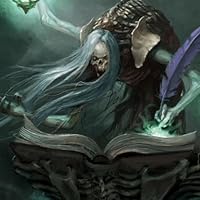
June 21, 2025
This was awesome! What an interesting way to introduce The Emperor to someone. I haven't read the Horus Heresy yet, but now I absolutely will. My only "gripe" was the McNeil clearly believed more in the logical side of the Emperor's reasoning as opposed to Uriah's faith... but I don't think that was the point of the story.
I've seen folks complaining on several platforms about how McNeil had already taken a side on the argument in his own head, especially with the way it ended. Two things can be said here- and will be said. First: It's 40K. The author isn't writing for philosophy majors, he's writing for English tabletop nerds. Calm down. Of course Psychic Jesus was gonna get what he wanted. Second, it's not about the argument, at least not in the sense of a victory over another.
For the Emperor, it was a way to boost his own ego, his assuredness in his own arrogance, etc. But for Uriah... Uriah was much more interesting to me. He was never going to convince a man of logic that faith was acceptable. He won in his own right. He didn't need to prove anything. It was his final act that was his victory. At least, that's my reading.
A wonderful representation of the clash between faith and reason nonetheless, perhaps it ends up revealing that both sides have deeply troubled individuals, and the only thing that makes one right is the ability to convince, or subdue others to your cause. Perhaps it means there is a third path. Perhaps it means that God is just as flawed as we are.
I've seen folks complaining on several platforms about how McNeil had already taken a side on the argument in his own head, especially with the way it ended. Two things can be said here- and will be said. First: It's 40K. The author isn't writing for philosophy majors, he's writing for English tabletop nerds. Calm down. Of course Psychic Jesus was gonna get what he wanted. Second, it's not about the argument, at least not in the sense of a victory over another.
For the Emperor, it was a way to boost his own ego, his assuredness in his own arrogance, etc. But for Uriah... Uriah was much more interesting to me. He was never going to convince a man of logic that faith was acceptable. He won in his own right. He didn't need to prove anything. It was his final act that was his victory. At least, that's my reading.
A wonderful representation of the clash between faith and reason nonetheless, perhaps it ends up revealing that both sides have deeply troubled individuals, and the only thing that makes one right is the ability to convince, or subdue others to your cause. Perhaps it means there is a third path. Perhaps it means that God is just as flawed as we are.

September 10, 2026
Brilliant, beautiful, although a bit "stereotypical" with its arguments. But that is the whole point. It is a realistic representation of the clash between religion and science.
I do not understand why people bash this saying "it's biased". Of course it's biased. It is how the Warhammer story goes. It is how it's always been established to go. That is one thing, but the other I dont understand is how people can't see that, biased or not, nobody ever wins at this game. Religion and Science are complete opposites. Matter and Anti-Matter.
Being on the Science side myself, I agree with The Emperor about every word he said. But that is for the context of our reality. The context here though, is for a fictional one. The story does push the Science camp more, again, as intended, but one can argue the exact opposite. Uriah's final decision, his words and warnings about the future are perfect examples. Retrospectively, knowing the "whole truth", you can argue Uriah is correct. There are gods (in Warhammer). A debate can be made and has been made and continues to be made every day about weather The Emperor's Truth was the correct approach. We may never know. And I argue that we will never know. Fiction or not. Science and Religion will always exist and oppose each other as it is their nature.
I do not understand why people bash this saying "it's biased". Of course it's biased. It is how the Warhammer story goes. It is how it's always been established to go. That is one thing, but the other I dont understand is how people can't see that, biased or not, nobody ever wins at this game. Religion and Science are complete opposites. Matter and Anti-Matter.
Being on the Science side myself, I agree with The Emperor about every word he said. But that is for the context of our reality. The context here though, is for a fictional one. The story does push the Science camp more, again, as intended, but one can argue the exact opposite. Uriah's final decision, his words and warnings about the future are perfect examples. Retrospectively, knowing the "whole truth", you can argue Uriah is correct. There are gods (in Warhammer). A debate can be made and has been made and continues to be made every day about weather The Emperor's Truth was the correct approach. We may never know. And I argue that we will never know. Fiction or not. Science and Religion will always exist and oppose each other as it is their nature.

January 25, 2026
What is This Book About? The Church of Lightning Stone stands defiant as the world’s last organized religion and institution. Patroned by one devout priest, it is more of a relic of the past than a vibrant faction on earth. As the priest goes through his stoic rituals within the confines of the church’s hollows, the self-proclaimed Emperor of Mankind is on the cusp of uniting Earth under one rule. His rule. And this new Emperor has abolished all religious practices with the exception of the Church of Lightning Stone. The last church.
My Review: This was one of the only short stories I have read within the WH40K universe, but it was phenomenal, nonetheless. Written with more of a gothic tone, this book reminds me of writings by Nathaniel Hawthorne and Edgar Allen Poe. But in Warhammer. I would definitely read this if you enjoy the lore of the Emperor, the Unity War, the Horus Heresy, or have a general appreciation for most things with political intrigue. The story is as haunting as it is fascinating.
Three Words that Describe this Book: eerie, gothic, haunting
Give This A Try if You Like… Dune, Dune Messiah, The Minister’s Black Veil, The Raven, The Justice of Kings
My Review: This was one of the only short stories I have read within the WH40K universe, but it was phenomenal, nonetheless. Written with more of a gothic tone, this book reminds me of writings by Nathaniel Hawthorne and Edgar Allen Poe. But in Warhammer. I would definitely read this if you enjoy the lore of the Emperor, the Unity War, the Horus Heresy, or have a general appreciation for most things with political intrigue. The story is as haunting as it is fascinating.
Three Words that Describe this Book: eerie, gothic, haunting
Give This A Try if You Like… Dune, Dune Messiah, The Minister’s Black Veil, The Raven, The Justice of Kings

April 9, 2023
The importance of this story isn't found so much in the sophomore debate being had between the protagonists over the said ailments mankind suffered for adherence to religion (as opposed to the benefit of holding a belief in God), but what this debate means for the foundation, and the future of the 41st millennium (a.k.a. Warhammer 40000).
If you were disappointed in this debate taking a side, just understand that's the point of the story which should become clear by the end of it. Additionally, the author may not have intended to give a grand sweeping tit for tat here in the interest of not only support for the existing franchise of lore, but because it's not needed, irony is already there. For all his enlightenment, the Emperor of mankind is still, but a man with an ego to feed.
In other words don't expect to justify or reinforce your personal beliefs based solely upon the limited discourse in a short fictional story for a sci-fi dystopian Intellectual Property that's largely satirical in the first place.
The voice edition I listened to was by Adam Nicol (not listed), and the acting was fair. No complaints with the audio.
If you were disappointed in this debate taking a side, just understand that's the point of the story which should become clear by the end of it. Additionally, the author may not have intended to give a grand sweeping tit for tat here in the interest of not only support for the existing franchise of lore, but because it's not needed, irony is already there. For all his enlightenment, the Emperor of mankind is still, but a man with an ego to feed.
In other words don't expect to justify or reinforce your personal beliefs based solely upon the limited discourse in a short fictional story for a sci-fi dystopian Intellectual Property that's largely satirical in the first place.
The voice edition I listened to was by Adam Nicol (not listed), and the acting was fair. No complaints with the audio.
May 21, 2026
Whilst The Last Church is a short story, it hits hard. It's pretty much just the emperor having a philosophical debate on religion with an elderly priest. What makes it so powerful is the tone. It's calm, almost gentle, but beneath it all, you can still feel the inevitability of what is going to happen. The Emperor isn't cruel, but his cold certainty that he is undoubtedly correct is unsettling more than malicious. You see both the idealist and the tyrant in him, the man who wants to save humanity but will burn everything to do so.
The Priest, Uriah, holds his ground with quiet dignity until the Emperor reveals that he is the very thing that drove Uriah to religion. The Emperor and Uriah leave the church, and The Emperor's soldiers set it ablaze. The Emperor offers Uriah a place in his new imperium, but Uriah declines the offer and chooses to walk back into the burning church to die with the last remnant of his belief.
It's a simple story, but it shows a lot about who The Emperor truly is and the foundations of belief that the Imperium was built on.
The Priest, Uriah, holds his ground with quiet dignity until the Emperor reveals that he is the very thing that drove Uriah to religion. The Emperor and Uriah leave the church, and The Emperor's soldiers set it ablaze. The Emperor offers Uriah a place in his new imperium, but Uriah declines the offer and chooses to walk back into the burning church to die with the last remnant of his belief.
It's a simple story, but it shows a lot about who The Emperor truly is and the foundations of belief that the Imperium was built on.

June 30, 2019
When Uriah realises that The Emperor being wise and all knowing , does not encounter a situation where he has no answer. Hence the Emperor would never be able to identify with or understand a person who relies on faith to deal with unanswered questions. That is Uriah's single most profound And character defining argument
But however, it is not workout flaws. But that for another day. Pretty Sure Richard Dawkins would push back this argument starting with " ..so you mean to say a man should not even attempt to gain knowledge and continue to dab in ignorance just so that it makes the whole situation of his unansweted queries conducive to retaining faith ? "
Anyway a relatively more philosophical overtone to the whm40k Universe. Had immense potential esp at the socio religious and psychological debate, but did not go for thr kill by being comprehensive. Perhaps because is a short story
But however, it is not workout flaws. But that for another day. Pretty Sure Richard Dawkins would push back this argument starting with " ..so you mean to say a man should not even attempt to gain knowledge and continue to dab in ignorance just so that it makes the whole situation of his unansweted queries conducive to retaining faith ? "
Anyway a relatively more philosophical overtone to the whm40k Universe. Had immense potential esp at the socio religious and psychological debate, but did not go for thr kill by being comprehensive. Perhaps because is a short story
This entire review has been hidden because of spoilers.

May 26, 2021
Как бы твои подданные не узрели бога в тебе самом.
Мастерски написанный, атмосферный и наполненный смыслом рассказ, повествующий о прибытии Императора в последний храм на Терре и посвященный разговору с его служителем.
В нем раскрывается позиция Императора по отношению к религии, что отлично дополняет грядущие события Ереси Хоруса и предвещает её последствия, невероятно жестокие в своей иронии.
Рассказ можно читать и после прочтения Ереси и во время, но так же он может стать и отличной входной точкой в мир Молота Войны. Вместе с повестью "Вальдор. Рождение Империума" они расскажут о Терре до начала Великого Крестового похода, с которого началась война, определившая судьбу галактики на долгие тысячелетия.
Оценка - 8/10
Рейтинг "goodreads" - 4.28/5
Моя группа Вконтакте - https://vk.com/ashborndetv
Мастерски написанный, атмосферный и наполненный смыслом рассказ, повествующий о прибытии Императора в последний храм на Терре и посвященный разговору с его служителем.
В нем раскрывается позиция Императора по отношению к религии, что отлично дополняет грядущие события Ереси Хоруса и предвещает её последствия, невероятно жестокие в своей иронии.
Рассказ можно читать и после прочтения Ереси и во время, но так же он может стать и отличной входной точкой в мир Молота Войны. Вместе с повестью "Вальдор. Рождение Империума" они расскажут о Терре до начала Великого Крестового похода, с которого началась война, определившая судьбу галактики на долгие тысячелетия.
Оценка - 8/10
Рейтинг "goodreads" - 4.28/5
Моя группа Вконтакте - https://vk.com/ashborndetv
September 27, 2025
Deliciously ironic story on both sides of the debate, both in hindsight and within its self-contained narrative. I've seen complaints that it's pretty shallow as a philosophical or religious debate, and I agree, but I also don't think that's a detractor from it necessarily. 40k is a setting that predominantly showcases the folly of its characters and ideologies, so while it would have been interesting to hear some more robust arguments, rather than some Reddit atheist arguing, I think that's missing the point of the story. I found it ultimately a story about human beliefs and human shortcomings, and it's well tailored to that purpose.
P.S: There's an animatic adaptation of this story on YouTube, and I find it cuts out some of the blunter writing in here, making it a little more graceful. I'd say that rendition of it is a proper 5/5.
P.S: There's an animatic adaptation of this story on YouTube, and I find it cuts out some of the blunter writing in here, making it a little more graceful. I'd say that rendition of it is a proper 5/5.
Displaying 1 - 30 of 95 reviews