

What do you think?

In the Footsteps of Mr. Kurtz: Living on the Brink of Disaster in Mobutu's Congo
He was known as "the Leopard," and for the thirty-two years of his reign Mobutu Sese Seko, president of Zaire, showed all the cunning of his namesake, seducing Western powers, buying up the opposition, and dominating his people with a devastating combination of brutality and charm. While the population was pauperized, he plundered the country's copper and diamond resources, downing pink champagne in his jungle palace like some modern-day reincarnation of Joseph Conrad's crazed station manager.
Michela Wrong, a correspondent who witnessed firsthand Mobutu's last days, traces the rise and fall of the idealistic young journalist who became the stereotype of an African despot. Engrossing, highly readable, and as funny as it is tragic, her book assesses how Belgium's King Leopold, the CIA, and the World Bank all helped to bring about the disaster that is now the Democratic Republic of Congo. If, in this poignant account, the villains are the "Big Vegetables" (les Grosses légumes) — the fat cats who benefited from Mobutu's largesse — the heroes are the ordinary citizens trapped in a parody of a state. Living in the shadow of a disintegrating nuclear reactor, where banknotes are not worth the paper they are printed on, they have turned survival into an art form. For all its valuable insights into Africa's colonial heritage and the damage done by Western intervention, In the Footsteps of Mr. Kurtz is ultimately a celebration of the irrepressible human spirit.
Michela Wrong, a correspondent who witnessed firsthand Mobutu's last days, traces the rise and fall of the idealistic young journalist who became the stereotype of an African despot. Engrossing, highly readable, and as funny as it is tragic, her book assesses how Belgium's King Leopold, the CIA, and the World Bank all helped to bring about the disaster that is now the Democratic Republic of Congo. If, in this poignant account, the villains are the "Big Vegetables" (les Grosses légumes) — the fat cats who benefited from Mobutu's largesse — the heroes are the ordinary citizens trapped in a parody of a state. Living in the shadow of a disintegrating nuclear reactor, where banknotes are not worth the paper they are printed on, they have turned survival into an art form. For all its valuable insights into Africa's colonial heritage and the damage done by Western intervention, In the Footsteps of Mr. Kurtz is ultimately a celebration of the irrepressible human spirit.
338 pages, Paperback
First published January 1, 2000
About the author
Michela Wrong
7 books258 followersHalf-Italian, half-British, Michela Wrong was born in 1961. She grew up in London and took a degree in Philosophy and Social Sciences at Jesus College, Cambridge and a diploma in journalism at Cardiff.
She joined Reuters news agency in the early 1980s and was posted as a foreign correspondent to Italy, France and Ivory Coast. She became a freelance journalist in 1994, when she moved to then-Zaire and found herself covering both the genocide in neighbouring Rwanda and the final days of dictator Mobutu Sese Seko for the BBC and Reuters. She later moved to Kenya, where she spent four years covering east, west and central Africa for the Financial Times newspaper.
In 2000 she published her first book, "In the Footsteps of Mr Kurtz", the story of Mobutu's rise and fall, which won a PEN prize for non-fiction. Her second book, "I didn't do it for you", which focused on the little-written-about Red Sea nation of Eritrea, came out in 2005 and was hailed as a "gripping political thriller" by Monica Ali.
Her third book, published in February 2009, was "It's Our Turn to Eat", which tracks the story of Kenyan corruption whistleblower John Githongo, who sought refuge in her London flat. Boycotted by Nairobi bookshops terrified of being sued, it has become an underground bestseller in Kenya, distributed by local churches, radio stations and non-governmental groups and debated in town hall meetings. Described as reading "like a cross between Le Carre and Solzhenitsyn", it has triggered expressions of interest from US and South African film directors. It was named as one of the Economist's "best books of 2009" and was shortlisted for the Orwell Prize.
Michela Wrong's non-fiction books on contemporary Africa aim to be accessible to both members of the general public and experts in the field. They have become a must-read for diplomats, aid officials, journalists and strategists based on the continent and regularly feature on the "required reading" lists of International Relations and African Studies courses at university. She was awarded the 2010 James Cameron prize for journalism "that combined moral vision and professional integrity
She currently lives in London and is regularly interviewed by the BBC, Al Jazeera and Reuters on her areas of expertise. She has published opinion pieces and book reviews in the Observer, Guardian, Financial Times, New Statesman, Spectator, Standpoint and Foreign Policy magazine, and travel pieces for Traveler Conde Nast. She speaks fluent Italian and French.
In 2014 she was appointed literary director of the Miles Morland Foundation, which funds a range of African literary festivals and a scholarship scheme for African writers. She is a trustee of the Africa Research Institute and an advisor to the Centre for Global Development.
She joined Reuters news agency in the early 1980s and was posted as a foreign correspondent to Italy, France and Ivory Coast. She became a freelance journalist in 1994, when she moved to then-Zaire and found herself covering both the genocide in neighbouring Rwanda and the final days of dictator Mobutu Sese Seko for the BBC and Reuters. She later moved to Kenya, where she spent four years covering east, west and central Africa for the Financial Times newspaper.
In 2000 she published her first book, "In the Footsteps of Mr Kurtz", the story of Mobutu's rise and fall, which won a PEN prize for non-fiction. Her second book, "I didn't do it for you", which focused on the little-written-about Red Sea nation of Eritrea, came out in 2005 and was hailed as a "gripping political thriller" by Monica Ali.
Her third book, published in February 2009, was "It's Our Turn to Eat", which tracks the story of Kenyan corruption whistleblower John Githongo, who sought refuge in her London flat. Boycotted by Nairobi bookshops terrified of being sued, it has become an underground bestseller in Kenya, distributed by local churches, radio stations and non-governmental groups and debated in town hall meetings. Described as reading "like a cross between Le Carre and Solzhenitsyn", it has triggered expressions of interest from US and South African film directors. It was named as one of the Economist's "best books of 2009" and was shortlisted for the Orwell Prize.
Michela Wrong's non-fiction books on contemporary Africa aim to be accessible to both members of the general public and experts in the field. They have become a must-read for diplomats, aid officials, journalists and strategists based on the continent and regularly feature on the "required reading" lists of International Relations and African Studies courses at university. She was awarded the 2010 James Cameron prize for journalism "that combined moral vision and professional integrity
She currently lives in London and is regularly interviewed by the BBC, Al Jazeera and Reuters on her areas of expertise. She has published opinion pieces and book reviews in the Observer, Guardian, Financial Times, New Statesman, Spectator, Standpoint and Foreign Policy magazine, and travel pieces for Traveler Conde Nast. She speaks fluent Italian and French.
In 2014 she was appointed literary director of the Miles Morland Foundation, which funds a range of African literary festivals and a scholarship scheme for African writers. She is a trustee of the Africa Research Institute and an advisor to the Centre for Global Development.
Ratings & Reviews
Friends & Following
Create a free account to discover what your friends think of this book!
Community Reviews
Displaying 1 - 30 of 208 reviews
November 11, 2017
I have never been to Congo, or Zaire. It is one of the countries on the African continent I, despite all my curiosity and lust for adventure, will probably never experience.
Nearly 150 years have gone by since “The Congo Free State” was established. 150 years of terror, divide and rule governance and kleptocracy, internal wars and closed eyes to Hutu/Tutsi conflicts, letting the genocides happen.
From colonialism to relative freedom – one bad ruler was exchanged for another.
Painstakingly depressing the West played on several horses, backing one for lack of a better or, during the cold war, backing one to make sure the Soviet did not get foothold.
Even when watching assets disappear into the air at rocket speed the World Bank did not call it a day. Too much at stake politically. 75 million people are working poor and with no access to health or education, send more money.
Except there was plenty of money. The National Mint of Zaire will print more if we run out, there are assets to cover it, a non-stop money-press running on the presumed value of copper, diamonds, cobalt and lots of other valuable resources. Except the books were cooked, and had been so for a very long time.
There were many reasons, Mobuto´s way of handling treasury as was it his pocket money is just one. Certainly his extravagant lifestyle contributed, but taking no interest in the country´s financial matters was far worse. The money was there to be spent, a tool for negotiation, a lubricant and a reward or pay-off.
In comes the word “tribalism”. Graces bestowed on people of your own tribe, clan and extended family is nothing new in Africa. In some countries it is considered only natural, in other politicians insist it does not exist, and even the word is taken as an offence.
Not in Zaire. A country divided in so many ethnic groups it was hard to establish any common ground politically. One of Mobuto´s favorites were told to be Machiavelli. Divide and rule & it is better to be feared than loved.
A way of dividing would be passing large amounts around, cash in brown envelopes, buying, at least for a time, faithfulness. But, you could never be sure. If an ally grows too strong, he may turn against you and thus government positions were shifted on regular basis, making sure nobody would ever feel safe.
Put briefly, it is bad governance – or a failed state.
You may wonder how things could go bad like this – and there are many reasons. Belgian colonial rule had been brutal and everyone had learned to fend for themselves economically. The sudden independence left a power void, even Patrice Lumumba were elected democratically the mandate was never a platform for “one country”. 5 years of political crisis with several governments paved the way for Mobuto who openly declared that “thieving just a little” was a tradition to be supported.
Regrettably, what could have been a new start for a country so rich in natural resources turned out to be a deroute. As seen in neighboring countries, the first-generation leader would cling on to power for dear life and the golden promises turn out to be castles in the sky – built only for show off.
Mobutu Sese Seko Kuku Ngbendu Wa Za Banga –
"The warrior who knows no defeat because of his endurance and inflexible will and is all powerful, leaving fire in his wake as he goes from conquest to conquest".
Tremendously well researched and documented, this account of human and political disaster deserves 5 full stars!
Nearly 150 years have gone by since “The Congo Free State” was established. 150 years of terror, divide and rule governance and kleptocracy, internal wars and closed eyes to Hutu/Tutsi conflicts, letting the genocides happen.
From colonialism to relative freedom – one bad ruler was exchanged for another.
Painstakingly depressing the West played on several horses, backing one for lack of a better or, during the cold war, backing one to make sure the Soviet did not get foothold.
Even when watching assets disappear into the air at rocket speed the World Bank did not call it a day. Too much at stake politically. 75 million people are working poor and with no access to health or education, send more money.
Except there was plenty of money. The National Mint of Zaire will print more if we run out, there are assets to cover it, a non-stop money-press running on the presumed value of copper, diamonds, cobalt and lots of other valuable resources. Except the books were cooked, and had been so for a very long time.
There were many reasons, Mobuto´s way of handling treasury as was it his pocket money is just one. Certainly his extravagant lifestyle contributed, but taking no interest in the country´s financial matters was far worse. The money was there to be spent, a tool for negotiation, a lubricant and a reward or pay-off.
In comes the word “tribalism”. Graces bestowed on people of your own tribe, clan and extended family is nothing new in Africa. In some countries it is considered only natural, in other politicians insist it does not exist, and even the word is taken as an offence.
Not in Zaire. A country divided in so many ethnic groups it was hard to establish any common ground politically. One of Mobuto´s favorites were told to be Machiavelli. Divide and rule & it is better to be feared than loved.
A way of dividing would be passing large amounts around, cash in brown envelopes, buying, at least for a time, faithfulness. But, you could never be sure. If an ally grows too strong, he may turn against you and thus government positions were shifted on regular basis, making sure nobody would ever feel safe.
Put briefly, it is bad governance – or a failed state.
You may wonder how things could go bad like this – and there are many reasons. Belgian colonial rule had been brutal and everyone had learned to fend for themselves economically. The sudden independence left a power void, even Patrice Lumumba were elected democratically the mandate was never a platform for “one country”. 5 years of political crisis with several governments paved the way for Mobuto who openly declared that “thieving just a little” was a tradition to be supported.
Regrettably, what could have been a new start for a country so rich in natural resources turned out to be a deroute. As seen in neighboring countries, the first-generation leader would cling on to power for dear life and the golden promises turn out to be castles in the sky – built only for show off.
Mobutu Sese Seko Kuku Ngbendu Wa Za Banga –
"The warrior who knows no defeat because of his endurance and inflexible will and is all powerful, leaving fire in his wake as he goes from conquest to conquest".
Tremendously well researched and documented, this account of human and political disaster deserves 5 full stars!

May 13, 2009
As a candidate for the past century's worst country it has no parallels. In order you've got: pillage, rape, genocide, more rape, CIA-sponsored political assassinations, a brutal dictatorship, the world's first genuine "kleptocracy", corruption on a grand and almost immortal scale, bad interior decorating, a surfeit of Louis Vutton luggage, hunger, AIDS, bankruptcy, civil war, more genocide, more civil war, and even more rape. There is even a fucking decaying nuclear reactor there, if you can believe that (I still can't.)
Anyways, as a history of the Mobutu period this is a cracking good read. Like King Leopold's Ghost, it's mostly just a catalog of one absurd horror after another, punctuated by mini-bios of the colorful characters responsible: Mobutu and the "Big Vegetables." This is a good template for writing about Africa, I think, but there's a predictable downside: the author comes across as pretentious and slightly uneven in tone (not dissimilar from yours truly,) and like most whites in Africa spends too much time focusing on the quirky ex-pats who populate her immediate social sphere and not enough on the 60 million plus black Africans who've been catching it in the shorts for a century plus. For this I give her a single demerit.
Still, I mean, read it already.
Anyways, as a history of the Mobutu period this is a cracking good read. Like King Leopold's Ghost, it's mostly just a catalog of one absurd horror after another, punctuated by mini-bios of the colorful characters responsible: Mobutu and the "Big Vegetables." This is a good template for writing about Africa, I think, but there's a predictable downside: the author comes across as pretentious and slightly uneven in tone (not dissimilar from yours truly,) and like most whites in Africa spends too much time focusing on the quirky ex-pats who populate her immediate social sphere and not enough on the 60 million plus black Africans who've been catching it in the shorts for a century plus. For this I give her a single demerit.
Still, I mean, read it already.

July 17, 2010
As a foreign correspondent stationed in Zaire/Congo, Michela Wrong witnessed the strangeness and tragedy of Mobutu Sese Seko's gangster dictatorship up close. For three decades of kleptocracy, Bretton Woods (the World Bank and the IMF) didn't just look the other way - they acquiesced in Mobutu's corruption, allowing him more than $3 million per month for his "presidential endowment:" personal security, an entourage, and travel expenses. Bretton Woods kept doing business with Zaire even after Mobutu sanctioned the police beating of a BW official and the rape of his wife and daughters. Wrong's chapter on the ways Mobutu played the development and diplomatic communities, and how they allowed themselves to be played, makes for eye-opening reading. Not supporting Mobutu would be the equivalent of calling for a coup, State Department officials continually felt; in the Reagan administration, Alexander Haig and George Schultz's answer to the Mobutu problem was always "Who else is there?"
Zaire had rich mineral resources, which, managed properly, should have been a source of national wealth. Instead, over many years they were looted and wasted, which should serve as a warning to those who think Afghanistan's recently announced lodes will automatically lead to prosperity and other good things. (For a good discussion of how mineral resources often have little to do with national wealth and GDP, see John Kay's Culture and Prosperity: The Truth About Markets - Why Some Nations Are Rich but Most Remain Poor, which is what led me to this book.) By the end of the 20th century, Wrong notes, Congo's annual operating budget for what was "potentially one of Africa's richest states was dipping below the daily takings of the US superstore Wal-Mart."
What funds Mobutu didn't distribute to regional and local tribal leaders pork barrel style, to maintain power, tended to go toward his Louis XIV-style aspirations. He routinely chartered the Concorde, which was "often to be glimpsed idling on the tarmac" in the rainforest town of Gbadolite, where he was building a luxurious personal compound dubbed by the foreign press "Versailles in the Jungle." The main villa featured 7-meter malachite doors which required two men to open. Pink champagne, Mobutu's favorite beverage, flowed constantly (12,000 bottles/year) and lunch was mussels flown in from Zeebrugge (a Belgian village). Large imported herds of sheep and cattle would in later years be barbequed by looters and Laurent Kabila's rebels.
Wrong's writing is lively and colorful, as in this description of Mobutu's estranged Belgian son-in-law: "Yet his fleshy, sun-kissed face hardly spelled deprivation. ...he had the cocktail-goers' habit of avoiding eye contact, constantly scouring the expensive Chinese restaurant we had retired to for someone more interesting to talk to. As his search was rewarded ('Look, there's John Galliano')..."
Zaire had rich mineral resources, which, managed properly, should have been a source of national wealth. Instead, over many years they were looted and wasted, which should serve as a warning to those who think Afghanistan's recently announced lodes will automatically lead to prosperity and other good things. (For a good discussion of how mineral resources often have little to do with national wealth and GDP, see John Kay's Culture and Prosperity: The Truth About Markets - Why Some Nations Are Rich but Most Remain Poor, which is what led me to this book.) By the end of the 20th century, Wrong notes, Congo's annual operating budget for what was "potentially one of Africa's richest states was dipping below the daily takings of the US superstore Wal-Mart."
What funds Mobutu didn't distribute to regional and local tribal leaders pork barrel style, to maintain power, tended to go toward his Louis XIV-style aspirations. He routinely chartered the Concorde, which was "often to be glimpsed idling on the tarmac" in the rainforest town of Gbadolite, where he was building a luxurious personal compound dubbed by the foreign press "Versailles in the Jungle." The main villa featured 7-meter malachite doors which required two men to open. Pink champagne, Mobutu's favorite beverage, flowed constantly (12,000 bottles/year) and lunch was mussels flown in from Zeebrugge (a Belgian village). Large imported herds of sheep and cattle would in later years be barbequed by looters and Laurent Kabila's rebels.
Wrong's writing is lively and colorful, as in this description of Mobutu's estranged Belgian son-in-law: "Yet his fleshy, sun-kissed face hardly spelled deprivation. ...he had the cocktail-goers' habit of avoiding eye contact, constantly scouring the expensive Chinese restaurant we had retired to for someone more interesting to talk to. As his search was rewarded ('Look, there's John Galliano')..."

April 1, 2018
In the Footsteps of Mr. Kurtz is part biography and part historical book on Mobutu’s reign in Zaire from the 60’s to 90’s.
The author, Michela Wrong, is not a historian but a foreign correspondent. Close to the heart of the dictatorship, she knows the situation well, because she lived in Zaire and Kinshasa for six years during Mobutu’s reign and overthrow.
In the early chapters, there is a lackluster attempt by the author to provide background history on the Congo region. The atrocities committed by King Leopold’s Belgian venture have been covered in many bestselling books. The author acknowledges in her bibliography that King Leopold’s Ghost by Adam Hochschild is a stellar read. I would say that the author would have been better off skipping these chapters as her strength is not as a historian.
The author then briefly discusses Mobutu’s overthrow of Lumumba. These events should have been a dramatic scene in the book but were not emphasized enough in my opinion.
I found the section covering Mobutu’s demise to be far and away the best part of the book. This is probably because it was contemporary to the author’s time in Zaire. I would go as far as to say the book would have been better if it only focused on the last year of Mobutu’s reign and the stories of the million Tutsi’s refugees from the Rwandan crisis that flowed into Zaire and led to the rebellion that brought down Mobutu.
I have no regrets in reading the book but at times it was a slog. Focused on facts with solid sentence composition and compelling yet the story lacked consistent show-me storytelling and at times was unsuccessful in highlighting the especially dramatic portions of Mobutu’s life and Zaire’s history.
Somewhere between 3 and 4 stars
The author, Michela Wrong, is not a historian but a foreign correspondent. Close to the heart of the dictatorship, she knows the situation well, because she lived in Zaire and Kinshasa for six years during Mobutu’s reign and overthrow.
In the early chapters, there is a lackluster attempt by the author to provide background history on the Congo region. The atrocities committed by King Leopold’s Belgian venture have been covered in many bestselling books. The author acknowledges in her bibliography that King Leopold’s Ghost by Adam Hochschild is a stellar read. I would say that the author would have been better off skipping these chapters as her strength is not as a historian.
The author then briefly discusses Mobutu’s overthrow of Lumumba. These events should have been a dramatic scene in the book but were not emphasized enough in my opinion.
I found the section covering Mobutu’s demise to be far and away the best part of the book. This is probably because it was contemporary to the author’s time in Zaire. I would go as far as to say the book would have been better if it only focused on the last year of Mobutu’s reign and the stories of the million Tutsi’s refugees from the Rwandan crisis that flowed into Zaire and led to the rebellion that brought down Mobutu.
I have no regrets in reading the book but at times it was a slog. Focused on facts with solid sentence composition and compelling yet the story lacked consistent show-me storytelling and at times was unsuccessful in highlighting the especially dramatic portions of Mobutu’s life and Zaire’s history.
Somewhere between 3 and 4 stars

January 17, 2018
Michela Wrong’s biography of President Mobutu of Zaire is also part travelogue and part political commentary. The sketch she gives of Mobutu can be gleaned from the press of the time, but the travelogue and commentary may be unique.
Wrong shows how the brutality of the Belgians working (literally) for King Leopold (this was King’s personal colony, and not that of Belgium) created the society that made Mobutu possible. There is some speculation as to how Mobutu prevailed in the early days of liberation. I got a new perspective on the Mobutu-Lumumba relationship.
Mobutu is said to be charming (hard to imagine) and clever (undoubtedly so). Against the recommendations of any accountant not cowed by him, US, the EU countries and the IMF give him money. His hangers on are the “big vegetables” who take these fortunes and then extract taxes from an already poor population. Their lavish lifestyles are described: cars, homes; hotels, travel and party life. There is no understanding that the government should do anything for the people.
Despite the country’s great mineral wealth there is nothing for the citizens. All the outside money (loans which the poor who could not flee will eventually have to pay) goes to the top. Most of the photos show a theme of the book which is how the enterprising Congolese make a living hustling over nothing.
In the midst of the poverty and chaos, many turn to religion and there is a profile of a Kimbangu a large and well supported sect that believes God is a black man. Some young people embrace "sapeur" which seems to be a way for young people to feel beautiful. You learn of Article 15 where the disabled can use transport free, and there are many disabled. There is an interview of a once idealistic European couple who seem to have lost millions in trying to farm after the Belgians left.
You learn how Mobutu played the US, EU countries and the IMF despite all the accountants’ warnings. He did not keep much watch on this own money overpaying for champagne, cars and all else, ignoring the schemes of his family and friends and handing out $100 bills. You learn how he did not grasp the post-Soviet world. When opportunities opened up elsewhere, fair weather friends deserted him. The army that he paid only erratically behaved in kind.
Wrong notes that despite this blatant extraction of wealth, there were no cells at home or abroad plotting Mobutu’s downfall. I did not know how the Rwanda genocide eventually led to Mobutu’s resignation. While Congolese joined the opposition, he was essentially brought down from the outside . Wrong does not explain why the King of Morocco took him in, but you get the feeling that it is similar to the innuendo surrounding his support from France.
This is a good overview and a starting place for understanding today’s Congo.
Wrong shows how the brutality of the Belgians working (literally) for King Leopold (this was King’s personal colony, and not that of Belgium) created the society that made Mobutu possible. There is some speculation as to how Mobutu prevailed in the early days of liberation. I got a new perspective on the Mobutu-Lumumba relationship.
Mobutu is said to be charming (hard to imagine) and clever (undoubtedly so). Against the recommendations of any accountant not cowed by him, US, the EU countries and the IMF give him money. His hangers on are the “big vegetables” who take these fortunes and then extract taxes from an already poor population. Their lavish lifestyles are described: cars, homes; hotels, travel and party life. There is no understanding that the government should do anything for the people.
Despite the country’s great mineral wealth there is nothing for the citizens. All the outside money (loans which the poor who could not flee will eventually have to pay) goes to the top. Most of the photos show a theme of the book which is how the enterprising Congolese make a living hustling over nothing.
In the midst of the poverty and chaos, many turn to religion and there is a profile of a Kimbangu a large and well supported sect that believes God is a black man. Some young people embrace "sapeur" which seems to be a way for young people to feel beautiful. You learn of Article 15 where the disabled can use transport free, and there are many disabled. There is an interview of a once idealistic European couple who seem to have lost millions in trying to farm after the Belgians left.
You learn how Mobutu played the US, EU countries and the IMF despite all the accountants’ warnings. He did not keep much watch on this own money overpaying for champagne, cars and all else, ignoring the schemes of his family and friends and handing out $100 bills. You learn how he did not grasp the post-Soviet world. When opportunities opened up elsewhere, fair weather friends deserted him. The army that he paid only erratically behaved in kind.
Wrong notes that despite this blatant extraction of wealth, there were no cells at home or abroad plotting Mobutu’s downfall. I did not know how the Rwanda genocide eventually led to Mobutu’s resignation. While Congolese joined the opposition, he was essentially brought down from the outside . Wrong does not explain why the King of Morocco took him in, but you get the feeling that it is similar to the innuendo surrounding his support from France.
This is a good overview and a starting place for understanding today’s Congo.

December 25, 2017
I found the first half of this book to be riveting. An analysis of the historical background to the Congo, Leopold, the rise of Mobutu, and a fascinating analysis of the anatomy simply of a dictatorship, but of the particular form of kleptocracy that Mobutu pioneered.
The second half describes different sectors of the society, economic, mining, the hyper-inflation, the abysmal condition of infrastructure of all sorts from roads to airports to hospitals — much of which was the result of the total collapse of Congolese society brought about by the draining of resources by the corrupt regime...., and finally, An account of the Rawandan genocide and the fall and death of Mobutu...., by which point I was exhausted and sated... what a mess!
Very well written, with intensity and passion and analytical clarity. A fine book.
The second half describes different sectors of the society, economic, mining, the hyper-inflation, the abysmal condition of infrastructure of all sorts from roads to airports to hospitals — much of which was the result of the total collapse of Congolese society brought about by the draining of resources by the corrupt regime...., and finally, An account of the Rawandan genocide and the fall and death of Mobutu...., by which point I was exhausted and sated... what a mess!
Very well written, with intensity and passion and analytical clarity. A fine book.

March 17, 2008
Ms. Wrong is a talented journalist and here she's written a solid obituary to the Mobutu era with some real-time observations on the brief and tumultuous reign of Mzee Laurent Kabila. The entire story of post-colonial DR Congo/Zaire is painted as outlandish and foolhardy with brushes of acerbic irony.
The book brought together several pieces of the puzzle for me and several times provoked an 'aha' out loud as I made connections to the life I observe daily in present-day DR Congo.
Footsteps is well written from an expatriate journalist perspective. My only major critique is that it seems Ms. Wrong has no time or interest in seeing the beauty of DRC in its land and its people, of at least giving a serious and direct nod to the suffering that is part of Mobutu's legacy. There is plenty to gawk at and rant over to fill this book and probably three more, but the kind of eye that sees the controversy and doesn't strive to also show the society in its humanness and loveliness is short sided. It sounds a little too much like a burned out expat who can't see the beauty amidst the mess.
The book brought together several pieces of the puzzle for me and several times provoked an 'aha' out loud as I made connections to the life I observe daily in present-day DR Congo.
Footsteps is well written from an expatriate journalist perspective. My only major critique is that it seems Ms. Wrong has no time or interest in seeing the beauty of DRC in its land and its people, of at least giving a serious and direct nod to the suffering that is part of Mobutu's legacy. There is plenty to gawk at and rant over to fill this book and probably three more, but the kind of eye that sees the controversy and doesn't strive to also show the society in its humanness and loveliness is short sided. It sounds a little too much like a burned out expat who can't see the beauty amidst the mess.

May 13, 2019
This leader, the President of his country, was insanely popular as he was not without his good qualities. He was a pragmatic, hardworking leader with a quiet good sense. He had this admirable decisiveness and courage under difficult circumstances, time and again demonstrating his ability to make the unruly and the troublemakers behave.
The people looked up to him as a father. In rallies he would speak to them in his native dialect, in a lingo easily understood by the masses—
“It would be full of puns, wordplay and wisecracks. (He) would get the crowd giggling, cheering and laughing. As often as not, there would be a public putdown for an unpopular aide or minister, sometimes a sacking. It was (his) way of assessing the national mood and lancing the boil of public discontent before it turned septic.
“‘He was a speaker of genius,’ said a … journalist who was a student at that time. ‘I would go unwillingly, because I didn’t really approve of (him). But as soon as he began speaking, we would be swept away. We’d stand in the sun for hours, but the time would slip by without you noticing. If you study those speeches now, in the cold light of day, you can see there was almost nothing in them, they were full of inconsistencies, gossip and tittle-tattle. But he knew just how to speak to the people. He would tell us nonsense and we would believe him.’
He had charm. Those who had a brush with him rarely forgot the experience, remarking on his extraordinary personal charisma. He had—
“a presence, a capacity to command attention, an innate conviction of (his) uniqueness, combined…with the more manipulative ability of making the interlocutor believe he has (his) undivided attention and has gained a certain undefinable something from the encounter….(W)hen you were in his presence discussing anything that was important to him, you suddenly saw this quite extraordinary personality, a kind of glowing personality. No matter what you thought of his behaviour or what he was doing to the country, you could see why he was in charge. ..He had a gift for the grand gesture, a stylish bravado that captured the imagination…(H)e could be all things to all men, holding up a mirror to his interlocutors that reflected back their wishes, convincing each that he perfectly understood their predicament and was on their side. ‘He could treat people with kid gloves or he could treat them with a steel fist,’ remembered a former…minister who saw more of the fist than the glove. ‘It was different for everyone. He was very clever at tailoring the response to the individual.’”
All throughout the years of his rule he would give the impression of movement, reform and change. He liked to do frequent government reshuffles, ministerial sackings, appointments, transfers and reappointments. He’d formulate government policies and decisions using nebulous and suspicious statistics. He had the capacity to tell the most outrageous lies without pausing for breath. His monstrous presidential fibs are legends.
He spoke against corruption but was surrounded by corrupt sycophants on whose graft-ridden activities he turned a blind eye on as he needed allies to keep himself in power.
Just a few months into his rule, he antagonized the west by flirting with Moscow and angered the United Nations as well. Believing in his greatness, he started a movement to allegedly recover national pride and had pushed for a change in his country’s name.
He was Mobutu Sese Seko Kuku Ngbendu, or President Mobutu of Zaire (formerly Congo) and he ran his country to the ground, which brought untold sufferings to his people, including those who laughed and cheered during his speeches.
God save the Philippines!
The people looked up to him as a father. In rallies he would speak to them in his native dialect, in a lingo easily understood by the masses—
“It would be full of puns, wordplay and wisecracks. (He) would get the crowd giggling, cheering and laughing. As often as not, there would be a public putdown for an unpopular aide or minister, sometimes a sacking. It was (his) way of assessing the national mood and lancing the boil of public discontent before it turned septic.
“‘He was a speaker of genius,’ said a … journalist who was a student at that time. ‘I would go unwillingly, because I didn’t really approve of (him). But as soon as he began speaking, we would be swept away. We’d stand in the sun for hours, but the time would slip by without you noticing. If you study those speeches now, in the cold light of day, you can see there was almost nothing in them, they were full of inconsistencies, gossip and tittle-tattle. But he knew just how to speak to the people. He would tell us nonsense and we would believe him.’
He had charm. Those who had a brush with him rarely forgot the experience, remarking on his extraordinary personal charisma. He had—
“a presence, a capacity to command attention, an innate conviction of (his) uniqueness, combined…with the more manipulative ability of making the interlocutor believe he has (his) undivided attention and has gained a certain undefinable something from the encounter….(W)hen you were in his presence discussing anything that was important to him, you suddenly saw this quite extraordinary personality, a kind of glowing personality. No matter what you thought of his behaviour or what he was doing to the country, you could see why he was in charge. ..He had a gift for the grand gesture, a stylish bravado that captured the imagination…(H)e could be all things to all men, holding up a mirror to his interlocutors that reflected back their wishes, convincing each that he perfectly understood their predicament and was on their side. ‘He could treat people with kid gloves or he could treat them with a steel fist,’ remembered a former…minister who saw more of the fist than the glove. ‘It was different for everyone. He was very clever at tailoring the response to the individual.’”
All throughout the years of his rule he would give the impression of movement, reform and change. He liked to do frequent government reshuffles, ministerial sackings, appointments, transfers and reappointments. He’d formulate government policies and decisions using nebulous and suspicious statistics. He had the capacity to tell the most outrageous lies without pausing for breath. His monstrous presidential fibs are legends.
He spoke against corruption but was surrounded by corrupt sycophants on whose graft-ridden activities he turned a blind eye on as he needed allies to keep himself in power.
Just a few months into his rule, he antagonized the west by flirting with Moscow and angered the United Nations as well. Believing in his greatness, he started a movement to allegedly recover national pride and had pushed for a change in his country’s name.
He was Mobutu Sese Seko Kuku Ngbendu, or President Mobutu of Zaire (formerly Congo) and he ran his country to the ground, which brought untold sufferings to his people, including those who laughed and cheered during his speeches.
God save the Philippines!
October 3, 2022
A splendid examination of Congo/Zaire under one of the 20th century's more grotesque dictators. That Congo is today a near a perfect example of a failed state is a for those of us far away from its reality a source of astonishment and at times amusement at the bizarreness of it all. For those who live there it is a nightmare of living through hell on earth. Mobuto may have been a monster but for years his monstrosities were known and overlooked by Western governments, and a host of willfully ignorant or uncaring people ranging from famous sportsmen, athletes and boxers though famous designers, architects, film stars, Playboy's and jet setting Euro/USA trash - all happy to over look his crimes as long as he spouted anti-communist slogans and provided lavish entertainments and western luxuries at at his palaces in Africa and France. It is not that people don't, people choose not to know. Just more then a century ago people chose not to know that Leopold II was running an obscene regime that was making him millions of francs while killing millions of people.
Congo/Zaire is hell made by our indifference and Michela Wrong narrates the horror brilliantly. There were a number of books that have recounted Mobuto's story and the fate of the Congo and hers is still, despite the passage of time, one that I'd still worth reading. That there are things she wrote in this book that she now has changed her mind about - particularly the whole Rwanda war element in the story of Congo will be known to anyone who has read her brilliant book 'Do Not Disturb: the True Story of a Political Murder and an African Regime Gone Bad'. She has dropped this book from her list of works. Admirable because it shows she is willing to acknowledge her mistakes and to learn from them, something governments and politicians are unwilling or unable to do.
Still this is one of the best books about what happened in the Congo. Read it and weep at the hypocracy of us all.
Congo/Zaire is hell made by our indifference and Michela Wrong narrates the horror brilliantly. There were a number of books that have recounted Mobuto's story and the fate of the Congo and hers is still, despite the passage of time, one that I'd still worth reading. That there are things she wrote in this book that she now has changed her mind about - particularly the whole Rwanda war element in the story of Congo will be known to anyone who has read her brilliant book 'Do Not Disturb: the True Story of a Political Murder and an African Regime Gone Bad'. She has dropped this book from her list of works. Admirable because it shows she is willing to acknowledge her mistakes and to learn from them, something governments and politicians are unwilling or unable to do.
Still this is one of the best books about what happened in the Congo. Read it and weep at the hypocracy of us all.

December 22, 2011
Wrong, a journalist, documents the reign and fall of Mobutu, head of Zaire for thirty years, and his influence upon the country’s fortunes. It’s a tale of tragicomic proportions, with all the requisite details. From the gold taps in the bathrooms of the president’s palace to the hangar-sized lobby of the never-used greeting area of the mammoth presidential retreat, Mobuto lived and stole like a king. Meanwhile the CIA, World Bank, IMF and other Western agencies poured money into Zaire’s coffers in the name of anti-communism, conveniently ignoring the unpaid wages of the soldiers, the mismanaged diamond mines, the human rights abuses, the internal strife, and myriad other reasons the West should have given Mobutu the cold shoulder.
It’s the old African story of mismanagement, meddling, and money, and Wrong tells it perfectly. She’s an intrepid current affairs journalist, an amazingly thorough and informed researcher, and shows a firm grasp of the history from Belgium’s vicious rule to the present day. Her charge is that the Western powers share a large part of the responsibility for making Zaire the bottom of the barrel Third World nation it is today, and she makes a good case. While she also paints Mobutu as an egocentric thug with no knowledge of how to run a state, she makes it clear that Western meddling helped ensure that the corrupt situation Mobutu created stayed firmly in place. Brilliant.
It’s the old African story of mismanagement, meddling, and money, and Wrong tells it perfectly. She’s an intrepid current affairs journalist, an amazingly thorough and informed researcher, and shows a firm grasp of the history from Belgium’s vicious rule to the present day. Her charge is that the Western powers share a large part of the responsibility for making Zaire the bottom of the barrel Third World nation it is today, and she makes a good case. While she also paints Mobutu as an egocentric thug with no knowledge of how to run a state, she makes it clear that Western meddling helped ensure that the corrupt situation Mobutu created stayed firmly in place. Brilliant.

May 6, 2014
When the new Congo nation said goodbye to its Belgian overlords in 1960, there was enthusiasm and hope in the air for the new nation. The horrid times of amputations and slavery were suddenly in the past and the resource-heavy Congo was going to be a big player on the African continent. The wildcard factor turned out to be a young soldier who was to turn everything upside down while showing how easy it was to slough off one foreign oppressor for one native oppressor.
The new nation's leader, Patrice Lumumba, didn't last long. Worried that he was turning to the Soviets for assistance (he was), the Belgians (with American assistance) encouraged secessionists in an effort to topple Lumumba. The army's chief of staff was supposed to be loyal, but instead toppled the new government and made himself the de facto ruler. Mobutu entered the scene and never left. Lumumba was taken away and shot (by the Belgians) and the Congo Crisis came to an abrupt halt.
From his coup to his death in 1997, Mobutu ran the Congo much as King Leopold had run it...as a personal empire to enrich himself and his family. Meet the new boss, same as the old boss. In 1973, Mobutu re-named the country so it became the Republic of Zaire, all part of his authenticity campaign. More wool over more eyes. He continued to sell his nation's mineral resources to benefit himself as his people continued their downward economic swing. His one-man rule continued, benefited by Belgium, France, and the United States. The Americans wanted him as a buffer during the Cold War, but the Europeans wanted their old power.
Mobutu's reign was so extensively corrupt, a new phrase for government plundering was created, namely "kleptocracy". He seemed untouchable until the Cold War ended and the Americans no longer needed him. A rebel coalition swiftly took control over a disheartened citizenry, sending 'The Leopard' into exile in Morocco, where he soon died from cancer. By that time, the palaces and thousands of luxury cars were in the hands of others, who would repeat the same mistakes as Leopold and Mobutu and become corrupted leaders.
I have been both fascinated and repulsed by the goings-on in the equatorial African nations, starting with the entire Rwanda business (We Wish to Inform You That Tomorrow We Will Be Killed with Our Families). After reading that book and learning about the connection to the Congo, it was time to understand how one man could simply hold sway over a nation that deserved so much better. The author, Michela Wrong, is a journalist with experience in the vast country and she has written an intensive behind-the-scenes look at how Mobutu gained and then kept his power for so long.
The book was fascinating, albeit depressing. From the horrible enslavement by the Belgian King (King Leopold's Ghost: A Story of Greed, Terror and Heroism in Colonial Africa) to the acceptance of massive inflation, declining living standards, and an obsession with expensive European goods, there just doesn't seem to be a way out for the ordinary citizen of what is now the Democratic Republic of the Congo. It's all very Heart of Darkness, as Joseph Conrad recognized so well.
The conquest of the earth, which mostly means the taking it away from those who have a different complexion or slightly flatter noses than ourselves, is not a pretty thing when you look into it too much.
A recommended read, along with the other books mentioned in this review.
Book Season = Autumn (pink champagne for leopards)
The new nation's leader, Patrice Lumumba, didn't last long. Worried that he was turning to the Soviets for assistance (he was), the Belgians (with American assistance) encouraged secessionists in an effort to topple Lumumba. The army's chief of staff was supposed to be loyal, but instead toppled the new government and made himself the de facto ruler. Mobutu entered the scene and never left. Lumumba was taken away and shot (by the Belgians) and the Congo Crisis came to an abrupt halt.
From his coup to his death in 1997, Mobutu ran the Congo much as King Leopold had run it...as a personal empire to enrich himself and his family. Meet the new boss, same as the old boss. In 1973, Mobutu re-named the country so it became the Republic of Zaire, all part of his authenticity campaign. More wool over more eyes. He continued to sell his nation's mineral resources to benefit himself as his people continued their downward economic swing. His one-man rule continued, benefited by Belgium, France, and the United States. The Americans wanted him as a buffer during the Cold War, but the Europeans wanted their old power.
Mobutu's reign was so extensively corrupt, a new phrase for government plundering was created, namely "kleptocracy". He seemed untouchable until the Cold War ended and the Americans no longer needed him. A rebel coalition swiftly took control over a disheartened citizenry, sending 'The Leopard' into exile in Morocco, where he soon died from cancer. By that time, the palaces and thousands of luxury cars were in the hands of others, who would repeat the same mistakes as Leopold and Mobutu and become corrupted leaders.
I have been both fascinated and repulsed by the goings-on in the equatorial African nations, starting with the entire Rwanda business (We Wish to Inform You That Tomorrow We Will Be Killed with Our Families). After reading that book and learning about the connection to the Congo, it was time to understand how one man could simply hold sway over a nation that deserved so much better. The author, Michela Wrong, is a journalist with experience in the vast country and she has written an intensive behind-the-scenes look at how Mobutu gained and then kept his power for so long.
The book was fascinating, albeit depressing. From the horrible enslavement by the Belgian King (King Leopold's Ghost: A Story of Greed, Terror and Heroism in Colonial Africa) to the acceptance of massive inflation, declining living standards, and an obsession with expensive European goods, there just doesn't seem to be a way out for the ordinary citizen of what is now the Democratic Republic of the Congo. It's all very Heart of Darkness, as Joseph Conrad recognized so well.
The conquest of the earth, which mostly means the taking it away from those who have a different complexion or slightly flatter noses than ourselves, is not a pretty thing when you look into it too much.
A recommended read, along with the other books mentioned in this review.
Book Season = Autumn (pink champagne for leopards)

August 20, 2007
A wonderful historical account of the life of Mobutu Sese Seko, dictator of Congo (Zaire). It's very readable, and comes across as a balanced account of the man and the historical events surrounding his rise to power.
It also provides a lot of insight into how such a kleptocracy can come about: support from the west: CIA, IMF, World Bank, European governments etc. etc. It's their corruption that undoubtedly aided his regime, and which probably account for similar situations in Africa - Mugabe comes to mind.
I love the way the book starts: "The feeling struck home within seconds of disembarking. When the motor-launch deposited me in the cacophony of the quayside, engine churning mats of water hyacinth as it turned to head back across the brown expanse of oily water that was the River Zaire, I was hit by the sensation that so unnerves first-time visitors to Africa. It is that revelatory moment when white, middle-class Westerners finally understand what the rest of humanity has always known - that there are places in this world where the safety net they have spent so much of their lives erecting is suddenly whipped away, where the right accent, education, health insurance and a foreign passport - all the trappings that spell "It can't happen to me' - no longer apply, and their well-being depends on the condescension of strangers."
The "cacophony on the quayside" is perfect.
It also provides a lot of insight into how such a kleptocracy can come about: support from the west: CIA, IMF, World Bank, European governments etc. etc. It's their corruption that undoubtedly aided his regime, and which probably account for similar situations in Africa - Mugabe comes to mind.
I love the way the book starts: "The feeling struck home within seconds of disembarking. When the motor-launch deposited me in the cacophony of the quayside, engine churning mats of water hyacinth as it turned to head back across the brown expanse of oily water that was the River Zaire, I was hit by the sensation that so unnerves first-time visitors to Africa. It is that revelatory moment when white, middle-class Westerners finally understand what the rest of humanity has always known - that there are places in this world where the safety net they have spent so much of their lives erecting is suddenly whipped away, where the right accent, education, health insurance and a foreign passport - all the trappings that spell "It can't happen to me' - no longer apply, and their well-being depends on the condescension of strangers."
The "cacophony on the quayside" is perfect.
August 31, 2010
This is a richly detailed account of Zaire (aka Congo) under Mobutu. It's chock full of amusing anecdotes and evdence of the corruption that has permeated every level of Zaire's society. It lucidly explains how Mobutu's kleptocracy and the "fend for yourself" culture has decimated a country that is rich in natural resources. It also outlines the hypocrisy of Western nations that used Zaire as a pawn during the Cold War. I enjoyed reading this book, and yet....there is something missing. The author, Michela Wrong, is, essentially, a muckraking journalist writing an expose on the economic self-destruction of Zaire. She produces a stinging condemnation, but her book lacks the empathy that even the most venal of nations deserves. Wrong clearly regards everyone she interviews with utter contempt. (The one exception is an ex-pat European farmer who seems to be beneath her contempt.)
There are other problems here, too. The causal relationship she draws between the brutal excesses of the Belgian colonialists and the complacency of the population under Mobutu seems a bit too neat. Her portrait of Mobutu himself seems incomplete. She never fully explains how the pragmatic young leader became the paranoid, corrupt "dinosaur"--other than the maxim "absolute power corrupts absolutely." I also think her references to Mr. Kurtz and Conrad's Heart of Darkness are too simplistic.
Still, this book has value for readers who are interested in 20th century African history.
There are other problems here, too. The causal relationship she draws between the brutal excesses of the Belgian colonialists and the complacency of the population under Mobutu seems a bit too neat. Her portrait of Mobutu himself seems incomplete. She never fully explains how the pragmatic young leader became the paranoid, corrupt "dinosaur"--other than the maxim "absolute power corrupts absolutely." I also think her references to Mr. Kurtz and Conrad's Heart of Darkness are too simplistic.
Still, this book has value for readers who are interested in 20th century African history.

August 15, 2011
If you want to know what happened in Zaire, then read this. I know a lot about near by Rwanda but DRC was something of a mystery to me. Michela Wrong is a fantastic guide through the politics of Mobutu and the emergence of DRC today. Very readable, lots of quirky detail and told by a writer who clearly loves Africa. Told with passion and lots of humour. Incredibly well researched but not remotely heavy reading. In fact, I finished it in a few days and I felt like I'd been there. Strongly recommended.

October 19, 2016
There are many highlights and quotes in this book, with echoes to my country too. Kleptocracy is an illness in Africa, that we need to find solutions to. If we have hope of leaving a good legacy to our grandchildren.
With this in mind I loved this: Failing to understand the reasons behind a country's ruin makes repetition all too easy.
Could we as a generation stand up and do better for our countries?
With this in mind I loved this: Failing to understand the reasons behind a country's ruin makes repetition all too easy.
Could we as a generation stand up and do better for our countries?

July 29, 2007
Wrong is at her best when she offers nuances into the psychology of corruption. As a description of absolute power and an attempt to look at Mobutu's legacy of leaving one of Africa's richest states in terms of natural resources as one of its poorest in institutions it is interesting. But Wrong's tendency to indulge the adjectives and become strangely didactic (as when she tells us that that Mobutu had his Brutus moment with Lumumba, like when Brutus says "Et tu Brutus." In Julius Caesar. By Shakespeare. Just in case we didn't know.) detracts from the work. Her willingness to trust one version of events at times is disturbing, especially when the only account we get of Lumumba's murder is from the CIA man who was assigned to poison his toothpaste. And I know she's a journalist, but I do wish she'd give us a little more on her sources...
August 5, 2016
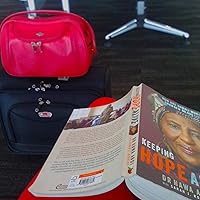
The book left me with many questions, questions to ponder on. The most important revelation was the need to think of the role of colonisation and subsequent independent rule on the current state of Congo's political, social, and economic environment. I could connect with many instances in the book, finding similarities with my country. This excerpt got me thinking "Knowing nothing about the past, of course, frees a population from any sense of blame for the present".... Pg 56
I would read this book a second time in the future. My interest in the region has been heightened and for this, I look forward to reading "King Leopold's Ghost" by Adam Hochschild
I would read this book a second time in the future. My interest in the region has been heightened and for this, I look forward to reading "King Leopold's Ghost" by Adam Hochschild

August 7, 2011
Another account of another brute raping and ruining his country. This time its Mobutu. And yet again it is the story of one kept in power by the West which coyly turns its head away and raises the fan so it doesn't need to look too closely. It s only when another fan comes into contact with some stuff flying that the West takes note and says....Goodness I had no idea

July 28, 2011
A very truthful account of Congo under Mobutu Sese Seko, rich in detail, deep in analysis and coherent in structure. It's more than a portrait of controversial leader, it is understanding how history works. I'll will definitely read more of Michela Wrong.

March 10, 2009
Fast paced and revealing look at how Western interference and internal corruption destroyed Zaire.

April 26, 2026
Sentence structure almost did me in for the first part of this book. Fortunately, I didn’t give up. Once it got going on the years the author witnessed, both sentences and content improved dramatically. The latter years of Mobutu and reign of Kabila (the first) were sad and fascinating. I came to like the organization of chapters, how they delved into a particular facet, even though the timeline bounced around. And the facets covered were well chosen: how the population copes, complicity of banks and other financial enablers, etc.
Sadly, the author’s expressed hope that the country might find a way forward now that the world had washed its hands of it was misplaced. Cobalt, anyone? Etc. etc. Things are worse than ever for the populace. As one person states in the book, it might take as long as 30 years to recover. Well.
The book apparently went to press just before Kabila was assassinated.
As with almost anything I read these days, the parallels to the current kleptocracy in the US are horrifying, all the way down to the tacky gold fixtures.
Sadly, the author’s expressed hope that the country might find a way forward now that the world had washed its hands of it was misplaced. Cobalt, anyone? Etc. etc. Things are worse than ever for the populace. As one person states in the book, it might take as long as 30 years to recover. Well.
The book apparently went to press just before Kabila was assassinated.
As with almost anything I read these days, the parallels to the current kleptocracy in the US are horrifying, all the way down to the tacky gold fixtures.

December 5, 2022
DNF 1/3 of the way through. The author writes like she wants everyone to know she was a lit major. The book is fine if you don’t mind western literary and classics comparisons to bloody events in the Congo every other sentence
March 29, 2019
Overall a very good book. Gave it four stars because I didn't like the structure of the book. From chapter to chapter it jumps from one subtopic to another plus the timeline was a bit fuzzy. But still, a very good overview of a nation that was ruled by a true autocrat. Plus gives you a little more information about the whole continent and colonialism overall.
I actually didn't know that Congo was once a colony of Belgium (under king Leopold II) and the only Belgium colony in Africa. The history of Belgium rule in Congo is cruel and horrifying. Nowadays people tend to forget what happened in Africa during the colonial rule and how Western countries have influenced the development (or underdevelopment) of the whole continent. The history of colonial rule in Congo is actually somewhat rewritten in Belgium (in books and museums) as the book describes.
Colonialism in Africa 1914:
http://exploringafrica.matrix.msu.edu...
The corruption and wasting of money that took place under president Mobuto's 30 year rule in Congo is just unbelievable. Wasting of the country's own resources plus international aid. Renting Concorde airplanes for private use, funneling billions of dollars of public companies' earnings to president's private accounts, building and buying enormous palace's all over Europe etc. And at the same keeping the people in check by brute force and punishments. Basically a lighter version of "police state" described in Orwell's 1984.
The same story or narrative tends to repeat itself in many African countries: citizens are oppressed by a hardliner-> revolts and riots brake out that culminate with a coup (usually a military coup)-> new group of people form a government (often banning all opposition parties, limiting free speech, gagging journalists etc) and the whole cycle starts again. It tends to be so that initially the new ruling party/elite promises better life, prosperity and it might even seem that things are getting better at first but in the end the picture will be quite similar - small group of people extracting the resources of the nation for their own good - few people benefiting from the poverty of many. And this is actually quite common even today, just look at this map: https://planetrulers.com/current-dict... In one way or another the ruling elite is abusing the nation in all of these autocratic countries, even if the average living standard might be quite OK and some sort of private ownership, freedom of speech, entry to new businesses etc is allowed.
I actually didn't know that Congo was once a colony of Belgium (under king Leopold II) and the only Belgium colony in Africa. The history of Belgium rule in Congo is cruel and horrifying. Nowadays people tend to forget what happened in Africa during the colonial rule and how Western countries have influenced the development (or underdevelopment) of the whole continent. The history of colonial rule in Congo is actually somewhat rewritten in Belgium (in books and museums) as the book describes.
Colonialism in Africa 1914:
http://exploringafrica.matrix.msu.edu...
The corruption and wasting of money that took place under president Mobuto's 30 year rule in Congo is just unbelievable. Wasting of the country's own resources plus international aid. Renting Concorde airplanes for private use, funneling billions of dollars of public companies' earnings to president's private accounts, building and buying enormous palace's all over Europe etc. And at the same keeping the people in check by brute force and punishments. Basically a lighter version of "police state" described in Orwell's 1984.
The same story or narrative tends to repeat itself in many African countries: citizens are oppressed by a hardliner-> revolts and riots brake out that culminate with a coup (usually a military coup)-> new group of people form a government (often banning all opposition parties, limiting free speech, gagging journalists etc) and the whole cycle starts again. It tends to be so that initially the new ruling party/elite promises better life, prosperity and it might even seem that things are getting better at first but in the end the picture will be quite similar - small group of people extracting the resources of the nation for their own good - few people benefiting from the poverty of many. And this is actually quite common even today, just look at this map: https://planetrulers.com/current-dict... In one way or another the ruling elite is abusing the nation in all of these autocratic countries, even if the average living standard might be quite OK and some sort of private ownership, freedom of speech, entry to new businesses etc is allowed.
March 10, 2018
Colonialism, underdevelopment, kleptocracy, autocracy, violent cruelty and corruption - In The Footsteps Of Mr. Kurtz is a horrifyingly fascinating and well-told case study of the all-too-human workings of our international political economic system. It is a case study of what has been called “under-development” in the academic literature (harking back to works by Gunder Frank, Baran and Sweezy, Amin, Wallerstein and others) - ways in which a newly created “national” political economy is integrated into the world economy and the shaping of that national political economy through the blending of local cultural factors with international intrusions and extractions of things valued in the larger system.
Ms. Wrong has given us vivid portrayals of:
- the cruelly efficient Belgian colonial period;
- disruption of that colonial arrangement by changing attitudes and power within the world system;
- emergence of a Congolese democracy quickly quashed by the Cold War’s power players;
- rise of the skilled, charismatic, and seemingly pliable Mobutu;
- growth of big-man kleptocratic redistribution as the glue to the national system;
- internationalization of the Congolese elite;
- apparent failures of international organizations to prevent the obvious “theft” of a large proportion of international aid and investment (although, we see, too, that this ‘apparent failures’ may have simply been the result of managing towards unacknowledged goals of the external players).
Wrong has woven her tale focused on the rise, reign, and fall of Joseph Desire Mobutu, the leopard - corrupt despot, national provider, charismatic international character, family-man and tribal loyalist. Not quite a full national history, not quite a full biography, In The Footsteps Of Mr. Kurtz is a fascinating and informative read.
Ms. Wrong has given us vivid portrayals of:
- the cruelly efficient Belgian colonial period;
- disruption of that colonial arrangement by changing attitudes and power within the world system;
- emergence of a Congolese democracy quickly quashed by the Cold War’s power players;
- rise of the skilled, charismatic, and seemingly pliable Mobutu;
- growth of big-man kleptocratic redistribution as the glue to the national system;
- internationalization of the Congolese elite;
- apparent failures of international organizations to prevent the obvious “theft” of a large proportion of international aid and investment (although, we see, too, that this ‘apparent failures’ may have simply been the result of managing towards unacknowledged goals of the external players).
Wrong has woven her tale focused on the rise, reign, and fall of Joseph Desire Mobutu, the leopard - corrupt despot, national provider, charismatic international character, family-man and tribal loyalist. Not quite a full national history, not quite a full biography, In The Footsteps Of Mr. Kurtz is a fascinating and informative read.
March 14, 2018
Well written, this book was a good contrast to the last book by a reporter I read on a country in Africa. The book mostly explains the collapse of Mobutu, and also why he was able to retain power for so long. The central thesis of the book could be called "it takes a village," which I was somewhat convinced of by the end. I wish the author included more facts and dates to sort of cement her argument. It was more "corruption was happening and happening" with no temporal changes, except for at the end of the regime (90s). I appreciate that the book did not try to identify only one or two causes of the regime, but really explain all the players and how they interacted. I also thought the ending was really fascinating, about the missing accounts and the elite. I would have, again, liked more information on who these elites exactly were, or some more facts here.
All in all, a very accessible read for anyone who wants to know more about a. Mobutu, b. Zaire, or c. events in the great lakes region. I think this book is accessible for people who have no knowledge of the region.
All in all, a very accessible read for anyone who wants to know more about a. Mobutu, b. Zaire, or c. events in the great lakes region. I think this book is accessible for people who have no knowledge of the region.

February 6, 2013
Quite an interesting book about Mobuto Sese Seko, the president of Zaire and how he took advantage of his country and wasted its natural resources all the while living the high life. Despite obviously being a bad risk the west including the IMF and World Bank continued to bank roll him even though they could obviously see that there would never be a repayment.
The province of Kasai, in the south, was the diamond province. For a brief time this province was its own empire and the emperor, Albert Kalonji, became so tired of being hounded for money or help that he wrote into the constitution "Vous etes chez vous, debrouillez-vous." Translated "This is your home, so fend for yourselves." That became the mantra of Mobutu when he told a party conference that it was acceptable to 'steal a little,' as long as the theft remained within limits.
So Zaire was ruined......
The province of Kasai, in the south, was the diamond province. For a brief time this province was its own empire and the emperor, Albert Kalonji, became so tired of being hounded for money or help that he wrote into the constitution "Vous etes chez vous, debrouillez-vous." Translated "This is your home, so fend for yourselves." That became the mantra of Mobutu when he told a party conference that it was acceptable to 'steal a little,' as long as the theft remained within limits.
So Zaire was ruined......

February 15, 2012
A really interesting, wild wild west story of modern Africa. However, her writing style is very disjointed, which might annoy some readers. Also the narration left me feeling like I couldn't be sure who was relaying the facts and if they were indeed facts.

November 22, 2008
A frighting look inside the world of an African dictatorship. Violence is endemic and the economy is in shambles.
April 30, 2008
The Congo bears a putrid history as a fruitful land constantly being pillaged and destroyed by leaders corrupted by endless greed. The reign of Mobutu Sese Seko, trademarked with the notorious leopard-skinned hat and pink champagne with which the greedy tyrant thrived, sickeningly juxtaposed the poverty, disease and neglect which plagued the nation which he robbed. Michaela Wrong declares, in her book "In the Footsteps of Mr. Kurtz," “In Mobutu’s hands, the [Congo] had become a paradigm of all that was wrong with postcolonial Africa.” After six years of observing the country firsthand, as a news correspondent for London’s Financial Times, Wrong has created an account of Mobutu’s kleptocratic governance, its consequences, and specifically the final days of his crumbling regime, which she witnessed. Furthermore, Wrong divvies-up the blame for the Congo’s demise, which traditional resides solely on Mobutu’s head, amongst the meddling of many global and Western parties, including the IMF and World Bank. With likeness to a giant, 300-paged newspaper article, this informative book combines her own first-hand anecdotes, numerous interviews, and meticulous research to illustrate how Mobutu sucked the Congo dry.
Mr. Kurtz, the memorable character from Joseph Conrad’s "Heart of Darkness," lay on his death bed, deep within an African jungle, uttering his last words. He muttered “The horror, the horror,” and these words still seem to resonate through present-day Africa, in the form of disease, corruption, war and poverty. Mr. Kurtz may have been implying his transformation from a formidable ivory trader to a cannibalistic “native.” Hence the title of Wrong’s book, Mobutu seems to have followed Mr. Kurtz’s destructive path, caving to the “monstrous passions at the core of the human soul” which lead him to use his power for the sole purpose of stealing everything he could get his hands on. However, Michaela Wrong also infers that Mr. Kurtz’s horrors were directed more so towards “rooten Western values, the white man’s inhumanity to the black man, than, as is almost always assumed today, black savagery.”
Since there seems to be plentiful responsibility to go around, Wrong meticulously counts the faults of ‘outside interferences’ which allowed Mobutu, one of history’s most corrupt leaders, to thrive and blatantly thieve for 32 long years. Amongst the guiltiest Western or world components are, of course, King Leopold, but also Belgium, USA, France, the IMF the World Bank. Wrong starts her book with a brief glimpse back at how Kin Leopold’s bloody colonization and exploitation of the Congo set the stage for a future of corruption. Belgium’s abrupt abandonment of the shaky new nation, sporting only 17 university educated Africans, was like unrolling an ominous welcome mat for the absurd regimes to come. Later, Wrong claims that external interference acted as a new, ‘insidious form of colonialism.’ According to interviewee, CIA agent Devlin, the US was involved in attempts to assassinate Lumumba, in order to bring Mobutu to power. Mobutu continued to keep strong ties with the US, which was particularly aware of the Congo’s richness in raw materials, especially during the Cold War. According to Wrong, the IMF continued to feed the Congo loans, pressured by Western countries not to cut off relations, even as Mobutu blatantly pocketed a large majority of the $9.3 billion of financial aid received. The lack of intervention of Mobutu’s outrageous financial actions, and even the temptation of offering more loans, by these organizations offered, have sunk the Congo deeper into financial disaster which will take decades into the future to ever repair.
The blameworthiness of associations like the IMF or other nations over Mobutu is a controversial subject up for debate. So naturally, Michaela Wrong receives significant censure about going soft on Mobutu and pinning blame on the IMF and World Bank for doing their job. I feel that there is no debating the fact that Mobutu is the foremost delinquent. However, it is important for the IMF and World Bank to full understand the outcome of their ‘aid’ and be impartial to individual country’s agendas, but work towards holistic global benefit. Moreover, no matter where people fall on this controversial issue, Wrong still has one major shortcoming in her argument; a gaping void in citations. For the amount of numbers, statistics and questionable claims she uses, her bibliography is sparse and footnotes are nonexistent. The credibility of information or sources constantly comes into question when Wrong makes claims such as Mobutu’s ordering of the rape of an IMF official’s spouse when his flow of financial aid was jeopardized by reform.
All in all, Michaela Wrong’s "In the Footsteps of Mr. Kurtz", is an informative read. The book has the fault of periodically being one-sided and lacking analysis of points of view other than her own. Also, the loose chronological structure of many of her vignettes may confuse people with no previous background knowledge of the Congo’s plight. To ensure readers will be able to understand the book and form their own opinions, I would recommend the book for an audience already familiar on the topic. This book is especially for those who have read about Congo’s colonial era (i.e. King Leopold’s Ghost), and are interested to learn about its post-colonial history. Overall, I applaud Wrong’s efforts to help disperse ignorance in a field which is too often ignored, and I hope that authors like her will continue to labor to ensure that these accounts of Africa stay on the forefront of people’s minds.
Mr. Kurtz, the memorable character from Joseph Conrad’s "Heart of Darkness," lay on his death bed, deep within an African jungle, uttering his last words. He muttered “The horror, the horror,” and these words still seem to resonate through present-day Africa, in the form of disease, corruption, war and poverty. Mr. Kurtz may have been implying his transformation from a formidable ivory trader to a cannibalistic “native.” Hence the title of Wrong’s book, Mobutu seems to have followed Mr. Kurtz’s destructive path, caving to the “monstrous passions at the core of the human soul” which lead him to use his power for the sole purpose of stealing everything he could get his hands on. However, Michaela Wrong also infers that Mr. Kurtz’s horrors were directed more so towards “rooten Western values, the white man’s inhumanity to the black man, than, as is almost always assumed today, black savagery.”
Since there seems to be plentiful responsibility to go around, Wrong meticulously counts the faults of ‘outside interferences’ which allowed Mobutu, one of history’s most corrupt leaders, to thrive and blatantly thieve for 32 long years. Amongst the guiltiest Western or world components are, of course, King Leopold, but also Belgium, USA, France, the IMF the World Bank. Wrong starts her book with a brief glimpse back at how Kin Leopold’s bloody colonization and exploitation of the Congo set the stage for a future of corruption. Belgium’s abrupt abandonment of the shaky new nation, sporting only 17 university educated Africans, was like unrolling an ominous welcome mat for the absurd regimes to come. Later, Wrong claims that external interference acted as a new, ‘insidious form of colonialism.’ According to interviewee, CIA agent Devlin, the US was involved in attempts to assassinate Lumumba, in order to bring Mobutu to power. Mobutu continued to keep strong ties with the US, which was particularly aware of the Congo’s richness in raw materials, especially during the Cold War. According to Wrong, the IMF continued to feed the Congo loans, pressured by Western countries not to cut off relations, even as Mobutu blatantly pocketed a large majority of the $9.3 billion of financial aid received. The lack of intervention of Mobutu’s outrageous financial actions, and even the temptation of offering more loans, by these organizations offered, have sunk the Congo deeper into financial disaster which will take decades into the future to ever repair.
The blameworthiness of associations like the IMF or other nations over Mobutu is a controversial subject up for debate. So naturally, Michaela Wrong receives significant censure about going soft on Mobutu and pinning blame on the IMF and World Bank for doing their job. I feel that there is no debating the fact that Mobutu is the foremost delinquent. However, it is important for the IMF and World Bank to full understand the outcome of their ‘aid’ and be impartial to individual country’s agendas, but work towards holistic global benefit. Moreover, no matter where people fall on this controversial issue, Wrong still has one major shortcoming in her argument; a gaping void in citations. For the amount of numbers, statistics and questionable claims she uses, her bibliography is sparse and footnotes are nonexistent. The credibility of information or sources constantly comes into question when Wrong makes claims such as Mobutu’s ordering of the rape of an IMF official’s spouse when his flow of financial aid was jeopardized by reform.
All in all, Michaela Wrong’s "In the Footsteps of Mr. Kurtz", is an informative read. The book has the fault of periodically being one-sided and lacking analysis of points of view other than her own. Also, the loose chronological structure of many of her vignettes may confuse people with no previous background knowledge of the Congo’s plight. To ensure readers will be able to understand the book and form their own opinions, I would recommend the book for an audience already familiar on the topic. This book is especially for those who have read about Congo’s colonial era (i.e. King Leopold’s Ghost), and are interested to learn about its post-colonial history. Overall, I applaud Wrong’s efforts to help disperse ignorance in a field which is too often ignored, and I hope that authors like her will continue to labor to ensure that these accounts of Africa stay on the forefront of people’s minds.
April 18, 2017
To put this all in perspective we have to understand the time and place that lead to the instalment of Mobutu. In the late 50s and early 60s Americans had recently come out of a decade of feverish McCarthyism and still had the bogey man of communism looming and the possible domino effect. The Congo lies literally at the heart of Africa and has no less than nine neighbouring countries, so the Americans were thinking ahead, though probably not thinking hard enough. No doubt the country’s vast mineral wealth was also a consideration, after all over 80% of the uranium in the nuclear bombs dropped in Hiroshima and Nagasaki came from the Congo. The thought of the USSR getting access to that alone must have caused some anxiety.
So in 1960 when the newly independent Congo had democratically elected one, Patrice Lumumba American concerns were raised. The Soviets had been trying to infiltrate the Congo for a while and Lumumba had contact with them, even though he found colonialism and communism equally deplorable, fears of Soviet influence grew stronger. After previous failed plots, the CIA eventually succeeded along with help from the Belgians in “neutralising” him. His remains were allegedly chopped up and dissolved in sulphuric acid. The killing of Lumumba paved the way for Mobutu, the CIA’s favoured candidate.
This book makes heavy reference to “King Leopold’s Ghost” and the author freely admits and credits the highly influential work. I would say that this book makes an ideal pairing with it, both of them help build quite a vivid picture of the Congo from Free State, Zaire to the so called DRC status of today and if you are really keen, might I recommend “Radio Congo” by Ben Lawrence, which covers slightly different terrain.
Mobutu Sese Seko Kuku Ngbendu Wa Za Banga (The all powerful warrior who goes from conquest to conquest leaving fire in his wake) as he re-named himself, in many ways was like a cartoon baddie from a far-fetched movie. He seemed just a little too outrageous to be true. “Go ahead and steal, as long as you don’t take too much.” He once said. CIA man Devlin said of him, “He was a political genius, but an economic spastic.” Mobutu claimed to have only had $6 to his name back in 1959, but by the end of his life he had stashed away between $4 billion and $14 billion, depending who we believe or as many think, he was actually close to being broke?....
In 1971 Mobutu started his process of Zaireanisation, Congo would be known as Zaire, the abacost would be chosen over a tie, Lingala the language over French. Foreign owned farms were turned over to the sons of the country, radicalisation in which the largely Belgian controlled industrial sector was confiscated. “The result was an obscene scramble for freebies by the burgeoning Zairean elite. Thousands of businesses, totalling around $1 Billion in value, were divided between top officials in the most comprehensive nationalisation seen in Africa.” The was also the era where the Congo hosted the Rumble in the Jungle, the heavyweight boxing tie between Foreman and Ali in 1974. It was also during this period that Mobutu went onto build the doomed Gbadolite complex, the so called Versaille of the Jungle, though today it resembles more an African Pripyat. He ploughed billions into this complex in the far north, that included a runway big enough to accommodate Concorde as well as installing a nuclear bunker amongst many other outlandish and superfluous features.
Erwin Blumenthal, a German bean counter was eventually brought into evaluate Mobutu’s financial state and he ended up sleeping with a gun beneath his pillow after uncovering the extent of the financial irregularities. At one stage inflation was at a staggering 9,800% . “Between the start of the Zairean economic crisis in 1975 and Mobutu’s departure in 1997, Zaire received a total of $9.3 billion in foreign aid.” Leading the way were the World Bank and IMF, who did what they often do in poor countries, they intervene, make reckless decisions in their single minded bid to serve US business interests and political agendas and consequently made the problem bigger and then pulled out far too late.
Mobutu consistently played the western governments of France, Belgium and US against each other to great effect and some of the stunts he pulled off in his manipulation are simply staggering. In spite of his well known grand theft Reagan received him and insisted, “A voice of good sense and good will.” George H W Bush greeted him as “One of our most valued friends.” So it is worth remembering that the scale of this kleptocracy would have not been possible if not for the sustained support of Washington financiers granting billions to a world renowned thief and the assistance of the dark and sinister Swiss banking system who helped keep it safe.
This book is prone to jumping around a bit, but these jumps can lead to some interesting asides, it allows Wrong to touch on some other aspects of life in the Congo, such as the cult of Kimbanguism, the Lingala music scene, the fashion obsessed youngsters who favour dancing and posing over politics and war, or the Kongo Kingdom movement lead by the eccentric King Mizele. In the end after all the Western parasites had ran away and left him, it took the AFDL (Coalition of four rebel movements set up in 1996 with the aim of bringing down Mobutu) to affect meaningful change in the Congo, though it was prostate cancer that ended up taking Mobutu at the age of 66.
So in 1960 when the newly independent Congo had democratically elected one, Patrice Lumumba American concerns were raised. The Soviets had been trying to infiltrate the Congo for a while and Lumumba had contact with them, even though he found colonialism and communism equally deplorable, fears of Soviet influence grew stronger. After previous failed plots, the CIA eventually succeeded along with help from the Belgians in “neutralising” him. His remains were allegedly chopped up and dissolved in sulphuric acid. The killing of Lumumba paved the way for Mobutu, the CIA’s favoured candidate.
This book makes heavy reference to “King Leopold’s Ghost” and the author freely admits and credits the highly influential work. I would say that this book makes an ideal pairing with it, both of them help build quite a vivid picture of the Congo from Free State, Zaire to the so called DRC status of today and if you are really keen, might I recommend “Radio Congo” by Ben Lawrence, which covers slightly different terrain.
Mobutu Sese Seko Kuku Ngbendu Wa Za Banga (The all powerful warrior who goes from conquest to conquest leaving fire in his wake) as he re-named himself, in many ways was like a cartoon baddie from a far-fetched movie. He seemed just a little too outrageous to be true. “Go ahead and steal, as long as you don’t take too much.” He once said. CIA man Devlin said of him, “He was a political genius, but an economic spastic.” Mobutu claimed to have only had $6 to his name back in 1959, but by the end of his life he had stashed away between $4 billion and $14 billion, depending who we believe or as many think, he was actually close to being broke?....
In 1971 Mobutu started his process of Zaireanisation, Congo would be known as Zaire, the abacost would be chosen over a tie, Lingala the language over French. Foreign owned farms were turned over to the sons of the country, radicalisation in which the largely Belgian controlled industrial sector was confiscated. “The result was an obscene scramble for freebies by the burgeoning Zairean elite. Thousands of businesses, totalling around $1 Billion in value, were divided between top officials in the most comprehensive nationalisation seen in Africa.” The was also the era where the Congo hosted the Rumble in the Jungle, the heavyweight boxing tie between Foreman and Ali in 1974. It was also during this period that Mobutu went onto build the doomed Gbadolite complex, the so called Versaille of the Jungle, though today it resembles more an African Pripyat. He ploughed billions into this complex in the far north, that included a runway big enough to accommodate Concorde as well as installing a nuclear bunker amongst many other outlandish and superfluous features.
Erwin Blumenthal, a German bean counter was eventually brought into evaluate Mobutu’s financial state and he ended up sleeping with a gun beneath his pillow after uncovering the extent of the financial irregularities. At one stage inflation was at a staggering 9,800% . “Between the start of the Zairean economic crisis in 1975 and Mobutu’s departure in 1997, Zaire received a total of $9.3 billion in foreign aid.” Leading the way were the World Bank and IMF, who did what they often do in poor countries, they intervene, make reckless decisions in their single minded bid to serve US business interests and political agendas and consequently made the problem bigger and then pulled out far too late.
Mobutu consistently played the western governments of France, Belgium and US against each other to great effect and some of the stunts he pulled off in his manipulation are simply staggering. In spite of his well known grand theft Reagan received him and insisted, “A voice of good sense and good will.” George H W Bush greeted him as “One of our most valued friends.” So it is worth remembering that the scale of this kleptocracy would have not been possible if not for the sustained support of Washington financiers granting billions to a world renowned thief and the assistance of the dark and sinister Swiss banking system who helped keep it safe.
This book is prone to jumping around a bit, but these jumps can lead to some interesting asides, it allows Wrong to touch on some other aspects of life in the Congo, such as the cult of Kimbanguism, the Lingala music scene, the fashion obsessed youngsters who favour dancing and posing over politics and war, or the Kongo Kingdom movement lead by the eccentric King Mizele. In the end after all the Western parasites had ran away and left him, it took the AFDL (Coalition of four rebel movements set up in 1996 with the aim of bringing down Mobutu) to affect meaningful change in the Congo, though it was prostate cancer that ended up taking Mobutu at the age of 66.
Displaying 1 - 30 of 208 reviews