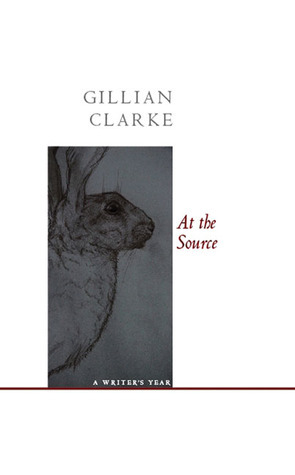
Fusing poetry, memoir, and nature writing, this evocative prose collection conducts a literary exploration of place and language. Reflecting upon the geography, history, and mythology of Wales, the verse delves into the sources of both Welsh and English dialects while incorporating essays and journal extracts, creating a seasonal portrait of the beloved Welsh landscape. From descriptions of lambing and hay making to ruminations on agriculture and ecological destruction, this is an enthralling depiction of the world as seen from the captivating countryside.
Gillian Clarke is one of the central figures in contemporary Welsh poetry, the third to take up the post of National Poet of Wales. Her own poems have achieved widespread critical and popular acclaim (her Selected Poems has gone through seven printings and her work is studied by GCSE and A Level students throughout Britain) but she has also made her cultural mark through her inspirational role as a teacher, as editor of the Anglo-Welsh Review from 1975 - 1984, and as founder and President of Ty Newydd, the writers' centre in North Wales.
Clarke currently runs an organic small-holding in Ceredigion, the Welsh landscape is a shaping force in her work, together with recurrent themes of war, womanhood and the passage of time. Her last three books have all been Poetry Book Society Recommendations.
Gillian Clarke writes mainly about her smallholding in rural Wales, and her life as a writer; but I particularly enjoyed her recollections of her childhood and young adulthood in Cardiff, where I too was also brought up. Lovely descriptions of the civic centre with its avenues of Elm trees before they were laid low by Dutch Elm disease. Altogether a very interesting and insightful read.
I feel so grateful to Gillian Clarke for this beautiful book, which has been a balm to my soul these last few weeks. There are too many memorable passages to quote (I very highly recommend buying the book for the full benefit! If possible, do try and buy the book direct from Carcanet Press or an independent bookshop rather than You Know Who!) but here are a few – so true the observation, so clear, so restorative after a year of witnessing man’s inhumanity to man in Gaza. I recommended it to my fellow poets at a reading this morning at our local library, Y Gaer, reached through the wind and rain of Storm Darragh – a haven. I don’t feel willing to lend it, but to keep it by me for further future reading.
‘… Not only adult rows, but the babble of downstairs after a child’s bedtime, the imperfectly tuned disharmonies of radio, talk, dispute, hint and rumour, send upstairs to the listening child a message that the world is full of tumultuous secrets…’
‘… From watching a child make a sundial out of a circle of paper, marking the hours with twelve pebbles, language and poetry’s stranger impulse, found the parallel; that the child, like the primitive man in the Neolithic, is finding his way in a world with no maps, that the mud-pie, the sandcastle, the pebble and driftwood house, are how a child learns all over again what early man discovered, that these materials are for human use, art and imagination…’
‘… an artist friend once said to me. ‘You know how lovely it is when you’re sitting by a window in a big chair and it’s raining, and you have a book, and you think, “How lucky I am! How lucky!”’
‘… the swallows wheel over the barn, diving in through the gap above the big doors with their beaks full of insects, then out and over the garden and fields, two adults and eight young from the first two broods, all feeding the last brood, nestlings which must get strong and learn to fly with only weeks to prepare for the flight to Africa. It’s beautiful and incredible to watch this – a whole family of wild creatures engaged in such unselfish cooperation. It shows how evolution can favour altruism…’
It's a bit of a mishmash of material, but the meditative, contemplative tone is easy to fall into. The latter half, focusing on a year on her farm in rural Ceredigion, is especially lovely. Read for research, and the second half was of limited utility but considerable pleasure.