The author of the best-selling Tolstoy, winner of France's prestigious Prix Goncourt, member of the Académie Française, and renowned expert on Russia paints yet another indelible portrait of one of Russia's imposing historical figures. Henri Troyat, author of acclaimed biographies of Catherine the Great, Tolstoy, and Turgenev, turns his attention to one of the most violent, demented rulers ever, Czar Ivan IV. Though this larger-than-life ruler inflicted torture on friends and enemies alike, destroyed villages and even killed his own son, he also forged what became 20th-century Russia.
Troyat was a French author, biographer, historian and novelist.
Troyat was born Levon Aslan Torossian in Moscow to parents of Armenian descent. His family fled Russia in anticipation of the revolution. After a long exodus taking them to the Caucasus on to Crimea and later by sea to Constantinople and then Venice, the family finally settled in Paris in 1920, where young Troyat was schooled and later earned a law degree. The stirring and tragic events of this flight across half of Europe are vividly recounted by Troyat in 'Tant que la terre durera'.
Troyat received his first literary award, Le prix du roman populaire, at the age of twenty-four, and by twenty-seven, he was awarded the Prix Goncourt.
Troyat published more than 100 books, novels and biographies, among them those of Anton Chekhov, Catherine the Great, Rasputin, Ivan the Terrible and Leo Tolstoy.
Troyat's best-known work is La neige en deuil, which was adapted as an English-language film in 1956 under the title The Mountain.
He was elected as a member of the Académie française in 1959. At the time of his death, Troyat was the longest serving member of the Academy.
Henri Troyat, born Lev Aslanovich Tarasov, was a famous French historian. He wrote a number of top notch biographies of famous Russians. I found this excellent volume in my used bookstore and seeing the subject snatched it up.
Ivan, the Fourth of His Name, Vasilyevich commonly known as Ivan the Terrible (1530-1580) was the first Czar of Russia. Though, to be fair, his nickname (Ioannes Severus, in Latin, Ivan Grozny,in Russian) was more accurately translated as "Ivan the Formidable" or "Ivan the Fearsome". But, let's be honest, this many-times great descendant of the Norse Varangian House of Rurik, was terrible in every sense of the word.
Ivan, for fantasy fans reminds us of Aerys the Mad King. While Ivan did have a troubled childhood, others from William the Bastard, to Richard the Lion-Heart, and many others who had very difficult childhoods due to familial or dynastic conflicts- all ended as hard men and killers, but never would have descended to this level of mindless cruelty.
Ivan, the son of Vasili III, the Rurikid ruler of the Grand Duchy of Moscow and was appointed Grand Prince when he was three years old after his father's death. But this nest of viperous boyars squabbling over power and endless feuding with each other would deeply trouble the boy Ivan. As an young lad he enjoyed the pleasant past time of swinging puppies by their tails and throwing them off castle walls. As you can already tell, he's a charmer. A charmer with a huge, hidden hatred of his boyars.
At 17, Ivan pulls a trick. He decides he's going to marry, but instead of an outsider he will choose a Russian bride. The estatic boyars prepare to offer their daughters. But, Ivan has one request.. as stated:
"The boyars, "moved to tears," according to the chronicler, cheered their sovereign and embraced each other. They were delighted that Ivan had decided to marry a Russian. Their national pride was flattered; besides, most of them had a daughter, a cousin, or a niece, who with a little luck, they said to themselves, might capture the Prince's attention. If so the whole family would profit from it. Already each in his own heads was spinning the golden threads of his particular dream of matrimony. The nobles were preparing to disperse, to run home and announce the great news, when Ivan stopped them with a gesture. He wasn't finished. There was something else he had his heart set on: Before marrying, he wanted to be crowned Czar. He proclaimed in a loud, clear voice. The boyars exchanged glances of surprise: "Grand Duke" or "Czar", what was the difference?"
For Ivan, there was a difference, and he had been thinking about it for a very long time. This title "czar" was one of the holy books in the Slavonic language gave to the kinds of Judea, Babylon, and Assyria, and even to Roman Emperors. They spoke of "Czar David", "Czar Ahasuerus," "Czar Julius Caesar," "Czar Augustus." Thus, for Ivan, the word "Czar" carried all the prestige of the Bible, The Roman Empire, and Byzantium...."
The foolish boyars agree. Ivan turns out to be a tyrant. Deeply paranoid and displaying a penchant for cruelty and violence that seems to hearken back to his centuries-old Viking reaver blood. From rape to torture, all of which he enjoyed watching personally or engaging in- Ivan acts in ways that even the old Viking's would have found a bit much.
Ivan also has a great deal of megalomania mixed with fervent religious beliefs. Though, in his mad mind, he is co-equal, or at least on a personal level of friendship, with God. Thus, his actions are much like God's- above understanding and reproach. All his cruelties and his sins are completely acceptable since he is the Czar.
The truly interesting thing is how much the Russian peoples seem to agree with him. Almost as a mark of their suffering, they loved their Czar and ascribed no wrongs to him personally. In fact, the harsher he was the more they admired and respected him.
Ivan did some long term things for Russia- from establishing the Czar title, to expanding its borders into Siberia and making the Western countries areas to be coveted by future Czars. He also did capture some Tartar cities and that was a good thing for the Russian nation as it sought to overturn the Mongol domination of centuries. Also, that beautiful St Basil's Cathedral in Red Square was made under his auspices.
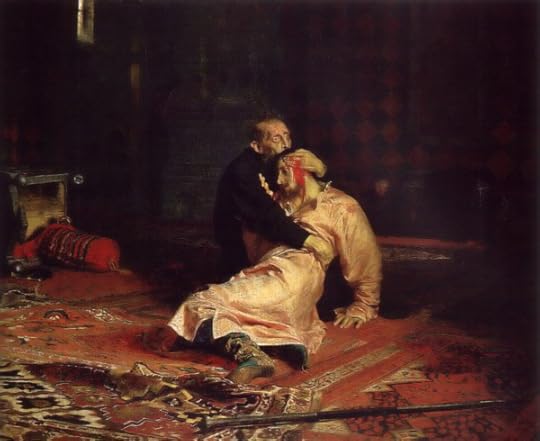
Ivan was a powerful ruler of Russia, but mad as a hatter near the end. He was always cruel and unjust, but the full-on paranoia, megalomania, abject destruction and torture, the excesses of food and drink and sex all led to not only filicide, Ivan killed the Czarevich with his own hands in a fit of rage, but his eventual terrible health and death.
A wonderful biography of a dark and cruel Czar. Easy to read, but very informative, I will enjoy adding this gem to my history collection. If you are interested in Russian history and the start of the Czardom, or like reading about truly violent and crazy people-Ivan's your guy. He's a charmer.
Bulgarian review first, followed by the English translation below
Само закърмен с руската култура като Лев Асланович Торосян, известен като Анри Троая, може да пише така за руската история с нейните царуващ мрак и малко ярки, но пък само какви(!) проблясъци. А за Троая тази книга изглежда много лична - за тиранията, историята, съдбата и националния дух.
Култът към личността и самодържавието има дълбоки корени в руската история и душевност. Ако Сталин бе живял през 16-ти век, можеше и да се казва Иван Грозни. А политкомисари и служители на КГБ щяха да се кичат с гордата титла “опричници” - безнаказаните царски главорези над всеки закон, освен царската прищявка.
По времето на Ренесанса в Русия се кади тамян навсякъде, невежеството е знак за чиста душа, поезия и литература са забранени и преследвани от църквата, жените се затворени в тереми и нямат право и на църква да ходят без позволение и добро основание, а боят е препоръчителна мярка за запазване на добрия морал. Или както постановява възхваляваният и написан от служители на Църквата “Домострой”: ”Ако обичаш сина си, бий го и то по-често ❗️; накрая той ще ти носи радост… Не се смей с него, не играй с него, защото ако си слаб в дребните неща ще страдаш в големите… Сломи сърцето му докато расте❗️, защото, ако стане твърдо, няма да ти се подчинява.”
Така че Иван Василиевич, в известен смисъл, е изигран от съдбата още по рождение - безпросветна епоха и жестоки нрави. Останал сирак от дете, е подмятан грубо от различните болярски фракции, и никога не им прощава. Началото не е безнадеждно - несигурен, параноичен, изпитващ плътска наслада от жестокостта, Иван все пак е любознателен, бива го с думите и е суетен, както и - макар и по дивашки суеверно - набожен. И все още млад. И женен за добро момиче. В тези години отвоюва Казан от татарите и народът му го обича, защото никак не го познава.
Две събития обаче отключват звяра в него до края на живота му. Тежка пневмония, която отново му напомня как болярите ще се сръфат за властта след смъртта му и вероятно ще видят сметката на сина му. И последвалата смърт на първата му съпруга. Иван оздравява и се жени още седем ❗️ пъти, макар църквата да признава само три от тях официално. Хенри VIII може да се скрие в някой ъгъл. Но не тази част е определящата.
Определящата присъда на историята ще дойде от делата на Иван, който не признава дори Бог за друго, освен за съучастник, който ще си трае, ако молитвеният ритуал се спази и не се обърка поредността. Хората са без значение - ако царят им ги убива, това си е негово право от Бога, те трябва да са благодарни за честта. Доста съвсем християнски и руски градове като Нижни Новгород и Псков скоро го разбират. Разбират го и бъдещите литовци, латвийци и естонци. Но най-прекрасно го разбират самите руси. Броят на избитите по особено мъчителен начин боляри и други подчинени на Иван започва да расте в геометрична прогресия, намаляваща до аритметична в добрите времена. Самият Иван често участва в мъченията и екзекуциите от първо лице, обучавайки и престолонаследника си в тънкостите на занаята. Смелчаци да му се опълчат почти липсват - само един болярин, избягал в Полша и водил безмилостна и поучителна кореспонденция с тирана; и един смел и просветен свещеник (рядкост за средата си), умъртвен с мъчения и канонизиран за светец. Това са. Останалите най-много да приемат стоически съдбата си и даже и тогава да викат “Да живее царят.”
Иван дотолкова си вярва, че успява да убие в пристъп на бяс неродения си внук и сина си. Това не го стряска особено - в крайна сметка винаги другите са виновни.
Ако някой е останал с впечатление, че Иван е глупак, това е съвършено погрешно. Не е. Бива го дори в политиката. Просто страната му не е имала късмета да се отърве от него още докато е бил дете. Но те, руснаците, никога не са били късметлии. А Иван…ами умира си на преклонна за него време възраст. И не, няма да го нарека цар.
П. П. В новите учебници по история на путинова Русия цари исторически ревизионизъм. Акцентът се измества от зверствата на опричнината към "централизацията на държавата" и защитата срещу "външните врагове". Жестокостта се представя като "сурова необходимост". Путин лично е подхвърлял идеята, че версията за това как Иван е убил сина си, е "западна провокация" и фалшификация на папските легати.
*** ▶️ Цитати:
👑 “Иван се чувства толкова високопоставен, че най-близкият му съсед не е човек, а самият Бог. Някъде долу гъмжи мравуняк, който той може да смаже с крак без никакво угризение. За царя е важно не какво мислят тези насекоми, а какво мисли Небесният Отец. ”
👑 “Показанията на болярина имат по-голяма тежест от тези на шест души от нисш ранг”
👑 “Нито една картина, нито едно огледало, но навсякъде много икони.” Дворецът на Иван Грозни
👑 “Всички руски владетели са самодръжци и никой не може да им прави бележки […]. Монархът може да упражнява волята си спрямо робите, дадени му от Бога… Ако не се подчинявате на владетеля, когато той е несправедлив, вие не само извършвате държавно престъпление, но осъждате душата си, защото самият Бог ви заповядва да се подчинявате сляпо на вашия княз.” Из писмо на Иван Грозни
👑 “за простите хора една грешка, узаконена от времето, е по-ценна от някаква модерна поправка, дори да е основателна.”
👑 “Досега владетелите на Русия са били свободни и независими. Те са възнаграждавали или наказвали своите поданици, както им е било угодно и без да се отчитат, пред когото и да е. Този ред на нещата никога няма да се промени. Вече не съм дете: имам нужда от Божията милост, от закрилата на Дева Мария и на всички светни, но изобщо не желая поуки от хората.” Из пис��о на Иван Грозни
👑 “Това, което убеждава Иван, че е на прав път, е примирението на ужасения народ.”
👑 “Никога не е добре да обединиш народ от роби със свободен народ. ”
Only someone nursed on Russian culture like Lev Aslanovich Tarassov, known as Henri Troyat, could write this way about Russian history, with its reigning darkness and rare, yet incredibly bright(!) flashes. For Troyat, this book seems very personal – a meditation on tyranny, history, fate, and the national spirit.
The cult of personality and autocracy have deep roots in Russian history and psyche. If Stalin had lived in the 16th century, his name might well have been Ivan the Terrible. And political commissars and KGB officers would have adorned themselves with the proud title of "oprichniki" – the unaccountable royal thugs standing above any law except the Tsar’s whim.
During the Renaissance, incense burns everywhere in Russia, ignorance is seen as a sign of a pure soul, poetry and literature are banned and persecuted by the Church, and women are locked in "terems," forbidden even from going to church without permission and good reason. Beating is a recommended measure for preserving good morals. Or, as decreed by the praised "Domostroy," written by Church officials: "If you love your son, beat him, and do it often ❗️; in the end, he will bring you joy… Do not laugh with him, do not play with him, for if you are weak in small things, you will suffer in great ones… Break his heart while he is growing ❗️, because if it becomes hard, he will not obey you."
Thus, Ivan Vasilyevich was, in a sense, cheated by fate from birth – a dark era and brutal customs. Left an orphan as a child, he was roughly tossed between various boyar factions and never forgave them. The beginning was not hopeless – though insecure, paranoid, and finding carnal pleasure in cruelty, Ivan was nonetheless inquisitive, gifted with words, and vain, as well as – albeit in a savagely superstitious way – devout. And he was still young. Married to a good girl. In those years, he conquered Kazan from the Tatars, and his people loved him because they did not know him at all.
Two events, however, unleashed the beast within him for the rest of his life. A severe bout of pneumonia, which reminded him how the boyars would snatch at power after his death and likely dispose of his son. And the subsequent death of his first wife. Ivan recovered and married seven ❗️ more times, although the Church officially recognized only three. Henry VIII could hide in a corner. But that is not the defining part.
History's defining judgment comes from the deeds of Ivan, who recognized God as nothing more than an accomplice who would remain silent if the prayer ritual was followed and the sequence wasn't botched. People were of no significance – if their Tsar killed them, it was his God-given right; they should be grateful for the honor. Quite a few Christian and Russian cities, like Nizhny Novgorod and Pskov, soon realized this. The future Lithuanians, Latvians, and Estonians realized it too. But the Russians themselves understood it most perfectly. The number of boyars and other subordinates executed in particularly agonizing ways by Ivan began to grow in a geometric progression, decreasing only to an arithmetic one during the "good" times. Ivan himself often participated in the tortures and executions firsthand, training his heir in the subtleties of the craft. Brave men to oppose him were almost non-existent – only one boyar who fled to Poland and conducted a ruthless and instructive correspondence with the tyrant; and one brave and enlightened priest (a rarity for his environment), tortured to death and canonized as a saint. That was it. The rest, at best, stoically accepted their fate, even then shouting, "Long live the Tsar."
Ivan believed his own hype so much that, in a fit of rage, he managed to kill his unborn grandson and his own son. This didn't particularly startle him – in the end, it’s always others who are to blame.
If anyone is left with the impression that Ivan was a fool, that is entirely incorrect. He wasn't. He was even good at politics. His country simply didn't have the luck to get rid of him while he was still a child. But they, the Russians, have never been lucky. As for Ivan… well, he died at what was, for his time, an advanced age. And no, I will not call him a Tsar.
P.S. In the new history textbooks of Putin's Russia, historical revisionism reigns supreme. The emphasis is shifting from the atrocities of the "oprichnina" to the "centralization of the state" and the defense against "foreign enemies." Cruelty is presented as a "harsh necessity." Putin himself has personally floated the idea that the version of how Ivan killed his own son is a "Western provocation" and a forgery by papal legates.
- Libro acquistato a Febbraio 2025 - Da molto tempo volevo leggere una biografia di Ivan IV, “Zar di tutte le Russie”, vissuto nel XVI secolo e ricordato come “Il Terribile”. Lo scrittore Henry Troyat che ha scritto la biografia di altri illustri personaggi russi come lo zar Pietro il Grande e la zarina Caterina, mi ha coinvolto in questa sua opera rivelandosi, attraverso il racconto della vita privata e pubblica di Ivan, la situazione del Granducato di Mosca del quale egli fu proclamato zar nonché i difficili rapporti con i boiari, famiglie di nobili del granducato, le continue guerre contro Polacchi e Tartari popoli limitrofi, le pressioni interne ed esterne e la sua complicata personalità probabile conseguenza di un’infanzia vissuta nell’incertezza e in balia dei potenti locali, biografo attento e perspicace che lungi da lasciarsi trascinare da tratti folcloristici e leggendari, regala al lettore un ottimo libro che apre alla conoscenza di un uomo dal carattere complesso, dalle scelte spesso contraddittorie, privo di freni inibitori e in balia delle sue paure interiori e dei suoi istinti più bassi. vissuto in un epoca difficile e problematica.
Историческа биография, каквата никога не бях чел до сега - спойка между исторически факти и почти лирично повествование, тя не се опитва да бъде безпристрастна или изчерпателна, а да разкаже историята на Страшния Иван така, че да е максимално интересна, но без да се отклонява от фактите.
Иван Грозни (името значи Страшни на руски) е последният от най-дълго управлявалата династия в Европа - тази на Рюриковичите, започната от викинга Рюрик от шведското племе Рус, завладял с братята си и дружината си гр. Киев и нарекъл го своя столица, за да властва над славянското население, поставяйки началото на Киевска Рус и руския народ.
700 години по-късно, държавата му вече се нарича Русия, нещата не са се променили особено и неговият последен потомък Иван Грозни властва над руснаците и каквито други народи успее да докопа, като чужд владетел (което може да се каже е по-скоро норма в световната история, но при него е особено фрапиращо) - издевателства над населението, без да се грижи нито грам за него, впуска се в пиянски пътувания с дружината си и в което руско село замръкнат, бият и убиват мъжете и изнасилват жените, "наказва" цели (малко или повече руски) градове за измислени заговори срещу него, като изтребва населението им така, както и Чингис хан преди това не го е изтребвал...
Паралелите на методите и начините на управлението на Иван Грозни с тези на Сталин, за когото също чета книга в момента, са очевидни и почвам да се чудя дали изобщо има надежда за Русия, която и в момента върви по тоя път - да бъде управлявана от сатрап, който изтезава народа на страната, но същия този народ почти го обожава.
I read this book in its original French version, but I understand that many books of Henri Troyat, including this one, have been translated into English. In this book, Henri Troyat once again tells us the story of a Russian Tsar: the enigmatic Ivan the Terrible. Ivan the Terrible (1539-1584) lost his parents when he was a small kid and had to learn how to survive in a world made of intrigues, violence and cruelty. After he became tsar at the age of 17, he soon showed a very contrasted personality, prone to not only violence and debauchery but also extreme mysticism and devotion to god. He probably convinced himself at some stage that, his right to rule coming from God, he could afford to be cruel to the nobility surrounding him and his people in general. Often paranoid, he tortured to death countless of nobles out of fear that they might not be loyal to him. At times mentally unstable, he even killed his own son. Ivan the Terrible also married 8 times, in complete disregard of any Russian Orthodox church recommendation. On the geopolitical scene, Ivan the Terrible remains in history as probably the first Russian tsar that really started to expand the territory beyond Muscovy. He fought against the Poles and the Swedes, and more importantly, against the Tatars, taking over Kazan, which he celebrated with the construction of the wonderful St Basil Cathedral on the Red Square. Not all his battles were successful. But his conquests truly marked the beginning of an ambitious and expanding Russia. With his talent, Henri Troyat makes us travel in history through the battlefields, the torture chambers and the depravation of the court at the time of Ivan the Terrible. The book will leave on any reader lasting impressions of an autocratic and erratic reign in a contrasted but fascinating country.
Despite the rather upsetting descriptions of the gory ways Ivan chose to torture his victims, this book provides a great deal of helpful insight into his mindset, including letters he sent to his ambassadors and advisers. His twisted relationship with the orthodox church and his paranoia are also investigated in depth. He was supposedly very pious and he occasionally spent weeks in remote monasteries praying. However, he never felt the slightest compunctions about brutally torturing and murdering thousands of innocent people as he considered himself to be anointed by God. Given the situation in Ukraine today, it is also enlightening to read about the constant wars that Ivan fought in the 16th century against the Poles, the Swedes, the Prussians, the Lithuanians, the Tatars and the Ottomans. For many years he sought to marry Queen Elizabeth of England in an attempt to create a solid alliance to vanquish the Poles. As we all know, this venture was a complete failure, as was his battle against Etienne Bathory, king of the Poles. Some of his valiant officers did succeed in conquering much of Siberia as well as Kazan and Astrakhan however and for these victories, Ivan has received a great deal of rather unjustified glory. He himself stayed well away from the front lines, usually safely hidden in an isolated church or within the fortress of the Kremlin. And, in the event that any of his officers attained too much glory, he didn't hesitate to have them roasted alive.
რუსეთში ყოველთვის ანიჭებდნენ უპირატესობას ძალმომრეობის მომხრე პიროვნებებს. სასჯელის შიში არ გარმორიცხავს სიყვარულს დამსჯელის მიმართ. ზოგჯერ ხელსაც კი უწყობს მას. ტირანი იგებს ხალხის გულს იმით, რომ ზარავს მათ. რუსული საშინებელება არ დაწყებულა 21-ე საუკუნის სისხლიანი ომებით, ან მე-20 საუკუნის დიდი ტერორით. ჯერ კიდევ მე-16 საუკუნეში ივანე მრისხანემ გააოცა ევროპა და ალბათ ზეციური ძალებიც, რადგან არ დარჩენილა დანაშაული, რომელიც მას არ ჩაუდენია. ის სასტიკად (ისეთი "გემოვნებით", რომ დღესაც კი გვიკვირს) ხოცავდა მტრებს, მოყვარეებს (საკუთარ შვილსაც კი), სრულიად უდანაშაულო ადამიანებს, ძარცვავდა, ანადგურებდა ყველას და ყველაფერს, მოჩვენებითი მართლმადიდებლობის ფონზე გმობდა ღმერთს ყოველი თავისი ნაბიჯით და ამისგან უდიდეს სიამოვნებას იღებდა თავის "რჩეულ" ოპრიჩნიკებთან ერთად... ასეთი ადამიანი ხალხმა არათუ მოიძულა, არამედ დიდ ხელმწიფედ აღიარა და არც ის უნდა იყოს შემთხვევითი, რომ იოსებ სტალინმა წინ წამოწია მსგავსი ისტორიული ფიგურა... სანამ ივანე მრისხანე სამაგალითო მმართველია, რუსეთი სისხლის ზღვიდან ვერ ამოვა...
Потресаващ разказ за нечовешката жестокост на един болен човек с тежко детство и силно религиозно увлечение. Отвратена съм, макар и да имах някаква представа за тази страна на руския цар съм неприятно изненадана. Идеята,че десетилетия наред руският народ е изтребван с отвратителни мъчения не е новина за мен, но някак свързвах този грозен факт с потушаването на бунтове и размирици, с шпионства и заговори, а не с параноя -плод на личностни разстройства или с жажда за кръв. Този прочит на историята малко ме натъжи. Очаквах повече подробности за политическите му ходове, за отношенията и порядките в двора, за съпругите му.
… започната преди месец и половина, а изчетена за 2 часа. Толкова бягах от биографични творби, а толкова исках да подхвана нещо на Анри Троая, че накрая се предадох без бой пред фигурата на княз Иван IV или по-известен с прозвището си Грозни. Не знам как в 250 + странички се побират житие и битие Иваново, но Троая показва, че е възможно. С истински спринт по текста ще станете свидетели на едни от най-динамичните периоди на Московското княжество, претворено по-късно в Руско царство. За Ивановата опричнина няма смисъл и да споменавам – там всичко е ясно. Няма да скучаете нито страница. Все ще има някой на кол или подготвена скара. Книжка, даваща доста хляб за размисъл над това - що е то руски манталитет и светоусещане. А най-вече ще разберете – що е то абсолютизъм. Що е то „самодържец“ в действие.
Istoria de fata poate fi lesne si un studiu al dictaturii, al paranoiei cronice. Eroul cuceritor al Tinuturilor Tatarilor si al Siberiei este un scelerat absolut, un obsedat sexual agresiv, un criminal in serie. Ivan cel Groaznic isi petrece ultimele zile intocmind liste cu cei pe care i-a ucis. Mii si mii. Pe unii in razboaie, pe altii ca sa se razbune sau doar pentru a se distra... Ca o incununare a filosofiei crimei, Tarul isi omoara propriul fiu. Ivan cel Groaznic reprezinta, de fapt, destinul unor neamuri care nu pot trai fara dictatura. Cartea scrisa de Henri Troyat (Lev Tarasov) ramane valabila in orice timp, iar eroul sau poate purta orice nume: Putin, Hitler, Stalin, Ceausescu, Bokassa, Pol Pot, Idi Amin, Mao, Kim, Gaddafi, Saddam...
This biography of Ivan the Terrible is an absolutely fascinating read. It chronicles the mind boggling reign of--literally--a sadistic madman and utter coward. I found Troyat's prose particularly powerful because it laid out Ivan's actions in a non-emotional, matter-of-fact manner. This somehow made the tyrant's atrocities seem even more monstrous. Equally shocking was the length of time that Ivan was able to abuse his people--from lowest peasants to highest nobles--without any sort of rebellion. For a western mind, it is almost impossible to conceive that the events in this well written book actually occurred.
Невероятно е, че Анри Троая написва история за руски владетел-страшния тиранин, убиец на собствения си син, както и жесток убиец на десетки хиляди невинни хора, между тях - и на негови близки, верни служители и подчинени. Личният му живот е не по-малко интригуващ от този на Хенри VIII. Без него историята нямаше да бъде същата. Невероятна книга! Мисля,че е уникална!
Una biografia forse un po' troppo romanzata (e si sente chiaramente l'intenzione dell'autore di creare pathos e far inorridire il lettore con i minuziosi dettagli sulle torture di Ivan), ma nel complesso utile e interessante.
دلبستگی شخصی استالین به ایوان مخوف نکته تازه ای نیست ولی شباهت عجیب میان خود او و ایوان و دوران حاکمیت این دو مستبد بیش از آن است که بتوان از سر تصادف صرفش دانست
Ivan est terrible. Le mot est faible pour qualifier ce pervers sadique, psychopathe, sanguinaire, lâche, abject, immonde, pathétique et génocidaire.
Ce qui est terrible, c'est de voir la fréquence à laquelle des fous arrivent au pouvoir tout au long de l'Histoire.
Ce qui est terrible, c'est de constater qu'il n'y a souvent rien pour les arrêter et que leur quête de pouvoir absolu se prolonge toujours dans la souffrance immense de leurs contemporains.
Ce qui est terrible, c'est de voir que chaque fois, la brutalité, la violence et l'excès font force de loi et de politique intérieure et internationale.
Ce qui est terrible, c'est de constater chaque fois notre impuissance, notre lâcheté ou notre servitude volontaire qui laissent le champ libre à ces ignominies dont on a du mal à concevoir qu'elles aient vraiment pu avoir lieu.
Ce qui est terrible, c'est que l'Histoire retienne le nom des bourreaux et puisse même en faire de "grands hommes" parce qu'ils ont laissé leur empreinte indélébile (dans le sang et les larmes) sur les cartes géopolitiques, les chairs et les esprits.
Ce qui est terrible, c'est de lire cette biographie au printemps 2022 dans le contexte de la guerre pour la Crimée et l'extension territoriale d'un empire en mal d'ego.
La Fin de l'Histoire ? Quelle naïveté. L'Histoire est relue sans cesse.
This book tells of events that happened almost five hundred years ago, but Troyat's writing is alive. And boy Ivan was one sick puppy. Troyat does not shy away from highlighting the lurid details, but neither is he sensationalistic. For me the most memorable story was when a messenger rushed in to give Ivan some important news, and Ivan slammed his spear into the poor messenger's foot, literally pinning him into the ground.
In fact, Ivan frequently killed and maimed people with his own hand, often on whims or in fits of rage. The book tells of one instance in which Ivan becomes overexcited in his punishment of a prince. First Ivan pours boiling hot soup on the prince's head. But that's not enough, so Ivan stabs him in the chest with a knife. As the prince is dying, Ivan realizes he has gone too far. He fetches help, telling the doctor that arrives that he has "jested a little too roughly." Of course, the prince could not be saved.
There are many such amazing stories in this book, not least being that of Ivan's murder of his own son. I also enjoyed the author's analysis of Ivan's religious views: Ivan viewed himself as God's equal, and therefore justified in meting out both blessings and punishment in the rather arbitrary manner that the biblicial God does.
My only qualm is that given the brevity of the sources and bibliography sections, I do wonder a bit about the book's accuracy.
Par tādiem šausmu darbiem un tik vardarbīgu valdnieku laikam vēl nebiju lasījusi. Vai vispār iespējams kas nežēlīgāks?!.. Stila ziņā kaut kas līdzīgs Stefana Cveiga romāniem par Mariju Antuaneti un Mariju Stjuarti, tikai mazāk poētiski. Taču man patika! Ļoti interesanti, ņemot vērā un salīdzinot ar pašreizējo politisko situāciju pasaulē - daudz par Krimu, Livoniju, Krievijas ambīcijām. Šķiet, teju 500 gadu pagājis un pilnīgi nekas nav mainījies. Un pat Ivana Bargā nāve slēpta, kamēr varas gaiteņos norisinājušās varas spēles un izlemts par pēctecību - par šo momentu pat sasmējos :D Reizē arī biedējoši, ņemot vērā vēstures cikliskumu un Krievijas impēriskās ambīcijas, ka tai vienmēr ir par maz un ka tā iznīcina un izposta pašas iekarotās zemes. "Russkij mir" visā krāšņumā - kā tagad, tā pirms 500 gadiem... :(
This entire review has been hidden because of spoilers.
I loved the stories told, and I feel like I know a lot more about Ivan and 16th century Russia than I previously did! I just wish that there were more references; I'd love to read the primary source accounts for myself.
در عجبم از پادشاهانی که هر چه بیشتر عبادت و نیایش میکنند، قتل عام هاشون بیشتره و تا دم مرگ هم سلطنت میکنن من جمله ایوان مخوف، تیمور لنگ و... و در آخر این آقا هم قبل از مرگ بدنش بوی تعفن گرفته بود و چرک از بدنش میومد بیرون ۱۴۰۲/۱۱/۲۹
Même si j'aime bien la narration, ça reste une biographie donc pas forcément passionnant. Sacré bonhomme quand même Ivan le Terrible, du type qu'on n'a pas envie de croiser.
An interesting reading, which offers a glimpse into the life and excesses of Ivan the Terrible. Without becoming too vulgar or too excessive in language, the author examines the childhood marked by intrigues and violence, the adolence during which he taught himself how to rule the country. During his 7 marriages and long period of reign, Ivan combined his cruelty with acesses of benevolence towards the boyars, while suspecting periodically attempts of assasination or challenge of the throne. Indeed, a terrible life.
"Tak złożona osobowość jak Iwan Groźny ma wśród historyków umiarkowanych zwolenników i zawziętych przeciwników. Jeśli Karamzin, Kowalewski i Idanow potępiają go jako szaleńca kierującego się namiętnościami, to inni, tacy jak Sołowiew, Biełow i Zabielin, zapominając wszelkie zło, jakie uczynił, wychwalają go jako geniusza politycznego. Rewolucyjni demokraci: Bieliński, Herzen, Dobrolubow, mają go za swojego prekursora. Marks podziwia jego talenty dyplomatyczne i organizacyjne. Lenin i Stalin widzą w nim założyciela scentralizowanego państwa rosyjskiego. [...] Po śmierci Stalina nastąpił, jak się zdaje, pewien zwrot w tych ocenach i w Moskwie mówi się chętnie o "nadmiernej idealizacji Iwana Groźnego".
Iwan IV Groźny, jeden z najbardziej kontrowersyjnych władców Rosji. Uznany powszechnie za krwawego tyrana był również zdolnym politykiem, który kontynuował dzieło swoich poprzedników jakim było zjednoczenie ziem rosyjskich, o czym część z jego współczesnych zagorzałych przeciwników zdaje się umyślnie zapominać. W opracowaniach historycznych cenię sobie obiektywizm lub chociaż jego próby, nie znoszę za to demonizowania czy wybielania postaci i ich decyzji.
"Iwan Groźny. Krwawy twórca Imperium" to bardziej opowieść o życiu pierwszego cara, niż rzetelne opracowanie historyczne. Oczywiście na końcu znajdziemy bogaty zbiór źródeł, z których autor korzystał, ale miałam wrażenie, że wybierał on co bardziej pikantne kąski, przez co całość wyszła trochę tendencyjnie. Oczywiście nie staram się umniejszyć terroru opriczniny, która była przepełniona okrutnymi torturami i mękami, zachowania Iwana były jednak złożone i miały związek z chrześcijańską i pogańską tradycją ludową.
Biografía del temible primer zar ruso, una figura muy típica del renacimiento. Beato, culto, psicópata, cobarde, paranoico, déspota, sensual... en definitiva un hombre que agotaba los adjetivos.
El libro, escrito por Henri Troyat, eminente novelista y divulgador de la historia rusa francés de origen ruso-armenio, es una buena aproximación a la figura de Iván y la rusia del siglo XV. Escrito de manera amena y sintética es en dicha virtud donde reside su mayor pecado, pues se trata de una biografía a la "antigua". Más que un estudio histórico riguroso sobre su figura hablamos aquí de una semblanza del personaje, una enumeración de sus momentos más destacados con breves pinceladas de su psique (cuando el personaje da para muchísimo más). Las notas bibliográficas son escasas y las fuentes parecen secundarias en el mejor de los casos, supongo que en 1982 no debía ser fácil para un exiliado como Troyat el poder acudir a las fuentes primarias.
En resumen, muy buen libro para iniciarse en este singular personaje histórico, pero que te deja con ganas de leer una biografía más completa y pormenorizada.
An interesting book about a leader and history from a part of the world I am not very familiar with. Ivan thought himself the equal of God and, like the old testament God, meted out rewards and punishment in an arbitrary manner. He enjoyed watching victims being tortured and even did some of it himself. He killed his beloved son, who was growing to be much like him, in a fit of rage. He took credit for adding Siberia to the empire when he had nothing to do with it and, in fact, when engaged in wars, was often praying away from the front. Once when he threatened to stand down as czar, his countrymen begged him to stay on as Czar and gave him unfettered powers to return. Basically, he was an awful human being and the psyche of his people is mystifying, but then again, people throughout history have revered truly evil leaders.
Good but at the same time difficult read. The facts of what this is based are flimsy. Hopefully they are packed by somewhat historical letters, notes and/or myths. When it comes to tsar's history and their activities it has always been a little bit fictionalised so it is fitting. The read itself is good. It mirrors today's world quite good and gives the perspective for the history for centuries for that country. Language good and interesting.
Since I knew relatively little about the subject this was very interesting and informative and translated in a way that made it an easy read.
That being said from a purely academic perspective this book takes way too many liberties. It states peoples internal thoughts and ideas without sources and sometimes makes assumptions without facts
I enjoyed this but from a purely academic standpoint this is not a great book.As a popular history however it works well.
I've been spoiled by so many better biographies. The author repeatedly tells us what historical figures were thinking without providing any first person resources. I stuck with this book way longer than I should have because I wanted to learn about this fascinating historical figure but I just couldn't get past the writing style.
Interesante biografía de uno de los psicópatas más antiguos, que trascendió tanto e impactó en el desarrollo social y de gobierno de uno de los países más grandes del mundo.