The former Connecticut resident describes the relationship she has developed with the valley after living twenty-five years in a bucolic farmhouse setting in New Brunswick, Canada
Beth Powning was born in Hampton, Connecticut. She attended E.O. Smith High School, and Sarah Lawrence College, where she majored in creative writing. Powning moved to New Brunswick, Canada in 1970.
Powning's work has been widely published in books, anthologies, and magazines. She is known for her lyrical, powerful writing and the profound emotional honesty of her work.
Her latest novel, "The Sister's Tale", will be released by Knopf Canada in both Canada and the US on May 25, 2021. Set in the 1887 maritimes provinces, it includes characters from "The Sea Captain's Wife" and concerns home children, suffragists, and women's rights.
Her 2015 novel, " A Measure of Light", was a Globe and Mail Bestseller, a Globe and Mail Best Book, long-listed for the Dublin International Literary Award, and the winner of the N.B. Book Award for Fiction. In the USA, "A Measure of Light" was a Sam's Club Best Book for March, 2018.
Beth Powning's novel, "The Sea Captain's Wife" was short-listed for the Thomas Head Raddall Atlantic Fiction Award, in Canada.; and was a Barnes and Noble Discover Award Book, in the USA. The novel has been long-listed for the International IMPAC Dublin Literary Award. It was translated into French by Editions Perce-Neige, with distribution in Canada and France.
"The Hatbox Letters" was also long-listed for the Dublin International Literary Award, and was a Globe and Mail Best Book.
Powning also won Canada's Lieutenant-Governor’s Award for High Achievement in English-Language Literary Arts and has been awarded an honorary Doctorate of Letters from the University of New Brunswick and Mount Allison University.
She has appeared at literary festivals across Canada, in Ireland, and the UK. She lives in a 19th century farmhouse in rural New Brunswick, Canada, with her husband, sculptor Peter Powning.
This is a lovely reprint of a book I'd read more than a decade ago. I just wanted to take a peek, to see the new edition, and was not disappointed.
This is not a novel; not a memoir; not a bio. And yet, in some sense it is all three for Powning offers intimate thoughts on her life, juxtaposed against the living-breathing organism that is Mother Earth. In the hands of some, this could be downright hokey, and I would run screaming from it like someone wanted to set my hair on fire. In Powning's hands, it's elegiac and enchanting.
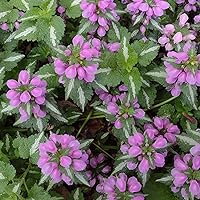
Accompanied by photographs she's taken of the natural landscape near her home in New Brunswick, her prose often reads like nature coming alive in your head. I often lose myself, pleasantly, in the beauty of Powning's words. A book to keep by the bedside table, along with her Edge Seasons: A Mid-life Year, to dip into at random, and gather comfort or wisdom in the wee small hours.
Beautifully written and illustrated with the author's gorgeous photos. Partly memoir but as much a paean to the author's farm and land in New Brunswick. It struck me as a prose-poem. When Beth Powning was 21 she and her husband, despairing over the vanishing farms and forests in Connecticut, decided they could not live in a land of strip malls and housing developments. They needed a place which had both wilderness and a place for a farm. So they bought an old disused farm, with 300 acres of land that was mostly woodland, in New Brunswick, Canada. The book moves seamlessly between now (first published in 1996), as the author approaches 50 and then, and back to her childhood experiences with woods and her garndparents farm that shaped the life she wanted to live. The book has a musing, almost dreamlike feeling. I finished the book 2 days ago and the peace and, sometimes harsh, beauty of that New Brunswick landscape has remained with me so strongly that I haven't been able to settle to a new book, which is very unusual for me.
On a cool fall day on Canada's west coast, hearing the honking of Canada geese, I read of Beth Powning's "dream of the wild" on Canada's east coast. She also dreamed of the garden as she and her husband Peter Powning "imagined a life" and set out for New Brunswick, Canada from New England in the United States in 1972. They still live in New Brunswick on the farm they brought in the spring of 1970. In her introduction to this new edition, Powning recalls handwriting the words that begin her book: "The coyotes are newcomers."
You would think a writer improves with practice (and we do) but here is Beth Powning almost twenty years ago writing with lyricism, honesty and originality. Having read Powning's other books, I can see the beginnings of them here. At night, lying in bed, she feels as if she's "in the cabin of a ship; the hills and fields rise around me like dark seas and I feel secure . . . " Those thoughts could have been her first gleanings about The Sea Captain's Wife, a novel published in 2010.
In a review of Edge Seasons, Powning's memoir published in 2005, poet and memoirist Patrick Lane said: "There are few writers who can evoke the wild world with such intensity and originality." The same can be said of this book written before Edge Seasons (and another memoir called Shadow Child: An Apprenticeship in Love and Loss). She refers to those edges or "space between" in Home. "All day long, I felt a peculiar passivity; in the space between the end of one era, and the start of another." And when Powning plants a vegetable garden she finds "a stage between vision and truth, when I suddenly doubt my faith."
Powning's full-color photographs accompany the prose and our walk with the author. It was Powning's camera ("microscope, wand, sacred text") that helped her to look at her world "in reverence and wonder." It was photography that brought her back to writing after her literary agent's letters "became boozily incoherent." The photographs are exquisite close-ups of the details of plants and meditative images of the landscape and the sky. Nature was no longer separate. Powning had found her subject in the grass and the spring's birdsong and found she was where she belonged.
"It takes a long time for roots to grow," Beth Powning says. It took twenty years for her to realize "this place" as home. It became so through the small events of the natural world" that offered comfort "with a kind of transcendent familiarity, an ancient re-awakening."
If there's a difference between prose and poetry, I couldn't find it here. Powning felt exposed under "so much sky" and dreamed of what could be planted on the farm. "I needed to frame the sky before I could love its serenity."
Beth Powning decided she would be an author when she was eight years old. How fortunate we are that she did. As for "home," you have to "weave it, thread by thread."
by Mary Ann Moore for Story Circle Book Reviews reviewing books by, for, and about women
Quiet, contemplative, insightful, this book is hard to classify: perhaps a memoir, but most of all a celebration of a sense of place, a place where one belongs in a personal and organic way. Truly beautiful prose without ever becoming the least bit academic or artsy. Powning's deep love for her rural home and everything that surrounds it shines through with authenticity in every paragraph. This is a book to be savored in a quiet corner, perhaps by the fire on a cold winter's day.
A lovely book- just lovely. It was generous of Beth Powning to share her personal experiences of making her adopted farm/ house a home by becoming part of the rhythm of her surrounding and appreciating the wonders of nature at her doorstep.
This is the kind of book I adore, a cozy, uplifting, warm little book with delicious pictures and sumptuous, poetic writing. A book to curl up with during cold winter evenings by the fireplace. The kind of book you have to pause and re-read to savour the golden wording, appreciating the aftertaste. I want to be this author's neighbour. I want her skill. I want the confidence to follow her footsteps into farming.
It contrasted interestingly with a book I previously read, where the author felt an instant and unshakeable affinity with her farm. Beth Powning, on the other hand, recognizes that when one comes "from away," there is a sense of otherness, of being a stranger, disconnected from the history of the place. It takes time to become acquainted, accepted, to meld with the landscape and become a part of it. This book chronicles that journey honestly and beautifully. Her devotion comes through in every sparkling phrase.
"In the tradition of our great nature writers -- Barry Lopez, Gary Synder and Annie Dillard -- Beth Powning tells the story of her personal journey to forge a bold new life in the wilderness of the North Country.
"Twenty-five years ago, when she was twenty-one, Beth Powning and her husband left their native Connecticut for an abandoned farmhouse in a secluded provine of Canada. They wanted a home insulated from the onslaught of strip malls and neon.
"... Home is a powerful celebration of the search for the spirit of home in nature, as well as the memoir of a woman's relationship with the land, as its mysteries, pleasures and terrors unfold before her.
"Brought to life with seventy-five sensuous color photographs taken by the author, and filled with rare insights into the natural world, this story will strike a resonant chord in anyone who has yearned for a simpler life." ~~back cover
And in anyone who loves nature, as the book is not so much a journal of her days, but rather of her encounters with the land and the animals, in no special order, in no distinct time. In exquisite language, she talks about coming to know the rhythms and contours of her adopted land, often remembering the land and the rhythm of daily life she absorbed into her bones as a child. This book is the story of the absorption of her new home: wildnerness and fields of timothy grass, and snow.
This book is why I read. Most of the books I read (and I assume this applies to all of us readers) are good, sturdy, funny, comforting, etc. But most of them are ordinary too, sinking below my memory in short order. This book, this unexpected jewel, will stay with me forever. Here's why"
"It takes a long time for roots to grow. For me, twenty years passed before I suddenly realized that this place had finally become home.
"It became my home when I knew, absolutely and without looking, that the wind would tug loose the fireweed's seed fluff in the last week of August; when I knew where to find the fiddleheads, and could tell by the sound of the brook when they would be ready; when I could watch spindrifts of snow ghosting across the fields and remember dew-hung spider webs on a June morning, like a reality behind a reality. It is the small events of the natural world, the return of the swallow, the leaping gray waters of the spring brooks, that comfort me with a kind of transcendent familiarity, an ancient re-awakening."
This is a beautiful book filled with lovely photographs and pure powerful prose. Powning is able to put into words her incredible sensitivity to the world that surrounds her at her 300 acre farm in Sussex New Brunswick. She and her husband moved there after leaving their home in Connecticut and searching for a life that was not punctuated by strip malls and the constant hum of sprawling cities.
This is a lovely book. Beth Powning's writing makes one feel like she is a friend sharing her story ... which in some ways she is. The writing is visceral and visual ... which for me is why I read. Paint me a picture! And she does.
"Seeds of Summer" (in Canada). Essays and photography of home, nature, 70s back to the land movement, creative living, making home, living a life imagine; practically in my back yard of New Brunswick. Beautiful.