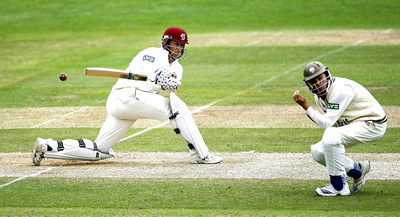
Excerpt from Mike: A Public School Story It was a morning in the middle of April, and the Jackson family were consequently breakfasting in comparative silence. The cricket season had not begun, and except during the cricket season they were in the habit of devoting their powerful minds at breakfast almost exclusively to the task of victualling against the labours of the day. In May, June, July, and August the silence was broken. The three grown-up Jacksons played regularly in first-class cricket, and there was always keen competition among their brothers and sisters for the copy of the Sportsman which was to be found on the hall table with the letters. Whoever got it usually gloated over it in silence till urged wrathfully by the multitude to let them know what had happened; when it would appear that Joe had notched his seventh century, or that Reggie had been run out when he was just getting set, or, as sometimes occurred, that that ass Frank had dropped Fry or Hayward in the slips before he had scored, with the result that the spared expert had made a couple of hundred and was still going strong. In such a case the criticisms of the family circle, particularly of the smaller Jackson sisters, were so breezy and unrestrained that Mrs. Jackson generally felt it necessary to apply the closure. Indeed, Marjory Jackson, aged fourteen, had on three several occasions been fined pudding at lunch for her caustic comments on the batting of her brother Reggie in important fixtures. Cricket was a tradition in the family, and the ladies, unable to their sorrow to play the game themselves, were resolved that it should not be their fault if the standard was not kept up.
Sir Pelham Grenville Wodehouse, KBE, was a comic writer who enjoyed enormous popular success during a career of more than seventy years and continues to be widely read over 40 years after his death. Despite the political and social upheavals that occurred during his life, much of which was spent in France and the United States, Wodehouse's main canvas remained that of prewar English upper-class society, reflecting his birth, education, and youthful writing career.
An acknowledged master of English prose, Wodehouse has been admired both by contemporaries such as Hilaire Belloc, Evelyn Waugh and Rudyard Kipling and by more recent writers such as Douglas Adams, Salman Rushdie and Terry Pratchett. Sean O'Casey famously called him "English literature's performing flea", a description that Wodehouse used as the title of a collection of his letters to a friend, Bill Townend.
Best known today for the Jeeves and Blandings Castle novels and short stories, Wodehouse was also a talented playwright and lyricist who was part author and writer of fifteen plays and of 250 lyrics for some thirty musical comedies. He worked with Cole Porter on the musical Anything Goes (1934) and frequently collaborated with Jerome Kern and Guy Bolton. He wrote the lyrics for the hit song Bill in Kern's Show Boat (1927), wrote the lyrics for the Gershwin/Romberg musical Rosalie (1928), and collaborated with Rudolf Friml on a musical version of The Three Musketeers (1928).
[7/10] : *** for the first part and **** for the second I am already a fan of mr Wodehouse, mostly based on the Jeeves and Wooster and the Blandings Castle series. Since I have seen in the Goodreads group frequent mentions of Psmith as the favorite character of many readers, I decided to expand my horizons and give him a try, preferably with his first showing. Which brings me to Michael Jackson:
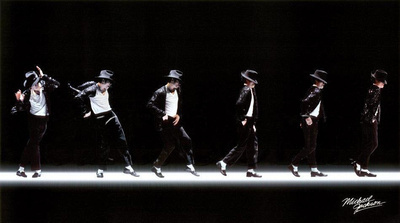
Not really, this is another Michael Jackson who doesn't moonwalk, the scion of a cricket-crazed British family, a 15 y.o. lad with three elder brothers, all playing competition cricket, and an assortment of little sisters. In the opening chapter, Mike meets his family over breakfast and is informed he will go to Wrykin: a public school where his elder brothers have already excelled at the game. (in case a reader is not familiar with the British school system, a 'public' school is in a fact a very private and rather exclusive private one, boys only in the case of Wrykin and Sedleigh).
What follows feels very familiar to every other novel and movie with a sporting theme : the young rookie is a natural talent at the game, gets noticed very soon by the trainer / captain of the team, gets in trouble and is in danger of being left out of the team, and the culmination of the plot will probably involve a play against the school's traditional adversaries, where said rookie would make history by scoring a goal in the very last seconds of the game. Wodehouse plays it straight in the first half of the novel, with less complicated twists and a focus on school spirit, fair play and ragging - which is slang for acting out, get into mischief, break the school rule, and in general having fun. The prose and the plot are rather simple, but there are glimpses of the style and of the wacky characters that will make the author instantly recognizable in later books (like the scene with the policeman and the pond in the night). Beside Mike ascension on the cricket ladder of fame from hopeful reserve in the third team to star player in the first, the plot revolves around his relationship with his elder brother Bob, and the one with his room-mate and rabble rouser Wyatt ( He had a pleasant, square-jawed face, reminiscent of a good-tempered bull-dog, and a pair of very deep-set grey eyes which somehow put Mike at his ease. There was something singularly cool and genial about them. He felt that they saw the humour in things, and that their owner was a person who liked most people and whom most people liked. )
I would call the story a very easy and pleasant read, if it weren't for my total ignorance of all things cricket. This is the national sport in Britain, with a greater popularity at the beginning of the 20th century (the setting of this novel) than soccer and rugby, yet to my shame I have never watched a single play, and even after reading the full Wikipedia article on the rules and specific terms of the game, I was still lost when it came to fast bowling, slow bowling, foot before the wicket, innings and overs. I am willing though to give cricket another chance now (maybe I'll find something on video to explain it better), mostly from sharing the author's evident enthusiasm for the game. A special note of thanks for Project Gutenberg, who not only made the novel easily available, but included a great set of original illustrations in black and white.
The novel has two distinct parts : after Mike at Wrykin, comes Mike at Sedleigh, officially known as Mike and Psmith. The explanation of the move comes from something that has already struck me as curious in the first half : school activities appear to be centered exclusively on sports, as if nothing else was taught at Wrykin. It turns out Mike excellence at batting is not reflected in similar exploits in the other academic fields. When his father finds out ( These school reports are the very dickens. Many a bright young lad has been soured by them. ) he withdraws Mike and sends him to a lesser school, one without any renown in the sport.
The second half of the book is much closer to what I have come to expect from a Wodehouse romp, and the reason is mostly the appearance of Psmith, Mike's new room mate, another outcast, in this case from Eton, with a haughty yet languid atitude, a fast tongue and a delightfully wicked mind.
Sit down on yonder settee, and I will tell you the painful story of my life. By the way, before I start, there’s just one thing. If you ever have occasion to write to me, would you mind sticking a P at the beginning of my name? P-s-m-i-t-h. See? There are too many Smiths, and I don’t care for Smythe. My father’s content to worry along in the old-fashioned way, but I’ve decided to strike out a fresh line. I shall found a new dynasty. The resolve came to me unexpectedly this morning, as I was buying a simple penn’orth of butterscotch out of the automatic machine at Paddington. I jotted it down on the back of an envelope. In conversation you may address me as Rupert (though I hope you won’t), or simply Smith, the P not being sounded.
Comrade Psmith motto ( ‘Never confuse the unusual and the impossible.’ ) is quickly made manifest when he gives a demonstration of practical socialism and he pitches his wit (and later his fists) against his unsuspecting colleagues at the new school. Mike's exile starts to shape up in interesting ways, even as he refuses to play for the new school's cricket team, as bellow his talents. The plotting of the Sedleigh chapters is also much improved, with a pivotal set piece involving a young student in trouble, a night ride on bycicle, a couple of teachers/dorm masters, a fire alarm bell, a bulldog and a missing boot.
The last part of the book sees a return to the cricket pitch and to the obscure technical terms for strikes and runs, with Mike reverting to his rather lame wonderboy persona and Psmith left to carry the torch of anarchy. It will be Psmith who I really look forward to meet again in later books, and I will say goodbye to this one using one of his irresistible challenges:
Let us now sally out and see if we can’t promote a rag of some sort in this abode of wrath.
“Mike” was first published in the U.K. on September 15, 1909. I believe it is the longest of Wodehouse’s school novels, and it was republished in 1953 in two slightly revised parts titled “Mike at Wrykyn” and “Mike and Psmith”. Mike Jackson is the main character in part one, and covers Mike’s life at Wrykyn, a public school as have all his brothers before him. The Jackson boys are known for their cricket, and Mike is the youngest, and most talented, of them all. In the second part, Mike is sent, against his will, to a new school, Sedleigh. There he meets Psmith, a student who is in a similar position. This part covers their strategy of rebelling against things in general, and the events that end up accepting their positions and their new school.
This novel is very much like Wodehouse’s other schoolhouse novels. A strong focus on sport, in this case it is cricket, which is his most common choice. There are also the usual interactions and misunderstandings between students, and of course a bit of rebellious behavior which causes friction with the faculty. In many ways “Mike” is unremarkable. Wodehouse has other stories, starting with his very first, which doesn’t cover at least some of the ground here. What makes it worth reading to Wodehouse enthusiasts is the character Psmith, one of the more memorable characters that Wodehouse created. Psmith only appears on four stories, starting with “Mike” and going on to “Psmith in the City”, and on to Psmith Journalist, before finishing with “Leave it to Psmith”. The character of Mike Jackson appears in the same four books, but he is not as nearly as unique a character.
“Mike” is the 12th book that P. G. Wodehouse had published, and it is the last of his school stories, though he would use these characters as he transitioned to other types of stories. Some of these attempts did not work so well, but it did culminate in the excellent “Leave it to Psmith”. I would recommend this book to those who love Wodehouse, but if you are looking for a good place to experience him for the first time, “Mike” is not the best choice. I would say that the second half of the book is clearly better than the first, but overall I round it down to two stars.
As other reviewers have noted, there is lots of cricket in this. As an American who is not much interested in sports, much of the details about batting and bowling escaped me. However, I did get a kick out of the boys' shenanigans. I was surprised to discover that Psmith had introduced the P in his name himself (because there were too many plain Smiths and he didn't like Smythe!).
I'm glad I stuck with this book, despite all the cricket talk. It's an amusing story about Mike, a talented cricket player, not-so-talented student at one of those boy's schools in England. (Public school there is what we would call private boarding school here.) Mike comes from a family of cricketers and makes amazing progress towards making the varsity team at his first school, Wryken, but a tendency to hang out with troublemakers and neglect his studies pushes his father to the brink. He pulls Mike (full name Michael Jackson--how weird is it to be reading this book at the same time Michael Jackson dies?...) out of Wryken, a cricket powerhouse, and sends him to Sedleigh, a small school with more academic focus and a nominal cricket team. Mike meets up with another new troublemaking student, Psmith, eschews the school cricket team, and secretly plays for the village cricket team. Mike and Psmith, along with some other characters, find themselves in and out of trouble in a fast-moving, humorous story, if you can just make it through the cricket scenes. I did go to Wikipedia to read about cricket, but it still doesn't make a lot of sense, except that the condition of the wicket is critical. I especially liked the part of the story where a dog gets painted red and Psmith drives a teacher crazy by hiding a paint-splotched boot. Then Mike shows up at school in the wrong shoes, telling the same teacher that one of his boots is missing. There are more books with these characters, which I may leave for another summer.
One thing I like about P.G. Wodehouse's books is the idyllic sense. The real world does not exist. Everything is ordered, the characters seem to bumble through without a scrape, and people are always getting engaged at the drop of a hat (Oh, wait, that's in the Wooster & Jeeves stories.) I also love the writing and the humor.
If you played cricket at any level as a kid and/or follow & absolutely love this beautiful game, this is an absolute must read. In case you don't know anything about cricket, you'll want to know all about it after reading this(much like I developed a passing interest in golf after reading The Heart of a Goof).
The reason I picked it up was to learn about the origins of Psmith having read (and absolutely loved) his later adventures. This is one of PGW's earlier works and originally was published as two separate novels- Mike at Wrykyn & Mike and Psmith. And since Psmith doesn't make an entry till the second part, the first half did feel a bit underwhelming at times. Yes, there were the typical Wodehousian anecdotes but they were few and far between an otherwise light & easy read.
Things spice up, literally & figuratively, as soon as Psmith makes an entry into Mike's life. What follows is absolute mayhem which will be quite relatable for anyone who's spent a few years at a hostel (even though it's more than a century old). The bullies, house masters, head master, guys doing odd jobs, the dogs, nothing is left out(barring a description of any academics classes).
Go ahead and indulge yourself in one of the best light hearted, feel good and nostalgic novels you'll ever pick up. No matter how different our lives have become now, there was always a point when nothing else mattered more other than opening the batting for your school/neighborhood team or scoring a long range screamer on the football field. Relive those memories again with Michael Jackson and Rupert Psmith.
Before there was Flashman—or, rather, after Hughes's Flashman but before Fraser's Flashman—there was Psmith. And if you're going to read all the Psmith books, you're going to read ALL the Psmith books, starting with this first one, 75% of which is a "Tom Brown's School Days" type of book consisting mostly of descriptions of cricket matches. But once Psmith shows up things liven up immensely. "Psmith in the City" is next. Fun fact: main character is named Michael Jackson. Discuss.
I know nothing about cricket, except for what I learned reading Wodehouse. There is batting and bowling. Rain can result in a sticky wicket. Making a century is a good thing.
So I struggled a bit, because the book is full of sentences (paragraphs, pages) like these:
Grant pursued the Fabian policy of keeping his bat almost immovable and trusting to luck. Point and the slips crowded round. Mid-off and mid-on moved halfway down the pitch.
Mike and Psmith (the p is silent like in Pshrimp) is early Wodehouse. In this period he was fresh from his experience as a public School boy. Here he had been happy, a leading athlete with particular success at cricket and boxing. Given the theory that a writer should start with what he knows best, this book is one of many where he will focus on the life of English school boys. Be advised that if you are not a fan of Cricket and fluent in the rules, language and period slang of the game you are going to have to go with the flow and accept that you cannot follow pages of the narrative. Small usages such as ragging for pulling pranks should be clear in context. However the bottom line is that Wodehouse is writing for a period British audience not for contemporary American readers.
This is a very light, and light hearted story. Nothing more is at stake than school loyalty and the demands of friendship. The school masters are faintly distant comedic figures and reality is whatever has the interest of the students.
Mike and PSmith begin the book as strangers to each other and to their new school. Each has been taken from their old school as near academic failures and form a friendship based mostly on not knowing anyone else. Mike is somewhat of an average guy if an exceptional cricket player. Psmith comes across as pretentious and possibly effete, however he has the quicker wit and seems to have many hidden qualities. Between them they will use force and Psmith's fast talking to secure a safe place in the student pecking order and routinely play the adults for fools.
For those of us who relate to Wodehouse mainly via the Bertie and Jeeves books, Psmith comes across as Jeeves clever but clearly destined for a Bertie Wooster lifestyle. In Psmith Wodehouse has created a character rich in contradictions and therefore rich in comedic potential. In Mike and Psmith we are not aware that there will be at least four more Psmith books. It is clear that this character can sustain more stories.
For me the humor in Mike in Psmith was rarely above the quiet smile level. It was a nice enough story. There was not enough plot or plot twists to make this a long book and Wodehouse keep this pacing crisp and the wind up is not long in coming. This book may appeal to younger reader, although perhaps not one missing a background in cricket. I cannot recommend it as an introduction to Wodehouse, but for the reader with some sense of who Wodehouse will become and in particular if you have not yet read the Psmith books, I can recommend Mike and Psmith.
This edition combines Mike at Wrykyn and Mike and Psmith into one book, with an extra introductory sentence added to the start of the second as a bridge. Mike at Wrykyn, which comprises the first 29 chapters, is pleasant enough but it's really a pretty standard school story about a boy trying to make the cricket team. Things really take off with the introduction of the monacle-wearing wit Psmith (the P is silent, he explains). I think the clever and quirky Psmith rivals Wodehouse's best characters. I really enjoyed the second book, although it's still early Wodehouse and doesn't approach the brilliant insanity of the best Blandings or Jeeves & Wooster books.
If this is the first Wodehouse book you try, don't let it turn you off. I'd recommend that all but the biggest Wodehouse (and cricket) fans skip the first book and start at chapter 30, where Mike and Psmith begins.
Wodehouse is the only author who can make me wholeheartedly enjoy reading a book with a plot completely centered on cricket when I don't know a half-volley from a mid-on. This is pure entertainment reading even before we get Psmith.
The story only really gets going once the inimitable Psmith is introduced, but rips along in fine Wodehousian style from that point, going from being fairly droll to laugh-out-loud funny. There is a lot of cricket and not much school in this school story, and I imagine the audiobook of this would be nice to listen to in a canvas deckchair under a tree on a summer afternoon. With ginger beer and a bun, of course.
Love English boarding school novels, love cricket novels (I have now read two, and Mike and Peter Wimsey find themselves in much the same jams), love unflappable weirdos with strange glasses (I have now found two, and Psmith and Peter Wimsey find themselves in much the same jams)
Very nostalgic read, it’s good to get back into Wodehouse. Wildly funny and the best of British humor. Rupert Psmith is one of the most iconic literary creations ever made.
And one of my favorite quotes:
“There are situations in life which are beyond one. The sensible man realizes this, and slides out of such situations, admitting himself beaten. Others try to grapple with them, but it never does any good. When affairs get in a real tangle, it is best to sit still and let them straighten themselves out. Or, if one does not do that, simply to think no more about them. This is Philosophy. The true philosopher is the man who says "All right," and goes to sleep in his arm-chair. One's attitude towards Life's Little Difficulties should be that of the gentleman in the fable, who sat down on an acorn one day and happened to doze. The warmth of his body caused the acorn to germinate, and it grew so rapidly that, when he awoke, he found himself sitting in the fork of an oak sixty feet from the ground. He thought he would go home, but, finding this impossible, he altered his plans. "Well, well," he said, "if I cannot compel circumstances to my will, I can at least adapt my will to circumstances. I decide to remain here." Which he did, and had a not unpleasant time. The oak lacked some of the comforts of home, but the air was splendid and the view excellent. Today's Great Thought for Young Readers. Imitate this man.”
I read this because I like the Bertie and Jeeves books, and was soon disappointed that this wasn't a comedy, but was instead a book about a young boy who is sent to boarding school. Things are a bit tough for him but his exceptional skill at cricket helps him to win friends and fit in. I know nothing about cricket, don't care about it either, and am not much interested in early 20th century Briting boarding school, so why did I keep reading? Because I noticed that if you replace "Cricket" with "Quidditch", "Wrykyn" with "Hogwarts", and "Mike" with "Harry" you have something astonishingly close to Harry Potter. I looked more and found out that the kids-at-boarding-school-playing-cricket novel was a major genre in Britain a while back, and I'm sure that Rowling read her fair share. From that point of view, you can see the Potter series, which I'm a fan of, is based strongly on this old genre. I had a pretty good time reading the book, looking for similarities.
But I had to rate it on its own, and frankly there it's three stars out of five at best.
Mike is a somewhat vanilla protagonist, there's not much plot and I couldn't understand half of what was going on, between all the old British slang and the cricket terms. It's really a testament to how fun and clever Wodehouse's writing style is that I'm giving this 3.5 stars despite all that. Even the cricket stuff, I could generally tell when something good or bad was happening to Mike's team, even if I'm baffled about the specifics.
It's not hard to see that this is two books that were stitched together, since we suddenly skip forward two years and leave the previous setting and characters behind. I actually expected Psmith to have a bigger part once he showed up; he steals the show whenever he speaks, so I'm looking forward to him in a starring role from here on out.
Longtime Wodehouse fan. Had to take a break from this one to learn about Cricket on YouTube, Didn’t help but it didn’t matter. Much fun to read. So disappointed it ended that I’m taking the time to write a review, just to hold on to the story for a few more minutes. Less frivolous than the usual Wodehouse novel. Almost seemed like there was a point to the story or hidden lesson to be learned. Thankfully, there wasn’t one. Maybe I missed it?
The last and best-known of Wodehouse's school novels. It has two distinct parts. In the first, "Mike at Wrykyn", we are introduced to Mike Jackson, the youngest boy in a family of great cricket players. His father even hires a professional player to coach the boys in the summer. At the beginning of the book, Mike is sent to a boarding school called Wrykyn, with a strong cricketing tradition. The first part of the book is about Mike's adventures at Wrykyn, both on the cricket field and elsewhere. It's a traditional boarding school story, with a lot of emphasis on sports, but also on other schoolboy escapades. Think "Tom Brown's School Days" but with a lot of cricket games.
The second part, "Mike and Psmith", takes place a few years later. Mike's father has withdrawn him from Wrykyn due to his bad grades and sent him against his will to Sedleigh, a smaller, less-prestigious school without a first class cricket team. Mike is disgusted at losing the opportunity to be the captain of the Wrykyn team and his intention is not to play for his new school. At Sedleigh, he meets and befriends Psmith, who is also new at the school, after being expelled from Eton. This second part is also a traditional boarding school story with plenty of cricket, but at the same time it's more similar to Wodehouse famous comedy writing (thanks to Psmith, a fast-talking, charmingly roguish character who shares the spotlight with Mike in this second part).
As a fan of boarding school stories, I always feel a disconnect when I read readers' reviews of Wodehouse's school stories. The people writing those reviews do not like school stories. They are fans of Wodehouse's comedy writing, and that's what they are looking for. Therefore, they like the second part of the novel much more than the first, since Psmith is precisely the type of character they want. I, on the other hand, liked both parts of the story about the same. The first part is more sport-focused, and the main plot is an underdog trying to secure a place in the school's first eleven in his first year there (underdog is a relative term here, because Mike is exceptionally talented at cricket, but also younger and physically weaker than the players he has to compete against to get on the team). The second part has a fair amount of cricket too, but Psmith steals the show.
To be honest, I sometimes got a bit tired of Psmith and all his talking, but he is funny, and I appreciated that, when it counts, his heart is in the right place.
Wodehouse assumes that his readers understand cricket here. If you know nothing of cricket, the descriptions of the matches and the cricket slang may be a bit tough for you, and you won't understand what exactly is going on, although you'll probably be able to follow what team and what players are doing well. I have some (very basic) notions of cricket and I like sport stories, so I was fine. For some readers, however, this might be a problem.
I am torn between really loving the book and just loving it and like most readers who found the second half exceptionally witty, where PSmith is introduced, I would have to write that I agree wholeheartedly. With PSmith the narrative dramatically changes! The moment P. G. Wodehouse introduces him, you are certain of the magic that is going to descend upon you in the forthcoming pages and bam-it falls with a deafening thud, wrapping you in wonder and laughter.
I would not say that the first half was a complete drag-I did enjoy reading about Mike Johnson's rise as a fine cricketer in his public boarding school, at Wrykyn. Coming from a cricket loving nation, where cricket perhaps is a religion, I wasn't entirely bored. Although I must add that I do not, strangely, understand the game but know enough to comprehend why it is a religion amongst young and old alike. P. G. Wodehouse is a master of humour, there is no denying this. I should, hence, warn you that when reading the second half observers may take you for a fool for you will find yourself smiling away or laughing unaware when you read about PSmith and his ways. I wish I could describe PSmith but words fail me! You ought to read about him and then we can talk.
While, when I started the book, I was not completely sure of reading the next in the series, but now I cannot wait to find out what PSmith will be upto subsequently!
Mike was published in 1909, a collection of 59 short chapters, detailing the cricketing adventures of Mike Jackson in Wrykyn and Sedleigh schools. Later, in 1953, Mike was republished as two books – Mike at Wrykyn and Mike and Psmith.
Mike at Wrykyn [***] is the story of how Mike establishes himself as a cricketer at Wrykyn. As a freshman, he gets unusual breaks and gets to play against M.C.C. as well as Ripton, both schools with which Wrykyn has a history of sporting rivalry.
Mike and Psmith [***½] continues Mike Jackson’s cricketing career in Sedleigh. At the cusp of becoming captain of the Wrykyn’s cricket team, Mike is pulled out of that school and enrolled in the much smaller Sedleigh. Psmith, the loquacious socialist, makes his first appearance in this book, and befriends Mike.
Reading both these novels, one would be left with the impression that in English public schools, cricket and other sports take precedence over academics. If it is otherwise, at the least, Wodehouse doesn’t bother to paint that picture. When he is not describing the game, he treats his readers to some exquisite shenanigans of English school kids. All in all, fun to read, but a far cry from the later day Wodehousian humor.
This is a very early P G Wodehouse, written in 1909. It’s a school story where our eponymous hero is about to start at Wrykyn, a boarding school where all his elder brothers had been before him, with one brother still there.
In many ways the story is exactly what you would expect from a boarding school novel written around the turn of the 20th century. But this is a P G Wodehouse once, so things aren’t as “straight up and down” as you might expect. And half way through the book you are introduced to Psmith, one of the great literary figures of the early 20th century. Well in my opinion he is.
So why only three stars? I couldn’t find the edition that I was reading so the cover above isn’t the only on the front of my book, which was printed by Amazon, and it’s a disgrace. The Tempe face is dreadful, sentences run into each other without gaps and all in all it’s very difficult to read. Also there are illustrations in the text, if only the book had bothered to tell you who the artist was.
So a good book let down by the way it’s been put together.
‘Mike’, a combination of ‘Mike at Wrykyn’ and ‘Mike and Psmith’ was originally published in 1909, later split into two novels and again re-combined in 1953. Wodehouse was about 27 when he wrote it. A school story with an emphasis on sports, particularly cricket, it does not lay as much importance on school and boyhood camaraderie as on the excellence in, and politics of, cricket. As a result, it reads rather elitist than popular, except for enthusiasts of the game, who follow the technical points of the game.
It is also a novel where Wodehouse was obviously experimenting with both language and style, and until Psmith walks in with his usual panache in the second part, Wodehouse’s usual humour is less pronounced, though it has begun to freak out in conversations between the school servants, and in situational, rather than in conversational humour, or in portraiture of character.
Nevertheless, for a lifelong Wodehouse admirer, it just felt good to rejoice in the school trivia again.
Light-hearted and entertaining, which is what I need right now. It was published in 1909 when the world was still relatively innocent and the horrors of the 20th century were yet to come.
The book is full of delightful moments and descriptions, especially after the arrival of Psmith on the scene. I enjoyed this description of a dog:
Sammy, short for Sampson, was a young bull-terrier belonging to Mr Downing. If it is possible for a man to have two apples of his eye, Sammy was the other. He was a large, light-hearted dog with a white coat, an engaging expression, the tongue of an ant-eater, and a manner which was a happy blend of hurricane and circular saw. He had long legs, a tenor voice, and was apparently made of india-rubber.
I read the Kindle version of "Mike" from "Best of P.G. Wodehouse" (3 Kindle Book Combo Collection published Oct. 16, 2003. Excellent writing. Subtle and ironic humor in the story. View of life in pre-war public boarding and day school for upper-class boys in England. Kindly school leaders but boys are often left on their own to dictate their peer interactions. A little depressing to read about the student rivalries. I learned about the sport of cricket which was very imp0rtant to the students and coaches. The entire story is a series of missteps and misunderstandings which end with a satisfactory moral conclusion.
The book gets better as it goes along particularly with the introduction of the Psmith character. Certainly one of the longest Wodehouse books I have read to date and the most interesting I have read so far of the 'school house' series. The emphasis on cricket, for me, added quite a focus to the book. While I cannot claim to be an expert on the game, I was familiar with most of the terms (and abbreviations) used in the book relating to the sport. It's something to ponder that the main character's name was Michael Jackson - a name that became quite famous in the latter 20th Century.
I read this after Mike and Psmith, Psmith in the City, and Psmith, Journalist because I was afraid of all the cricket I had heard was in it, but it couldn’t have been much more than what was in Mike and Psmith. I just like Mike so much I had to give his debut story a try. I really enjoyed it. I haven’t heard of anyone who likes Mike more than Psmith, but I do. He’s got heart.
As for the cricket, I have learned a lot about it from doing research to understand what was going on in these books, and now I am interested in watching some.
This is another of P.G. Wodehouse's school boy stories, with all the antics and sports scenes you'd expect. Mike, the titular character, is absolutely obnoxious, but in the second part of the book he meets Psmith, who is hilarious and makes the book shine. There are also so many extended cricket scenes in this book which put me to sleep almost instantaneously, so if you are a fan of cricket or need something to help you fall asleep, this might work for you.
Looking back to the earlier school stories which Wodehouse wrote when he started writing, and also looking forward with the advent of the character Psmith ("the P is silent") and the humour which came to characterise his work.
The now old fashioned public school background and the central part given to cricket may nowadays limit the appeal of this book, but it's a lot of fun if you understand the game and its jargon.
I had already read Mike and Psmith (Mike book #2) and had thought at the time that is was fairly interesting and maybe Mike at Wrykyn (Mike book #1) would have been boring.
But I was wrong. When I started reading this, I realized what I'd missed. And then the 2nd part became even more interesting for me.