Jump to ratings and reviews
Rate this book
Rate this book
Lo sbarco di Anzio è da poco avvenuto e le truppe tedesche occupanti sentono la morsa degli Alleati. Si intensificano le azioni dei patrioti. Sono i giorni lugubri delle Fosse Ardeatine. L’infernale 1944.
Martin Bora, giovane maggiore dei servizi segreti della Wehrmacht è venuto in missione a Roma. Caput mundi, la tenera città che gli era familiare da giovanissimo aristocratico, è ora una fosca città aperta, «sotto assedio dall’interno». Nel suo animo e nel suo corpo la guerra ha inciso a sangue. Ha perso la mano sinistra in un’azione dei partigiani; il fratello, compagno di un’infanzia dorata, è caduto con il suo aereo in Russia; Dikta, la bella moglie altera, è lontana.
In quest’atmosfera, una giovane segretaria dell’ambasciata tedesca s’è sfracellata al suolo dalla finestra di casa sua, al quarto piano. Potrebbe passare per un suicidio o per un incidente, se non fosse che le chiavi dell’appartamento chiuso non si trovano dentro casa. Inoltre, il delitto offrirebbe certe occasioni alla polizia italiana. Nell’inchiesta che inizia, mentre si occupa di più importanti affari di intelligence, Bora ha al fianco l’ispettore Sandro Guidi che il questore capo ha chiamato per chiudere in fretta il caso. Ma al contrario le indagini proseguono. Altri delitti coinvolgono capi nazisti, cardinali, gerarchi italiani, salotti altolocati. Bora, e accanto a lui Guidi con cui s’è rafforzata una amicizia piena di discrezione, procedono sull’orlo dell’abisso, tra diplomazie vaticane, odi invincibili di SS e comandi Wehrmacht, maneggi di burocrati fascisti, inconfessabili vizi privati. Li guida, contro ostacoli e minacce, un senso di decenza e soprattutto il desiderio di salvare nell’estrema barbarie qualcosa, «i doni della dignità».
La saga di Martin von Bora continua in questo romanzo che incardina il mistero in una sensibilissima raffigurazione di una Roma prigioniera di guerra, con una precisione storica spinta fino ai ritratti particolari dei reali protagonisti di quei tempi maledetti. Allegoria del dramma storico di un nobile ufficiale tedesco coinvolto nel nazismo senza essere nazista.

568 pages, Paperback

First published January 1, 2002

37 people are currently reading
181 people want to read

About the author

Ben Pastor

32 books86 followers
Ben (Maria Verbena Volpi) Pastor was born in Rome, but her career as a college teacher and writer requires that she divide her time between the United States and Italy, where she is now doing research. Author of the internationally acclaimed Martin Bora war mysteries, she begins with Aelius Spartianus a new series of thrilling tales. In addition to the United States, her novels are published in Italy, Germany, Spain, Poland, and the Czech Republic. She writes in English.

Ratings & Reviews

What do you think?
Rate this book

Friends & Following

Create a free account to discover what your friends think of this book!

Community Reviews

5 stars
125 (32%)
4 stars
150 (39%)
3 stars
74 (19%)
2 stars
24 (6%)
1 star
11 (2%)
Displaying 1 - 30 of 35 reviews
Profile Image for Chequers.
597 reviews35 followers
September 20, 2019
E' stata per me una lettura molto dolorosa, perche' io sono romana e mi ricordo benissimo quello che mi raccontava mio padre dell'occupazione tedesca e specialmente del massacro delle Fosse Ardeatine (e lui, come me oggi, non si capacitava che gli autori dell'attentato di Via Rasella non si siano consegnati ai tedeschi ma abbiano lasciato accadere la durissima rappresaglia), Kappler ha finito i suoi anni in una casetta vicino alla casa dove io sono cresciuta, mentre invece la segretaria tedesca e' precipitata dal quarto piano di un palazzo nella via dove sono nata, ed il sospettato del suo omicidio e' stato visto aggirarsi nella via dove abitava mia nonna, quando ancora il quartiere non era diventato lo "chicchetoso" Prati ma era ancora il popolare Trionfale....insomma tanti tanti ricordi della mia vita che sono affiorati leggendo questo bel libro della Pastor.
La sua scrittura pero' non sembra prendere le parti di nessuno, non c'e' nessun favoritismo ma solo un imparziale resoconto dei fatti accaduti poco prima che gli americani entrassero a Roma, e cio' ha giovato moltissimo al racconto, collocandolo quasi in uno spazio temporale a se'.
Tutti i personaggi sono approfonditi come al solito, ed il dolore di Bora e' piu' che palpabile: per la moglie, per dover lasciare Roma, per la guerra che e' ormai perduta, per la sua vita di Junker ligio al dovere che poco ha a che fare con gli ideali nazisti.
Bravissima Ben Pastor, da consigliare come sempre.
Profile Image for Paula.
961 reviews224 followers
August 20, 2023
I can´t do this series justice with a review. Extraordinary sense of place and period, superb character study, fascinating characters,complex moral dilemmas and a protagonist that grows in each book (and grows on you).
Profile Image for Susan.
3,020 reviews570 followers
April 9, 2014
This is the third novel featuring Martin Bora, following “Lumen” and “Liar Moon.” This book sees Bora in Rome and takes place from January to May, 1944. It is coming to the end of the Nazi occupation and, like “Liar Moon,” the novel features Inspector Sandro Guidi as an uncomfortable partner of Bora in an investigation. For those forced to work with the Germans will soon possibly be viewed as collaborators and there is an uneasy feeling in a city where the Allies are approaching and the Germans may be forced to pull out at any moment.

Guidi has been told to investigate the death of Magda Reiner, a secretary at the German Embassy, who fell to her death from her apartment. The main suspect is a man called Merlo; one of the highest ranking Party official in Rome. However, Guido’s superior officer seems unwilling to contemplate any other outcome and it leaves Guido wondering why he has been framed for the crime. Reunited with Bora, the two investigate while the war escalates and you cannot escape the irony of one murder being given such importance when the city is torn by reprisals, the resistance, curfews, oppression and hunger.

Those who have followed this evocative and intelligent series will already be aware of Bora’s difficult relationship with his wife, Benedikta. She figures again in this novel, visiting him in Rome, while Guidi becomes intrigued by Francesca Lippi – a young woman who shares the boarding house where he is staying. This book sees us explore more of Bora’s repressed personal life. Now damaged by war physically, as well as mentally, he finds his life as a German officer and his personal feelings begin to clash more and more. This novel will take us from the politics of the Vatican to torture and mass executions. It is no exaggeration to say that, at the end of this novel, you will feel emotionally wrung. However, if you are coming to this series for the first time, please try to read them in order – they are really best read in sequence . This is a rewarding, and different, crime series, which is both enjoyable and yet, at times, difficult to read. Still, I do hope that Martin Bora will figure in future books, as it is rare to find such a fascinating, if flawed, central character.
Profile Image for paper0r0ss0.
652 reviews57 followers
August 11, 2021
Terzo episodio della saga di Martin Bora e purtroppo non il migliore. Un sacco di pagine, scritte con l'intento di offrire la descrizione del Gotterdammerung nazista nella Roma citta' aperta del 1944, che pero' riescono soltanto ad annoiare il lettore. Tutta la prima parte e' una vera sofferenza. La trama gialla non decolla e la descrizione della cupa atmosfera cittadina riesce a malapena a coprire la confusione di un racconto che non sa dove andare a parare. La traccia gialla del resto e' cosi' esile e annacquata da risultare irritante. Solo per qualche istante il personaggio principale, con i suoi comportamenti talvolta eccentrici, riesce a rendere tollerabile la lettura.
Profile Image for Mieczyslaw Kasprzyk.
888 reviews146 followers
January 21, 2019
Every now and then you read a book and realise that you are privileged to be handling a masterpiece, a book that has somehow managed to touch on an aspect of humanity that can resonate across time. This is how I feel about "A Dark Song of Blood". I know that there will be some who will be baffled at my words and will be unable to see what it is that I experienced but, for me, this was a book that caught a time and place, and emotions, that I could truly identify with.
Initially it was a different read, almost episodic in the way that... well, it's almost like a journal, diary entries or a daily log. It wasn't a satisfactory opening because the "logs" were short and almost impersonal... you could easily call them mini-chapters or passages. I realised, at some stage that it was a sort of countdown. This is a record of the final months of the German occupation of Rome, from just before the landings at Anzio to the German abandonment of the city to the Americans.
It's not long before you get into the flow of the thing and the sections begin to get longer, and more gripping. The many characters that we are introduced to in the small "entries" begin to take on real flesh and blood and the story takes a real hold on you.
Martin Bora, fresh from his adventures in Verona, is in Rome as aide-de-camp to General Westphal. Coincidently, so is Inspector Guidi who worked with him in Verona on a delicate investigation. Guidi is put in charge of investigating the murder of a German civilian and, in the process Bora also becomes involved. This is the bare bones of it all because the story is neither a war story nor an investigation of a crime - it is much more than this.
The cold, almost arrogant Bora somehow manages to encapsulate all the emptiness and tragedy of life. Heartbreak and love go hand-in-hand. Bora's sincerity shines through the Prussian professionalism of the military man that he is. Emotional wounds accompany physical injury and loss in a way that makes Bora a true hero. Around him is the pettiness, the nastiness and the brutality of the SS and the Italian Fascists, the complications of an occupying power dealing with the Holy See, and of the Army struggling to avoid the inevitable in the South. Bora, somehow, manages to wade through all this with true dignity. He has to be admired for the man that he is.
Guidi also comes across as a fascinating character. In many ways he is the opposite to Bora; he lacks confidence and authority. He is neither a collaborator nor a partisan, he's just a policeman doing his duty. Like Bora, he is a professional who finds himself in difficult circumstances. His personal life takes on complications as he becomes involved with the enigmatic Francesca and the difficulties of working alongside a man, Bora, that, to be honest, he doesn't really like.
There were three moments in the book that touched me deeply and changed the whole reading experience - one managed to shock me, the second gripped me with fear and trepidation for the characters, the third was a twist that, somehow, I saw coming. The final moments, the almost-Gotterdammerung of the last hours in Rome, had a quality that felt very familiar - I watched it on the telly as the Americans abandoned Saigon. There is a depth to this tale. In my view it is a masterpiece.
703 reviews19 followers
November 16, 2015
Ben Pastor writes with depth and perception. The Bora books are historical fiction more than crime novels so if a satisfying detective mystery is what you are looking for then these probably are not for you.

Pastor's writing is intense and emotional, deeply involving, satisfying like an excellent meal or glass of fine wine.
Bora standing against the sill with his back to the muting glare of the window, until daylight grew faint and relinquished the room. His wholeness was scattered all over, as far as his mind could go-strands of him, loose ends, strange pieces, and he would need to pick them up and braid them back together to reshape his balance.


The plots are complex, with a tendency to fade a bit towards the end. To be honest, that doesn't bother me because I am more interested in the historical background, the moral dilemmas of wartime and occupation, and, most of all, the fascinating character, Martin Bora. Reading war fiction there is always the question, What would I do in these circumstances?

For the final pages of this book I could hardly breathe for tension, and fear of what might happen, seriously tempted to skip ahead, just to KNOW. I didn't out of guilt I would somehow disappoint the author by displaying such a lack of trust. By the end, however, I felt emotionally drained and wrung out, but in a good way, if you know what I mean.

I have become very fond of Martin Bora despite (because of?) his flaws. Of course Pastor, too, is in love with her creation, I think, and that communicates something to her writing that engages the reader at some fundamental level. Don't get me wrong, this isn't some kind of soppy, sentimental romance type writing. Bora is unhappily married and, desperately lonely though he is, generally refuses to give in to his need for love, though it causes him pain. Relationships are not something Bora is very good at, and circumstances just don't allow him to pursue personal pleasure. In Books 2 and 3 his awkward relationship with Italian police man Guidi working together to solve murder crimes, despite pretty much official indifference, shows Bora in both good and bad light; under different circumstances they would have likely been friends. That this is impossible is a source of regret to them both.


I am reading the Bora series in quick succession (PLEASE can the publisher issue ALL the books in English!) and they shape up as a fine character study. Bora is a career military intelligence officer, a patriot though not a Nazi party member or sympathiser. As the series progresses he becomes increasingly conflicted by the demands of serving his country and his conscience, what he sees as his duty as a Christian, an honourable man. Pastor writes Bora almost as a romantic hero type: handsome, cultured and educated (a doctorate in philosphy), he plays the piano and can speak English and Italian fluently. A Prussian from an aristocratic family, a fine soldier, haughty and almost unbearably stoical, Bora isn't a man to wear his emotions on his sleeve, though he feels deeply and suffers in silence, fighting to retain customary control. He holds himself to high standards of ethics and morals, a practising Catholic who becomes spiritually troubled by the kind of war unleashed by Hitler's Reich.
Men's life was nothing, nothing. At any time the stars could crush them from their pointed and multiform distance, a cascade of worlds against their weakness. It was only anger that kept grief at bay, but the emptiness was untenable. The silence absolute. Bora looked in disgust at the pitiful tangle of his soul. It was like bloody offal and deserving mercy only in the measure he could give mercy to any human being for failing himself and others. He deserved nothing if he let go.


My reactions to Martin Bora remind me of reading Dorothy Dunnett and her flawed 'heroes', Lymond and Niccolo, which is high praise from me, so it was with delight I read "Actually, I [Bora] was born in Edinburgh. And I'm Scots on my grandmother's side."

Profile Image for Steven Z..
677 reviews170 followers
April 11, 2020
One of the best ways to study and learn about the events and personalities of World War II is through historical fiction. The genre has produced a myriad of authors of which the late Philip Kerr whose main character Bernie Gunther a sarcastic and wise cracking Gestapo officer from the 1930s onward is special. Gunther despised the Nazi regime and was able to navigate the politics and horror in his own pursuit of justice. With the passing of Kerr another author has attracted my attention, Ben Pastor who has created the character of Martin-Heinz von Bora , a Major in the Wehrmacht who finds SS and Gestapo policies to be abhorrent, but believes in Germany and is willing to fight for his country as he did on the eastern front. Bora is tasked to investigate a series of murders in Pastor’s series and he too must navigate the minefield that is Nazi vendettas and murders. In Pastor’s third iteration of her Bora novels, A DARK SONG OF BLOOD, Bora finds himself in Italy in early 1944 as the allies are making their way toward Rome and he is assigned to investigate three murders; first a secretary at the German Embassy, Magda Reiner; his former tutor and mentor Cardinal Hohmann; and Baroness Marina Fonseca, a close friend of the Cardinal.

Bora must work with Sandro Guidi an inspector in the Italian Police Department. The two men have a tenuous relationship that played out in Pastor’s previous novel LIAR MOON, and their attitude toward each other has carried over to Pastor’s new novel. Bora is a tortured individual as he related to Guidi in imparting his feelings about his brother, a pilot who was killed on the Russian front. Bora maintains a great deal of guilt as he believes he was responsible for his brother’s death after convincing him to enlist. Further, he was forced to identify the body after his brother crashed. Bora is also haunted by his experiences that took place at Stalingrad as Germany sieged the city for over 900 days. Later in the war Bora would suffer a catastrophic injury losing a hand to a terror explosion in Lagos, Italy which also resulted in a nasty limp. Bora’s marriage is under a great deal of strain as his wife Dikta resents his service in the army and the fact she has seen him for only three months out of five years of marriage.

At the outset Pastor’s story is a bit uneven. We know the death of Magda Reiner resulted from a fall from a fourth-floor window at the German Embassy which has reacquainted Bora and Guidi to investigate. Pastor also introduces an inordinate number of characters very quickly which requires the reader to pay careful attention. It takes about a hundred pages for the reader to feel comfortable and once the information is digested the novel is easier to navigate as events build upon each other, particularly the relationship between Bora and Guidi.

Bora is a decent man who finds himself in an untenable situation. He suffers from nightmares and guilt related to the death of his brother and his activities rooting out partisans on the Russian front. To further unsettle Bora his wife Dikta will visit only to inform him that she has had their marriage annulled. He is a sensitive person for the most part and all he desires is for the war to end so he can remarry and raise a family. Guidi, Pastor’s secondary protagonist lives in a rooming house with a series of interesting characters one of which is Francesca, a pregnant young woman who he finds he is falling in love with. The problem is the identity of the father, possibly Antonio Rau who may be a member of the Italian resistance. His relationship with Pietro Caruso, the Police Chief of Rome is flawed to say the least and eventually Caruso will fire Guidi and try and have him executed. Bora will step in to save Guidi, but their relationship remains “iffy” as they try and solve three murders as various Nazi and Italian officials create numerous roadblocks inhibiting their progress.

One of the strengths of good historical fiction is the blending of a story with factual information with real events. Further, the integration of historical figures and fictional characters is a seamless way to enhance any plot. Pastor possesses these strengths in abundance witnessed by Bora’s interactions with his superior General Siegfried Westphal who had been an operations officer under General Edwin Rommel and was now Chief of Staff for General Albert Kesselring. Other historical figures who are intertwined in the story include, Rome’s Nazi SS Chief Colonel Herbert Kappler, Pietro Caruso the Police Chief of Rome, General Maelzer, the Nazi Commandant of Rome, and SS General Karl Wolfe among others.

The suspects in the three murders appear unrelated, but they are numerous. In the case of Reiner, Pietro Caruso, SS Captain Egon Sutor a former lover, and Rodolfo Merlo, the Secretary-General of the National Confederation of Fascist Unions are all strong possibilities. As far as the deaths of Cardinal Hohmann and Baroness Fonseca evidence points to a crime of passion and a dual suicide which Bora refuses to accept.

Pastor is able to bring all of these elements to the fore and slowly unravels a plot that brings the murders, Nazi obstructionism, and allied movements together in creating a strong addition to the historical fiction relating to World War II. In my mind Martin Bora has replaced Bernie Gunther to satisfy my need for a World War II historical fiction fix and I look forward to reading, TIN SKY, Pastor’s fourth novel in the series which shifts to events in the Ukraine.
Profile Image for Alfonso D'agostino.
931 reviews73 followers
February 2, 2019
Sarà che MoglieRiccia insegna, ma ho sempre ascoltato con palese sospetto la frase “bisognerebbe farlo leggere a scuola” (o “farlo vedere a scuola”, nel caso di un film). Espressione spesso preceduta da sottintesi storici banalucci o pietistici e che presuppone la presenza di un Grande Insegnamento Morale che chissà poi quale sia. Ma confesso che ho avuto la tentazione di pensare che le pagine dedicate da Ben Pastor alla strage delle Fosse Ardeatine in questa terza avventura di Martin Bora – splendido il Kaputt Mundi che troneggia in copertina – fossero proprio adatte ad essere trasmesse oralmente in classe.

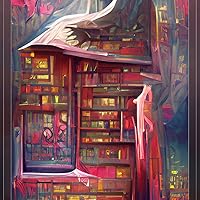
Naturalmente non è così, e Kaputt Mundi è pur sempre un (meraviglioso) giallo-noir venato di Storia che trasuda da tutti i pori: dalla tragica realtà dell’occupazione nazista della nostra capitale sono tratti alcuni dei personaggi, dal colonnello Kappler, rozzo autore della rappresaglia tedesca all’attentato di via Rasella, al feldmaresciallo Kesserling, responsabile delle operazioni militari sul fronte italiano. In questa cornice Martin Bora indaga sulla misteriosa morte di una giovane impiegata precipitata dal quarto piano di una palazzina, mentre Guidi – già co-protagonista di Luna bugiarda – incontra l’umanità più disperata della popolazione e se ne fa inevitabilmente attrarre.

In Kaputt Mundi colpisce, ancora una volta e forse ancor di più che nei romanzi precedenti, la capacità di Ben Pastor di raccontare le mille sfumature della storia e dell’animo umano in una infinita scala cromatica, che si distanzia anni luce dal tradizionale “tutto bianco” o “tutto nero” della pubblicistica più banale. Vale per Martin Bora, naturalmente, ed è altrettanto evidente nella narrazione di episodi storici: tra i resistenti si celano anche figure abbiette e doppiogiochiste, gli attentati non sono soltanto azioni coraggiosi verso l’occupatore ma anche azzardi dettati certo da idealismo partecipativo eppure forieri di tragiche conseguenze. Tutto è sfumato, eppure ben chiaro, e mi sembra sia questa la cifra stilistica di un’autrice che mi convince sempre di più, romanzo dopo romanzo.

http://capitolo23.com/2019/02/02/rece...
Profile Image for Rob Kitchin.
Author 55 books107 followers
January 25, 2015
A Dark Song of Blood is the third book in the Martin Bora series translated into English. As with the earlier books, the strength of the story is the character of Bora and the moral ambiguities of the tale. Bora has aristocratic roots, is a committed military man who has served in Spain, Poland, Russia and Italy, and is strong willed, intelligent, principled and brave. Although he knows he serves a corrupt regime he has a strong sense of duty and loyalty, but he’s no apologist for the German army. He also abhors the Gestapo and SS and their work and methods, and hates the treatment of the Jews and will actively intervene on their behalf. At the same time, he’s quite happy to see partisans executed, but not the ratio of reprisals. The story unfolds over the first six months of 1944 and mostly focuses on Bora’s interactions with the local police, the Gestapo and SS, and the Church, with the murder investigation forming one thread amongst a number, being very slowly edged forward and at times almost disappearing entirely. At one level, this is fine, as there is plenty happening, but another it left the plot a little rudderless at times. And whilst Pastor keeps a number of possible suspects in the frame, I found the denouement a little unsatisfying. Overall, an interesting story centred on a fascinating character.
Profile Image for John Lee.
872 reviews16 followers
November 30, 2019
I started this series thinking that it was a different twist on the who-done-it theme. This is book three and although there are murders to solve, I think that perhap this is more a story of the War.

My enjoyment of the story was marred by me being unable to keep track of which of the many interested factions in Rome at the time, the host of characters belonged to. In my patchy knowledge of this period of history I never realised how many different parties were trying to pull events their way.

I thoroughly enjoyed the story but not in the way that I had envisaged. The author managed to capture the 'feel' of the city at that moment in time as years of war are about to come to an end and, from the German point of view, that their war was over and that they were the losers.

The second of the spoilers that the author wrote into the story towards the end of Lumen has now happened and we shall see what will now become of Wehrmacht Lieutenant Colonel Martin Bora as he leaves the retaken city.

I am looking forward to the next episode.


94 reviews
November 28, 2024
An intriguing plot and unusual setting (Rome in 1944). It was interesting to find out what happened to the historical characters mentioned. Sometimes, the descriptions of the main character's inner turmoil were a bit overblown, I thought, but these did not detract from what is a good read.
Profile Image for Keith Currie.
610 reviews18 followers
January 19, 2016
I love the peculiar uniqueness of Ben Pastor’s novels. I suppose their unusual sense of otherness is what irritates some readers, the fact that they cannot easily be categorized. This one should be read, not so much as a crime investigation – although it is that too – but as an exploration of the reactions and behaviours of an army and its soldiers on the brink of defeat in an occupied city. That city is Rome, the army is the German army and the soldier primarily is Major Martin Bora, conscience-struck, but dutiful and true to his calling as a soldier.
This is the best of the three Martin Bora novels I have read, a weaving web of complex movements and relationships. Bora is maimed, abandoned by his wife, fighting (he knows it) for the wrong side, trying to steer a course of conscience throughout, unwilling to compromise his Christian faith and principles. For all his acerbic priggishness Bora does what is right, even though it costs him a lot, both in his personal relationships and in attracting the notice of very dangerous people.
The novel is a sustained narrative of impending collapse, punctuated with scenes of sudden, unexpected and shocking horror: Bora caught in a field hospital during an allied bombing raid, holding the hand of an injured prisoner of war; the scene in the hotel bedroom when his wife Benedikta tells him the truth about why they have no children; Bora’s increasingly frustrating attempt to save his colleague, the Italian detective Guidi, from an SS death squad; the scene outside the church of St John Lateran when Bora takes action against a local who is informing the SS about Roman Jews; the shock when the identity of the informer is revealed.
This is a hugely satisfying book on many levels. For me the standout aspect is the tense relationship between Bora and Guidi, men who at another time might have been the closest of friends, but in their own times can at best maintain a strained and difficult professional alliance.
Profile Image for Cynthia Alice.
30 reviews4 followers
March 10, 2016
This was my very first encounter with Ben Pastor. I simply happened to notice a novel about WWII at the public library. Given that I will eagerly read almost anything, except garbage, about WWII, I brought it home, started to read, and managed to finish it. Despite the fact that Pastor's frame of reference in this book is not one I enjoy for many reasons, I still found myself getting attached to the experiences and fates of the two central characters.
Perhaps I will risk saying that Pastor seems to have learned how to walk that razor's edge: on one side the stereotypical stoical male Roman Catholic victim/martyr/driven German aristocrat, trapped in catch twenty-twos (ie. no-win situations); on the other side the much more modern man, much more honest-with-himself, unable at this point in history (the present juxtaposed with 1944) to avoid responsibility for his decisions and their consequences.
Profile Image for Edmond Dantes.
376 reviews31 followers
May 23, 2016
Lettura Faticosa, troppo lungo, i personaggi , a parte Martin, sono solo dei bozzetti...l'intrigo è o troppo cervellotico o troppo banale...
La cosa migliore è la descrizione della Roma occupata e dei doppi / tripli giochi praticati...
Profile Image for André.
2,514 reviews34 followers
February 7, 2023
Citaat : Hij had een heel jaar lang in geleende tijd geleefd, in geleende rust, en had een vrijwel ondoordringbare façade opgetrokken van zelfbeheersing, van opgewektheid zelfs, maar nu zag hij in dat de crisis waarin hij zich bevond alleen maar heftiger was geworden omdat hij niet de tijd had genomen die onder ogen te zien.
Review : Rome, januari 1944. Terwijl de geallieerde troepen steeds dichterbij komen, beleeft de Italiaanse hoofdstad de meest dramatische dagen van de Duitse bezetting: avondklok, hongersnood, arrestaties, deportaties, massamoord... In deze gespannen sfeer krijgt Wehrmachtofficier Martin Bora de delicate opdracht om drie moorden op te lossen. De slachtoffers zijn een jonge medewerkster van de Duitse ambassade die onder verdachte omstandigheden uit de derde verdieping naar beneden is gevallen, een vrouw uit de societykringen die dood is gevonden na een amoureuze ontmoeting, en een kardinaal van van de Romeinse curie die actief was in het verzet tegen de nazi's.

Met de Italiaanse inspecteur Sandor Guidi aan zijn zijde begint Martin Bora aan een onderzoek dat hen in groot gevaar brengt. Hij wordt tegengewerkt door vriend en vijand, krijgt te maken met veldmaarschalk Kesselring en de toekomstige paus Paulus VI, en ontdekt een waarheid die zijn leven en dat van Guidi voor altijd zal veranderen: de menselijke waardigheid gaat boven alles.


Zo’n twintig jaar geleden begon de Italiaans-Amerikaanse Ben Pastor aan haar serie rond Martin Bora. Ben Pastor, in 1950 in Rome geboren, trouwde een Amerikaans militair en verhuisde naar Amerika. Ze stak heel veel energie in het personage van Martin Bora, een aristocraat in dienst van de Duitse Wehrmacht, een gehate nazi, maar evenzeer een integer man in een fout uniform. Na de mislukte aanslag op Hitler op 20 juli 1944 werden honderden 'oproerige' officieren uit de omgeving van het hoofd van de samenzwering, graaf Claus Schenk von Stauffenberg, gearresteerd en terechtgesteld. Het was deze Stauffenberg die de auteur als voorbeeld diende voor Martin Bora, de detective-soldaat en hoofdpersoon van Kaputt Mundi en haar andere misdaadromans: een katholiek uit een adellijke familie, die zich, algauw teleurgesteld, afkeert van de ideeën van de nazi's en zich bij wat hij doet door zijn onwrikbaar menslievende geesteshouding laat leiden.

Titel boek : Karelische nachten
Profile Image for Sharon Rimmelzwaan.
1,456 reviews42 followers
October 17, 2021
'Dark Song Of Blood' by Ben Pastor is the third book to feature Major Martin Bora, an aristocratic officer in the German Army. Although I just jumped in to the series, I found I had no issues getting into the story.
The story is set from January through to June of the same year, 1944. The Germans occupied Rome until the June when they withdrew.
Bora is given the assignment of investigating three high-profile murders, with Sandro Guido a police officer from Rome. We see both of them caught up in their own struggles, Bora with the power struggle between the German Army, the Gestapo and the SS well. Guido has the issue of the different factions within the Italian Police department as well as the Resistance and the Partisans also. If Bora and Guido don't have enough issues then the Vatican, decides to show the influence and power they hold over the events that are unfolding.
I found this an excellently written book with a layered plot line. Ben Pastor has created complex and interesting characters. Bora is one of these complex characters and the depth to which the novel delves into his character makes him such an interesting man to read about. He battles with the Vatican and the SS, while trying to keep his oath to his country and his religion intact as well as solving the mystery in hand.
I always enjoy historical fiction and this particular story has been researched so well. I loved how you couldn't tell where the facts or fiction started and ended. I haven't read anything about the German Occupation of Rome but after reading this I did Google to see who was real and who wasn't.
Another Bitter Lemon Press published book that I have enjoyed so much that I want to read the previous novels in this series too. I love a story that just holds me, and this is one definitely did. I was so interested in the Rome of 1944 and the power struggles that Bora and Guido are up against.
In conclusion 'Dark Song Of Blood' is a book that highly entertained and also educated me about the time of the German Occupation of Rome. Not an easily forgettable book.
Thank you to Anne Cater of Random Things Tours and Bitter Lemon Press for my copy of the book.
Profile Image for Nicola Hancock.
518 reviews7 followers
October 19, 2021
This is book three in the Captain Martin Bora series. Anyone that knows me knows this era of book is right up my street and one I really find myself addicted to. Set in 1944 you forget other countries existed and for this to be set in Rome is incredible as it’s given me a complete different outlook. Not only that though this was deeper and has the complete twist of a crime thriller built into this historic read. Three murders…

I cannot put into words how the author magnifies the brutality of war and crime in a political world. I thought the main characters were bold and played such an integral part in this read.

The twist you discover shocked me and I didn’t guess it. No spoiler alert of course. For me this book could be read as a stand-alone. However, from reading this I’m keen to understand what happens in the first two books.

Reading more about the Gestapo and SS was so eye opening for me. The author has truly done a lot of work behind the scenes to create such a well adapted crime mystery historic thriller. This book is amazing.
Profile Image for Leigh's Little Library.
463 reviews10 followers
October 13, 2021
This is my first book by this author and it was an interesting read. I hadn't realised that it was also part of a series, but I didn't think it took anything away from what I was reading.

I enjoy an historical fiction story and this is definitely that, with a bit of crime and mystery thrown in for good measure.

The author has clearly done their research and it shows in their writing and the aesthetic they create within the cities and characters they write. The story is descriptive and complex and is a slow going read.

If you enjoy historical fiction that isn't particularly fast paced but still an enjoyable read, then this is for you.
Profile Image for Thanasis.
184 reviews27 followers
December 26, 2023
Ρώμη 1944.
Ο μονόχειρας πλέον Ταγματάρχης Μπόρα και ο Ιταλός αστυνομικός Γκουίντι συναντιούνται και πάλι στο 3ο βιβλίο της σειράς. Μια γραμματέας της Γερμανικής πρεσβείας πέφτει από τον 4ο όροφο και ο Μπόρα με τον Γκουίντι ο καθένας από το πόστο του προσπαθούν να βρουν τον ένοχο.

Ιστορικό - αστυνομικό μυθιστόρημα που το δυνατό του σημείο είναι οι χαρακτήρες των δύο πρωταγωνιστών, το ιστορικό πλαίσιο και η ατμόσφαιρα που κυριαρχεί παντού στην κατεχόμενη Ρώμη όπου όλοι περιμένουν την άφιξη των Συμμάχων και την αποχώρηση των Γερμανών.

_Η εμμονή των Γερμανών στους τύπους και στην γραφειοκρατία ακόμα και όταν όλα γκρεμίζονται γύρω τους είναι παρούσα και σε αυτό το βιβλίο.
Profile Image for Nimalee  Ravi.
507 reviews16 followers
October 12, 2021
This is my first read by the author and it's a part of Major Martin Bora series. I really enjoyed Bora's and Roman police Inspector Sandro Guidi's characters. The story is set in Rome in 1944 during the last days of Nazi occupation.

You can see that alot of research has gone into this novel regarding the time period, Nazism and other resistance movements.

I have to say I really enjoyed this historical thriller. I wasn't expecting the twist when the identity of the informer is revealed. If you are a fan of historical crime thrillers, this one is definitely for you.
This entire review has been hidden because of spoilers.
241 reviews2 followers
January 30, 2021
Kaputt mundi - pastor 7 giallo storico, più storico che giallo. Molto bella l’ambientazione nella Roma città aperta con gli occhi di chi sta ballando sul Titanic che affonda, i nazisti, e chi guarda il tutto in modo disincantato, speranzoso, orgoglioso e stanco della dittature delle bombe delle ritorsioni. Max bora è un bel personaggio, nazista si ma con la dignità dell’eroe. Roma vale sempre un buon libro
Profile Image for Vassilis Xanthakis.
165 reviews15 followers
February 10, 2022
3.5/5.0

Ως λάτρης του ιστορικού-αστυνομικού μυθιστορήματος και δη αναφορικά με τον Β' Παγκόσμιο Πόλεμο, επέλεξα το συγκεκριμένο βιβλίο με μεγάλη προσδοκία, ίσως και λόγω της ορμής από τα βιβλία του Κερ. Δεν ήταν άσχημη επιλογή, όμως θεωρώ πως κάτι του έλειπε όσο αφορά την ένταση για να κρατήσει το ενδιαφέρον σε μεγαλύτερα επίπεδα. Πιθανότατα θα δώσω κι άλλη ευκαιρία πάντως στα βιβλία της συγκεκριμένης συγγραφέα.
132 reviews
October 15, 2022
I was disappointed by this novel. Apparently about the investigation of a suspicious death this becomes increasing peripheral as the book progresses. And the characters of the two main protagonists are in my view undeveloped. The book is also marred by a jerky translation. I have also have doubts about some of the historical details, were American cigarettes really available to German soldiers, no shortage of coffee and an ability to eat out whenever the plot demands at a restaurant?
Profile Image for Harrystuart.
87 reviews8 followers
November 12, 2018
Ho scoperto solo a posteriori che questo è il quarto o il quinto libro con Martin Bora Protagonista. Sicuramente un libro non facile. Le prime 150 pagine scorrono alla velocità di un bradipo zoppo. Troppe descrizioni paesaggistiche, troppe strategie militari, troppi personaggi inseriti alla rinfusa. Poi la trama si dipana e diventa anche una lettura interessante.
Profile Image for Elena Giacomini.
267 reviews2 followers
June 10, 2024
Il romanzo della Pastor più bello che ho letto finora. Sarà che è ambientato in Italia, luogo in cui vivo, sara' il ritmo incalzante, ma mi è
Iaciuto molto. Peccato per la conclusione dell'amore...
Profile Image for Lis.
773 reviews16 followers
October 15, 2019
Ottimo per la ricostruzione storica, mediocre e troppo lento come giallo
149 reviews
January 30, 2020
Captain Martin Bora series is excellent WWII murder mysteries. Captures specific German campaigns and actual historical characters.
Profile Image for Hans Ostrom.
Author 30 books35 followers
October 14, 2021
"You don't fool me. Politics to you is a cloak for bare militarism, which is as ideologically unsound as I can think of."
Profile Image for Lorenza Alessandri.
558 reviews20 followers
September 9, 2023
Ogni tanto ci sono dei libri che finisco senza sapere perché li finisco.
Questo è uno di quelli
Displaying 1 - 30 of 35 reviews

Join the discussion

Can't find what you're looking for?

Get help and learn more about the design.