

What do you think?

The War of the Spanish Succession 1701 - 1714
The War of the Spanish Succession, fought between 1701 and 1714 to decide who should inherit the Spanish throne, was a conflict on an unprecedented scale, stretching across most of western Europe, the high seas and the Americas. Yet this major subject is not well known and is little understood. That is why the publication of James Falkner's absorbing new study is so timely and important. In a clear and perceptive narrative he describes and analyses the complex political manoeuvres and a series of military campaigns which also involved the threat posed by Ottoman Turks in the east and Sweden and Russia in the north. Fighting took place not just in Europe but in the Americas and Canada, and on the high seas. All European powers, large and small, were involved - France, Spain, Great Britain, Holland, Austria and Portugal were the major players. The end result of eleven years of outright war was a French prince firmly established on the throne in Madrid and a division of the old Spanish empire. More notably though, French power, previously so dominant, was curbed for almost ninety years.
280 pages, Hardcover
Published January 19, 2016
Ratings & Reviews
Friends & Following
Create a free account to discover what your friends think of this book!
Community Reviews
Displaying 1 - 30 of 38 reviews

December 16, 2019
The Eighteenth Century saw a series of wars in Europe, that led up to the more famous ones towards the end of that century. I've been wanting good books on all of these for some time.
I'm still looking for a truly good book on the War of the Spanish Succession.
This one got better as it went along, but felt entirely too jumbled at the beginning, and never seems to give more than a surface appreciation of events. Notably, there's a wrap up at the end that places the war into better context, and some of that would have been much better served at the beginning of the book, to get context there. There's no really detailed looks at any of the principle figures involved, nor a lot about how they related to each other.
In some ways, Spencer's Blenheim: Battle for Europe gives a better sense of the war as a whole even though it's ultimately focused on one campaign. As such, there are things that are not in that book at all, but you still get a better sense of Louis XIV, Marlborough, and Eugene from that book than for anyone here. Worse, while the book is generally chronological, it doesn't present things tightly enough for that to be evident.
Either I got a better sense for things as I went through, or the writing does get better as it goes. The feeling of reading a disconnected jumble grew less as I went along, and it does present all the major campaigns of the war. Better, there's a good number of quotes from contemporaries to provide some color and sense of how things were regarded at the time. Overall, it's a barely decent history that could have been a bit better with some reorganization.
I'm still looking for a truly good book on the War of the Spanish Succession.
This one got better as it went along, but felt entirely too jumbled at the beginning, and never seems to give more than a surface appreciation of events. Notably, there's a wrap up at the end that places the war into better context, and some of that would have been much better served at the beginning of the book, to get context there. There's no really detailed looks at any of the principle figures involved, nor a lot about how they related to each other.
In some ways, Spencer's Blenheim: Battle for Europe gives a better sense of the war as a whole even though it's ultimately focused on one campaign. As such, there are things that are not in that book at all, but you still get a better sense of Louis XIV, Marlborough, and Eugene from that book than for anyone here. Worse, while the book is generally chronological, it doesn't present things tightly enough for that to be evident.
Either I got a better sense for things as I went through, or the writing does get better as it goes. The feeling of reading a disconnected jumble grew less as I went along, and it does present all the major campaigns of the war. Better, there's a good number of quotes from contemporaries to provide some color and sense of how things were regarded at the time. Overall, it's a barely decent history that could have been a bit better with some reorganization.

March 10, 2017
The thirteen years of war in the early 18th has some resemblance to the Napoleonic Wars of a century later. Louis XIV of France wanted to use the throne of Spain as an ally by allowing his grandson to take over when Carlos II died. Unlike Napoleon, who also tried to put a relative on the Spanish throne, Louis XIV managed to achieve that goal, but by 1714 was in a precarious financial position after so many costly battles. His main antagonists were Britain, Holland and the Austrian empire, two of which also took on Napoleon.
This book discusses the fighting in Spain, Holland and Germany, especially the battles under the Duke of Marlborough and Prince Eugene of Savoy. It's a good book to learn the basics of these bloody battles, but maps were limited. It was also slow moving at times.
This book discusses the fighting in Spain, Holland and Germany, especially the battles under the Duke of Marlborough and Prince Eugene of Savoy. It's a good book to learn the basics of these bloody battles, but maps were limited. It was also slow moving at times.

January 19, 2019
One of the most compelling questions on every monarch’s mind in the last decade of the seventeenth century was: Who will succeed King Carlos II of Spain? His empire stretched from the Iberian Peninsula to the Americas and included lands in the Low Countries (Netherlands, Belgium, and Luxembourg today), North Africa, and the Philippines. To rule these required a firm hand, yet he had neither offspring nor siblings to ascend the throne.
Although lesser claimants existed, two men from two different countries could make strong cases as to why they should be the next king of Spain. One was Philippe, Duc d’Anjou and grandson of King Louis XIV of France. The other was Archduke Charles of Austria. At the time, no one wanted to go to war and eventually, many ruling monarchs agreed that Philippe would become the next king of Spain. But succession questions where no direct heirs exist were never an easy thing to resolve, especially when the contenders and neighboring countries had their own goals and desires.
Then Louis, who rarely made unwise choices, sent soldiers into the Spanish Netherlands in February 1701. The move was supposedly to protect his grandson, who was now Philip V of Spain, but the Dutch were highly incensed over this move. In early September, England, Holland, and Austria joined together to form the Grand Alliance; soon after Denmark and the German states agreed to assist them. Two additional moves on Louis’s part tipped the scale on the side of war. He refused to allow English manufactured goods to be imported to France, and he recognized the Catholic son of the deposed James II as the rightful ruler of England and Scotland. The Grand Alliance declared war in May 1702.
What became known as the War of the Spanish Succession was a conflict that encompassed much of Europe, the West Indies, and even Canada. While most of the war occurred on land, the navies engaged in sea battles and privateering played a significant role. Although peace negotiations began early, nothing was resolved until 1713, 1714, and 1715, years in which the various parties eventually signed treaties. During more than ten years of fighting, numerous elements impacted its outcome: issues of who would command the armies, harmony amongst allies and commanders, conditions of the troops, court rivalries, and distractions at home (such as insurrection in southern France and the bitterly cold winter of 1709). In the end, all parties got what they initially wished and the Spanish people, who never had a voice in the matter, gained a king worthy of their respect and trust.
James Falkner, who specializes in this time period and this conflict, covers all this and more in a volume that presents an unbiased overview of the diplomacy, politics, and military initiatives that took place during the War of the Spanish Succession. He includes numerous maps, illustrations, and a chronological time line to assist readers. There are three appendices. The first two provide the main terms of the 1702 Treaty of Grand Alliance and the Treaties of Utrecht, Baden and Rastadt, and Madrid (1713-1715). The third appendix provides brief biographies of Key Military Figures, their careers, and what became of them. Among those included are James FitzJames, Duke of Berwick; Prince Eugene de Savoy-Carignan; Prince George of Hesse-Darmstadt; John Churchill, 1st Duke of Marlborough; Camille d’Houston, Duc de Tallard, Marshal of France; Louis-Joseph de Bourbon, Duc de Vendôme; Claude-Louise-Hector de Villars, Marshal of France; and François de Neufville, Duc de Villeroi, Marshal of France. The book concludes with end notes, a bibliography, and an index.
Falkner provides a good grounding for readers about how the question of succession becomes an issue, who the principal claimants are, and why their claims are the strongest. Those seeking detailed analysis of the various battles and sieges, however, need to look elsewhere, for The War of the Spanish Succession merely summarizes these actions. Also missing are events that take place outside of Europe and the Mediterranean. Privateers garner only a scant mention, yet the plethora of these men will have a major impact on history once the war ends. Although the text is highly readable, it doesn’t always hold the reader’s interest and lay readers may become easily confused as to who’s who and for which side they fight. Readers with a particular interest in this war and military history during the eighteenth century, however, will delight in this one-volume overview.
Although lesser claimants existed, two men from two different countries could make strong cases as to why they should be the next king of Spain. One was Philippe, Duc d’Anjou and grandson of King Louis XIV of France. The other was Archduke Charles of Austria. At the time, no one wanted to go to war and eventually, many ruling monarchs agreed that Philippe would become the next king of Spain. But succession questions where no direct heirs exist were never an easy thing to resolve, especially when the contenders and neighboring countries had their own goals and desires.
Then Louis, who rarely made unwise choices, sent soldiers into the Spanish Netherlands in February 1701. The move was supposedly to protect his grandson, who was now Philip V of Spain, but the Dutch were highly incensed over this move. In early September, England, Holland, and Austria joined together to form the Grand Alliance; soon after Denmark and the German states agreed to assist them. Two additional moves on Louis’s part tipped the scale on the side of war. He refused to allow English manufactured goods to be imported to France, and he recognized the Catholic son of the deposed James II as the rightful ruler of England and Scotland. The Grand Alliance declared war in May 1702.
What became known as the War of the Spanish Succession was a conflict that encompassed much of Europe, the West Indies, and even Canada. While most of the war occurred on land, the navies engaged in sea battles and privateering played a significant role. Although peace negotiations began early, nothing was resolved until 1713, 1714, and 1715, years in which the various parties eventually signed treaties. During more than ten years of fighting, numerous elements impacted its outcome: issues of who would command the armies, harmony amongst allies and commanders, conditions of the troops, court rivalries, and distractions at home (such as insurrection in southern France and the bitterly cold winter of 1709). In the end, all parties got what they initially wished and the Spanish people, who never had a voice in the matter, gained a king worthy of their respect and trust.
James Falkner, who specializes in this time period and this conflict, covers all this and more in a volume that presents an unbiased overview of the diplomacy, politics, and military initiatives that took place during the War of the Spanish Succession. He includes numerous maps, illustrations, and a chronological time line to assist readers. There are three appendices. The first two provide the main terms of the 1702 Treaty of Grand Alliance and the Treaties of Utrecht, Baden and Rastadt, and Madrid (1713-1715). The third appendix provides brief biographies of Key Military Figures, their careers, and what became of them. Among those included are James FitzJames, Duke of Berwick; Prince Eugene de Savoy-Carignan; Prince George of Hesse-Darmstadt; John Churchill, 1st Duke of Marlborough; Camille d’Houston, Duc de Tallard, Marshal of France; Louis-Joseph de Bourbon, Duc de Vendôme; Claude-Louise-Hector de Villars, Marshal of France; and François de Neufville, Duc de Villeroi, Marshal of France. The book concludes with end notes, a bibliography, and an index.
Falkner provides a good grounding for readers about how the question of succession becomes an issue, who the principal claimants are, and why their claims are the strongest. Those seeking detailed analysis of the various battles and sieges, however, need to look elsewhere, for The War of the Spanish Succession merely summarizes these actions. Also missing are events that take place outside of Europe and the Mediterranean. Privateers garner only a scant mention, yet the plethora of these men will have a major impact on history once the war ends. Although the text is highly readable, it doesn’t always hold the reader’s interest and lay readers may become easily confused as to who’s who and for which side they fight. Readers with a particular interest in this war and military history during the eighteenth century, however, will delight in this one-volume overview.
October 27, 2020
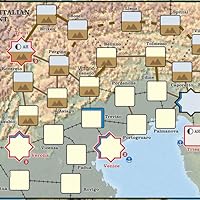
I bought this to better understand the board game 'No Peace Without Spain' which I am playing. It is a very readable and thorough account of what was to me a relatively unknown period of European history. The famous battles of Blenheim, Ramillies, Malplaquet I had heard of in passing, maybe in some 'Great Battles of History' sort of stuff, but still with only the vaguest of conceptions. This is a fast-paced account and there is no time for dwelling on the details of any one battle or on the personalities involved. Falkner is very methodical, yet economical in covering the events of this incredibly multifaceted war in a little over 200 pages. The pace rarely flags as significant developments occur on almost every page. A real 'page-turner' for the military historian. There is a nice biographical section at the end to provide some context on the numerous military leaders--a gallery of Princes, Dukes, Archdukes, Marquises, Counts, Earls, Margraves (?), Marshals, and of course Kings, Queens and Emperors. Was there ever a time with such a fascinating and bizarre array of titles? Maps are substandard but enough to get you through. In researching to find this book I found there is not much written on it, at least recently. The book jacket says it is the first comprehensive history written in 90 years (2015 copyright). But it did prompt me to purchase the massive 2-volume 'Life of Marlborough' by Winston Churchill, a far more ambitious undertaking!

March 18, 2017
I'm glad that there is finally a treatment on this conflict which had far reaching consequences in the 18th century and beyond. Though I thoroughly enjoyed it, it pales in comparison in my opinion to John Lynn's chapter on the subject which was actually what I would describe as the climax of his book (The Wars of Louis XIV). Falkner tends to eschew battlefield tactics for personal correspondence which highlights the period but I was surprised that his description of Malplaquet was less than a paragraph. I would still recommend his book but just like most books I've encountered on European historical military narratives -- the maps that come with the book for reference were found wanting. Kudos though to the effort in putting the faces (there are pictures) of the dramatis personae included as well as a timeline for those unfamiliar with the events and desire an organized treatment.
May 2, 2019
Did you ever wonder why the process of choosing a country's rulers by their ancestry has fallen out of favor? (This is not good news for Ivanka). This book will suggest an answer. Did you ever wonder why there is a little bit of England at the southern tip of the Iberian peninsula? This book will tell you why.
There are authors of history who can spin their narrative to be as compelling as the best fiction. Mr. Falkner is not one of them. He does a good job with the story, but unless you are one of those persons who finds this stuff inherently intriguing, you may well want to skip this.
There are authors of history who can spin their narrative to be as compelling as the best fiction. Mr. Falkner is not one of them. He does a good job with the story, but unless you are one of those persons who finds this stuff inherently intriguing, you may well want to skip this.

September 19, 2016
Excellent potted history of the Spanish Succession, while it provides good overall coverage of the war and politics it doesn't get bogged down in the detail. Some of the background elements could be a bit more detailed but overall Faulkner provides a great overview of a complex and now little know war that had large ramifications for the world at large.
September 23, 2019
A good read if you want a basic overall history of the war. There isn't any battle detail but overall it's a good read for becoming familiar with the War of Spanish Succession.

March 16, 2022
The War of the Spanish Succession 1701-1714, by James Falkner
Precis: A good work on a now-obscure war recommended for readers who enjoy military and diplomatic history, or who have an interest in European history of the Eighteenth century.
Main Review: If one were to summarize the War of the Spanish Succession in the most cynical manner, one might put it thus: “Two old men get into a fight over whose grandson gets to be king of Spain, thousands die, little changes.”
One would not be far off.
Of course, the war had deeper issues than that. The crisis began when King Charles II of Spain, the sickly and bizarre last of the Spanish Habsburgs, died in 1700 without a direct heir. He had named as heir Philip of Anjou, the grandson of his older sister and King Louis XIV. If Philip for some reason refused, the next named heir was Archduke Charles of Austria, son of the Holy Roman Emperor Leopold I and, through his mother, grandson of King Philip III of Spain, making him Charles II’s cousin.
Being made to trace a Habsburg family tree might well be considered cruel and unusual punishment.
In any event, both men claimed the throne at the urging of their respective monarchs, King Louis XIV and Holy Roman Emperor Leopold I. The strategic stakes were actually enormous for both realms: for nearly two hundred years, French foreign policy had striven to prevent a union of the two powerful crowns, which would have left them surrounded. The Spanish Empire, though in decline, was fabulously wealthy, and that wealth, in the hands of a vigorous Habsburg at the head of the reunited House, would poses a mortal danger to France. Thus Louis was anxious to see his grandson take the throne, both to prevent that union and get his own grubby paws on all that wealth.
On the other hand, the Austrian Habsburgs wanted the Spanish throne and empire for similar reasons: to counter France and to provide more money and troops for their struggle with the Ottoman Empire in the Balkans.
And then there was England, first under King William III and then Queen Anne, and the Dutch republic. Both had reasons for wanting to weaken Spain and carve off pieces of its Empire, as well as preventing France from gaining control of Spain, the prospect of which probably had the leaders of both lands waking up screaming from nightmares. Thus they backed the claim of Archduke Charles.
And so with Spain in a regency, both sides gathered allies, lined up, and declared war in 1701. A war that would last 14 years, until treaties get signed, Philip gets to keep his throne, some minor territorial changes take place, France winds up broke, and everyone takes a breather until the next war.
Falkner does a good job telling the story of the war and its diplomacy, going year by year and the many fronts: the Rhine region, the Spanish Netherlands (largely today’s Belgium), Italy, and Spain and Portugal. He describes the campaigns and how the commanders fought them, covering battles and sieges, and the diplomacy and strategy of both Louis, on the one hand (for he was decidedly the senior partner in the Franco-Spanish alliance), and the “Grand Alliance” on the other.
But it is a work of pure military history, and thus rather dry for that. Also, the war dragged on for so that, that the reader might well find himself sighing and thinking “Look, it’s over. Just cut a deal already.” If one is looking for how the war affected the societies of the principals, one will find little of that. For me that was fine, as I wanted to learn more about the war itself. The book is heavily footnoted, but these are mostly citations, not explanatory notes. Also, the lack of more than a few maps was unhelpful, particularly when reading about major battles, such as Blenheim and Ramillies. Still, the descriptions are not hard to follow.
One section I greatly appreciated was Appendix III, which provides brief biographies of key players in the war, including what happened to them after it ended. It was the biography of the Duke of Berwick, the illegitimate son of King James II of England and his mistress, Arabella Churchill (thus making him a relative of Winston Churchill, I believe), and one of King Louis’ best generals (his father having been deposed and forced to flee in 1688), that provided my favorite quote:
“Having lived in semi-retirement for some time, Berwick was recalled to service by King Louis XV to campaign in the War of the Polish Succession. At the siege of Phillipsburg, on 12 June 1734, he was decapitated by a roundshot thought to have been fired in error by his own gunners."
Should have stayed in retirement.
I read The War of the Spanish Succession 1701-1714 in Kindle format and I’m happy to report I found it well-formatted and typo-free. Too often, Amazon lets sloppy publishers publish shoddy work.
Recommended, with the caveat that it is most likely to appeal to those with a strong interest in military history per se.
Precis: A good work on a now-obscure war recommended for readers who enjoy military and diplomatic history, or who have an interest in European history of the Eighteenth century.
Main Review: If one were to summarize the War of the Spanish Succession in the most cynical manner, one might put it thus: “Two old men get into a fight over whose grandson gets to be king of Spain, thousands die, little changes.”
One would not be far off.
Of course, the war had deeper issues than that. The crisis began when King Charles II of Spain, the sickly and bizarre last of the Spanish Habsburgs, died in 1700 without a direct heir. He had named as heir Philip of Anjou, the grandson of his older sister and King Louis XIV. If Philip for some reason refused, the next named heir was Archduke Charles of Austria, son of the Holy Roman Emperor Leopold I and, through his mother, grandson of King Philip III of Spain, making him Charles II’s cousin.
Being made to trace a Habsburg family tree might well be considered cruel and unusual punishment.
In any event, both men claimed the throne at the urging of their respective monarchs, King Louis XIV and Holy Roman Emperor Leopold I. The strategic stakes were actually enormous for both realms: for nearly two hundred years, French foreign policy had striven to prevent a union of the two powerful crowns, which would have left them surrounded. The Spanish Empire, though in decline, was fabulously wealthy, and that wealth, in the hands of a vigorous Habsburg at the head of the reunited House, would poses a mortal danger to France. Thus Louis was anxious to see his grandson take the throne, both to prevent that union and get his own grubby paws on all that wealth.
On the other hand, the Austrian Habsburgs wanted the Spanish throne and empire for similar reasons: to counter France and to provide more money and troops for their struggle with the Ottoman Empire in the Balkans.
And then there was England, first under King William III and then Queen Anne, and the Dutch republic. Both had reasons for wanting to weaken Spain and carve off pieces of its Empire, as well as preventing France from gaining control of Spain, the prospect of which probably had the leaders of both lands waking up screaming from nightmares. Thus they backed the claim of Archduke Charles.
And so with Spain in a regency, both sides gathered allies, lined up, and declared war in 1701. A war that would last 14 years, until treaties get signed, Philip gets to keep his throne, some minor territorial changes take place, France winds up broke, and everyone takes a breather until the next war.
Falkner does a good job telling the story of the war and its diplomacy, going year by year and the many fronts: the Rhine region, the Spanish Netherlands (largely today’s Belgium), Italy, and Spain and Portugal. He describes the campaigns and how the commanders fought them, covering battles and sieges, and the diplomacy and strategy of both Louis, on the one hand (for he was decidedly the senior partner in the Franco-Spanish alliance), and the “Grand Alliance” on the other.
But it is a work of pure military history, and thus rather dry for that. Also, the war dragged on for so that, that the reader might well find himself sighing and thinking “Look, it’s over. Just cut a deal already.” If one is looking for how the war affected the societies of the principals, one will find little of that. For me that was fine, as I wanted to learn more about the war itself. The book is heavily footnoted, but these are mostly citations, not explanatory notes. Also, the lack of more than a few maps was unhelpful, particularly when reading about major battles, such as Blenheim and Ramillies. Still, the descriptions are not hard to follow.
One section I greatly appreciated was Appendix III, which provides brief biographies of key players in the war, including what happened to them after it ended. It was the biography of the Duke of Berwick, the illegitimate son of King James II of England and his mistress, Arabella Churchill (thus making him a relative of Winston Churchill, I believe), and one of King Louis’ best generals (his father having been deposed and forced to flee in 1688), that provided my favorite quote:
“Having lived in semi-retirement for some time, Berwick was recalled to service by King Louis XV to campaign in the War of the Polish Succession. At the siege of Phillipsburg, on 12 June 1734, he was decapitated by a roundshot thought to have been fired in error by his own gunners."
Should have stayed in retirement.
I read The War of the Spanish Succession 1701-1714 in Kindle format and I’m happy to report I found it well-formatted and typo-free. Too often, Amazon lets sloppy publishers publish shoddy work.
Recommended, with the caveat that it is most likely to appeal to those with a strong interest in military history per se.

May 5, 2017
I was charitable here as there is precious little written on this subject so anything coherent is a welcome addition.
The first chapter needs to be re-read as it outlines the causes of the war (the void in the line of Spanish succession) but it seemed to me that the parties (Austria+England+United Provinces vs France) more or less reached agreement but then started the war nonetheless.
So, the war starts and goes on, year-after-year, in the Spanish Netherlands, Spain, modern day western Germany, and Italy. Marches, battles, sieges, winter quarters, then rinse and repeat. Eventually, the war becomes too costly to continue and England feels its objectives have been sufficiently reached and negotiates a deal with France; leaving the United Provinces and Austria to desultorily fight on before ending the war with some gains and some lost objectives.
So, the book is a starting point - essentially a military narrative, competently written, but the reader should have some decent knowledge of European geography and place locations.
So, what's to critique here?
1. There is no real sense of the motivations of the national governments that drove their states into another multi-year war. Yes, we get some quotes from Louis XIV and Queen Anne, but these are there to decorate the narrative. What is missing is a historian's interpretation of the various political, financial, cultural, and other forces that drove the decisions. Was it a sense of a zero-sum game where if France won, England lost and vice-versa? And what did losing mean? less tax revenue to support the grand style of the court? or fear of a peasant uprising, or a power shift from the king to the privileged or vice-versa? The author only hints at these things.
2. There is also no real sense as to what campaigning, fighting, besieging, or retreating was really like for the early eighteenth century soldiers. If you are looking for a Shelby Foote-like evocation of Marlborough's Blenheim or Ramillies campaigns, you won't find it here. The narrative is workmanlike but no more. Of course the American Civil War is more recent in time with a much richer trove of source material but still, one wants more.
3. Other questions are left to the reader.
3.1 Yes, the countries ran out of money but exactly how and why? There are no statistics or analysis.
3.2 Yes, the allies seemed to sort of coordinate on strategy but exactly how did they manage this given the slow nature of communications.
3.3 At battle, there were contingents from many countries/states all speaking different languages. How did this play out in the battles?
3.4 How did logistics work, especially on the longer marches such as Blenheim and Turin?
Bottom line, there is little sense of time and place while reading this book and the period cries out for a master historian-storyteller
P.S. The maps are disappointing as the Spain and Low Countries maps are of place names only - no year-by-year campaign pictures showing movements/dates. When something is described in detail like Blenheim, Turin, or Gibraltar, there is no map to follow.
The first chapter needs to be re-read as it outlines the causes of the war (the void in the line of Spanish succession) but it seemed to me that the parties (Austria+England+United Provinces vs France) more or less reached agreement but then started the war nonetheless.
So, the war starts and goes on, year-after-year, in the Spanish Netherlands, Spain, modern day western Germany, and Italy. Marches, battles, sieges, winter quarters, then rinse and repeat. Eventually, the war becomes too costly to continue and England feels its objectives have been sufficiently reached and negotiates a deal with France; leaving the United Provinces and Austria to desultorily fight on before ending the war with some gains and some lost objectives.
So, the book is a starting point - essentially a military narrative, competently written, but the reader should have some decent knowledge of European geography and place locations.
So, what's to critique here?
1. There is no real sense of the motivations of the national governments that drove their states into another multi-year war. Yes, we get some quotes from Louis XIV and Queen Anne, but these are there to decorate the narrative. What is missing is a historian's interpretation of the various political, financial, cultural, and other forces that drove the decisions. Was it a sense of a zero-sum game where if France won, England lost and vice-versa? And what did losing mean? less tax revenue to support the grand style of the court? or fear of a peasant uprising, or a power shift from the king to the privileged or vice-versa? The author only hints at these things.
2. There is also no real sense as to what campaigning, fighting, besieging, or retreating was really like for the early eighteenth century soldiers. If you are looking for a Shelby Foote-like evocation of Marlborough's Blenheim or Ramillies campaigns, you won't find it here. The narrative is workmanlike but no more. Of course the American Civil War is more recent in time with a much richer trove of source material but still, one wants more.
3. Other questions are left to the reader.
3.1 Yes, the countries ran out of money but exactly how and why? There are no statistics or analysis.
3.2 Yes, the allies seemed to sort of coordinate on strategy but exactly how did they manage this given the slow nature of communications.
3.3 At battle, there were contingents from many countries/states all speaking different languages. How did this play out in the battles?
3.4 How did logistics work, especially on the longer marches such as Blenheim and Turin?
Bottom line, there is little sense of time and place while reading this book and the period cries out for a master historian-storyteller
P.S. The maps are disappointing as the Spain and Low Countries maps are of place names only - no year-by-year campaign pictures showing movements/dates. When something is described in detail like Blenheim, Turin, or Gibraltar, there is no map to follow.

April 5, 2020
This book wastes no time, diving straight from the immediate causes of the war into the first campaign. This does mean it loses some perspective regarding the place of this war within the continuum of European history, but this is addressed partially (if perfunctorily) in the final chapter. Nevertheless, Falkner gives a superbly organized account of the ebb and flow of the war despite the far-flung geographic spread. Appendix 3 was useful in familiarizing the reader with the most important dramatis personae. The action is fast-paced and mostly lucid, serving well to educate on the war's general course. Falkner's argument that the peace that was eventually signed at Utrecht could have been achieved between 1706 to 1709 (especially in 1709, with France defeated on almost all fronts and open to invasion) is convincing; so was the rationale he provided: the intransigent "No peace without Spain" clauses and overweening ambition in victory-flushed London, Vienna, and The Hague. This acts as a stark reminder of how momentum and hubris can unwisely drive one beyond the original scopes set out before an enterprise, even when all that is necessary has been attained, in an attempt to make good the cost of the undertaking itself.
The main issue with this account was a lack of good maps: it could get difficult following some of the campaigns and battles. Eugene of Savoy's Turin campaign had a remarkably detailed map that greatly aided comprehension of the various strategic dispositions, and it was a disappointment that the rest of the book did not conform to the example upheld therein. From my limited knowledge of the war, certain important events seemed to have been bypassed as well. The role of Britain's colonies in what they called Queen Anne's War was barely acknowledged in spite of repeated mentions of the importance of trade (trade with whom? And where?). Rákóczi's rebellion in Hungary, which greatly restricted Habsburg latitude, was treated patchily in spite of its relevance to operations in the other theatres of the war. The Battle of Malplaquet, whose bloodiness was a key contributor to the ascent of the Tory peace party, was treated in half a paragraph. Considering that this battle hardened sentiments of war-weariness within the Allied cause, as well as influenced the dismissal of the Duke of Marlborough (which was itself written off in a few lines with few explanations), it really should have been examined in more detail.
One last concern: there were too many elementary typos, run-on sentences, and all-round grammatical errors. It could lead to a distracting experience for the pedant, but the issues cited above remain the principle detraction to this book.
The main issue with this account was a lack of good maps: it could get difficult following some of the campaigns and battles. Eugene of Savoy's Turin campaign had a remarkably detailed map that greatly aided comprehension of the various strategic dispositions, and it was a disappointment that the rest of the book did not conform to the example upheld therein. From my limited knowledge of the war, certain important events seemed to have been bypassed as well. The role of Britain's colonies in what they called Queen Anne's War was barely acknowledged in spite of repeated mentions of the importance of trade (trade with whom? And where?). Rákóczi's rebellion in Hungary, which greatly restricted Habsburg latitude, was treated patchily in spite of its relevance to operations in the other theatres of the war. The Battle of Malplaquet, whose bloodiness was a key contributor to the ascent of the Tory peace party, was treated in half a paragraph. Considering that this battle hardened sentiments of war-weariness within the Allied cause, as well as influenced the dismissal of the Duke of Marlborough (which was itself written off in a few lines with few explanations), it really should have been examined in more detail.
One last concern: there were too many elementary typos, run-on sentences, and all-round grammatical errors. It could lead to a distracting experience for the pedant, but the issues cited above remain the principle detraction to this book.
September 16, 2017
This subject is rarely written on so this was welcomed. The book is well written.
However it is clear that Falkner is biased towards the English cause and his written shows as much, which opinion being voiced of a defeat as being "regrettable" or "unfortunate" when the English are on the losing side but never when it is the French.
Good book, lack of professionalism.
However it is clear that Falkner is biased towards the English cause and his written shows as much, which opinion being voiced of a defeat as being "regrettable" or "unfortunate" when the English are on the losing side but never when it is the French.
Good book, lack of professionalism.

September 29, 2020
Mostly based on dated secondary literature, while in terms of interpreting primary literature providing hardly something new compared to earlier work (Churchill (1930s) and Chandler (1970s)). Yet it serves as an acceptable overview.
January 17, 2022
Great history, very thorough. Packed with info, made it difficult to follow the trajectory in some places. Would have appreciated more info about the war as it was fought in the West Indies and other colonies.

March 9, 2022
Delivers what it promises: a barebones unbiased study. Maddeningly short on details on everything apart from armies moving around, though. Details of the battles are sadly lacking. Also, absolutely riddled with typos.

April 7, 2026
3/10
Not my cup of tea as far as popular history goes, written by an ex-army officer, whilst very much focused on "great man theory" and battlefield minutae. Certain kinds of dad/grandad will find this to be absolute catnip.
Not my cup of tea as far as popular history goes, written by an ex-army officer, whilst very much focused on "great man theory" and battlefield minutae. Certain kinds of dad/grandad will find this to be absolute catnip.

May 6, 2017
This history would have been much more interesting if the author had profiled the participants. As it is, it was still informative & well-told.
May 30, 2017
A good reminder of an era I haven't studied in about 25 years. A bit too much military detail perhaps and could have benefited from more social history.

July 28, 2018
Not bad, very detailed.

August 26, 2019
This book has more typos and misspellings than I’ve ever seen in a book. It reads as if a person typed up a handwritten manuscript. This is embarrassing.

October 21, 2022
A compact narrative of the political contours and major campaigns in the War of the Spanish Succession. Serves as a good introduction to more detailed works on the subject.
March 16, 2023
Excellent overview of both the military aspects as well as the political machinations. As always for me, a few more maps would have been useful but overall and really good read.
December 22, 2023
Straight and to the point, easy to follow, not overly flowerly, and does a good job of summarizing things and making a large chunk of history flow.

December 25, 2024
A very good history of this fascinating war. I would have like more detail on the most important battles and a few more detailed maps, but overall well written and informative.

May 4, 2025
What an essential period and a crucial war in modern history. If only the book was a bit more engaging on such material.
April 9, 2020
Excellent book on a topic I knew so little about. The author has done tremendous research, with liberal use of quotes to enliven the narrative. It even includes a timeline - which I would like all history books to include.
However, one quip I have isn't really related to text, but rather to maps. While some maps are included (at least on Kindle), more maps focused on specific battles/campaigns would have been welcome, especially in Iberia and the Low Countries.
Also, charts/maps showing the various alliances would have been useful.
But this shouldn't take away from a superb narrative. I was struck that so many locations were also prominent in the Spanish Civil War and World War II.
However, one quip I have isn't really related to text, but rather to maps. While some maps are included (at least on Kindle), more maps focused on specific battles/campaigns would have been welcome, especially in Iberia and the Low Countries.
Also, charts/maps showing the various alliances would have been useful.
But this shouldn't take away from a superb narrative. I was struck that so many locations were also prominent in the Spanish Civil War and World War II.

April 5, 2016
Pen & Sword Ltd is, per its website, “…one of the UK’s leading military history publishers.” Many of its titles cover those Greek and Roman heroes usually known only to classical history students. Whether these titles break new ground or just rehash Polybius, Livy, Plutarch and the others remains to be seen.
The company is not confined to the classics. When was the last time you read an account of the War of the Spanish Succession? The whole war, that is, not just accounts by David Chandler of Marlborough, well done as they are. James Falkner presents us with The War of the Spanish Succession
Marlborough wins most of his campaigns in Belgium and the Netherlands, but is not able to get into the heart of France because of its extensive line of fortresses in its northeast. Spain was a seesaw affair among French, Spanish, Portuguese, English, and Austrians, many of whom also played in northern Italy. The British began their ownership of Gibraltar in this war and fairly well dominated the western Mediterranean, but not so much that they could invade anywhere they chose, amphibious warfare not being much advanced at this time. We learn of other excellent leaders such as Villars, Berwick, Vendome, and Starhemberg and there are biographical sketches at the back of the book, but no real leadership studies.
There are some politics but no detailed account of any intricate maneuvers. One side proposes this, the other side that, and there is some weaseling going on; I begin to see where the term “Perfidious Albion” comes in, but there is no exhaustive account of which diplomat is saying exactly what. Of the downfall of Marlborough and England’s pulling out of the war, there isn’t much, but we know it happens. Queen Anne’s War, that is, the war’s American version, gets two paragraphs.
The last chapter sums it all up nicely: everybody was worn to a frazzle and there was peace in Europe for twenty-five years (compare to twenty-one years between the First and Second World Wars). This is a good account of the whole war. For greater details, readers should look at biographies of the rulers and generals involved and campaign studies, once they find them.
The company is not confined to the classics. When was the last time you read an account of the War of the Spanish Succession? The whole war, that is, not just accounts by David Chandler of Marlborough, well done as they are. James Falkner presents us with The War of the Spanish Succession
Marlborough wins most of his campaigns in Belgium and the Netherlands, but is not able to get into the heart of France because of its extensive line of fortresses in its northeast. Spain was a seesaw affair among French, Spanish, Portuguese, English, and Austrians, many of whom also played in northern Italy. The British began their ownership of Gibraltar in this war and fairly well dominated the western Mediterranean, but not so much that they could invade anywhere they chose, amphibious warfare not being much advanced at this time. We learn of other excellent leaders such as Villars, Berwick, Vendome, and Starhemberg and there are biographical sketches at the back of the book, but no real leadership studies.
There are some politics but no detailed account of any intricate maneuvers. One side proposes this, the other side that, and there is some weaseling going on; I begin to see where the term “Perfidious Albion” comes in, but there is no exhaustive account of which diplomat is saying exactly what. Of the downfall of Marlborough and England’s pulling out of the war, there isn’t much, but we know it happens. Queen Anne’s War, that is, the war’s American version, gets two paragraphs.
The last chapter sums it all up nicely: everybody was worn to a frazzle and there was peace in Europe for twenty-five years (compare to twenty-one years between the First and Second World Wars). This is a good account of the whole war. For greater details, readers should look at biographies of the rulers and generals involved and campaign studies, once they find them.

February 14, 2026
This book essentially provides a high-level overview of the War of the Spanish Succession, glossing over the tactical details of major battles and keeping the accounts of the intermediary negotiations quite brief. Ultimately, it serves as a solid introductory work of popular military history.
October 27, 2019
This is a very good read, although it was briefer than I would have liked. I had never heard of the War of the Spanish Succession until about a year ago, although I had heard of a couple of characters from the period, the Duke of Marlborough and Frederick the Great of Prussia. It was a bit difficult following the narrative in the beginning due to my lack of knowledge of most of the other characters but I eventually caught on.
The writing is crisp and straight forward and there are a few maps. One thing that struck me was the breadth of the conflict, from the Iberian peninsula to England to Austria to several points in between. There were even some overseas engagements.
My biggest problem with the book is that it's too brief. I would have liked more details on the various key battles such as at Ramillies. I'm glad to have read this.
The writing is crisp and straight forward and there are a few maps. One thing that struck me was the breadth of the conflict, from the Iberian peninsula to England to Austria to several points in between. There were even some overseas engagements.
My biggest problem with the book is that it's too brief. I would have liked more details on the various key battles such as at Ramillies. I'm glad to have read this.
Displaying 1 - 30 of 38 reviews