

What do you think?

The Fade Out
The Fade Out, Vol. 3
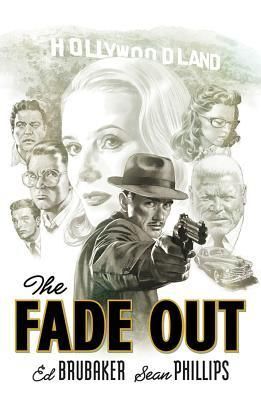
The final act of the bestselling Hollywood noir comic from the award-winning team of Brubaker and Phillips!
Collecting: The Fade Out 9-12
Collecting: The Fade Out 9-12
128 pages, Paperback
First published February 17, 2016
About the author
Ed Brubaker
1,817 books3,117 followersEd Brubaker (born November 17, 1966) is an Eisner Award-winning American cartoonist and writer. He was born at the National Naval Medical Center, Bethesda, Maryland.
Brubaker is best known for his work as a comic book writer on such titles as Batman, Daredevil, Captain America, Iron Fist, Catwoman, Gotham Central and Uncanny X-Men. In more recent years, he has focused solely on creator-owned titles for Image Comics, such as Fatale, Criminal, Velvet and Kill or Be Killed.
In 2016, Brubaker ventured into television, joining the writing staff of the HBO series Westworld.
Brubaker is best known for his work as a comic book writer on such titles as Batman, Daredevil, Captain America, Iron Fist, Catwoman, Gotham Central and Uncanny X-Men. In more recent years, he has focused solely on creator-owned titles for Image Comics, such as Fatale, Criminal, Velvet and Kill or Be Killed.
In 2016, Brubaker ventured into television, joining the writing staff of the HBO series Westworld.
Ratings & Reviews
Friends & Following
Create a free account to discover what your friends think of this book!
Community Reviews
Displaying 1 - 30 of 264 reviews

July 9, 2019
(A-) 81% | Very Good
Notes: Review pending re-read. Collected review for volumes 1-3 can be found here: The Fade Out
Notes: Review pending re-read. Collected review for volumes 1-3 can be found here: The Fade Out

April 4, 2016
The Fade Out is a meticulously researched, seedy yet stylish period piece set in post-WWII Hollywood. At the time, a small number of studios dominated the American film industry, producing movies on their own lots with the help of creative long-term personnel that usually also lived on the lot. Like all closed systems, the so-called studio system was a breeding ground for corruption and exploitation, and The Fade Out is all about one studio's dirty underbelly. It is arguably Brubaker's most tightly scripted and most fully realized story to date: a must-read for Brubaker-Phillips fans and film buffs alike, and especially for anybody with a passion for film noir!

January 8, 2016
“The past is a knife…”
Though Charlie and Gil edge ever nearer to uncovering the murderer of starlet Val Sommers, with the studios owning the papers and the police, any attempt at revealing the truth would be futile and mean destruction for the pair – unless they destroy each other first!
Ed Brubaker and Sean Phillips’ The Fade Out comes to a brilliant but very dark and depressing end with this third and final volume. The essence of nihilism hangs heavy over this book’s narrative: two broken men living a lie doggedly pursue the murder of a troubled young woman in an incredibly corrupt business run by people who did whatever they wanted without consequence. Death, sexual abuse, death, child molestation, death, alcoholism, death, movies, death – don’t read The Fade Out if you’re looking to cheer yourself up!
While I found the flashback-y start to be a bit slow, things quickly ramped up afterwards and ended strongly. But though The Fade Out is a very disturbing story of Golden Age Hollywoodland and all the hidden misery behind the glitz’n’glamour, it’s an enormously interesting tale done in Brubaker and Phillips’ signature noir style. The characters are all falling apart but their unhappiness only makes things more compelling. We see more of Charlie and Val from before (to remind us why Charlie’s so determined) and their scenes of doomed romance are exquisitely bittersweet - Brubaker has the noir tone/writing style down COLD!
It’s weird how in murder mysteries more often than not after finishing one the reader tends to remember the murder victim rather than the murderer. I think that’s because the enjoyment comes from the investigation rather than the solution as well as the bulk of the story being focused on the former with the latter dropped in only at the end. That’s why I’m more forgiving of The Fade Out’s finale – we find out who killed Val Sommers but the identity’s not shocking because the murderer’s only been on the fringes of the story. But getting to the solution has been a blast and that’s the real mark of a quality whodunit.
That said, the murder mystery has been emblematic of what The Fade Out is really about: the sleaze and corruption of old Hollywood, and Brubaker and Phillips have illustrated this thoroughly and artistically. Those last couple pages are great but so tragic for poor Charlie – the grim legacy of the movie culture for those who survive within it.
Sean Phillips’ artwork is beautiful from the gorgeous painted covers to the uncanny character expressions - Maya, the starlet who replaced Val, has some striking panels as we see her heart breaking behind Charlie’s back caught within her face. Elizabeth Breitweiser’s colours are gorgeous, bringing the captivating lights of Hollywoodland to life as well as the murky depths of its depravity.
The Fade Out has been a fantastic limited series from one of the finest creative comics teams of all time, Ed Brubaker and Sean Phillips, and arguably their best collaboration to date. The third volume ends the story well and, if you’ve enjoyed the series so far, it won’t let you down - recommended to all noir/murder mystery fans with an interest in the Golden Age of Hollywood.
Brubaker and Phillips’ next project sees them returning to their most famous series, Criminal, for a one-shot similar to last year’s special. Out in April, the ‘70s-set issue features…. a Kung-Fu werewolf?! Take my money right now!!
Though Charlie and Gil edge ever nearer to uncovering the murderer of starlet Val Sommers, with the studios owning the papers and the police, any attempt at revealing the truth would be futile and mean destruction for the pair – unless they destroy each other first!
Ed Brubaker and Sean Phillips’ The Fade Out comes to a brilliant but very dark and depressing end with this third and final volume. The essence of nihilism hangs heavy over this book’s narrative: two broken men living a lie doggedly pursue the murder of a troubled young woman in an incredibly corrupt business run by people who did whatever they wanted without consequence. Death, sexual abuse, death, child molestation, death, alcoholism, death, movies, death – don’t read The Fade Out if you’re looking to cheer yourself up!
While I found the flashback-y start to be a bit slow, things quickly ramped up afterwards and ended strongly. But though The Fade Out is a very disturbing story of Golden Age Hollywoodland and all the hidden misery behind the glitz’n’glamour, it’s an enormously interesting tale done in Brubaker and Phillips’ signature noir style. The characters are all falling apart but their unhappiness only makes things more compelling. We see more of Charlie and Val from before (to remind us why Charlie’s so determined) and their scenes of doomed romance are exquisitely bittersweet - Brubaker has the noir tone/writing style down COLD!
It’s weird how in murder mysteries more often than not after finishing one the reader tends to remember the murder victim rather than the murderer. I think that’s because the enjoyment comes from the investigation rather than the solution as well as the bulk of the story being focused on the former with the latter dropped in only at the end. That’s why I’m more forgiving of The Fade Out’s finale – we find out who killed Val Sommers but the identity’s not shocking because the murderer’s only been on the fringes of the story. But getting to the solution has been a blast and that’s the real mark of a quality whodunit.
That said, the murder mystery has been emblematic of what The Fade Out is really about: the sleaze and corruption of old Hollywood, and Brubaker and Phillips have illustrated this thoroughly and artistically. Those last couple pages are great but so tragic for poor Charlie – the grim legacy of the movie culture for those who survive within it.
Sean Phillips’ artwork is beautiful from the gorgeous painted covers to the uncanny character expressions - Maya, the starlet who replaced Val, has some striking panels as we see her heart breaking behind Charlie’s back caught within her face. Elizabeth Breitweiser’s colours are gorgeous, bringing the captivating lights of Hollywoodland to life as well as the murky depths of its depravity.
The Fade Out has been a fantastic limited series from one of the finest creative comics teams of all time, Ed Brubaker and Sean Phillips, and arguably their best collaboration to date. The third volume ends the story well and, if you’ve enjoyed the series so far, it won’t let you down - recommended to all noir/murder mystery fans with an interest in the Golden Age of Hollywood.
Brubaker and Phillips’ next project sees them returning to their most famous series, Criminal, for a one-shot similar to last year’s special. Out in April, the ‘70s-set issue features…. a Kung-Fu werewolf?! Take my money right now!!

February 5, 2016
I picked this up today and read it through without moving from my chair. It's the concluding volume of a three volume story. I'm calling it now the best series from the best comics crime duo, Brubaker and Phillips, and give Elizabeth Breitweiser credit for the Golden Age coloring. Saying it is the pinnacle of their work so far is saying a lot--check out Criminal as just one other example of a terrific noir crime series.
This one's a period piece, a send up of Hollywood with cameos from various famous people. There's a dead actress, there's cover-ups, and two unlikely people decide to figure out what happened: A screenplay writer and his blacklisted screenwriter friend, who in the great noir tradition smoke and drink and bumble their way to the edge of disaster after disaster.
It's not super-violent as some of Brubaker's work can be; it feels more thoughtful and even more carefully crafted than usual. It has corruption and greed and secrets John Q. Public will never know about, and one of the most successfully bleakest and most fitting noir endings you will want to read. I say yeah!
This one's a period piece, a send up of Hollywood with cameos from various famous people. There's a dead actress, there's cover-ups, and two unlikely people decide to figure out what happened: A screenplay writer and his blacklisted screenwriter friend, who in the great noir tradition smoke and drink and bumble their way to the edge of disaster after disaster.
It's not super-violent as some of Brubaker's work can be; it feels more thoughtful and even more carefully crafted than usual. It has corruption and greed and secrets John Q. Public will never know about, and one of the most successfully bleakest and most fitting noir endings you will want to read. I say yeah!

January 9, 2016
Good Lord, this was dark. And to be fair, it has been from the beginning. This has always been a grim look at the seedy side of Hollywood glamor, and the ending was entirely in keeping with that. Satisfying? Well, maybe not, but I sincerely doubt that Brubaker meant it to be so. I think he meant it to be depressing, and he certainly succeeded on that point.
He also succeeded with developing his characters, even the victim who spends the vast majority of the series dead. There are a lot of characters in this series, actually, and Brubaker did a fine job of juggling and balancing them. There are forks and false starts all over the place, of course, but they remain more than interesting enough as divergences.
Phillips's art remains top notch, and perfectly suited to the story. Brubaker and Phillips are a perfect noir comic team, and I don't doubt that they'll continue to successfully return to the genre.
He also succeeded with developing his characters, even the victim who spends the vast majority of the series dead. There are a lot of characters in this series, actually, and Brubaker did a fine job of juggling and balancing them. There are forks and false starts all over the place, of course, but they remain more than interesting enough as divergences.
Phillips's art remains top notch, and perfectly suited to the story. Brubaker and Phillips are a perfect noir comic team, and I don't doubt that they'll continue to successfully return to the genre.

July 12, 2018
The Final Fade
Volume three is the final volume in the Fade Out trilogy, a dark noir-inspired stroll through forties Hollywood with blacklisting, Corpses, Fake marriages, kinkiness, amnesia attacks, studio toughs, cover-ups, and twists and turns.
Volume three is the final volume in the Fade Out trilogy, a dark noir-inspired stroll through forties Hollywood with blacklisting, Corpses, Fake marriages, kinkiness, amnesia attacks, studio toughs, cover-ups, and twists and turns.

August 31, 2016
The conclusion of Brubaker's and Phillips's Hollywood noir. Yet another fantastic but very dark series from the two.

July 23, 2016
Any golden dreams about Classic Hollywood I have are gone. Not that that I had many, but the ones that were there have floated away, evanescent as air. This series is well-written and beautifully illustrated, but it's dark and cynical and sad. Charlie is a hero who is deeply flawed, and he is fighting a losing battle against the corruption that has consumed the lives of those around him, and is slowly rotting him inside. With his PTSD, he's already got a lot of baggage. More information is revealed about his troubled relationship with his writing partner, Gil, and that whole situation is so messed up right there. But that's not the most messed up thing about this story, by far.
Another cliffhanger ending that leaves me wondering where this story will go next.
Another cliffhanger ending that leaves me wondering where this story will go next.

October 3, 2016
Warning: The ending was complete and utter crap for me!
For Act Three this should have gotten a perfect 5 stars and win the title as one of the best Graphic novel miniseries of 2016 in my humble opinion and I was already looking into buying the deluxe edition that includes all the volumes in one book but now I have my doubts. The last 5 pages went into the garbage and destroyed my faith with it came to this murder mystery. I have barely read anything or seen films that deal with the Noir genre so I do not know if these type of endings are the norm with it comes to this genre but I was thoroughly disappointed enough to drop my rating to a 3 or lower but I decided to rate it 4 because until those last few pages Fade Out was close to perfection.
Act 3 begins right after where Act 2 ends which is Charlie putting the pieces together and finds that Gil was blackmailing the heads of the studio and all hell is breaking loose. The beginning deals with a flashback with Charlie's past and you find out that he was married once and how WWII completely changed him as a human being and still suffers with PTSD till this day. Then flash forward we see Charlie beating the living daylights out of Gil without letting him explain himself. When he finally calms down Gil tells him that he was not blackmailing them instead making them scared and see where their actions would lead them.
Sure enough all the heads of Victory Street Pictures are running all over the place and dumping valuable information which Gil was lucky to recover and they discover a photograph that shows Al Kemp having sex with minors at the height of his prime and for Gil & Charlie that means there is a possibility that Valeria was molested or rape when she was a child star and now certain memories are starting to resonate with Charlie.
Both Gil and Charlie decide to embark on this wild goose chase to become the detectives of this mystery and finally put an end to the heart ache that surrounds Valeria's murder. They take a trip to Al Kemp's place and discover it to be deserted and Al Kemp meeting his marker in the bath tube. Charlie visits Phil Brodsky's office who is the Studio Security Chief aka the man who covers up the dirty secrets of Victory Street Pictures to see what Phil has on Valeria and discovers that Dottie knows more about what is going around at the lot than the general public.
Charlie connects two-and-two together and gets the general idea of who kills Valeria but it is not a guaranteed deal and while they were at Al Kemp ranch they find other intruders quite possibly FBI agents and Gil gets caught in the crossfire and sadly dies. I am not heartbroken by his death and Charlie makes the perfect point when it comes to Gil's wife that she was waiting for the inevitable and is finally relieved that he is gone. Not because he was a bad man or anything but its gotten to the point of this dysfunctional relationship that you just want to put an end to the misery and move on with your life and I agree with that feeling over Gil. His character suffers so much bad luck that you begin to start having pity for the man but then you discover that he never learns his lesson and while his intentions are not awful, he is the one that landed himself and Charlie into the predicament of being slaves for Victory Street Pictures.
Charlie's relationship with Maya is a fantasy and the big reveal of her true identity flew right over my head when it was clearly obvious from the beginning and throughout major scenes in this book. I found it interesting how the writers shifted perspective on Phil Brodsky because he is portrayed as this awful man (which he still is) but when he helps Charlie to cover up his mess and these other dilemmas, the narrative shifts from someone who is portrayed as a villain to one arrogant guy who is paid major bucks to cover up the messes of others and you cannot blame him if he leaves his conscious at home in order to dig down and get dirty to resolve the mistakes of his bosses and clients.
***BEWARE SPOILERS DOWN BELOW BEWARE SPOILERS DOWN BELOW BEWARE***
We never get the guaranteed death of Valeria but you can draw your conclusions by the revelations of Phil Brodsky's predication about her death to Charlie. Basically she was choked to death by the FBI agent who was disguised as a Producer and the death was an impulse. Valeria refused to reveal anybody who was affiliated with a communist essentially she was protecting Charlie and Gil and the agent believed by scaring and torturing her that she would give in and reveal the sources but she never did and the price to pay was her life. Since he is an agent and undercover in this major operation her murder gets scooped under the rug and nothing to avenge for. When Charlie connects the dots it is already too late because the man is vanished and never to be traced meaning that Valeria died in vain and with nothing to show for it.
Charlie tries to move on with his life and we see some progress for our characters but for the most part it ends on a depressing note. I would love to see a flash forward and witness what happens to the characters, how they die, and if they were truly successful or only got their 15 mins of fame. I love how this series incorporates real famous celebrities like Humphrey Bogart, Clark Gable, and counties others because it makes the story feel real. Even though it is a sad murder I would love for this case to be real and see the inner workings of these characters and their impact on pop culture.
**END OF SPOILERS**
I believe the ending was crap because of the way I believe and think. I always believe justice wins in the end whether it be in the real world or in the afterlife and when that does not happen especially in this series that I invested myself in it gets me mad because I wanted Valeria's death to be meaningful and a major surprise for the characters. It was not a surprise at all because it was referenced countless times throughout the three volumes and while it was a bit obvious I still did not want to believe it was him.
I hope Ed Brubaker invest in these characters again and we get more action with Charlie and the gang especially the sacrifices these characters made to be famous and deal with Old Hollywood as owners, directors, and countless other people in the higher ups of film making abused and tortured actors to act like God and how they are untouchable because they control the media, the directors, writers, actors, and their crew. In the end this is a wonderful graphic series to invest yourself in for a couple of hours and I highly recommend everyone to read it. A bit graphic in the illustrations department but worth every penny. Until next time...
For Act Three this should have gotten a perfect 5 stars and win the title as one of the best Graphic novel miniseries of 2016 in my humble opinion and I was already looking into buying the deluxe edition that includes all the volumes in one book but now I have my doubts. The last 5 pages went into the garbage and destroyed my faith with it came to this murder mystery. I have barely read anything or seen films that deal with the Noir genre so I do not know if these type of endings are the norm with it comes to this genre but I was thoroughly disappointed enough to drop my rating to a 3 or lower but I decided to rate it 4 because until those last few pages Fade Out was close to perfection.
Act 3 begins right after where Act 2 ends which is Charlie putting the pieces together and finds that Gil was blackmailing the heads of the studio and all hell is breaking loose. The beginning deals with a flashback with Charlie's past and you find out that he was married once and how WWII completely changed him as a human being and still suffers with PTSD till this day. Then flash forward we see Charlie beating the living daylights out of Gil without letting him explain himself. When he finally calms down Gil tells him that he was not blackmailing them instead making them scared and see where their actions would lead them.
Sure enough all the heads of Victory Street Pictures are running all over the place and dumping valuable information which Gil was lucky to recover and they discover a photograph that shows Al Kemp having sex with minors at the height of his prime and for Gil & Charlie that means there is a possibility that Valeria was molested or rape when she was a child star and now certain memories are starting to resonate with Charlie.
Both Gil and Charlie decide to embark on this wild goose chase to become the detectives of this mystery and finally put an end to the heart ache that surrounds Valeria's murder. They take a trip to Al Kemp's place and discover it to be deserted and Al Kemp meeting his marker in the bath tube. Charlie visits Phil Brodsky's office who is the Studio Security Chief aka the man who covers up the dirty secrets of Victory Street Pictures to see what Phil has on Valeria and discovers that Dottie knows more about what is going around at the lot than the general public.
Charlie connects two-and-two together and gets the general idea of who kills Valeria but it is not a guaranteed deal and while they were at Al Kemp ranch they find other intruders quite possibly FBI agents and Gil gets caught in the crossfire and sadly dies. I am not heartbroken by his death and Charlie makes the perfect point when it comes to Gil's wife that she was waiting for the inevitable and is finally relieved that he is gone. Not because he was a bad man or anything but its gotten to the point of this dysfunctional relationship that you just want to put an end to the misery and move on with your life and I agree with that feeling over Gil. His character suffers so much bad luck that you begin to start having pity for the man but then you discover that he never learns his lesson and while his intentions are not awful, he is the one that landed himself and Charlie into the predicament of being slaves for Victory Street Pictures.
Charlie's relationship with Maya is a fantasy and the big reveal of her true identity flew right over my head when it was clearly obvious from the beginning and throughout major scenes in this book. I found it interesting how the writers shifted perspective on Phil Brodsky because he is portrayed as this awful man (which he still is) but when he helps Charlie to cover up his mess and these other dilemmas, the narrative shifts from someone who is portrayed as a villain to one arrogant guy who is paid major bucks to cover up the messes of others and you cannot blame him if he leaves his conscious at home in order to dig down and get dirty to resolve the mistakes of his bosses and clients.
***BEWARE SPOILERS DOWN BELOW BEWARE SPOILERS DOWN BELOW BEWARE***
We never get the guaranteed death of Valeria but you can draw your conclusions by the revelations of Phil Brodsky's predication about her death to Charlie. Basically she was choked to death by the FBI agent who was disguised as a Producer and the death was an impulse. Valeria refused to reveal anybody who was affiliated with a communist essentially she was protecting Charlie and Gil and the agent believed by scaring and torturing her that she would give in and reveal the sources but she never did and the price to pay was her life. Since he is an agent and undercover in this major operation her murder gets scooped under the rug and nothing to avenge for. When Charlie connects the dots it is already too late because the man is vanished and never to be traced meaning that Valeria died in vain and with nothing to show for it.
Charlie tries to move on with his life and we see some progress for our characters but for the most part it ends on a depressing note. I would love to see a flash forward and witness what happens to the characters, how they die, and if they were truly successful or only got their 15 mins of fame. I love how this series incorporates real famous celebrities like Humphrey Bogart, Clark Gable, and counties others because it makes the story feel real. Even though it is a sad murder I would love for this case to be real and see the inner workings of these characters and their impact on pop culture.
**END OF SPOILERS**
I believe the ending was crap because of the way I believe and think. I always believe justice wins in the end whether it be in the real world or in the afterlife and when that does not happen especially in this series that I invested myself in it gets me mad because I wanted Valeria's death to be meaningful and a major surprise for the characters. It was not a surprise at all because it was referenced countless times throughout the three volumes and while it was a bit obvious I still did not want to believe it was him.
I hope Ed Brubaker invest in these characters again and we get more action with Charlie and the gang especially the sacrifices these characters made to be famous and deal with Old Hollywood as owners, directors, and countless other people in the higher ups of film making abused and tortured actors to act like God and how they are untouchable because they control the media, the directors, writers, actors, and their crew. In the end this is a wonderful graphic series to invest yourself in for a couple of hours and I highly recommend everyone to read it. A bit graphic in the illustrations department but worth every penny. Until next time...

July 18, 2016
Eh.
Not really a sattisfying ending.
Not really a sattisfying ending.

July 26, 2016
The Fade Out, Vol. 3: Act Three by Ed Brubaker wraps up this great graphic novel series in perfect (and depressing) noir fashion. If you love classic film noir, the behind-the-scenes of classic Hollywood, and a compelling mystery, you'll enjoy this superbly crafted graphic novel series by Ed Brubaker and Sean Phillips.


January 7, 2016
A satisfying conclusion to a very interesting crime novel. I loved the characters and the setting. I'm not typically interested in crime/noir novels - that is unless Brubaker's name is on the cover. He's very entertaining. This was perhaps the least visceral I've read from him. Its not action based - the main characters are not hardened criminals or crime fighters. I think Brubaker shows his writing chops here more than any other work I've read by him - not to suggest that he blindly relies on action in his other books.

January 8, 2016
Now this is vintage noir pur sang. Dark, nihilistic, with a fitting yet bleak ending. The 1940's Hollywood setting is just icing on the cake for a film buff like me. This spectacular miniseries should be granted the oversized deluxe edition treatment with tons of bonus material. It truly deserves that. Get on it Image, will you?
Brubaker and Philips both are bringing their A game, aided by the gorgeous colouring of Breitweiser. A lot of time, love and effort went into this book, and it clearly shows. Let's hope projects like these won't be a rarity in the future. Highly recommended.
Brubaker and Philips both are bringing their A game, aided by the gorgeous colouring of Breitweiser. A lot of time, love and effort went into this book, and it clearly shows. Let's hope projects like these won't be a rarity in the future. Highly recommended.

December 30, 2022
THE FADE OUT, ACT III by Ed Brubaker is the final part of the fantastic noir series set in the 1940s. The story of murder, sex, Hollywood during its Golden Age, and a bunch of other interrelated topics. The third and final book deals with the attempts by Gil and Charles to try to resolve Val's murder. Unfortunately, they are absolutely TERRIBLE at this and the two drunken screenwriters attempt at something heroic fails miserably. The consequences are heartrending but also extremely well-realized. I am so very glad I tried this book series out.

January 7, 2018
The darkest, grimiest and most profane noir I've read in a while. As expected, everything goes to hell in these final issues and the creators do a great job pulling it all together to a satisfying ending. The ambitious work covers a lot of bases, alcoholism, sexual abuse, child molestation and post traumatic stress all in a well researched 1948 Hollywood setting. Brubaker, Phillips, and Breitweister make a superb creative team. Great stuff.

January 22, 2016
Ok, first: the last issue's article about Cary Grant's love affair with acid is fucking hilarious. Good Housekeeping let him describe his experiences? Unreal. I definitely won't be telling my mom about Grant taking a dump on his doctor's floor, that'll crush her dreams.
Anyway.
The Fade Out. The ending gave me shivers. It's perfect, because in the tradition of the best film noirs, it's not hopeful and doesn't wrap everything into a tidy little bow. It leaves you unsure of what will happen next, yet sure that whatever will occur, it won't be anything nice. The lingering doom is upon every character, and some it reaches far quicker than others.
The art deserves yet another mention, because the colors and linework are just amazing. The lights of L.A., whether natural or electricity, either pop from the background or loom ominously through a window into a dark and musty room.
The movie industry is full of tragic fates, and I feel sad that there's plenty of material where you can take inspiration from. I wonder what secrets have never come to light? When you know something about what went on behind the scenes, watching even the most sweet and saccharine black and white movie from the golden age of Hollywood makes you a bit of melancholic.
Anyway.
The Fade Out. The ending gave me shivers. It's perfect, because in the tradition of the best film noirs, it's not hopeful and doesn't wrap everything into a tidy little bow. It leaves you unsure of what will happen next, yet sure that whatever will occur, it won't be anything nice. The lingering doom is upon every character, and some it reaches far quicker than others.
The art deserves yet another mention, because the colors and linework are just amazing. The lights of L.A., whether natural or electricity, either pop from the background or loom ominously through a window into a dark and musty room.
The movie industry is full of tragic fates, and I feel sad that there's plenty of material where you can take inspiration from. I wonder what secrets have never come to light? When you know something about what went on behind the scenes, watching even the most sweet and saccharine black and white movie from the golden age of Hollywood makes you a bit of melancholic.

February 22, 2016
Another episode of a great series. If this is the finale then the ending is a bit less than desirable. Even so, I'm still super impressed by the Brubaker/Phillips team.

May 31, 2025
Just finished The Fade Out Act 3 — absolutely phenomenal. Brubaker and Phillips stick the landing with pitch-perfect noir. It’s dark, haunting, and brutally honest, peeling back the final layers of a Hollywood soaked in lies, tragedy, and moral decay. The tension builds to a devastating, inevitable conclusion that hits like a punch to the gut.
The writing is razor-sharp, the art is moody and atmospheric, and the pacing never lets up. Every page feels like it’s drenched in cigarette smoke and regret. Still loving everything this duo puts out—this is another masterclass in crime storytelling.
The writing is razor-sharp, the art is moody and atmospheric, and the pacing never lets up. Every page feels like it’s drenched in cigarette smoke and regret. Still loving everything this duo puts out—this is another masterclass in crime storytelling.

July 13, 2019
Well, this series sucked. Glad I only spent $6 total on it.
This was a bland and overall useless story with a weak climax and even weaker resolution. This brought absolutely nothing new to the table. Sigh.
This was a bland and overall useless story with a weak climax and even weaker resolution. This brought absolutely nothing new to the table. Sigh.

September 1, 2022
The tale just keeps getting more intense - incredible

September 1, 2022
With THE FADE OUT, long time collaborators Ed Brubaker and Sean Phillips set out to create a work that would evoke the atmosphere and mood of classic 1940's noir. That they opted to set their story in post-WWII Hollywood and the film industry instead of making it a detective story based in Los Angeles was a brilliant move. This looks, feels, and reads like a classic 1940's noir film. I can see it play out in my mind. The script is complete and well-polished. The storyboards are finished - - all twelve issues that will take you through Acts One through Three. All that is needed is the casting department to determine the wide range of actors. I'm ready to buy a ticket!
Even though the primary character in this large cast is depressed screenwriter Charlie Parish, THE FADE OUT is a vivid and often brutal impression of how movie-making was accomplished in the 1940's, with a lot of smaller studios in closed systems, in control of their actors, directors, and screenwriters and often employing less than honorable methods to stay in control.
So much happens in the final act to define and illuminate that story. I tried to imagine how this would end and did not anticipate the final resolution. The mystery may be solved, but not everyone will be satisfied. True to the nature of the story, it's a "Hollywood" type of ending, which sometimes is not a happy one.
Brubaker's script and dialogue is spot-on. Phillips' illustrations are so expressive, and he is a master of indicating emotions through facial expressions and body language. The color work by Elizabeth Breitweiser both embodies the noir mood and elevates the story-telling.
This is a brilliant work, deserving of multiple re-reads. I read this in the single monthly issues and also enjoyed the back-content which featured stories of early Hollywood. THE FADE-OUT is a work that Im going to seek out a quality hardcover edition of for many return visits. Recommended.
Even though the primary character in this large cast is depressed screenwriter Charlie Parish, THE FADE OUT is a vivid and often brutal impression of how movie-making was accomplished in the 1940's, with a lot of smaller studios in closed systems, in control of their actors, directors, and screenwriters and often employing less than honorable methods to stay in control.
So much happens in the final act to define and illuminate that story. I tried to imagine how this would end and did not anticipate the final resolution. The mystery may be solved, but not everyone will be satisfied. True to the nature of the story, it's a "Hollywood" type of ending, which sometimes is not a happy one.
Brubaker's script and dialogue is spot-on. Phillips' illustrations are so expressive, and he is a master of indicating emotions through facial expressions and body language. The color work by Elizabeth Breitweiser both embodies the noir mood and elevates the story-telling.
This is a brilliant work, deserving of multiple re-reads. I read this in the single monthly issues and also enjoyed the back-content which featured stories of early Hollywood. THE FADE-OUT is a work that Im going to seek out a quality hardcover edition of for many return visits. Recommended.

March 19, 2016
Like its predecessors (The Fade Out, Vol. 1: Act One and The Fade Out, Vol. 2: Act Two), the writing and the art are top-notch. While I don't absolutely love the ending, I get that 'hey, it's noir' and that I shouldn't expect a happy ending, but I at least would've liked to have some resolution. As it is, with the overwhelming sense of futility conveyed by the story's ending, it's hard to feel anything approaching closure. And yet, despite all this, I find myself awarding this book 5 stars.

August 28, 2016
WTF kind of ending was that!? I read it twice and still missed out on why it was awesome. Everything up until then was excellent but I can't escape my disappointment in the ending. Kinda made me mad.

September 16, 2023
Read as part of The Fade Out Complete Collection.

September 27, 2016
This is fantastic! These fellas (and lady) are at the top of their game!

July 13, 2019
130719 see act one

January 27, 2022
Solid storytelling across the board. I could hear the characters, which doesn't always happen for me with comics. A great noir series!

Read
March 22, 2021Although Ed Brubaker thinks otherwise (once he wrote the extraordinary situation of The Fade Out for its long termness among their publications) I wish the series hadn't ended immediately.
I have to confess, as an outsider, probably I couldn't apprehend lots of Hollywood references of its golden era. Nonetheless it didn't prevent me from enjoying the comics. While reading I listened to Billie Holiday songs, strongly recommended.
As a fan of his mainstream comics, I wish Ed Brubaker would write only independent stories.
I loved The Fatale, I loved The Fade Out and I am looking forward to new noir tales from Brubaker-Phillips super duo. Thank you for your magnificent work!
I have to confess, as an outsider, probably I couldn't apprehend lots of Hollywood references of its golden era. Nonetheless it didn't prevent me from enjoying the comics. While reading I listened to Billie Holiday songs, strongly recommended.
As a fan of his mainstream comics, I wish Ed Brubaker would write only independent stories.
I loved The Fatale, I loved The Fade Out and I am looking forward to new noir tales from Brubaker-Phillips super duo. Thank you for your magnificent work!

May 6, 2021
The Fade Out Je naprosto úžasná série, určitě jedna z nejlepších které jsem letos zatím četl. Příběh nám servíruje víc než pouhou detektivku ale je i psychologicky strašně silný a atmosféricky je přímo ohromující. Tady nemá smysl vypisovat co všechno je dobře protože ono je to, jak už jsem napsal všechno.

November 8, 2023
CW: pedophilia, murder, gun violence, blood, visual injuries
When you close the last book of a series and you say "wow" out loud 🫡
When you close the last book of a series and you say "wow" out loud 🫡
Displaying 1 - 30 of 264 reviews