The true story of a Chinese American mountain man who fed thirty people for ten days in the wilderness--and helped inspire the creation of the National Park Service.
Tie Sing was born in the mountains. The mountains were in his blood. But because he was of Chinese descent at a time in America when to be Chinese meant working in restaurants or laundries, Tie Sing’s prospects were limited. But he had bigger plans. He began cooking for mapmakers and soon built a reputation as the best trail cook in California.
When millionaire Stephen Mather began his quest to create a national park service in 1915, he invited a group of influential men—writers, tycoons, members of Congress, and even a movie star—to go camping in the Sierras. Tie Sing was hired to cook.
Tie Sing planned diligently. He understood the importance of this trip. But when disaster struck—twice!—and Tie Sing’s supplies were lost, it was his creative spirit and quick mind that saved the day. His sumptuous menus had to be struck and Tie Sing had to start over in order to feed the thirty people in the group for ten whole days. His skills were tested and Tie Sing rose to the challenge.
On the last night, he fed not just the campers' bodies, but also their minds, reminding them to remember and protect the mountains.
2016 marks the 100th anniversary of the National Park Service, created by Congress on August 25, 1916.
Today, you can hike to Sing Peak, named for Tie Sing, in Yosemite National Park.
4.5★ What a delightful picture book to celebrate the 100th anniversary of the founding of the U.S. National Park Service!
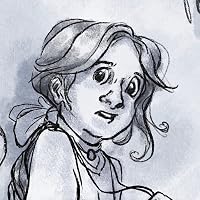
The illustrations are beautiful line drawings with watercolour wash which show kids what’s happening, while the words provide the details. Without Tie Sing and his skill and adaptability, America may never have had its famous National Park Service.
America has benefited from Chinese culture for a long time, especially during the Gold Rush days and the building of the Trans-continental railway in the mid-1800s. But by 1915 “America was a tough place to be Chinese. Bosses paid Chinese workers less than white workers. Townsfolk spat out Chinese names like they’d swallowed river gravel. Most people with Chinese names ended up cooking in restaurants or washing clothes in laundries.”
I had heard before of Stephen Mather’s campaign for the U.S. government to properly manage the national parks. He gathered a large contingent of influential men and took them camping . . . yes, camping . . . in national parks, to introduce them to the spectacular natural beauty being conserved.
But Mather said, “Give a man a poor breakfast after he’s had a bad night’s sleep, and he will not care how fine your scenery is.”
So he found Tie Sing, an experienced trail cook for mapmakers. “With sky for his ceiling and sequoias for his wall . . in his sheet-metal oven, he baked sourdough rolls as light as the clouds drifting above the peaks.”
The campers went hiking and riding all day and returned to camp to find Tie Sing had “assembled sardine hors d’oeuvres, sliced juicy cantaloupe, and squeezed lemons to make tart-sweet lemonade. He grilled steaks and venison, fried fish and chicken, and baked sourdough rolls. He served up gourmet meals as fine as any you’d find in a San Francisco Restaurant.”
A mule disappeared (so did the supplies), another mule fell down a ravine and returned (but without supplies), and poor Tie Sing had to make do. With the help of only one offsider, Eugene, he kept everyone better fed than most of us dear readers, and to top it off, on the last night he made fortune cookies with his own fortunes inside about the wonders of the mountains: “Where but in the mountains would such a man become a spirit with the mountains? "
It worked. Congress was duly lobbied and on August 25, 1916, the National Park Service was founded.
The book says you can hike to Sing Peak in Yosemite National Park. There is a section with further facts and photographs of the real people at the end of the book. There’s also a fair bit about banning Chinese from being citizens, pretty topical for 100 years later with the current refugee situation.
A wonderful resource for teachers all over the world. Thanks to NetGalley and the publishers, Charlesbridge, for my advanced review copy (from which I’ve quoted – possibly subject to change).
Published in 2016, on the centennial of the founding of the National Park Service here in the United States, this picture-book biography from author Annette Bay Pimentel and illustrator Rich Lo tells the story of Tie Sing (sometimes Ty Sing), a celebrated Chinese-American trail cook, for whom Sing Peak, in the Sierra National Forest, is named. Born in Nevada, Tie Sing lived during a time when opportunities for people of Chinese descent were quite limited. Having no desire to work in a laundry, he became a trail cook, and eventually gained such a good reputation in the field that he was recommended as the cook for Stephen Mather's important 1915 camping trip, during which many influential people were taken on a tour of the Sierra Nevada wilderness, in order to convince them to support the founding of a National Park Service. Although he encountered many challenges and obstacles along the way, Sing always persevered, and was fondly remembered by many of the men who were on the trip. One of those men was Robert Marshall, a chief geographer with the USGS (The United States Geological Survey) at the time, who named Sing Peak in the trail cook's honor...
I found the story in Mountain Chef: How One Man Lost His Groceries, Changed His Plans, and Helped Cook Up the National Park Service absolutely fascinating, and commend Pimentel for all the research she did, in order to tell this story of a man who may not have been famous in his day, but who played an important role at a pivotal moment in the development of our National Park system. The afterword gives more information about Sing, who apparently worked for the USGS for thirty years, and who tragically died in a mountain accident in 1918, just three years after the events described in the main narrative here. It is humbling to realize how much Sing loved America, and its wild places, in light of the racism and discrimination that he and other Chinese-Americans faced during this period. Whatever the general attitude in society at the time, it was good to learn that many of the members of Mather's trip were impressed by Sing's patriotism, and considered him a "true American." The accompanying artwork from Rich Lo, done in pencil and watercolor, is expressive and appealing. Recommended to picture-book readers who enjoy biography, or who are looking for stories about Asian-American pioneers and/or the early history of the Park Service.
I am sorry to say I don't know much history about the founding of the National Park system of the United States. I also don't know a lot of history of the Chinese and Chinese-Americans in the United States other than that they were marginalized, discriminated against and made into non-citizens. So reading about Tie Sing and how he cooked for the people who ended up founding the National Parks Service was a delight.
I had no idea that this man existed, and that the author found about about him by reading sources that mentioned him. There are photos of the party of men who went out to see what would become Yosemite, but not much more information about Tie Sing than what they wrote about him in passing.
The information in the back of the book is interesting to read as well, where the author explains how she did the research. The only thing I wondered about, and wished there was more information on was what other things he fed the men when all the rations that he brought with him were gone.
Good, easy to read book about Chinese-American, California and United States history.
Thanks to NetGalley for making this book available for an honest review.
- True story - Set in the Sierra Nevada (OUTDOORS) - About an American-born Chinese man who didn't want to work in a laundry and instead found his niche as a resourceful trail cook renowned for his gourmet meals (AMERICAN DREAM) - And was recruited to cook for a two-week horseback camping trip (RIDE, SALLY RIDE) - Which was organized by tycoon Stephen Mather in order to convince influential men, including one U.S. Congressman and the head of the National Geographic Society to lobby for a National Park Service (WORKED) - Told in vibrant watercolors that highlight the purple mountains majesty, the dark pines, and the rich umbers of horses and camp equipment (GORGEOUS) - Augmented by vivid descriptions of sizzling steaks, apple pie, and sourdough biscuits served on fine china and a heavy linen tablecloth under starry skies after a day of riding. (MARTHA STEWART EAT YOUR HEART OUT)
VERDICT: Let me ride through the wide-open country that I love - DON'T FENCE ME IN #bookaday
This is an engaging story about Tie Sing and how, through his culinary expertise, helped to convince influencers, including "writers, tycoons, members of Congress - and even a movie star, " to establish the National Park Service (NPS).
I had to chuckle when I learned that the group of individuals who were on the trip to decide whether or not to create the NPS were not exactly hardcore campers, and that it took extraordinary efforts to ensure that they had a good time and created lasting memories that would give them the incentive to support the initiative.
The illustrations were created using "pencil drawings and watercolor washes done on paper, then scanned and layered in Photoshop." (p. 2) They don't do justice to the magnificent scenery, but they do convey the characters' expressions.
The experiences of Chinese-Americans at this time in American history is just touched upon in the narrative. But a four-page section called, "What You May Be Wondering," (pp.36-39) expands a bit on the discrimination experienced by Chinese immigrants and those who were born American citizens alike.
This is very relevant, considering the struggles that persons of color continue to face today, especially asylum-seekers and undocumented immigrants.
Black and white photographs, courtesy of the Bancroft Library at UC Berkeley, show Mr. Sing in action during the trip as well as some of the other participants.
A selected bibliography and source notes are also provided at the end of the book.
interesting quotes:
"Give [a man] a poor breakfast after he had a bad night's sleep, and he will not care how fine your scenery is." (p. 7)
"Today, if you visit Yosemite National Park, you can hike to Sing Peak. It was named for Tie Sing, a mountain-loving American who knew how to plan." (p. 34)
"Tie Sing...was born in the United States and so was automatically an American citizen - but being of Chinese descent and carrying a Chinese name were enough to strip citizens of their rights." (p. 36)
"Camper Emerson Hough later wrote that if you positioned yourself just right, you could hook a fish and pull it out so that it would go directly into Tie Sing's frying pan." (p. 37)
Mountain Chef is the story of Tie Sing, a cook hired by Stephen Mather for his diverse group of companions with the aim of creating a national park service. Eager and adventurous, Sing faced many challenges throughout the expedition. From runaway mules to broken appliances, Sing persevered through them and is shown to be a good improviser on making changes to the meals. He struck the minds of his companions with his fortune cookies that ultimately led them to officially declare the Yosemite site a national park. In admiration and his contribution to the team, Sing Peak is named in his honor that can still be hiked today. Written well and in good detail, Annette Pimentel has made a good recognition of the man who helped create Yosemite Park, and Rich Lo's watercolor is vibrant in bringing the words to life. The last few pages includes a small introductory to all the real-life figures presented in this book.
Tie Sing was considered to be the best trail cook in California in the early 1900s, and this wonderful book is a sweet and factual introduction to his life and legacy.
The story is skillfully told, and the illustrations match the theme of the time and the story. Included after the story are pages of biographical information about Tie Sing and some of the people that he cooked for, who helped persuade congress to create the National Park Service.
The only issue at present is the small, slightly illegible font used in the book, though since this is an advanced copy, that may change before publication. Highly recommended for all ages, although it is intended for children.
Another book I'm reading for the Los Angeles FOCAL committee. (Friends of Children and Literature) I enjoyed this book very much because it deals with the Chinese in America and the creation of the National Park Service. Tie Sing is hired by Stephen Mather to cook for a group of men learning about the California wilderness and camping for ten days in Sequoia National Park in 1915. Tie Sing is a great cook and is famous for his sourdough bread! Disaster strikes when his mules carrying the supplies run away and dump most of the supplies down the canyon. Tie, being a great chef, comes up with a delicious meal to save the day. And Mather has convinced the men with him to go to Congress and create a national park service.
What a fascinating story about a man who overcame prejudice and ended up as cook on a journey that helped initiate the National Parks Service. As someone who enjoys camping in parks and wilderness areas here in Canada, I am very impressed by Tie Sing was able to conjure up such elaborate feasts under those conditions. I wonder whatever happened to that missing mule? I appreciate the endnotes and photographs at the end of the book.
2nd graders did a great job reading this even if they didn't really connect with the national park-aspect as much. Loved it when they engaged with the types of foods Tie Sing was making & how resilient he was.
Loved the historical & asian representation here for younger readers.
This is a picture book biography about Tie Sing, a Chinese American man who was the best trail cook in California. He was hired to cooke for an expedition that was meant to develop support for the National Park system. Of course being out on the trails, things are bound to go wrong and they did for Tie Sing, but he never gave up and always made the most of it. It's a story of inventiveness and problem solving. The water colour illustrations are wonderful. The back of the book includes mini biographies of the characters in the story and answers other questions the reader may have about Tie Sing and this expedition.
I received a copy of this book from Netgalley in exchange for an honest review.
I was attracted to this book because of its title - the line about a man losing his groceries just drew me in. This is the story of Tie Sing, who was a talented trail cook and who helped convince the government to start the national parks. (And yes, if you're putting your food provisions in baskets and tying them to mules, you can lose your groceries!) The kids enjoyed this story. It is on the longer side so I would recommend it for elementary students.
In-depth narrative of little-known Chinese American at an important time in history. Pieced together from scarce sources, the story is informative and interesting, putting readers in the scene. Lovely watercolor illustrations.
Great, richly layered story about a Chinese American trail chef who helped inspire the creation of the National Park Service. Lots of great back matter discussing the history behind the story.
This is a non-fiction biography for kids about Tie Sing, the man who “helped cook up the National Park Service.”
Tie Sing was born in Virginia City, Nevada, “a tough place to be Chinese.” He grew up to be a chef who loved to hike as well as to create gourmet meals. He got a job cooking for mapmakers, for whom he “stirred silky sauces, broiled succulent steaks . … and baked sourdough rolls as light as the clouds drifting above the peaks.” His reputation grew as the best trail cook in California.
In 1913 Tie Sing was hired by a millionaire to accompany tycoons and members of Congress on a camping trip in what is now the Yosemite National Park, to promote the idea of a national park service. On the trail, Tie Sing, along with an assistant, created epicurean meals for the thirty people on the trip. They served gourmet meals "as fine as any you’d find in a San Francisco restaurant” on linen tablecloths with fine china plates and thick cloth napkins.
One day the mule carrying their fanciest food wandered off and could not be found. Tie Sing had to improvise. Then on another day a second mule tumbled off a narrow ridge and more food and kitchen gear were lost. Again he had to brainstorm to make up for the losses.
And on the last night, he came up with an even better idea “to fill the campers with memories.” He wrote on tiny slips of paper, and inserted them into cookies: “fortune cookies.” The messages promoted the beauty of the mountains: “Long may you search the mountains.” “Long may you build the paths through the mountains. “Where but in the mountains would such a man become a spirit with the mountains?”
The men were duly impressed by the experience, and, as the author recounts:
“On August 25, 1916, exactly one year, one month, and one day after Tie Sing served his fortune cookies, Congress created the National Park Service.”
In Tie Sing’s honor, one of the peaks in Yosemite National park was named Sing Peak.
An extensive section at the end of the book called “What You May Be Wondering” fills in more information about Tie Sing, and features some actual photos. The author tells us that Tie Sing worked for the U.S. Geological Survey (USGS) as a trail cook for thirty years, and was killed in a mountain accident in 1918. She also fills in background on the discrimination against ethnic Chinese in the United States at the time. Short biographies provide the backgrounds of some of the men who went on the trip to promote the National Park Service. She concludes with a selected biography and source notes.
[Note: while the author doesn’t address the origins of the fortune cookies, Tie Sing did not invent the idea. Although both Japanese and Chinese immigrants claimed credit for inventing them (or more accurately, for bringing the idea to America), it is generally conceded that whoever came up with the idea first popularized it in San Francisco in the late 19th or early 20th century.]
Rich Lo created lovely pencil and watercolor illustrations, some of which are based on the historical photos, to help tell the story. The endpapers are illustrated with a map of the trip described in the book. Lo is not only an award-winning illustrator of kids’ books, but he creates public art.
Evaluation: This story seamlessly combines several histories in one: the creation of the National Park Service; what camping on the trail was like before the service; and the racial discrimination against people of Chinese heritage. There is a message in the story for thoughtful readers, but it is not made explicit or forcefully. The story is unique, interesting and entertaining.
Tie Sing was a Chinese American who worked as a chef for campers in the California mountains. He is all but forgotten by history, but played an important part in convincing key Americans to form the National Park Service. When Stephen Mather put together a camping trip of these key Americans to show them the land that needed to be preserved, he picked Tie Sing to make sure their tummies were happy so that the trip would more likely be a success. Feeding men well on the trails in the mountains is a challenge, but Tie Sing impressed the men with his cooking and helped make the whole experience a pleasant one. Those men soon went back to Washington D.C. and convinced the nation to form the National Park Service.
I like this book for a number of reasons, but probably most of all because it highlights the impact even "ordinary" people can have on the future. No job is unimportant. No job is too small to have an impact, and Tie Sing exemplifies that. It's also nice to have a picture book biography of a Chinese American from the early 1900s. Those are few and far between (if any others exist...I can't think of any off of the top of my head). The author provides some very interesting notes on the challenges she faced doing research for this book. She also includes short bios of men who were on the camping trip.
This book was a fun read and really made me open my eyes to certain issues. I did not know that Chinese people were treated so poorly in America. The book said that they were paid less for similar work which is wrong. This book did show how amazing of a person Tie Sing was though. He was so intelligent to put fortunes into the cookies which was a nice touch. I was amazed that he thought of this because this was cleaver and really made the campers happy. I also love how even through the discrimination that he faced that he did not allow it to bother him. He was the bigger person and did what was expected of him which really speaks to how great his character was. Tie Sing should be a model to everybody on how to conduct yourself and how to treat people. I did not know anything about him previously before reading this book, but I am glad that I got to learn about what an amazing man he was.
This story is about Tie Sing, an American with a Chinese heritage. He was an amazing cook for expeditions. When they were surveying the national parks, they wanted the best, so they got Tie Sing. In the Wilderness, he laid out fancy 4 star meals to help people want to make the national parks happen. He had hardships and still was able to pull it out.
One of the facts I loved was how he preserved meat with no refrigeration. He wrapped the meat in wet cold paper and as it evaporated, it lowered the temperature of the meat. He seems like a really neat person.
The artwork was soft with pastels. It looks like watercolors. It did the trick. They were around the Yellowstone area.
At one point Tie Sing lost a donkey that feel off a cliff. The donkey lived while all it carried was lost. They have actual pictures of the group around the white linen table eating with Tie Song in the background. It was rugged and Tie Sing brought some elegance to the event.
I really liked this story! It focuses on real-life hero Tie Sing, a Chinese-American mountain man who fed thirty people for ten days in the wilderness. His actions even inspired the creation of the National Park Service! I enjoyed how this book's message related to how anyone can make a difference. This message is important to teach to children, as they can accomplish anything they set their minds to. No matter how monumental it may be! No job is small or unimportant, everyone is just as special! I also liked the art, the mountain ranges in California where Te Sing was located were rendered rather well! The author also included short biographies at the end of the book of the real-life individuals who were involved in this! This is a great story to read in a classroom, as it will spark inspiration in everyone!
Mountain Chef is like a Breath of Fresh Mountain air! This book is excellent on so many levels. It teaches about Tie Sing, an amazing Chinese-American, who was one of the reasons for turning Yosemite into a National Forest. Thank you! I loved reading about this mountain- loving man who was truly a genius chef. I enjoyed the setting of the story, the tranquil and magnificent wilderness and I especially liked Tie Sing’s wonderful, determined and optimistic personality. He was faced with many challenges (OK, disasters) and learned how to improvise when it felt like all was lost. I love the subtle message: Hardships will lead us to discover our inner strength and greatness if we persevere! I’m glad this book was written about Tie Sing so he can get the recognition he deserves.
Tie Singh, a Chinese American, was known as the best trail cook in the Sierra Nevada Mountains. He was a mountain man and was hired to cook for thirty influential people for ten days in the wilderness. Despite most of his food supplies being lost, Tie managed to feed the adventurers, so they could enjoy the beauty of the mountains. The men returned to civilization and a year later in 1916, convinced lawmakers to create the National Park Service to support America's national parks. Annette Bay Pimentel's well-written historical story is illustrated with colorful pictures by Rich Lo. In the backmatter, the author includes a "What You May Be Wondering" section with questions and answers, a few photos, a Selected Bibliography and Source Notes.
Fascinating picture book historical account of early American can-do chef Tie Sing who made food for the rich dude (Stephen Mather) trying to convince his fellow American influencers that we need to have a national park system. Sing cooked for 19 guests on a rustic tour of western landscapes organized by Mather. Despite obstacles, badly behaving mules, and other complications he feed everyone splendidly. This quote by S. Mather I loved "Give [a man] a poor breakfast after he has had a bad night's sleep, and he will not care how fine your scenery is." My only quibble with this book is I'm not crazy about the font choices.
I enjoyed many parts of this book--Lo's pencil/watercolor illustrations evoke the natural setting and add to the events in the narrative, the story itself keeps a focus on Sing's experience, and the author has provided endnotes, a bibliography, and maps that a young scholar will find useful as jumping-off points for further research into myriad related subjects.
I am curious how the publisher chose the font, "Estro by Mecanorma." Since this picture book is text-heavy, I found the copy somewhat difficult to read and I imagine it would be even more difficult to see well enough to read aloud.
3.5 stars New introduction to creation of our national park system with the story focused on someone not typically in the spotlight -- a cook and a Chinese American cook at that. Great back matter although it would have been nice to have identified the men sitting at the camp table, at least those deemed important enough to get paragraphs about themselves. Endpapers show a map of different points somewhere in California. A map of California showing where this area is would be very helpful -- if an adult doesn't know, how would an elementary age reader?
This is a good book that looks at the history of Chinese-Americans in this country. The book talks about a man named Tie Sing who was an excellent cook as well as a mapmaker. He actually was a cook for a group of men who were walking the rails of the of the Sierra Nevada and with Sing's persuasion, the National Park Service was created. This was a story that I had not heard before so I learned so much history while reading this book. The illustrations were amazing and vibrant which caused them to pop off the page. The use of watercolors also caused the drawings to look so life like. This book teaches readers that all jobs are important and that you should show your passion.
This is a stunning biography of one of the many people who's passion for nature and the National Parks Service contributed to it's creation. Tie Sing was the mountain cook for a 10-day expedition, meant to bring awareness to America's beautiful parks. The care he gave to the good food on that expedition, and the resourcefulness he exhibited helped keep everyone happy and well-fed. If they went hungry, they wouldn't be happy! (Hangry early Americans).
A really interesting story about the start of the National Park Service, and the (previously) unrecognized man who had the brunt of the work in impressing that people who made that happen with his ability to cook gourmet meals on camping trips. The illustrations are really nice, though they hardly ever show any of his menu items (which might be a weird complaint, but this is kind of what the story is about..), but the descriptions of the food alone will be sure to leave you hungry!
I love that this story relates to National Park Service, this is a great thing to expose children too. I also like the colorful illustrations depicted in the book to show the great outdoors. Furthermore this story is showing how hard work and some times taking a different direction led to something greater such as it did in this story. The Chinese American Mountain man mounted to something greater than just working in a restaurant or laundry mat. By: Randi Triantafillou
This is such an important story from American history about a Chinese American trail cook (master chef) named Tie Sing who was - in today's terms - an essential worker on the path to the National Parks Service's establishment.
** I consider this and "The Journey of York: The Unsung Hero of the Lewis and Clark Expedition" by Hasan Davis and Alleanna Harris two of the best and most vital stories of American history that I read this year. Essential additions to any social studies classroom.
What an interesting bit of history and picture book memoir about Chinese American, Tie Sing, who helped inspire the start of the National Park Service. Tie Sing was hired to be the chef for a camping expedition in the mountains of California. Readers will be engaged by his abilities to provide gourmet meals to the campers. Also find out about his challenges in traveling and hauling food through the mountains on donkey. Highly recommended.