Άλβαρο ντε Κάμπος: ο εμπνευσμένος μηχανικός των Ωδών
Σύμφωνα με τον Φερνάντο Πεσσόα, εμπνευστή και διευθυντή αυτής της μοναδικής ορχήστρας των ετερωνύμων ποιητών, ο Άλβαρο ντε Κάμπος γεννήθηκε στην Ταβίρα στις 15 Οκτωβρίου 1890, σπούδασε μηχανολόγος και στη συνέχεια ναυπηγός-μηχανικός στη Γλασκώβη και έζησε στη Λισσαβόνα, άνεργος. Σε κάποιες διακοπές ταξίδεψε στην Ανατολή, απ’ όπου εμπνεύστηκε το "Οpiarium". Έμαθε τα λατινικά από ένα θείο του από την Μπέιρα που ήταν ιερέας. Ψηλός, λεπτός και με μονόκλ, είναι ο αχώριστος σύντροφος του Πεσσόα, μοιράζεται μαζί του τις ίδιες παιδικές αναμνήσεις, την αγγλική παιδεία, περιδιαβαίνει στο πλάι του στη Λισσαβόνα, παρεμβαίνει δυναμικά στη σχέση του με την αγαπημένη του Οφέλια και εντέλει φεύγει από τη ζωή μαζί με το δημιουργό του, γράφοντας το τελευταίο ποίημά του σαράντα μέρες πριν από το θάνατο του ίδιου του Πεσσόα.
Ο Άλβαρο ντε Κάμπος είναι η οργισμένη φωνή του δημιουργού του, η οχληρή και θορυβώδης πλευρά της προσωπικότητάς του, ο μεγαλόσχημος εκφραστής ενός ανεκπλήρωτου ερωτισμού και ενός φαντασιωσικού πανσεξουαλισμού, ο υμνητής του φουτουρισμού, ο δηλωμένος οπαδός του Γουίτμαν, και κυρίως ο ποιητής της Θαλασσινής ωδής, "του πιο εκκωφαντικού ποιήματος" που έχει γραφτεί ποτέ, κατά τον Άγγλο ποιητή Ρόυ Κάμπελ, και της μόνης ολοκληρωμένης ποιητικής σύνθεσης που γνώρισε τη δημοσιότητα ζώντος του δημιουργού της.
Fernando António Nogueira Pessoa was a poet and writer.
It is sometimes said that the four greatest Portuguese poets of modern times are Fernando Pessoa. The statement is possible since Pessoa, whose name means ‘person’ in Portuguese, had three alter egos who wrote in styles completely different from his own. In fact Pessoa wrote under dozens of names, but Alberto Caeiro, Ricardo Reis and Álvaro de Campos were – their creator claimed – full-fledged individuals who wrote things that he himself would never or could never write. He dubbed them ‘heteronyms’ rather than pseudonyms, since they were not false names but “other names”, belonging to distinct literary personalities. Not only were their styles different; they thought differently, they had different religious and political views, different aesthetic sensibilities, different social temperaments. And each produced a large body of poetry. Álvaro de Campos and Ricardo Reis also signed dozens of pages of prose.
The critic Harold Bloom referred to him in the book The Western Canon as the most representative poet of the twentieth century, along with Pablo Neruda.
This is my first encounter with Fenando Pessoa (or, in this case, one of his numerous personalities Álvaro de Campos). It is 'Naval Ode' just because it was available. And what voyage it was! It is an avant-garde (written in 1915) poem filled with the images and all kinds of powerful (sometimes violent) noises and sounds produced by the sea and the people and machines (ships, sailors, pirates, seaports, machines etc) whose existance is closely conncted to the sea. But what is more important is that this is also the poet's voyage into himself. There are some fragments of childhood memories and echoes of traumatizing experiences. It seems the author is trying to confront his 'demons' - fears, anxiety and rage. And melt away. In any case, I am intrigued, I need to learn more about Fernando Pessoa, a great poet , an axtraordinary person and his multiple personalities.
(...) Ah, every quay is a regret made of stone! And when the ship leaves the quay And we note suddenly that a space is widening Between the quay and the ship, There comes to me, I know not why, a recent anguish, A mist of feelings of sadness That shines in the sun of my mosy anguishes Like the first window the morning strikes on, And clings round me like some one else's remembrance Which is somehow mysteriously mine.
Ah, who knows, who knows, If I did not leave long ago, before Myself, A quay; if I did not depart, a ship in The oblique sun of morning, From another kind of port? Who knows if I did not leave, before the hour Of the exterior world as I see it Dawned for me, A large quay full of few people, Of a great half-awakened city, Of a great city commercial, overgrown, apopletical, As much as that can be outside Time and Space?
Ay, from a quay, from a quay somehow material, Real, visible as a quay, really a quay, The Absolute Quay on whose type, unconsciously imitated, Insensibly evoked,
We men have built Our quays in our harbours, Our quays, of actual stone overlooking true water, Which, once built, suddenly show themselves to be Real-Things, Things-Spirits, Entities in Stone-Souls,
At certain moments of ours of root-sentiments When it seems that a door is opened in the outer world And, without anything changing Everything reveals itself to be different. (...)
"Ah, every quay is a regret made of stone! And when the ship leaves the quay And we note suddenly that a space is widening Between the quay and the ship, There comes to me, I know not why, a recent anguish, A mist of feelings of sadness That shines in the sun of my mossy anguishes Like the first window the morning strikes on, And clings round me like some one else’s remembrance Which is somehow mysteriously mine."
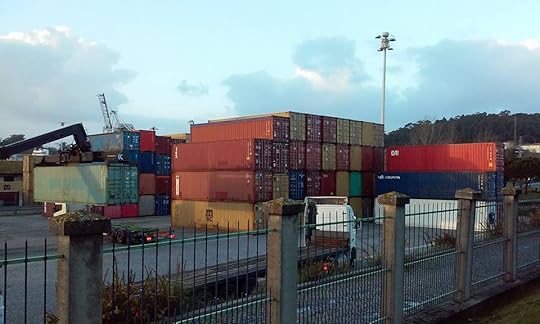
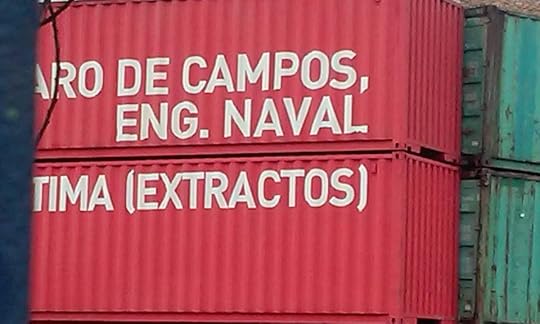
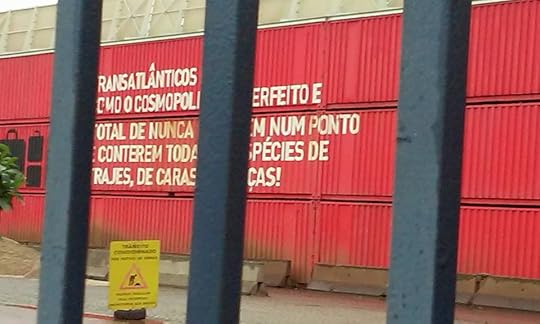
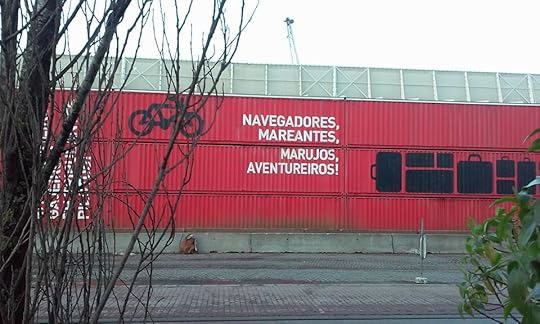
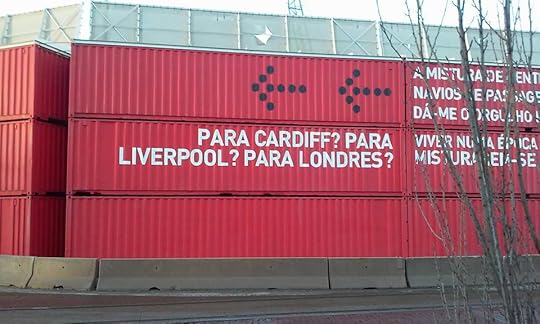
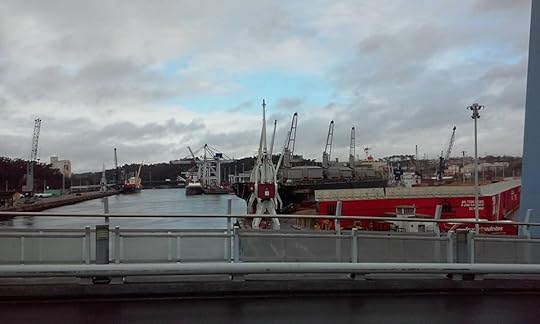
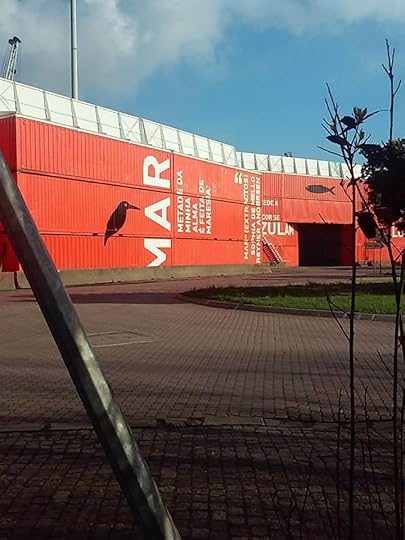
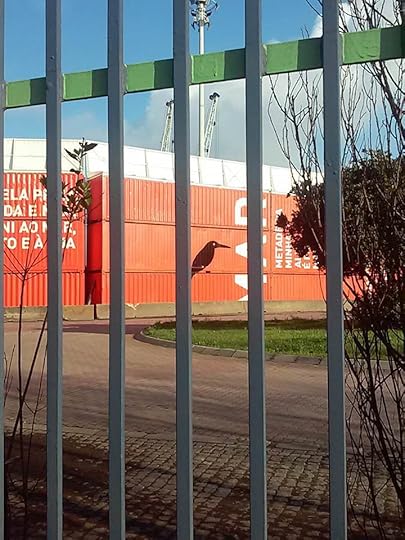
Boxes upon boxes,...hundreds upon hundreds; almost meaningless, on that grey day.
Maybe for those not reading Portuguese this photo-essay won't matter that much. Unless I translate a few lines (maybe I will, someday ...) .
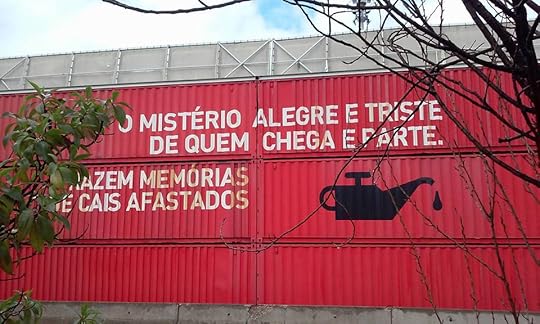
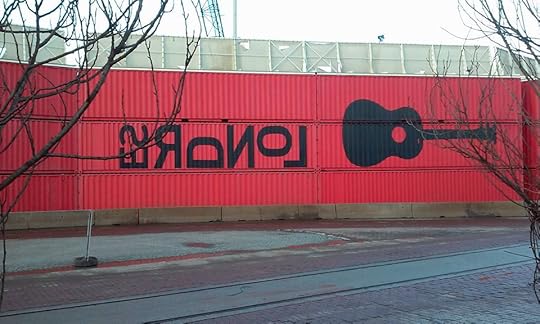
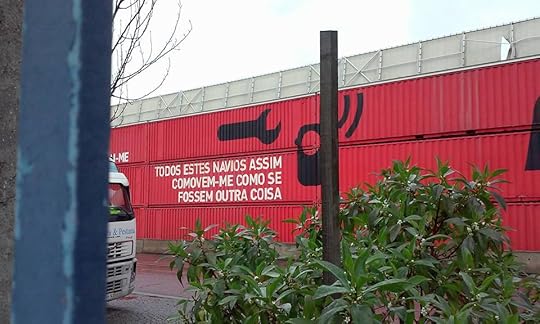
The thing is that, yesterday, I had the chance to walk by and around the Leixões (Oporto) dockyards and enjoy another landscape midst the mechanical one; I mean, the cultural landscape; Pessoa's own words and lines permeating the containers; infusing those boxes with the Portuguese, true identity; one connected with the sea.
Ode Maritima is mostly about that: voyage, departure, discovery. And longing for the return.
"Uma gaivota que passa, E a minha ternura é maior."
UPDATE: This is a good article for discussions on the possible meanings of the Portuguese expressions translated into English.
Já o tinha lido há uns anos. Hoje por uma simples frase que ouvi veio-me à memória e decidi revisitá-lo. Soube-me melhor desta vez, talvez porque também eu, esteja cada vez mais marítima.
"Todos os mares, todos os estreitos, todas as baías, todos os golfos, Queria apertá-los ao peito, senti-los bem e morrer!"
"Chamam por mim as águas, Chamam por mim os mares, Chamam por mim, levantando uma voz"
"Ah, seja como for, seja por onde for, partir! Largar por aí fora, pelas ondas, pelo perigo, pelo mar. Levado, como a poeira,pelos ventos, pelos vendavais! Ir,ir,ir,ir de vez!"
"Merda pra toda a vida como a nossa, que não é nada disto!"
"Uma gaivota que passa, E a minha ternura é maior."
«я перечувствовал слишком, чтобы чувствовать дальше.»
масштаб моих ужаса и горя в этом году словно отравляет драгоценные части меня, которые позволяли мне внимательно подмечать, остро чувствовать и находить точные слова для всего этого. нет ни истинного вдохновения, ни захватывающих идей. временами нет даже способности увлечься чем-либо по-настоящему достойным восхищения. но ведь это тупик, разве нет? по крайней мере, для меня и для того, какой жизнью я хотела бы жить. Пессоа и его сочетание поэтического и философского позволили мне ненадолго заглушить человеческие страдания и побыть в пространстве вне их.
Sin duda uno de los mejores y más emblemáticos poemas del siglo XX. Entre los críticos que admiran este poema de 904 versos, se encuentra el norteamericano Harold Bloom, quien, en mi opinión merecidamente, lo incluye en su canon literario del mundo occidental.
Conozco dos traducciones al Castellano, la del destacado escritor y traductor mexicano Carlos Montemayor y la realizada por Miguel Ángel Viqueira y publicada, en edición biligüe, en el segundo tomo dedicado a la obra poética de Pessoa por Ediciones 29. La traducción de Montemayor suena más moderno y más afín al oído hispanoamericano; la traducción de Viqueira es mucho más cercana a los versos originales, sobre todo en la crudeza con que aborda los versos más chocantes. Como detalles, Viqueira, por ejemplo rehúsa traducir saudade, y lo deja en el portugués original, mientras que Montemayor escoge traducirlo a veces como nostalgia y otras veces como melancolía, Viqueira respeta rigurosamente el orden de los términos nombrados en los versos originales mientras que Montemayor se permite más flexibilidad, logrando así interesantes efectos.
Recomiendo fuertemente la lectura que hace el actor Juan Stack y que produjo y divulga la Universidad Nacional Autónoma de México (UNAM) en http://descargacultura.unam.mx/app1?s... , pese a lo dificultoso que me resultó la descarga o la reproducción en línea.
The steamers that enter the bar in the morning, Bring to my eyes with their coming The glad and sad mystery of all who arrive and depart. They bring memories of distant quays, and of other moments Of another kind of the same mankind in other ports.
Of what port? Over what waters? Oh wandering and unstable soul of the people who live in ships, Of the symbolic people who pass and for whom, nothing lasts For when the vessel returns to the port, There is always some change on board!
To float as soul of life, to depart as voice, To live the moment tremulously on eternal waters! To wake to more direct days than the days of Europe, To see mysterious ports over the loneliness of the sea, To double distant capes and see sudden great landscapes Of unnumbered astonished alones!
Over the ever-different tracts of seas with islands afar, Over the distant lines of the coasts we merely pass by, Over the clear growing-clear of ports, with their houses and their people, When the ship nears the land.
a regret at something, a perturbation of tendernesses towards what vague fatherland?
A minha opinião está um pouco influenciada por eu ser um puto de 19 anos que leu isto em cinquenta minutos, e que decidicamente vai precisar de mais leituras para dominar o texto em si. Não obstante, eu gostei. Nunca fui muito de ler, por iniciativa própria, poesia, mas é algo que quero mudar, e eu diria que a "Ode Marítima" é bastante agradável de ler, não só pela forma de escrever em si, com descrições claras e uma forma emotiva de expressão, mas pela maneira de como FP "joga" com o heterónimo de Álvaro de Campos - fez-me entender que a subdivisão da obra de Campos em «fases» consoante o estado de espírito não me parece correto, visto que, na Ode, Álvaro de Campos passa desde o entusiasmo pela vida marítima e pelo próprio modernismo, para uma melancolia, fruto da procura de uma vida mais simples e pela própria nostalgia de infância. Aquilo que menos gostei (e isso FP não tem culpa nenhuma) foi o facto de ter acompanhado a leitura a ouvir uma senhora (Cristina Ramalho: https://www.youtube.com/watch?v=jg5bV...), para me focar mais, mas a verdade é que foram saltadas algumas partes, o que me deixou confuso, e a expressividade podia ter sido melhor - apesar de ser justo dizer que eu não o faria melhor, certamente. Dessa forma, quatro estrelas parece-me uma avaliação justa.
Um paquete que passa desencadeia na alma do poeta uma roda de sensações e reflexões, que sobem de tom, culminando numa exaltação delirante, doentia e masoquista, para logo se desvanecerem acabando numa imobilidade triste e insatisfeita presa à realidade concreta do real.
Na grande aventura marítima e a pirataria incorpora todos os ângulos dessa saga marinheira, Álvaro de Campos funde-se simultaneamente com carrascos e vítimas, com violadores e violados, com assassinos e assassinados, com a fúria e o medo, e cristaliza essa estranha união na dor. Dor física do moribundo, dor eterna de Prometeu. A dor procurada, querida, o culto do sacrifício voluntário, sem sentido nem honra, nem esperança.
A poesia nunca foi o meu forte... como me lembro de tr lido Fernando Pessoa por volta dos 15 anos e ter gostado, quando vi esta oferta da conversasdecafe, no BookCrossing, candidatei-me. Gostei bastante do início do livro, fez-me recordar as minhas travessias quase diárias do Tejo, quando vivia na outra banda e estudava em Lisboa. Depois o livro - ou o àlvaro de Campos - passa-se completamente. Decididamente, o bucólico Alberto Caeiro faz mais o meu género! Libertado através do BookCrossing
Το βιβλίο αυτό είναι μια αποκάλυψη. Είναι ένα μαχαίρι που σχίζει το προσωπικό χωροχρονικό συνεχές του καθενός που το διαβάζει και τον αφήνει για πάντα μεταλλαγμένο. 12 χρόνια αφότου το έπιασα στα χέρια μου για πρώτη φορά, δεν μπορώ να βρω περισσότερα λόγια για να το περιγράψω.
Álvaro de campos é um heterónimo de Pessoa. Neste longo poema, ele quer sentir tudo de todas as maneiras. É o auge do sensacionismo assim como a Ode Triunfal. Adoro!
The following review is in Greek as it concerns the Greek translation by M. Papadima. (Gutenberg,2023)
Το ποίημα αποτελεί μια ωδή-απεύθυνση του πλαστού ποιητή-μηχανικού Αλβάρο ντε Κάμπος (ετερώνυμο του Πεσσόα) προς την Θάλασσα και τις μορφές τις οποίες αυτή περικλείει (πλοία, ναύτες, πειρατές, ταξιδιώτες κλπ). Ο ποιητής ατενίζοντας το πλοίο που πλησιάζει νοητά περιπλανιέται και στοχάζεται την φύση του ταξιδιού και της εσωτερικής παλινδρόμησης μεταξύ αφετηρίας και προορισμού.
Σύντομα όμως ο ψυχισμός του αναστατώνεται και ύστερα από τον ύμνο στην ελευθερία της Θάλασσας και όσων την ταξιδεύουν, βρίσκεται να αποζητά και να φαντασιώνεται την βίαιη ελευθεριότητα των πειρατών και τον τρόπο με τον οποίο αυτοί -αψηφώντας τον αστικό πολιτισμό και την στοιχειώδη ανθρωπιά- σφάζουν, βιάζουν και κουρσεύουν τα πάντα στον διάβα τους. Αυτή η βιαιότητα φαίνεται να ηδονίζει τον ποιητή (με υφολογία έντονα σεξουαλική) και κορυφώνεται με τρόπο μανιώδους έκστασης. Ύστερα, μέσω μιας αναπόλησης των παιδικών του χρόνων, αυτός επανέρχεται στην ήρεμη αρχική του κατάσταση, όπου εξυμνεί τις μικρές (αλλά γοητευτικές) πτυχές του αστικού πολιτισμού/τοπίου.
Προσωπικά λάτρεψα το ποίημα και την ελληνική μετάφραση που θεωρώ ότι (χωρίς να έχω εικόνα του πρωτότυπου) διατήρησε την έντονη ροή του κειμένου από τον στοχασμό, στην ένταση και πίσω στην ήρεμη ποιητική ματιά με τρόπο ιδιαίτερο καλότεχνο.
Όσον αφορά το ποίημα, αυτό είναι γραμμένο με τρόπο που δεν αφήνει κάποιον να ξεχωρίσει τον ποιητή-μηχανικό και τις εικόνες που περιγράφονται: οι εικόνες περιγράφουν τον ψυχισμό του και ο τρόπος γραφής (στίξη, ρυθμός, λεξιλόγιο) αντικατοπτρίζουν την ψυχική του κατάσταση. Όσον αφορά την θεματολογία και τον νοηματικό κορμό-άξονα του ποιήματος, μου θύμισε ιδιαίτερα τις Αόρατες Πόλεις του Καλβίνο: ο ποιητής/ταξιδιώτης ενώ περιπλανιέται και φαντασιώνεται τόπους μακρινούς και βιαιότητες, στην πραγματικότητα σχολιάζει το (συμπληρωματικό και άκρως αντίθετο με αυτές) σημείο αφετηρίας του: την πεζή και κομφορμιστική ζωή του ίδιου ή οποία υποθάλπει το καταπιεσμένο (και βίαιο) φαντασιακό του.
Συνολικά, βρήκα το ποίημα λογοτεχνικά εξαιρετικό, συμπυκνωμένο και ανεπιτήδευτο και το συστήνω ανεπιφύλακτα!
Столько лиц необычных! Лица все необычные, И самое религиозное чувство — много смотреть на людей. Братство на самом деле — это не идея революции. И это то, чему учит людей их обычная жизнь, принуждая терпеть всё, И часто встречает готовность тех, кто должен терпеть, И наконец они плачут от нежности к тому, что надо терпеть. О! Это красиво, это человечно и привязано так К человеческим чувствам, таким уживчивым и буржуазным, Так усложненно простым, так метафизично печальным! Жизнь, качаясь и расходясь, наконец приводит нас к человечному. Бедные люди! Бедные все они все!
Can't say i understood it completely. It was like a dream about the sea, ships, docks, cranes, pirates and pirate cruelty. I was very confused along the way and couldn't feel a definite feeling, things merged one into another. At some point the narrator begged to be smashed into things so that he could get closer to them. Perhaps my confusion is actually the intended effect of the poem? I can't really say. In the end i was intrigued enough the want to read some of Pessoa's prose.
Um dos melhores poemas, pela pele de Álvaro de Campos, a invocar o imaginário e saudades marítimas dos portugueses. O modernismo e as contradições são um tema recorrente e fazem a Ode muito mais interessante.