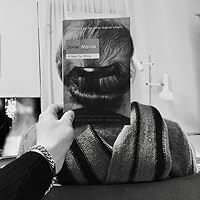
Céleste Albaret, Marcel Proust's majordomo and jacqueline-of-all-trades for the last ten years (or so) of his life, 'wrote' this memoir in the 1970s. And by 'wrote' I mean that she rattled off her memories to a ghostwriter, and then the ghostwriter's book Monsieur Proust was later translated into English. So the NYRB edition of Monsieur Proust referenced here is really twice-removed from a first-person account. But probably another layer of removal is implied by the fifty years which passed between the events of the book and Albaret's recollections. I don't know about you, but I have a difficult time remembering what I did or said last week, so (to my thinking) an account fifty years after the fact necessarily implies approximation. Albaret, ironically, weakens her case for accuracy when she insists that she remembers (quite a few) exact quotations and precise details. But nothing is more damaging to her claim of nearly exhaustive knowledge of Proust during the final years of his life than her insistence that he was not a homosexual. Her arguments seem motivated by rationalizations and perhaps by her own preference that Proust not be homosexual, but who really knows? One of Albaret's lamest attempts to buttress her case is her claim that Proust told her pretty much everything, so he would have likewise told her of his 'indiscretions.' Either this assertion overstates her intimacy with Proust or vastly understates what it meant to be a closeted gay man in the very early part of the twentieth century. Without any hint of irony, Albaret maintains that Proust several times visited a male brothel but only for purposes of research. Of course, his observations at the brothel are featured memorably in Time Regained, but one tends to raise an eyebrow at the claim that his interests were solely educational. Albaret spends one chapter itemizing the 'loves of his life' (all of them women, all of them seemingly chaste) and discusses the 'real' Gilberte Swann, Duchesse de Guermantes, Madame Verdurin, and others (although these characters were amalgams of many real people). All of this is interesting, even if it belies the true objects of his affections.
Despite all this, Albaret's book is fascinating for Proustophiles. (And make no mistake—this book is only for hardcore Proustophiles. Dabblers need not apply.) Maybe Albaret didn't know all of the particulars of Proust's sexual tastes, but she certainly knew almost everything about his reclusive lifestyle during his final decade. After having read Monsieur Proust, I have a very specific, fully fleshed-out idea of a day-to-day existence that was only hazy and trivial before. The cork-lined walls, the nocturnal life, the phobia of germs and illnesses, the ascetic diet, the ritualistic behavior... the fabled bedroom on Boulevard Haussmann... It's all here, in vivid detail. Albaret, who is one of the models for the maid Francoise in A la recherche du temps perdu, is worshipful; she adores Proust, and she has almost nothing to say that is critical of him—except on those curious occasions when she reveals things she doesn't imagine to be damning but which—in the minds of most readers—will probably seem so. Is there evidence to support the many claims of Proust's snobbishness? Yes. Is he demanding and authoritative? Yes. Do we get the sense that Proust is emotionally cold, dryly analytic, as if he stands resolutely apart from the world he observes? That his melacholy is somehow abstract and unengaged? Absolutely. But he's also charming, generous, and funny—and unfailingly loyal to Céleste Albaret. There's an absorbing chapter on the notorious dandy Count Robert de Montesquiou, who serves as the primary model for the equally notorious Baron de Charlus. Montesquiou was a frightening kind of man capable of outrageously rude and spiteful behavior. Proust warned Albaret that if he ever received chocolates from Montesquiou, they should be thrown out; they might be poisoned. There's also a great section on Proust's (and Albaret's) atttitude toward André Gide, the famed French writer who rejected the manuscript of Swann's Way and later came to regret it. All in all, Monsieur Proust, faults and all, is a must-read for any diehard Proust fan, and I'm kind of shocked only twentysome people have rated it on Goodreads. If you've devoted a significant chunk of your life to reading all of A la recherche du temps perdu, then make time for the additional four hundred pages of Monsieur Proust.