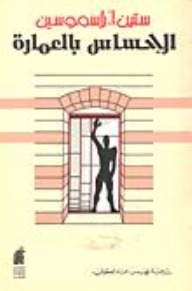
Getting older, I don't really have a bucket list, but delving into the native language of architecture is definitely something that would be on it. I especially find modern architecture challenging and enticing. Unfortunately, I do not (yet) have the knowledge and especially the analytical tools to ‘read’ architecture in a proper way. This booklet has the merit of providing a key. It is what is called a classic, published in 1959 and long used in architecture schools. To today's reader the writing style certainly seems old-fashioned, and its age (now over 60 years) and its many references to antique, Renaissance and Baroque buildings in Italy makes it no doubt dated.
But the booklet compensates for that with that reading key, which – I think – is still valid. Rasmussen puts it concisely: “If we believe that the object of architecture is to provide a framework for people's lives, then the rooms in our houses, and the relation between them, must be determined by the way we will live in them and move through them.” In other words: architecture must first and foremost be 'lived' and 'experienced'.
The author therefore offers a kind of phenomenology of the way we experience spatial structures, with aspects such as hard and soft surfaces, concave and convex shapes, light incidence, the role of color and even sound in architecture. The chapter on 'rhythm' particularly appealed to me: indeed, the shape of a building, the distribution of the windows or rooms exude a rhythm that appeals, through their regularity or precisely because of their disruptive asymmetry. For instance, I was not aware at all that the design of the Spanish Steps in Rome (early 18th century) was based on the movements and rhythm of the polonaise. Not everything in this book appeals anymore (the quality of the photographs is really substandard nowadays), and - as said - its references are undoubtedly outdated, but Rasmussen has set me on the road to enjoy the architectural language (even) more.