

What do you think?

Pera Palas'ta Gece Yarısı - Modern İstanbul'un Doğuşu
Modern İstanbul'un doğuşu hiç bu kadar sürükleyici bir dille, hiç bu kadar roman tadında yazılmamıştı. Charles King, Osmanlı İmparatorluğu'nun son demlerinde inşa edilen, Türkiye Cumhuriyeti tarihinde nice badireler atlatan, bugün de eski görkemine kavuşan Pera Palas'ın ekseninde İstanbul'un payitahttan küresel şehre dönüşümünü anlatıyor. Bu rengârenk anlatıda, Beyaz Ruslar Grand Rue kaldırımlarında aile yadigârlarını satarken Halide Edip kadın hakları için mücadele veriyor, Mustafa Kemal ulus devleti inşa ederken Troçki Büyükada'da sürgün hayatı yaşıyor, geleceğin Papa XXIII. Johannes'i Nazi işgali altındaki Avrupa'dan kaçanlara gizlice yardım elini uzatıyor. Bostonlu bir profesör Ayasofya'nın hazinelerini gün ışığına çıkarırken Müslüman bir genç kız Dünya Güzellik Kraliçesi seçiliyor. Her milletten ajanların kol gezdiği bir şehir İstanbul; Pera Palas yönetimi lobiye postu seren ajanların müşterilere yer açmasını rica etmek zorunda kalıyor. Udi Hrant'ın, Roza Eskenazi'nin, Seyyan Hanım'ın yanı sıra Palm Beach Seven orkestrasının nağmelerini de dinleyebilirsiniz İstanbul sokaklarında. Georgetown Üniversitesi Uluslararası İlişkiler Bölümü profesörü Charles King, yirmi sekiz yıl önce ilk ayak bastığında onu büyüleyen İstanbul'un modern tarihini yeniden kurgularken Avrupa tarihinin unutulmuş bir dönemini de gözler önüne seriyor. Elinizdeki kitap, yazar Robert D. Kaplan'ın sözleriyle, "sepya tonunda bir klasik."
406 pages, Hardcover
First published September 15, 2014
About the author
Charles King
14 books224 followersCharles King is a New York Times-bestselling author and a professor at Georgetown University. His books include EVERY VALLEY (2024), on the making of Handel's Messiah, which was a New York Times Notable Book; GODS OF THE UPPER AIR (2019), on the reinvention of race and gender in the early twentieth century, which was a finalist for the National Book Critics Circle Award and winner of the Francis Parkman Prize and the Anisfield-Wolf Award; MIDNIGHT AT THE PERA PALACE (2014), on the birth of modern Istanbul, which was the inspiration for a Netflix series of the same name; and ODESSA (2011), winner of a National Jewish Book Award.
Ratings & Reviews
Friends & Following
Create a free account to discover what your friends think of this book!
Community Reviews
Displaying 1 - 30 of 281 reviews

July 19, 2014
(Thank you Goodreads Giveaways).
I have tried to read histories of Turkey before but I found myself mired in the minutiae of politics. Those books somehow missed what makes Turkey exotic to Western eyes and ears.
But Charles King can tell a story. Boy, can he tell a story.
He starts by taking us to Istanbul. Really. We are on the sea and the city, both ancient and new, emerges for our view. The minarets, the calls to prayer. A city at the junction of two continents.
Each chapter opens with a wonderful black and white photograph from the time. Very artistic. And then King follows with things - stuff - about a city and its people. Like how in the 1880s, over a quarter of Istanbul's population - mostly unmarried men - did not live in private homes but were accommodated in mosques, artisans' shops, and other group lodgings. Cocaine was the drug of choice in clubs and bars, easily concealed inside a woman's high heel. There were harems but they were not a world of 'supine odalisques, opium pipes and diaphanous gowns.' That image harkened back to the days of the sultan's court. A remnant from those earlier days were the black eunuchs who had to become maî·tre d's or museum guards when work in the imperial harem petered out.*
While Istanbul is an admixture of Muslims, Jews, Armenians, Greeks, Turks and Levantines, it is also a portal from West to East. So the Brits came, and the Americans. Goebbels came in his long ecru coat. Often they came to the Pera Palace of the title.
There you could hear jazz: not just a musical form but an ethical system. King takes us to the music of Roza Eskenasi, Hrant Kenkulian, and Seyyan. He makes you want to go youtubing, such are his descriptions of the sounds. Roza was a Jewish rebetiko singer, described here as a torch song for the urban gangster, the soundtrack of a world in which people overspent in poverty and sometimes killed the person they loved the most. You can find her here: http://www.youtube.com/watch?v=QxDfgm.... Hrant Kenkulian, blind and Armenian, was the greatest oudi player of his time, so beloved he was given the honorific Udi Hrant. The dude could play: http://www.youtube.com/watch?v=59_ZMQ.... Seyyan was a Muslim woman who sang Turkish Tango. Imagine that. Her songs were heartrending: The past is a wound in my heart/My fate is darker than my hair/The thing that makes me cry from time to time/Is this sad memory. Here: http://www.youtube.com/watch?v=9pLFkh....
I'm not supposed to quote from the book because it's an ARC, but, well, if you promise not to tell......King considers the music above, the different cultures of the musicians, and writes:
People always somehow manage to lead messier lives than nationalists would like. Artistic genius depends on that fact.
He tells the stories of two Turkish brothers, Neshui and Ahmet Ertegün, who began collecting obscure 78s, featuring black dance bands and jazz singers. You might remember Ahmet, who would follow the music to the U.S. and found Atlantic Records, a label that gave us Ray Charles, the Rolling Stones, Aretha Franklin and Led Zeppelin.
He takes us inside the Hagia Sofia, tells us its history and how the images were painted over, revived, painted over and revived again. When you look at the Deesis Image there, look at John the Baptist. He's the fella on the right:
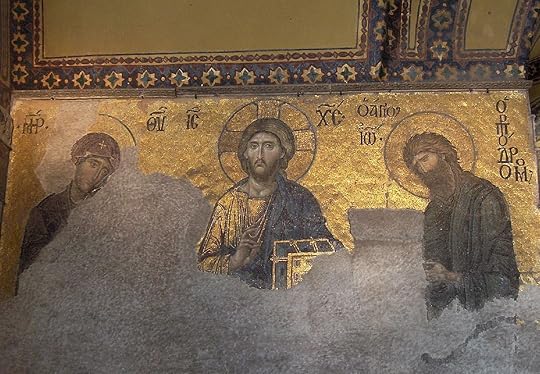
He's not here as a baptizer, but as the predecessor, the one who comes before. He is tortured, even as he points the way.
When Goebbels shows up, things turn nasty. A bomb explodes in the Pera Palace. Turkey remains neutral in World War II, but it's surrounded by action. Istanbul becomes a portal for Jews, a way to Palestine. King tells how basic, stupid bureaucracy stood in the way. Enter Angelo Roncalli, an apostolic delegate assigned to Turkey. Without letting his boss, Pope Pius XII, know what exactly he was up to, Roncalli cut through the red tape, saving thousands of Jewish lives. He would later become Pope John XXIII.
In the final five pages of the Epilogue, King shows off his writing chops. He takes us back to Istanbul - When the sky is bruise-blue, crowds of gulls and pigeons still bounce along the shoreline - and back to the day when the bomb went off in the Pera Palace. He names the people who were there, seemingly every culture, every religion, all engaged in some small task. If there was ever a capital of the world, he writes, it was Istanbul. Charles King has done an admirable. confident job of taking us there.
*Hey, I had to.
I have tried to read histories of Turkey before but I found myself mired in the minutiae of politics. Those books somehow missed what makes Turkey exotic to Western eyes and ears.
But Charles King can tell a story. Boy, can he tell a story.
He starts by taking us to Istanbul. Really. We are on the sea and the city, both ancient and new, emerges for our view. The minarets, the calls to prayer. A city at the junction of two continents.
Each chapter opens with a wonderful black and white photograph from the time. Very artistic. And then King follows with things - stuff - about a city and its people. Like how in the 1880s, over a quarter of Istanbul's population - mostly unmarried men - did not live in private homes but were accommodated in mosques, artisans' shops, and other group lodgings. Cocaine was the drug of choice in clubs and bars, easily concealed inside a woman's high heel. There were harems but they were not a world of 'supine odalisques, opium pipes and diaphanous gowns.' That image harkened back to the days of the sultan's court. A remnant from those earlier days were the black eunuchs who had to become maî·tre d's or museum guards when work in the imperial harem petered out.*
While Istanbul is an admixture of Muslims, Jews, Armenians, Greeks, Turks and Levantines, it is also a portal from West to East. So the Brits came, and the Americans. Goebbels came in his long ecru coat. Often they came to the Pera Palace of the title.
There you could hear jazz: not just a musical form but an ethical system. King takes us to the music of Roza Eskenasi, Hrant Kenkulian, and Seyyan. He makes you want to go youtubing, such are his descriptions of the sounds. Roza was a Jewish rebetiko singer, described here as a torch song for the urban gangster, the soundtrack of a world in which people overspent in poverty and sometimes killed the person they loved the most. You can find her here: http://www.youtube.com/watch?v=QxDfgm.... Hrant Kenkulian, blind and Armenian, was the greatest oudi player of his time, so beloved he was given the honorific Udi Hrant. The dude could play: http://www.youtube.com/watch?v=59_ZMQ.... Seyyan was a Muslim woman who sang Turkish Tango. Imagine that. Her songs were heartrending: The past is a wound in my heart/My fate is darker than my hair/The thing that makes me cry from time to time/Is this sad memory. Here: http://www.youtube.com/watch?v=9pLFkh....
I'm not supposed to quote from the book because it's an ARC, but, well, if you promise not to tell......King considers the music above, the different cultures of the musicians, and writes:
People always somehow manage to lead messier lives than nationalists would like. Artistic genius depends on that fact.
He tells the stories of two Turkish brothers, Neshui and Ahmet Ertegün, who began collecting obscure 78s, featuring black dance bands and jazz singers. You might remember Ahmet, who would follow the music to the U.S. and found Atlantic Records, a label that gave us Ray Charles, the Rolling Stones, Aretha Franklin and Led Zeppelin.
He takes us inside the Hagia Sofia, tells us its history and how the images were painted over, revived, painted over and revived again. When you look at the Deesis Image there, look at John the Baptist. He's the fella on the right:
He's not here as a baptizer, but as the predecessor, the one who comes before. He is tortured, even as he points the way.
When Goebbels shows up, things turn nasty. A bomb explodes in the Pera Palace. Turkey remains neutral in World War II, but it's surrounded by action. Istanbul becomes a portal for Jews, a way to Palestine. King tells how basic, stupid bureaucracy stood in the way. Enter Angelo Roncalli, an apostolic delegate assigned to Turkey. Without letting his boss, Pope Pius XII, know what exactly he was up to, Roncalli cut through the red tape, saving thousands of Jewish lives. He would later become Pope John XXIII.
In the final five pages of the Epilogue, King shows off his writing chops. He takes us back to Istanbul - When the sky is bruise-blue, crowds of gulls and pigeons still bounce along the shoreline - and back to the day when the bomb went off in the Pera Palace. He names the people who were there, seemingly every culture, every religion, all engaged in some small task. If there was ever a capital of the world, he writes, it was Istanbul. Charles King has done an admirable. confident job of taking us there.
*Hey, I had to.

December 28, 2014

A splendidly entertaining and illuminating social history of the inter-war years in Istanbul.
Istanbul, Constantinople, Byzantium. Names to conjure by. The city lies athwart two continents and one of the most famous seaways in the world. And like all much-desired places it has seen many comings and goings: the traders and entrepreneurs; the job seekers and refugees; the desperate and degenerate; the creative re-inventors; and some whose fate calls them to high adventure and great deeds.

Some arrive by sea, others on a fabled rail route that can take the traveler all the way from Calais or Paris to Istanbul, the end of Europe and gateway to the mysterious East. Perhaps, like Agatha Christie, you are a seasoned traveler, yet the thrill of the journey on the Orient Express can still leave one breathless: “I am going by it!" Christie wrote, "I am in it! I am actually in the blue coach with the simple legend outside: CALAIS-ISTANBUL.”
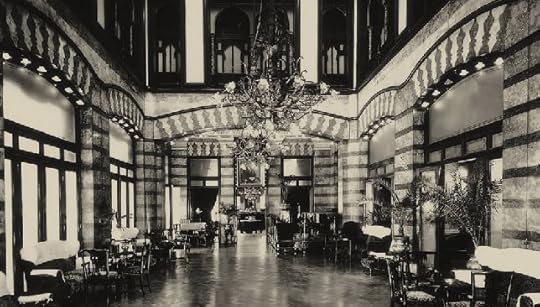
Like Christie, many travelers chose to stay at the Pera Palace Hotel, originally owned by Wagon-Lit, the Belgian firm that launched the Orient Express.
The Pera’s palm-filled court has seen dozens of notable guests: Mustafa Kemal went there to network with British officers in charge of the post WW1 occupation. So many spies once crowded its chairs that a polite sign in Turkish reminded the watchers to please give up their seats to the paying guests. Ernest Hemingway stayed there while reporting on one of the city's many refugee crises. Agatha Christie wrote Murder on the Orient Express in Room 411, though her fictional detective, Hercule Poirot, stayed at the rival Tokatlian.
When it’s time for a pick-me-up most head for the Orient Bar….You never know who you might meet there!
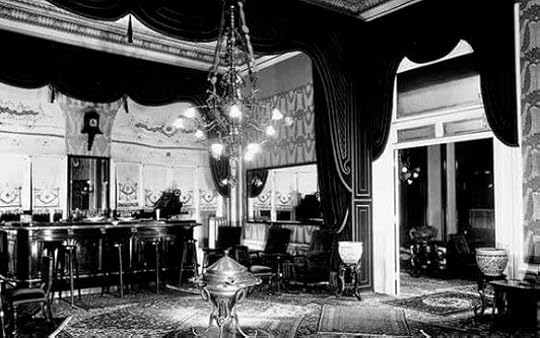
Turkish memoirist Ziya Bey sniffed that it was a place where “foreign officers and businessmen are feted by unscrupulous Levantine adventurers and drink and dance with fallen Russian princesses or with Greek and Armenian girls whose morals are, to say the least, as light as their flimsy gowns.”
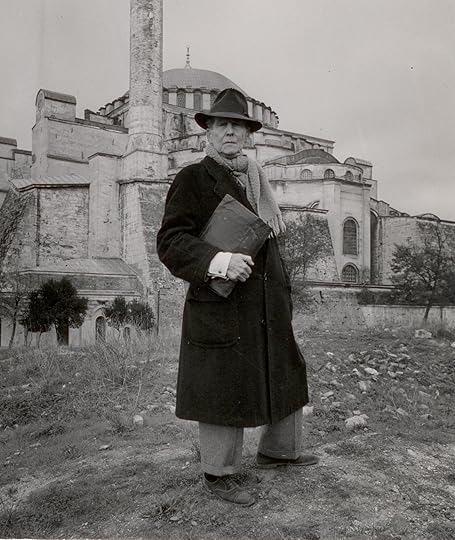
I would have been delighted to run into a fellow Bostonian, Thomas Whittemore, who from his suite at the Pera Palace headed the Russian relief effort in Istanbul after the Bolshevik Revolution. Whittemore “made his way through the transatlantic society of men usually referred to as aesthetes: fast-talking, witty, less well-read than well-informed, and confirmed bachelors in an age when everyone understood what that meant….”
Later thanks to his passion for Byzantine art and the connection he forged with Mustafa Kemal, Whittmore played a major role in restoring the mosaics at Hagia Sophia.
The decades saw many changes in both the hotel’s guest roster—and the list of owners. Prodromus Bodosakis-Athanasiadis bought the Pera Palace in 1919, only to have it confiscated by the Kemalist government in 1923. Unlike many, Bodosakis landed on his feet and went on to become a formidable industrialist in his new Greek homeland.
Misbah Muhayyeş, the cat-lover who bought the property in 1927, was a newcomer to Istanbul. Originally from Beirut, he was an early supporter of the Kemalists. His family ran a textile firm, which Muhayyeş turned to good use by providing uniforms to the nationalist army. When the Kemalists came to power, he was granted Turkish citizenship and the chance to buy an ‘abandoned’ hotel property.
Portraits of Bodosakis and Muhayyeş, the two proprietors who took the hotel from empire to republic, hang across from each other outside the Orient Bar—one the target of state policies, the other the roundabout beneficiary, and each clearly confident, in the moment he was captured on canvas or on film, that the city belonged to people like him.But Charles King is not one to get stuck in his hotel room.
Istanbul, and the hotel’s neighborhood of Beyoğlu, was a place full of the unexpected delights and contradictions. A map of the neighborhood in 1935 shows the many consulates, mosques, churches, synagogues—but also bars and jazz joints and dance clubs galore.
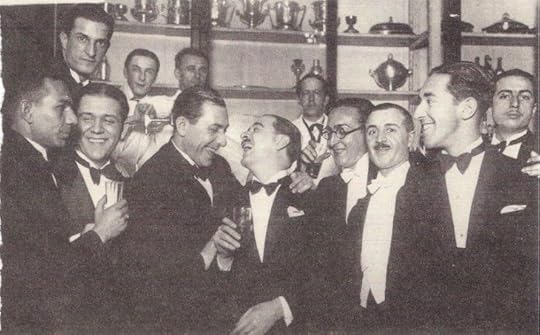
Among my favorite chapters are the two that tell the story of Istanbul’s nightclub and music scene, featuring such marvelous characters as an African American impresario, Frederick Bruce Thomas, a son of Mississippi slaves, who travelled through Europe, landed in Russia and as Fyodor Fyodorovich Thomas built a career as the maître d’ at one of Moscow’s most elegant eateries. Caught up in the Russian revolution, he decamped to Istanbul where he eventually inaugurated a new dancing and dinner club, the famed Maxim.
The chapter on the vibrant Turkish and Greek music scene is a tour de force.
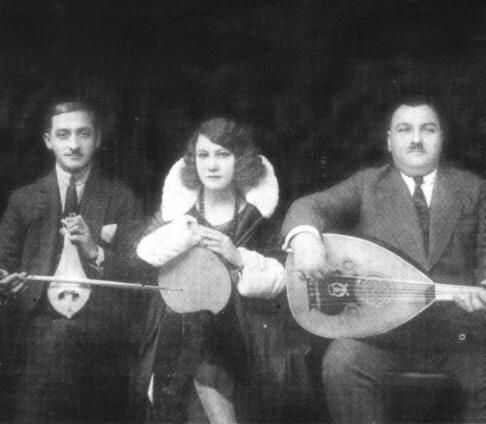
Roza Eskenazi was one among thousands of Istanbullu exiles. As a young widow she fled burnt-out Salonica to Athens and worked the cabarets. Rosa’s rebetico style became the voice of the Greek diaspora, adapting the musical scales and structure of Ottoman classical music to stirring balladry.
In Istanbul, a blind Armenian, Hrant Kenkulian, or Udi Hrant, revolutionized the playing of “an instrument that Turks, Arabs and Persians all think of as their own.” Here is a fragment of one of his brilliant improvisations or taksim
Thanks to the efforts of two Armenian brothers, Aram and Vahram Gesarian, much of this glorious music was captured on HMV records. The Turks also made their contribution to the world of music. The Ertegün brothers, sons of a Turkish diplomat posted to America, found the new land very much to their modern tastes and stayed on to build Atlantic Records. The rest is popular music legend writ large: Motown sound, rhythm and blues, and rock greats from Ray Charles to the Rolling Stones, Aretha Franklin and Led Zepplen were all launched by the Ertegüns.
Like the Duke of Wellington, Charles King endeavors “to get over heavy ground as lightly as possible.” His analysis of Mustafa Kemal’s reign is superbly balanced: forced modernization/Westernization had both pluses and minuses. King does not gloss over the dictatorial quality of Atatürk’s reign, nor the oddities of his personal life. And always, King lets us see the evolving Turkish nation through the eyes of an extraordinary array of characters. Such is his gift for making flawed humans come alive that I even found myself caring for Leon Trotsky, sunk in paranoia, an unwelcome guest of the Kemal regime, exiled on an island in the Bosporus with only a Greek fisherman for company.
The last chapters cover World War II and tell the story of Istanbul’s role as a transit point for Jews desperate to find safe havens from the Nazi terrors. The book ends with the riots of 1955, the September events that were the last straw for many of Istanbul’s minorities. Each year marked a further retreat and “Turkey as a whole became more Muslim, more Turkish, more homogeneous, and more rural – because of the flight of non-Muslim minorities from the cities – than it had ever been.”
But Istanbul is still wonderful, still mysterious. The city wears her history like a veiled dancer. Under Charles King’s skillful direction, the dancer unwinds some of her many-colored veils to the sound of an oud taksim.
And if you ever get a chance to go to Istanbul, grab it, and do stay at the Pera Palace. After a decades’ long decline the grand hotel was bought by a Dubai conglomerate and underwent a $30 million renovation. Even the seedy Pera neighborhood is looking up, they say. But I’m glad I stayed there when everything still had that fading fin de siècle quality and I could sit in the worn velvet chairs in the Orient Bar and wonder if the dark stranger at the next table was, perhaps, a spy….

September 25, 2016
Charles King has written an engaging popular history of Istanbul, a city at the crossroads between the East and the West, during the interwar years until the end of World War II. Istanbul was a great multi-ethnic city in the Ottoman Empire with a location at the entrance to the Black Sea, important as a port city, a religious center, and a military location. When the Turks were defeated in World War I, Istanbul was occupied by the Allied troops. Greece tried to take over parts of the Ottoman Empire, but Mustafa Kemal (Ataturk) and his forces drove the Greeks out. He established an authoritarian government in Ankara, and the Allies left Istanbul. The city became more modern and secular.
Many refugees passed through Istanbul, such as the White Russians escaping the Bolshevik Revolution. Later, Jews moved through Istanbul on their way to Palestine as they were fleeing the Holocaust. Fires devastated many neighborhoods in Istanbul, changing the ethnic character of the city. Many people of non-Turkish descent were forced out of the country so the percentage of ethnic Turks increased. The chapters about the refugees, some of them stateless and without resources, were very troubling.
The author uses the Pera Palace Hotel, the surrounding neighborhood, and its famous guests to show the social changes in the city. More women joined the workforce after World War I. The book introduces the reader to jazz singers, prostitutes, writers, reformers, beauty queens, photographers, religious leaders, and politicians. Istanbul was especially famous for espionage and the great number of spies. There's a bit of dry humor in some of the stories. There are also moments of awe, such as the descriptions of the sun lighting up the mosaics in the renovated Hagia Sophia. I enjoyed Charles King's interesting book about the transformation of Istanbul.
Many refugees passed through Istanbul, such as the White Russians escaping the Bolshevik Revolution. Later, Jews moved through Istanbul on their way to Palestine as they were fleeing the Holocaust. Fires devastated many neighborhoods in Istanbul, changing the ethnic character of the city. Many people of non-Turkish descent were forced out of the country so the percentage of ethnic Turks increased. The chapters about the refugees, some of them stateless and without resources, were very troubling.
The author uses the Pera Palace Hotel, the surrounding neighborhood, and its famous guests to show the social changes in the city. More women joined the workforce after World War I. The book introduces the reader to jazz singers, prostitutes, writers, reformers, beauty queens, photographers, religious leaders, and politicians. Istanbul was especially famous for espionage and the great number of spies. There's a bit of dry humor in some of the stories. There are also moments of awe, such as the descriptions of the sun lighting up the mosaics in the renovated Hagia Sophia. I enjoyed Charles King's interesting book about the transformation of Istanbul.

July 9, 2020
3.5 ☆ an Impressionist portrait of the young Turkey
The subtitle The Birth of Modern Istanbul described King's book more accurately than the title Midnight at the Pera Palace. Historical vignettes were loosely organized by subject and chronology from the late 1800s to the 1950s.
This coincided with the creation and subsequent decline of the Pera Palace Hotel in the Beyoglu neighborhood of Istanbul. When the luxurious Les Wagon Lits' Orient Express train line became the first to span the European continent, opulent accommodations at the various destinations were a crucial part of the business strategy. From the beginning, the Pera Palace targeted non-Turkish travellers. This preference by foreigners persisted, which is why it became the choice location for decades for spies from multiple nations.
In the late 1800s, the Ottoman Empire bore the moniker, "the sick man of Europe," as it was fraying at both the edges as well as from within due to civic agitation. From this position of weakness, Sultan Mehmed V declared jihad and the empire got embroiled in WWI. This marked the beginning of the end of a rule that had lasted for more than 6 centuries. Its capital, Istanbul, was occupied by the Allied (in-name-only) forces as international powers carved up the once expansive empire, which led to the Treaty of Sevres in 1920.
If geography is destiny, then it's no surprise that Turkey's trans-continental location would leave an imprint upon the country's history, demographics, and public policies. In 1922, Mustafa Kemal emerged as the new leader of the Republic of Turkey, created from the Treaty of Lausanne. As the Kemalists shepherded their mostly rural nation into modernity, the changes were truly dramatic: switching Arabic script for a Western alphabet, dropping the measurement of time and dates centered on Mecca to match Europe's calendar, and the novel adoption of family surnames. When the 1934 surname law passed, Mustafa Kemal was christened Ataturk for "Father of Turkey." In 2012, I had visited Ataturk's mausoleum in Ankara, the current capital, and his tomb was still cloaked in ceremony and reverential grief.
When Turkey wasn't monitoring German military campaigns, they focused upon their rivalries with Greece on a cultural basis and with Russia for its ideological philosophies as both countries had overturned rule by royalty. The new republic wanted to be a secular state, but also one that was homogenously Muslim Turks. This led to a bloodless genocide in the 1920s as ethnic Greeks were expelled in "The Great Exchange." This was quite traumatic to the 1+ million ethnic Greek Turks but it beat the bloodier and deadly alternative, which is what happened to 1+ million Christian Turks of Armenian descent in the 1910s. But as much as the new republic wanted homogeneity, Istanbul's strategic location made that impossible. During the Bolshevik revolution, white Russian emigres had flooded into Istanbul.
Under the Ottoman Empire, the Sultan was also the caliphate, hence the jihad that had cemented the empire's demise. The young republic's desire to be a secular state was evident with Hagia Sofia's fate. Also known as the Church of Holy Wisdom, the magnificent cathedral was erected in the 6th century. When the Turks conquered Constantinople in 1453, Mehmed II converted it to a mosque. Its luminous mosaics of Christian religious figures were covered and the center of worship was physically oriented as much as possible toward Mecca. In 1934, Ataturk secularized the Hagia Sofia as a museum, a monument of Byzantine architecture, and its previous Christian art was partially restored. In July 2020, Turkish president Erdogan decreed that the Hagia Sofia would once again be a mosque. Wow - the change in symbolism!
The most notable aspect of the 1930s-40s was the delicate walk Turkey attempted on the global diplomatic tightrope. It wanted to maintain neutrality during WWII, even as it watched its former holdings and then neighbors fall to the German military. But it still clung tenaciously to its goal of being a homogenous Muslim state, and it feared that any immigrant-in-transit would instead remain in Turkey. Turkey's handling of the European Jewish refugees situation thus became a surreal bureaucratic maze few could hope to navigate successfully. But about one-fourth of all Jewish refugees bound for Palestine, part of the former Ottoman empire's Levantine territory, did transit through Turkey. It would be hard not to draw comparisons to the pre-Covid19 pandemic flow of Syrian and other refugees.
Overall, Midnight at the Pera Palace was interesting but not riveting. Given Istanbul's crossroads location, King also described immigration flows and their cultural impacts on gender roles and the arts and entertainment. This included the hope that a Miss Turkey would eventually trounce the Miss Greece in European beauty pageants. I heard too much for my tastes about Leon Trotsky, who had lived in exile in Turkey. I had listened to the audiobook as it was the only available format. The very loose chronological order contributed to some minor confusion as did the unfamiliar names. I retain information better when I can see it in print. Otherwise, the narration was clear and with deadpan delivery, especially for some of the grimmer elements.
The subtitle The Birth of Modern Istanbul described King's book more accurately than the title Midnight at the Pera Palace. Historical vignettes were loosely organized by subject and chronology from the late 1800s to the 1950s.
This coincided with the creation and subsequent decline of the Pera Palace Hotel in the Beyoglu neighborhood of Istanbul. When the luxurious Les Wagon Lits' Orient Express train line became the first to span the European continent, opulent accommodations at the various destinations were a crucial part of the business strategy. From the beginning, the Pera Palace targeted non-Turkish travellers. This preference by foreigners persisted, which is why it became the choice location for decades for spies from multiple nations.
In the late 1800s, the Ottoman Empire bore the moniker, "the sick man of Europe," as it was fraying at both the edges as well as from within due to civic agitation. From this position of weakness, Sultan Mehmed V declared jihad and the empire got embroiled in WWI. This marked the beginning of the end of a rule that had lasted for more than 6 centuries. Its capital, Istanbul, was occupied by the Allied (in-name-only) forces as international powers carved up the once expansive empire, which led to the Treaty of Sevres in 1920.
During the inter war years, [Istanbul] whose very geography united Europe and Asia became the world's greatest experiment in purposeful reinvention in the western mode. In the process, the former Ottoman capital came to reflect both the best and the worst the West had to offer: its optimism, its obsessive human ideology, human rights, overbearing state, the desire to escape the past, and the drive to erase it all together.
If geography is destiny, then it's no surprise that Turkey's trans-continental location would leave an imprint upon the country's history, demographics, and public policies. In 1922, Mustafa Kemal emerged as the new leader of the Republic of Turkey, created from the Treaty of Lausanne. As the Kemalists shepherded their mostly rural nation into modernity, the changes were truly dramatic: switching Arabic script for a Western alphabet, dropping the measurement of time and dates centered on Mecca to match Europe's calendar, and the novel adoption of family surnames. When the 1934 surname law passed, Mustafa Kemal was christened Ataturk for "Father of Turkey." In 2012, I had visited Ataturk's mausoleum in Ankara, the current capital, and his tomb was still cloaked in ceremony and reverential grief.
When Turkey wasn't monitoring German military campaigns, they focused upon their rivalries with Greece on a cultural basis and with Russia for its ideological philosophies as both countries had overturned rule by royalty. The new republic wanted to be a secular state, but also one that was homogenously Muslim Turks. This led to a bloodless genocide in the 1920s as ethnic Greeks were expelled in "The Great Exchange." This was quite traumatic to the 1+ million ethnic Greek Turks but it beat the bloodier and deadly alternative, which is what happened to 1+ million Christian Turks of Armenian descent in the 1910s. But as much as the new republic wanted homogeneity, Istanbul's strategic location made that impossible. During the Bolshevik revolution, white Russian emigres had flooded into Istanbul.
Under the Ottoman Empire, the Sultan was also the caliphate, hence the jihad that had cemented the empire's demise. The young republic's desire to be a secular state was evident with Hagia Sofia's fate. Also known as the Church of Holy Wisdom, the magnificent cathedral was erected in the 6th century. When the Turks conquered Constantinople in 1453, Mehmed II converted it to a mosque. Its luminous mosaics of Christian religious figures were covered and the center of worship was physically oriented as much as possible toward Mecca. In 1934, Ataturk secularized the Hagia Sofia as a museum, a monument of Byzantine architecture, and its previous Christian art was partially restored. In July 2020, Turkish president Erdogan decreed that the Hagia Sofia would once again be a mosque. Wow - the change in symbolism!
The most notable aspect of the 1930s-40s was the delicate walk Turkey attempted on the global diplomatic tightrope. It wanted to maintain neutrality during WWII, even as it watched its former holdings and then neighbors fall to the German military. But it still clung tenaciously to its goal of being a homogenous Muslim state, and it feared that any immigrant-in-transit would instead remain in Turkey. Turkey's handling of the European Jewish refugees situation thus became a surreal bureaucratic maze few could hope to navigate successfully. But about one-fourth of all Jewish refugees bound for Palestine, part of the former Ottoman empire's Levantine territory, did transit through Turkey. It would be hard not to draw comparisons to the pre-Covid19 pandemic flow of Syrian and other refugees.
Overall, Midnight at the Pera Palace was interesting but not riveting. Given Istanbul's crossroads location, King also described immigration flows and their cultural impacts on gender roles and the arts and entertainment. This included the hope that a Miss Turkey would eventually trounce the Miss Greece in European beauty pageants. I heard too much for my tastes about Leon Trotsky, who had lived in exile in Turkey. I had listened to the audiobook as it was the only available format. The very loose chronological order contributed to some minor confusion as did the unfamiliar names. I retain information better when I can see it in print. Otherwise, the narration was clear and with deadpan delivery, especially for some of the grimmer elements.

February 7, 2017
Herşeyden önce, bu kitap lanse edildiği gibi bir roman değil. Bir tarih kitabı. Nasıl ki kahvesini koyu içmek istemeyenler bir miktar süt veya bir küp şekerle içimini yumuşatmak ister, bu kitap da roman unsurları eklenerek aynı bu şekilde yumuşatılmış.
Bence Pera Palas unsuru kitabı biraz romantize etmeye yarıyor. Evet Pera Palas merkezde ama konu Pera Palas değil. Tersine çok daha detaylı, çok daha kapsamlı. Binlerce kez daha dramatik. Ve dürüst. Bence en önemlisi bu, dürüst. Hatta kitabı okurken bunu neden bir Türk yazar özeleştiri yaparak yazmadı diye merak ettim. Neticede onlarca kitap ve makale kanıtı ile devasa bir kaynakça bölümü var. Bu kaynaklar orada duruyor. Sadece uzanıp almak ve bir araya getirmek gerek.
Dürüst derken Osmanlı İmparatorluğu'nun son dönemlerinden Mustafa Kemal Atatürk'ün ülkeyi modernleştirme çabalarında ölçülü dikta rejimine, Halide Edip'le olan ilişkisine ve gücün verdiği kudretle yol arkadaşlarını bir bir kendisinden uzaklaştırmasına kadar Türk insanının özel bir çaba sarfetmeden öğrenemeyeceği birçok detay var kitapta.
Bununla birlikte Türk Hükümetleri'nin ülkeyi peyderpey cahilleştirme çabası, çeşitli kılıflarla ardı ardına gelen insanlık ayıpları (Struma, Varlık Vergisi, 6-7 Eylül Olayları), milliyetçilik kisvesi altında İstanbul başta olmak üzere ülkeyi bilimi, sanatı, ticareti öğrendikleri gayrimüslimlerden temizleyerek hıyanet içerisinde başkalarına peşkeş çektikleri pek çok detay gizli satır aralarında. Günümüzle karşılaştırdığımda, ülkemin bir adım ilerlemediğini, gelişimi yapılan yol ve binalara endeksleyip düşünsel yönde kendine ve milletine hiç yatırım yapmadığını, dolayısıyla ani bir kıvılcım ile tarihte yaşanan tüm trajedilerin tekrarlanacağını bir kez daha anladım.
Son olarak Kitap Yayınları'nın anlayamadığım kare kitap sevdaları. Kitap Yayınları: orijinal olacağız diye çabalamayın, kütüphaneye sığdıramıyoruz kitaplarınızı.
Herkese keyifli okumalar.
Bence Pera Palas unsuru kitabı biraz romantize etmeye yarıyor. Evet Pera Palas merkezde ama konu Pera Palas değil. Tersine çok daha detaylı, çok daha kapsamlı. Binlerce kez daha dramatik. Ve dürüst. Bence en önemlisi bu, dürüst. Hatta kitabı okurken bunu neden bir Türk yazar özeleştiri yaparak yazmadı diye merak ettim. Neticede onlarca kitap ve makale kanıtı ile devasa bir kaynakça bölümü var. Bu kaynaklar orada duruyor. Sadece uzanıp almak ve bir araya getirmek gerek.
Dürüst derken Osmanlı İmparatorluğu'nun son dönemlerinden Mustafa Kemal Atatürk'ün ülkeyi modernleştirme çabalarında ölçülü dikta rejimine, Halide Edip'le olan ilişkisine ve gücün verdiği kudretle yol arkadaşlarını bir bir kendisinden uzaklaştırmasına kadar Türk insanının özel bir çaba sarfetmeden öğrenemeyeceği birçok detay var kitapta.
Bununla birlikte Türk Hükümetleri'nin ülkeyi peyderpey cahilleştirme çabası, çeşitli kılıflarla ardı ardına gelen insanlık ayıpları (Struma, Varlık Vergisi, 6-7 Eylül Olayları), milliyetçilik kisvesi altında İstanbul başta olmak üzere ülkeyi bilimi, sanatı, ticareti öğrendikleri gayrimüslimlerden temizleyerek hıyanet içerisinde başkalarına peşkeş çektikleri pek çok detay gizli satır aralarında. Günümüzle karşılaştırdığımda, ülkemin bir adım ilerlemediğini, gelişimi yapılan yol ve binalara endeksleyip düşünsel yönde kendine ve milletine hiç yatırım yapmadığını, dolayısıyla ani bir kıvılcım ile tarihte yaşanan tüm trajedilerin tekrarlanacağını bir kez daha anladım.
Son olarak Kitap Yayınları'nın anlayamadığım kare kitap sevdaları. Kitap Yayınları: orijinal olacağız diye çabalamayın, kütüphaneye sığdıramıyoruz kitaplarınızı.
Herkese keyifli okumalar.

November 25, 2019
From the first time I visited Istanbul I decided that this was my favorite city in the world. It is such an otherworldly grand and beautiful place that at first glimpse one can scarcely believe it exists. Any confusion as to why The City has been so prized and fought over throughout history can be dispelled by a summer afternoon ferrying across the Bosphorus and taking in an imperial skyline that charts the course of a whole millennium. Istanbul has experienced many ups and downs in its long history. To this day though it remains one of the world's invincibly attractive places.
This book made me want to book the first flight back there. It is a history of how Istanbul became modern at the death of the imperial age and the birth of the Republican one. There are snapshots of great lives that intersected with the city like Halide Edip and even Leon Trotsky. It is complex to consider how the city was dying for some people, mainly its old Armenians and Greeks, while at the same time it was bursting to life for an entirely new class of ethnic Turks from Anatolia. On the level of individual lives this might be tragedy or triumph, but on the scale of grand history it is simply another episode on the stones of an ancient city that had seen much the same before.
This book looks at the new trends, new lives and new episodes that were being birthed during this era of change. It casts few judgements, though the topics are all ones that continue to arouse fierce passions. Each subject is treated in vignettes that range to about twenty pages or so. The old world really died, including its anachronisms like the eunuchs of the last sultan who had to try and make lives for themselves in modern Turkey after the death of the empire. There is not really any grand theory or idea articulated in the book, it's just an homage to this old place. I enjoyed it and I think anyone who is similarly fascinated by Istanbul would feel the same. Regarding the question of favorite cities today; I would say that mine are New York, Jerusalem and Istanbul, in no particular order. If I cross paths with a new contender in my lifetime I'll consider myself very fortunate.
This book made me want to book the first flight back there. It is a history of how Istanbul became modern at the death of the imperial age and the birth of the Republican one. There are snapshots of great lives that intersected with the city like Halide Edip and even Leon Trotsky. It is complex to consider how the city was dying for some people, mainly its old Armenians and Greeks, while at the same time it was bursting to life for an entirely new class of ethnic Turks from Anatolia. On the level of individual lives this might be tragedy or triumph, but on the scale of grand history it is simply another episode on the stones of an ancient city that had seen much the same before.
This book looks at the new trends, new lives and new episodes that were being birthed during this era of change. It casts few judgements, though the topics are all ones that continue to arouse fierce passions. Each subject is treated in vignettes that range to about twenty pages or so. The old world really died, including its anachronisms like the eunuchs of the last sultan who had to try and make lives for themselves in modern Turkey after the death of the empire. There is not really any grand theory or idea articulated in the book, it's just an homage to this old place. I enjoyed it and I think anyone who is similarly fascinated by Istanbul would feel the same. Regarding the question of favorite cities today; I would say that mine are New York, Jerusalem and Istanbul, in no particular order. If I cross paths with a new contender in my lifetime I'll consider myself very fortunate.

December 30, 2014
The Ottoman Empire has always fascinated me and especially its demise after over 600 years of existence. This history gives us a look at what happened after the Empire's dissolution, especially in the city of Istanbul (Constantinople). The Pera Palace Hotel of the title was the center of intrigue.....spies, White Russian refugees, Greeks, and many others juggling for a position in the newly created country of Turkey. The capital was moved to Ankara and Istanbul morphed into something between the old world and the newer progressive stance that was to be Turkey's policy. We see such luminaries as Ernest Hemingway, Leon Trotsky, and the future Pope John XXIII as Istanbul became a crossroads of activities, both positive and nefarious. The author also touches upon the societal and religious changes as Turkey and Istanbul moved toward a more European environment.
A well done book, indeed....I would recommend it.
A well done book, indeed....I would recommend it.
April 23, 2022
'When the Ottoman Empire collapsed, so many spies mingled in the lobby of Istanbul's Pera Palace Hotel that the manager put up a sign asking them to relinquish seats to paying guests. As the multi-ethnic empire became a Turkish republic, Russian emigres sold family heirlooms, an African American impresario founded a jazz club and Miss Turkey became the first Muslim beauty queen. Turkey's president Kemal Ataturk, Muslim feminist Halide Edip, the exiled Leon Trotsky and the future Pope John XXIII fought for new visions of human freedom. During the Second World War, German intellectuals ran from the Nazis while Jewish activists spirited refugees out of occupied Europe. This pioneering portrait of urban reinvention re-creates an era when an ancient city became a global crossroads-a moment when Europe's closest Muslim metropolis became its vital port of refuge.'
I came close to giving this book five stars, maybe I should have, it is a splendid - and wonderfully written - history of the end of the Ottoman Empire and the birth of the modern state of Turkey. I cannot begin to describe the rich, fascinating insights this book provides. It is as wonderfully evocative as Philip Mansell's wonderful 'Constantinople: City of the World's Desire' though of course it deals with a period - the period between the end of WWI and the start of WWII - in Istanbul's history that is outside the remit of Mr. Mansell's book. But it is a wonder and a delight I cannot stress how good this book is. Please if you have any interest in, or are going to visit Istanbul, read this book.
I came close to giving this book five stars, maybe I should have, it is a splendid - and wonderfully written - history of the end of the Ottoman Empire and the birth of the modern state of Turkey. I cannot begin to describe the rich, fascinating insights this book provides. It is as wonderfully evocative as Philip Mansell's wonderful 'Constantinople: City of the World's Desire' though of course it deals with a period - the period between the end of WWI and the start of WWII - in Istanbul's history that is outside the remit of Mr. Mansell's book. But it is a wonder and a delight I cannot stress how good this book is. Please if you have any interest in, or are going to visit Istanbul, read this book.

March 10, 2015
It's I guess a pretty decent history of Turkey from ~1898-1950, and there are some great little tidbits in there about the first Turkish beauty queen, retired eunuchs, and other empire-to-nationalism desiderata.
But it's one thing to talk about a largely international city, and another to just ignore non-English sources. It's really frustrating to read about how all these spy networks, refugees, and other bits of the world come to Istanbul, but have the actual city they live in and the laws they work around as nothing as a backdrop. This was especially obvious in the final third, where the book focuses on the Holocaust and refugees, but only mentions Turkish government actions (and inactions) tangentially, when they interacted the protagonist.
It works in fiction, since we care about the protagonist and all. But when the book is nominally a history of a city, it's a bit silly to make the city simply background for people around for 40-50 pages. It makes what would otherwise be a good history into Paris, Je t'Aime.
So between starting out with "Anatolian carpet" analogies and....that, it's not great. There's some good tidbits in there, but that's no reason to go through 380+ pages. Which is a bummer, since a lot of good people worked on this book.
But it's one thing to talk about a largely international city, and another to just ignore non-English sources. It's really frustrating to read about how all these spy networks, refugees, and other bits of the world come to Istanbul, but have the actual city they live in and the laws they work around as nothing as a backdrop. This was especially obvious in the final third, where the book focuses on the Holocaust and refugees, but only mentions Turkish government actions (and inactions) tangentially, when they interacted the protagonist.
It works in fiction, since we care about the protagonist and all. But when the book is nominally a history of a city, it's a bit silly to make the city simply background for people around for 40-50 pages. It makes what would otherwise be a good history into Paris, Je t'Aime.
So between starting out with "Anatolian carpet" analogies and....that, it's not great. There's some good tidbits in there, but that's no reason to go through 380+ pages. Which is a bummer, since a lot of good people worked on this book.
October 22, 2016
I found this book about modern Istanbul very interesting, but some sections were hard for me to take in. The book was rather more wide-ranging than I'd expected from the title. I was hoping for a history of the Pera Palace Hotel and the people who met there over the years, but, instead, this is a more general account and the hotel occupies a relatively small space.
There is plenty of fascinating material, ranging from accounts of the White Russians in Istanbul after the revolution to the controversy over a beauty contest. Particularly moving is the section late in the book about the Jewish exiles from Nazi countries who landed up in Istanbul. On a lighter note, there are some great descriptions of Turkish music and literature. However, I found some sections, particularly the long accounts of diplomatic negotiations, difficult to understand. (Doubtless my own failing, as I often struggle with history books.) I would like to watch a TV or film documentary about Istanbul now, to help me visualise it better.
There is plenty of fascinating material, ranging from accounts of the White Russians in Istanbul after the revolution to the controversy over a beauty contest. Particularly moving is the section late in the book about the Jewish exiles from Nazi countries who landed up in Istanbul. On a lighter note, there are some great descriptions of Turkish music and literature. However, I found some sections, particularly the long accounts of diplomatic negotiations, difficult to understand. (Doubtless my own failing, as I often struggle with history books.) I would like to watch a TV or film documentary about Istanbul now, to help me visualise it better.
February 9, 2024
Ok, I'm not going to lie...I started reading this book because I am disgustingly obsessed with the Netflix show Midnight at the Pera Palace (a fictionalized Turkish series very loosely based off the historical information presented in this book). I love and watch it so often that any day now I'm going to get an email from Netflix asking me if I'm okay, like that one girl who watched that Princess movie a million times and they had to check in on her. It owns my whole ass.
Midnight at the Pera Palace: The Birth of Modern Istanbul has a very interesting core idea: tracing the history of Turkey by focusing on a hotel in Istanbul called the Pera Palace in Taksim (which I've been to!) In theory, King uses the Pera Palace as a touchstone to discuss the innate diversity and dynamism that has always been definitional of the Ottoman Empire, later the Turkish Republic. He argues the Pera Palace evolved along with Turkey in the 20th century, and the hotel is a microcosm of its larger social context. This idea itself is fascinating and unique for a historical study. However, the execution left a lot to be desired. While the target audience seems to be the general layman reader, King often used confusing or mixed terminology when discussing critical events in Turkish history. For example, he briefly and superficially delves into the Young Turks, yet sometimes calls them the Unionists without ever explicitly relating the two. For someone who has a solid understanding of Turkish history, this would be more understandable, but the target reader of this book would not know enough to comfortably use those terms interchangeably.
In addition to brushing over critical movements and groups, the study awkwardly sidesteps questions of the Armenian Genocide (1915-23) and other pogroms (against Bulgarians, Greeks etc), to the point that it became painfully obvious, uncomfortable, and frustrating. In his vague and hurried style, he half-addresses the genocide only when it can literally not be avoided. Mention is made of how there are no longer a large number of Armenians in Anatolia after they were 'pushed out', and how many Armenians were 'cast from their homes.' By whom were they pushed out? How? How did a historical study on the Ottoman Empire/Turkey talk about the 20th century without discussing the Armenian Genocide? How can a historian discuss Trotsky going fishing at length, but throws out mention of the genocide in a couple sentences, and only as an afterthought? My personal theory is that, due to modern Turkey's denial of the genocide and its current assertion that Armenians were killed by roaming bands of Kurds, King did not want to get on the wrong side of Turkish favor. As a result, he fails as a historian to look at the evidence and assess accordingly.
I found the structure of King's study to be very odd and discontinuous to its ultimate detriment. The historian often drifts away not only from the Pera Palace, but from Turkey in general (which is not very promising for a book about Turkey). Instead, he keeps referring back to Eastern Europe and Russia, in particular. It became so obvious that at one point I googled Charles King to see what his specialization was as a historian, only to discover that he does in fact have a Masters in Russian and Eastern European Studies, and still writes intensely on those areas today. Whereas a chapter called "Beyond the Veil", predominantly focused on Turkish (Muslim and non-Muslim) women's position in the new Republic, was only 18 pages (most of which unfortunately focused on biographies of different women instead of a more generalized social and legal assessment), the chapter on Leon Trotsky was 20 pages, and often had nothing to do with Turkey at all. When he does focus on Turkey, the book is riveting, but it's brought down by the fact that King almost always glosses over fascinating social and legal changes by briefly mentioning them and then quickly moving on in a directionless and roundabout manner. For example, in the aforementioned chapter about women, he brings up the fact that window screens, which were used to keep Muslim women away from view in houses during the Ottoman period, were discouraged (banned? regulated? I don't know - King never clarifies because it was literally only one sentence!) in the republic as a result of a national hygiene law to bring in light and fresh air into stuffy housing. This would have been a very insightful place to bring up Mustafa Kemal's progressive views towards women in society and how he used various channels (often using roundabout indirect legislation - like sanitation laws) to increase their presence in public life, but King races forward to only give biographies of a few select women (albeit they were badasses, like Halide Edip). Giving rambling biographies of random people, instead of giving social and legal overviews was a staple of King's approach, to the extent that it became annoyingly predictable. The pattern is this: a couple paragraph overview of a topic in Istanbul, and then extremely long biographical information about specific people. Often the people he focused on were Europeans/Americans, which only affirmed my belief that his speciality was not Euroasia/the Middle East at all.
I feel like Charles King really wanted to write a book on Russia and its international relations in the 20th century, but was forced by his editor to return to Turkey. I often wondered if he had to background to really give any in-depth thoughts on Turkey at all, due to the fact that he has few Turkish language sources in his bibliography and his viewpoint is extremely European-focused. The study even sometimes forgets about the Pera Palace itself, and throws mention of it here and there as a kind of afterthought in the editing process. I wish this study had been written by someone who had more savvy in both the time period and the country. This review is a little harsher than I foresaw when I began to write it, but I didn't realize how much the aforementioned points were grating me until I finished. I don't regret reading Midnight at the Pera Palace, but I wish it was more organized, less Euro-focused/sourced, and a little more historically situated.
The show, however, is bomb, and has my eternal loyalty and devotion. Season 2 on February 29th :D !
Midnight at the Pera Palace: The Birth of Modern Istanbul has a very interesting core idea: tracing the history of Turkey by focusing on a hotel in Istanbul called the Pera Palace in Taksim (which I've been to!) In theory, King uses the Pera Palace as a touchstone to discuss the innate diversity and dynamism that has always been definitional of the Ottoman Empire, later the Turkish Republic. He argues the Pera Palace evolved along with Turkey in the 20th century, and the hotel is a microcosm of its larger social context. This idea itself is fascinating and unique for a historical study. However, the execution left a lot to be desired. While the target audience seems to be the general layman reader, King often used confusing or mixed terminology when discussing critical events in Turkish history. For example, he briefly and superficially delves into the Young Turks, yet sometimes calls them the Unionists without ever explicitly relating the two. For someone who has a solid understanding of Turkish history, this would be more understandable, but the target reader of this book would not know enough to comfortably use those terms interchangeably.
In addition to brushing over critical movements and groups, the study awkwardly sidesteps questions of the Armenian Genocide (1915-23) and other pogroms (against Bulgarians, Greeks etc), to the point that it became painfully obvious, uncomfortable, and frustrating. In his vague and hurried style, he half-addresses the genocide only when it can literally not be avoided. Mention is made of how there are no longer a large number of Armenians in Anatolia after they were 'pushed out', and how many Armenians were 'cast from their homes.' By whom were they pushed out? How? How did a historical study on the Ottoman Empire/Turkey talk about the 20th century without discussing the Armenian Genocide? How can a historian discuss Trotsky going fishing at length, but throws out mention of the genocide in a couple sentences, and only as an afterthought? My personal theory is that, due to modern Turkey's denial of the genocide and its current assertion that Armenians were killed by roaming bands of Kurds, King did not want to get on the wrong side of Turkish favor. As a result, he fails as a historian to look at the evidence and assess accordingly.
I found the structure of King's study to be very odd and discontinuous to its ultimate detriment. The historian often drifts away not only from the Pera Palace, but from Turkey in general (which is not very promising for a book about Turkey). Instead, he keeps referring back to Eastern Europe and Russia, in particular. It became so obvious that at one point I googled Charles King to see what his specialization was as a historian, only to discover that he does in fact have a Masters in Russian and Eastern European Studies, and still writes intensely on those areas today. Whereas a chapter called "Beyond the Veil", predominantly focused on Turkish (Muslim and non-Muslim) women's position in the new Republic, was only 18 pages (most of which unfortunately focused on biographies of different women instead of a more generalized social and legal assessment), the chapter on Leon Trotsky was 20 pages, and often had nothing to do with Turkey at all. When he does focus on Turkey, the book is riveting, but it's brought down by the fact that King almost always glosses over fascinating social and legal changes by briefly mentioning them and then quickly moving on in a directionless and roundabout manner. For example, in the aforementioned chapter about women, he brings up the fact that window screens, which were used to keep Muslim women away from view in houses during the Ottoman period, were discouraged (banned? regulated? I don't know - King never clarifies because it was literally only one sentence!) in the republic as a result of a national hygiene law to bring in light and fresh air into stuffy housing. This would have been a very insightful place to bring up Mustafa Kemal's progressive views towards women in society and how he used various channels (often using roundabout indirect legislation - like sanitation laws) to increase their presence in public life, but King races forward to only give biographies of a few select women (albeit they were badasses, like Halide Edip). Giving rambling biographies of random people, instead of giving social and legal overviews was a staple of King's approach, to the extent that it became annoyingly predictable. The pattern is this: a couple paragraph overview of a topic in Istanbul, and then extremely long biographical information about specific people. Often the people he focused on were Europeans/Americans, which only affirmed my belief that his speciality was not Euroasia/the Middle East at all.
I feel like Charles King really wanted to write a book on Russia and its international relations in the 20th century, but was forced by his editor to return to Turkey. I often wondered if he had to background to really give any in-depth thoughts on Turkey at all, due to the fact that he has few Turkish language sources in his bibliography and his viewpoint is extremely European-focused. The study even sometimes forgets about the Pera Palace itself, and throws mention of it here and there as a kind of afterthought in the editing process. I wish this study had been written by someone who had more savvy in both the time period and the country. This review is a little harsher than I foresaw when I began to write it, but I didn't realize how much the aforementioned points were grating me until I finished. I don't regret reading Midnight at the Pera Palace, but I wish it was more organized, less Euro-focused/sourced, and a little more historically situated.
The show, however, is bomb, and has my eternal loyalty and devotion. Season 2 on February 29th :D !

September 3, 2016
Hats off to Charles King, Midnight at the Pera Palace: The Birth of Modern Istanbul is an absorbing, illuminating history of interwar Istanbul filled with interesting personalities and rich in beguiling historical detail. Like all good popular history books, it inspires me to go to Istanbul and see it for myself, something I had no previous desire to do.
A railway linking Constantinople - as Istanbul was known until the 1930s - to the rest of Europe, opens this account. Somehow Charles King condenses the next 30 years or so, plus quite a bit of other historical and social context, into a very enjoyable, thoroughly researched, engrossing, stimulating book. The reader encounters White Russian emigres, Greeks, Eastern European Jews, spies of all nationalities, terrorists, Jazz musicians, Trotsky, Hemingway, Goebbels, beauty contests, revolutionaries, nationalists, political intrigue, hedonism and plenty more. It’s a wonderful achievement.
A railway linking Constantinople - as Istanbul was known until the 1930s - to the rest of Europe, opens this account. Somehow Charles King condenses the next 30 years or so, plus quite a bit of other historical and social context, into a very enjoyable, thoroughly researched, engrossing, stimulating book. The reader encounters White Russian emigres, Greeks, Eastern European Jews, spies of all nationalities, terrorists, Jazz musicians, Trotsky, Hemingway, Goebbels, beauty contests, revolutionaries, nationalists, political intrigue, hedonism and plenty more. It’s a wonderful achievement.

December 20, 2016
A very enjoyable read. Also very informative. I thought Charles King did a magnificent job here. A history of Istanbul and Turkey against the backdrop of the Pera Palace, a marvelous hotel which has had its ups and downs over the years. From the fall of the Ottoman Empire through World War I I. I was surprised to read that the priest working to save the Jews was the future Pope John XXIII, who I know made a big impression on most of my generation, with his big push toward ecumicalism.

July 22, 2016
An engaging social history of Istanbul centered around one hotel. (Not a substantive comment, but: as I listened to the audiobook the reader's pronunciation of the name "Istanbul" triggered a lot of daydreaming about the months I spent in Turkey a long time ago. My host family would always tease me for saying "istanBOOOL" - which is also how this man read it - instead of "i-STAN-bul.")
April 1, 2022
Bir kitap nasıl kağıt israfına dönüşürün canlı örneği...
Öncelikle malum diziyi izlemedim, fakat sosyal medyada kitap ile dizi içeriği arasında bir bağlantı yok denince okumayı düşündüm. Kitapla dizinin bir bağlantısı olmadığı gibi, kitabın içeriği ile adı arasında da hiçbir alaka yok...
İçerikte bir çok yanılgı mevcut ve okudukça bu durumun kasten yapıldığı hissine kapıldım. Öncelikle Atatürk'ün şahsına yapılan yakıştırmalar ve karalamalar kabul edilecek gibi değil. AkabindeErmeni Soykırımı yaptığımızın iddia edilmesi, genç cumhuriyetin tüm eylemlerinin tek taraflı bir bakış açısıyla bağnazca değerlendirilmesi beni dehşete düşürdü.
"Devrimci Ermeni grupları gerçekten de imparatorluğun yoğun Ermeni nüfuslu bölgelerinde ayaklanmalar düzenlemiş, hatta İstanbul'da ı896'da Grande Rue'nun hemen aşağısındaki Osmanlı Bankası'nı basarak büyük gürültü koparmışlardı.Ancak Enver, Cemal ve Talat'ın çevresindeki ordu mensupları ve siyasetçiler, özellikle de İttihat Terakki'ye bağlı Teşkilat-ı Mahsusa, bu baskına
kitlesel bir katliamla cevap verdi.
Teşkilat-ı Mahsusa'nın esas görevi ordunun emri altında paramiliter birlikler kurmak ve devletin potansiyel düşmanlarını ortadan kaldırmaktı. Osmanlı kuvvetleri doğu cephesinde büyük yenilgilere uğramaya başlayınca, özellikle de Aralık 1914-0cak 1915'te, Sankamış'ta Ruslada yapılan muharebeden sonra,Teşkilat-ı Mahsusa ve yandaşları, savaşın bozgurıla bitmesini istiyorlar diye düşündükleri Ermenileri ortadan kaldırmaya giriştiler. " 48
"Sakarya zaferi Türk kuvvetlerinin başkomutanı Mustafa Kemal'i de milli hareketin rakipsiz önderi haline getirmişti. Böylece Kemal, İstanbul elitinin bir üyesi ve tecrübeli komutan olarak herkesten daha ünlü olanKazım Karabekir gibi potansiyel rakiplerine üstünlük sağladı. Mustafa Kemal'e mareşal rütbesi ve onursal gazi unvanı verildi." 83
"Lozan şizofrenik bir antlaşmaydı." 122
"Mustafa Kemal'in bile Ankara'daki ikametgahında eski bir saray haremağasını istihdam ettiği söyleniyordu." 141
"Bütün bu değişimlere "inkılap" yani devrim deniyordu. Bütün devrimciler gibi Kemalistler de işe sultanlığı işgalcilerden kurtarmak isteyen birer reformcu olarak başlamışlarsa da, eski sistemin onarılamayacağı belli olmuştu. Ne var ki birçok bakımdan bu, sıra dışı bir devrimdi. Türkler saraya hep birlikte yürümeden, sadece bir kanun çıkararak hükümdarlarını alaşağı ettiler. Bütün yaptıklan kendi topraklarını yeniden fethetmekti.Parlamenter cumhuriyet fikrine hemen sarıldılar, ama liderlerini Osmanlı sultanını bile aşan bir kişi kültüyle sarmaladılar. kıyafeti daima züppeliğin sınırında bir şıklıktaydı."171
"Oysa gerçekte Kemalizm, Mustafa Kemal'in iç rakiplerine karşı büyük güçlükle kazandığı bir zaferin ürünüydü; sebebi değil." 173
"Mustafa Kemal'in bu parlak stratejisi birine karşı kullanılacak doğru hasını seçmekteki ustalığına dayanmaktaydı. Nasıl becermişse becermiş, savaş ve işgalin yarattığı siyasi boşlukta faaliyet gösteren, neredeyseçapulcu denebilecek bazı güçlü kişileri kendi safına çekmişti. Kılıç Ali ve Topal Osman gibi renkli ama acımasız karakterler milli kuvvetlerin yanındaydı. Bunlar,
çeteci taktikleriyle siyasi muhalifleri, silahlı aşiretleri, işgal kuvvetlerini ve sivilleri ayrım gözetmeksizin hedef alıyorlardı. Kemalistler daha sonra Sovyetler Birliği'nin içine dalacağı göstermelik mahkemeler ve kitlesel temizlik girdabına genel anlamında yakalanmasa da, Büyük Millet Meclisi'nin verdiği yetkiyle daha küçük çaptaki istiklal mahkemelerini kurmuşlardı.
" 174
"...bir dizi şikayetin ifadesi olarak kalkıştıkları isyanlar acımasızca bastınldı. Askeri uçaklar köyleri bombaladı; bu uçaklardan birini, cumhurreisinin manevi kızı, ilk kadın pilot Sabiha Gökçen kullanıyordu. Kürtlerin yoğun olduğu Dersim bölgesine 1937-1938'de yapılan hava saldırıları,çetelere karşı operasyon adı altında sivillerin bombalanmasıyla Türklerin bir tür Guemica'sına dönüştü. İspanya'daki ünlü olaydan farkı ise bomba yağdıranlar ile onlardan korunmaya çalışanların aynı ülkenin vatandaşları oluşuydu." 175 (??????????????????????????????????????)
“Çok içiyorsun diye hafif yollu şikayet eden ibadetine düşkün sünni bir nineye sahip olmak, insanın hem iyi bir cumhuriyet yanlısı hem de iyi bir Türk olduğunun belki de en kesin işaretiydi.” 176
Yine Struma gemisinin batırılmasında suçun Türkiye Cumhuriyeti'ne atılmış olması da kabul edilemez. Kaynakçadan anladığım kadarıyla Mango'nun kitabı çok yerde referans olarak geçiyor. Kitabın içeriğinde yukarıda örneklerini listelediklerim dışında daha pek çok şey -iyi niyetle- hatalı ya da -bilerek- çarpıtılmış.
Okumayı düşünenlerin çok temkinli olmasında fayda var. Okumasanız daha iyi. :)
Öncelikle malum diziyi izlemedim, fakat sosyal medyada kitap ile dizi içeriği arasında bir bağlantı yok denince okumayı düşündüm. Kitapla dizinin bir bağlantısı olmadığı gibi, kitabın içeriği ile adı arasında da hiçbir alaka yok...
İçerikte bir çok yanılgı mevcut ve okudukça bu durumun kasten yapıldığı hissine kapıldım. Öncelikle Atatürk'ün şahsına yapılan yakıştırmalar ve karalamalar kabul edilecek gibi değil. Akabinde
"Devrimci Ermeni grupları gerçekten de imparatorluğun yoğun Ermeni nüfuslu bölgelerinde ayaklanmalar düzenlemiş, hatta İstanbul'da ı896'da Grande Rue'nun hemen aşağısındaki Osmanlı Bankası'nı basarak büyük gürültü koparmışlardı.
kitlesel bir katliamla cevap verdi.
Teşkilat-ı Mahsusa'nın esas görevi ordunun emri altında paramiliter birlikler kurmak ve devletin potansiyel düşmanlarını ortadan kaldırmaktı. Osmanlı kuvvetleri doğu cephesinde büyük yenilgilere uğramaya başlayınca, özellikle de Aralık 1914-0cak 1915'te, Sankamış'ta Ruslada yapılan muharebeden sonra,
"Sakarya zaferi Türk kuvvetlerinin başkomutanı Mustafa Kemal'i de milli hareketin rakipsiz önderi haline getirmişti. Böylece Kemal, İstanbul elitinin bir üyesi ve tecrübeli komutan olarak herkesten daha ünlü olan
"
"
"Bütün bu değişimlere "inkılap" yani devrim deniyordu. Bütün devrimciler gibi Kemalistler de işe sultanlığı işgalcilerden kurtarmak isteyen birer reformcu olarak başlamışlarsa da, eski sistemin onarılamayacağı belli olmuştu. Ne var ki birçok bakımdan bu, sıra dışı bir devrimdi. Türkler saraya hep birlikte yürümeden, sadece bir kanun çıkararak hükümdarlarını alaşağı ettiler. Bütün yaptıklan kendi topraklarını yeniden fethetmekti.
"
"Mustafa Kemal'in bu parlak stratejisi birine karşı kullanılacak doğru hasını seçmekteki ustalığına dayanmaktaydı. Nasıl becermişse becermiş, savaş ve işgalin yarattığı siyasi boşlukta faaliyet gösteren, neredeyse
"...bir dizi şikayetin ifadesi olarak kalkıştıkları isyanlar acımasızca bastınldı. Askeri uçaklar köyleri bombaladı; bu uçaklardan birini, cumhurreisinin manevi kızı, ilk kadın pilot Sabiha Gökçen kullanıyordu. Kürtlerin yoğun olduğu Dersim bölgesine 1937-1938'de yapılan hava saldırıları,
“Çok içiyorsun diye hafif yollu şikayet eden ibadetine düşkün sünni bir nineye sahip olmak, insanın hem iyi bir cumhuriyet yanlısı hem de iyi bir Türk olduğunun belki de en kesin işaretiydi.” 176
Yine Struma gemisinin batırılmasında suçun Türkiye Cumhuriyeti'ne atılmış olması da kabul edilemez. Kaynakçadan anladığım kadarıyla Mango'nun kitabı çok yerde referans olarak geçiyor. Kitabın içeriğinde yukarıda örneklerini listelediklerim dışında daha pek çok şey -iyi niyetle- hatalı ya da -bilerek- çarpıtılmış.
Okumayı düşünenlerin çok temkinli olmasında fayda var. Okumasanız daha iyi. :)

January 17, 2020
Mu-az-zam.

January 9, 2023
Some historical books that are written about the early years of the 19th century (mostly the '20s and the '30s) have this tendency of being somehow nostalgic, to make the reader want to live in that day and age, to suggest a feeling of loss. I was so glad that this book did not have that tone, moreover, I would say that this is book is a celebration of change with all the good and the bad. This book is not solely about Pera Palace, it's about the birth of republican Turkey. I very much enjoyed that the author takes time to discuss the big history and afterwards present us the small history of a certain individual - the feminist Halide Edip, the singer Roza Eskenazi, etc.
This book was a joy to read and it was also vey insightful.
This book was a joy to read and it was also vey insightful.
October 18, 2021
This is a social history of Istanbul focused on the first half of the 20th century. Interesting, informative, engaging, I would recommend it to anyone interested in social history. This is written for a popular audience, so any reader with knowledge of the subject may find it too basic.

August 13, 2022
Nutuk okunmasi sart oldu, olaylara bakisunin ne kadar tarafsiz oldugunu anlayabilmek icin

November 28, 2025
uma história da Turquia que não é só uma história da Turquia.
Desde o fim do império otomano e consequente movimentação de pessoas e reorganização geográfica de paises, passando pelo nacionalismo turco e criação da Turquia laica, até ao fim da segunda guerra mundial, e outra grande alteração geopolítica com o seu imenso movimento de refugiados.
Uma história que não se baseia apenas nisso, mas que esclarece e identifica as novidades trazidas pelos emigrantes e refugiados no campo da cultura, arte e música. e muito bem contada!
Desde o fim do império otomano e consequente movimentação de pessoas e reorganização geográfica de paises, passando pelo nacionalismo turco e criação da Turquia laica, até ao fim da segunda guerra mundial, e outra grande alteração geopolítica com o seu imenso movimento de refugiados.
Uma história que não se baseia apenas nisso, mas que esclarece e identifica as novidades trazidas pelos emigrantes e refugiados no campo da cultura, arte e música. e muito bem contada!
June 13, 2026
Dit boek heb ik een jaar geleden gekregen van mijn Turkse Ex-schoonmoeder terwijl we ontbijt aan het eten waren in Pera Palace. Het prachtige ouderwetse hotel waar Atatürk regelmatig verbleef en natuurlijke Agatha Christie die er sliep na haar rit op de Orient Express.
Hoewel Turkije altijd mijn hart heeft gehad, wist ik ontzettend weinig over de geschiedenis. In dit boek loop je door historie van Turkije gebasseerd op de gebeurtenissen rondom Pera Palace. De tijdsperiode gaat vanaf de Romeinen tot vandaag de dag. Waarin aandacht wordt besteed aan geopolitieke situaties, denk daarbij aan de enorm vele oorlogen met de gepaarde mate van spionage.
Ook is een van de grootste themas van dit boek migratiestromen. Het is niet verrassend dat een stad die voetstukken heeft in Europa en Azië een hub was van migratie maar toch keek ik op van de diversiteit die op Istanbul afkwam. Bijvoorbeeld: zwarte Amerikanen uit the South, Grieken, Armeniërs, Mensjewieken, Trotski, Joodse mensen uit de hele wereld voor de oorlog en na als doorvlucht naar Palestina, etc. Vele hebben in de turbulente periode na de Tweede Wereldoorlog Istanbul verlaten doordat het geen veilige haven meer bleek te zijn.
Verder was het ook erg leerzaam om meer over Atatürk te leren. In een tijd waarin Papa Turkije het tegen beeld is van Erdogan vergeet je soms dat hij geen perfecte leider was. Zijn Cult of Personality met de Kemalist die regeerde als een dictatuur die ook nog eens verantwoordelijk was voor genocides is toch iets wat we niet heel graag meer willen vandaag de dag en denk dat menig Atatürk-fan deze acties graag wil vergeten.
Al met al een geweldig boek dat boordevol zat met waardevolle informatie. Ik merk wel echt dat ik non-fictie erg zwaar vind. Daarom heb ik er ook zo lang over gedaan. Daarom een minpuntje.
Hoewel Turkije altijd mijn hart heeft gehad, wist ik ontzettend weinig over de geschiedenis. In dit boek loop je door historie van Turkije gebasseerd op de gebeurtenissen rondom Pera Palace. De tijdsperiode gaat vanaf de Romeinen tot vandaag de dag. Waarin aandacht wordt besteed aan geopolitieke situaties, denk daarbij aan de enorm vele oorlogen met de gepaarde mate van spionage.
Ook is een van de grootste themas van dit boek migratiestromen. Het is niet verrassend dat een stad die voetstukken heeft in Europa en Azië een hub was van migratie maar toch keek ik op van de diversiteit die op Istanbul afkwam. Bijvoorbeeld: zwarte Amerikanen uit the South, Grieken, Armeniërs, Mensjewieken, Trotski, Joodse mensen uit de hele wereld voor de oorlog en na als doorvlucht naar Palestina, etc. Vele hebben in de turbulente periode na de Tweede Wereldoorlog Istanbul verlaten doordat het geen veilige haven meer bleek te zijn.
Verder was het ook erg leerzaam om meer over Atatürk te leren. In een tijd waarin Papa Turkije het tegen beeld is van Erdogan vergeet je soms dat hij geen perfecte leider was. Zijn Cult of Personality met de Kemalist die regeerde als een dictatuur die ook nog eens verantwoordelijk was voor genocides is toch iets wat we niet heel graag meer willen vandaag de dag en denk dat menig Atatürk-fan deze acties graag wil vergeten.
Al met al een geweldig boek dat boordevol zat met waardevolle informatie. Ik merk wel echt dat ik non-fictie erg zwaar vind. Daarom heb ik er ook zo lang over gedaan. Daarom een minpuntje.

August 13, 2025
Bardzo solidna książka, wypełniona informacjami o historii Turcji lat 1905 – 1955. Tak do 60% spójna, arcyciekawa opowieść. potem zaczyna się wkradać chaos, za dużo o rosyjskich akcentach w mieście (rozumiem zaintersowania autora, ale to jednak miała być książka o Stambule i Turcji), nieproporcjonalnie długi rozdział o udziale Turcji w "przerzucaniu" ludzi do Palestyny.

September 18, 2014
Mystical and impressive Istanbul, tucked by the Phosphorus at the crossroads of East and West, both culturally and geographically, has always fascinated me enormously. This city has always somehow magically drawn me to it, and thus when I saw this book coming out, I had to look out for its first edition....
Pera Palace, the splendid western style hotel in the heart of the world´s greatest Islamic Empire, was inaugurated in 1892 to serve the clients arriving on board of the Orient Express to the Ottoman Empire´s capital. Pera Palace is the setting for Charles King´s book, symbolizing the transition from the past Ottoman Empire to the new era, a place between east and west, between an empire and a republic, between Christianity, Islam and secularism...
As Byzantium, New Rome, Constantinople and Istanbul, the city has a vast history to tell and is an interesting mix of immigrants, cultures, religions, and architecture. Sitting by the Bosphorus, water has always played an important part for Istanbul and its people and as a forever hopelessly romantic soul, I wish I had lived there to see the Ottoman Royalty crossing the Bosphorus in their Royal Barges, with their gold-uniformed oarsmen, going between their palaces on the European and Asian sides, in the shadow of modern cruisers, mixing the old and the new world as described by the author…
As the main setting of this book is the hotel which was inaugurated in 1892, this book obviously concentrates on the 20th century history of Turkey.
WW I and its impact on Istanbul are described, as well as its ending and the triumphant entering of the allied fleet by the sea thru the Bosphorus Canal into the city, officially starting the final countdown of the 619-year old existence of the Ottoman Empire … The city was divided into three governing areas (that of British, French and Italian) … and was mix of Muslims, Greeks, Armenians and Jews. American high commissioner Bristol wrote that US entered the war to overcome Germany´s imperialism, yet now “with Turkey´s administration and its proposed terms, Britain is showing imperialistic tendencies”…. The weak Sultanate continued to officially govern the people through the millet system where the Sultan was the caliph governing his non-Muslim citizens only indirectly , and also through the capitulations system but Mustafa Kemal and the Turkish nationalists resisting the allied occupation kept on rising… Russian civil war refugees flooded into occupied Istanbul in 1920 leaving their mark in the city´s history… and four years after the Allied started their “administration of the city”, and with Nationalists stronger than ever, Sultan Mehmed requested help from the British to exile in November 1922, and in 1923 following the Lausanne Peace Treaty, the Turkish Republic was established with Kemal as its president and the Allies left, followed by the compulsory exile of 1 million Greek Orthodox and half a million Muslim and by tough internal policies targeting at cutting ties from formal rivals. Pera Palace was seized by the state and repurchased by a Turkish nationalist…
Post WW I Istanbul world saw an even further Russian influx and was astonishingly liberal and loud (for a city of Muslim majority) buzzing, jazzing and with its brothels in the 1920´s and 30´s... at the same time Kemalism developed into an ideology. Personally I think Kemal is underestimated in the Western World for what he managed to do in turning this old Empire into a secular state and into a first form of democracy in an orderly fashion, and he more than deserves to be called the Father of the Nation.
Charles King has done extensive research to put this magnificent detail-rich book together, and his writing is brilliant, it feels as if he was actually part of the city´s history throughout the 20th century, bringing in history, politics, music, art, poetry, literature – my sincere compliments go out to the author for his accomplishment with his writing and for the wonderful idea of writing the city´s history through one of the emblematic sites of the city, the Pera Palace Hotel.
Finally, having read this book, I realize how little I know of 20th century history, and how much more I want to learn… and knowing at least a bit more of Istanbul and of its history now, I dream of travelling back to this beautiful city again for a few days of leisure to see the city through new eyes, while lodging at the Pera Palace of course….
Pera Palace, the splendid western style hotel in the heart of the world´s greatest Islamic Empire, was inaugurated in 1892 to serve the clients arriving on board of the Orient Express to the Ottoman Empire´s capital. Pera Palace is the setting for Charles King´s book, symbolizing the transition from the past Ottoman Empire to the new era, a place between east and west, between an empire and a republic, between Christianity, Islam and secularism...
As Byzantium, New Rome, Constantinople and Istanbul, the city has a vast history to tell and is an interesting mix of immigrants, cultures, religions, and architecture. Sitting by the Bosphorus, water has always played an important part for Istanbul and its people and as a forever hopelessly romantic soul, I wish I had lived there to see the Ottoman Royalty crossing the Bosphorus in their Royal Barges, with their gold-uniformed oarsmen, going between their palaces on the European and Asian sides, in the shadow of modern cruisers, mixing the old and the new world as described by the author…
As the main setting of this book is the hotel which was inaugurated in 1892, this book obviously concentrates on the 20th century history of Turkey.
WW I and its impact on Istanbul are described, as well as its ending and the triumphant entering of the allied fleet by the sea thru the Bosphorus Canal into the city, officially starting the final countdown of the 619-year old existence of the Ottoman Empire … The city was divided into three governing areas (that of British, French and Italian) … and was mix of Muslims, Greeks, Armenians and Jews. American high commissioner Bristol wrote that US entered the war to overcome Germany´s imperialism, yet now “with Turkey´s administration and its proposed terms, Britain is showing imperialistic tendencies”…. The weak Sultanate continued to officially govern the people through the millet system where the Sultan was the caliph governing his non-Muslim citizens only indirectly , and also through the capitulations system but Mustafa Kemal and the Turkish nationalists resisting the allied occupation kept on rising… Russian civil war refugees flooded into occupied Istanbul in 1920 leaving their mark in the city´s history… and four years after the Allied started their “administration of the city”, and with Nationalists stronger than ever, Sultan Mehmed requested help from the British to exile in November 1922, and in 1923 following the Lausanne Peace Treaty, the Turkish Republic was established with Kemal as its president and the Allies left, followed by the compulsory exile of 1 million Greek Orthodox and half a million Muslim and by tough internal policies targeting at cutting ties from formal rivals. Pera Palace was seized by the state and repurchased by a Turkish nationalist…
Post WW I Istanbul world saw an even further Russian influx and was astonishingly liberal and loud (for a city of Muslim majority) buzzing, jazzing and with its brothels in the 1920´s and 30´s... at the same time Kemalism developed into an ideology. Personally I think Kemal is underestimated in the Western World for what he managed to do in turning this old Empire into a secular state and into a first form of democracy in an orderly fashion, and he more than deserves to be called the Father of the Nation.
Charles King has done extensive research to put this magnificent detail-rich book together, and his writing is brilliant, it feels as if he was actually part of the city´s history throughout the 20th century, bringing in history, politics, music, art, poetry, literature – my sincere compliments go out to the author for his accomplishment with his writing and for the wonderful idea of writing the city´s history through one of the emblematic sites of the city, the Pera Palace Hotel.
Finally, having read this book, I realize how little I know of 20th century history, and how much more I want to learn… and knowing at least a bit more of Istanbul and of its history now, I dream of travelling back to this beautiful city again for a few days of leisure to see the city through new eyes, while lodging at the Pera Palace of course….

November 16, 2014
Grand old hotels have a way of becoming the well of souls of grand old cities. Some mystics even have it that these elegant edifices absorb and retain the spirit of the times and the passage of events that transpire within their ballrooms, dining halls, bars, bedrooms and secret recesses. Grand old hotels bear witness to great events whether they be treaty signings, illicit romance, murders or conspiracies to revolution. They are graced by statesmen, revolutionaries, poets, artists and the Bon vivants du jour. And just like railway stations, every great city has one. The Waldorf Astoria in New York, Raffles in Singapore, the Ritz in Paris, the Balmoral in Edinburgh, the Gellert in Budapest.
The Pera Palace in Istanbul has Bourne witness to the tumultuous events in the transformation of a Nation in the Classical tradition of the grand old hotel. Established in 1892 as the fabled Orient Express reached Istanbul (lore also has it that Agatha Christie wrote Murder on the Orient Express while staying at the hotel), the early years of the hotel witnessed the accelerated decline of the Ottoman Empire, the rise to power of the Young Turks, and the life of the city during WW1. The city which straddles European and Asian cultures, intermingling religions and peoples in a fusion of ancient and modern was, in those days, a far more mixed cauldron of Nationalities than the modern Istanbul is. At the Sunset of the Centuries-old Ottoman rule, Istanbul was a mix of Turk, Muslim, Jew, Christian, Greek and Armenian almost in equal measure.
The title of the Charles Kings' book somehow playfully deceives the reader in that the book actually has very little to do with the Pera Palace itself; one suspects that the sexy title is more a commercial enticement to sell a book which is in actual fact more an impressively researched account of early 20th Century Turkish history. The book, with each chapter beautifully adorned by photographs from the collection of Selahattin Gul, settles down into an authoritive account of the heady birth of the Turkish Republic under Mustafa Kemal from the ruins of the Allied occupation and Greek invasion of Anatolia after WW1. Successive chapters detail the emergence of a more secular, Western and gradually tolerant culture under Kemalist rule, as told through the stories of various artists, beauty queens, architects and agitators.
As a personal fan of Turkey and a frequent visitor to Istanbul, the book opened up whole sets of interesting facts I was unaware of from these times. Interesting bi-lines were the stories of Russian émigrés making their lives in Istanbul to the central role played by Istanbul in the transit of Jewish refugees fleeing Nazi occupation of the Balkans and South East Europe.
Taken together with Sean McMeekin's writings on Turkey before WW1, Giles Milton's' unforgettable Paradise Lost : Smyrna 1922 and a decent biography of Ataturk, Midnight at the Pera Palace will educate any keen student of 20th Century Turkish history. It not only fills in many of the gaps in the momentous history of Turkey in the inter- war years, but also crafts an evocative, atmospheric account of one of the World's great cities, Istanbul. Alluring, romantic and seductive Istanbul.
The Pera Palace in Istanbul has Bourne witness to the tumultuous events in the transformation of a Nation in the Classical tradition of the grand old hotel. Established in 1892 as the fabled Orient Express reached Istanbul (lore also has it that Agatha Christie wrote Murder on the Orient Express while staying at the hotel), the early years of the hotel witnessed the accelerated decline of the Ottoman Empire, the rise to power of the Young Turks, and the life of the city during WW1. The city which straddles European and Asian cultures, intermingling religions and peoples in a fusion of ancient and modern was, in those days, a far more mixed cauldron of Nationalities than the modern Istanbul is. At the Sunset of the Centuries-old Ottoman rule, Istanbul was a mix of Turk, Muslim, Jew, Christian, Greek and Armenian almost in equal measure.
The title of the Charles Kings' book somehow playfully deceives the reader in that the book actually has very little to do with the Pera Palace itself; one suspects that the sexy title is more a commercial enticement to sell a book which is in actual fact more an impressively researched account of early 20th Century Turkish history. The book, with each chapter beautifully adorned by photographs from the collection of Selahattin Gul, settles down into an authoritive account of the heady birth of the Turkish Republic under Mustafa Kemal from the ruins of the Allied occupation and Greek invasion of Anatolia after WW1. Successive chapters detail the emergence of a more secular, Western and gradually tolerant culture under Kemalist rule, as told through the stories of various artists, beauty queens, architects and agitators.
As a personal fan of Turkey and a frequent visitor to Istanbul, the book opened up whole sets of interesting facts I was unaware of from these times. Interesting bi-lines were the stories of Russian émigrés making their lives in Istanbul to the central role played by Istanbul in the transit of Jewish refugees fleeing Nazi occupation of the Balkans and South East Europe.
Taken together with Sean McMeekin's writings on Turkey before WW1, Giles Milton's' unforgettable Paradise Lost : Smyrna 1922 and a decent biography of Ataturk, Midnight at the Pera Palace will educate any keen student of 20th Century Turkish history. It not only fills in many of the gaps in the momentous history of Turkey in the inter- war years, but also crafts an evocative, atmospheric account of one of the World's great cities, Istanbul. Alluring, romantic and seductive Istanbul.

July 23, 2022
A history of Turkey in the inter-war years centred around the ‘main character’ of the Pera Palace Hotel in Istanbul. I loved aspects of this book that told the stories of people and how individuals lives fitted in with the changing times. Having recently being in Istanbul I enjoyed the way the book reflected the diversity of the city but foreshadowed the rise in nationalism, although with a religious tone, today. I just would have liked more about the hotel, it’s staff, it’s clients and less about Turkish and Istanbuls history in general. It meant that the book sometimes to lost the hotel for several pages.

May 6, 2016
tarih kitapları nedense ürkütür beni. değişken ve belirsizdir; çünkü bugüne en uzak gün dündür. ama merkezine pera palas'ı alması ve bizim eğitim sistemimizde hep sisli duran yakın tarihimizi ele alması ilgimi çekti. okuyamazsam referans kitap olarak saklarım demiştim; ama son satırına kadar okudum. tarihi insani perspektiften ele alışı, olabildiğince dışarıdan bakışı, okuyucu dostu bir anlatım benimseyişi ve aradaki fotoğraflar kitabın en büyük artıları.
1850-1950 yılları İstanbul'unu anlatıyor genel itibarı ile. kozmopolitliğin azalışı, değişen güç dengeleri, cumhuriyetin ilanı ve art arda gelen kurallar, yasalarla insan-kültür hızının birbirini tutmayışı. fonda dünya savaşları. aile trajedileri, casusluklar, güzellik yarışmaları ve müzik. çok katmanlı bir tarih okuması.
Soru işaretleri, yanlı yaklaşımlar, gölgede kalmış taraflar ve kişisel görüşler de var tabii; ama olsun. yakın tarihe ilgi duyan, istanbul'un büyüsünü bilen ve istiklal caddesi'nden galata'ya en az bir kez yürümüş herkesin bir şeyler bulabileceği bir kitap. tavsiye ederim.
1850-1950 yılları İstanbul'unu anlatıyor genel itibarı ile. kozmopolitliğin azalışı, değişen güç dengeleri, cumhuriyetin ilanı ve art arda gelen kurallar, yasalarla insan-kültür hızının birbirini tutmayışı. fonda dünya savaşları. aile trajedileri, casusluklar, güzellik yarışmaları ve müzik. çok katmanlı bir tarih okuması.
Soru işaretleri, yanlı yaklaşımlar, gölgede kalmış taraflar ve kişisel görüşler de var tabii; ama olsun. yakın tarihe ilgi duyan, istanbul'un büyüsünü bilen ve istiklal caddesi'nden galata'ya en az bir kez yürümüş herkesin bir şeyler bulabileceği bir kitap. tavsiye ederim.

December 11, 2021
Wonderfully absorbing and rich in illuminating detail, this history of a fascinating city perenially on my list of places I want to visit covers political, cultural and social developments (and so much more) in Istanbul during the first half of the 20th century. From capital of a centuries old empire to largest but no longer primary city of a newly emerging republic, from the late Ottoman Empire and its dissolution after WWI through occupation and proclamation of a new republic during the interwar years, to serving as a hub for spies, refugees and exiles in a tightrope dance of attempting to maintain neutrality in WWII, Istanbul and Turkey at large go through upheaval after upheaval in these decades, leading to an ever-shifting cityscape and society. King introduces a number of notable figures and touches on everything from military campaigns and political maneuvering to the changing role of women in society, religion, music, architecture, industry, and more in this engaging book that I greatly enjoyed.

January 20, 2016
The cover and lead title represent it as a book of fiction.
May 3, 2022
"On most days, Istanbul can be a city of harsh and dazzling light. Even at dusk the fading sun glints painfully off the water. Millions of lamps flick on in houses and apartments on both sides of the Bosphorus. Illuminated billboards flash their messages in the major squares. With medieval towers floodlit and prominent, and the minarets of imperial mosques strung with light bulbs during Ramadan, it is easy to retrace the entire history of the city's skyline, from Byzantine churches to the Ottoman royal residences to the skyscrapers of Turkish mega firms, even after dark. From Eminonu at the foot of the old city to Kadikoy on the Asian side, up the Bosphorus past the milky marble palaces at Çiragan and Dolmanahce to the crenellated castle at Rumelihisari, across the bridges and highways with their red brake lights and soul-killing traffic jams, to the green bulb of an oil tanker's starboard sidelight reflecting off the black water, Istanbul always shine."
Charles King ✒️
Charles King ✒️

June 15, 2023
This book is a great read for any fans of Istanbul. For anyone interested in history and Istanbul, this book is a great primer on how the city evolved over the years.
It's easy to read for a history book and was super interesting for me given that I am a fan of the city and have been there numerous times.
It's easy to read for a history book and was super interesting for me given that I am a fan of the city and have been there numerous times.
Displaying 1 - 30 of 281 reviews