Sweet Medicine is the story of Tsitsi, a young woman who compromises the values of her Catholic upbringing to find romantic and economic security through otherworldly means. The story takes place in Harare at the height of Zimbabwe’s economic woes in 2008. The book is a thorough and evocative attempt at grappling with a variety of important issues in the postcolonial context: tradition and modernity; feminism and patriarchy; spiritual and political freedoms and responsibilities; poverty and desperation; and wealth and abundance.
!!! https://africanbookaddict.com/2016/10... 3.5 stars. This is a good debut! In between reading this, I watched interviews and talks where Panashe speaks on racism in South Africa (where she was raised, even though she was born in Zim), feminism, womanism and her magazine - Vanguard Magazine, which is basically... check full review on africanbookaddict.com (link above) !
A sweet, sweet read. The plot steeped in reality I felt Tsitsi's anguish at the thought of loosing Zvogbo. Haai, ho thata banna! Talk about faking it till you make it.
Well written believable tale. Life does mirror art, truly.
Panache starts the story right before the climax and slowly takes us back to the beginning. The diction, while mixed with Shona, is simple and fits in very well with the the local culture de jeur.
Not wanting to give the plot away, in a nutshell, Panashe tells a story of Tsitsi who had to do "acts unbecoming of a lady" to get out of her poverty laden survivalist existence, and catapults herself, her Mama and Sekuru into a life they were meant to live while Zimbabwe slowly disintegrates and decays.
Again, as in "Nervous Conditions" certain themes come to the fore. The devastating effects of colonisation. A country rebuilding itself under the principles of democracy but buckling under pressures caused by corruption, threat of militia rule, poverty, inequality, unemployment and lack of economic growth.
Graduates falling over themselves to secure low paying jobs. Unmet family expectations. Unrealized dreams. The dredge of working from hand to mouth. Never having enough of anything. The inability to plan for anything.
Tsitsi, with the help of Chiedza, becomes industrious. She shakes what her Mama gave her and was "set for life" so to speak. When the threat of someONE usurping her position in the Big House, she seeks help, after all God helps those who helps themselves, and sails away into the sunset with the man, a baby on the way and a white wedding in the not so distant future.
Loved the read very much. 4 smacking stars to you, Panashe.
This book humanizes the effects of the political/ economic crisis in Zim. I loved Tsitsi's thoughts and Chiedza's ideas. But i was completely lost in the shona. So the justification for not translating the Shona phrases was that she did not want to translate an African Language for other Africans. Its a bit arrogant for a continent with 100s of languages. She could have covertly given meanings of the Shona phrases without directly translating the meaning.
I really struggled with this read, the use of the Shona language is a tough one and the author did not translate or explain. Conversations with some of my Shona speaking friends also proved to collect negative sentiment as they felt the author made errors with some of the Shona words.
The scenes is set in Harare in 2008 at the height of Zimbabwe's economic crisis. The story is about how Tsitsi tries to attain economic and you may say romantic security in an unstable country.
The story tracks Tsitsi's journey coming full circle, although the events at the beginning are confusing and the story jumps between the past and the present...so you have to jump to conclusions or turn pages to connect the dots...
Tsitsi is an interesting character, when it comes to her religious beliefs she is a vessel of contradictions! Her actions are hypocritical and she is full of excuses for when she turns to unbecoming activities in order to survive. She justifies her actions and choices to survive...
She was fortunate enough to have parents when were able to send her to one of the best boarding schools in the country. Where she encountered boys who were convinced girls were less intelligent. This misconception propelled her to work even harder to prove them wrong. She even slept with a science textbook under her pillow! So much for determination. Tertiary was no different, male students would tell Tsitsi and her friend Chiedza - they were the only women in the economics lecture, that that were wasting their time by studying and that they should rather concern themselves with make-up.
Even though she graduated in economics, she fell into the dependency trap. She never really received better job offers other than those in administrative positions. Her dream of working for the Reserve Bank of Zimbabwe fell apart and ended up working as a personal assistant to Mr Zvobgo, with whom she later has an affair. She is at his mercy and goes through great lengths to keep him as he is his survival ticket for Tsitsi and her mother. She settles for being a trophy housewife in order to just survive.
Tsitsi's friend Chiedza is the voice of feminism, unlike Tsitsi, who is shy, conservative Catholic. Chiedza is outspoken, a socialite and very liberal. She is not at all intimidated by the male chauvinists, she is bold and challenges the status quo as far as relationships between men and women are concerned. She is often Tsitsi's voice of reason, a sound board and a true friend who is always candid.
The author addresses key issues such as gender inequality and patriarchy and allows other ideologies and stereotypes on gender roles to come through. I enjoyed the fact that she did not shove the "womanist" ideologies down my throat!
The challenges experienced by Tsitsi around her career highlight Zimbabwe's economic crisis of 2008, when the country experienced a shrinking economy, overhauled exchange rate, high inflation and rising unemployment. The narrative also draws attention to the political conditions of the time through discussions of structural adjustment programmer and the Third Chimurenga description. Looking at what is happening in Zimbabwe at the current moment, it is clear that things continue to get worse than 2008.
I struggled to follow the rythm of the book until the last few chapters. I enjoyed the chapter where Tsitsi accompanied Chiedza to church. I felt like the voice in that chapter was different to the rest of the book. I love bits of vernacular in dialogue because it is hard to get lost because you didn't understand what the character was saying. When it is used in narration, I prefer that the subsequent narration should lead me to understanding what was said without being overt about it. I found that I missed most of the narration where Shona expressions were used and I could not discern their meaning despite invoking my language discerning skills. I guess I was probably not the target audience for the story and that's okay.
I hope to one day acquire more knowledge of Shona so I can re-read these parts and finally get them. I will resort to Google translate only if I have failed at every other attempt.
Panashe is a beautiful wordsmith. In sweet medicine we can see her carefully articulated descriptions and creative abilities.
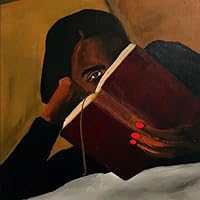
I had not wanted to pick up this book for a long time because of its cover. I found the cover to be odd and doesn't at all translate to what the book is about. It does the book injustice.
I did struggle reading it to the end because it did not flow well for me. I was unclear about what the story actually was right through the book. There were moments where I had to re-read chapters in order to make sense of it or to get the point.
I was disturbed by the use of Shona, large parts of dialogue was in Shona. I am sure this was intentional. I felt like I missed the most important parts of the story because of it. Perhaps the author needed to translate or hint at what was being discussed.
I applaud Panashe, she writes beautifully. However, the story needed some thrashing out and a clear/precise plot.
I really wanted to like this book but despite my best efforts, I did not enjoy this at all.
There doesn't seem to be a plot or any character development and the writing style is awkward and long winded. The alternating between past and present didn't work well.
What worked well was the depiction of life in Zimbabwe under difficult conditions and the interactions brought on by the Chiedza character. I really enjoyed the chapter describing the charismatic churches.
– You cannot fight an evil disease with sweet medicine. –
– Work, don't wish. –
– For many families a woman is only really good enough to do two things. That's to either get married off to a son-in-law for a good number of cows, or, if she so chooses to remain a spinster for the rest of her life, to be free domestic help for the household. So, if that's the case and I have the honour of being disregarded by the likes of Fata Masika, I'm happy to be an educated prostitute. –
– The most difficult kind of honesty is honesty with yourself. –
– I tell you, prostitutes are professional in their skills and practise it like the vocation of a true apostles - and why shouldn't they? What's so different from the accountant or the doctor selling his time? ... They do those things because that was what was available for their talents and their circumstances at the time. But do we pity them? No. –
– Yes, she was in fact a Very Divorceable Woman who took off her wedding ring and, in turn, had her ex-husband Mr Zvobgo, the almost Undivoreceable Man had it not been for her Divorceable-ness, discover just how Divorceable he was. –
“And why not? If he could do it to her, he can do it to you.”
Sweet Medicine was an easy read, with many Shona untranslated portions lol which I thought made the author bold enough. Its a story of a girl, Tsitsi who was daring to go after what she wanted, though she had Insecurities, identity crisis, and religious convictions battling inside. I love how the author portrays Tsitsi all her different sides such that it’s easy to love her and hate her at the same time. The author displays the position of women both strong characters Chiedza and Mrs. Zvobgo the first and weaker ones like Tsitsi clearly. Other themes noted: Politics, patriarchal society, starvation, and hardships of Zimbabwe in 2008(till now🤦🏾♀️). Changing of the world order doing relevant degrees otherwise you find yourself degreed and broke.
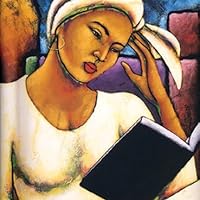
Two things got me into this book – 1) The Cover and 2) The First Sentence. I have been talking about covers recently and I am quite passionate about it – I feel like African publishers are putting little to no effort on the covers of the books they publish, so when I saw this I was blown away. I almost want to frame it and hang it in my living room. The double- coloured cover is also quite apt in describing the situation Tsisti finds herself in – torn between her catholic values and her hunger and need for wealth and a comfortable life.
Tsitsi’s story is so many girls’ story! She is smart, has a good education, she is one of the only two female students in the economics class and graduates with distinction. She however finds herself in rut – stuck in a dead-end government job with no future prospects and a salary that is barely enough to meet her needs let alone take care of her widowed mother and uncle. The ‘Black Tax’ beckons!
She decides, against her staunch catholic teachings and own values to find a ‘sponsor’/ ‘blesser’/ ‘benefactor’, however you choose to call it depending on which part of Africa you are from. We see Tsitsi struggle with her decision from start to finish. She convinces herself that she has no other choice and each time she concedes just a little bit more of her soul and her values to secure the new life she has built for herself.
This is a contemporary story and it is familiar to many of us. I loved the way Chigumadzie told it without imposing herself on the reader and leaving it to you to decide for yourself. Did I judge Tsistsi? Hell Yes! Did I sympathise with her? YES. Did I feel she had no other choice? Yes and No! I realised as humans beings we are most times so judgmental of other people’s decisions that conflict with our own values.
I loved the unapologetic use of Shona and Zimbabwean slang. Untranslated and unexplained. Almost like she was telling us to find some Zimbabwean friends to translate or just move the F on. We need more gutsy writers like this. If you’re looking for an easy read, pick this one up! I recommend! 3.5 Stars
Set in Harare during the height of Zimbabwe’s 2008 economic crisis, Sweet Medicine follows Tsitsi, a young woman trying to survive in a city under immense pressure. Influenced by her fiery best friend Chiedza, Tsitsi makes choices that go against her moral compass, not out of recklessness, but necessity. The novel moves steadily between present events and the past that shaped them, giving the story depth without losing momentum.
Chigumadzi uses Shona extensively and without translation. While this firmly grounds the story in its cultural context, it can be difficult for readers unfamiliar with the language, as some meaning is lost. The book would have benefited from clearer contextual cues to help readers infer meaning, rather than leaving gaps that feel unresolved.
The novel offers a quiet but pointed look at the realities ordinary citizens faced while the elite lived in a parallel world, a contrast that remains relevant today. It explores themes of economic survival, religion and spirituality, marriage for convenience, and the fragility of mother-daughter relationships.
I genuinely enjoyed this read. It is thoughtful, grounded, and unafraid to sit with discomfort.
This book is set in Harare, Zimbabwe, at the height of the country's economic and political crisis in 2008.
Tsitsi, a young, well-educated woman, is desperate to make sure her mother, a domestic worker, is well taken care of. Despite having a degree in economics, Tsitsi only finds works as a secretary, barely earning enough to ensure having a meal once every second or third day.
Then she comes up with a plan, one that offends her Catholic sensibilities, but that she defends to ensure she doesn't have to leave Zimbabwe for South Africa to find work there. Her boss, Mr Zvobgo, is older than even her mother, but as a politician in government, he has plenty of money, property and servants.
Tsitsi sets about seducing the married Zvogbo to ensure she and her family are taken care of. But while her plan works, doubts remain and her insecurities begin to eat her up.
"Sweet Medicine" is smart, engrossing and informative.
I don’t even know if this makes me hard to impress, but this one just felt… flat.
Sweet Medicine by Panashe Chigumadzi is very much an easy holiday read. The kind of book you take to the beach, read without thinking too much, and move on. I would be dishonest if I said it isn’t well written - the author did a great job.
It took me a while to actually start it, and when I finally did, it was fine… but that’s kind of it. Just fine.
I can appreciate the time in which it is set, and I can feel the despondence of the time through what’s happening with the characters but, I can’t even properly remember how it ended, which probably says everything. I know I finished it, but I genuinely couldn’t tell you what happens at the end.
So yeah. If you’re looking for something light and easy, this works. Just don’t expect too much from it, and don’t expect to leave with anything. It’s one of those you read, enjoy for what it is in the moment, and then it kind of just… goes.
I had high expectations for this book because I went to the book launch in 2016 and I really enjoyed the curation of it. It was warm. It gave me a sense of the Zimbabwe during that time but unfortunately this didn't translate into the book. The story line was all of the place. It didn't run smoothly and while I am not against timelines in books being manipulated(?), Chigumadzi didn't know how to do this. She only started revealing the important bits in the last pages of the book which is an issue because she didn't establish at the beginning that this was the place we were going to. The main character, Tsitsi was extremely unlikable and often I don't have an issue with unlikable characters but there wasn't a sense of who she was, she was judgmental (a characteristic that she gets from her mother I suppose) and she was very slow. Her treatment of her friend, Chiedza, in particular was nauseating, she judged Chiedza's choices while they were both in the same situation and yet, Chiedza was the one who was shamed.
I thought the themes of Christianity and exploring African culture was interesting. It challenged Tsitsi's conceptions of what her god could do and what he wasn't doing during that moment where she had to make other plans to get Mr Zvogbo to stay with her. I wanted this story line to have been explored throughout the whole book, not just the beginning and the end. I thought it was central to Tsitsi's conflict but it wasn't done justice.
There weren't any memorable characters in this book and the development of most of them was appalling. You understand what they are driven by but you don't get to see it beyond the two dimensional placement that is given and this was rather disappointing.
My friend and I did a review on my youtube channel if anyone would like to see the rest of my thoughts about the book. Here's the link: https://www.youtube.com/watch?v=1a9x_...
I don't think it was a bad book, but there were moments that felt disjointed, especially some of the flashbacks. That said, there were also moments where I was grateful for the non-linear storytelling.
The is a lot of Shona in this book. Not a complaint, just an observation. Shona is not too far from Chichewa, so there were times, where I could make out what was being said, but there were more moments of me google translating things (and Google translate Shona wasn't the best) or bugging my Shona speaking friends.
I would rate this book about 2.5 I expected more from the story. The author uses both English and Shona to relay her story, which may be unfair to a reader who doesn't understand either of the languages. I'm of the opinion that the book would have gained more meaning had the story been relayed in a single language. Albeit, we support Pan-African writers and their keenness on the issues surrounding Africa, and it's always refreshing to seek understanding through the lenses in which they view the pressing issues.
Will give it 3/5, its a story that one can relate to as the issues that come out in the book affect most Africabs i.e the sacrifices we make so as to ensure our families are well taken care of and in a round about way, black tax. Add in growing up in a christian home but later in life having to choose between christianity and seeking the help of traditional healers. Having grown up near some of the places she mentions, made the book more relatable for me. I will stop now lest I spoil the book for someone who would want to read it. Thank you
Okay I liked it. It wqs good. But there were a lot of spots where characters lapsed into their language (Shona?) But they weren't translated. It wad hard to decifer the meaning. Chigumadzi is a talented writer, but her the transitions between past and present were often unclear, leaving me confused.
Good book, although there's a fair amount of Shona included with no glossary - you have to guess from context if you don't speak the language. Enjoyed the insight into the 2008 Zimbabwean crash, which I didn't really know anything about, although the book is mainly about the protagonist's emotional story so it doesn't get caught up in the historical backdrop too much. 4/5.
I enjoyed the book, I wish I knew Shona someone of the sections written in Shona made it a little difficult to understand what was being said.
For some reason I couldn’t sympathise with Tsitsi I found her a little mean and judgemental(and she knows it 😂) I was hoping she would be a little friendly... anyways ... I was not ready for it to end 😳 🤷🏾♀️
Absolutely loved the solid writing style. Very intellectual and literary. I loved that she did not translate the Shona bits in the book, to force Africans to ask each other regarding our languages. It is a definite unifying factor. Thank you for your brilliant offering.
Also one of the first books I have owned with such a stunning cover.
A great storyline, but was not a fan of the narration style. I personally struggled to relate to any of the characters, even Tsitsi as protagonist. The story would have probably worked better if it was narated by Tsitsi.
A great book with vivid creative writing. In the end, the book asked me on a date and when it was time to show up, this date I have been chatting to lovingly on the phone for a while never pitched. But I still love may date!
Sweet Medicine starts slow however, picks up after a few chapters. I do wish the Shona phrases were translated to get a better understanding of the characters and storyline. Nonetheless, the ending was great and unexpected.