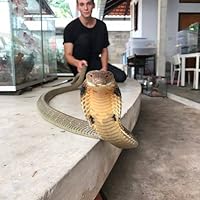
A thrilling tale of encounters with nature’s masters of biochemistry
From the coasts of Indonesia to the rainforests of Peru, venomous animals are everywhere—and often lurking out of sight. Humans have feared them for centuries, long considering them the assassins and pariahs of the natural world.
Now, in Venomous, the biologist Christie Wilcox investigates and illuminates the animals of our nightmares, arguing that they hold the keys to a deeper understanding of evolution, adaptation, and immunity. She reveals just how venoms function and what they do to the human body. With Wilcox as our guide, we encounter a jellyfish with tentacles covered in stinging cells that can kill humans in minutes; a two-inch caterpillar with toxic bristles that trigger hemorrhaging; and a stunning blue-ringed octopus capable of inducing total paralysis. How do these animals go about their deadly work? How did they develop such intricate, potent toxins? Wilcox takes us around the world and down to the cellular level to find out.
Throughout her journey, Wilcox meets the intrepid scientists who risk their lives studying these lethal beasts, as well as “self-immunizers” who deliberately expose themselves to snakebites. Along the way, she puts her own life on the line, narrowly avoiding being envenomated herself. Drawing on her own research, Wilcox explains how venom scientists are untangling the mechanisms of some of our most devastating diseases, and reports on pharmacologists who are already exploiting venoms to produce lifesaving drugs. We discover that venomous creatures are in fact keystone species that play crucial roles in their ecosystems and ours—and for this alone, they ought to be protected and appreciated.
Thrilling and surprising at every turn, Venomous will change everything you thought you knew about the planet’s most dangerous animals.
Picture Christie Wilcox is an award-winning science writer with a decade of experience in online and print storytelling. Wilcox's extensive scientific background and firsthand experience as a researcher has given her a different perspective on the latest discoveries than most popular science writers. Through her writing, Wilcox shares her insatiable enthusiasm for biology, leveraging her doctoral training to produce highly-researched and accurate science journalism seasoned with humor and wit; her bylines include The Washington Post, The Wall Street Journal, Popular Science, Discover, Gizmodo, and National Geographic, among others. Her first book Venomous, a popular science book on venoms (August 2016), has garnered widespread acclaim, including coveted spots on the list of Best Science Books of 2016 from Amazon and Smithsonian Magazine.
Wilcox began her writing career blogging at Observations of a Nerd in 2008, creating Science Sushi in 2011 when she joined the Scientific American blogging network. In 2013, she moved Science Sushi to Discover Magazine, where it remained for 5 years before findings its own independent home. From 2017 to 2021, Wilcox worked as an editor and writer for SciShow, where she got to translate her love for science into engaging episode scripts for one of YouTube's best and biggest science video channels. Now, she's the newsletter editor for The Scientist, where she's helping scientists make the world better.
In addition, Wilcox is a passionate activist for the use of social media for scientific outreach. She has written feature articles, essays, editorial pieces, and blog posts on the topic of science education and communication using new media platforms. Her passionate appeal to draw scientists online has garnered her multiple speaking engagements at national conferences, and she has led workshops for other scientists on how to engage through new media for major scientific organizations including the National Institutes of Health and the American Association for the Advancement of Science, and created a resource wiki on online outreach. Most recently, she led an elite team of editors in pulling together over 25 of the greatest online science communicators to create Science Blogging: The Essential Guide, released March 2016.
Wilcox obtained her Ph.D. in 2014 in Cell and Molecular Biology with a specialization in Ecology, Evolution and Conservation Biology from the University of Hawaii at Manoa, and has published numerous peer-reviewed publications in addition to her lay-level writing. Wilcox lives in the Puget Sound area, where she tries not to miss the sunny shores she grew accustomed to during her doctoral training.
First of all, let's just knock it off with those subtitles, shall we? Because I am so tired of having to rewrite them in my head. If you took all the biochemistry in this book and distilled it, I think you'd have fifteen pages, plus a couple of diagrams. So, No. How about, 'Exploring Venoms and Their Various Effects'? Not sexy, I know. But frankly, is biochemistry? No, it's not. In fact, they were the geeks at my school. The only ones higher on the nerd-brain scale were the neuro-psych majors. (You could argue geo-physics was pretty nerdy too, but I didn't know anyone who actually did such things). What, you say? I digress? Well, yes, I do. Just like Wilcox does.
You want a very good review, please check out Jennifer's thoughts here . I read it anyway, because Jennifer is a biologist, and I was kind of hoping there was a fair amount of information in here that she was taking for granted. Not really. Listen to Jennifer, people!
And I'll tell you quite frankly, she was absolutely correct: Wilcox is not a very good writer. I hope she is better at laboratory research, because frankly, her anecdotes show she is also kind of terrible at decision-making in the field (approaching a Komodo dragon? Touching a rock without looking while diving? Sending kids to find sea urchins where they can find dangerous ones?) Yikes.
Furthermore, the pictures in the book are of rather poor quality. That is to say, were they blown up and poster-size, they'd be awesome resources. Shrunk to 5x4 inches, not so much. I can't even read what's going on. The one with the different animals acting on different parts of the clotting cascade is ridiculous, and not in a ha-ha kind of way. So, even the opportunities to be college-level informative are squandered a bit, unless you pull out the magnifying glass.
But, if you are tempted, this is what you will find in Nine Chapters:
Masters of Physiology: platypus. So cute! Except their venom-secreting spurs. Venoms and how chromotography advanced their study. Genomics now advancing it.
Death Becomes Them: median lethal dosage to determine potency (with a Phylum chart, fun! Stay away from box jellies and taipans (snake) where it takes 0.01 IV to kill you). She then discusses some ins and outs of how humans perceived venoms through history, then segues into evolution. There's a theory, the 'Snake Detection Theory,' that predation pressure pushed primates into needing more acute vision. This is tied to the fact that primates seem instinctively afraid of and visually sensitive to snakes, as well as the more 'lethal' snakes being the Old World vipers. She then points out mosquitos actual have the most 'lethal' venom in the sense that they kill millions through being a vector for bacteria. (There's also an aside on what it might mean to kill all the mosquitos. Answer: no one is sure, but it's a large biomass to remove).
Of Mongeese and Men: co-evolution, mostly between snakes and victims. Goes into innate and adaptive immune systems, and a short bit on how some anti-venom is made by injecting a horse with venom and then harvesting blood a few weeks later. Back to co-evolution; the reason mongooses can shrug off venom is because it has evolved changes in the cells that most snake neurotoxins target. Pigs, honey badgers, and hedgehogs all have evolved versions of this as well. There's some speculation that snakes may have developed more lethal venom because of pressure from predation. It concludes with a segment about "self-immunizers" who actually have an acronym, 'SI,' and who practice venom injections, and are clearly nutty.
To the Pain: bullet ants (with picture), scorpion fish, Odysseus. The 'cost' of making venom and the evolution pressure. Sea urchin spines (with picture). This feels like the least sciency- chapter and is about Wilcox being daring.
Bleed it Out: a nice explanation of blood, platelets, hemoglobin and hemotoxic venoms. Searching for the Lonomia moth caterpillar in Peru, whose spines cause a hemorrhagic syndrome by first setting off a clotting cascade and causing DIC. Interestingly, she wears skinny jeans on the airplane, her luggage gets lost and so she has to wear them in the jungle, because she's never learned anything about the carry-on spare outfit.
Then there's leeches. She tells a story of a college instructor's story (!) and has this for her most science-y paragraph, "Some venom molecules start at the beginning of the clotting cascade, binding to the platelet receptors or exposed ECM components such as collagen. Others break down or tie up ADP, XA2, epinephrine, and serotonin to keep them from acting. Then there are the ones that act further down the line, blocking thrombin and its key role in coagulation. There are enzymes: phopholipases, metalloproteases, hyaluronidases, and apyrases...." The list continues, then a new paragraph goes on to all the ways leeches have been used and how three anticoagulants in use now are venom-derived. Last little bit is a journey to meet a Komodo dragon (and having to be told not to get too close!) and learning it's bite isn't toxic so much as an anti-coagulant.
All the Better to Eat You With: venoms can cause necrosis. She spends two pages imagining this in general. There's a little bit of biochem here, where the phosopholipases break down muscle cell membranes, but then gets vague, as in, "additional venom enzymes, including hyaluronidases and serine proteases, add to the carnage." The cell death activates the immune response, so inflammatory pathways also cause some of the damage. The 'spider bite' people have that sends them to the MD are probably MRSA in many cases. Brown recluse bites are nasty as a result of sphingomyelinase D which is also found in bacteria toxin. Snake imagery was very popular on flags during 1778. Then there's two pages on what makes a good venom protein: secreted, do fundamental biochemical actions, are fast-acting, are stable, and come in bunches.
Don't Move: the blue-ringed octopus illustrates the sodium ion channel, which Wilcox tries very hard to explain. There's even one of those small diagrams. This leads into cone snails, which, once they injected into the brain, discovered different effects, including a pain-killer for people but a paralytic for fish. She then discusses the evolution rate of the cone snail gene and how it came to evolve so many different toxins.
Mind Games: snake venoms and the weirdos who use them to get high, the jewel wasp and it's zombie-making-neurotoxic venom.
Lethal Lifesavers: famous drugs from venoms, including the newest diabetes drugs (Trulicity) from the Gila monster and Captopril (pit viper vasodilator) as well as potentially harvesting immune response to use in cancer or immune disorders.
tl;dr: I think if you lower your expectations, you might glean some factoids, depending on your biological or animal or evolutionary knowledge. You are welcome. You all owe me a thorough book review.
This is a great idea for a book, and it has almost everything - cool animals, solid science, anecdotes of all-too-close encounters, plenty of enthusiasm. The main thing Venomous is missing is good writing.
Christie Wilcox, whose PhD is in lionfish venom evolution, is probably a better scientist than writer. A good editor might have been able to prevent the crimes against adjectives (limbs are both "rotten and gangrenous," said flesh "falls from the bone in putrified, zombified chunks,") and lack of concision (a full paragraph is needed to preface the author's run in with a sea urchin). It's not a long book at 191 pages, but it often feels long because the language is irritatingly imprecise.
The best writing in the book is quoted from the entomologist Justin Schmidt, who writes like a connoisseur of his experiences being envenomated: the bullet ant's sting is "Pure, intense, brilliant pain. Like walking over flaming charcoal with a three-inch nail in your heel." I've added Schmidt's book The Sting of the Wild to my to-read list, not least because I was stung by a wasp for the first time while reading Venomous and am now very curious how Schmidt would describe it. (My own response was much less elegant and more along the lines of, "OWWW. What the f***?!")
Part of my difficulty with Venomous is that I like my non-fiction with some sort of underlying, continuous narrative thread. It's certainly not Christie Wilcox's fault that venom has evolved and been lost many times in different animal lineages; that story isn't linear to start with. But while there's no shortage of interesting stories and facts about vipers and caterpillars and blue-ringed octopuses, the book reads more like a collection of facts and studies than a cohesive, forward-moving story.
I didn't have a problem with the science in this book; Wilcox definitely knows more biochemistry than I do, but doesn't delve super deeply into any of it. She doesn't cut out all the jargon, however, which may be annoying if you don't have a basic background in biology. (I was thrilled to revisit my old friend, sphingomyelinase D from the brown recluse, whose mechanism I struggled to understand for one particularly nerve-wracking organic chemistry presentation.) The science in here is totally solid (one of the pluses of a scientist-turned-writer), meticulously cited, and often really cool, whether Wilcox is thinking about evolutionary arms races, the weirdly anachronistic production of antivenins, potential medicinal uses of venom, or the mystery of how Komodo dragons kill.
I find Wilcox most eloquent in the final paragraphs of the book in which she argues for conservation, writing, "Every species on this planet tells a story, an evolutionary novel packed with generations upon generations of knowledge. Letting those species disappear is like setting fire to every library on earth." But I disagree that usefulness to humans should be our main impetus to conserve the remarkable biodiversity of our planet; as a fellow biologist, I'd argue that the organisms of this planet have an intrinsic value and right not to be squeezed out by our runaway population growth and resource usage. Then again, I'm a misanthrope.
I might keep my copy of Venomous, as it goes with other books on my shelf - what, you don't have a poison-themed book collection? - but I can't quite shake the feeling that it could have been so much better than it actually was.
Several reviews said Wilcox was no Mary Roach. I agree that she's not quite as funny, but she is entertaining & interesting. I was more worried that I might get lost because of too many scientific terms, but didn't find this to be a problem most of the time. The next to the last chapter got somewhat confusing, but the rest was very much at my level & I'm no scientist. Most of the technical terms were used to make a point more precise, such as how a venom uses a specific enzyme to trick out nerve cells into thinking we are being burned. If I don't exactly understand the process, it's certainly not bewildering & the point is well made - it's very specific & yet works on a wide range of organisms from reptiles to mammals. Very cool! They're incredible biochemical wonders.
She starts out with a much needed (at least for me) explanation of the difference between poisonous & venomous. We eat the first & have the second injected into us. Venom can be offensive (the better to control & digest prey), defensive (don't tread on me!), or used for both. It varies in potency & how it works widely depending on its main purpose. Generally, defensive venom is very fast acting on nerves since its primary purpose is to make predators go away quickly.
Why some animals are venomous is fascinating & full of mystery. Related species often aren't, but genetic research has found that a common ancestor probably was & that most of the genes are available in all. Some don't use it because it isn't required & venom comes at a high metabolic cost. Rebuilding a supply can take as much or more energy as being pregnant for several days, although it varies widely among species. The duck-billed platypus uses it primarily for fighting other males during breeding season - another area where it is weird.
How venomous animals drive the evolution of other species, including our own , along with what the deadliest venom is, are both very interesting discussions & not simple at all. We may owe something to snakes for our own mental & visual evolution. While they tend to scare us the most, many other animals have far deadlier venom & the most venomous often don't have the highest kill ratio per year. I won't spoil her answers. They're an eye-opener & need her discussion to make it both understandable & believable.
How & why do some species develop an immunity to other species? Why do related species not have it or did they lose it? It's amazing how little research has been done in all these areas. Her discussion of how antivenom is made points this out through how primitive it is. They inject horses with venom, collect their blood, & pull out the antivenom -- still?!!! Yes, when they can. They often can't or don't because they can't get enough of the toxin. Seriously?!!! Definitely an area where we are lagging far behind. This lack is hardest on the poorest areas since antitoxin is expensive & won't sit on the shelf forever. We have tailored bacteria to produce insulin & it's past time we started doing the same for the antitoxins, BUT there isn't a compelling economic reason nor do we understand venoms well enough. They're very complex.
The discussion on hematophagous (blood feeding) animals is fantastic. I never knew just how complex & well developed their toxins were, but it makes sense. Instead of delivering the pain of a defensive toxin, they trick the host into not feeling their invasion & stop the blood from clotting, all at the same time. More, their toxins have been copied & several are very important drugs approved by the FDA often used by doctors to control blood clotting & pressure.
This is a new book, just published 2 months ago (August 2016), & that really helps. I cringed a bit as she started in on the Komodo Dragons & their venomous bite since I'd just read an article that dispelled the long standing belief they killed by having so much bacteria in their mouths. They don't & she explains this well. The example of a snail that continually evolves its toxins was incredible. It not only makes sense, but shows a variability in evolution that I've never heard about before. How multiple toxins can work together to become more toxic was also an eye-opener.
Just how important venomous animals are to the drug industry is really just becoming apparent since we haven't had the tools to really break apart their toxins properly. They're so subtle & complex, often fixing conditions - if we know what causes the condition & can align it with a specific toxin. She goes into some detail about the long road from discovery to possible medicine which is interesting & shows why pharmaceutical companies need big profits from successful drugs, although she doesn't say so in so many words. She also comments on how important it is that we don't destroy these species just because they seem like a danger. They can also be saviors.
I wonder if there is a database generally available to researchers on toxins & their effects that is aligned with one of conditions & what would fix them? While she gives several examples of toxins fixing conditions such as bee stings curing Lyme disease, her examples often seem serendipitous.
A very good book. I wish I could have afforded the text along with the audio book. That would have helped, but both are expensive & they didn't come together. Still, I'd highly recommend this in either format.
Venomous or How I haven't learned to stop touching deadly creatures.
It's immediately clear that the author is an expert in venomous creatures of the globe and finds them absolutely fascinating. It's also clear that venom researchers have an underdeveloped sense of self-preservation, especially when it comes to deadly creatures. The books is sprinkled with anecdotes of envenomation from the author and descriptions from others. The take-home? It hurts. A lot. Also sometimes you get a weird high.
The subtitle of this book, "How Earth's Deadliest Creatures Mastered Biochemistry", doesn't really reflect the content of the book. There is very little biochemistry and only two figures highlighting the biochemical mechanisms. The book is both too detailed in some ways and yet not detailed enough. For example, many venom proteins bind to ion channels. The author explains that certain venoms bind to sodium channels and others to chloride channels and these, of course, have different impacts. As a biochemist, I'd like to understand more about the mechanism of action, but for people who know (or remember) very little of ion channel biology, just pointing it out isn't particularly helpful.
There seemed to many instances of the author providing long lists of information, perhaps to demonstrate her knowledge. She mentioned what an LD50 was and then proceeds to go through LD50 numbers on a bunch of different organisms. Why? Then there are the odd tangents that don't bolster the point being made, but read like something the author thinks is interesting and might as well toss in. The overall impression is of an author determined to show off her breadth of knowledge to the detriment of an interesting and cohesive story.
I feel like I learned a little bit about venomous creatures, but I ended many chapters unsatisfied. I think the author had this tendency to build up a question about how the biochemistry worked and then (perhaps because it isn't yet known) didn't answer it.
Diagrams. If there is one thing a book on science should have is figures and diagrams to underscore complex points. There was an odd lack of informative figures in this book. Many times I wished we had a clade diagram of evolution, or a figure of the protein of interest, or a breakdown of the types of toxins present in venom.
Overall, it was okay, but if you're looking for an interesting book about how venoms work at a molecular level, you're likely to leave disappointed.
Venomous: How Earth's Deadliest Creatures Mastered Biochemistry by Christie Wilcox, is a brief and interesting look at various venomous species of animals, how they operate, and how they interact with the human world. Wilcox has written an interesting book examining many different and surprising species of deadly animal, from the Platypus, with its barbed hind legs, to snakes and jellyfish, to a caterpillar that makes one bleed to death. These animals are strange and fascinating, and indeed have always been of interest to humans throughout history. Greeks wrote texts on venomous animals, and modern scientists still work hard to create antivenom to treat snake bites and deadly stings.
This book was entertaining, light in tone, and breezy to read. Wilcox has not written an in-depth analysis of venom and its biochemical breakdown, but more a look at various venomous species, how they create poison, and how they interact with the human world. The book is separated into chapters, starting with the Platypus, and moving into different types of venoms, from more deadly, to more painful, to strange ones that affect your blood coagulation or how you think. The simplicity of the book is great for a pop-science text, and is entertaining enough for a layman like myself. I have always enjoyed books on plants and animals, and pop-science in general, and enjoyed this one just the same.
Wilcox has some interesting points to make about venomous animals. They often warn off transgressors with bright colours or hissing/rattling. Venom is extremely costly to make, both in the antivenom field, where many creatures such as spiders, are tough to milk, as well as from the animals perspective. Venom takes a lot of energy to make, for the most part. Some species use up almost as many calories creating venom as when carrying a litter of offspring. Venom's are often extremely complicated from a biochemical standpoint, and many scientists are still unable to separate the various peptides and protein-chains in their make-up with complete success. Wilcox also examines animals that have built up venom resistances biologically, such as the mongoose, and the biological and reproductive scenarios that may have led to these traits.
All in all, Venemous was a great little read on venomous creatures, and the various traits they exhibit, as well as their interactions with the human world through the fields of science. While this was not the most in-depth book one could read on the subject, it was interesting as a pop-science read for the lay-person, and was well written, full of great commentary, and overall very entertaining. Easily recommended to those looking for a quick pop-science read that is not overly grand or editorialized. A simple, fun, intelligent and interesting book.
The writing of this book won’t appeal to everyone. Wilcox kind of writes like she’s one of your friends who’s recounting a handful of interesting stories; there will be some anecdotal moments and some technical things where you’ll have to pause. It’s definitely a bit jarring but it worked for me because it’s legible enough to get the point across and felt rather ‘user-friendly’.
The topic at hand is what I really enjoyed reading about. It’s not only a new subject but one I wouldn’t have thought to look for myself if it hadn’t been for a serendipitous moment during my visit to the library yesterday. This is also (luckily) the perfect place to start when introducing yourself to learning about venomous creatures, their anatomy, and even their purpose. She tackles topics of venom research, addiction to various venoms, the evolution and future of venomous creatures, and even how humans relate to these dangerous beings.
Given the dark nature of these creatures and how they usually choose to interact with us, Wilcox kept it light and edifying. The book even ends on a strangely uplifting note with the proposal that perhaps, in the future, poison derived from certain venomous creatures can be a possible antidotal ingredient to battle natural human diseases such as cancer or dementia.
To paraphrase the author, this book is Dr. Christie Wilcox's ode to the fearsome power of venomous creatures and her tribute to their incredible scientific potential. This is a beautifully written book on the little discussed and known subject of venom. The book is an investigation into venom and some of the weird and wonderful creatures that use them. The author takes a look at how venomous creatures interact with other species and ecosystems, how these interactions have effected the evolutionary path of these species (including humans). Dr. Wilcox reveals how the different types of venom work, what they do to the human (and prey) body, adaptation and immunity to venom, and how these substances can revolutionize biochemistry and the medical field.
The author is a molecular biologist writing for an intelligent public (of any age - teenagers might enjoy this book too). The author manages to balance all the interesting science with amusing or illustrative anecdotes without making these personal stories seem like useless filler. Who could find stories about Komodo Dragons, venomous mammals, bullet ants which inflict one of the most painful sting in the world, bees, spiders, snakes, wasps that turn cockroaches into zombies, and spikey caterpillars that turn your insides into mush, boring? She includes enough well-explained biochemical detail to show how different venom functions, without bogging the reader down with excruciating detail, and she does not "dumb-down" the science either (THANK YOU!). There are numerous photographs and illustrations which would probably be more legible (or at least larger) in the paper version of the book than the Kindle version I read.
This book is both informative and entertaining to read. I learned a great deal of new stuff (which is the point to reading science books) and had fun while doing all this learning. This is an author who I hope writes more science books in the future.
This rating/review is based on an ARC from the publisher sent to my work (the public library).
Mary Roach this is not. There is definitely some really interesting and fun stuff in here, but also a ton of hard to follow stuff. I think this book could really benefit from a non-science editor to help clarify (dumb down) some of the content. I wish there were footnotes instead of endnotes, and some of the figures used were unexplained and totally way above the scientific understanding of the intended readership. The parts that worked best were the personal stories and investigations of the author, the stuff that didn't work was the in-depth talk of proteins and cascade reactions. That kind of specificity is interesting, but really hinders the readability and flow. Obviously I didn't read the final published book, but I don't imagine I will nor will I recommend it to library patrons. I also left the ARC in the Madrid Metro because I felt bad just recycling it.
I didn't plan for this to be a Halloween read, but Christie Wilcox's lively, engaging study of venomous animals gave me the creeps a time or two. Wilcox is an excellent science writer, able to cogently distill complicated concepts for the lay reader while passing along her obvious love for the often unlovable snakes, spiders, wasps, ants, caterpillars, octopuses and platypuses that defend and/or feed themselves through venoms that can make flesh rot, turn insects into zombies or kill a human in minutes.
Most important, however, Wilcox details how scientists have begun learning how venom can be turned into medicine, potentially to fight cancer, AIDS and other currently incurable diseases. She makes a compelling argument that even the unloveliest of animals stores within its DNA millions of years of data that we mere humans could not learn on our own, and that the extent to which we allow our fear to drive these animals to extinction is the extent to which we impoverish our own ability to learn and benefit from their remarkable adaptations.
This was an interesting read. Author Christie Wilcox is a scientist and science writer. Although the book contained quite a lot of super-interesting writing, I feel like it suffers from a common problem of scientists writing books; the book lacks a central narrative, and flow that holds it together. My biggest criticism is that the author drops many technical references in the book, assuming that her audience is very highly scientifically literate. She blasts through the biomechanics of envenomation like it's second nature. I didn't have trouble following, but I feel that the layperson will be left completely in the dark... This is not effective communication, IMHO. A science book needs to be accessible to the layperson. So while I did really enjoy the content and information this book presented, I will fault the author for not making it more accessible. It was a fairly short book, too. A few pages could have easily been devoted to laying some groundwork here. I would still recommend it to anyone interested. Just be aware that parts of it are fairly technical. 3 stars.
This was fascinating but it's not a book for someone without a basic grasp of biological terms. On the other hand, if you're okay with skipping all the technical language and examples, it's great!
I decided to get this book when I got my jellyfish tattoo. I had different reasons for getting this tattoo in particular (for example TAZ) but mostly I really like the idea of animals and other creatures being dangerous despite seeming innoffensive, or being pretty in general. I'm glad I got the audiobook of it because the author narrates and she's obviously very passionate about her subject ! and she gives annecdotes, funny and worrying at the same time, that make the book much more lively than a simple science book about venomous animals. Despite that, I'm not very well versed in chemistry or toxins or general science terms so I had some trouble understanding the most precise explanations on the work of scientists in the field. I enjoyed learning about the different types of venom and the uses they can have in the evolution and survival of the animal, as well as possible uses in medicine, but I was lost a lot at times, and it was difficult to get back in track. That's my fault though, I still think if you're interested in natural selection of venomous animals and/or like to know about weird experiences people have had with venoms, it's a great read.
Venomous: How Earth`s Deadliest Creatures Mastered Biochemistry de Christie Wilcox a fost o non ficțiune informativă și interesantă pe partea de știință, biologie, studiul otrăvurilor, dar vocea narativă nu mi s-a părut amuzantă, cum se dorea. De altfel, autoarea povestește niște întâmplări din viața ei care mă fac să mă întreb dacă ea, ca persoană, are spirit de auto conservare. Au fost explicate niște concepte legate de biologie și chimie pe care eu le cunosc pentru că am studiat materiile astea la facultate, dar pentru cineva care nu are legătură cu domeniul, explicațiile mi s-au părut ușor ambigue și complicate de dragul de a fi complicate.
I was surprised how engaging this book was. There is a lot to learn here, obviously, but Wilcox plays this "friendly scientist" trope that works in her favor. In some instances the reading is slowed down with sudden influx of jargon, but the pacing picks up once we overcome those hurdles.
PS: I think this book makes a good present to teens.
I have a deep fascination with venomous creatures. Thus, when I located this book at the Daviess County Library, I, of course, checked it out. From the Coasts of Indonesia to the rainforests of Peru, venomous animals abound. Humans have feared them and revered them from the beginning of recorded time when people from Turkey built a temple known today as Potbelly Hill, the oldest known religious site on earth. Limestone pillars remain where devoted believers erected them more than one hundred centuries ago without aid of animals or even wheels. The ancient artists chose to decorate the pillars with venomous snakes, spiders, and scorpions. The author explains that he developed his interest when he was a boy living in Kailua, Hawaii. l and being fascinated by the blue bubbles of the Portuguese man-of-wars that would wash up on the beaches. Biologist Christie Wilcox investigates and illuminates the animals of nightmares. Her premise is that the hold the keys to a deeper understanding of evolution , adaptation, and immunity. She starts off with the platypus unlike any other creature when first discovered. Male platypus has a spur that juts out from the hind legs. They are terribly venomous and the poison causes excruciating pain that can last for several days. The reader learns how venom comes from the box jelly fish by relating the story of how a girl ignored warning of blobs in the water. and almost died. The stunning blue-ringed octopus capable of inducing total paralysis. She answers the question of how these animals go about developing their deadly poisons. She meets intrepid scientists who risk their lives studying these lethal creatures. Turning something bad into good, she also discusses how untangling the mechanisms of some of our most poisonous creatures can be utilized to treat illnesses. Pharmacologists are exploiting venoms to produce lifesaving drugs.
This is a fun and educational read. It covers a wide variety of animals, and goes into a lot of detail about the venom they produce, its effects on pray and would-be predators, how such adaptations are thought to have evolved, etc. The author is quirky and funny, which wasn't obnoxious to me, but this may turn off some readers.
The author presents an overly credulous description of the practice of venom "self-immunization". She repeats some of the practitioners' dubious claims of increased health from repeated exposure to snake and bee venom. Snake venom is not a panacea. Its use as a drug in India also sounds grossly exaggerated. The author seems not to know quite enough about how the immune system actually works. She even says, "allergies are a mystery" which is pretty much untrue.
There's also discussion of the so-called "toxin hypothesis" of allergies. This is what I would call a "fringe" scientific theory and appears to come from a single paper published by a single individual. This has been given more press than it deserves, in my opinion. Its inclusion as apparent scientific fact in this book for a lay audience is inappropriate. It should be qualified as preliminary if not fringe science and its (numerous and severe) flaws explained clearly. Or left out altogether.
It was OK. Interesting in parts, and I learned some things, but the organization was haphazard to say the least. I also wasn't the biggest fan of the writing style. While I'm sure it's a challenge to write an accurate and up-to-date science book that will also appeal to the non-expert audience, I felt like Wilcox should have just picked a side and run with it. Instead there are lots of extremely vague general paragraphs followed by occasional random details dropped in without explanation. Often repetitive, as well, even though it is a fairly short book. The cover is really beautiful.
Fascinating read synergistic words and diagrams paint vivid pictures
This book is scientifically stimulating but, perhaps more importantly, it is vibrant and hopeful for humans and venomous creatures as well. The biochemistry is artfully engaging and easy to follow. The author uses a deft hand blending breakthroughs and personal experiences to create an accessible and engaging story. It was literally better than many novels I have read in terms of entertainment.
This is a wonderful narrative non-fiction book for anyone who loves science journalism. Wilcox's writing does more than just describe venomous animals, she paints a picture of the environment, people, and animals that transports you to an underwater cave or or a beach in Hawaii.
She provides a nice balance of scientific facts and storytelling. If you are a fan of natural history and some of the world's most unusual animals, then this is the book for you.
If you are not a biological scientist fascinated by the biochemical tricks produced by and from cool venomous creatures then you will not rate this book as high as I did. For me, it was the perfect amount of science, exploration, interesting anecdotes and inspiring speculation.
Man I loved this book, but I’m pretty sure it’s a very me book: aka someone who stayed in school an extra year to learn more about this stuff. Also known as I’m a nerd.
Enjoyable and accessible book from 2016 on venomous animals and how people suffer from and use venom. Author Christie Wilcox (the audiobook narrated by Emily Rankin) is a molecular biologist and does a fantastic job discussion the molecular makeup of venom as well as how it works in human and other bodies, though also does very well with discussing the animals themselves and associated human history, culture, mythology, and the history of the science of both the venom and the animals.
Nine chapters. Chapter one discussed how people who study venom came in either from the animal side or the biochemistry side. Discussion of toxic versus venomous (venom has to be delivered, though can be offensive as in bites or defensive as in spines). Offensive venoms tend to be quick kills, while defensive venoms tend to be extraordinarily painful but not generally fatal. Discussed how venom is studied at the molecular level and two venomous mammals, the platypus and the 14 (possibly 15) species of loris.
Chapter two introduced the terms LD50 or median lethal dose and mortality rate (and the differences), looked at venom in Hawaiian and Australian box jellyfish, compared the morality rates from snake bites (about 100,000 globally annually), which is exceeded by Hymenoptera (wasps, bees), but the biggest source of deaths is from mosquitoes. Also, interesting discussion of the snake avoidance theory, that humans developed big brains to aid in visual acuity for detecting venomous snakes.
Chapter three examined how animals like mongooses and honey badgers can be immune to venom, venom immunity from innate mechanisms or from adaptive immune responses, testing venom immunity in the lab whether in vivo (in a living creature) or in vitro (outside a living animal), how antivenom is made, people who are into self-injecting or SI (trying to build up an immunity to venom by deliberate injections) as well as associated controversies, and how allergies may be a side effect or consequence of the venom immune response.
Chapter four looked at venom that cause pain, starting with the bullet ant and continuing with scorpionfishes and venomous spiny fish of family Scropaenidae, how venom causes pain, the metabolic costs to produce venom, and how defensive venom needs to be universal, fast acting (and thus on the nervous system of the victim), and not hurt the producer of the venom.
Chapter five looked at hemotoxins, venoms that affect the blood, and animals that use hemotoxins including caterpillars of genus Lonomia (South American saturniid moths), mosquitoes, leeches, ticks, and the largest user of a hemotoxin, the Komodo Dragon (quite a bit on the world’s largest lizard).
Chapter six looked at necrotic venoms particularly in rattlesnakes and the brown recluse spider. Interesting discussion on how brown recluse bites are often actually Lyme disease, syphilis, a staph infection, anything but a spider bite. Also, some good coverage of the cultural history of the rattlesnake and conservation threats. Great discussion of how necrotic venoms work in the body and the potential for a universal antivenom.
Chapter seven was on neurotoxins, focusing on the deadly blue-ringed octopus of Australia, cone snails, and elapid snakes (family Elapidae, includes cobras, mambas, and kraits). How neurotoxins work in the body and how they have been used medicinally is also covered.
Chapter eight was a neat chapter on mind altering neurotoxins, starting with the jewel wasp, a parasitoid on cockroaches, and continuing with how cobra and krait venom has been used in India as a recreational drug.
Chapter nine was on the use of venom as a therapeutic and to develop new drugs to treat things such as diabetes, looking in particularly at medical researchers looking at cobra, honeybee, and Gila monster venom (quite a bit on the Gila monster).
Lots of biochemistry at times but I was never lost and the animals themselves were frequently discussed, with the author providing her own experiences with Komodo dragons, bullet ants, and other venomous animals. A few fun pop culture references and a great writing style.
This was very interesting and informative, as well as easy to understand. The final chapter on drugs made from venom compounds was very eye opening. I didn't realize that some diabetes drugs were made from compounds first found in gila monster venom! I was expecting more on jellyfish, just from the cover, but they are only briefly mentioned, as are centipedes (thankfully) and spiders. This is mostly about snake venoms, but the science explored does hold for any venom. It explores how they work and offers some insight on evolution and why some animals loose thier venom.
This was a really fun overview of venomous animals and the molecular and genetic background of venom. She hit a good balance of understanding for the species while also fully laying out the sometimes terrifying effects of their venom. It was also a good balance of chatty and scientifically sound. I especially appreciate that this book was not an autobiography disguised as a science book like so many others - she does share some of her experiences, but they are all relevant and they are there to display the animals, not her search for inner meaning. Well done.
It was fine. Sometimes too much a series of facts (though interesting ones). Sometimes anecdotes that didn't grab me. I still struggle to want more science in my pop-science books.