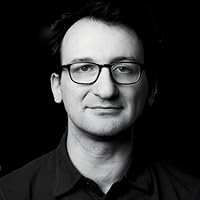
«Сумма технологии» подвела итог классической эпохе исследования Будущего. В своей книге Станислав Лем провел уникальный и смелый технологический анализ цивилизаций. Он проанализировал возможности возникновения принципиально новых групп научных дисциплин и полностью отказался от простых экстраполяционных построений Будущего. Написанная почти сорок лет назад книга нисколько не устарела и является классикой футурологии.
Stanisław Lem (staˈɲiswaf lɛm) was a Polish science fiction, philosophical and satirical writer of Jewish descent. His books have been translated into 41 languages and have sold over 27 million copies. He is perhaps best known as the author of Solaris, which has twice been made into a feature film. In 1976, Theodore Sturgeon claimed that Lem was the most widely read science-fiction writer in the world.
His works explore philosophical themes; speculation on technology, the nature of intelligence, the impossibility of mutual communication and understanding, despair about human limitations and humankind's place in the universe. They are sometimes presented as fiction, but others are in the form of essays or philosophical books. Translations of his works are difficult and multiple translated versions of his works exist.
Lem became truly productive after 1956, when the de-Stalinization period led to the "Polish October", when Poland experienced an increase in freedom of speech. Between 1956 and 1968, Lem authored 17 books. His works were widely translated abroad (although mostly in the Eastern Bloc countries). In 1957 he published his first non-fiction, philosophical book, Dialogi (Dialogues), one of his two most famous philosophical texts along with Summa Technologiae (1964). The Summa is notable for being a unique analysis of prospective social, cybernetic, and biological advances. In this work, Lem discusses philosophical implications of technologies that were completely in the realm of science fiction then, but are gaining importance today—like, for instance, virtual reality and nanotechnology. Over the next few decades, he published many books, both science fiction and philosophical/futurological, although from the 1980s onwards he tended to concentrate on philosophical texts and essays.
He gained international fame for The Cyberiad, a series of humorous short stories from a mechanical universe ruled by robots, first published in English in 1974. His best-known novels include Solaris (1961), His Master's Voice (Głos pana, 1968), and the late Fiasco (Fiasko, 1987), expressing most strongly his major theme of the futility of mankind's attempts to comprehend the truly alien. Solaris was made into a film in 1972 by Russian director Andrei Tarkovsky and won a Special Jury Prize at the Cannes Film Festival in 1972; in 2002, Steven Soderbergh directed a Hollywood remake starring George Clooney.
Dazzlingly brilliant, Summa Technologiae is Lem's speculative nonfiction masterpiece, written in 1964 but not translated into English until now. It contains the intellectual seeds of most of his subsequent work, and ideas that very few science-fiction writers were even touching at the time (nanotech, evolutionary biology, virtual reality, complexity theory, the "singularity", etc.). The penultimate section, "The Creation of Worlds," is one of the most mind-expanding things I've read in some time, tying evolution, cosmology, technology, and language together in an epic analogy.
Fans of Lem's later Imaginary Magnitude and A Perfect Vacuum will find many of their ideas already present in Summa. Lem is not as pessimistic here as he would later become. While hardly a techno-booster, he's more concerned here with possibilities than likelihoods, so he does indulge in some best-case fantasies at times--which are still not *that* sunny.
Here's what he has to say: "Civilization lacks knowledge that would allow it to choose a path knowingly from the many possible ones, instead of drifting in random tides of discoveries. The discoveries that contributed to its construction are still partly accidental. ... So it is not a question of condemning of praising technology but rather of examining to what extent we can trust its development and to what extent we can influence its direction."
Not terribly reassuring. The sections on virtual reality ("phantomatics") and artificial life ("imitology") are lighter on the gloom and feel quite prescient.
While not necessarily the best place to start if you're new to Lem (try A Perfect Vacuum for a more digestible, Borgesian form of some of Lem's ideas), Summa contains Lem's brilliance in the most concentrated form. It is absolutely essential for Lem fans and for anyone interested in authentic, hard-nosed futurism, rather than posthumanist cheerleading.
Читал рекордно долго: около двух лет с большущими перерывами. Делать так не стоило, потому что эти перерывы, вместе с непростой подачей непривычно плотного потока информации, к последним частям размыли и исказили то, что ещё оставалось в памяти от частей первых. По этой (но не единственной) причине книгу мне нужно будет перечитать.
Меня легко увлекают технократические идеи. Каждый день - новые статьи о вездесущем Илоне Маске, планах о высадке на Марс, продлении жизни, нанотехнологиях, физике невозможного и прочих чудесных (в хорошем смысле) вещах. Это очень круто и в духе времени.
Но "Сумма технологии" содержит всё это и намного больше. Систематизировано, разложено по полочкам с нескучной дотошностью. Со взглядом в перспективу, с разных точек зрения, со смелыми, но обоснованными прогнозами и всевозможными вариантами развития нас и нашего мира.
Трудно представить, каково было осознать и написать это в 1960-х. Даже сейчас, когда значительная часть предсказанных в книге явлений уже не является фантастикой, в некоторые заявления ещё может быть трудно поверить, и многие мысли могут казаться чересчур дерзкими. Кому-то, конечно, покажутся, но не мне. "Сумма", по-моему - очень поучительный пример для консерваторов, напоминание о том, что мир не только "не стоит на месте", но и ускоряется с небывалыми темпами. Если рядовые мы и не являемся двигателями этого прогресса, нам хотя бы нужно нужно успевать за ним - и уж точно не пытаться тормозить.
А ещё было бы очень круто прожить достаточно, чтобы стать свидетелями того, как воплощаются в жизнь пока нереализованные идеи "Суммы технологии". Надеюсь, и проживём.
I'm halfway through and this is already five stars, a philosophy by someone who denies being a philosopher. The Summa is a beautiful work of science and art and philosophy. All Lemmings should flock to this text as it contains many of the ideas than animate Solaris, Fiasco, the Futurological Congress, Non Serviam, the Sniffle, and other Lem favorites. This was written in the 60s before many of his major works and is probably a kind of hard AI Bible for those in that community like Dennett Hofstadler and Co. The chapters on first contact and alien civilizations are wonderful. I do have grave disagreements with Lem's structuralism or functionalism but I agree totally with his focus on evolution as the kind of master key for understanding intelligence, language and many other things. Lem is always fascinating and way way ahead of the curve. My only problem is I disagree with his tendency to ignore concrete experience and in brief the materials in which functions are realized (I've written about it, as have many others since the heyday of functionalism and hard AI). These are important and in a way stop the runaway regresses he fears about information, meaning, interpretation and the reality of our sensations or "what it's like" to be a creature of evolution. We are grounded in matter and energy (or concretely realized configurations of these) not just abstract information. Nevertheless a certain skepticism about "consciousness" is fully justified. Lem's skepticism about meaning and representation in language is also very valuable. He sees language as a causal-evolutionary phenomenon, and fundamentally non-conceptual, not as the realization of some Tractarian vision of the perfect logical system. Conceptual agreement and generality seem to come from the fact that our evolutionary use of language cannot police non-agreement and not from Platonism. Very strongly agree. In short, this is a magnificent thought provoking book that presaged all sorts of ideas in the AI and SF communities. His speculations are becoming real as we speak, many are already here.
A far reaching and comprehensive look at the future of technology and the autoevolution of mankind within that future. Even fifty years after its composition it seems very relevant. For me, Lem is a more compelling and thought provoking futurist than Kurzweil.
Jau bene trečią kartą skaitau šią Lemo knygelę, tenka tik apgailestauti, kad lietuvių kalba neturime viso "Summa Technologiae" veikalo, kuris dar ilgam išliks filosofinių esė apie civilizacijas klasika.
I believe a professional academic who specializes in either Lem or history of futurologist thought will find this book interesting, but would not recommend to a casual hobbyist.
Firstly, Lem's writing (or its English translation) is slightly too often unnecessarily wordy and burdensome to read. And while Lem presents many interesting ideas (contrast "phantomatics" with "virtual reality"), many of them are very speculative, or based on further speculative conjecture, or based on outdated science (which is not surprising itself, as Lem's devised them from the vantage point of the 1960s Poland). Some of Lem's theories are interesting observations that I will call outright false (for example, comparison of technological creations to natural evolution and attributing deterministic dynamics with certain "phases" to both). But even though it is occasionally fascinating to try to map Lem's ideas to their current counterparts, their formulation does not come with sense of relevancy.
Moreover, many of Lem's theories of universe and life and information and their function are like a cathedral built on speculative arguments, not testable hypotheses or provable mathematical statements, but rather argument on argument: what you are supposed to do when you observe construction that looks wonky in some regard, but you are not construction engineer either and can not confidently judge if the building is truly sound, or maybe if not the whole of it, at least some sections? Keep going with study of the structure with the hope that the understanding of which parts are salvageable will come later, or determine that the best course of action is to give up?
With the above paragraph I try to say that as I progressed with the book, I started skimming more and more, not sure what to make of it. I repeat that book is probably more interesting to an academic who specializes in this kind of academic thought, but as person only with some interest in science, future and science fiction, I did not obtain much of the claimed insight.
Це чудова універсальна настільна книга для кожного наукового фантаста і футуролога. Незважаючи на поважний 50-річний вік, вона не втратила свого футурологічного і прогностичного значення. Лише декілька зауваг у мене виникло в ході прочитання:
1) описуючи «фантомат», Лем чомусь зазначає, що до одного фантомата не можна підімкнути двох людей. Він випустив з уваги можливість створення спільної «моделі реальності», з’єднаної двосторонніми зв’язками з декількома пристроями моторно-сенсорного нейронного інтерфейсу – таким чином, щоб кожен клієнт керував своїм персонажем у світі фантомата (і ці персонажі навіть могли б зустрітися). В наш час існують ММОРПГ, які відділяє від багатокористувацького фантомата лише те, що замість безпосереднього нейронного інтерфейсу ми досі використовуємо біо- і технологічних посередників між мозком і машиною: мозок – пальці – клавіатура – комп’ютер – монітор – очі – мозок.
2) хотів сказати, що в розмові про проблему «неподільності особистості» Лем не заглибився далі в «копіювальну машину руйнівного типу», яка могла б мати квантові властивості, а відтак – переносити з одного місця в інше якусь «неподільну інформацію», якусь квантову систему, яка «не підлягає копіюванню». Але потім зрозумів, що теорема про заборону клонування була сформульована лише 1982 року (а потім уже, власне, Роджер Пенроуз придумав свою квантову теорію свідомості).
3) єдиним практичним застосуванням матричного числення автор чомусь уважає квантове числення, але ж системи лінійних рівнянь розв’язували задовго до відкриття квантів. Утім, це помітили й критики, стаття яких уміщена в самій книзі.
А, і так. Закономірною кульмінацією «вирощування інформації» буде такий метод: узяти людський сперматозоїд, запліднити ним яйцеклітину, виростити дитину, навчити її фізиці й передоручити їй розробку наступної теорії :)
I have been a sporadic fan of Stanisław Lem since I read The Cyberiad in the late '70s. (I also became a huge fan of the translator, Michael Kandel, who did an amazing job of translating a book that depends - heavily at times - on wordplay.
Lem, for those who do not know, was the best-selling non-Anglophone science fiction writer of (at least) the second half of the 20th Century - with the possible exception of the committee that was writing the Perry Rhodan books at the time. He was a witty satirist, a deep thinker, and one of the most creative minds the human race has ever produced. (He also wrote books of reviews / introductions for non-existent books, simultaneously saving him the time and trouble of actually writing them and getting the opportunity to tell folks what he would have wanted themto take away from them if he had.)
The Summa Technologiae is generally held to be Lem's masterpiece, and I was terribly disappointed to learn that it had never been translated into English. So imagine my surprise and delight to learn a few weeks ago that it had at last been translated - and published -seven years ago! I of course immediately ordered a copy, and here it is.
What, you may ask, is it about?
Well, to begin with, it isn't a novel. It isn't exactly science fictoin, but it isn't exactly not science fiction, either: that is, it plays wildly with science-fictional ideas, but it isn't a work of fiction, at least in any sense in which I understand the word. It's more of a book of speculative science and philosophy.
Lem begins and ends with evolution, and keeps it close by his side through the whole book. He draws parallels between biological evolution and technological "evolution", pointing out (though not in these words) that the latter actually is an inarguable example of "evolution by intelligent design".
From here he moves on to the question of life in the greater Universe, rapidly and repeatedly drawing and discarding conclusions regarding whether there is intelligent life Out There and, if so, why we can't "see" it.
Next, he tackles the question of "intelectronics," the advancing world of computers and cybernetics. (It must be noted here that Lem first published the Summa in 1964, with revisions appearing until 1974. So his ideas about computers, and every other scientific and technological subject, are informed by those dates.) He rejects the Frankenstein scenario, but cautions against giving too much control to advanced computers, and is canny about the question of whether they can actually become conscious.
Lem continues through a variety of other technologies, including what we now think of as "fully immersive virtual reality", plus the creation of self-contained universes, life extension, cyborgization, and others, all with wit, clarity, and incisiveness. He concludes with a "Lampoon of Evolution", in which he points out rather sharply the limits within which evolution has to work. By comparison, technological evolution need not become stuck in culs-de-sac the way biological evolution sometimes does; further, technological evolution allows for a much greater degree of hybridization between different "species".
I enjoyed this book a great deal. It took me nearly three weeks to read (only 361 pages, plus copious notes and a translator's introduction), but I didn't regret a minute of it. I can't judge how accurate the translation is (I was able to make that judgment about The Cyberiad because I compared notes with a Polish acquaintance), but it's very readable if at times quite dense.
It's finally over... I gave my best to understand the text, but sometimes it just went over my head with science and paradoxes. All in all, lots of interesting ideas (some of them already came to pass, some are more or less on the way, some are pure speculation) and typical Lem difficult writing.
I don't fully know how to rate it, or on what grounds, so...
В целом я остался совершенно поглощён данной книгой и мысли описываемых в ней. Масштаб рассматриваемых вопроса, поражало моё воображение. Я ничего подобного не читал до этой книги и очень доволен, что до неё добрался. Мало кому я бы советовал эту книгу, так как она абсолютно оторвана, как мне показалось, от современных потребностей людей. Её по сути незачем читать, если тебе не интересно, почему мы на данный момент ещё (возможно) не встретили другие разумные цивилизации во вселенной. Где заканчивается личность и что такое разум. Что будет, если оцифровать сознание или сделать клон себя, это будешь по-прежнему ты, или уже кто-то для тебя чужой. Путешествие по страницам этой книги для меня, как телепортация в те миры, которые в 99% повседневной жизни, даже особо не наблюдаются. Параллельная вселенная, где всё рассматривается на изнанку, а время течёт вспять, при этом, всё описанное имеет научное обоснование. Я хочу лучше понять мир, в котором мы живём и я с уверенностью могу сказать, что это книга, добавила большое количество кирпичиков в фундамент этой задачи.
Me tomó casi dos meses leer este libro debido a que prácticamente cada párrafo me dejaba reflexionando por horas acerca de conceptos que conocía en un vacío, pero que no había logrado conectar del modo post-trascendental de Lem. "Summa Technologiae" es un grimorio tecnobiológico, una historia y diátriba acerca de los efectores evolutivos que una vez aprieta el pedal no deja ir hasta por lo menos las páginas finales tanto del libro como de la última serie de ensayos en los que Lem despotrica contra el concepto de la evolución vista como un ente creador y constructor consciente; aunque llega el punto en que me siento como un abogado de "Malcolm in the Middle" al parafrasear diciendo: «Señor Lem, hay algo llamado "demasiada evidencia"», y para las últimas páginas siento que estoy leyendo una suerte de "Las raíces del azar" Koestler, pero sin el falsacionismo evidente. Y todo termina con el autor preguntando «¿Recuerdan a Gulliver?», y se despide ambivalentemente señalando los lenguajes que crean "realidades".
Лем, конечно, очень умный дядька. Но пишет совершенно беспощадно к своему читателю. Мыль растекается по древу и не слишком часто оттачивается до четких и ясных формулировок. Приходится выписывать эти витиеватые завиточки вместе с ним, иногда теряясь в лабиринте и перескакивая на какой-то другой завиточек, который приводит в тупик.
Книгу, в первую очередь, интересно читать, зная, что она написана 50 лет назад. И уровень полета мысли Лема, конечно, невероятен для того времени. Некоторые области от смог ухватить крайне глубоко (например, фантоматика), а некоторые и сейчас выглядят совершенно удивительными (выращивание информации).
Я лично почерпнул несколько интересных идей, но все же формат подачи помешал мне насладится книгой и впитать больше. Такие вещи приходится читать 2 или 3 раза, но я, пожалуй, пас.
Typical futurology. A book that was perceived as extremely advanced in the 1960s now looks like trash. A little over 60 years have passed. To be fair, I will note that Lem wrote more or less honestly, unlike other futurologists like Fukuyama, who lied brazenly and cynically.
Сума технології, як і будь-яка хороша наукова робота, у чомусь виходить за межі свого часу, у чомусь співвідноситься з ним. Ця книга не обмежується ні філософією техніки, філософією науки, а займається процесом їхнього взаємного проникнення. Кожен текст має два значення: глибоке, яке висловив автор, та широке, що пізніше вкладе в нього під час читання читач.
“Більш майстерний стратег може перемогти менш майстерного, але він може зазнати поразки від повного профана, оскільки дії останнього будуть "нерозумними" до непередбачуваності.”
“Космічну присутність Розуму ми можемо не помітити не тому, що його ніде немає, а через те, що він поводиться не так, як ми очікуємо.”
“Кількість видів тварин, які загинули в ході еволюції, незрівнянно більша за кількість видів, що вижили. Крім того, в організмів, які живуть довше, випромінювання збільшує частоту мутацій більшою мірою, ніж у короткоживучих.”
“"Абсолютний хижак" аж ніяк не є видом — самогубцем, ще меншою мірою він може вважатися "руйнівником природного довкілля". Його еволюційна роль носить зовсім інший характер: абсолютний хижак є каталізатор біологічної еволюції. Таким чином, Людина Розумна не може занапастити не тільки природу, але навіть і себе.”
“Чим штучніше навколишнє середовище, тим сильніше ми залежимо від технології, від її надійності — і від її збоїв, якщо вона їх допускає. З одного боку, цивілізація рятує людину від смерті, а з іншого — ставить її у більшу залежність від свого безвідмовного функціонування.”
Автор зачіпає область бездонних філософських питань, у яких може безслідно потонути весь наш конструкторський оптимізм: питання про математику та її ставлення до реального світу, проблема мови та семантики, різні види буття…
Nigdy nie byłem zbyt wielkim fanem literatury science fiction, choć szanuję wyobraźnię, która musi stać za jej autorami. Mimo to jestem ogromnym fanem Stanisława Lema. Nie dość, że lwowianin, to jednocześnie wizjoner.
Moja jego ukochana książka to "Summa technologiae", którą wydał chyba w 1964 roku ubiegłego wieku, gdzie przewidział internet, e-booki, telewizję ze stupięćdzieciesięcioma kanałami i masę innych rzeczy. To książka nie o kosmosie, ale o tym, co się wydarzy w przyszłości na Ziemi.
Poza tym, bo przeczytałem jego dwie biografie, bardzo interesujący człowiek. Tak sobie przypominam tę książkę o przyszłości.
There are a truly impressive number of potential sci-fi novels lurking in the pages of this speculative treatise, which covers such a huge range of subjects that it would seem incredible if this weren't by the famously imaginative Lem. Actually, given that it was originally published in 1964, it's still impressive, since only now are many of these topics coming to the light of day in the form of new technologies. Joanna Zylinska, who fills in ably for fan favorite translator Michael Kandel, sadly absent here, sums up the questions Lem was trying to explore at the beginning of her introduction:
"Is the human a typical phenomenon in the Universe or an exceptional one? Is there a limit to the expansion of a civilization? Would plagiarizing Nature count as fraud? Is consciousness a necessary component of human agency? Should we rather trust our thoughts or our perceptions? Do we control the development of technology, or is technology controlling us? Should we make machines moral? What do human societies and colonies of bacteria have in common? What can we learn from insects?"
Heavy stuff, and that's really only some of the subjects he discusses, at far greater depth (and length) than those teasers even hint at. A stumbling block is his blizzard of neologistic terminology ("theotechnologists", "phantomatics", "imitology", "ariadnology") or words that are just plain obscure ("biogeocenosis", "cybergnostic"), but regular readers should be used to his ability to dig deeply in the dictionary for a needed term or, should that fail, his unhesitating willingness to make a suitable term up. His style will be familiar from his other essay collections: dense in argument, assumption, and expansion. Here's a sample from the "Two Evolutions" chapter:
"The technologies that facilitate living are becoming a tool for life's impoverishment because the mass media are turning from their role of a compliant duplicator of spiritual goods to that of a producer of cultural junk. We are told that, culturally, technology is at best barren. I say 'at best' because the unification of humanity it promotes takes place at the expense of the spiritual heritage of the past centuries and also at the expense of the ongoing creative efforts. Subjugated by technology, art begins to be dominated by economic laws, showing signs of inflation and devaluation. Above the technical pool of mass entertainment - which has to be easily accessible because general accessibility is the mantra of Technologists - only a handful of creative types survive. Their efforts are focused on ignoring or deriding the stereotypes of mechanized life. Briefly put, technoevolution brings more evil than good, with man turning out to be a prisoner of what he himself has created. The growth of his knowledge is accompanied by the narrowing down of possibilities when it comes to deciding about his own fate."
So on a purely formal level, you have several overlapping economic and cultural arguments, wrapped up in a spiritual argument, which itself is only one part of a long, dense chapter comparing and contrasting biological and technological evolution. One can argue that he's right or wrong, but he's arguable regardless - many many hours of debate could be spawned just by that one paragraph.
Unfortunately, I feel like the whole of this vast treatise is more "arguable" than "enjoyable". I'm not sure if his primary goal with these writings was to provoke any particular reaction from his audience; to my mind, he's so effective in general at presenting his ideas in his fiction that perhaps in this case he felt like constructing narratives around these ideas was simply too difficult. But these ideas feel so hermetic that it's often very difficult to appreciate the nuance and vision, and all too easy to simply get lost. One example is the section "The Dangers of Electrocracy", which resembles an exceedingly condensed version of Isaac Asimov's short story "The Evitable Conflict", wherein robots tasked with ensuring the well-being of mankind slowly usurp more and more power over the world economy until a few executives realize that humanity has unwittingly ceded an important measure of control over its destiny to its servants - but possibly for the better. In Asimov's telling, this is a powerful moment of ambivalence for mankind, an illustration of how the aggregate of many small decisions can have an overall questionable effect; in Lem's description, it's simply a technical matter of odds, black boxes, and homeostatic equilibria.
However, once allowances have been made for the scope of Lem's ambition, the imposing edifice of Summa Technologiae can be seen for what it is, less an attempt to settle disputes than to spawn a whole literature of new ones. This is not the last word on anything, merely a first few hundred questions from one of the greatest science fiction authors of all time. I could wish that he had worked these into his novels, yet there are so many potential novels lurking within that this deserves a closer study by anyone interested in a pure work of ideas.
Lem thinks out loud across cybernetics, biology, and philosophy at once, rarely closing the loop on a single claim. It can feel chaotic: facts and speculation interwoven at every level of abstraction, indifferent to disciplinary borders. But that's the point. Writing in 1964, Lem reached for synthetic evolution, designed intelligence, and natural selection as a wasteful "engineer", without proper vocabulary that would eventually come decades later (see Dennett's Darwin's Dangerous Idea). No syllogistic satisfaction here. Instead, the rarer feeling of watching someone describe the shape of an idea before it has a name. Reads like a work of prophetic, almost divine inspiration.
Mainly, the writing is very dense. Lem surrounds each idea with a lot of facts, ideas, even speculation that I believe he thinks adds some sort of validity, scholarship even, but really just obscures his thinking.
What the book should be is a series of monographs that are collected with an overarching description of his aim and analysis of the set taken together. That upper or top level analysis would be the “summa” aspect of the book.
I would have welcomed a succinct, plain summary of his aims, but instead the first chapter, Dilemmas, meant to lay out his intentions, is written very much in the same way as the rest of the book with lots of extra information, examples, and so on. If you want to write about technologies and society, lay out your arguments cleanly.
The translator’s introduction was more useful in that regard.
Certainly this is not a book I will reread. Whether or not the ideas still hold up or are dated is not the point. There are better ways to get the same information, have the same debate and discussion.
Ω(»,Φ,I,β) - Lem's wordsmithing abilities, while nuanced & accurate, are obscure, niche, & archaic. That just makes it stranger when he's talking about things earlier than almost everyone else.
What an extraordinary book! This has been first published (in Polish language only) in 1964. Subsequent first German edition in 1976, first English edition in 2013 only. (Why?) This books is a compendium of philosophical deliberations, extrapolating from the state of scientific knowledge mid-century. It is testament to Lem's genius, that one can not only read and enjoy this book some 55 years later, but that the questions he poses have retained a high degree of relevance for our time. All of a sudden, a number of Hollywood Sci-Fi blockbusters of 10 years ago feel like mere rip-offs of ideas Lem has introduced way back. (There's an idea for a academic research paper.) En route, he outdoes Thomas Aquinas - not a small feat!
Рекомендую цю книгу всім кого цікавить футурологія(наука про майбутнє).
Найбільше сподобалась, описана автором ’фантоматика’, це цілком імовірна річ на шляху розвитку нашої цивілізації, і навіть зараз досліджують подібні речі (усвідомлені сновидіння, ’віртуальна реальність’(oculus rift - ще дуже далекий її прототип).
Ставлю 4 бали, оскільки мого тезаурусу не було достатньо для сприйняття всього, що описував і аналізував Лем і тому в деяких місцях було досить нудно, тим не менше в майбутньому збираюсь ще раз перечитати цю чудову книгу.
Lem's smart but maybe too smart. He goes off on these long theoretical rants about what life would be like in a future where computers could simulate reality to the point that the user of the simulation couldn't tell the difference between it and reality - what the psychological implications would be. Then he tells us that he's the only science fiction author alive doing any work of any interest. Really?
Book is hard Most of information will not be understanded however it does inform you about interesting thoughts that you would never discover by yourself Value of technologies in our life, very strong prediction of modern VR technologies and concepts of cyborgs
Stanislaw Lem nos deja entrometernos en algunos de sus ideas frente al avance de la tecnología que se estaban desarrollando en el momento en el cuál lo escribió (inició de la década de os sesenta). Sorprendentemente muchos de sus análisis se pueden aplicar al desarrollo de la tecnología actual, con temas tan vigentes como la inteligencia artificial (intelelectrónica en el libro), realidad virtual (fantomática para Lem), integración de mecanismos con el cuerpo para "potenciar habilidades" entre otros temas interesantes. No hay duda que Lem era un erudito en muchos temas, entre ellos la tecnología y la biología. Este libro es una muestra de esta erudición a través de su tesis principal planteando una cierta analogía frente a la evolución biológica y la evolución tecnológica, partiendo del hecho de asumir la tecnología como un proceso homeostático regulador del ambiente (y a su vez la condiciones de los humanos). A lo largo de sus paginas con ejemplos y algunas sátiras pasa de analizar las posibilidades de otros mundos con seres inteligentes, pasando por mundos creados por la misma humanidad con diferentes niveles de control, hasta redactar un panfleto contra la evolución desde un punto analítico de sus métodos, todo esto, a la luz de una intensión: tratar de revisar las posibilidades de evolución de la humanidad. Este es un libro obligado para las personas que les interesa los temas relacionados a la tecnología y su repercusión en la sociedad.