While poverty and dust storms plague a Colorado mining town during the Depression, doctor's wife Bena Jonssen begins to unravel the sexual corruption lurking under the community's thin veneer of respectability. A first novel.
Heidi Suzanne Julavits is an American author and co-editor of The Believer magazine. She has been published in The Best Creative Nonfiction Vol. 2, Esquire, Story, Zoetrope All-Story, and McSweeney's Quarterly. Her novels include The Mineral Palace (2000), The Effect of Living Backwards (2003) and The Uses of Enchantment (2006) and The Vanishers (2012).
She was born and grew up in Portland, Maine, before attending Dartmouth College. She later went on to earn an MFA from Columbia University.
She wrote the article "Rejoice! Believe! Be Strong and Read Hard!" (subtitled: "A Call For A New Era Of Experimentation, and a Book Culture That Will Support It") in the debut issue of The Believer, a publication which attempts to avoid snarkiness and "give people and books the benefit of the doubt."
In 2005, she told the New York Times culture writer A.O. Scott how'd she decided on The Believer's tone: "I really saw 'the end of the book' as originating in the way books are talked about now in our culture and especially in the most esteemed venues for book criticism. It seemed as though their irrelevance was a foregone conclusion, and we were just practicing this quaint exercise of pretending something mattered when of course everyone knew it didn't." She added her own aim as book critic would be "to endow something with importance, by treating it as an emotional experience."
She has also written short stories, such as "The Santosbrazzi Killer", which was published in Harper's Magazine.
Julavitz currently lives in Maine and Manhattan with her husband, the writer Ben Marcus, and their children
The Mineral Palace was the debut novel by author Heidi Julavits published in 2000, so it has been in my library for some time. Although the book quickly took on dark tones as Bena was increasingly forced to confront, not only her own demons, but those of the town of Pueblo, the beautiful and descriptive writing was filled with such compassion and strength to keep one's interest as Bena comes to terms with her roles of wife and mother.
It is 1934 and in the midst of the Great Depression when Bena and her physician husband Ted Jonsson move with their infant son from their home in Minnesota. Because there had been a problem in the clinic, Dr. Jonson had been forced to leave, feeling fortunate to find a position in a small clinic in Pueblo, a dwindling Colorado mining town plagued by dust storms and poverty. As they journeyed west in their black touring car, Bena has a chance run-in with Bonnie Parker of Bonnie and Clyde fame, while stopped in Dodge City, Kansas. The mysterious woman gave Bena a charm of a water tower with "Dodge" stamped across it for luck. However, Bena is fixated with numbers and how they may portend good or bad fortune as she is constantly reordering series of numbers as they present themselves. Bena lands a job as a society reporter for The Pueblo Chieftain. There are a lot of interesting, sometimes tragic, characters with one of the focal points being the famed Mineral Palace, now abandoned and in disrepair, but plans are being made to restore in to its former grandeur. Its original purpose when designed in the late 1800's was to promote the wealth of Colorado as a mining state. There are a lot of seemingly disparate threads that suddenly come together in an explosive ending. I will certainly read more by Heidi Julavits.
"In the distance she could see Pikes Peak; she could almost discern the trail beaten into its brown hide by Ute mothers as they climbed, arms outstretched and full with the children born without sight, without arms, their palates cleaving high and straight to the domes of their skulls."
I just don't know what to make of Heidi Julavits! Where does she come up with this stuff?
A beautifully dark novel, set in the 1930s Depression Era, in a small Colorado town. Meticulous writing, intriguing setting, multi-dimensional characters. Julavits is especially good at crafting complicated relationships between characters. You know, the sort of relationships where most things go unspoken (intentionally). Think Revolutionary Road set amid dust storms and prostitution rings.
Some of the plots and characters were predictable (____'s death and Red is only attracted to broken women) but there were more than enough complications to keep me engaged until the last page.
This novel was a very spontaneous purchase I made after reading the summary. Unfortunately, it did not work out quite well for me, as I couldn't take to the main character of the story, which mostly left me unaffected. The only parts where I could sympathize where the motherly moments where Bena tended to her little son and later found out about his tragic disease. Otherwise, it turned out to be a case of "let's get over with it", which was not entirely unpleasant, but not very entertaining either. However, this feels a very personal and subjective experience, so I will neither advise against nor recommend this book.
I can’t remember the last time I was this disappointed in a book. It was dark, hopeless and depressing. I know... dust bowl, depression era, what did I expect? I expected at least a sliver of hope or light. I’m not saying the writing wasn’t good; it was. The story was just too too heavy.
I understand why this is more of a 3-star book for most people, but I'm always interested in portrayals of small-town journalists, and that bumped it up a notch for me. Grim but well-written.
I picked up this book because I loved the cover which spoke of intrigue to me. The book had no intrigue whatsoever. I have no issue with realism and this book is set in the grip of the Great Depression in America, but I like a book to have some uplifting moments – even if it’s just one!
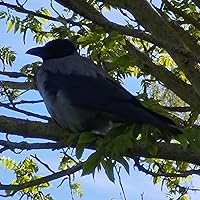
Bena Jonssen’s marriage is failing, her newborn baby is unwell, her husband lost his job, and they are travelling across America to a tiny town in the middle of a dustbowl. No one is happy. From the moment a crow hits their windshield on page six, the extensive description of death and decay begins, and continues through to the final page. I have no idea what hurt the author, but the amount of animal deaths in the first few chapters is incredibly off-putting – from the crow, to a cat having a rock thrown at its skull, alley cats being stamped to death, or killed with rat poison, to a blind dog dying, and that’s just the start.
The theme of death and decay continues. I had hoped when Bena visited the Mineral Palace of the title, it might pick up, but it didn’t. The palace is a shell of an old time, full of ghosts, rot, and decline. I saw no hope in it, and was rewarded with yet more despair. I gave up. I couldn’t relate to, or even like, Bena and I just didn’t care about any of the characters. I skim read the rest of book in an hour because I hate not finishing books. There wasn’t one ounce of hope, and it moved on to incest, suicide, and infanticide. Even Bena said at one point ‘This wasn’t how she’d romanticized even the bleakest of goodbyes.’ Yes, Bena! I feel you! This book is bleak and unsatisfactory in every way.
Julavits writing is good, but is desperately wasted on a grim story that leaves you feeling tired, dispirited, and depleted.
This entire review has been hidden because of spoilers.
Set during the depression which is sad enough as it is, this book is brutally honest about the shit that can happen in life. Most of the characters have had traumatic childhood experiences that they have carried into adulthood and are just floundering their way through life meeting or making more more hurt. The rich don’t really care about the poor during the depression but pretend too. Your dad who didn’t claim you may become your worst nightmare, and marriages are mostly a pretense. It’s heartbreaking what people live through. But it’s honest. The author doesn’t flinch in telling it how it is. But emotionally prepare yourself because it starts sad, continues sad, and ends sad. The writing was very bumpy in the first 3 chapters, she previously wrote short stories and it has that disconnected feel to it. By the 4th chapter the narrative kicks in. While it could be called historical fiction it’s probably closer to a story about human nature, closer to a drama. I should’ve know when it started quoting Shakespeare that all would not end well.
Wow. What a strange, devastating novel. Five stars for me because I think this is so under-rated and a surprising discovery. Atmospheric, dark, nuanced, and with sparkling prose - a book that pays homage in ways to classic gothic literature, but in the dusty, desolate setting of the boom and bust American West. I'm looking forward to reading more Heidi Julavits.
A strange, dark and churning story. I didn't enjoy it as such but it did captivate me, I had to finish it. It's a strange creature with a touch of Murakami to it while remaining very distinct in its own right. An unsettling, slightly disturbing read.
Fratricide, suicide (x2), infanticide (x3), a child-molesting Santa Claus, kittens being eaten by rats, a slice of bologna as simile for a soul. Wow! And there's more where that came from. No depth to any of the characters but the author keeps you so busy you barely notice.
This entire review has been hidden because of spoilers.
DNF! What an awful book. Just a few chapters in, the author felt the need to write about a cat getting it's skull smashed by a rock thrown at it. The person who throws this rock is someone the main characters are driving by on the side of the road. For what purpose was this included in the story?
horrible, dry, slow, boring. I'm not sure how this got past publishing? did not finish. 100 pages in, still nothing happening. lost in a dust storm. chapter closes. next chapter, 3 paragraphs in, circle back to dust storm and what happened to characters.
3.5-This book was depressing and I took a few days break from it. The setting itself is bleak,the 1930’s Great Depression and drought. The town is run down and its less wealthy inhabitants have a horrible life. I started off liking Bena but as the story went on I went off of her,she could have helped Maude,she shouldn’t have gone back to work so soon after having little Ted as he needed her. My heart ached for Little Ted,there wasn’t the medical knowledge available then as there is now and Bena shouldn’t have done what she did in the end. Maude really should have given her baby to Gerta. Red was the only decent man in this book,Mr Gast and Ted were awful. The writing was beautiful but there were a lot of animal deaths which I didn’t like. The ending was upsetting.
…The truth was that she’s come to see her husband’s infidelities as a relief. She and Ted had created a comfortable life inside of which they could hide from themselves and each other. The distance he maintained from her in order to protect his philandering meant that she could rightly be unknowable to him, and he to her.
A novel, disappointing in its unriveting action, provides at times a concept worth considering. But why Julavits persisted in having this rather weak work published feels almost desperate in her obsession, perhaps at any cost, to be seen, and considered, a novelist. Her nonfiction, or for argument a contrivance we might name creative nonfiction, is so vastly superior to a “made-up” fiction relying on dehydrated tools called plot that reading this first novel was a monumental struggle. The problem wasn’t only my previous encounter with The Folded Clock: A Diary and how much I loved it, but the often held feeling I was now wasting my time reading this too-conventional first novel. But Julavits is smart and uses her personal studies to further enrich her fiction if the reader chooses to invest the time needed to discover hidden gems she plants in clear sight.
Julavits, in interviews, mentions the psychoanalyst Adam Phillips as a writer she reads. As relates to The Mineral Palace he writes in his book Monogamy that:
The best hideout—the cosiest one—is the one in which you can forget what you are hiding from; or that you are hiding at all. The secret the couple have to keep—mostly from each other—is what they are hiding from and that they are hiding. The belief they have to sustain is that their fears are the same.
We have couples because it is impossible to hide alone.
And as much as I appreciate the work of Adam Phillips, and am grateful for Julavits and my introduction to him, The Mineral Palace fails to sustain me any longer. The writing is simply not good enough to continue on with reading further than page 132. The failure of Julavits to keep me engaged unfortunately rests in her allegiance to literary convention. It is my hope that successive fiction coming from the pen of Heidi Julavits proves to be one-of-a-kind, unique in its example, and demanding of my time. She is too talented a writer to pretend to be a mainstream novelist.
Set against the Dust Bowl and Great Depression, Heidi Julavits’s debut novel The Mineral Palace is as heavy and despondent as the story’s backdrop. While the novel may not be a light summer pick-me-up, there is much to appreciate in Julavits’s well-crafted narrative and fine writing. Her prose is as polished as her pedigree indicates: an MFA from Columbia and an acknowledgments page crowded with shout-outs to literary heavyweights like Maureen Howard and Dave Eggers. Her protagonist is a reporter, trained to observe and witness from a cold, non-participatory distance, and so the reader is treated to stunning details of the dry, lifeless landscape in Colorado and the dry, lifeless people-scape in the stunted town of Pueblo.
Bena Duse Jonssen lives her daily existence much like a reporter—she is detached, questioning, amoralistic but quick to judge. She is a new mother in her mid-twenties, toting around a half-dead baby that seems to symbolize the hopelessness of America’s future, straining uselessly for life under oppressive economic and environmental conditions. It’s a bleak setting and a bleak story, bloated with deaths—dead animals, dead babies, dead souls. Julavits ponders the burden of living surrounded by so much death and a dead, dried up earth. “What is the point?” Bena asks twice in the novel. Most of the characters—and readers—would prefer not to think about the question, but it is inescapable in the hot, dusty surroundings, where the earth offers up no possibility for a renewal. Bena moves through her days curious about the lives and stories of other people, while seeing herself as smarter and wiser than everyone else, but also passive and listless in her unhappiness.
Like many women before her, Bena is dragged westward by her husband’s past mistakes and hopes for new prospects, and so Julavits tackles the ways that women’s happiness is bound up in the fortunes of their husbands. Very little seems to separate the wealthy woman, the maid, or the prostitute, when all are subject to the power, whim, and violence of male desire. And it generally doesn’t seem to end well for anyone in Julavits’s world. The unforgiving landscape that sweeps humans and animals into dust is matched by the depraved, deformed people of Pueblo who wound each other and themselves—missing limbs, bruises, blood, stitches, and twisted behaviors populate this novel in overwhelming abundance. Julavits seems to compress the world’s misery into one 6-month time frame, one single Southwest town. A tough read in that sense, but for the reader who can stomach the story, the writing is masterful.