Jump to ratings and reviews
Rate this book

Wolfe von Lenkiewicz

Rate this book
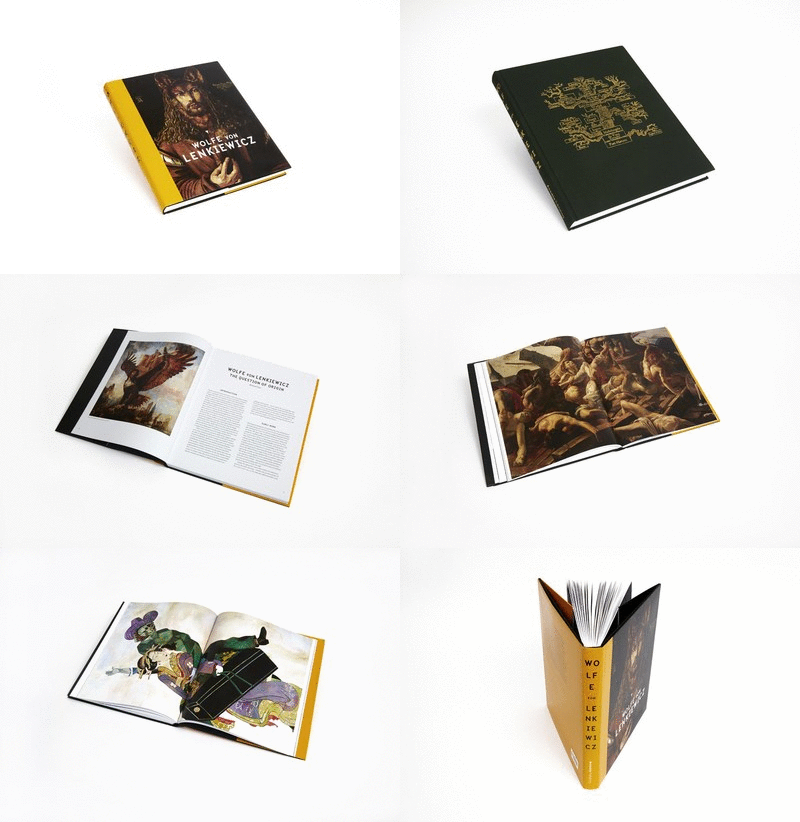
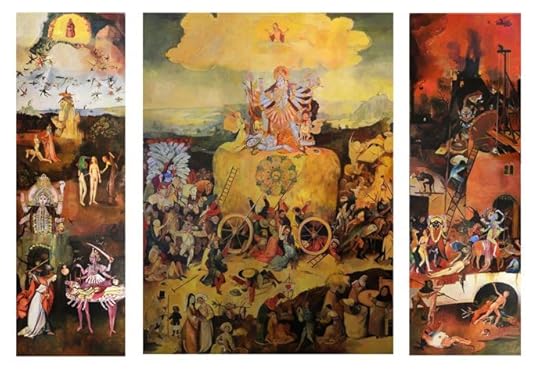
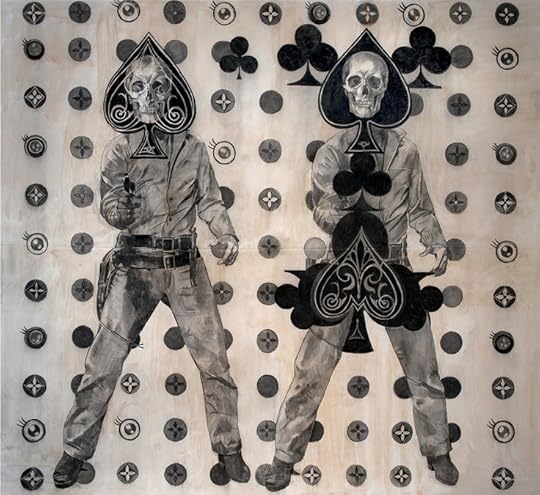
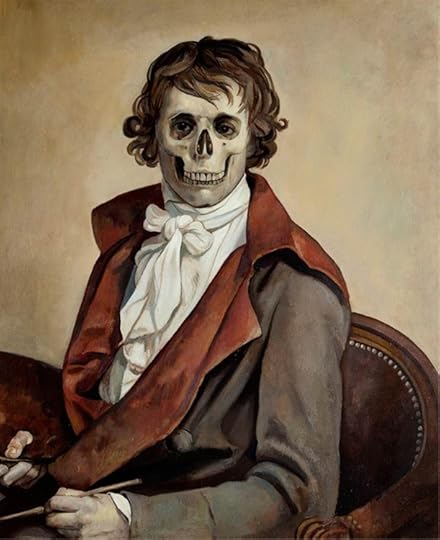
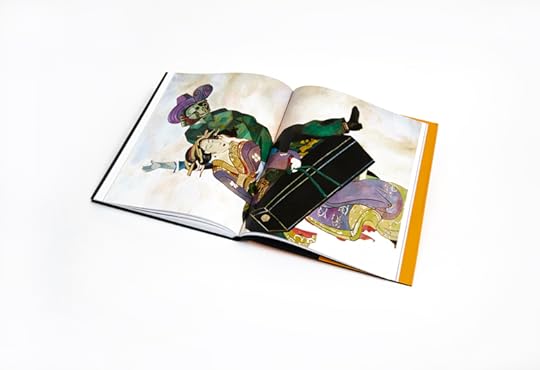
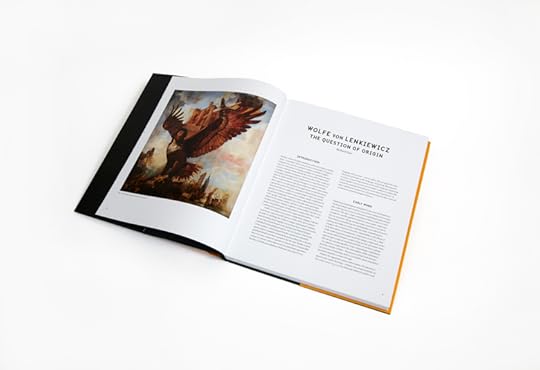
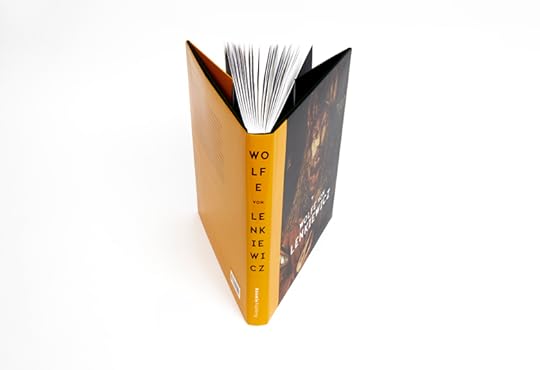
This is the first major monograph on the work of one of Britain’s most dynamic artists, Wolfe von Lenkiewicz. His striking paintings and drawings mine the hallowed halls of art history and popular culture in search of visual languages, imagery, themes, and motifs that he can appropriate, adapt, use, and abuse, bringing together different movements, genres, periods, and styles in dialogues that are surprising, innovative, and sometimes provocative.

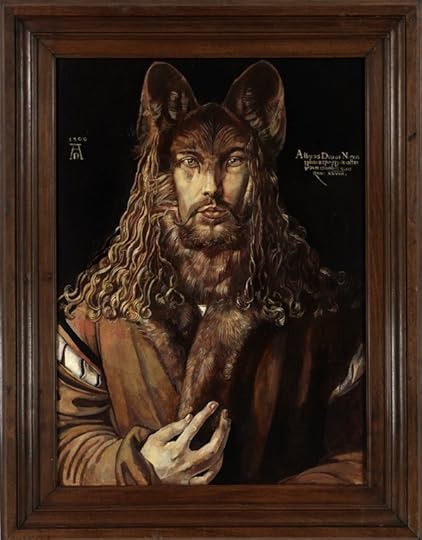
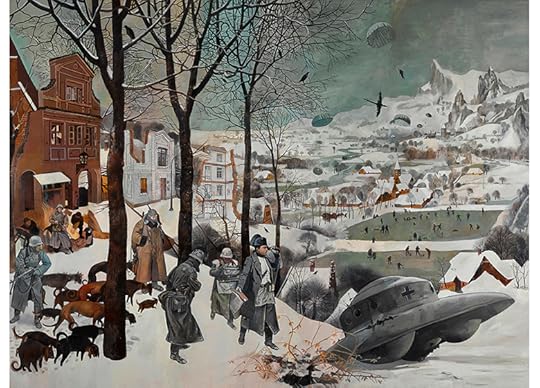
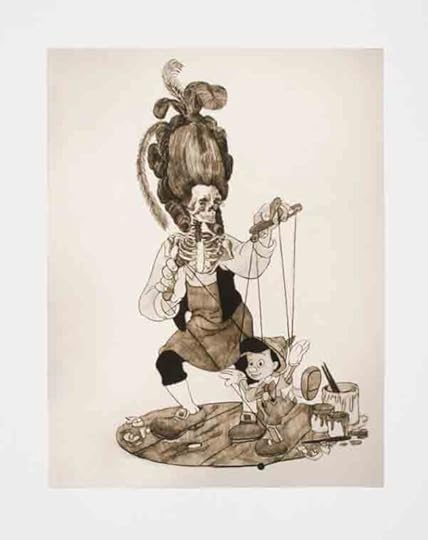
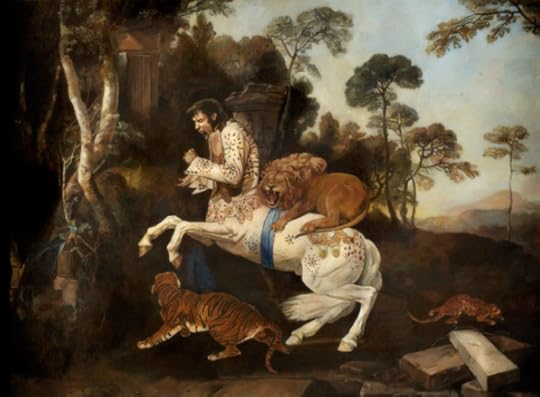
Lenkiewicz’s imagination and energy seem to be inexhaustible, concocting endless amazing hybrids such as iconic Renaissance paintings invaded by characters from nineteenth-century Japanese woodblocks, French Revolutionary masterpieces spliced with German Romanticism, or Cubism infiltrated by Victorian children’s illustration. The result is a peculiar and fantastical cast of characters and scenarios, whether Nazi soldiers trampling through the snow towards a crashed UFO in the middle of a village scene by Pieter Bruegel the Elder, Snow White making an uncomfortable guest appearance in an already troubling Balthus interior, or a guillotined head assuming a cameo role in an otherwise serene still life.

These painterly chimera are cultural mash-ups. Sometimes irreverent, sometimes witty, other times simply beautiful, odd, and arresting amalgams, they are always poignant, pertinent, and decidedly thought-provoking, inviting the viewer to think across time, cultures, countries, and ideologies about the many languages of art. In the process, Lenkiewicz has established his own distinctive oeuvre, one that perhaps perfectly illustrates the notion of post-modernity within painting – an oeuvre of juxtapositions and non-sequiturs, binary oppositions and the uncanny, ruptures and elisions, the real and the irrational. As well as often encouraging us to look at the history of art with fresh eyes, Lenkiewicz’s practice asks about visual culture today, about how our understanding of the past rests on shifting sands.

With an introduction by distinguished art critic Edward Lucie-Smith and a major new essay by writer and editor Richard Dyer, this beautifully designed and produced hardback book presents an impressive selection of works produced by the artist between 2009 and 2015.

Born in 1966 and based in London, Lenkiewicz is of German and Polish descent; he studied philosophy at York University, graduating in 1990. He is the son of the late painter Robert Lenkiewicz and great grandson of Baron von Schlossberg, court painter to King Ludwig II of Bavaria, the Swan King.

236 pages, Hardcover

Published October 19, 2015

32 people want to read

About the author

Richard Dyer

69 books28 followers

Ratings & Reviews

What do you think?
Rate this book

Friends & Following

Create a free account to discover what your friends think of this book!

Community Reviews

5 stars
1 (100%)
4 stars
0 (0%)
3 stars
0 (0%)
2 stars
0 (0%)
1 star
0 (0%)
Displaying 1 of 1 review
Profile Image for XenofoneX.
250 reviews359 followers
January 3, 2017
A Wolf Snuck into the Louvre One Night, and Did Such Wonderful, Terrible Things...
description
description
Except for the parts I made up, this story is completely true:
One night in Paris, a skinny wolf snuck into the Louvre. After weeks spent nibbling on garbage and passed-out drunks in alleyways -- little pieces they wouldn't miss -- it was the first place that felt safe. Wandering the long corridors, he came to the Department of French Paintings, and stopped to investigate the false windows. It was there he developed a taste for fine art... literally. He had a sweet tooth, and gorged himself on some of the Rococo section's most sugary compositions, devouring Boucher's and Fragonard's until he developed a sudden onset of Canine diabetes. He was a wild creature, but even the wolf was a little ashamed by the 20 pounds of evil-smelling shit he left behind. The next morning, museum security were predictably horrified. The curators pointed fingers and screeched and wept, the pain of the loss echoing through the dead palace like a rusty blade dissecting naked souls. The janitors were more pragmatic. Appointing themselves assistant curators to the wolf, they carefully bottled the scat in a borrowed Seifferd goblet. They then placed the 18th Century receptacle in the center of the room. On the walls were black and white photos of the paintings, before the wolf had 'revitalized' them as 'organic sculptures'. The impromptu exhibition was simply entitled 'Post Art', and it was generally well-received... particularly by a slightly younger Gerhard Richter. It gave him ideas about the embarrassing paintings which would become 'Volume 1' of his Catalogue Raisonne. He dedicated his next show to the wolf, and made a large pile of all his earliest canvases, 'revitalizing' them with kerosene and a match. He collected the ashes in clinical looking jars, and labelled them as 'Volume 1' of his Catalogue Raisonne. A secret campaign was launched to find the 'Wolf who Laid the Priceless Crap', led by a cabal of artists: Glenn Brown, Walton Ford, Akira Yamaguchi, and Mark Tansey. They eventually found him in a slimy Parisian dumpster he had made his atelier, and were dumbstruck by the sight -- the wolf had been crapping non-stop for days, and simultaneously rearranging the broken pieces of art-dung into two dimensional compositions adorning the dumpster walls, with many others stacked neatly to one end... every piece was a smelly work of pure genius. Galleries were uncertain how to market this exciting young talent, especially since he had a tendency to snarl and bite potential customers. It was decided to launch a complete image makeover... the wolf was equipped with an animatronic human costume and the name 'Wolfe Von Lenkiewicz'... very cheeky. And as it turns out, assuming a personality that's insanely erudite, pretentious-but-somehow-charming, and deadly-witty with weaponized quips, isn't all that fucking hard... there's an APP for THAT. So Wolfe Von Lenkiewicz, the skinny canine artist wearing an animatronic Man-suit, began dazzling and abusing the Contemporary Art scene. He was equipped with an A.I.-brain implant and digital vocoder that recycles and repurposes the best of Vincent Desiderio, the Chapman Bros, John Lennon, Johnny Lydon, and Odd Nerdrum; it's capable of firing 1000 anti-Artforum jargon-rounds a second, an assault no critic can handle, and no rich customer can resist. So... now his shitty paintings command 5 and 6-figure price-tags."

description
It's been a few months since I found an artist with the kind of imagery that burns itself into the walls of my cranium. It's like a pleasant sort of psychic and perceptual art-vandalism, one that I seek out as a fucking funderful, low-risk alternative to drugs. It's the mirror-image of the self-destructive determination/desperation of a junkie with cold sweat on his back. Wolfe Von Lenkiewicz -- I'll call him 'Wolfie', with a 'V', because I can -- is deep into engineering clever-as-fuck art history abominations that are beautiful, profound, and fun. Pretention can be cool, kids... delivered with an ounce of self-deprecation and a wry smile. Wolfie's dusted off a few Botticelli's and Utugawa's to play matchmaker and occasional pornographer for paintings long separated by oceans and centuries.
description
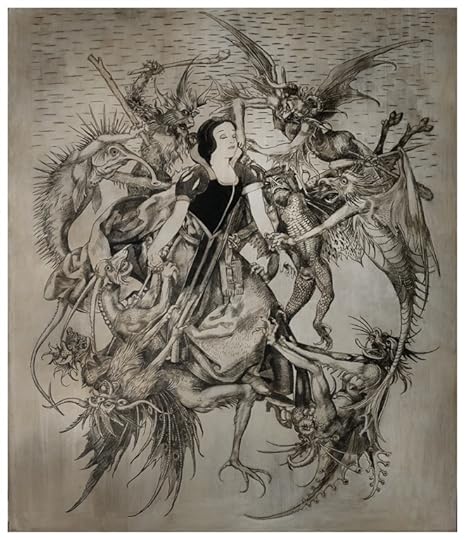
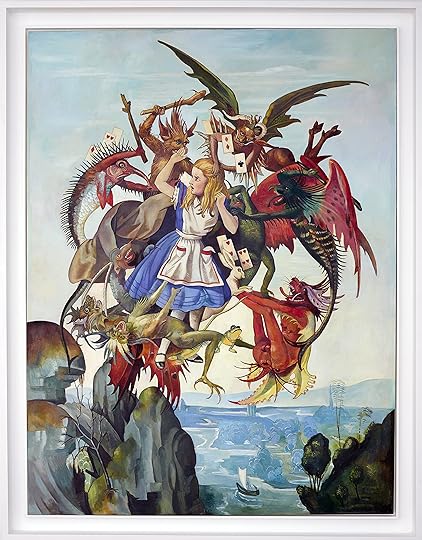
Von Lenkiewicz drops Alice into the same hellish scenario that Snow White suffered through in his original drawing, closely approximating the early Northern Renaissance engraving by Martin Schongauer, 'St. Anthony Tormented by Demons' (c.1470-1475); Schongauer's work inspired many powerful and fantastic imaginings of the scene, most notably Grunewald and Bosch:
description
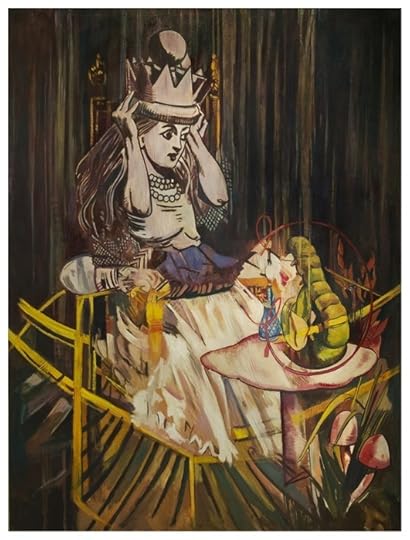
A unlikely collision between a John Tenniel (I think) illustration from Lewis Carroll's 'Alice in Wonderland' and Francis Bacon's 'Study After Velázquez’s Portrait of Pope Innocent X':
description
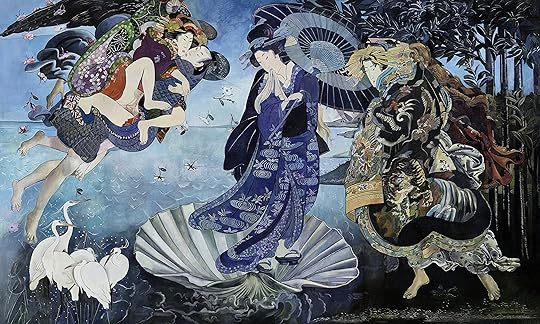
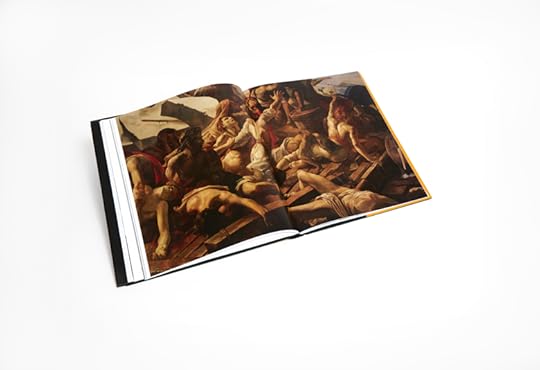
He does mash-ups and reinterpretations of high-watermark works from the Renaissance to Modernity: Botticelli's 'Birth of Venus', as a Hiroshige Ukiyo-e redux (1). Gericault's romantic masterpiece 'The Raft' crashes ironically into the icy romantic existentialism of Caspar David Friedrich's 'The Wreck of the Hope'(2)... fun on sooo many levels.
(1)
description
(2)
description
(3)Lenkiewicz's gifts with a pencil are how I first found his work, in a great anthology devoted entirely to graphite:Walk the Line: The Art of Drawing
description
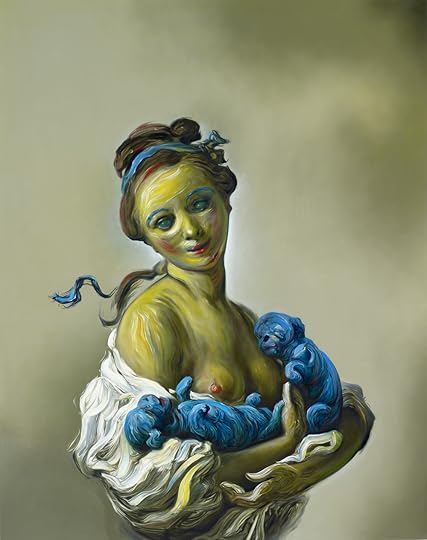
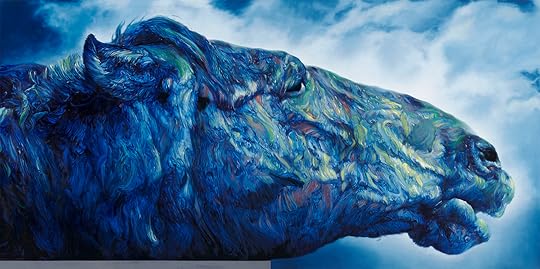
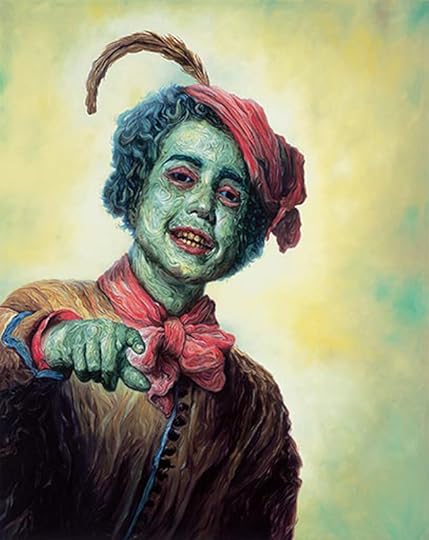
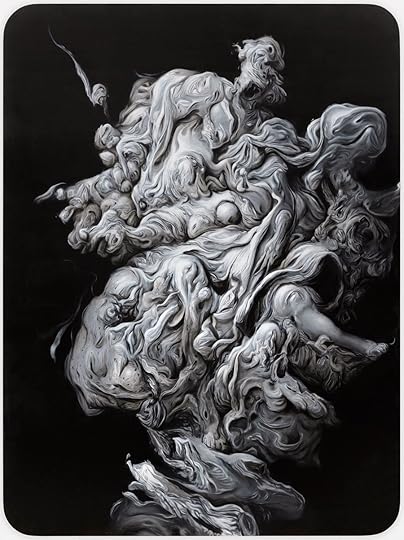
Wolfie's playing in the same gigantic art history as art medium sandbox in which you'll find Glenn Brown and the other contemporary pioneers of a post-modern representational art that establishes a visual interaction with the greatest painters and paintings of the last few hundred years: Mark Tansey, Vincent Desiderio, Walton Ford, Akira Yamaguchi, Raqib Shaw, Darren Waterston, and even the late Francis Bacon, with his psychological 'inner portrait' of a screaming 17th Century Pope complementing the Pope painting of Diego Velasquez. It's some stiff competition, but Von Lenkiewicz is pissing quality all over one corner and claiming it as wolves tend to do. Brown's history of doing nearly exact copies of paintings taken from online sources has gotten him some undeserved hatred*(See Footnote), despite the fact that they represent a very small portion of his oeuvre... and his technical virtuosity is on par with the Masters. I'm a fan of both artists, and they're both reaching a similar goal via different routes Brown takes his glowing jpegs and then distorts them; his oils are a triumph of 'trompe l'oeil' illusionism, with these corrupted, nearly unrecognizable homages covered in ominous colors and thick, impasto gestural strokes. But looking closely and at an angle, it becomes clear that the paintings are completely flat; the brushstrokes themselves are made up entirely of thousands of micro-brushstrokes, replicating the 'superflat' LCD pseudo-surface of the source. While these 'zombie' paintings are his best known, his near copies, like the ones that take SF paintings by artist-illustrators like Chris Foss as their starting point, are never exact; they're elevated to a massive scale, given aesthetic improvements that improve without significantly altering the original, with meticulous and intricate details, and grand titles like 'Boecklin's Tomb'. Brown's appropriation of largely forgotten SF illustrations is a very earnest appreciation, and a way of expressing the cultural changes that sound the death-knell for cultural elitism. The Google Image search is an algorithmically curated mega-gallery of odd-associations and strange bedfellows. It is the great leveller, with Chris Foss, Picasso, Robert Crumb, Velasquez are all hanging in the same room. Lenkiewicz has similar ideas, and a thoroughly unique aesthetic. The same could be said of Walton Ford, who works in the graphic language of 18th and 19th Century 'Natural History', emulating in particular the art of J.J. Audubon. Over the last two decades, he's perfected this style and made it his own, adding Surrealist and Symbolist elements to craft allegorical compositions of profound significance.
description
description
description
Chinese painter Yongbo Zhao is another artist who uses art history as an art medium; and then you've got the Chapman Brothers, who have used Goya as inspiration for two decades, and recently made literal use of Goya's oeuvre as their canvas. They purchased some of the last extant sets of original Goya portfolios like 'Disasters of War', 'improving' the plates with their own grotesque and whimsical paintings. But Wolfie's prodigious artistic talents make his paintings and drawings something just as important to me -- fucking awesome. For more on this species of contemporary art, I made a helpful list: Art History as an Art Medium: Listopia
description
description
As for the physical book, it is 'sublime'... a word I use very sparingly because it sounds muy lamo, but comes close to expressing this inexpressible awesomeness of this book. It's a perfect compromise, an epic, 240-paged, 11.25 x 13.25 inch monograph that isn't too big to read comfortably. The cover-image of Albrecht Durer's self-portrait hunts your attention down and tears out the hamstrings. Under the dust jacket, the book is a smyth-sewn, clothbound tome of bibliographic majesty, with a gilt-pressed front-cover illustration of a Darwinian tree of evolutionary progession; on the branches, however, are the names of many of Wulfie's most important artistic and philosophical progenitors. These names and the others found within produced some of the most powerful and visionary images in art history: from the Northern/Early/High Renaissance and Baroque -- Bosch, Bruegel, Durer, Holbein, Grunewald, Botticelli, Da Vinci, Caravaggio, Velasquez, Vermeer -- to Neo-Classicism, Romanticism, and Symbolism -- Goya, Friedrich, David, Gericault, Bocklin -- to Japanese Ukiyo-e -- Utagawa Kuniyoshi, Hokusai, Hiroshige -- to 20th Century Modernism and Post-Modernism, including Art Nouveau, Cubism, Futurism, Expressionism, Dada, Surrealism, Pop Art, Op Art, Walt Disney Animated classics -- Egon Schiele, Picasso, Chagall, Otto Dix, Balthus, Mondrian, and Bacon.
description
description
description
description
description
description
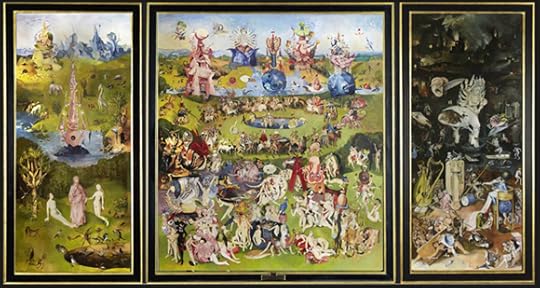
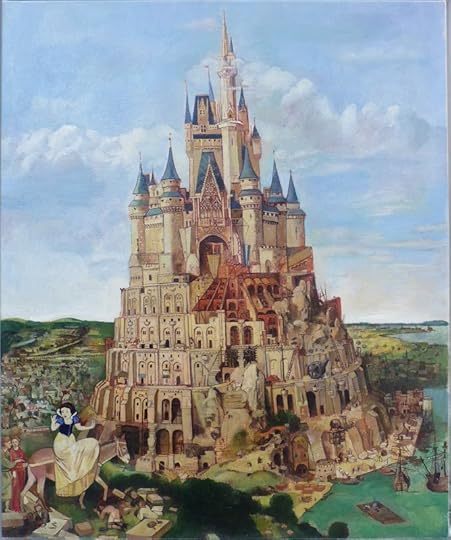
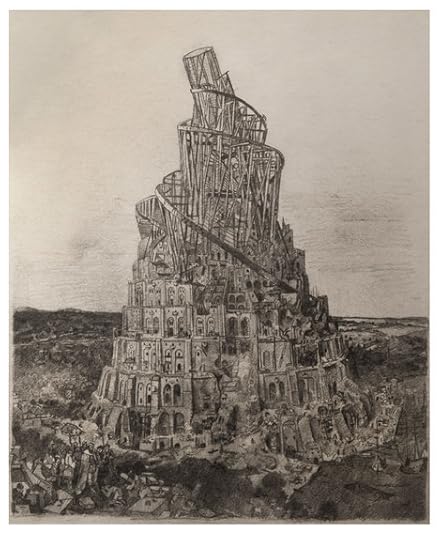
As a bibliophile and an art lover, I think that the art monograph can become a perfect synthesis of these two passions. Books like this one -- like Walton Ford's 'Pancha Tantra', and Ali Banisadr's 'One Hundred and Twenty Paintings' -- are works of art themselves, representing the most important and profound oeuvres in contemporary art. Wolfe Von Lenkiewicz has only been at it seriously for a few years, but the intelligence and wit on display, executed with the technical brilliance of the masters he's emulating, is remarkable. Some compositions are dark and subtle, speaking to readers with a background in art history; but you don't need to get every reference. One of his favorite sources is Gericault, whose name figures prominently on the cover's gold-pressed evolutionary tree. When he got weary of crashing Gericault's painted terror-raft into Friedrich's icy oblivion, he would play with the artist's notorious anatomical studies. Gericault requested the guillotined heads and severed limbs of two executed criminals for his artistic purposes, a reminder of how fucked up a world it was that you could get a bloody, dripping sack of hacked-up criminals just by asking nicely. These grotesque but powerful oil studies are somehow more disturbing in their plain, unadorned approach than Goya's 'Black Paintings' (with the exception of 'Saturn Devouring His Children', which wins the 'creepy-as-fuck' prize, hands down); humanity reduced to meat, the answer to a grim existential question. Lenkiewicz captures all these things by seamlessly integrating them into his still life paintings; just objects to join the composition. And then Lenkiewicz reinterprets Gericault's ground-breaking portraits of mentally disturbed inmates, trading faces and features above their jarring original titles. His technical skills, whether it be with oils or charcoal and pencil, are fucking amazing, augmented ten-fold by a visionary imagination... i.e. Bosch's 'Garden of Earthly Delights', the paradise and the nightmare joined by Asian demons and deities; or Bruegel's iconographic image of the 'Tower of Babel', with the image taking a Disneyfied architectural turn as Babel's top transitions to the iconic 'Cinderella Castle', in a style of oil painting that replicates Bruegel's beautifully. The large scale pencil version of the composition is equally impressive, with a more intellectual twist, substituting the castle for Vladimir Tatlin's famous 'Monument for the Third International' sculpture (a small-scale replica for a monument that was never built, contrasting with the Tower of Babel, which was also never finished, due to a communication breakdown of biblical proportions).
description
description
description
If you love art and art monographs, don't put this one off... especially for fans of Walton Ford, Michael Triegel, Ernst Fuchs (R.I.P.), Werner Von Tubke, Jonas Burgert, Ruprecht Von Kaufmann, Neo Rauch, and the names I've already listed above... they're all visionaries. It'll be out of print soon, and the price will run up into the hundreds, then thousands of dollars.

FOOTNOTES:
*{The hatred stems from some early Glenn Brown works that openly copy a couple Science Fiction paintings designed for paperback novels in the 70's and 80's by Chris Foss; it was an homage, a show of respect for an artist Brown felt was under-appreciated, and a genre that is often snubbed. But with the aid of Britain's notoriously unethical tabloids, the discrepancy in monetary value was overblown -- lumped in with Tracey Emin-style examples of slightly odd, occasionally douchey, 7-figure post-modern art -- calculated to outrage anyone who finds art scary and weird. The notion that Brown is another PoMo scam-artist couldn't be farther from the truth, with some of the most technically prodigious works on the contemporary market, and utterly anomalous works of genius that -- I'm sorry to say -- are far better than anything Foss has done: (See Below)}
Glenn Brown's virtuosic art history 'zombies':
description
description
description
description
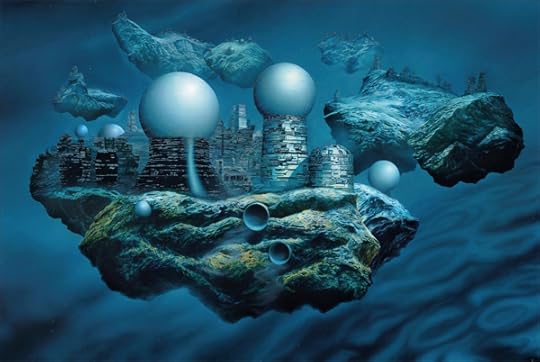
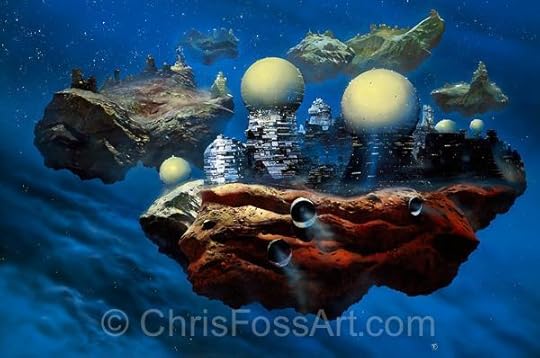
Below is Glenn Brown's version of Chris Foss' 'Floating Cities', followed by the original; it's an almost identical homage, larger scale, more detailed, but mostly faithful... and it's also mirror-reversed. The SF and 'fine art' homages are a very small part of his oeuvre, and he hasn't completed a new one in nearly a decade:
description
description

More Art-book Reviews

More Comic-book Reviews

More Novel Reviews


Displaying 1 of 1 review