

What do you think?

In Defence of Atheism: The Case Against Christianity, Judaism and Islam
In the twenty-first century, religion is making a comeback, bringing in its wake extremism of all kinds. From Christian anti-abortion campaigns to suicide bombers claiming the righteousness of Islam, we are witnessing a resurgence of fundamentalism. Michel Onfray's response to the threat of a post-modern theocracy is to lay down the principles of an authentic exposing the fiction that is God, he proposes instead a new philosophy of reason that celebrates life and humanity. In Defence of Atheism demonstrates that organised religion is motivated by worldly, historical and political power; that the three dominant monotheisms - Christianity, Islam and Judaism - exhibit the same hatred of women, reason, the body, the passions; that religion denies life and glorifies death. Onfray exposes some uncomfortable Judaism invented the extermination of a people; Jesus never existed historically; Christianity was enforced with extreme violence by Constantine; Islam is anti-Semitic, misogynist, warlike and incompatible with the values of a modern democracy.
256 pages, Paperback
First published January 26, 2005
About the author
Michel Onfray
394 books533 followersMichel Onfray is a French philosopher. Born to a family of Norman farmers, he graduated with a Ph.D. in philosophy. He taught this subject to senior students at a technical high school in Caen between 1983 and 2002, before establishing what he and his supporters call the Université populaire de Caen, proclaiming its foundation on a free-of-charge basis, and the manifesto written by Onfray in 2004 (La communauté philosophique). However, the title 'Popular University' is misleading, although attractive, as this 'University' provides no services other than the occasional delivery of lectures - there is no register of students, no examination or assessment, and no diplomas. After all, 'ordinary' French University lectures are open to all, free of charge. Nor is the content of the Université populaire de Caen radical in French terms, it is in its way, a throwback to less democratic traditions of learning. Both in his writing and his lecturing, Onfray's approach is hierarchical, and elitist. He prefers to say though that his 'university' is committed to deliver high-level knowledge to the masses, as opposed to the more common approach of vulgarizing philosophic concepts through easy-to-read books such as "Philosophy for Well-being".
Onfray writes obscurely that there is no philosophy without psychoanalysis. Perhaps paradoxically, he proclaims himself as an adamant atheist (something more novel in France than elsewhere - indeed his book, 'Atheist Manifesto', was briefly in the 'bestsellers' list in France) and he considers religion to be indefensible. He instead regards himself as being part of the tradition of individualist anarchism, a tradition that he claims is at work throughout the entire history of philosophy and that he is seeking to revive amidst modern schools of philosophy that he feels are cynical and epicurean. His writings celebrate hedonism, reason and atheism.
He endorsed the French Revolutionary Communist League and its candidate for the French presidency, Olivier Besancenot in the 2002 election, although this is somewhat at odds with the libertarian socialism he advocates in his writings.[citation needed] In 2007, he endorsed José Bové - but eventually voted for Olivier Besancenot - , and conducted an interview with the future French President, who he declared was an 'ideological enemy' Nicolas Sarkozy for Philosophie Magazine.
Onfray himself attributes the birth of a philosophic communities such as the université populaire to the results of the French presidential election, 2002.
Onfray writes obscurely that there is no philosophy without psychoanalysis. Perhaps paradoxically, he proclaims himself as an adamant atheist (something more novel in France than elsewhere - indeed his book, 'Atheist Manifesto', was briefly in the 'bestsellers' list in France) and he considers religion to be indefensible. He instead regards himself as being part of the tradition of individualist anarchism, a tradition that he claims is at work throughout the entire history of philosophy and that he is seeking to revive amidst modern schools of philosophy that he feels are cynical and epicurean. His writings celebrate hedonism, reason and atheism.
He endorsed the French Revolutionary Communist League and its candidate for the French presidency, Olivier Besancenot in the 2002 election, although this is somewhat at odds with the libertarian socialism he advocates in his writings.[citation needed] In 2007, he endorsed José Bové - but eventually voted for Olivier Besancenot - , and conducted an interview with the future French President, who he declared was an 'ideological enemy' Nicolas Sarkozy for Philosophie Magazine.
Onfray himself attributes the birth of a philosophic communities such as the université populaire to the results of the French presidential election, 2002.
Ratings & Reviews
Friends & Following
Create a free account to discover what your friends think of this book!
Community Reviews
Displaying 1 - 30 of 252 reviews
July 4, 2011
My beef with the book is not that he is atheist, or militantly so. So what. Smart and militant atheists are in ever-increasing supply these days, so it's hardly a shock to read their work. This is just not a good book. The blurb says that this book is "tightly argued." Ummm....no. It is hardly argued at all. It is asserted. Assertion after assertion goes unsupported by evidence or reasoning. I'm telling you, my respect for philosophy as an enterprise--especially when compared to folks who make a living in the world of verifiable evidence--just sinks lower and lower year by year. Believe me, I know as a blogger that there's virtually nothing more pleasurable than making bold and controversial assertions and then......just leaving them there, unsupported, staring the reader in the face and saying, "here, challenge that; I dare you!" It's fun. It's just crappy argumentation. And it's only offensive if one advances it as argumentation--and as a more persuasive means of setting forth one's views than, say, acting as an oracle.
"Onfray starts from the premise that not only is God still very much alive, but increasingly controlled by fundamentalists who pose a danger to the human race." Now see, this is just a stupid premise. For all of the West, including the United States, there is simply no good evidence to support this. We're becoming secular, and rapidly so. And arguably on balnance this is good. It's certainly okay,at least with me. And much of the world that remains religious, such as Asia, is harmlessly so. True, Islam has not died, but come on. The world is more religious today than, say, three hundred years ago? That's just the crazy talk of a philosopher assclown who didn't have the will to pick up an almanac or go online to the French equivellent of the Pew Institute.
"Not since Nietzsche has a work so groundbreaking and explosive appeared to question the role of the world's dominant religions." Groundbreaking? Good grief, the man may be a philosophical giant, but that doesn't mean he can't be lazy and just as oracular as the believers he mocks. He says nothing here that Bertrand Russell (and others) didn't himself say some seventy years ago.
"Onfray starts from the premise that not only is God still very much alive, but increasingly controlled by fundamentalists who pose a danger to the human race." Now see, this is just a stupid premise. For all of the West, including the United States, there is simply no good evidence to support this. We're becoming secular, and rapidly so. And arguably on balnance this is good. It's certainly okay,at least with me. And much of the world that remains religious, such as Asia, is harmlessly so. True, Islam has not died, but come on. The world is more religious today than, say, three hundred years ago? That's just the crazy talk of a philosopher assclown who didn't have the will to pick up an almanac or go online to the French equivellent of the Pew Institute.
"Not since Nietzsche has a work so groundbreaking and explosive appeared to question the role of the world's dominant religions." Groundbreaking? Good grief, the man may be a philosophical giant, but that doesn't mean he can't be lazy and just as oracular as the believers he mocks. He says nothing here that Bertrand Russell (and others) didn't himself say some seventy years ago.
September 4, 2007
I do not exaggerate at all when I say that I think this might be the most important book that's been published this century. For me, it was like finally reading through the exact system of beliefs that I've held for my entire life, but written down in a logical order, such that their validity and logic cannot be questioned. And though the revolution may not yet have won, if you look at the success of this book combined with the success of Sam Harris' "The End of Faith," and Dawkins' "The God Delusion," there is evolving a body of evidence that the new social and cultural ethic may actually succeed...

March 2, 2012
“Atheist Manifesto” is more than a bit disappointing although the subtitle “The Case Against Christianity, Judaism, and Islam” accurately describes the book. What author Onfray is against and why is abundantly clear. What he advocates and why are much less so, or at least the arguments are unexamined.
Onfray’s “case against” rests on several grounds: (a) belief in God is irrational and not grounded in reality; (b) the three great monotheistic religions are focused on the hereafter to the detriment of the here and now leading to negativity about (and contempt for) life (they are death affirming rather than life affirming); (c) the origins of their holy books are spurious; their final texts are arbitrary selections from numerous and varying predecessors, essentially a sell out to the rich and powerful; they contain a mass of contradictions such that the rich and powerful and madmen have been able to justify gross crimes based on holy writ; and (d) mass murder and other heinous acts have been committed by and in the name of the three religions. Let’s take each argument in turn.
(a) Onfray begins the book with the assertions that belief in God is irrational and not based on reality and that atheism is rational and based on the real. Remarkably, these positions are taken as self-evident. I say “remarkably” because Onfray is a professor of philosophy and his bibliography attests to knowledge of the great works of the subject. Yet he doesn’t address any of the major issues of philosophy (or science) such as the nature of reality and how do we know it. He takes a half-hearted crack at criticizing free will, but his entire thesis is grounded in the ability to choose. He shuns determinism without mentioning it. He embraces democracy and utilitarianism without examining their attributes or problems for the happiness of humanity (such as the tyranny of the majority). It is even more remarkable that he implicitly rejects the notion of natural law (without mentioning it) while proclaiming his own self-evident truths: reason is all; if humans will only live by reason alone, all will be well. The argument is entirely circular, and the evidence is against it, as we will see.
(b) Except for its radical right fringes, the Judea-Christian West is highly secular and materialistic, much more focused on the here and now than on pie-in-the-sky-by-and-by. Church and synagogue membership and attendance are way down. While a probable majority is vaguely deist, even theist, they don’t accept or follow the basic dogmas of Judaism or Christianity. They deny rather than embrace death. I’m less well versed in Islam so I won’t speak to that. While Onfray’s argument has some historical validity, it is now passé.
(c) Again, I will speak only to the bible: the old and new testaments. My knowledge of the provenance of the authoritative text (or texts?) of the Koran is too limited for me to speak to it. As to the bible(s), Onfray’s indictment is spot on. The texts we use today are incredibly unreliable, undoubtedly corrupted by political and theological biases from the first century on. Internal contradictions do, in fact, abound. However, no one, particularly those who purport to take the text as the literal word of God, reads and interprets all of it literally. Many don’t read any of it literally. Every advocate selects according to her bias. Further, the bible contains remarkable philosophical and psychological insights into the nature and dilemmas of humanity. Onfray is apparently unaware of the work of the West’s most eminent theologians (as shown most dramatically in the publications of the Jesus Seminar) in stripping away the accretions of the centuries to uncover the essential Gospel message of love and compassion, a remarkable, counter-intuitive and revolutionary message.
(d) The records of the three great monotheistic religions are without any doubt strewn with massacre and other wrongdoings in the name of God. Onfray expends most of his words in describing them, accurately. The problem is ongoing (at least in Africa in the case of Christianity). However, Onfray ignores the equally or worse excesses committed by and in the name of scientific atheism in the form of communist regimes. The problem common to theism and atheism alike is the venal and savage nature of man. His religions have, if anything, tried to civilize and tame him, with mixed results.
Incredibly, the last two pages of Onfray’s book are a rant against freedom of conscience. Toleration of the beliefs of others is a crime because they are in error! They don’t believe rationally. Why do I hear the thump of the guillotine? Seriously, if you are not aware of the case against Christianity, Judaism and Islam, read this book. Otherwise, give it a pass.
Onfray’s “case against” rests on several grounds: (a) belief in God is irrational and not grounded in reality; (b) the three great monotheistic religions are focused on the hereafter to the detriment of the here and now leading to negativity about (and contempt for) life (they are death affirming rather than life affirming); (c) the origins of their holy books are spurious; their final texts are arbitrary selections from numerous and varying predecessors, essentially a sell out to the rich and powerful; they contain a mass of contradictions such that the rich and powerful and madmen have been able to justify gross crimes based on holy writ; and (d) mass murder and other heinous acts have been committed by and in the name of the three religions. Let’s take each argument in turn.
(a) Onfray begins the book with the assertions that belief in God is irrational and not based on reality and that atheism is rational and based on the real. Remarkably, these positions are taken as self-evident. I say “remarkably” because Onfray is a professor of philosophy and his bibliography attests to knowledge of the great works of the subject. Yet he doesn’t address any of the major issues of philosophy (or science) such as the nature of reality and how do we know it. He takes a half-hearted crack at criticizing free will, but his entire thesis is grounded in the ability to choose. He shuns determinism without mentioning it. He embraces democracy and utilitarianism without examining their attributes or problems for the happiness of humanity (such as the tyranny of the majority). It is even more remarkable that he implicitly rejects the notion of natural law (without mentioning it) while proclaiming his own self-evident truths: reason is all; if humans will only live by reason alone, all will be well. The argument is entirely circular, and the evidence is against it, as we will see.
(b) Except for its radical right fringes, the Judea-Christian West is highly secular and materialistic, much more focused on the here and now than on pie-in-the-sky-by-and-by. Church and synagogue membership and attendance are way down. While a probable majority is vaguely deist, even theist, they don’t accept or follow the basic dogmas of Judaism or Christianity. They deny rather than embrace death. I’m less well versed in Islam so I won’t speak to that. While Onfray’s argument has some historical validity, it is now passé.
(c) Again, I will speak only to the bible: the old and new testaments. My knowledge of the provenance of the authoritative text (or texts?) of the Koran is too limited for me to speak to it. As to the bible(s), Onfray’s indictment is spot on. The texts we use today are incredibly unreliable, undoubtedly corrupted by political and theological biases from the first century on. Internal contradictions do, in fact, abound. However, no one, particularly those who purport to take the text as the literal word of God, reads and interprets all of it literally. Many don’t read any of it literally. Every advocate selects according to her bias. Further, the bible contains remarkable philosophical and psychological insights into the nature and dilemmas of humanity. Onfray is apparently unaware of the work of the West’s most eminent theologians (as shown most dramatically in the publications of the Jesus Seminar) in stripping away the accretions of the centuries to uncover the essential Gospel message of love and compassion, a remarkable, counter-intuitive and revolutionary message.
(d) The records of the three great monotheistic religions are without any doubt strewn with massacre and other wrongdoings in the name of God. Onfray expends most of his words in describing them, accurately. The problem is ongoing (at least in Africa in the case of Christianity). However, Onfray ignores the equally or worse excesses committed by and in the name of scientific atheism in the form of communist regimes. The problem common to theism and atheism alike is the venal and savage nature of man. His religions have, if anything, tried to civilize and tame him, with mixed results.
Incredibly, the last two pages of Onfray’s book are a rant against freedom of conscience. Toleration of the beliefs of others is a crime because they are in error! They don’t believe rationally. Why do I hear the thump of the guillotine? Seriously, if you are not aware of the case against Christianity, Judaism and Islam, read this book. Otherwise, give it a pass.

October 9, 2014
"Comme bien souvent le psychanalyste soigne autrui pour mieux éviter d’ avoir à s´interroger trop longuement sur ses propes fragilités, le vicaire des Dieux monothéistes impose son monde pour se convertir plus sûrement jour aprés jour".
"L´athéisme n´est pas une thérapie mais une santé mentale recouvrée"*.
Some time [2013] ago I had written some reflections about Onfray’s criticism on Psychoanalysis. They follow next because they approach Religion as well. They serve as an introduction to my approach of his book.
In France, Michael Onfray has been a front runner of this anti-Freud movement, debunking many of the well-established Freudian ideas. Onfray’s book “Le crepuscule d’une idole-L’affabulation freudienne” is symptomatic. The French philosopher has been keen on “killing” the father of Psychoanalysis (“pour en finir avec Freud"). He jokes often with this Freudian concept: “the floating attention”, the therapist may exhibit while in sessions. Onfray laughs: the therapist may even sleep in sessions, because it’s “the unconscious (patient´s and therapist's) that communicates!".
"Freud is no scientist".
Onfray, an atheist, a left-wing thinker (but not a Marxist) is for the “school reform” and a fervent apologist of the “people’s universities”. (Socrates spoke to the people!) He believes one can be “moral” without Christianity. In fact, he clarifies: the 3 monotheistic religions (Christianity, Islam and Judaism) have something in common: they sacrifice women, they are misogynous and phallocratic. He’s been very critical on the Vatican for banning some authors: Freud, Sartre, Descartes, Spinoza; but not banning the Nazi books; Mein Kampf at the top. Islam invites war and torture and anti-Semitism.
Returning to his criticism on psychoanalysis. (1) He points the fact that it’s an “expensive” approach (more pay, more efficiency!) that can go on endlessly. He refers the case of the “man of the wolves”: not healed. (2) Psychoanalysis doesn't apply to those "deprived of intelligence", those melancholic depressive... or those after 50 years of age. (3) Freud upon visiting the USA in 1908 was saying something like: “the inventor of Psychoanalysis was doctor Joseph Breuer” yet, later on, in Europe, Freud will get to the point of saying “I am the psychoanalysis”, therefore its creator. [...].
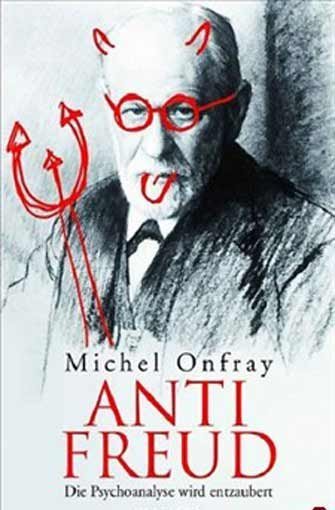
Oh!! I almost skipped commenting on the German edition of Onfray's book (Die Entzauberung der Psychoanalyse: The shattering of the psychoanalysis....someone wrote). Take a look at the cover: yes, Freud demonized. Pity Onfray doesn't have an atheist TERMINOLOGY (?). It's a bit inconsistent: an atheist portraying Freud as a devil. Moreover, calling the three monotheist religions "phallocratic" is too much of a psychoanalytic approach, evidently.
Onfray is really against “culpabilization”. Once he spoke he wanted to write something about ecology: ”Heuristics of fear”. According to him, much of the “culpabilization” of the global warming phenomenon is due to human activity: pollution. But we must recognize, says Onfray, “Cosmos is also responsible”. He means solar-cycles activity.
in The Case Against Christianity, Judaism, and Islam.
Recently I’ve watched an interesting debate (on French TV), Onfray was part of, plus some other characters, some with a clear religious affiliation. The debate was subordinated to the question “What’s God for?”[A quoi sert Dieu?].
Onfray answered this way to the question: to pit people against each other, under the pretext of love; in the name of love to forbid and interdict; just for saying what’s in The Koran, one gets a death threat; one can get his/her throat cut for not agreeing; Hitler in his book “Mein Kampf” spoke well about Jesus, and Nazi soldiers used the emblem “Got mit uns” (God with us). He added that some texts were “incoherent”.
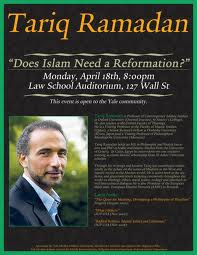
A scholar of the Islam, Tariq Ramadan, spoke next to Onfray and (being very displeased) disclosed his feelings on Onfray’s “kind of arrogance”: “you want to open the debate and you shut it”; ”Nietzsche got more respect than you, when he said “God is dead”; “you just put everything in the same package". Tariq spoke of “suffering” in religious people, the need for a “self-work” and “getting off the ego”; and about the “coherence” between words and acts. So, he was very critical on Onfray.
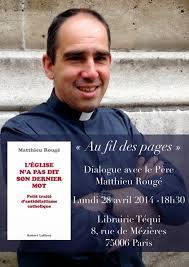
A catholic priest, Matthieu Rougé, answered, saying: “God (serves) to illumine life”. He’s the author of the book: “L´église na pas dit son dernier mot, petit traité d’antidéfaitisme catholique”.

Then a “militant catholic” called Julie Graziani. She said from an “utilitarian point of view" God’s for nothing (“…a rien du tout”).

Finally, spoke a Tunisian journalist and doctor of Letters and Comparative Literature named Fawzia Zouari. Witnessing the heated debate between two men (Onfray versus Ramadan) she suggested God is a men’s subject: “God is not a women’s issue”; somehow women have privatized the issue, taken not as “ideology”. She even quoted the Arabic words from the Koran that “women lack faith and reason”. Therefore, she concluded: it’s beneficial those like Nietzsche speaking his mind, because Islam suffers from the syndrome of the “closed bottle”, ”we should leave”.

Some last, but not final, words about the book. Its French title evokes (maybe) different (and more?) connotations. Traité d'athéologie: Physique de la métaphysique, Treaty of ATHEOLOGY: Physics of the metaphysics.
But mainly that word "ATHEOLOGY" [I know it's not English] seems to put me back in my 2013 considerations: the "atheist terminology" is gaining momentum. In itself, it's becoming a sort of cult, sorry,"cult" is religious terminology.
!!!!
* "As it happens quite often the psychoanalyst treats other people to better avoid having to wonder too much about his own fragility for a long time, the chaplain of the monotheistic Gods imposes his world to become more and more a convert,day after day. Atheism is not a therapy but a recuperated mental health".
** "Nowhere, have I despised the one who believed in the spirits, in the immortal soul, in the breath of the Gods, in the tears of the Virgin ”.
"But everywhere I noticed how much men make things up to avoid looking at the face of reality".
https://theotherjournal.com/2008/03/0....
"L´athéisme n´est pas une thérapie mais une santé mentale recouvrée"*.
Some time [2013] ago I had written some reflections about Onfray’s criticism on Psychoanalysis. They follow next because they approach Religion as well. They serve as an introduction to my approach of his book.
In France, Michael Onfray has been a front runner of this anti-Freud movement, debunking many of the well-established Freudian ideas. Onfray’s book “Le crepuscule d’une idole-L’affabulation freudienne” is symptomatic. The French philosopher has been keen on “killing” the father of Psychoanalysis (“pour en finir avec Freud"). He jokes often with this Freudian concept: “the floating attention”, the therapist may exhibit while in sessions. Onfray laughs: the therapist may even sleep in sessions, because it’s “the unconscious (patient´s and therapist's) that communicates!".
"Freud is no scientist".
Onfray, an atheist, a left-wing thinker (but not a Marxist) is for the “school reform” and a fervent apologist of the “people’s universities”. (Socrates spoke to the people!) He believes one can be “moral” without Christianity. In fact, he clarifies: the 3 monotheistic religions (Christianity, Islam and Judaism) have something in common: they sacrifice women, they are misogynous and phallocratic. He’s been very critical on the Vatican for banning some authors: Freud, Sartre, Descartes, Spinoza; but not banning the Nazi books; Mein Kampf at the top. Islam invites war and torture and anti-Semitism.
Returning to his criticism on psychoanalysis. (1) He points the fact that it’s an “expensive” approach (more pay, more efficiency!) that can go on endlessly. He refers the case of the “man of the wolves”: not healed. (2) Psychoanalysis doesn't apply to those "deprived of intelligence", those melancholic depressive... or those after 50 years of age. (3) Freud upon visiting the USA in 1908 was saying something like: “the inventor of Psychoanalysis was doctor Joseph Breuer” yet, later on, in Europe, Freud will get to the point of saying “I am the psychoanalysis”, therefore its creator. [...].
Oh!! I almost skipped commenting on the German edition of Onfray's book (Die Entzauberung der Psychoanalyse: The shattering of the psychoanalysis....someone wrote). Take a look at the cover: yes, Freud demonized. Pity Onfray doesn't have an atheist TERMINOLOGY (?). It's a bit inconsistent: an atheist portraying Freud as a devil. Moreover, calling the three monotheist religions "phallocratic" is too much of a psychoanalytic approach, evidently.
Onfray is really against “culpabilization”. Once he spoke he wanted to write something about ecology: ”Heuristics of fear”. According to him, much of the “culpabilization” of the global warming phenomenon is due to human activity: pollution. But we must recognize, says Onfray, “Cosmos is also responsible”. He means solar-cycles activity.
“Nulle part je n'ai méprisé celui qui croyait aux esprits, à l´âme immortelle, au souffle des dieux…aux larmes de la Vierge…”.
"Mais partout j’ai constaté combien les hommes fabulent pour éviter de regarder le réel en face"**.
in The Case Against Christianity, Judaism, and Islam.
Recently I’ve watched an interesting debate (on French TV), Onfray was part of, plus some other characters, some with a clear religious affiliation. The debate was subordinated to the question “What’s God for?”[A quoi sert Dieu?].
Onfray answered this way to the question: to pit people against each other, under the pretext of love; in the name of love to forbid and interdict; just for saying what’s in The Koran, one gets a death threat; one can get his/her throat cut for not agreeing; Hitler in his book “Mein Kampf” spoke well about Jesus, and Nazi soldiers used the emblem “Got mit uns” (God with us). He added that some texts were “incoherent”.
A scholar of the Islam, Tariq Ramadan, spoke next to Onfray and (being very displeased) disclosed his feelings on Onfray’s “kind of arrogance”: “you want to open the debate and you shut it”; ”Nietzsche got more respect than you, when he said “God is dead”; “you just put everything in the same package". Tariq spoke of “suffering” in religious people, the need for a “self-work” and “getting off the ego”; and about the “coherence” between words and acts. So, he was very critical on Onfray.
A catholic priest, Matthieu Rougé, answered, saying: “God (serves) to illumine life”. He’s the author of the book: “L´église na pas dit son dernier mot, petit traité d’antidéfaitisme catholique”.
Then a “militant catholic” called Julie Graziani. She said from an “utilitarian point of view" God’s for nothing (“…a rien du tout”).
Finally, spoke a Tunisian journalist and doctor of Letters and Comparative Literature named Fawzia Zouari. Witnessing the heated debate between two men (Onfray versus Ramadan) she suggested God is a men’s subject: “God is not a women’s issue”; somehow women have privatized the issue, taken not as “ideology”. She even quoted the Arabic words from the Koran that “women lack faith and reason”. Therefore, she concluded: it’s beneficial those like Nietzsche speaking his mind, because Islam suffers from the syndrome of the “closed bottle”, ”we should leave”.
Some last, but not final, words about the book. Its French title evokes (maybe) different (and more?) connotations. Traité d'athéologie: Physique de la métaphysique, Treaty of ATHEOLOGY: Physics of the metaphysics.
But mainly that word "ATHEOLOGY" [I know it's not English] seems to put me back in my 2013 considerations: the "atheist terminology" is gaining momentum. In itself, it's becoming a sort of cult, sorry,"cult" is religious terminology.
!!!!
* "As it happens quite often the psychoanalyst treats other people to better avoid having to wonder too much about his own fragility for a long time, the chaplain of the monotheistic Gods imposes his world to become more and more a convert,day after day. Atheism is not a therapy but a recuperated mental health".
** "Nowhere, have I despised the one who believed in the spirits, in the immortal soul, in the breath of the Gods, in the tears of the Virgin ”.
"But everywhere I noticed how much men make things up to avoid looking at the face of reality".
https://theotherjournal.com/2008/03/0....

February 21, 2013
It’s all rather simple, really: there are no gods.
Trying to get this simple message across, however, has not always been simple. In general, people have become so used to having the familiar figures of their gods so imbedded and integrated into their lives that emotionally they cannot seem to shake themselves out of their stupors: they feel a loss of identity, of culture, of difference, of rituals, of all those things that they have been taught are the essentials to their various faiths. They seem to prefer the dreams and nightmares of their intellectual sleep to waking up to confront the truths of life when awake. Even making such a statement often offends their sensibilities, as if the person making that statement is somehow directly ridiculing their personal sense of identity. They accuse atheists of being rude, insulting, and aggressive, and they make sure they are just as rude, insulting and aggressive in return.
Those who do so are usually in the grip of one of the major monotheisms (they seem not to recognise that in fact apart from them, all other religions either believe in multiple gods and demons — Hinduism, Shinto, various pagan religions, etc. — or, in their purer forms, that Buddhism and Daoism are essentially atheist in nature (although in their more popular manifestations (the many forms of Theravadan Buddhism and ‘religious’ Daoism) have many ‘assistant’ beings people worship and pray to — so that in essence they are ‘polytheistic’ as well). Many monotheists tend to dismiss, simply and purely, all these polytheisms out of hand . For them, the only true monotheist reality is based on their common source: Abraham.
Of the three main branches of the Abrahamic faith, only two (Judaism and Islam) are truly monotheistic: there is only one god (Yahweh or Allah) and one set of sacred book(s) (the Torah, or the Koran), and their god cannot be depicted in any way whatsoever. Even so, there are many, varied ‘flavours’ of both of these, all differing in various ways. The third Abrahamic faith, Christianity, also has thousands of variations, but managed to make its One God a triple-One: three divine persons in One nature, and one of those also has a Human nature (Jesus). Most Christianities also have in effect thousands of mini-gods which they call saints, and to which their faithful regularly and fervently pray for special consideration. The Christian god(s) most certainly can and have been depicted in all sorts of ways. Both Christianity and Islam have histories of out-and-out intolerance for any other gods (including each other’s). Both have fought against themselves and Judaism, (despite their common source) as well as against pagan gods and others.
Onfray’s atheism is against all forms of gods, but concentrates in this book on the dominant Abrahamic faiths. His main concern is to point out that if one’s identity, culture, outlook on life is based on this dominant stream, it is also based on a deeply negative, deeply impersonal, anti-intellectual and anti-scientific concept which reinforces a debased view of humanity and of the world in general. This ‘outlook’ is thus poisonous and deadly rather than salvific. Onfray is determined to ensure that this underlying pessimism is clearly understood as being central to them all. That he does so with a certain Gallic insouciance the translator has retained, makes this a most enjoyable read indeed. Its sub-text, that there is no need to fear revealing this poison, and that in getting rid of it you will in fact feel a lot better about yourself and the world you live in, is liberating to say the least.
It’s all rather simple, really.
Trying to get this simple message across, however, has not always been simple. In general, people have become so used to having the familiar figures of their gods so imbedded and integrated into their lives that emotionally they cannot seem to shake themselves out of their stupors: they feel a loss of identity, of culture, of difference, of rituals, of all those things that they have been taught are the essentials to their various faiths. They seem to prefer the dreams and nightmares of their intellectual sleep to waking up to confront the truths of life when awake. Even making such a statement often offends their sensibilities, as if the person making that statement is somehow directly ridiculing their personal sense of identity. They accuse atheists of being rude, insulting, and aggressive, and they make sure they are just as rude, insulting and aggressive in return.
Those who do so are usually in the grip of one of the major monotheisms (they seem not to recognise that in fact apart from them, all other religions either believe in multiple gods and demons — Hinduism, Shinto, various pagan religions, etc. — or, in their purer forms, that Buddhism and Daoism are essentially atheist in nature (although in their more popular manifestations (the many forms of Theravadan Buddhism and ‘religious’ Daoism) have many ‘assistant’ beings people worship and pray to — so that in essence they are ‘polytheistic’ as well). Many monotheists tend to dismiss, simply and purely, all these polytheisms out of hand . For them, the only true monotheist reality is based on their common source: Abraham.
Of the three main branches of the Abrahamic faith, only two (Judaism and Islam) are truly monotheistic: there is only one god (Yahweh or Allah) and one set of sacred book(s) (the Torah, or the Koran), and their god cannot be depicted in any way whatsoever. Even so, there are many, varied ‘flavours’ of both of these, all differing in various ways. The third Abrahamic faith, Christianity, also has thousands of variations, but managed to make its One God a triple-One: three divine persons in One nature, and one of those also has a Human nature (Jesus). Most Christianities also have in effect thousands of mini-gods which they call saints, and to which their faithful regularly and fervently pray for special consideration. The Christian god(s) most certainly can and have been depicted in all sorts of ways. Both Christianity and Islam have histories of out-and-out intolerance for any other gods (including each other’s). Both have fought against themselves and Judaism, (despite their common source) as well as against pagan gods and others.
Onfray’s atheism is against all forms of gods, but concentrates in this book on the dominant Abrahamic faiths. His main concern is to point out that if one’s identity, culture, outlook on life is based on this dominant stream, it is also based on a deeply negative, deeply impersonal, anti-intellectual and anti-scientific concept which reinforces a debased view of humanity and of the world in general. This ‘outlook’ is thus poisonous and deadly rather than salvific. Onfray is determined to ensure that this underlying pessimism is clearly understood as being central to them all. That he does so with a certain Gallic insouciance the translator has retained, makes this a most enjoyable read indeed. Its sub-text, that there is no need to fear revealing this poison, and that in getting rid of it you will in fact feel a lot better about yourself and the world you live in, is liberating to say the least.
It’s all rather simple, really.

September 13, 2018
هذا الكتاب قد شكل خيبة أمل كبيرة بالنسبة لي لأن أحد الأشخاص الذي لا أتذكر من هو بالضبط الأن قد رشحه لي قبل سنة أو نحو ذلك وقال أنه كتاب يساعد على تفهم وجهة النظر الإلحادية للدين والفكر الإلحادي والأسس التي يسير عليها أغلب الملحدين وكذلك من الرائع دائما أن تنظر إلى أرائك ومعتقداتك بعيون المعارضة التي أحيانا تلتقط الأشياء التي لا تلاحظها بسهولة . حسنا لماذا كان هذا خيبة أمل كبيرة بالنسبة لي ,لأنه ببساطة لم يتضمن أي شي من المذكور فوق .
قبل أن أبد بالكلام عن الكتاب سابدأ بالأخطاء الفاحشة التي ذكرها الكاتب –الفيلسوف- في كتابه :
1-ص88: يذكر الكاتب أن الأية 29 من سورة البقرة تشرح كيف أغرى إبليس ادم وحواء وكيف أن حواء قطفت الشجرة وسببت اللعنة على البشر ولذلك تجد الأديان تحتقر المرأة باعتبارها الخطيئة الأولى .
سورة البقرة أية 29 . بسم الله الرحمن الرحيم
"هو الذي خلق لكم ما في الأرض جميعا ثم استوى إلى السماء فسواهن سبع سماوات وهو بكل شيء عليم "
حسنا هنا يأتي السؤال أين ذكر أدم وحواء بهذه الأية بحق الطبيعة .وكما أن القران لم يذكر أن حواء هي من إنزلت ادم بل هم نزلوا معا فلم يقل أبد أنه ذنب حواء .
2- ص120 : يذكر أن للمسلم نساء شرعيات وهن 3 على الأكثر .
3-ص125: أقتبس هنا " كما أننا نعرف القراًن لا يدين صراحة التقليد الجاهلي الذي يبرر عار أبوة البنت وهو يشرع لهكذا سؤال: هل أحتفظ بالمولود أم دفنه حيا بالتراب "
هنا يتكلم عن قضية دفن الفتيات في الجاهلية وأن القران تساهل معها بل حتى لم يمنعها لكن أن كل طالب أكمل التعليم المتوسط يعلم أن الإسلام قد نهى عن هذا الفعل صراحة في القران .
4- ص 127 :"واعتبار الزواج فريضة ولا تسامح مع العزوبية "
نعم الإسلام يشدد على الزواج ويدفع اليه لكنه لم يعتبره فريضة بمعنى تركه حرام وبالتاكيد يتسامح مع العزوبية .
5- ص182 :" فان العهد القديم يعطي إجمالا 3500 صفحة والعهد الجديد 900, والقران 700 صفحة "
6- -ص191:"يتضمن القران 124 سورة "
حسنا لا أعلم من أين أتى بالعشر سور الاضافيات لكني بالتاكيد متشوق لقرأتها .
7-ص193:"ثم حزن واسى فوق الأرض حين ولادة بنت لأسرة من الأسر (الزخرف ؛17)"
حسنا أن قرأنا هذه الأية التي يستشهد بها سنجدها تقول
(وإذا بشر أحدهم بما ضرب للرحمن مثل ظل وجهه مسودا وهو كظيم )
. أي شخص ذو مقدر ضئيل من المعرفة بالإسلام سيعرف أن الإسلام هنا يعترض على أولئك الذين يحزنون من ولادة البنت وليس العكس.
8- ص 236 : يتحدث عن الأشياء التي يدينها الإسلام مثل الزنا والمخدرات والكحول والسينما والعطر .
هل أطلع هذا الفيلسوف العظيم على السينما الإيرانية أو حتى السعودية هل شاهد فلم الرسالة والعطر النبي يوصي بالعطر يوصي !يوصي !
أنا لست من ذلك النوع من الأشخاص الذي يبحث عن الأخطاء لكن أثناء قراءتي فكرت أن وقع الكاتب في مثل هذه الأخطاء المباشرة فهو لا يعرف عدد صفحات القران أو أياته ولا يقتبس بصورة صحيحة أحيانا . فكيف أثق بكلامه ونقده للمسيحية واليهودية بما أن لي معرفة ضحلة بهاتين الديانتين .
للكاتب منهجية غريبة وهي عبارة عن حلقات مفرغة . فمثلا الديانات خرافات لأنها ترهات لأنها عديمة المعنى لأنها خرافات لأنها ترهات وهكذا تستمر الحلقة .
على سبيل المثال يدعي الكاتب أن المسيح كمسيح هي شخصية قام بولس باختراعها والتعاليم المسيحية هي نتاج هلوسة بولس وأمراضه النفسية . حسنا قد تتساءل –بغض النظر عن صحة هذا الادعاء- كيف توصل إلى استنتاجه هذا :
حسنا تذكر بعض المصادر التاريخية أن القديس بولس كان يعاني من بعض الآم في المعدة والتهاب المفاصل وبعض الالتهابات الجلدية . –حسنا ذلك رائع ما من الممكن استنتاجه من هذه المعلومات عدا أنه كان من الواضح رجلا كبيرا في السن وكان يبشر بالمسيحية في عدة مدن لذلك اضطر للسفر كثيرا وتعرض لكثير من الأمراض وبسبب عدم الوعي الصحي المنتشر في ذلك الزمن يمكن اعتباره شيء عادي صحيح –
لكن ذلك ليس رأي كاتبنا العزيز لا لا فهو يرى أن بولس كان يعاني من هذه الأعراض بالإضافة إلى 20 عرض أضافي وكذلك يعاني من العجز الجنسي . وبإضافة الأمراض الثلاث المذكورة في كتب التاريخ والعوارض ال20 تقريبا التي افترضها مؤلفنا العزيز نستنتج أن بولس كان يعاني من مرض الهستريا بالإضافة إلى العجز الجنسي وبذلك يبدء المؤلف بالاستنتاج من ذلك أن هذا هو سبب تشدد بولس ضد النساء والجنس ببساطة لأنه لم يستطع الحصول على علاقة مع أحداهن لذلك قرر تحريم هذا الشيء وكذلك التسامح المسيحي ومبدأ –أذا صفعك عل خدك الأيمن أعطه الأيسر – ذلك بسبب ضعف بولس الجسدي وأراد أن يجعل الجميع ضعفاء خانعين مثله وهذا يفسر –بالنسبة للكاتب – الرؤى والتجليات التي مر بها القديس في حياته .
الأن ببساطة أستطاع الكاتب من المعطيات (ألأم في المفاصل والمعدة والتهاب الجلد ) أستنتاج (هلوسة , هستريا , خنوع , صرع ,عجز جنسي , عقدة مازوخية ) . برأيي المتواضع – من يحتاج شارلوك هولمز عندما يملك أونفري –
وهكذا يستمر الكاتب بنسج استنتاجاته وأرائه بهذا الأسلوب بأغلب الكتاب . لذلك قد يصلح الكتاب لشخص ملحد أصلا ولا يجد مانع في تقبل هذا المعلومات بدون سؤال أو شك أو تنفع لزوجين ملحدين ليعطيانه لطفلهما كهدية عندما يدخل طور المراهقة .

August 10, 2011
A book without footnotes and a bibliography is not an academic exercise, but an opinion piece. Everyone is entitled to their opinion. But I don't find the hysteria appealing, especially from someone arguing a rational point of view. Too many adjectives, too much repetition.

February 8, 2009
Onfray is a contemporary philosopher and writer. Even so, this book is quite readable ;-).
His writing style is almost conversational, at times argumentative and punctuated with ironic interjections. It took me a couple of a chapters to get used to it, to ensure that I wasn't misreading his point.
If I dare to distill his argument, it would be this: Humanity's current struggle between secular and non-secular ideologies is evidence that we are transitioning into a post-Christian era. But most often, our formulation of secularist ideas are burdened with the underpinnings of religion simply because it is, and has been, so pervasive. It informs ones behavior and thoughts even when one espouses more atheistic leanings.
He's arguing for belief in the natural order of things. He later describes true atheistic atheism.
Onfray argues that Christianity is based on hatred of self, of the body, of intelligence, of knowledge. And his arguments are compelling and well presented. Without the artifice of a final judgement, Onfray makes the point that human beings can fully enjoy life rather than fear it.
These quotes are all early in the book when he's laying a foundation for a new way of thinking. In this section he discusses several other atheist viewpoints and some interesting historical figures such as Jean Meslier, a Jesuit priest who after 40+ years in service to the church,left a 3 volume, 2000 page tomb attacking God and religion.
Rather like a trial lawyer, in the first half of the book, Onfray presents a defense of Atheism. In the 2nd half, he adopts the role of prosecutor, deconstructing the monotheisms. Onfray's language is colorful and his command of history, astute. His main focus is Christianity, which he equates with nihilism. Here he presents many of the scholarly criticisms of 'the book' in anecdotal style with chapter headings like "The Pauline Contamination", "Ravings of a hysteric", "At War with Intelligence".
In a chapter titled "Theocracy", Onfray jumps on the Bible's ever-present contradiction between the 5th commandment "thou shalt not kill" and, in the same context, the blatant genocide of the Caananites ordered by Yahweh. The point he's underscoring here is that if you cherry pick the scriptures, you won't ever be exposed to the full range of hostility promoted by the good book. This, he makes very plain.
A few sections focus on the Catholic Church and its complicity in human struggles. This next quote will give you another glimpse of his style. Here, he contrasts the Catholic response to the nihilation of the Jews and bombing of Hiroshima.
I appreciated this book all the more, having just taken a class on the history of God. His references were mostly accessible. But on a few occasions I reached for the ever-present google search engine --- and embarked on a few tangential journeys. It's all good.
I read this book because I'm fascinated at the strife caused by organized religion. And I was looking for something that could help me crystallize my own thoughts. I think I found something here. And the good news is, it was an entertaining read at the same time.
"Proof of the existence of a truth is often reducible to the sum of errors repeated until they become received truth". (Onfray)
His writing style is almost conversational, at times argumentative and punctuated with ironic interjections. It took me a couple of a chapters to get used to it, to ensure that I wasn't misreading his point.
If I dare to distill his argument, it would be this: Humanity's current struggle between secular and non-secular ideologies is evidence that we are transitioning into a post-Christian era. But most often, our formulation of secularist ideas are burdened with the underpinnings of religion simply because it is, and has been, so pervasive. It informs ones behavior and thoughts even when one espouses more atheistic leanings.
" The forces at play are clearly identifiable. It is not Western, progressive, enlightened, democratic, Judeo-Christianity pitted against Eastern, backward-looking, obscurantist Islam. Rather, is yesterday's monotheisms pitted against the atheism of tomorrow. Not Bush vs Bin Laden. Instead it is Moses, Jesus, Muhammad and their religions of the book versus Baron d'Holbach, Ludwig Feuerbach, Friedrich Nietzsche, and their philosophical formulae of radical deconstruction of myths and fables."
He's arguing for belief in the natural order of things. He later describes true atheistic atheism.
"The term encompasses more than negation of God .... . It calls for a different episteme. a Greek word used in philosophy to indicate the set of ideas, the science, the body of knowledge that makes it possible to separate the true from the false. Atheistic atheism would place morality and politics on a new base, one that is not nihilist but post-Christian. Its aim is neither to reconstruct churches nor to destroy them, but to build elsewhere and in a different way, to build something else for those no longer willing to dwell intellectually in places that have already done long service.
Onfray argues that Christianity is based on hatred of self, of the body, of intelligence, of knowledge. And his arguments are compelling and well presented. Without the artifice of a final judgement, Onfray makes the point that human beings can fully enjoy life rather than fear it.
... "There is no need to brandish the threat of hell or dangle the glittering bauble of paradise, no point in establishing an ontology of post-humous rewards to elicit good, just and honest action. It is an ethic without transcendant obligations or sanctions."
These quotes are all early in the book when he's laying a foundation for a new way of thinking. In this section he discusses several other atheist viewpoints and some interesting historical figures such as Jean Meslier, a Jesuit priest who after 40+ years in service to the church,left a 3 volume, 2000 page tomb attacking God and religion.
Rather like a trial lawyer, in the first half of the book, Onfray presents a defense of Atheism. In the 2nd half, he adopts the role of prosecutor, deconstructing the monotheisms. Onfray's language is colorful and his command of history, astute. His main focus is Christianity, which he equates with nihilism. Here he presents many of the scholarly criticisms of 'the book' in anecdotal style with chapter headings like "The Pauline Contamination", "Ravings of a hysteric", "At War with Intelligence".
In a chapter titled "Theocracy", Onfray jumps on the Bible's ever-present contradiction between the 5th commandment "thou shalt not kill" and, in the same context, the blatant genocide of the Caananites ordered by Yahweh. The point he's underscoring here is that if you cherry pick the scriptures, you won't ever be exposed to the full range of hostility promoted by the good book. This, he makes very plain.
A few sections focus on the Catholic Church and its complicity in human struggles. This next quote will give you another glimpse of his style. Here, he contrasts the Catholic response to the nihilation of the Jews and bombing of Hiroshima.
".... official Christianity in the era of postmodern war opted for the nuclear deterrent, defended it, and excused it. John Paul II accepted its principle on June 11,1982, via a truly extraordinary logical fallacy: the atom bomb, he said, opened the road to peace! France's bishops followed close behind, armed with their own reasons, which included the need to struggle against 'the domineering and aggressive nature of Marxist-Leninist ideology.' Sweet Jesus! What power of decision, what lucidly stated positions! How we would have welcomed an equally clear and straightforward condemnation of Nazism....". He is swift to point out that not only did the Catholic Church not condemn Nazism, they supported it in more ways than simply turning a blind eye.
I appreciated this book all the more, having just taken a class on the history of God. His references were mostly accessible. But on a few occasions I reached for the ever-present google search engine --- and embarked on a few tangential journeys. It's all good.
I read this book because I'm fascinated at the strife caused by organized religion. And I was looking for something that could help me crystallize my own thoughts. I think I found something here. And the good news is, it was an entertaining read at the same time.
"Proof of the existence of a truth is often reducible to the sum of errors repeated until they become received truth". (Onfray)

February 27, 2020
un manifiesto interesante para los que se inician en el ateísmo o para los religiosos que quisieran conocer otros puntos de vista y otras perspectivas aunque no creo que los hagan cambiar de perspectiva ya que sus argumentos no están muy bien redactados y en muchas ocasiones recurre al insulto y a la menospreciación de las ideas religiosas,cosa que no es de mi agrado, porque si bien si presenta argumentos válidos le quita su rigurosidad al meter el insulto y al ridiculizar las ideas creyentes, por esto y porque para los que ya tenemos tiempo "practicando" el ateísmo realmente no presenta nada nuevo que ya se sepa, argumentos y pensamientos muy básicos para esta "ideología" que solamente resultan interesantes para las nuevas mentes dispuestas a abrirse a nuevas perspectivas.

March 17, 2013
Talk about preaching to the converted! This book didn't make any case against Christianity, Judaism and Islam. The author must believe that his opinions are true just because he has read a lot of books, has a large vocabulary and is extremely sardonic.
This book mainly makes fun of the three major, monotheistic religions by making a bunch of sarcastic remarks to indicate that religion has been used to justify a lot of terrible things throughout history and the sacred texts cannot literally be true and are not literally the words of a supernatural being. In my opinion, that is a sophomoric thesis.
I think the author is making a "case" against fundamentalism, but most Christians, Jews and Muslims are not fundamentalists and would agree that fundamentalism is dangerous.
Carl Jung and Joseph Campbell have written about the need within our psyches for religion, and many psychological studies have confirmed that religious people are, on the average, happier. So why not be religious if it makes us happier?
In my opinion, it entirely misses the point to make a case that Christianity, Judaism and Islam are not "true." I agree they do not tell us the truth about what was, what is or what will be. Yes, anyone born from the Enlightenment onward ought to fully accept the scientific method for ascertaining the truth. But what about the question of what should be, what ought to be? Science does not answer that question; myth does. Do myths give us definitive answers? No, but they help us search for the answers. In my opinion, philosophy is one tool, but philosophy alone just leads to existential crisis and cannot alone give our lives the meaning we all strive for.
What does the author mean by rejecting the religious concept of free will? If we have no free will, why is he so critical of people who believe in religion? Nearly all people do believe themselves to have free will and to be confronted not only with choices about how to make themselves happy but also choices about what they ought to do. I was not at all convinced by this book that philosophy alone can answer these questions without the aid of religion.
If the author wants to test the hypothesis that atheists are "better" than Christians, Jews and Muslims on certain measures, why doesn't he use the scientific method to actually test this hypothesis? How would the author measure a good life? By these measurements, is there any evidence that atheists live better lives than Christians, Jews and Muslims?
This book mainly makes fun of the three major, monotheistic religions by making a bunch of sarcastic remarks to indicate that religion has been used to justify a lot of terrible things throughout history and the sacred texts cannot literally be true and are not literally the words of a supernatural being. In my opinion, that is a sophomoric thesis.
I think the author is making a "case" against fundamentalism, but most Christians, Jews and Muslims are not fundamentalists and would agree that fundamentalism is dangerous.
Carl Jung and Joseph Campbell have written about the need within our psyches for religion, and many psychological studies have confirmed that religious people are, on the average, happier. So why not be religious if it makes us happier?
In my opinion, it entirely misses the point to make a case that Christianity, Judaism and Islam are not "true." I agree they do not tell us the truth about what was, what is or what will be. Yes, anyone born from the Enlightenment onward ought to fully accept the scientific method for ascertaining the truth. But what about the question of what should be, what ought to be? Science does not answer that question; myth does. Do myths give us definitive answers? No, but they help us search for the answers. In my opinion, philosophy is one tool, but philosophy alone just leads to existential crisis and cannot alone give our lives the meaning we all strive for.
What does the author mean by rejecting the religious concept of free will? If we have no free will, why is he so critical of people who believe in religion? Nearly all people do believe themselves to have free will and to be confronted not only with choices about how to make themselves happy but also choices about what they ought to do. I was not at all convinced by this book that philosophy alone can answer these questions without the aid of religion.
If the author wants to test the hypothesis that atheists are "better" than Christians, Jews and Muslims on certain measures, why doesn't he use the scientific method to actually test this hypothesis? How would the author measure a good life? By these measurements, is there any evidence that atheists live better lives than Christians, Jews and Muslims?

January 27, 2009
The translation from the French makes for reading that is a little labored at times, but worth the effort. In terms of the recent flood of atheist manifestos, this one stands out as being particularly critical of the three monotheistic religions. A no-holds-barred, scathing criticism on monotheism. One of the things I learned was how the Church influenced who and who was not 'remembered' as part of the Enlightenment. Only the critics that were gentler seem to have made in into the mainstream of Enlightenment philosophers. There are many others who works have not appeared in paperback and are not part of typical college courses on Enlightenment philosophers.
This book is not for the weak or the wishy-washy. It might even offend agnostics. Liberal theists or deists will almost certainly be offended at the fierceness of his attacks. Because it is written by a European (French), expect most of the Christian criticism to be focused on Catholicism. Most radical Moslems would probably agree with his assessment of Christianity. Most Christians would probably agree with his assessment if Islam. But, of course, that is not the point. . .
I continue my study of comparative religion, which I began at age 12.
This book is not for the weak or the wishy-washy. It might even offend agnostics. Liberal theists or deists will almost certainly be offended at the fierceness of his attacks. Because it is written by a European (French), expect most of the Christian criticism to be focused on Catholicism. Most radical Moslems would probably agree with his assessment of Christianity. Most Christians would probably agree with his assessment if Islam. But, of course, that is not the point. . .
I continue my study of comparative religion, which I began at age 12.
August 17, 2008
Reality - beautiful elegant and succinct

September 13, 2018
أي كلام يا عبسلام..

May 13, 2009
Great book overall with excellent, solid points to support not only atheism but the idea of religion (in particular, the three main monotheistic religions) as being oppressive on numerous levels. The book includes historical and textual evidence to support the claims and hypotheses made and is not an account built on personal opinion alone.
As a theist, I made a promise to myself to leave all bias aside when reading this book and attempt not to take things personally. Onfray's language can get a little strong at times and his convictions can seem offensive, if taken personally. Regardless of your convictions, it is recommended to approach the book with an open and inquisitive mind and to see it as a contribution to scholarly debate surrounding the issue of religion and the existence of God.
Though the main purpose of the book is to make a case against the mainstream monotheistic religions (Islam, Christianity, Judaism), I often felt as though spirituality was discounted in the process. Religion is not necessarily the same as spirituality and other spiritual traditions are much more tolerant. Though Onfray does touch on other ancient and modern religions briefly, their "validity" is not argued in the same way that he argues against the monotheisms. Then again, the book is not called "The case against all world religions ancient and modern".
Excellent read. I highly recommend it to theists, atheists, agnostics and everyone in between.
As a theist, I made a promise to myself to leave all bias aside when reading this book and attempt not to take things personally. Onfray's language can get a little strong at times and his convictions can seem offensive, if taken personally. Regardless of your convictions, it is recommended to approach the book with an open and inquisitive mind and to see it as a contribution to scholarly debate surrounding the issue of religion and the existence of God.
Though the main purpose of the book is to make a case against the mainstream monotheistic religions (Islam, Christianity, Judaism), I often felt as though spirituality was discounted in the process. Religion is not necessarily the same as spirituality and other spiritual traditions are much more tolerant. Though Onfray does touch on other ancient and modern religions briefly, their "validity" is not argued in the same way that he argues against the monotheisms. Then again, the book is not called "The case against all world religions ancient and modern".
Excellent read. I highly recommend it to theists, atheists, agnostics and everyone in between.

November 3, 2016
بقدر إطلاعي فيما سبق عن قضايا التوحيد والإلحاد من وجهة نظر مؤمنة .. قدرت أفند بعض حججه (بعضها مستفز جدا .. جدا)
وبقدر نقاط ضعف المعرفة الإيمانية لدي .. أثار البعض الآخر من قناعاته تساؤلاتي
لم أجد فيه ما يزعزع الإيمان بقدر ما هو يحث على المزيد من البحث فيما لا أعرف
دون الحديث عن تلك الآراء سواء التي أقتنعت بعكسها أو تلك التي أثارت حيرتي ..
تشغلني كثيرا مسألة (اتمنى أن اتمكن من البحث فيها قريبا) العيوب الموجودة في ديانتنا الخاصة من مغالطات تاريخية أو تحريفات .. ربما، كمسلمين، نعرف عن تحريفات الديانات الأخرى ومواطن ضعفها، لكن هل نظرنا لديننا من منظور الآخر؟
تجنبت تفاصيل الجزء الثالث عن المسيحية وتاريخيها لمعرفتي انه لن يكون محايدا ولا امتلك القدر الكافي من المعرفة فيه لاتمكن من تمييز رأيه عن المعروف.
سيد أونفري .. تميزك الثقافي وبحثك الذي توصل بك لاقتناعك بنفي للآله وخرافات الأديان .. أثار إعجابي
لكنك لم تكن يوما مؤمنا لتعرف كم ينقصك، الكثير ما ترى أننا نقوم به كأعباء هو ما أبعد ما يكون عن ذلك -بعيدا عن اقتناعك بأن الدين مسكن للنفوس البشرية الخائفة من فكرة الفناء - الأمر ليس كذلك .. فقط هناك أمور لا يتم شرحها تستشعر وتتسرب داخلنا كما الموسيقى.
حقيقي شكرا لك، جعلتني أشعر بالغيرة على ديني (برغم فترة الركود الديني الطويلة التي أمر بها) وتجدد استعدادي للبحث والقراءة فيه.
وبقدر نقاط ضعف المعرفة الإيمانية لدي .. أثار البعض الآخر من قناعاته تساؤلاتي
لم أجد فيه ما يزعزع الإيمان بقدر ما هو يحث على المزيد من البحث فيما لا أعرف
دون الحديث عن تلك الآراء سواء التي أقتنعت بعكسها أو تلك التي أثارت حيرتي ..
تشغلني كثيرا مسألة (اتمنى أن اتمكن من البحث فيها قريبا) العيوب الموجودة في ديانتنا الخاصة من مغالطات تاريخية أو تحريفات .. ربما، كمسلمين، نعرف عن تحريفات الديانات الأخرى ومواطن ضعفها، لكن هل نظرنا لديننا من منظور الآخر؟
تجنبت تفاصيل الجزء الثالث عن المسيحية وتاريخيها لمعرفتي انه لن يكون محايدا ولا امتلك القدر الكافي من المعرفة فيه لاتمكن من تمييز رأيه عن المعروف.
سيد أونفري .. تميزك الثقافي وبحثك الذي توصل بك لاقتناعك بنفي للآله وخرافات الأديان .. أثار إعجابي
لكنك لم تكن يوما مؤمنا لتعرف كم ينقصك، الكثير ما ترى أننا نقوم به كأعباء هو ما أبعد ما يكون عن ذلك -بعيدا عن اقتناعك بأن الدين مسكن للنفوس البشرية الخائفة من فكرة الفناء - الأمر ليس كذلك .. فقط هناك أمور لا يتم شرحها تستشعر وتتسرب داخلنا كما الموسيقى.
حقيقي شكرا لك، جعلتني أشعر بالغيرة على ديني (برغم فترة الركود الديني الطويلة التي أمر بها) وتجدد استعدادي للبحث والقراءة فيه.

March 6, 2017
This is a book by french writer Michel Onfray.
i read it many years ago and now i read it again in a few days time.
this book is just brilliant and i liked it.
it is one of the best books i have read and it is a hard book to read.
it is about Atheism and about God.
i have read it two times and it should be read again and again.
it talks about Friedrich Nietzsche and it asks the question "is God dead or alive"? the question is still unanswered.
he talks about different things like the bad things done in the name of religion.
its all about God and different holy books and god.
God does not have any date of birth he says etc.
it talks about many religions and their holy books.
i would love to meet Michel Onfray and have lunch with him.
i hope he writes more books like this.
i read it many years ago and now i read it again in a few days time.
this book is just brilliant and i liked it.
it is one of the best books i have read and it is a hard book to read.
it is about Atheism and about God.
i have read it two times and it should be read again and again.
it talks about Friedrich Nietzsche and it asks the question "is God dead or alive"? the question is still unanswered.
he talks about different things like the bad things done in the name of religion.
its all about God and different holy books and god.
God does not have any date of birth he says etc.
it talks about many religions and their holy books.
i would love to meet Michel Onfray and have lunch with him.
i hope he writes more books like this.

July 27, 2018
Zayıf bir kitap, ateizm hakkında yazılmış bir çok derli toplu kitap varken bu kitabı okumak zaman kaybı. Tercümesinden mi dilinden mi karar veremedim okunmadı yorucu, yazım hatası çok fazla. Sanki dünyada ateizm konusunda en başta gelen kişi yazarın kendisi. Kimseyi beğenmiyor, kendisi de üç tek tanrılı din üstünden ateizmi anlatma kolaylığına sapıyor. Beğenmedim.

January 23, 2022
Εξαιρετικό ανάγνωσμα.
Μια δριμεία κριτική στην ιδεαλιστική θεώρηση της ζωής και μια κατακεραύνωση των τριών μονοθεϊστικών θρησκειών μέσα από ένα φιλοσοφικό-ιστορικό πρίσμα .
Διαβάζεται απνευστί
Μια δριμεία κριτική στην ιδεαλιστική θεώρηση της ζωής και μια κατακεραύνωση των τριών μονοθεϊστικών θρησκειών μέσα από ένα φιλοσοφικό-ιστορικό πρίσμα .
Διαβάζεται απνευστί

December 17, 2020
As a "practicing" atheist, I’m so glad I came across this book! It pretty much summarized everything that led me away from the religion in which I was raised (Judaism) and brought me into the ranks of - first, agnostics and then - full-fledged atheists. Not only does it dissect the three main religions (Christianity, Judaism, and Islam) into pieces and explains how each “bible” is basically a collection of tales full of contradictions and unsupported arguments that aim at the only one thing: submission and ignorance, blind faith into their teachings and denial of anything that goes against them, the subjugation of the masses and condemnation of individualism in the name of a fictional deity. Bringing up historical and scientific proof, the author does an excellent job in proving how all three “holy books” were written by different people in a span of hundreds of years, with multiple additions and rewritings and extractions until they took their present shape and caused multiple holy wars, genocides, persecutions, witch hunts, inquisitions, terrorist acts, not mentioning the thriving misogyny they all promote and the hatred of everything earthly (free consensual - read extramarital - sex, intellectualism/enlightenment, the love of one’s body and nature surrounding it, etc) in pursuit of some imaginary afterlife.
“…men construct fables in order to avoid looking reality in the face. The invention of an afterlife would not matter so much were it not purchased at so high a price: disregard of the real, hence willful neglect of the only world there is. While religion is often at variance with immanence, with man’s inherent nature, atheism is in harmony with the earth - life’s other name.”
The main point of the book is that humanity invented religion out of fear of death, and only. We’re so afraid to just perish into nothing that we are ready to follow ridiculous religious guidelines just to get a chance to get into one afterlife or the other instead of enjoying our life here, on earth, to the fullest. Another major point that the author makes is that atheism is much more peaceful than any religion, in the name of which millions were slaughtered during the course of history. In fact, religion does not equal morality. You can argue all you want, but burning women for suspecting them in witchcraft is far from being moral; waging crusades and slaughtering innocent civilians in the name of one’s god is far from being moral; subjugating women and limiting their role to that one of being a homemaker is far from moral; hating your homosexual neighbors solely for being in love with each other is far from moral. From what I’ve been observing throughout my entire life, all religions only tear people apart and place them in opposite camps. In contrast, “atheism is in harmony with the earth - life’s other name.”
“…men construct fables in order to avoid looking reality in the face. The invention of an afterlife would not matter so much were it not purchased at so high a price: disregard of the real, hence willful neglect of the only world there is. While religion is often at variance with immanence, with man’s inherent nature, atheism is in harmony with the earth - life’s other name.”
The main point of the book is that humanity invented religion out of fear of death, and only. We’re so afraid to just perish into nothing that we are ready to follow ridiculous religious guidelines just to get a chance to get into one afterlife or the other instead of enjoying our life here, on earth, to the fullest. Another major point that the author makes is that atheism is much more peaceful than any religion, in the name of which millions were slaughtered during the course of history. In fact, religion does not equal morality. You can argue all you want, but burning women for suspecting them in witchcraft is far from being moral; waging crusades and slaughtering innocent civilians in the name of one’s god is far from being moral; subjugating women and limiting their role to that one of being a homemaker is far from moral; hating your homosexual neighbors solely for being in love with each other is far from moral. From what I’ve been observing throughout my entire life, all religions only tear people apart and place them in opposite camps. In contrast, “atheism is in harmony with the earth - life’s other name.”

March 22, 2025
Para una atea convencida desde siempre, este libro poco aporta y hasta ofende un poco el tono burlón ante lo religioso. Algunas cosas he aprendido, obviamente , pero en líneas generales le falta profundidad. Onfray tiene libros mejores.
"Es necesario promover una laicidad poscristiana, o sea, atea, militante y radicalmente opuesta a cualquier elección o toma de posición entre el judeocristianismo occidental y el islam que lo combate. Ni la Biblia ni el Corán. Entre los rabinos, sacerdotes, imanes, ayatolás y otros mulás, insisto en anteponer al filósofo. Entre todas esas teologías abracadabrantescas, prefiero recurrir a los pensamientos alternativos a la historiografía filosófica dominante: las personas con humor, los materialistas, radicales, cínicos, hedonistas, ateos, sensualistas y voluptuosos. Pues ellos saben que sólo existe un mundo y que toda promoción de los mundos subyacentes lleva a la pérdida del uso y beneficio del único que hay."
"Es necesario promover una laicidad poscristiana, o sea, atea, militante y radicalmente opuesta a cualquier elección o toma de posición entre el judeocristianismo occidental y el islam que lo combate. Ni la Biblia ni el Corán. Entre los rabinos, sacerdotes, imanes, ayatolás y otros mulás, insisto en anteponer al filósofo. Entre todas esas teologías abracadabrantescas, prefiero recurrir a los pensamientos alternativos a la historiografía filosófica dominante: las personas con humor, los materialistas, radicales, cínicos, hedonistas, ateos, sensualistas y voluptuosos. Pues ellos saben que sólo existe un mundo y que toda promoción de los mundos subyacentes lleva a la pérdida del uso y beneficio del único que hay."

March 1, 2009
Michel Onfray must be a reason that American Christians do not like the French. Take Sam Harris and George Smith (both atheist writers) and add a bit of French snobbery and you've got Onfray. This book is not altogether thorough, but presents its material, if not completely fairly, at least fairly credibly. It is not too long (245 pgs), but combs through quite a bit of material. It is a great introduction to many atheistic theories and viewpoints concerning religious belief. Onfray divides his time between the Free University of Caen, and writing. His academic background (?) takes a backseat to broad and general sweeps, but with some background on religious history and atheistic thinking the reader can both refer to other books for warrant and when interesting bits are found, read further elsewhere. A fun book to read, Onfray holds no punches back, but I say fight stupidity where you find it. And, there is plenty of stupid to be found in the religious realm.
December 31, 2011
I found the Atheist Manifesto tiresomely repetitive and probably mean and nasty. As an atheist I have to say I'm glad this books out there and I especially found the section on Paul interesting and worthwhile, BUT on a whole it lacks finesse and versatility in the argumentation.

October 19, 2013
Harsh, polemic, rude, angry, rebellious and without many references. A dismissive dissection of the monotheistic cousin faiths. I liked it. He has a point.

November 29, 2018
Michel Onfray has been linked to the new atheists and his assertive style in the arguments against Christianity, Judaism, and Islam makes that make some sense, but this "manifesto" is more interesting and smart in where Onfray differs: first, Onfray removes Spinoza and the pantheists as well as Epicureanism from the new atheist claims of them being atheists and lays modern atheism at the feed of the early Enlightenment. Furthermore, more like Nietzsche and less like Dawkins, Onfray is bothered by the essentially Christian assumptions of most secularism and atheism. These are interesting because they were not really adopted in most of the new atheist in English speaking world: Onfray, while a champion of science, is also not interested in a lot of the new atheist scientism and is skeptical of the way science is used and seems less inclined to be a pollyanna on the topic. The complaints against the monotheisms are declaratory, aggressive, although historically informed compared to some of the English-speaking writers on the topic. However, it is not tightly argued and does not really take counter-veiling trends in the religion seriously after his sympathetic introduction. It is written in the style of the early 20th manifesto and is thus a polemic and not a research piece.

April 6, 2009
I wasn't too thrilled with this book, not because of its subject matter, but because of the way in which it was written. I like my non-fiction to be structured, succinctly delivered and substantiated by data. Michel Onfray's "Atheist Manifesto" is not a "God Delusion" (Dawkins) or an "Atheist Universe" (Mills), in that it is meant to be read like a philosophical treatise, and not a systematic examination of religious practices. It also doesn't help that I read a translation from the French.
Though Onfray makes impassioned arguments against the institutions of religion on obvious claims of intolerance, holy wars and bodily mutilation, he does so with a blazened, Hitchens-esque sense of superiority that is often a little off-putting. Because of this obstreperous tone, the grammatical structure is often met with too many dashes, ellipses and fragmented sentences. All of this makes for a difficult read. I'd give it fewer stars, but I did read the whole thing and learned a thing or two about Enlightenment thinkers, so Monsieur Onfray gets some points.
Though Onfray makes impassioned arguments against the institutions of religion on obvious claims of intolerance, holy wars and bodily mutilation, he does so with a blazened, Hitchens-esque sense of superiority that is often a little off-putting. Because of this obstreperous tone, the grammatical structure is often met with too many dashes, ellipses and fragmented sentences. All of this makes for a difficult read. I'd give it fewer stars, but I did read the whole thing and learned a thing or two about Enlightenment thinkers, so Monsieur Onfray gets some points.

April 5, 2012
God is not really dead, as unfortunate as it sounds. We are just so imbibed with its episteme' that all attemps so far to disengage from forms of thoughts relinquishing traditional religion has practically gone little far. Our health needs a much freer and more radical mental struggle to clear out our culture from the insidious treat of submissive systems of ideas.
Michel Onfray hereby propose his own passionate and argumentative call to duty for atheism. Pure atheism, not a faithful or disguised one. His invitation comes in the steps of a proposed Summa Ateologica never finished by Bataille, and develops into three main deconstructive steps, addressing monotheism, christianism and theocracy respectively. The initial semantic discussion is a good start to understand how atheism has always been considered socially dangerous and so discriminated in the history of philosophy, in spite of the works of fine minds like D'Holbach, Feuerbach, Nietzsche and others. The latter brings much inspiration to the author in his disruptive criticism of monotheistic religions. He claims they all are ensuing from a central death pulsion which brings to neglect all expressions of life in favour of deadly thoughts and all expressions against the full power of life. Politics and power are then integral to the dominance of religion, as with the case of Constantin and the Roman empire joined by the Paulinistic version of Christianism. Ethical rules hold only within the narrow margin of the original, elected tribes while the conduct against the aliens can be whatever bloody as wanted with no remorce nor regrets (alleged Vatican-Nazi alliance anyone?). Fragments from socalled holy text can be extrapolated to support whatever position, from Mein Kampf-like to peaceful - this is possible because these texts, brewed disorderly within several centuries in spite of being considered inspired by a supreme being, are full of contradictions. And so on and so forth.
Onfray produces an extensive list of arguments against religion after producing his main argument: Judaism, Christianism and Islamism are theocracries set against life, whose (not dissimilar) way of thinking pollutes our culture since centuries without most of us being aware of that, as this influence is so deeply rooted (as a second nature, I would say). As a defendes of hedonism, Onfray cannot but reject such anti-vitalistic attitude, and he does with irony and a tons of evidence.
This agile but interesting treatise lies in between Odifreddi's and Giorello's texts, as it shares the capillary details of the pedantic, rationalistic and dissacrating reading of the Bible of the former and the philosophical attitute of the latter. It also includes a commented rich bibliography for extended readings of the sources, demonstrating the carefully documented background the author stems his cleansing attempt from.
As always in such cases, the hope is that this book finds itself in the hands of a believer to which to bring enough motivation to change its mind or at least relativize it. Hitchen's and Dawkins' own attempts have also largely failed in all honesty, so it is not sure this more straightforward and even antecedent text will reach its goal (in spite of the considerable stir it created in the media at the time of release).
That is, one cannot but think that, as with Wittgenstein said of his Tractatus, these things will be understood and even considered trivial by people already convinced of them, while they will be superfluous and easy to disregard by believers. As sad as it sounds. Still, well worth reading.
Michel Onfray hereby propose his own passionate and argumentative call to duty for atheism. Pure atheism, not a faithful or disguised one. His invitation comes in the steps of a proposed Summa Ateologica never finished by Bataille, and develops into three main deconstructive steps, addressing monotheism, christianism and theocracy respectively. The initial semantic discussion is a good start to understand how atheism has always been considered socially dangerous and so discriminated in the history of philosophy, in spite of the works of fine minds like D'Holbach, Feuerbach, Nietzsche and others. The latter brings much inspiration to the author in his disruptive criticism of monotheistic religions. He claims they all are ensuing from a central death pulsion which brings to neglect all expressions of life in favour of deadly thoughts and all expressions against the full power of life. Politics and power are then integral to the dominance of religion, as with the case of Constantin and the Roman empire joined by the Paulinistic version of Christianism. Ethical rules hold only within the narrow margin of the original, elected tribes while the conduct against the aliens can be whatever bloody as wanted with no remorce nor regrets (alleged Vatican-Nazi alliance anyone?). Fragments from socalled holy text can be extrapolated to support whatever position, from Mein Kampf-like to peaceful - this is possible because these texts, brewed disorderly within several centuries in spite of being considered inspired by a supreme being, are full of contradictions. And so on and so forth.
Onfray produces an extensive list of arguments against religion after producing his main argument: Judaism, Christianism and Islamism are theocracries set against life, whose (not dissimilar) way of thinking pollutes our culture since centuries without most of us being aware of that, as this influence is so deeply rooted (as a second nature, I would say). As a defendes of hedonism, Onfray cannot but reject such anti-vitalistic attitude, and he does with irony and a tons of evidence.
This agile but interesting treatise lies in between Odifreddi's and Giorello's texts, as it shares the capillary details of the pedantic, rationalistic and dissacrating reading of the Bible of the former and the philosophical attitute of the latter. It also includes a commented rich bibliography for extended readings of the sources, demonstrating the carefully documented background the author stems his cleansing attempt from.
As always in such cases, the hope is that this book finds itself in the hands of a believer to which to bring enough motivation to change its mind or at least relativize it. Hitchen's and Dawkins' own attempts have also largely failed in all honesty, so it is not sure this more straightforward and even antecedent text will reach its goal (in spite of the considerable stir it created in the media at the time of release).
That is, one cannot but think that, as with Wittgenstein said of his Tractatus, these things will be understood and even considered trivial by people already convinced of them, while they will be superfluous and easy to disregard by believers. As sad as it sounds. Still, well worth reading.

February 13, 2015
I'm not usually one to complain about books written for the high brow crowd, but damn, the writing style in Atheist Manifesto is exclusionary--positively "ivory tower," if you will. Not up to date on your world philosophers, revolutions, or far-flung historical figures? Boy, are you going to be lost, because hardly a page goes by, without a reference to some conquest, or philosophical school of thought, or what have you, rarely with any sort of aside to fill you in if you aren't familiar with a particular name or event. After awhile, it feels not only tedious, but also like some sort of entrance test: "you must have this many degrees to appreciate this book."
That said, if you can get past the prodigiously overblown writing style, Atheist Manifesto isn't a bad book, per se. Onfray does make some very salient observations, backed up with historical details, and the overall message about the hypocrisy of, and harm done by all three major monotheistic religions is an important one. . . . I just don't know who he expected to receive it.
In all seriousness, I don't know who this book was written for. Atheists? Most probably are already familiar and/or agree with most of the points made in these pages. Believers? The sheer authoritative (some might even say, self-aggrandizing) tone of the book will probably prevent all but the most determined of religious readers from finishing it. Agnostics? If it weren't for the excessively scholarly language, I might say yes; as it is, a layman picking up Atheist Manifesto, and expecting to be swayed either way will likely just end up lost in the dry, lengthy, academic prose.
The only audience I can truly see enjoying this book, as opposed to merely trudging through it, are professors, historians, or other academic professionals. For everyone else, there are far more accessible tomes on the subject of atheism out there.
That said, if you can get past the prodigiously overblown writing style, Atheist Manifesto isn't a bad book, per se. Onfray does make some very salient observations, backed up with historical details, and the overall message about the hypocrisy of, and harm done by all three major monotheistic religions is an important one. . . . I just don't know who he expected to receive it.
In all seriousness, I don't know who this book was written for. Atheists? Most probably are already familiar and/or agree with most of the points made in these pages. Believers? The sheer authoritative (some might even say, self-aggrandizing) tone of the book will probably prevent all but the most determined of religious readers from finishing it. Agnostics? If it weren't for the excessively scholarly language, I might say yes; as it is, a layman picking up Atheist Manifesto, and expecting to be swayed either way will likely just end up lost in the dry, lengthy, academic prose.
The only audience I can truly see enjoying this book, as opposed to merely trudging through it, are professors, historians, or other academic professionals. For everyone else, there are far more accessible tomes on the subject of atheism out there.

June 9, 2013
This is a brilliant but hyperbolically written book in need of a fact checker. Onfray provides a brilliant insight into the nature of religious belief as an expression of the death instinct, into the nature of theocracy, into the origins of Christianity in Pauline inadequacy made universal, into the obsession with purity that mars the relation of believers to this worldly life, to the body, and to women. He describes how even our secularism and atheism is profoundly Christian- it carries forward the ethics and morality of our Christian past even while denying its theological origins. Our laws concerning sexual morality, drugs, reproductive rights and euthanasia are still profoundly Christian. Our system of justice still operates along the line of Christian precepts of sin and redemption. The doctrine of free will remains unquestioned. Onfray argues that we must finish the task of secularism and bring our society into a post-Christian era along the lines of the hedonist philosophers, drawing inspiration from Epicurus, Mill, and Bentham. If looked at in isolation, his treatment of each of the three monotheistic religions will seem partisan and even bigoted. Taking all of the criticisms together, along with his criticism of organized atheism, will soften the blow. This is clearly a polemical document. The style is dazzling, the content thought provoking, the research... uneven and sometimes inaccurate. Despite these shortcomings, I recommend this book, not the least because it offers a take on atheism very different from that of the so called 'New Atheists,' one much more in keeping with the tradition of continental philosophy.

March 2, 2014
Atheists are a dime a dozen and preach the same ideology, yet Onfray manages to come out looking the worst. He asserts (emphasis on assertion, which is neither an argument nor a truth, yet he thinks it is.) that God is irrational, therefore not based on reality... but to him atheism is! (How so? since the same arguments that could be made to discredit the existence of God, could easily be made to discredit his non existence). And somebody should probably tell him that the ''bad use'' of religion and its distortion by mankind is not to be blamed on God but on the humans who didn't comprehend religion in the first place. Fondamentalism is not religion. Using big complicated words doesn't save you from the fact that you only have shallow assertions to offer. Adopting an aggressive and sarcastic approach to say the least does not make your work believable. Writing 200 pages citing mysterious historical sources that are neither believable nor clear, as your defense, doesn't really give a semblance of truth to whatever you're talking about.
I'm not an atheist but I can understand where most of them come from and I even enjoyed some of their works, based on sheer rationality, and this book isn't one of them, except for its ''Look at me'' title, it has nothing to offer and is, quite honestly, an insult to the laws of reasoning.
I'm not an atheist but I can understand where most of them come from and I even enjoyed some of their works, based on sheer rationality, and this book isn't one of them, except for its ''Look at me'' title, it has nothing to offer and is, quite honestly, an insult to the laws of reasoning.
July 26, 2023
2.5.
Como suele ocurrir con Onfray, este ensayo presenta una suma de argumentos materialistas básicos con datos ya sobradamente conocidos (mejor presentados, y con mayor dialéctica, profundidad y tensión en otros autores). Onfray confunde ateísmo con incomprensión de lo religioso.
Se puede empatizar con su crítica al dogmatismo de las fantasías humanas y a los crímenes históricos de las instituciones religiosas, por supuesto. Pero las razones esgrimidas, la falta de matices antropológicos sobre el fenómeno religioso, la unidimensionalidad a la hora de acercarse a un fenómeno tan complejo y su posicionamiento presentista y unifocal debilitan su empresa.
Hay libros mejores, bastante mejores, para criticar con inteligencia el monoteísmo, la institución religiosa o sus bases doctrinales. Además, cómo bien señala un autor laico como Antonio Piñero, Onfray no hace sino repetir lo ya resabido...con superficialidad y falta de contraste. Con un punto demagógico, agregaríamos. Algo que ya hizo con su ensayo sobre Freud.
Como suele ocurrir con Onfray, este ensayo presenta una suma de argumentos materialistas básicos con datos ya sobradamente conocidos (mejor presentados, y con mayor dialéctica, profundidad y tensión en otros autores). Onfray confunde ateísmo con incomprensión de lo religioso.
Se puede empatizar con su crítica al dogmatismo de las fantasías humanas y a los crímenes históricos de las instituciones religiosas, por supuesto. Pero las razones esgrimidas, la falta de matices antropológicos sobre el fenómeno religioso, la unidimensionalidad a la hora de acercarse a un fenómeno tan complejo y su posicionamiento presentista y unifocal debilitan su empresa.
Hay libros mejores, bastante mejores, para criticar con inteligencia el monoteísmo, la institución religiosa o sus bases doctrinales. Además, cómo bien señala un autor laico como Antonio Piñero, Onfray no hace sino repetir lo ya resabido...con superficialidad y falta de contraste. Con un punto demagógico, agregaríamos. Algo que ya hizo con su ensayo sobre Freud.
Displaying 1 - 30 of 252 reviews