

What do you think?

Maynard's House
Austin Fletcher, a disturbed young Vietnam War vet, is willed a small house deep in the woods of northern Maine. He comes to own it by the generosity of a brother-in-arms a fellow soldier and confidante, Maynard Whittier, killed in action by a wayward mortar shell. The rugged landscape of Maine is an intoxicating blend of claustrophobic interiors and endless frozen wastelands. Little by little, the mysterious force in the house asserts itself until Austin isn't exactly sure what is in his mind and what is real. And just when our hero's had enough and is ready to quit the place, a blizzard arrives and the real haunting begins.
244 pages, Paperback
First published January 1, 1980
About the author
Herman Raucher
15 books69 followersEbooks now available for download. Print-on-demand to follow soon. See author website for links and updates at www.hermanraucher.com
Herman Raucher began his writing career during The Golden Age of Live Television, penning original one hour dramas for such esteemed shows as Studio One, Goodyear Playhouse and The Alcoa Hour. At about the same time, he was serving as Advertising Copy Director for Walt Disney whose new company, Buena Vista, was venturing from animated films into live action productions. It was also the time of the debut of Disneyland and all the excitement that came with it.
Back in New York he served as Creative Director and Board Member of several major ad agencies. To further fill out his life he turned his pen to writing four plays, six novels and seven films, among them being “Summer of '42” which was both a best-selling novel and a box office success. It earned him an Academy Award Nomination for Best Original Screenplay as well as a similar nomination from The Writers Guild of America. Raucher’s cult film, “Hieronymus Merkin,”won the Best Original Screenplay award from The Writers Guild of Great Britain. His racially charged movie, “Watermelon Man,”shook up the film critics no small end.
He still feels most at home with novels, in that no one can change as much as a comma without his approval—a condition that every writer savors but very few achieve.
Herman Raucher began his writing career during The Golden Age of Live Television, penning original one hour dramas for such esteemed shows as Studio One, Goodyear Playhouse and The Alcoa Hour. At about the same time, he was serving as Advertising Copy Director for Walt Disney whose new company, Buena Vista, was venturing from animated films into live action productions. It was also the time of the debut of Disneyland and all the excitement that came with it.
Back in New York he served as Creative Director and Board Member of several major ad agencies. To further fill out his life he turned his pen to writing four plays, six novels and seven films, among them being “Summer of '42” which was both a best-selling novel and a box office success. It earned him an Academy Award Nomination for Best Original Screenplay as well as a similar nomination from The Writers Guild of America. Raucher’s cult film, “Hieronymus Merkin,”won the Best Original Screenplay award from The Writers Guild of Great Britain. His racially charged movie, “Watermelon Man,”shook up the film critics no small end.
He still feels most at home with novels, in that no one can change as much as a comma without his approval—a condition that every writer savors but very few achieve.
Ratings & Reviews
Friends & Following
Create a free account to discover what your friends think of this book!
Community Reviews
Displaying 1 - 30 of 264 reviews

March 14, 2015
Totally forgotten today, Maynard’s House manages to wring maximum terror out of a man being chased by a pointy witch’s hat.

March 1, 2021
Surprise!
Austin Fletcher is an invisible man. Easy to overlook and easy to forget. During his stint in Vietnam, he meets Maynard, who’s determined to become his friend, despite all his discouragement.
Against his wishes, Maynard wills him his house, and because of his loyalty to his first and only friend, he accepts it.
After Maynard dies in Vietnam, Austin travels all the way to Maine to take possession of his house, but he has a strange feeling that the house doesn’t want him there.
He befriends two children, and though he finds them strange, he latches onto them like a thirsty man in a desert.
He is obsessed with Ara, the precocious teenager, and begins to suspect that she has a lot of secrets.
And a lot of secrets there are. l can’t begin to tell you, for doing so will spoil your surprise.
Although Austin is not very likable in the beginning of the story, one becomes used to his personality and hope for his happiness.
I’m giving this book 4.5 stars. ✨✨✨✨✨
Austin Fletcher is an invisible man. Easy to overlook and easy to forget. During his stint in Vietnam, he meets Maynard, who’s determined to become his friend, despite all his discouragement.
Against his wishes, Maynard wills him his house, and because of his loyalty to his first and only friend, he accepts it.
After Maynard dies in Vietnam, Austin travels all the way to Maine to take possession of his house, but he has a strange feeling that the house doesn’t want him there.
He befriends two children, and though he finds them strange, he latches onto them like a thirsty man in a desert.
He is obsessed with Ara, the precocious teenager, and begins to suspect that she has a lot of secrets.
And a lot of secrets there are. l can’t begin to tell you, for doing so will spoil your surprise.
Although Austin is not very likable in the beginning of the story, one becomes used to his personality and hope for his happiness.
I’m giving this book 4.5 stars. ✨✨✨✨✨

April 1, 2018
Austin's friend Maynard has died, and left him a haunted house in isolated, backwoods Maine to live in. some friend.
Maynard's house had everything I wanted: literally chilling, wintry atmosphere to die for; a cozy cabin in the woods - homey furniture, shelves full of books, squirrels living in the rafters - I could picture it all so well and could see myself living there happily; eerie nights layered with spooky sounds; eccentric neighbors full of straight-faced playfulness; plenty of time to commune with nature and plenty of time to contemplate life, and get lost in the dreaminess of it all. and so I went to live there, for 246 pages and 3 days. it was a lovely but disturbing weekend.
Austin went to live there too. he found everything I described. he also found a purpose. unfortunately, that purpose wasn't his own. alas, poor Austin.
Herman Raucher is a wonderful writer. "evocative" is a pale adjective to use when describing how he makes a place come alive. his prose and pacing are polished and restrained, and at first quite deliberate; all the better to bait a trap. slowly his story slips and slides into dreamland, and the writing takes on a more hallucinatory style. mournful flashbacks to Austin's service in the Vietnam War transform into disturbingly prescient conversations with the dead. descriptions of the land and of increasingly strange occurrences start to feel somehow off, like I was missing some important detail that was just beyond my grasp no matter how many times I reread a sentence or paragraph - like I was trying to recall something important from a dream. everyone, everything seems to be teasing Austin, and I felt a similar sort of way when reading his story.
the eeriness seeped in from unexpected corners of the narrative and different supernatural occurrences varied weirdly in tone: from straightforward and blatant (a witch's hanging tree - with no shadow) to cozily, almost comfortingly "haunting" (a rocking chair creaking at night) to absurdly comic (a malevolent hat, chasing after Austin) to palpable but inexplicable (a raging bear attack in the middle of the night, but where did the bear go?) to jaw-dropping (a ghost briefly narrates! of all things) to nightmarish and appalling (a dark stream flowing under the cabin, through the cellar, taking Austin to someplace horrible). the ending had everything I wanted: dreadful ambiguity; satisfying circularity; a happy ending turned inside out.
poor, poor Austin! Raucher did such a fine job in creating this shell-shocked young man. it is a challenge to make someone so blank and so disengaged from the world into a genuinely understandable, sympathetic person. such characters usually come across as ciphers, or assholes. Austin is both. but he's also someone who was real to me, even relatable, almost from the start. such depth of characterization for a character with so little depth! poor Austin, doomed before he even arrived at Maynard's house.
Maynard's house had everything I wanted: literally chilling, wintry atmosphere to die for; a cozy cabin in the woods - homey furniture, shelves full of books, squirrels living in the rafters - I could picture it all so well and could see myself living there happily; eerie nights layered with spooky sounds; eccentric neighbors full of straight-faced playfulness; plenty of time to commune with nature and plenty of time to contemplate life, and get lost in the dreaminess of it all. and so I went to live there, for 246 pages and 3 days. it was a lovely but disturbing weekend.
Austin went to live there too. he found everything I described. he also found a purpose. unfortunately, that purpose wasn't his own. alas, poor Austin.
Herman Raucher is a wonderful writer. "evocative" is a pale adjective to use when describing how he makes a place come alive. his prose and pacing are polished and restrained, and at first quite deliberate; all the better to bait a trap. slowly his story slips and slides into dreamland, and the writing takes on a more hallucinatory style. mournful flashbacks to Austin's service in the Vietnam War transform into disturbingly prescient conversations with the dead. descriptions of the land and of increasingly strange occurrences start to feel somehow off, like I was missing some important detail that was just beyond my grasp no matter how many times I reread a sentence or paragraph - like I was trying to recall something important from a dream. everyone, everything seems to be teasing Austin, and I felt a similar sort of way when reading his story.
the eeriness seeped in from unexpected corners of the narrative and different supernatural occurrences varied weirdly in tone: from straightforward and blatant (a witch's hanging tree - with no shadow) to cozily, almost comfortingly "haunting" (a rocking chair creaking at night) to absurdly comic (a malevolent hat, chasing after Austin) to palpable but inexplicable (a raging bear attack in the middle of the night, but where did the bear go?) to jaw-dropping (a ghost briefly narrates! of all things) to nightmarish and appalling (a dark stream flowing under the cabin, through the cellar, taking Austin to someplace horrible). the ending had everything I wanted: dreadful ambiguity; satisfying circularity; a happy ending turned inside out.
poor, poor Austin! Raucher did such a fine job in creating this shell-shocked young man. it is a challenge to make someone so blank and so disengaged from the world into a genuinely understandable, sympathetic person. such characters usually come across as ciphers, or assholes. Austin is both. but he's also someone who was real to me, even relatable, almost from the start. such depth of characterization for a character with so little depth! poor Austin, doomed before he even arrived at Maynard's house.

January 17, 2021
If You Cross Its Threshold...
MAYNARD'S HOUSE
by Herman Raucher
5 stars. Austin Fletcher has just inherited his army buddy Maynard's house...
The house is located deep in the Maine woods, but Austin is looking for solitude...
He doesn't understand...
Why would Maynard leave his house to him? They barely knew one another...
What Austin doesn't know is that if you cross its threshold, it can be a terrible thing...
It is a long snowbound trek to the house, but Austin finally arrives. It is fully stocked with food and firewood...
The house is in remarkable condition considering it has been vacant for almost two years...
As Austin settles into his new home...
He slowly realizes there is something about the house; in it, outside it, in its walls, in the night...
But he refuses to be run off...
Things about the house begin to frighten Austin at night: the dogs, the witch's tree, the hoot owl outside his bedroom window, the old rocking chair.
And then there are the Minnawickies...
This was one of the best haunted house novels I have ever read. It was excellent. There are some spine-tingling scares as well as belly laughs.
Highly recommended!
MAYNARD'S HOUSE
by Herman Raucher
5 stars. Austin Fletcher has just inherited his army buddy Maynard's house...
The house is located deep in the Maine woods, but Austin is looking for solitude...
He doesn't understand...
Why would Maynard leave his house to him? They barely knew one another...
What Austin doesn't know is that if you cross its threshold, it can be a terrible thing...
It is a long snowbound trek to the house, but Austin finally arrives. It is fully stocked with food and firewood...
The house is in remarkable condition considering it has been vacant for almost two years...
As Austin settles into his new home...
He slowly realizes there is something about the house; in it, outside it, in its walls, in the night...
But he refuses to be run off...
Things about the house begin to frighten Austin at night: the dogs, the witch's tree, the hoot owl outside his bedroom window, the old rocking chair.
And then there are the Minnawickies...
This was one of the best haunted house novels I have ever read. It was excellent. There are some spine-tingling scares as well as belly laughs.
Highly recommended!

March 30, 2016
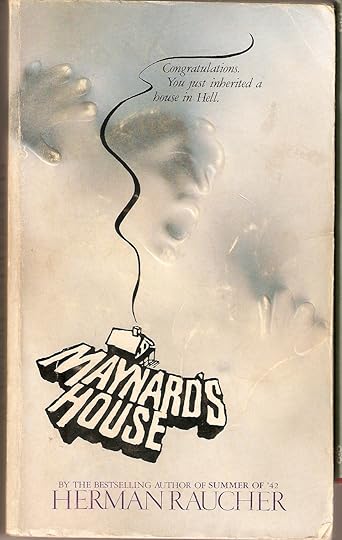
[Cover of the Sep. 1981 Berkley mass-market paperback, 272 pages (the image up top is actually for the 1980 Putnam hardcover).]
One of the most chilling ghost stories I've read in recent years. This is top tier, eloquently-written weird fiction in which the overall atmosphere of creeping dread builds ever so slowly, and to excellent effect. Which is surprising considering this was Raucher's sole foray into horror. Full review to come, eventually, though I don't know how much I can add to Mark Monday's review. He was right on the money.

February 6, 2021
Maynard's House is a psychological horror set deep in the isolated Maine wilderness.
Herman Raucher is clearly a master of his craft. The writing is sublime, weaving an ambiguously sinister atmosphere across an environment so vivid I felt as though I could reach out and touch it.
Austin, our protagonist, is tragic in his PTSD and isolation. Most of the story seems to question whether the events are truly happening or if they are the product of an injured mind. I cared for Austin but never quite had the feeling he cared much for himself. Right off the train he seemed bent on his own destruction.
The first six chapters pulled me in, but the pace lolled in the middle. The hallucinatory appeal began to fade as I longed for answers instead of wind-blown hats. However the end more than made up for it. I sighed in horror euphoria as the last four chapters played out.
Maynard's House is the kind of story that will leave you pondering its pages long after they end.
Herman Raucher is clearly a master of his craft. The writing is sublime, weaving an ambiguously sinister atmosphere across an environment so vivid I felt as though I could reach out and touch it.
Austin, our protagonist, is tragic in his PTSD and isolation. Most of the story seems to question whether the events are truly happening or if they are the product of an injured mind. I cared for Austin but never quite had the feeling he cared much for himself. Right off the train he seemed bent on his own destruction.
The first six chapters pulled me in, but the pace lolled in the middle. The hallucinatory appeal began to fade as I longed for answers instead of wind-blown hats. However the end more than made up for it. I sighed in horror euphoria as the last four chapters played out.
Maynard's House is the kind of story that will leave you pondering its pages long after they end.

March 12, 2021
3.5 Stars ⭐️
Mel 🖤🐶🐺🐾
Mel 🖤🐶🐺🐾

March 14, 2025
4.5 stars
short review for busy readers:
First published in 1980, this haunted house story more than deserves the moniker "forgotten gem". Spooky occurrences, excellent nature descriptions, amusing banter, crazy-mirror style refracting of time/space, and a horror conclusion that will have your hair standing on end. Absolute bliss!
in detail:
Austin Fletcher, 23-yr old Vietnam vet with some lingering PTSD issues, travels out to northern Maine in the winter of 1974 to see the cabin that Maynard, the recently deceased NCO of his unit, left him in his hastily scribbled battlefield will.
What Austin does, and does not know, are two things.
1) how to survive an icy Maine winter in a cabin all alone, what with bears and all sorts of wild animals and other creatures (🧚♂️) about, and
2) just how much the cabin is possessed by the ghost of a witch who was hung from a nearby tree about 300 years previously
The nature survivalist descriptions are intense and take up a good chunk of the novel, which might be the one feature which might not appeal to all readers. The story itself is a (seemingly) slow burn, the supernatural elements starting small (or do they?) and building up to full tilt nightmare apparitions.
But don't think it's straightforward. This is one of those novels that, at the end, will have you puzzling over what exactly was going on the whole time, and flipping back to the beginning to catch all the clues you totally missed.
Not everything makes total logical sense -- and it doesn't have to -- but what I think really happened is... ... which you must admit, it pretty supernaturally cool!
Recommended for fans of Man vs Nature stories, northerly snow and ice settings, the 1970s, and creepy haunted houses.
short review for busy readers:
First published in 1980, this haunted house story more than deserves the moniker "forgotten gem". Spooky occurrences, excellent nature descriptions, amusing banter, crazy-mirror style refracting of time/space, and a horror conclusion that will have your hair standing on end. Absolute bliss!
in detail:
Austin Fletcher, 23-yr old Vietnam vet with some lingering PTSD issues, travels out to northern Maine in the winter of 1974 to see the cabin that Maynard, the recently deceased NCO of his unit, left him in his hastily scribbled battlefield will.
What Austin does, and does not know, are two things.
1) how to survive an icy Maine winter in a cabin all alone, what with bears and all sorts of wild animals and other creatures (🧚♂️) about, and
2) just how much the cabin is possessed by the ghost of a witch who was hung from a nearby tree about 300 years previously
The nature survivalist descriptions are intense and take up a good chunk of the novel, which might be the one feature which might not appeal to all readers. The story itself is a (seemingly) slow burn, the supernatural elements starting small (or do they?) and building up to full tilt nightmare apparitions.
But don't think it's straightforward. This is one of those novels that, at the end, will have you puzzling over what exactly was going on the whole time, and flipping back to the beginning to catch all the clues you totally missed.
Not everything makes total logical sense -- and it doesn't have to -- but what I think really happened is... ... which you must admit, it pretty supernaturally cool!
Recommended for fans of Man vs Nature stories, northerly snow and ice settings, the 1970s, and creepy haunted houses.

January 7, 2026
I am not doing my traditional backstory on this book so just going to give out thoughts on it.
Thoughts:
I am probably going to be in the minority on this book as it seems that lots of people really liked this book. The story to me did not have typical ghosts in the book as I kept reading the book wondering when the spooky stuff was going to show up. The main character Austin is the focus of the whole story when he inherits an old cabin from a Vietnam war buddy with the cabin being located way out in the boonies.
The whole story is about how Austin copes with being alone out in the woods inside the cabin and what he goes through with the cabin. I felt that the cabin was really the ghost as it seems to manipulate Austin's perception of what goes on there. The problem with the story is that it was kind of boring as there really wasn't the usual ghost type stuff happening in the story.
By the time I made it to the end of the book the author gave the last part of the book a 360 degree twist and the story took a whole different direction making me wonder what was going on. When I say "twist" I mean the story goes out into the twilight zone and becomes entangled in a weird time loop maneuver that didn't make sense to me.
I have owned this book for a few years so it was kind of a disappointment to not live up to whatever hype this book has out there. I wasn't impressed with how it is labeled as a ghost story as it is more like a psychological horror story with very few ghosts except in the mind of the character Austin. Giving this story two "Missed The Ghost Mark By A Mile" stars!
Thoughts:
I am probably going to be in the minority on this book as it seems that lots of people really liked this book. The story to me did not have typical ghosts in the book as I kept reading the book wondering when the spooky stuff was going to show up. The main character Austin is the focus of the whole story when he inherits an old cabin from a Vietnam war buddy with the cabin being located way out in the boonies.
The whole story is about how Austin copes with being alone out in the woods inside the cabin and what he goes through with the cabin. I felt that the cabin was really the ghost as it seems to manipulate Austin's perception of what goes on there. The problem with the story is that it was kind of boring as there really wasn't the usual ghost type stuff happening in the story.
By the time I made it to the end of the book the author gave the last part of the book a 360 degree twist and the story took a whole different direction making me wonder what was going on. When I say "twist" I mean the story goes out into the twilight zone and becomes entangled in a weird time loop maneuver that didn't make sense to me.
I have owned this book for a few years so it was kind of a disappointment to not live up to whatever hype this book has out there. I wasn't impressed with how it is labeled as a ghost story as it is more like a psychological horror story with very few ghosts except in the mind of the character Austin. Giving this story two "Missed The Ghost Mark By A Mile" stars!

October 1, 2023
4.50 ⭐️ — This was something different, yet so familiar, almost like meeting an old-friend who’s been erased from your memory — Raucher’s haunting prose is masterful & Perry Daniel’s narration made it impossible for me to go even try reading parts of this outside the car, such was the emotive link his performance gives to the characters.
"Maynard's House," is a skillfully crafted near masterpiece of the slow burn, eery thriller where the atmospheric tension takes such a hold of you, it’ll take some time to shake it off. This novel, penned by the enigmatic Herman Raucher, is an exquisitely, masterfully illustrated journey into the depths of human despair and redemption. Raucher's prose is mightily mesmerizing, evoking a sense of wondery, timelessness and an eerie, haunted atmosphere that lingers long, long after the final page is turned or heard.
Set against the backdrop of a decaying, isolated cabin, that is nestled deep within the eerie woods of Maine, "Maynard's House" is a tale that weaves together elements of fever-dream narrative, eery atmospheric horror, psychological tension, and dark, forbidden desire. The novel's protagonist, Austin Fletcher, seeks some solace and a fresh start in this dilapidated abode, seemingly unaware of the sinister secrets lurking within its walls, after inheriting the house from his recently departed war mate, the eponymous Maynard. Knowing a little about Raucher’s life, really helps understand the mysteries in-play here and how the ultimate goal is for the reader to reach their own conclusion that best reflects their skewed perspective.
Raucher's vivid descriptions of the house and its surroundings create an atmosphere that is both chilling and seductive. The reader is drawn into the gloomy world of Maynard's House, where shadows dance in flickering candlelight, and the very walls seem to whisper secrets of long-forgotten tragedies, hinted at but never truly revealed, Raucher’s gift is accentuated by Perry Daniels brilliant showing as the audiobook.com narrator that includes some mesmerising voice work to really bring the secluded, snow-laden wilderness of Maine & its folksy inhabitants of Beldon to life.
The characters in this tale are intricately drawn, but not with their backstories or history, rather in their dialogue — something rarely achieved well. In these characters, of which each harboring their own dark pasts and desires. Austin, with his haunted past & complex emotions, is a protagonist who elicits both sympathy and unease. His interactions with the Mysterious and alluring Ara and the eccentric characters within Beldon itself, of which — be it the super folksy depot man or the laconic bear hunter, all add immense value & atmospheric layered tension to the mix.
As the story unfolds, Raucher skillfully blends elements of psychological horror, a sense of impending doom, creating a relentless tension that keeps the reader on the edge of their seat, but more than that, as noted by one previous reviewer — “Raucher develops the theme so well that the events that occur in his book seem as though they have been prewritten inside our collective unconscious” — This is exactly the vibe I had gnawing away at me whilst experiencing this beautiful and terribly undervalued gem!
The revelations that emerge, as Austin delves begins to slowly forge deeper into the mysteries of Maynard's House, are both eerily familiar & predominantly thought-provoking, as he is forcing the reader to confront the darkness that resides within us all, or as Billy Joel put it “We all have a face, that we hideaway forever, they’re the faces of a stranger, but we love to try them on”…
What sets "Maynard's House" apart is Raucher's lyrical prose and his ability to delve into the darkest recesses of the human psyche, without ever resorting to a too-graphic or shocking commentary. His exploration of themes such as guilt, redemption, and the blurred line between sanity and madness elevates this novel to a near literary masterpiece. There’s some controversy, Ala the immediate attraction to a 16yr old girl, but without giving anything away, this all depends on your feelings of the evil that lurks either in Austin, or in whatever is choosing to haunt him. My opinion of this, leant me to view this as more of the horror element, the idea it’s part of Raucher’s haunting of the reader and an attempt to lead the reader down a path, and forcing a decision that then creates the illusion you’ve chosen. For me, it’s all a part of the genius of the authors work, and I do believe many will oppose this view, but for effect — his goals are met either way.
This novel is simply a tour de force in how to create true gnawing impact through literary horror that deserves nothing less than being round up to five stars, despite it probably being more of a four-star read, the added atmospheric beauty from the audiobook & PD read, elevate it immensely. Raucher's ability to weave a spellbinding tale of of a clearly PTSD ridden character, through continual introspection, seeped with the use of trauma & ambiguity, is unparalleled. This novel is a hauntingly unforgettable journey that will leave you questioning the boundaries of reality & the depths of the human-soul, and psyche. If you have a penchant for literary horror that is both chilling and thought-provoking, "Maynard's House" is an absolute must-read.
"Maynard's House," is a skillfully crafted near masterpiece of the slow burn, eery thriller where the atmospheric tension takes such a hold of you, it’ll take some time to shake it off. This novel, penned by the enigmatic Herman Raucher, is an exquisitely, masterfully illustrated journey into the depths of human despair and redemption. Raucher's prose is mightily mesmerizing, evoking a sense of wondery, timelessness and an eerie, haunted atmosphere that lingers long, long after the final page is turned or heard.
Set against the backdrop of a decaying, isolated cabin, that is nestled deep within the eerie woods of Maine, "Maynard's House" is a tale that weaves together elements of fever-dream narrative, eery atmospheric horror, psychological tension, and dark, forbidden desire. The novel's protagonist, Austin Fletcher, seeks some solace and a fresh start in this dilapidated abode, seemingly unaware of the sinister secrets lurking within its walls, after inheriting the house from his recently departed war mate, the eponymous Maynard. Knowing a little about Raucher’s life, really helps understand the mysteries in-play here and how the ultimate goal is for the reader to reach their own conclusion that best reflects their skewed perspective.
Raucher's vivid descriptions of the house and its surroundings create an atmosphere that is both chilling and seductive. The reader is drawn into the gloomy world of Maynard's House, where shadows dance in flickering candlelight, and the very walls seem to whisper secrets of long-forgotten tragedies, hinted at but never truly revealed, Raucher’s gift is accentuated by Perry Daniels brilliant showing as the audiobook.com narrator that includes some mesmerising voice work to really bring the secluded, snow-laden wilderness of Maine & its folksy inhabitants of Beldon to life.
The characters in this tale are intricately drawn, but not with their backstories or history, rather in their dialogue — something rarely achieved well. In these characters, of which each harboring their own dark pasts and desires. Austin, with his haunted past & complex emotions, is a protagonist who elicits both sympathy and unease. His interactions with the Mysterious and alluring Ara and the eccentric characters within Beldon itself, of which — be it the super folksy depot man or the laconic bear hunter, all add immense value & atmospheric layered tension to the mix.
As the story unfolds, Raucher skillfully blends elements of psychological horror, a sense of impending doom, creating a relentless tension that keeps the reader on the edge of their seat, but more than that, as noted by one previous reviewer — “Raucher develops the theme so well that the events that occur in his book seem as though they have been prewritten inside our collective unconscious” — This is exactly the vibe I had gnawing away at me whilst experiencing this beautiful and terribly undervalued gem!
The revelations that emerge, as Austin delves begins to slowly forge deeper into the mysteries of Maynard's House, are both eerily familiar & predominantly thought-provoking, as he is forcing the reader to confront the darkness that resides within us all, or as Billy Joel put it “We all have a face, that we hideaway forever, they’re the faces of a stranger, but we love to try them on”…
What sets "Maynard's House" apart is Raucher's lyrical prose and his ability to delve into the darkest recesses of the human psyche, without ever resorting to a too-graphic or shocking commentary. His exploration of themes such as guilt, redemption, and the blurred line between sanity and madness elevates this novel to a near literary masterpiece. There’s some controversy, Ala the immediate attraction to a 16yr old girl, but without giving anything away, this all depends on your feelings of the evil that lurks either in Austin, or in whatever is choosing to haunt him. My opinion of this, leant me to view this as more of the horror element, the idea it’s part of Raucher’s haunting of the reader and an attempt to lead the reader down a path, and forcing a decision that then creates the illusion you’ve chosen. For me, it’s all a part of the genius of the authors work, and I do believe many will oppose this view, but for effect — his goals are met either way.
This novel is simply a tour de force in how to create true gnawing impact through literary horror that deserves nothing less than being round up to five stars, despite it probably being more of a four-star read, the added atmospheric beauty from the audiobook & PD read, elevate it immensely. Raucher's ability to weave a spellbinding tale of of a clearly PTSD ridden character, through continual introspection, seeped with the use of trauma & ambiguity, is unparalleled. This novel is a hauntingly unforgettable journey that will leave you questioning the boundaries of reality & the depths of the human-soul, and psyche. If you have a penchant for literary horror that is both chilling and thought-provoking, "Maynard's House" is an absolute must-read.

May 5, 2023
I don’t write reviews.
“‘A house is a place to go back to, to regroup in. A house is a kind of a special corner of the universe. It’s a place where everyone who ever lived in it, still does.’
What you’re saying, Maynard, is what I know. I’ve got a lot of company here.
‘That’s the nature of a house. It absorbs its occupants, kind of keeping them forever alive.’”
And let me never doubt a Thoreau-loving, State-of-Mainer as long as I live. Maynard, though dead, has a lot to teach Austin. No, this isn’t exactly a ghost story either. Austin, freshly back from Vietnam, alive, inherits an isolated house in northern Maine from Maynard, not conventionally returning from Vietnam, dead. Maynard’s house has history.
Maynard’s House is a story full of “ayuh” and Maine accents which thrill me. The snow, the solitude, the endless quiet, the tree which casts no shadow, all make a creepy setting. The denouement was brilliant and I actually shivered a few times.
Unlike a lot of complainers, I enjoyed the relationship between Austin and Ara. (The age difference was a part of the story and something Austin talks about many times. So don’t get your panties in a bunch over a fictional account of fake people. It’s ridiculous). Ara helped Austin view things more objectively while simultaneously deepening the existential mystery which lies at the heart of this tale. What that mystery is, I won’t say. Or can’t say. But I thoroughly feel it.
Those who visit Austin in his separate world are equally real and unreal. To which extent of each, even I remain unsure. Froom, Ara’s younger brother who never talks to Austin, but pelts him with snowballs as a sign of affection. Jack Meeker, the postman who is always there to support a stranger he found in the snow. Benson, the bearded, wild-eyed hunter of bears, who roams the forests of Maine in winter, tracking his prey. Ara, the girl who seems completely unattached to the real world and is just as unsure of reality as Austin finds himself becoming. And Maynard himself, of course.
The whole situation starts with a strange scene. A train blocked by snow. A young man unfamiliar with the area decides to walk five miles to a town he’s never seen. A stranger finds him passed out on the tracks. Welcome to Belden.
Thinking on this one makes me realize I’ll be thinking on this one for quite some time. I’m smiling as I write this.
“Watching the snow fall and pile in the encompassing dimness, his sanity pressured by things monstrously beyond his ken, his equilibrium provoked by a conversation with Maynard that could not possibly have taken place, except as a distortion. He knew that staying just one more night in that house would cause him to cross over completely, to a never-never land where nothing had a shadow, where memories were marbles and thoughts chewing gum and people but ten pins in the gutter of the gods. He had to get out. Make tracks. Leave dust. Snow or no snow. Wolves, bears or ducks. Midnight or Mardi Gras. He had to go. He had come by lantern, he would leave by lantern. For as the man had written on the fine pine plank, ‘This house is not fit.’”
“‘A house is a place to go back to, to regroup in. A house is a kind of a special corner of the universe. It’s a place where everyone who ever lived in it, still does.’
What you’re saying, Maynard, is what I know. I’ve got a lot of company here.
‘That’s the nature of a house. It absorbs its occupants, kind of keeping them forever alive.’”
And let me never doubt a Thoreau-loving, State-of-Mainer as long as I live. Maynard, though dead, has a lot to teach Austin. No, this isn’t exactly a ghost story either. Austin, freshly back from Vietnam, alive, inherits an isolated house in northern Maine from Maynard, not conventionally returning from Vietnam, dead. Maynard’s house has history.
Maynard’s House is a story full of “ayuh” and Maine accents which thrill me. The snow, the solitude, the endless quiet, the tree which casts no shadow, all make a creepy setting. The denouement was brilliant and I actually shivered a few times.
Unlike a lot of complainers, I enjoyed the relationship between Austin and Ara. (The age difference was a part of the story and something Austin talks about many times. So don’t get your panties in a bunch over a fictional account of fake people. It’s ridiculous). Ara helped Austin view things more objectively while simultaneously deepening the existential mystery which lies at the heart of this tale. What that mystery is, I won’t say. Or can’t say. But I thoroughly feel it.
Those who visit Austin in his separate world are equally real and unreal. To which extent of each, even I remain unsure. Froom, Ara’s younger brother who never talks to Austin, but pelts him with snowballs as a sign of affection. Jack Meeker, the postman who is always there to support a stranger he found in the snow. Benson, the bearded, wild-eyed hunter of bears, who roams the forests of Maine in winter, tracking his prey. Ara, the girl who seems completely unattached to the real world and is just as unsure of reality as Austin finds himself becoming. And Maynard himself, of course.
The whole situation starts with a strange scene. A train blocked by snow. A young man unfamiliar with the area decides to walk five miles to a town he’s never seen. A stranger finds him passed out on the tracks. Welcome to Belden.
Thinking on this one makes me realize I’ll be thinking on this one for quite some time. I’m smiling as I write this.
“Watching the snow fall and pile in the encompassing dimness, his sanity pressured by things monstrously beyond his ken, his equilibrium provoked by a conversation with Maynard that could not possibly have taken place, except as a distortion. He knew that staying just one more night in that house would cause him to cross over completely, to a never-never land where nothing had a shadow, where memories were marbles and thoughts chewing gum and people but ten pins in the gutter of the gods. He had to get out. Make tracks. Leave dust. Snow or no snow. Wolves, bears or ducks. Midnight or Mardi Gras. He had to go. He had come by lantern, he would leave by lantern. For as the man had written on the fine pine plank, ‘This house is not fit.’”

June 6, 2025
Some people went to Mecca, some to Jerusalem, some to the Ganges. Austin was going to Maynard’s house.
I already knew Herman Raucher could write and tug at the heart strings, from Summer of '42, but I wasn’t expecting so much beauty and pain and depth from what is nominally a horror novel. The only one Raucher wrote, but a story that would get my vote in any top 5 list in the genre.
Austin Fletcher, a young man from big city Cincinnati, is drafted and sent to Vietnam where the violence and the constant stress make him retreat deep into himself, as if trying to hide from the world and from his peers. His patrol commander, Maynard Whittier, notices something familiar about Austin though and, in a moment of candor, writes over his house in Maine to him on a piece of scrap paper, in case he doesn’t make it back home.
“Swell, but why me?”
“It’s you or Joe Sharma, or Terry Glover. And since they can barely read, and since you’re a kind of loner like I am ... Austin, I got books back home. Lots of fine books. And then there’s my own notes on the area, got it all catalogued. Even if ya never read none of it, I’d like to know it’s in good hands. Thoreau – ya ever read Thoreau?”
We’ll get back to Thoreau, eventually. Before that, a mortar shell falls in the middle of the platoon during one of their jungle patrols, kills Maynard on the spot and sends Austin into deep shock. Months later, Austin is still dazed and confused, but is riding a local train north in the middle of a blizzard, his mind re-running flashes of his youth and of the war against the whiteout swirls in the window.
He was going to Belden. Belden, Maine – wherever that was. Somewhere near Mount Katahdin, south of Sourdnahunk Lake, north of Pemadumcook Lake, west of the towns of Mattawamkeag and Millinocket, and east of Chesuncook, Caucomgomok and Seboomook Lakes.
This is Stephen King’s country, and the experienced reader might even feel Raucher was poaching in the master storyteller own domain, at least for the setting if not for the style of presentation. I think Raucher is achieving similar results with King, but with much better control of tone and plot, tighter writing yet more lyrically charged imagery.
There are questions right from the start about the nature of reality, about how reliable is Austin as a narrator, how much trauma can his mind absorb, where is the border between the real and the imagined. Austin is well aware of his problems, he uses logic and humour and sheer willpower to try to put himself on an even keel, but the fact remains that he is running to hide from the world in one of the most isolated and wild places in America. How will he survive all alone in a cabin in the woods, in the middle of winter, miles away from the nearest human presence?
He had been a floater and a waster, a time-marker and a corner-cutter. He had lived his entire life as if poised on a diving board, yet all he’d ever done was tense his toes and arch his insteps – he had never really jumped in, not into anything. Ever. Not of his own free will. Not even in Nam.
With the help of a local gruff and droll bearded man he met at the railroad station, Jack Meeker, Austin finally reaches Maynard’s cabin, and is pleased to discover it is fully equipped with food, wood, clothes and other necessary items for living there. Plus the walls covered with the books his friend has promised. It looks like a good place to take stock and to recover and to decide where he wants to go with his life. Jack Meechum is probably pulling his leg with his scary stories about dead witches and savage bears and isolation madness.
“Back a ways we passed a witch’s tree. Ya may have taken notice.”
... something is off though, but Austin can’t quite put his finger on what disturbance is hidden under the tranquil snowy landscape. The first days in the cabin are filled with hope and with learning his way around the house, except for a hilarious incident with a bear, a lack of toilet paper and the outhouse. But that’s another story.
Strange sounds, messages written in the snow, a curiously tame deer, barely glimpsed shadows at the edge of his vision and chilling currents of air near the tree where a woman accused of witchcraft was hanged centuries ago erode the young man’s confidence in his own sanity. Could the local legends about the Minnawickies, forest sprites, be true? Or maybe it’s just a couple of kids playing pranks on the newcomer?
The whole forest was radiantly alive wherever he looked, earth and sky, valley and hill, all of it abounding with activity that he was more and more able to define and enjoy.
The days are filled with necessary activities for survival and with wonder at the living world surrounding him, but in darkness Austin is visited by doubts and uncertainty. Most of the scary things can be easily explained logically, and eventually even the Minnawickies turn out to be a young girl and her brother, who are bored and move around freely on snowshoes or sled. Ara and Froom are friendly and know a lot of useful stuff about living in Maine in winter, but they are also ambiguous about the supernatural and warn Austin not to ignore the warning signs.
... of which there are plenty.
It looks like Maynard gifted a haunted house to his friend. All the previous inhabitants left notes about the troubles they experienced living in the house, feeling either cursed or unlucky. To ward off loneliness Austin starts reading extensively, first from the humorous books, then from Maynard’s personal notes, all of it leading up to Thoreau and his retreat from civilization into nature.
Most of what I believe can be found here, in Thoreau, a man who knew there was more to living alone with nature than in the company of a near-sighted civilization.
“The way I see it, life should be dealt with from a base. Like a house.”
Austin spoke to the book. “Yeah, I figured you’d say somethin’ like that.”
“A house is a place to go back to, to regroup in. A house is a kind of a special corner of the universe. It’s a place where everyone whoever lived in it still does.”
Things become clearer to the reader, in a metaphorical way: the house as an anchor in Austin’s life is the same house as a repository of past lives and past trauma. Which one will end up dominant in his life? He feels both enchanted and repelled by this house, the wonders of daylight hours crushed under the onslaught of the nightmares waiting for him in the dark.
At a place in the onyx night where the hour of the wolf takes hold and all time stops though man never knows it, Austin awoke.
Austin is in danger of getting lost again inside his own mind, and there is nobody there to help him, not even the beautiful but erratic girl Ara. He must find a way to retrieve his sanity, in this existential struggle presented as a fight for survival in the wilderness.
It crossed his mind that she might not have been there at all, that he had imagined her there or dreamed her there, for, Lord knows, the precision of his thinking those past few days had hardly been as a compass pointing unwaveringly north. It had been more like a weathervane in a tricking wind, signalling a dozen directions at once, as unerring in its pursuit of truth as a mindless mouse in an exitless maze.
“Well, there’s always a bear. If not in the woods, then in ya mind.”
I have tried to write my own notes on themes and allegory and to avoid actual plot developments, after the opening scenes with the arrival of Austin at the house. For such an introspective novel, I never felt any slowness in pacing or in tension, maybe because I resonate myself quite strongly with the love for unspoiled places and for the ideas of Thoreau. I did feel this is a novel that should not be rushed, even if it is indeed following most of the rules of the thriller genre, including the spectacular and scary finale. But I wanted to stop and pay attention to the writing, right from the first page. I often turned back the page and re-read a particular turn of phrase, a particular image, to make sure I got it right. And I felt rewarded for my attention to detail, such is the richness of the text and the subtlety of the arguments, even when the dialogue turns to jokes and heavy dialect.
A house filled with books in the middle of a natural park with lake, forest, mountain and wildlife nearby is as close to a perfect base as I can imagine. Even with a couple of horrible skeletons in the cupboards or in the root cellar. That guy Thoreau was on to something ...
“... I went to the woods because I wished to live deliberately, to front only the essential facts of life, and see if I could learn what it had to teach – and not, when I came to die, discover that I had not lived.”
I already knew Herman Raucher could write and tug at the heart strings, from Summer of '42, but I wasn’t expecting so much beauty and pain and depth from what is nominally a horror novel. The only one Raucher wrote, but a story that would get my vote in any top 5 list in the genre.
Austin Fletcher, a young man from big city Cincinnati, is drafted and sent to Vietnam where the violence and the constant stress make him retreat deep into himself, as if trying to hide from the world and from his peers. His patrol commander, Maynard Whittier, notices something familiar about Austin though and, in a moment of candor, writes over his house in Maine to him on a piece of scrap paper, in case he doesn’t make it back home.
“Swell, but why me?”
“It’s you or Joe Sharma, or Terry Glover. And since they can barely read, and since you’re a kind of loner like I am ... Austin, I got books back home. Lots of fine books. And then there’s my own notes on the area, got it all catalogued. Even if ya never read none of it, I’d like to know it’s in good hands. Thoreau – ya ever read Thoreau?”
We’ll get back to Thoreau, eventually. Before that, a mortar shell falls in the middle of the platoon during one of their jungle patrols, kills Maynard on the spot and sends Austin into deep shock. Months later, Austin is still dazed and confused, but is riding a local train north in the middle of a blizzard, his mind re-running flashes of his youth and of the war against the whiteout swirls in the window.
He was going to Belden. Belden, Maine – wherever that was. Somewhere near Mount Katahdin, south of Sourdnahunk Lake, north of Pemadumcook Lake, west of the towns of Mattawamkeag and Millinocket, and east of Chesuncook, Caucomgomok and Seboomook Lakes.
This is Stephen King’s country, and the experienced reader might even feel Raucher was poaching in the master storyteller own domain, at least for the setting if not for the style of presentation. I think Raucher is achieving similar results with King, but with much better control of tone and plot, tighter writing yet more lyrically charged imagery.
There are questions right from the start about the nature of reality, about how reliable is Austin as a narrator, how much trauma can his mind absorb, where is the border between the real and the imagined. Austin is well aware of his problems, he uses logic and humour and sheer willpower to try to put himself on an even keel, but the fact remains that he is running to hide from the world in one of the most isolated and wild places in America. How will he survive all alone in a cabin in the woods, in the middle of winter, miles away from the nearest human presence?
He had been a floater and a waster, a time-marker and a corner-cutter. He had lived his entire life as if poised on a diving board, yet all he’d ever done was tense his toes and arch his insteps – he had never really jumped in, not into anything. Ever. Not of his own free will. Not even in Nam.
With the help of a local gruff and droll bearded man he met at the railroad station, Jack Meeker, Austin finally reaches Maynard’s cabin, and is pleased to discover it is fully equipped with food, wood, clothes and other necessary items for living there. Plus the walls covered with the books his friend has promised. It looks like a good place to take stock and to recover and to decide where he wants to go with his life. Jack Meechum is probably pulling his leg with his scary stories about dead witches and savage bears and isolation madness.
“Back a ways we passed a witch’s tree. Ya may have taken notice.”
... something is off though, but Austin can’t quite put his finger on what disturbance is hidden under the tranquil snowy landscape. The first days in the cabin are filled with hope and with learning his way around the house, except for a hilarious incident with a bear, a lack of toilet paper and the outhouse. But that’s another story.
Strange sounds, messages written in the snow, a curiously tame deer, barely glimpsed shadows at the edge of his vision and chilling currents of air near the tree where a woman accused of witchcraft was hanged centuries ago erode the young man’s confidence in his own sanity. Could the local legends about the Minnawickies, forest sprites, be true? Or maybe it’s just a couple of kids playing pranks on the newcomer?
The whole forest was radiantly alive wherever he looked, earth and sky, valley and hill, all of it abounding with activity that he was more and more able to define and enjoy.
The days are filled with necessary activities for survival and with wonder at the living world surrounding him, but in darkness Austin is visited by doubts and uncertainty. Most of the scary things can be easily explained logically, and eventually even the Minnawickies turn out to be a young girl and her brother, who are bored and move around freely on snowshoes or sled. Ara and Froom are friendly and know a lot of useful stuff about living in Maine in winter, but they are also ambiguous about the supernatural and warn Austin not to ignore the warning signs.
... of which there are plenty.
It looks like Maynard gifted a haunted house to his friend. All the previous inhabitants left notes about the troubles they experienced living in the house, feeling either cursed or unlucky. To ward off loneliness Austin starts reading extensively, first from the humorous books, then from Maynard’s personal notes, all of it leading up to Thoreau and his retreat from civilization into nature.
Most of what I believe can be found here, in Thoreau, a man who knew there was more to living alone with nature than in the company of a near-sighted civilization.
“The way I see it, life should be dealt with from a base. Like a house.”
Austin spoke to the book. “Yeah, I figured you’d say somethin’ like that.”
“A house is a place to go back to, to regroup in. A house is a kind of a special corner of the universe. It’s a place where everyone whoever lived in it still does.”
Things become clearer to the reader, in a metaphorical way: the house as an anchor in Austin’s life is the same house as a repository of past lives and past trauma. Which one will end up dominant in his life? He feels both enchanted and repelled by this house, the wonders of daylight hours crushed under the onslaught of the nightmares waiting for him in the dark.
At a place in the onyx night where the hour of the wolf takes hold and all time stops though man never knows it, Austin awoke.
Austin is in danger of getting lost again inside his own mind, and there is nobody there to help him, not even the beautiful but erratic girl Ara. He must find a way to retrieve his sanity, in this existential struggle presented as a fight for survival in the wilderness.
It crossed his mind that she might not have been there at all, that he had imagined her there or dreamed her there, for, Lord knows, the precision of his thinking those past few days had hardly been as a compass pointing unwaveringly north. It had been more like a weathervane in a tricking wind, signalling a dozen directions at once, as unerring in its pursuit of truth as a mindless mouse in an exitless maze.
“Well, there’s always a bear. If not in the woods, then in ya mind.”
I have tried to write my own notes on themes and allegory and to avoid actual plot developments, after the opening scenes with the arrival of Austin at the house. For such an introspective novel, I never felt any slowness in pacing or in tension, maybe because I resonate myself quite strongly with the love for unspoiled places and for the ideas of Thoreau. I did feel this is a novel that should not be rushed, even if it is indeed following most of the rules of the thriller genre, including the spectacular and scary finale. But I wanted to stop and pay attention to the writing, right from the first page. I often turned back the page and re-read a particular turn of phrase, a particular image, to make sure I got it right. And I felt rewarded for my attention to detail, such is the richness of the text and the subtlety of the arguments, even when the dialogue turns to jokes and heavy dialect.
A house filled with books in the middle of a natural park with lake, forest, mountain and wildlife nearby is as close to a perfect base as I can imagine. Even with a couple of horrible skeletons in the cupboards or in the root cellar. That guy Thoreau was on to something ...
“... I went to the woods because I wished to live deliberately, to front only the essential facts of life, and see if I could learn what it had to teach – and not, when I came to die, discover that I had not lived.”

August 19, 2021
Mam słabość do opowieści o nawiedzonych domach, być może dlatego, że za ich nawiedzeniem, kryje się zazwyczaj coś więcej, coś mocniej, coś dalej.
Pośród opowieści o nawiedzonych domach najbardziej lubię te, w których warstwa psychologiczno-społeczna spójnie przenika całość strasznej fabuły. „W kleszczach lęku” Henry Jamesa, „Nawiedzony Dom na Wzgórzu” Shirley Jackson, „Całopalenie” Roberta Marasco, a teraz do ulubionych dołącza „Dom Maynarda” Hermana Rauchera. „Dom Maynarda”, który demitologizuje „Waldena” Henry’ego Davida Thoreau, który unika zaszufladkowania, który pozwala czytelnikowi czytać go zawsze od nowa wraz z kolejnymi mijającymi latami. Jestem ciekawa, czy Was również do siebie przekona.
Więcej na: wielkibuk.com
Pośród opowieści o nawiedzonych domach najbardziej lubię te, w których warstwa psychologiczno-społeczna spójnie przenika całość strasznej fabuły. „W kleszczach lęku” Henry Jamesa, „Nawiedzony Dom na Wzgórzu” Shirley Jackson, „Całopalenie” Roberta Marasco, a teraz do ulubionych dołącza „Dom Maynarda” Hermana Rauchera. „Dom Maynarda”, który demitologizuje „Waldena” Henry’ego Davida Thoreau, który unika zaszufladkowania, który pozwala czytelnikowi czytać go zawsze od nowa wraz z kolejnymi mijającymi latami. Jestem ciekawa, czy Was również do siebie przekona.
Więcej na: wielkibuk.com

February 15, 2021
Atmosphere for days!!
This is a strange “haunted house” story. If your the kind of person that likes everything wrapped in a neat little bow at the end, this is not the book for you. This story has atmosphere for days!! Austin inherits Maynard’s house after he dies in the Vietnam war. They were good buddies and Maynard had no one else to leave it to. So, as soon as Austin gets out of the military, he heads to Maine (in the dead of winter) and to his new house. That’s all I can say. I enjoyed this book a lot. The sense of isolation is heavy, the solitude Austin faces. There seems to be something dreadful about the night. Is it ghost or just natural noises he isn’t familiar with? I’m so glad I read this with my book club, Horror Aficionados. I think most of us really liked it.
This is a strange “haunted house” story. If your the kind of person that likes everything wrapped in a neat little bow at the end, this is not the book for you. This story has atmosphere for days!! Austin inherits Maynard’s house after he dies in the Vietnam war. They were good buddies and Maynard had no one else to leave it to. So, as soon as Austin gets out of the military, he heads to Maine (in the dead of winter) and to his new house. That’s all I can say. I enjoyed this book a lot. The sense of isolation is heavy, the solitude Austin faces. There seems to be something dreadful about the night. Is it ghost or just natural noises he isn’t familiar with? I’m so glad I read this with my book club, Horror Aficionados. I think most of us really liked it.

September 30, 2023
A hauntingly beautiful, eerie and unsettling read, Raucher gave us an atmospheric classic with Maynard's House. Overarching themes of loneliness, claustrophobia and insanity permeate this novel, and if you need endings where everything is wrapped up with a bow, you will be disappointed.
While first published in 1980, Maynard's House takes place during the winter of 1972/3, featuring Austin Fletcher, a Vietnam vet, whose buddy and CO in the army Maynard left him his house on a hastily written will shortly before he was killed by an artillery round. Austin, from Ohio, does not know much about Maine where Maynard's house rests tucked into the deep northern woods there, but feels he owes it to his buddy to at least check it out. The novel starts with Austin riding a decrepit local train used to haul more potatoes than people on his way to the tiny town of Belden. Raucher gives us a taste of the cold and foreboding winter Austin enters as the train struggles to negotiate the first major snow of the year.
Austin, a loner by nature, obviously has some deep scars from the war as witnessed by his exchanges with the people on the train and (after a nightmarish walk in the cold) with the train station master at Belden. Raucher nails the Maine accent and the stoic nature of the people in Maine, building up the locals deftly that reminded me of Stephen King's best work. Jack Meeker, the Depot guy, eventually takes Austin to Maynard's house in his old jeep/snow plow. Even though the house has been vacant for two years, Maynard left it fully stocked with food and cut wood for the stove.
The house itself is off the grid entirely, with an old Franklin stove for heat, kerosene lanterns for light and a 'backhouse' for the calls of nature. Jack gives Austin a bit of the lowdown of the place, telling him that while the house is around 100 years old, it was build on a much older foundation. Further, it might have been the abode of a witch a long ways back. Later, Austin discovers a wooden plank nailed to the wall that chronicles the people that first rebuilt the house and who came after; not many stayed for long and more than a few died there. So, is this going to be a haunted house story? Maybe.
What makes Maynard's House special consists of how Raucher presented Austin. Is he slowly going crazy or is the house really haunted. Putting like this sounds trite and this is an old trope, but Raucher is masterful here at this. We follow Austin along on his adventures at living with 19th century technology in a very remote, isolated cabin dead in winter. It seems Maynard loved Thoreau and more, loved the life style the author so vividly depicted, but Austin? It first he seems to rejoice in the isolation, Maynard told Austin he liked the 'hibernate' in the winter and read. Yet, he becomes increasingly unsettled. Again, is it the house or is Austin cracking up?
The odd, disorientated feeling of the book that started with the bleak train ride just builds and builds. Raucher does punctuate this with some flashbacks from 'Nam, but mostly this unfolds in 'real' time. I will be thinking about this one for a bit! 4.5 stars, rounding up!
While first published in 1980, Maynard's House takes place during the winter of 1972/3, featuring Austin Fletcher, a Vietnam vet, whose buddy and CO in the army Maynard left him his house on a hastily written will shortly before he was killed by an artillery round. Austin, from Ohio, does not know much about Maine where Maynard's house rests tucked into the deep northern woods there, but feels he owes it to his buddy to at least check it out. The novel starts with Austin riding a decrepit local train used to haul more potatoes than people on his way to the tiny town of Belden. Raucher gives us a taste of the cold and foreboding winter Austin enters as the train struggles to negotiate the first major snow of the year.
Austin, a loner by nature, obviously has some deep scars from the war as witnessed by his exchanges with the people on the train and (after a nightmarish walk in the cold) with the train station master at Belden. Raucher nails the Maine accent and the stoic nature of the people in Maine, building up the locals deftly that reminded me of Stephen King's best work. Jack Meeker, the Depot guy, eventually takes Austin to Maynard's house in his old jeep/snow plow. Even though the house has been vacant for two years, Maynard left it fully stocked with food and cut wood for the stove.
The house itself is off the grid entirely, with an old Franklin stove for heat, kerosene lanterns for light and a 'backhouse' for the calls of nature. Jack gives Austin a bit of the lowdown of the place, telling him that while the house is around 100 years old, it was build on a much older foundation. Further, it might have been the abode of a witch a long ways back. Later, Austin discovers a wooden plank nailed to the wall that chronicles the people that first rebuilt the house and who came after; not many stayed for long and more than a few died there. So, is this going to be a haunted house story? Maybe.
What makes Maynard's House special consists of how Raucher presented Austin. Is he slowly going crazy or is the house really haunted. Putting like this sounds trite and this is an old trope, but Raucher is masterful here at this. We follow Austin along on his adventures at living with 19th century technology in a very remote, isolated cabin dead in winter. It seems Maynard loved Thoreau and more, loved the life style the author so vividly depicted, but Austin? It first he seems to rejoice in the isolation, Maynard told Austin he liked the 'hibernate' in the winter and read. Yet, he becomes increasingly unsettled. Again, is it the house or is Austin cracking up?
The odd, disorientated feeling of the book that started with the bleak train ride just builds and builds. Raucher does punctuate this with some flashbacks from 'Nam, but mostly this unfolds in 'real' time. I will be thinking about this one for a bit! 4.5 stars, rounding up!

May 23, 2021
I spent some money on this “gem.” It is out of print, difficult to find, and expensive. Was it worth the money? No. No, it was not.
What I thought we had here was a book about a young man that inherited a house in Maine from his friend who died next to him in Vietnam. By the end, I am not entirely sure that this is what happened.
If we accept the premise that Austin is Austin traveling to Maine for the first time, then we also have to accept that in addition to Austin being a war vet (with PTSD?), Austin is also a pervert who is immediately taken by a woman-child he initially estimates to be 16, but at times suspects may be as young as 10 or 11. At no point does he ask. He does acknowledge repeatedly how inappropriate his attraction to the child is, but it does not stop him from forcing himself on her or fantasizing (?) about having sex with her (does he or doesn’t he?). I get that this is an old book but the author clearly acknowledges the age dilemma and chooses to dedicate 50 percent of the book to it anyway, which was just absolutely disgusting to me.
Now that I’ve got that off my chest...
The ending is just.... confusing. I was unable to find anything, anywhere, to confirm what happened. One minute Maynard is fighting off bears and daydreaming about sex with a child, and the next, he is booby trapping the house, shooting holes in the windows, hiding in the root cellar from a fire, and watching a witch burn from a witch tree that’s supposed to be, like, a quarter mile from the house (from the root cellar). He emerges to find his friend Jack alive and his own reflection replaced with Maynard’s, and himself headed off to war in Vietnam, years before he’s supposed to have arrived as Austin. So..... is he really Maynard and he comes back delusional? Is he Austin and somehow taken over by Maynard? I’ve read some who think the house rejects Austin and loves Maynard and the witch somehow makes the switch...
Then we have the ending, where Austin again comes home from the war. Austin, not Maynard. And the “16” (or 10) year old and her brother are waiting for him with his two dogs at the train station and they sled all the way home...
I mean... I really just could not wrap my brain around this one, and for that reason, I’m giving it two stars.
In terms of writing, this book is 5 stars. Raucher can write. The setting, also, is 5 stars. I really enjoyed the descriptions of Maine and the set up right up until Ara and Froom were confirmed to be children and not creatures of local lore. The isolation and snow and Thoreau-like “life in the woods” part was great. The local lore, like the witch tree and the dancing rock, were also really interesting. The dialogue was (occasionally) funny, but overdone.
Because the author spent as much time describing an adult male’s sexual attraction to a young child as anything else, and because the ending did not make any sense to me, I can’t give this above 2 stars, and despite the great writing, can understand why it remains unprinted and hard to find.
What I thought we had here was a book about a young man that inherited a house in Maine from his friend who died next to him in Vietnam. By the end, I am not entirely sure that this is what happened.
If we accept the premise that Austin is Austin traveling to Maine for the first time, then we also have to accept that in addition to Austin being a war vet (with PTSD?), Austin is also a pervert who is immediately taken by a woman-child he initially estimates to be 16, but at times suspects may be as young as 10 or 11. At no point does he ask. He does acknowledge repeatedly how inappropriate his attraction to the child is, but it does not stop him from forcing himself on her or fantasizing (?) about having sex with her (does he or doesn’t he?). I get that this is an old book but the author clearly acknowledges the age dilemma and chooses to dedicate 50 percent of the book to it anyway, which was just absolutely disgusting to me.
Now that I’ve got that off my chest...
The ending is just.... confusing. I was unable to find anything, anywhere, to confirm what happened. One minute Maynard is fighting off bears and daydreaming about sex with a child, and the next, he is booby trapping the house, shooting holes in the windows, hiding in the root cellar from a fire, and watching a witch burn from a witch tree that’s supposed to be, like, a quarter mile from the house (from the root cellar). He emerges to find his friend Jack alive and his own reflection replaced with Maynard’s, and himself headed off to war in Vietnam, years before he’s supposed to have arrived as Austin. So..... is he really Maynard and he comes back delusional? Is he Austin and somehow taken over by Maynard? I’ve read some who think the house rejects Austin and loves Maynard and the witch somehow makes the switch...
Then we have the ending, where Austin again comes home from the war. Austin, not Maynard. And the “16” (or 10) year old and her brother are waiting for him with his two dogs at the train station and they sled all the way home...
I mean... I really just could not wrap my brain around this one, and for that reason, I’m giving it two stars.
In terms of writing, this book is 5 stars. Raucher can write. The setting, also, is 5 stars. I really enjoyed the descriptions of Maine and the set up right up until Ara and Froom were confirmed to be children and not creatures of local lore. The isolation and snow and Thoreau-like “life in the woods” part was great. The local lore, like the witch tree and the dancing rock, were also really interesting. The dialogue was (occasionally) funny, but overdone.
Because the author spent as much time describing an adult male’s sexual attraction to a young child as anything else, and because the ending did not make any sense to me, I can’t give this above 2 stars, and despite the great writing, can understand why it remains unprinted and hard to find.
This entire review has been hidden because of spoilers.

January 4, 2019
A quiet and shockingly effective “haunted” house tale drenched in winter Maine snow, Maynard’s House has been all but forgotten, and that is a shame. What works best for me, as a horror reader, is the suggestive, the elusive: obvious scares don’t cut it — as much. This book works.
Because this is set in Maine, one’s mind quickly goes to Stephen King. Like King’s best early works, this novel illustrates a true and authentic Maine vibe — one can almost hear the creaking tree branches, the pitter-pat of woodland creatures in the countryside snow — but Herman Raucher is his own writer telling his own story. And it’s a damn good one.
Combining Vietnam-induced PTSD with a possessed house is quite genius, and it makes for an unsettling, unflinching look at infused paranoia and the importance of the past. The main character — only 23! — is wise beyond his years, having seen war friends die . . . . and now, he must grapple with a house that does not like him.
Maynard’s House is the start of a month-long exploration of 1980s horror. I will review the famous and infamous and totally forgotten; everything is eligible. What a way to kick things off!
Because this is set in Maine, one’s mind quickly goes to Stephen King. Like King’s best early works, this novel illustrates a true and authentic Maine vibe — one can almost hear the creaking tree branches, the pitter-pat of woodland creatures in the countryside snow — but Herman Raucher is his own writer telling his own story. And it’s a damn good one.
Combining Vietnam-induced PTSD with a possessed house is quite genius, and it makes for an unsettling, unflinching look at infused paranoia and the importance of the past. The main character — only 23! — is wise beyond his years, having seen war friends die . . . . and now, he must grapple with a house that does not like him.
Maynard’s House is the start of a month-long exploration of 1980s horror. I will review the famous and infamous and totally forgotten; everything is eligible. What a way to kick things off!
February 6, 2021
Better than it should have been, and not as great as it could have been...
Had this novel not gone the supernatural horror route and remained a story about a loner Vietnam vet who finds himself in the unlikeliest of places, this could have been perhaps a masterpiece. But marketed as a horror novel, the book takes some sudden disappointing, awkward, fumbling, and unsatisfying turns.
Yet, I still couldn't bring myself to rate this less than 4 stars because the writing is that good. Herman Raucher brings alive the mundane with short, crisp and imaginative metaphor that make the reader tingle with literary electricity. His prose is not flowery but is immensely poetic.
And the humor is superb. This has to be one of the funniest books I've read in years. The comedy mostly comes in the form of clever banter between the main character, Austin, and the locals of a rural town in Maine. Now, I've criticized books like "The Haunting of Hill House" for this very thing, where every interaction between characters is nothing but quips, banter, and coquetry. The reason I felt it worked in this case was because there was a genuine sense of pathos and human tenderness behind all the "funnin'," so that the relationships seemed very real and thus the dialogue did not feel forced or artificially witty just to make the author sound intelligent.
I loved all the characters, especially Ara and the postmaster. The protagonist took some getting used to, as he often is an impulsive and ungrateful tool, but he grows on you. The reader has a tender spot for everyone involved, even the titular "Maynard" who only appears posthumously. The eye-dialect used to represent the Maine accent is done just enough to not entirely distract, though much like in Stephen King stories, I was about to lose my mind everytime someone said "Ah-yuh."
But where this book went wrong was in the horror department. For about three-quarters of the length, the story is predominantly a rural comedy with a little bit of "Lolita"-style romance that is more sweet and sentimental than it is sensational. And then very abruptly, the thing turns into an episode of "The Twilight Zone." This book has been called a "slow burn." No. There was literally NO burn until the narrative was almost over. There was no growing sense of dread, or madness, or claustrophobia, no raised stakes, no incremental reveal of a supernatural threat.
Austin inherits an isolated house in the woods from his comrade-in-arms killed in battle. He moves in. The house is fully stocked. Friendly postmaster brings him even more free provisions. Austin meets a bunch of colorful locals and cuddly animals. He gets chased by a bear that's not so cuddly. He has to learn the ropes of rural living. There is very little hint that anything is wrong with our hero psychologically or any supernatural forces really at play, just some old folksy tales and some mildly spooky inscriptions on the wall of his cabin. Maybe the creak of a rocking chair. An owl hooting in the distance. That's about it. So when the book makes an abrupt turn, it feels shoehorned in, as though up to that point Raucher had written an unfinished draft for a romantic comedy that he didn't think would be marketable, and his publisher said, "Turn it into one of them scary books. Those have been selling like hotcakes." It was 1980 after all.
And the rest, as they say, is history. "Maynard's House" has become one of those classic paperback horror novels from the golden age that people love to collect. But I honestly cannot recommend this very highly to most horror fans.
It is, however, a beautifully written, delightfully comic, and occasionally sentimental novel about trauma, loss, transcendentalism, loneliness, and the soul's universal need for human kindness that will be sure to keep a smile on your face until you reach the dopey ending. How you feel about it then will vary. But it's still worth a read on a cold winter night, even if the book itself lacks chills.
Had this novel not gone the supernatural horror route and remained a story about a loner Vietnam vet who finds himself in the unlikeliest of places, this could have been perhaps a masterpiece. But marketed as a horror novel, the book takes some sudden disappointing, awkward, fumbling, and unsatisfying turns.
Yet, I still couldn't bring myself to rate this less than 4 stars because the writing is that good. Herman Raucher brings alive the mundane with short, crisp and imaginative metaphor that make the reader tingle with literary electricity. His prose is not flowery but is immensely poetic.
And the humor is superb. This has to be one of the funniest books I've read in years. The comedy mostly comes in the form of clever banter between the main character, Austin, and the locals of a rural town in Maine. Now, I've criticized books like "The Haunting of Hill House" for this very thing, where every interaction between characters is nothing but quips, banter, and coquetry. The reason I felt it worked in this case was because there was a genuine sense of pathos and human tenderness behind all the "funnin'," so that the relationships seemed very real and thus the dialogue did not feel forced or artificially witty just to make the author sound intelligent.
I loved all the characters, especially Ara and the postmaster. The protagonist took some getting used to, as he often is an impulsive and ungrateful tool, but he grows on you. The reader has a tender spot for everyone involved, even the titular "Maynard" who only appears posthumously. The eye-dialect used to represent the Maine accent is done just enough to not entirely distract, though much like in Stephen King stories, I was about to lose my mind everytime someone said "Ah-yuh."
But where this book went wrong was in the horror department. For about three-quarters of the length, the story is predominantly a rural comedy with a little bit of "Lolita"-style romance that is more sweet and sentimental than it is sensational. And then very abruptly, the thing turns into an episode of "The Twilight Zone." This book has been called a "slow burn." No. There was literally NO burn until the narrative was almost over. There was no growing sense of dread, or madness, or claustrophobia, no raised stakes, no incremental reveal of a supernatural threat.
Austin inherits an isolated house in the woods from his comrade-in-arms killed in battle. He moves in. The house is fully stocked. Friendly postmaster brings him even more free provisions. Austin meets a bunch of colorful locals and cuddly animals. He gets chased by a bear that's not so cuddly. He has to learn the ropes of rural living. There is very little hint that anything is wrong with our hero psychologically or any supernatural forces really at play, just some old folksy tales and some mildly spooky inscriptions on the wall of his cabin. Maybe the creak of a rocking chair. An owl hooting in the distance. That's about it. So when the book makes an abrupt turn, it feels shoehorned in, as though up to that point Raucher had written an unfinished draft for a romantic comedy that he didn't think would be marketable, and his publisher said, "Turn it into one of them scary books. Those have been selling like hotcakes." It was 1980 after all.
And the rest, as they say, is history. "Maynard's House" has become one of those classic paperback horror novels from the golden age that people love to collect. But I honestly cannot recommend this very highly to most horror fans.
It is, however, a beautifully written, delightfully comic, and occasionally sentimental novel about trauma, loss, transcendentalism, loneliness, and the soul's universal need for human kindness that will be sure to keep a smile on your face until you reach the dopey ending. How you feel about it then will vary. But it's still worth a read on a cold winter night, even if the book itself lacks chills.

August 10, 2024
Of course, no spoilers…
If you’re easily upset, check the trigger warnings.
I just wanted a quick and easy horror story to pass time because I was undecided what book I should read next. This should have been my next pick all along! I knew nothing about this book or its author, other than the GR rating was 3.56 with only 985 ratings. I thought this was going to be another twist on the all too familiar scenario of a man/woman/family going to live in a purchased/inherited/free house by a new author. It’s really more than that!
Austin, a 23 year old combat veteran from Cincinnati, returns from Vietnam with nothing to go back to except an isolated cabin in Maine that was hurriedly willed to him by his army buddy, Maynard. Maynard was later killed in action, making the cabin Austin’s property. Austin was woefully unprepared for living alone in the wilds, and there might be something wrong with the house.
This was an excellent read. The writing is exceptionally good, and I always love it when humor is thrown in. Some parts were very funny, and the Maine dialect in some of the conversations, I found really amusing. The book is a unique take on the haunted house story, and the end requires some thought, which is nicely challenging.
Five stars!
If you’re easily upset, check the trigger warnings.
I just wanted a quick and easy horror story to pass time because I was undecided what book I should read next. This should have been my next pick all along! I knew nothing about this book or its author, other than the GR rating was 3.56 with only 985 ratings. I thought this was going to be another twist on the all too familiar scenario of a man/woman/family going to live in a purchased/inherited/free house by a new author. It’s really more than that!
Austin, a 23 year old combat veteran from Cincinnati, returns from Vietnam with nothing to go back to except an isolated cabin in Maine that was hurriedly willed to him by his army buddy, Maynard. Maynard was later killed in action, making the cabin Austin’s property. Austin was woefully unprepared for living alone in the wilds, and there might be something wrong with the house.
This was an excellent read. The writing is exceptionally good, and I always love it when humor is thrown in. Some parts were very funny, and the Maine dialect in some of the conversations, I found really amusing. The book is a unique take on the haunted house story, and the end requires some thought, which is nicely challenging.
Five stars!

December 24, 2025
Isolation, desolation, and loneliness in the middle of nowhere and in a small house during one of the worst Maine winters. Things are happening; they don’t make sense, and something is working against him; it could be his imagination, post-traumatic stress or something much worse. Whatever it is, it’s not good and I don’t think he’s going to make it.
Old school, winter horror. This reminded me of the film, The Thing, and it was great. The main character was not very likable towards the end, but no complaints; it was a fun read.
Old school, winter horror. This reminded me of the film, The Thing, and it was great. The main character was not very likable towards the end, but no complaints; it was a fun read.

March 7, 2021
5 stars
Robert Eggers' The Lighthouse + Iain Reid's I'm Thinking of Ending Things + Stanley Kubrick's The Shining = Herman Raucher's Maynard's House
This is the PERFECT psychological horror novel to read during winter. Without knowing much about it prior, (picked up on a whim through a discussion thread), I'm completely in awe at how atmospheric and effectively written this is. Released in 1980, I would consider this is a lost gem well worth rediscovering.
"His house, for some time, had been schizoid. By day it was as bright and inviting as a house could be—a Christmas card, a Robert Frost poem. But by night it was Edgar Allan Poe and Nathaniel Hawthorne, a foreboding thing of shapeless terrors and casual shadows, a cold place where no lantern lasted the night and no fire emanated any warmth."
Maynard's House manages to be unsettling, but still maintains a high level of levity, leaning too much one way would make it a bleak, dreary read, the other a comedic satire losing all its horror intensity. Referencing a wide spectrum of psychological condition (PTSD, cabin fever, and maybe actual supernatural manifestation), Herman Raucher purposefully sets up a regimented narrative structure (present time, flashback, dreamscape), and as the protagonist's mental stability deteriorates, the framework starts to lose its boundary, and elements gradually blend and encroach, until everything entangles into a singular madness—if you have seen Darren Aronofsky's film The Mother!, Maynard's House goes to a similar territory of sheer hysteria in its final act.
Another stroke of genius from Herman Raucher is making his deranged protagonist extremely sympathetic; while Austin Fletcher is clearly mentally unstable from the get-go, by giving his personality a sarcastic, self-aware edge, the humor helps humanizing his behavior (I can relate to his hilarious attempts (and failings) at being a woodsman), and providing an air of melancholy when the relatable anti-hero meets his demise.
There are not many horror novels I would consider re-read, but I'm happy to say Maynard's House is definitely a delightful outlier (I'm Thinking of Ending Things being another); thanks to its meticulous structure, imaginative writing, a strangely relatable protagonist, and a story rooted in the desire to belong.
Robert Eggers' The Lighthouse + Iain Reid's I'm Thinking of Ending Things + Stanley Kubrick's The Shining = Herman Raucher's Maynard's House
This is the PERFECT psychological horror novel to read during winter. Without knowing much about it prior, (picked up on a whim through a discussion thread), I'm completely in awe at how atmospheric and effectively written this is. Released in 1980, I would consider this is a lost gem well worth rediscovering.
"His house, for some time, had been schizoid. By day it was as bright and inviting as a house could be—a Christmas card, a Robert Frost poem. But by night it was Edgar Allan Poe and Nathaniel Hawthorne, a foreboding thing of shapeless terrors and casual shadows, a cold place where no lantern lasted the night and no fire emanated any warmth."
Maynard's House manages to be unsettling, but still maintains a high level of levity, leaning too much one way would make it a bleak, dreary read, the other a comedic satire losing all its horror intensity. Referencing a wide spectrum of psychological condition (PTSD, cabin fever, and maybe actual supernatural manifestation), Herman Raucher purposefully sets up a regimented narrative structure (present time, flashback, dreamscape), and as the protagonist's mental stability deteriorates, the framework starts to lose its boundary, and elements gradually blend and encroach, until everything entangles into a singular madness—if you have seen Darren Aronofsky's film The Mother!, Maynard's House goes to a similar territory of sheer hysteria in its final act.
Another stroke of genius from Herman Raucher is making his deranged protagonist extremely sympathetic; while Austin Fletcher is clearly mentally unstable from the get-go, by giving his personality a sarcastic, self-aware edge, the humor helps humanizing his behavior (I can relate to his hilarious attempts (and failings) at being a woodsman), and providing an air of melancholy when the relatable anti-hero meets his demise.
There are not many horror novels I would consider re-read, but I'm happy to say Maynard's House is definitely a delightful outlier (I'm Thinking of Ending Things being another); thanks to its meticulous structure, imaginative writing, a strangely relatable protagonist, and a story rooted in the desire to belong.

March 12, 2020
I haven't read many haunted house stories, and the ones I have read recently have been underwhelming. But then I paid a visit to Maynard's House. Did it impress? A-yuh. Quick note, this is a story that is definitely meant to be read by a warm fire under cozy blankets, as the tale is set in the frigid winter of backwoods Maine. Not the kind of story that would translate well to a movie, you need to immerse yourself and your imagination into the book and just hang on for the ride. Great story, interesting characters that you ponder and wonder about even when not reading it, and a very eerie finish (although it is a happy ending). Will I recommend this to everyone? A-yuh.

November 12, 2021
Una cabaña en mitad de la nada. Alrededor, sólo la nieve.
Austin acaba de regresar de Vietnam. Maynard, un compañero caído en combate, le ha dejado en herencia una casa en lo más profundo de los territorios salvajes de Maine. Mientras llega para reclamar su nueva propiedad, dispuesto a pasar el resto de sus días en ella, va descubriendo las leyendas sobre el lugar, preguntándose cuánto de ello será cierto y cuánto rumores alimentados por la fantasía morbosa de los locales. Brujas, rituales, ruidos extraños.
Llega en una noche helada, a través de una tormenta de nieve, iluminando sus pasos con una lámpara de aceite. Al entrar, descubre una cabaña acogedora pero sobre la cual parece pesar algo más que el paso del tiempo y de la nieve sobre su viejo tejado. Pura atmósfera gótica. Según iba descubriendo la premisa, no podía pedir más. Sentía cada euro bien invertido.

La lectura es una delicia. La mejor prosa que he leído este año. Sentí algo parecido a cuando leí Moby Dick. Aunque a veces no sucede gran cosa, me dejaba llevar, arrastrado por la magia de las palabras, degustando cada párrafo. Alimenta, y deja buen sabor de boca. Alta literatura, que si hubiera sido escrita por alguien de más nombre sería un clásico.
He de decir que esperaba una novela de terror. Y aunque podría clasificarse como tal, Maynard’s house no es el libro que recomendaría para quien quiera pasar miedo. Aquí los elementos de “terror” están más bien al servicio de la trama, para generar atmósfera. Como algo circunstancial sobre lo cual no se pone el foco.
Por ejemplo, cuando una silla cruje al moverse sola en mitad de la noche, podría imaginarme al protagonista diciendo algo como “Esa silla, a ver si se calla, así no hay quien pegue ojo”.

Es más bien… un thriller de instrospección onírica, por decir lo más pedante que se me viene a la cabeza. Drácula me encanta por su atmósfera, y por su historia, pero no lo leería para pasar miedo. En este sucede algo parecido.
Pero bueno, dicho esto, por supuesto durante su estancia en ese lugar pasan muchas cosas. Hay hasta un romance. O algo parecido. El tipo se empieza a hacer un lío. Las ganas de marcharse, las ganas de quedarse, los recuerdos de Vietnam, las leyendas sobre la casa y lo que la rodea, los ruidos que escucha por la noche. Todo se va entremezclando, creando una confusa amalgama que te invita a perderte en ella, como Austin en esa casa, sólo entre la nieve, olvidándose del paso del tiempo.
Últimamente, por falta de espacio, suelo guardar los libros que voy leyendo en el primer lugar que les encuentro. Así que suelen terminar embuchados en cualquier rincón, o incluso en el armario, debajo de una pila de ropa.
A este le buscaré un lugar de honor en la estantería.

Estilo: 9,5
Historia: 8
Diversión: 7
Puntuación final: 8,5
Austin acaba de regresar de Vietnam. Maynard, un compañero caído en combate, le ha dejado en herencia una casa en lo más profundo de los territorios salvajes de Maine. Mientras llega para reclamar su nueva propiedad, dispuesto a pasar el resto de sus días en ella, va descubriendo las leyendas sobre el lugar, preguntándose cuánto de ello será cierto y cuánto rumores alimentados por la fantasía morbosa de los locales. Brujas, rituales, ruidos extraños.
Llega en una noche helada, a través de una tormenta de nieve, iluminando sus pasos con una lámpara de aceite. Al entrar, descubre una cabaña acogedora pero sobre la cual parece pesar algo más que el paso del tiempo y de la nieve sobre su viejo tejado. Pura atmósfera gótica. Según iba descubriendo la premisa, no podía pedir más. Sentía cada euro bien invertido.
La lectura es una delicia. La mejor prosa que he leído este año. Sentí algo parecido a cuando leí Moby Dick. Aunque a veces no sucede gran cosa, me dejaba llevar, arrastrado por la magia de las palabras, degustando cada párrafo. Alimenta, y deja buen sabor de boca. Alta literatura, que si hubiera sido escrita por alguien de más nombre sería un clásico.
He de decir que esperaba una novela de terror. Y aunque podría clasificarse como tal, Maynard’s house no es el libro que recomendaría para quien quiera pasar miedo. Aquí los elementos de “terror” están más bien al servicio de la trama, para generar atmósfera. Como algo circunstancial sobre lo cual no se pone el foco.
Por ejemplo, cuando una silla cruje al moverse sola en mitad de la noche, podría imaginarme al protagonista diciendo algo como “Esa silla, a ver si se calla, así no hay quien pegue ojo”.
Es más bien… un thriller de instrospección onírica, por decir lo más pedante que se me viene a la cabeza. Drácula me encanta por su atmósfera, y por su historia, pero no lo leería para pasar miedo. En este sucede algo parecido.
Pero bueno, dicho esto, por supuesto durante su estancia en ese lugar pasan muchas cosas. Hay hasta un romance. O algo parecido. El tipo se empieza a hacer un lío. Las ganas de marcharse, las ganas de quedarse, los recuerdos de Vietnam, las leyendas sobre la casa y lo que la rodea, los ruidos que escucha por la noche. Todo se va entremezclando, creando una confusa amalgama que te invita a perderte en ella, como Austin en esa casa, sólo entre la nieve, olvidándose del paso del tiempo.
Últimamente, por falta de espacio, suelo guardar los libros que voy leyendo en el primer lugar que les encuentro. Así que suelen terminar embuchados en cualquier rincón, o incluso en el armario, debajo de una pila de ropa.
A este le buscaré un lugar de honor en la estantería.
Estilo: 9,5
Historia: 8
Diversión: 7
Puntuación final: 8,5

February 10, 2025
This was very well written, and it wasn’t surprising to find out that Raucher was also a playwright. There is a question of what’s real and what is possibly PTSD going on throughout, and everything works very well as a chamber piece - in fact you could totally see it working as a play - but then it gets horrific, it really goes to another level. This isn’t a fast paced thrill ride, but it’s quite effective. Unfortunately I think it was the author’s only horror novel.

February 20, 2021
This is one I think I'm going to have to re-read at some point. Very atmospheric, but really not "scary" in any sense for me. However, the psychological aspect was great.

August 2, 2010
Expertly written by an old pro (Raucher is the author of Summer of '42), Maynard's House is a slow-burn supernatural thriller, deeply rooted in character, specifically its main character. The story is largely a one man show. The plot concerns a 23 year-old Vietnam veteran who has never quite made an impression on anyone or anything in his life, and what happens when this quite ordinary man meets up with mysterious supernatural forces in an old isolated house in rural Maine that has been bequeathed to him by a fellow soldier. I liked it. The story is nicely realized, and though deliberately-paced, it maintains a quiet, eerie momentum. The elemental Maine setting is well-observed and the rural characters (particularly in their dialogue) feel authentic. The story comes together nicely at the end, but not in an overly pat way. Recommended to fans of the old school, i.e. those who appreciate slow-moving, character-oriented spookers.

February 25, 2021
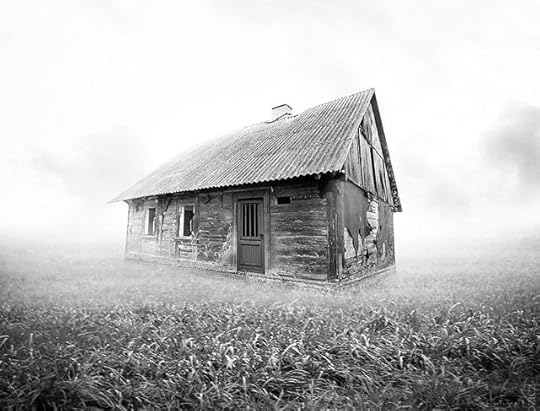
Magical realism and Maine charm.
A lonely house seeks out a lonely man. No it’s not that simple, sometimes it is a frustrating can of crazy, but it got us chatting at Horror Aficionados.
This is not a scary story, more a Book Club book.

January 3, 2019
The real horror is how much of the book is dedicated to the main character pining after an underaged girl. Eww.
Also, this book has led me to believe that everyone from Maine is an asshole.
Also, this book has led me to believe that everyone from Maine is an asshole.

February 26, 2021
What are you willing to do to prove a friendship or find a place where you feel like you belong? Loner Austin Fletcher proves he's willing to go to the extreme on both when his good, "Wartime buddy" Maynard wills him his house in barren upstate Maine. Austin finds things pretty shaky right from the beginning, when he encounters a few minor inconveniences such as transportation issues, feeling of deja vu, some eerie journal type entries carved into the wall, a couple of bear attacks, and a couple of visits from someone who may or may not be what they seem. Add in a few visits from his good ole recently deceased buddy Maynard and its a wonder poor Austin doesn't run off screaming into the night. Or maybe he just can't

May 25, 2024
"Some things ought to stay hidden" – that's what I would tell my past self, who searched tirelessly for this book.
The worst part is that the writing here is superb: the dialogue is witty (though sparse, given that the main "action" takes place in the remote location where our protagonist lives alone), and the setting is depicted poetically.
And I wouldn't even mind the ambiguous ending that leaves the reader unsure of what, if anything, was real. But...
From the opening pages, I noticed instances of cultural stereotyping and exoticization. While not overtly racist, the portrayals felt insensitive and reflected the biases of the book's era (the 1980s). I initially felt I could overlook these aspects, perhaps because I'm from Eastern Europe and the type of exoticization differed from what I'm accustomed to. Had the book echoed the specific racial prejudices prevalent in my region, I likely would have abandoned it (have had enough of that shit already).
Sadly the book was determeined to reach me another way.
Our protagonist encounters a few people in the woods who visit him frequently. For a while, we're unsure if they are spirits or real humans. However, once that mystery is resolved, the main plot (survival in the old witch's house and maintaining sanity) takes a backseat. Instead, the focus shifts to the protagonist's desire to fuck a kid - a 16-year-old girl who appears to fluctuate in age, sometimes seeming older (like a witch) and sometimes younger (like a child). I had hoped this moral dilemma would be resolved quickly, one way or another, so the story could (please!!!) move on. Sadly, that hasn't been the case.
So, instead of a story about living in a supposedly haunted house, it primarily tries to convince the reader that it's okay to fuck a child. This, combined with instances of benevolent racism and an ambiguous ending, is too much to overlook, even with a great writing style.
More often than not, when reading older books, I find myself agreeing with feminist and queer critiques that it's time to move on to contemporary authors, who are often pushed aside in favor of white, patriarchal classics.
In the case of this book, I'm certain I'd be better off reading something else.
The worst part is that the writing here is superb: the dialogue is witty (though sparse, given that the main "action" takes place in the remote location where our protagonist lives alone), and the setting is depicted poetically.
And I wouldn't even mind the ambiguous ending that leaves the reader unsure of what, if anything, was real. But...
From the opening pages, I noticed instances of cultural stereotyping and exoticization. While not overtly racist, the portrayals felt insensitive and reflected the biases of the book's era (the 1980s). I initially felt I could overlook these aspects, perhaps because I'm from Eastern Europe and the type of exoticization differed from what I'm accustomed to. Had the book echoed the specific racial prejudices prevalent in my region, I likely would have abandoned it (have had enough of that shit already).
Sadly the book was determeined to reach me another way.
Our protagonist encounters a few people in the woods who visit him frequently. For a while, we're unsure if they are spirits or real humans. However, once that mystery is resolved, the main plot (survival in the old witch's house and maintaining sanity) takes a backseat. Instead, the focus shifts to the protagonist's desire to fuck a kid - a 16-year-old girl who appears to fluctuate in age, sometimes seeming older (like a witch) and sometimes younger (like a child). I had hoped this moral dilemma would be resolved quickly, one way or another, so the story could (please!!!) move on. Sadly, that hasn't been the case.
So, instead of a story about living in a supposedly haunted house, it primarily tries to convince the reader that it's okay to fuck a child. This, combined with instances of benevolent racism and an ambiguous ending, is too much to overlook, even with a great writing style.
More often than not, when reading older books, I find myself agreeing with feminist and queer critiques that it's time to move on to contemporary authors, who are often pushed aside in favor of white, patriarchal classics.
In the case of this book, I'm certain I'd be better off reading something else.
Displaying 1 - 30 of 264 reviews