

What do you think?

Middle-Aged Boys & Girls
We all know adults who are stranded in the amber of adolescence. Growing older but not necessarily growing up is the central theme of Middle-Aged Boys & Girls, featuring characters who, to varying degrees, are stuck in adolescent roles of rebel, outcast, enfant terrible and cool kid. All are linked by losses--of looks, of status, of job security, of health, of confidence--which forces them to life's inevitable turning point. Given that we are living in an age where fifty is the new forty, and forty is the new thirty, and twenty is the new god-knows-what, these stories, with their sometimes painful, sometimes funny and always unflinching truths, resonate.
222 pages, Paperback
First published January 1, 2016
About the author
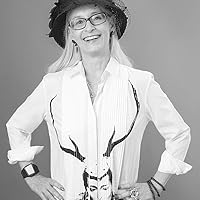
Diane Bracuk
2 books14 followersDiane Bracuk, Toronto based author of Middle-Aged Boys&Girls
has been published in leading literary journals and magazines in Canada
and abroad. Doughnut Eaters, the final story in this book, won Prism International's
2015 creative non-fiction award and is a 2016 National Magazine Award finalist.
has been published in leading literary journals and magazines in Canada
and abroad. Doughnut Eaters, the final story in this book, won Prism International's
2015 creative non-fiction award and is a 2016 National Magazine Award finalist.
"A surprising and entertaining debut."
Ratings & Reviews
Friends & Following
Create a free account to discover what your friends think of this book!
Community Reviews
Displaying 1 - 24 of 24 reviews

March 12, 2016
This is one of the best short story collections I read and, by far, my best book from Netgalley.
To put it simply, the writing is delicious. It has spirit and critique. Sometimes it gets judgy, and sometimes it gets heartbreakingly empathetic. From the first paragraph, I knew I found a hidden jewel: after I read this, I found myself closer to my human peers, more privy to their inner insecurities (and how those relate to mine) than judgmental of their shortcomings. This is what "high literature" should be all about.
This kind of book is why I became a reader in the first place.
To put it simply, the writing is delicious. It has spirit and critique. Sometimes it gets judgy, and sometimes it gets heartbreakingly empathetic. From the first paragraph, I knew I found a hidden jewel: after I read this, I found myself closer to my human peers, more privy to their inner insecurities (and how those relate to mine) than judgmental of their shortcomings. This is what "high literature" should be all about.
...the reason he was interviewing her, and not he other way around, the requisite Master's degree in social work prominently displayed on the wall. Never once spending a day at the poverty line, but rich in the political acumen that people like her lacked to market themselves to the powers that bestowed big money.
His head was lowered. Preoccupied, I wondered? Or with the affectionate, mockexasperation of the duty-bound father?
The kind of guy [who was] was small town loser-boy who couldn't make it in the big city, stubbornly clinging to hard rock bands that no one listened to anymore, his hard luck stories and his victim's sense of entitlement.
This kind of book is why I became a reader in the first place.

April 5, 2019
In Diane Bracuk’s beautifully crafted book of short stories, Middle-Aged Boys and Girls, one story in particular, “Thick,” stands out for me, with its pithy, nuanced look at the loss of youthful beauty.
The protagonist, Jane Wilding, is forty-something ex-model, poised to come out of retirement. It begins with Jane waiting at Kinkos to get colour copies of old bathing suit shots photocopied. Taken aback that no male clerk had come to wait on her, Jane bemoans that, “No place had ever been too busy for her before.” It’s no surprise that bathing suits figure prominently in “Thick,” as well as Jane’s full lips. She was objectified from the time she was twelve, in an accidentally too-tight bathing suit.
As a young woman she was called a “Goddess. Fantasy woman.” So to be ignored and “unseen” and for it to dawn on her that her “free ride” was coming to an end is a shock, something that causes her to re-evaluate her past. Was this “… a harbinger of what lay ahead”?
Jane represents both the individual “girl” and also women-at-large in their response to the male gaze. While she has always taken her unique beauty for granted, she constantly found male attention confounding and irritating, even from the very first time a fuss was made: “... adoration came straight at her with no warning.” While middle-aged “girls” reading Bracuk’s story may go for Botox, fillers, and spin classes, anything to stave off invisibility, they may be every bit as shocked as Jane to discover they are not the centre of attention.
Jane’s experience at an audition in mid-life is both hilarious and humiliating. Bracuk’s ability to describe both the situation and simultaneously probe inside the psyche of the protagonist is exceptional.
All the stories in Bracuk’s Middle-Aged Boys and Girls show the same kind of careful attention, to both character and language. But this reviewer found “Thick,” was a story she could personally relate to the most. Pick up a copy and see which story speaks to you!
The protagonist, Jane Wilding, is forty-something ex-model, poised to come out of retirement. It begins with Jane waiting at Kinkos to get colour copies of old bathing suit shots photocopied. Taken aback that no male clerk had come to wait on her, Jane bemoans that, “No place had ever been too busy for her before.” It’s no surprise that bathing suits figure prominently in “Thick,” as well as Jane’s full lips. She was objectified from the time she was twelve, in an accidentally too-tight bathing suit.
As a young woman she was called a “Goddess. Fantasy woman.” So to be ignored and “unseen” and for it to dawn on her that her “free ride” was coming to an end is a shock, something that causes her to re-evaluate her past. Was this “… a harbinger of what lay ahead”?
Jane represents both the individual “girl” and also women-at-large in their response to the male gaze. While she has always taken her unique beauty for granted, she constantly found male attention confounding and irritating, even from the very first time a fuss was made: “... adoration came straight at her with no warning.” While middle-aged “girls” reading Bracuk’s story may go for Botox, fillers, and spin classes, anything to stave off invisibility, they may be every bit as shocked as Jane to discover they are not the centre of attention.
Jane’s experience at an audition in mid-life is both hilarious and humiliating. Bracuk’s ability to describe both the situation and simultaneously probe inside the psyche of the protagonist is exceptional.
All the stories in Bracuk’s Middle-Aged Boys and Girls show the same kind of careful attention, to both character and language. But this reviewer found “Thick,” was a story she could personally relate to the most. Pick up a copy and see which story speaks to you!

March 4, 2016
Thank you to Guernica Editions for providing me with an advanced copy of Diane Bracuk's Middle-Aged Boys & Girls, in exchange for an honest review.
PLOT- Diane Bracuk's short story collection, Middle-Aged Boys & Girls, revolves around the theme of middle-aged adults stuck in some type of childish mentality or behavior. Her stories examine what it means to be a "grown-up" and why it's so easy to revert to childish behavior in middle-age.
LIKE- Bracuk has a gift for creating memorable characters and for writing the unexpected. With each story, I had no clue where she was going to take me. The unexpected is what grabbed and held my attention.
One of my favorite stories was Lord of the Manor, where a couple finds out that the beautiful home that they have been renting is on the market. In efforts to thwart potential buyers, they concoct a plan to kill a groundhog and place the carcass in the air-conditioning vent. Alternating between guilt: from killing an innocent animal and lying to their young son, and pride: that their plan is working, they end up having to live with the stink.
Another memorable story was Salvation, about a single, childless woman named Donna. Donna has spent her youth and middle-age building her career and is devastated when she loses her job. Unable to find employment, she decides to volunteer at a homework center for troubled kids. Donna is cut to the quick, by Christina, a teenager with an attitude problem. Donna soon finds herself reverting to high school behavior, alternating between trying to impress and show-up Christina.
A similar theme arises in Dissolution, the story of a yoga teacher who takes on teaching a short-term class at a shelter for homeless teens. Janet becomes obsessed with one of the girls in the class and later regrets that this obsession took away time with her husband, who has cancer.
DISLIKE- Nothing. This is a fantastic collection and frankly, it was difficult to pick my favorite or most memorable stories. I like the theme of the collection. It's relatable. At thirty-eight, I can understand some of the impulses of these characters and can admit to some childish behavior myself. I think there are some things that we never truly out-grow.
RECOMMEND- Yes! Bracuk is a wonderful writer and her stories take readers on unexpected journeys. They resonate and are affecting. Many of the stories in Middle-Aged Boys & Girls are also award winners!
Like my review? Check out my blog!
PLOT- Diane Bracuk's short story collection, Middle-Aged Boys & Girls, revolves around the theme of middle-aged adults stuck in some type of childish mentality or behavior. Her stories examine what it means to be a "grown-up" and why it's so easy to revert to childish behavior in middle-age.
LIKE- Bracuk has a gift for creating memorable characters and for writing the unexpected. With each story, I had no clue where she was going to take me. The unexpected is what grabbed and held my attention.
One of my favorite stories was Lord of the Manor, where a couple finds out that the beautiful home that they have been renting is on the market. In efforts to thwart potential buyers, they concoct a plan to kill a groundhog and place the carcass in the air-conditioning vent. Alternating between guilt: from killing an innocent animal and lying to their young son, and pride: that their plan is working, they end up having to live with the stink.
Another memorable story was Salvation, about a single, childless woman named Donna. Donna has spent her youth and middle-age building her career and is devastated when she loses her job. Unable to find employment, she decides to volunteer at a homework center for troubled kids. Donna is cut to the quick, by Christina, a teenager with an attitude problem. Donna soon finds herself reverting to high school behavior, alternating between trying to impress and show-up Christina.
A similar theme arises in Dissolution, the story of a yoga teacher who takes on teaching a short-term class at a shelter for homeless teens. Janet becomes obsessed with one of the girls in the class and later regrets that this obsession took away time with her husband, who has cancer.
DISLIKE- Nothing. This is a fantastic collection and frankly, it was difficult to pick my favorite or most memorable stories. I like the theme of the collection. It's relatable. At thirty-eight, I can understand some of the impulses of these characters and can admit to some childish behavior myself. I think there are some things that we never truly out-grow.
RECOMMEND- Yes! Bracuk is a wonderful writer and her stories take readers on unexpected journeys. They resonate and are affecting. Many of the stories in Middle-Aged Boys & Girls are also award winners!
Like my review? Check out my blog!

March 28, 2016
This is an easy collection of stories to dip in and out of and none of them take too long to read. Each story is a microcosm of everyday life with an aspect maybe twisted or blown out of proportion to make the story. I did find I was just getting into the story when I flicked the page to find the end of the story - just when it was beginning to capture me.
I was attracted to this book by the cover and being of an age that I thought I would relate to the stories. However, I think it would suit any age and as I was reading the link to being middle-aged never really came into play for me.
I was attracted to this book by the cover and being of an age that I thought I would relate to the stories. However, I think it would suit any age and as I was reading the link to being middle-aged never really came into play for me.

June 21, 2016
Intriguing, often wickedly funny, stories about grown-ups who have never truly left behind their childhood and teenage identities -- the bully, the rebel, the exhibitionist and more. The writing is knife-sharp and cuts close to the bone. A great read for grown-ups who can't shake the sense that they're still growing up. Diane Bracuk is a writer to watch.

July 26, 2016
I don't normally like short stories, but this collection proved the exception. The stories in this collection are compelling, ironic, sometimes comical, often heartbreaking in an understated way. The writing is beautiful and the author has a gift for showing how small, daily events and routine happenings can have profound meaning in our lives. Highly recommend

Did Not Finish
April 20, 2022I probably read about half the stories, which were fine, although the focus on relationships as middle aged women was more than I could bare. All the women were either looking for love, divorced and dealing with it, and considering getting back into dating. I get that this is a huge part of someone's life but it's the most boring part.

June 11, 2016
An excellent collection of short stories about how grown-ups often act like children. Bracuk has an easy style to her writing that makes it a joy to read, creating instantly recognisable characters who appear almost mundane yet who behave in extraordinary ways.
From grown women trying to impress girls, to a family trying to stop their rental from being sold from underneath them by putting a dead animal in the air vent, these are the actions of impetuous children made by their older and supposedly better selves.
There is a lot to love in this collection - from the great cover, reminiscent of books from my childhood, to the characters unveiled in the writing. An unexpected delight.
From grown women trying to impress girls, to a family trying to stop their rental from being sold from underneath them by putting a dead animal in the air vent, these are the actions of impetuous children made by their older and supposedly better selves.
There is a lot to love in this collection - from the great cover, reminiscent of books from my childhood, to the characters unveiled in the writing. An unexpected delight.
December 31, 2016
With surgical precision and wry humour, Diane Bracuk nails the failings, flailings and foibles of middle-aged boys and girls who carry with them not only the baggage of their youth but also the vicissitudes that come with aging. The issues one thought were particular to youth, those that naive, formerly youthful selves believed would be miraculously cured by aging, are not, and this realization is explored in detail as seen through the lens of Bracuk's all-seeing eye. Funny, engaging and very real, Middle-Aged Boys & Girls will amuse and engage readers, and there is wisdom to be found here.
April 23, 2016
I am not usually a fan of short stories but the title was too intriguing. I enjoyed these stories, reflecting on the characters, their circumstances and if they really were middle-aged boys and girls.

June 3, 2016
Not only have I *met* most of the characters in this book of vignettes, to a certain degree, I *am* most of these characters. Still in disbelief that I am actually middle-aged. Still clinging to the young person I am inside.

October 20, 2021
A FICTIONAL GUIDEBOOK FOR TODAY’S SOCIAL LANDSCAPE
As one might expect from the title of Diane Bracuk’s subtle and sparkling book, the characters in these gripping, psychological tales are superannuated children who continue to strive for what true adults know they can’t have—freedom, autonomy, gratification, unconditional love and security. But there is more to these tormented souls than their inadequate capacities to fulfill their inflated expectations. Ms. Bracuk takes the reader to the verge of judging her gallery of misfits who wish ardently to fit in, only to withhold judgment, as if to say, “The fault may lie in ourselves, but we get plenty of help from our environment.”
Middle Aged Boys and Girls is a fictional guidebook for today's social and psychological landscape. At the same time, this remarkable book possesses the virtues of classics you loved and admired as a student and young adult. Diane Bracuk is an engaging contemporary voice. Her writing is elegant and accomplished, yet entertaining and accessible.
In a profound way, Middle-Aged Boys and Girls has a distant kinship with Winesburg, Ohio by Sherwood Anderson, published a century ago. Middle-Aged Boys and Girls possesses the freshness and honesty of Winesburg, Ohio, and covers similar psychological terrain—the trapped and smoldering lives of its gallery of characters—though Ms. Bracuk writes about these matters with a light touch and unique slant.
Like Anderson’s classic, Ms, Bracuk’s collection is a cycle of short stories about diverse individuals who occupy the same spiritual and psychological space. Hence, Middle-Aged Boys and Girls reads both as an anthology of stories and a kaleidoscopic web-of-life novel spinning on one thematic axis.
Ms. Bracuk has established her unique, coherent world, where people cling to middle class respectability, get ensnared by marriages and divorces, bodies and body images, and by the ubiquitous judgments of others. Middle-Aged Boys and Girls limns the loneliness, isolation, and repressed sexuality of intelligent souls who understand what is happening to them and what they are up against. They are oppressed and set upon by neighbors and strangers at every turn.
Middle-Aged Boys and Girls also explores sexual and social issues and morés that have been ignored, even by other respected female authors. Whereas the polymorphously adulterous characters of Nobel laureate Alice Munro's stories philander without repercussions like randy Greek gods, Diane Bracuk’s caravansary of unhappy single women, divorced wives, struggling mothers and battered non-conformists may long for sexual expression, but are inhibited by their legitimate fear of consequences. Their desire for normality, to fit in, or at least not to be cast out, overpowers and subverts their desires. And when they err even a tad, they are punished, which reinforces the taboo.
Despite the agency and sophistication of Diane Bracuk’s female characters, they are not “liberated women” by any means. For instance, they are deeply self-conscious about their bodies and bodily functions. In “Shadow Selves” the narrator says, “I was slim, but pear-shaped. Or bulbous, I thought, seeing my shape more aligned with hoary root vegetables than sweet-tasting fruit.” And, in "Dissolution"—the most ambitious and expansive tale in this collection—the protagonist’s early, libidinous life is described: “Waking up wasted, feeling the petri dish of various ejaculatory fluids fermenting in her vagina.” Moreover, Bracuk’s protagonists perpetually worry about their weight, their age, how they look, smell and are otherwise perceived.
The content of this story cycle will engross any reader but one would not do Ms. Bracuk justice by omitting mention of her style. Her prose cuts and gleams like a sharp knife. She has a gift for deft phrasing and arresting images that hold the eye and play with the mind. Here is just one small example: “Maureen’s voice now came in like a sturdy old sea rope, made tensile by wind and rain.” I wouldn't call the style "poetic" because that suggests a lush surfeit of language when applied to prose, whereas Ms. Bracuk’s writing is spare and polished smooth. She takes great care and delight in her use of language and her pleasure is infectious.
With Middle Aged Boys and Girls, Diane Bracuk has put her mind and heart to the task of showing what life is like for the vast majority of people today: it is a reality of perpetual longing for love, lust, security, respectability, desirability and even self-expression in a claustrophobic world where such objectives are rare and inaccessible prerogatives and objects of taboo. If you want to read with enjoyment a perceptive and honest book of fiction about life today, I highly recommend Middle-Aged Boys and Girls.
As one might expect from the title of Diane Bracuk’s subtle and sparkling book, the characters in these gripping, psychological tales are superannuated children who continue to strive for what true adults know they can’t have—freedom, autonomy, gratification, unconditional love and security. But there is more to these tormented souls than their inadequate capacities to fulfill their inflated expectations. Ms. Bracuk takes the reader to the verge of judging her gallery of misfits who wish ardently to fit in, only to withhold judgment, as if to say, “The fault may lie in ourselves, but we get plenty of help from our environment.”
Middle Aged Boys and Girls is a fictional guidebook for today's social and psychological landscape. At the same time, this remarkable book possesses the virtues of classics you loved and admired as a student and young adult. Diane Bracuk is an engaging contemporary voice. Her writing is elegant and accomplished, yet entertaining and accessible.
In a profound way, Middle-Aged Boys and Girls has a distant kinship with Winesburg, Ohio by Sherwood Anderson, published a century ago. Middle-Aged Boys and Girls possesses the freshness and honesty of Winesburg, Ohio, and covers similar psychological terrain—the trapped and smoldering lives of its gallery of characters—though Ms. Bracuk writes about these matters with a light touch and unique slant.
Like Anderson’s classic, Ms, Bracuk’s collection is a cycle of short stories about diverse individuals who occupy the same spiritual and psychological space. Hence, Middle-Aged Boys and Girls reads both as an anthology of stories and a kaleidoscopic web-of-life novel spinning on one thematic axis.
Ms. Bracuk has established her unique, coherent world, where people cling to middle class respectability, get ensnared by marriages and divorces, bodies and body images, and by the ubiquitous judgments of others. Middle-Aged Boys and Girls limns the loneliness, isolation, and repressed sexuality of intelligent souls who understand what is happening to them and what they are up against. They are oppressed and set upon by neighbors and strangers at every turn.
Middle-Aged Boys and Girls also explores sexual and social issues and morés that have been ignored, even by other respected female authors. Whereas the polymorphously adulterous characters of Nobel laureate Alice Munro's stories philander without repercussions like randy Greek gods, Diane Bracuk’s caravansary of unhappy single women, divorced wives, struggling mothers and battered non-conformists may long for sexual expression, but are inhibited by their legitimate fear of consequences. Their desire for normality, to fit in, or at least not to be cast out, overpowers and subverts their desires. And when they err even a tad, they are punished, which reinforces the taboo.
Despite the agency and sophistication of Diane Bracuk’s female characters, they are not “liberated women” by any means. For instance, they are deeply self-conscious about their bodies and bodily functions. In “Shadow Selves” the narrator says, “I was slim, but pear-shaped. Or bulbous, I thought, seeing my shape more aligned with hoary root vegetables than sweet-tasting fruit.” And, in "Dissolution"—the most ambitious and expansive tale in this collection—the protagonist’s early, libidinous life is described: “Waking up wasted, feeling the petri dish of various ejaculatory fluids fermenting in her vagina.” Moreover, Bracuk’s protagonists perpetually worry about their weight, their age, how they look, smell and are otherwise perceived.
The content of this story cycle will engross any reader but one would not do Ms. Bracuk justice by omitting mention of her style. Her prose cuts and gleams like a sharp knife. She has a gift for deft phrasing and arresting images that hold the eye and play with the mind. Here is just one small example: “Maureen’s voice now came in like a sturdy old sea rope, made tensile by wind and rain.” I wouldn't call the style "poetic" because that suggests a lush surfeit of language when applied to prose, whereas Ms. Bracuk’s writing is spare and polished smooth. She takes great care and delight in her use of language and her pleasure is infectious.
With Middle Aged Boys and Girls, Diane Bracuk has put her mind and heart to the task of showing what life is like for the vast majority of people today: it is a reality of perpetual longing for love, lust, security, respectability, desirability and even self-expression in a claustrophobic world where such objectives are rare and inaccessible prerogatives and objects of taboo. If you want to read with enjoyment a perceptive and honest book of fiction about life today, I highly recommend Middle-Aged Boys and Girls.

June 1, 2021
Brilliantly written and empathetic, the stories in this collection explore the changes and challenges faced by those of us who, to quote a country song, "are old enough to know better but still too young to care".
The opening story, "Shadow Selves", expertly shows how society's expectations of female beauty can create an invisible, but impenetrable, line between two friends. In "Thick", a gorgeous model comes to the realization that her physical beauty is fading, after both a humiliating audition and an ego crushing experience with the counter boys at Kinko's ("Her younger, idolized self contrasted with this surprisingly shaken one." p.72). A single mother grapples with her teenage daughter's budding sexuality in "Valentine", while still coping with the heartache of her husband leaving her for another woman ("He felt pity that someone with her solid sensibilities would never know the love that had the power to break up a secure marriage. She had wanted to get out of range of his dramatic love, which by its very nature would devalue the one that had come before it." p. 53).
Lush tree lined streets and middle class comforts hide monsters and horrific acts in "The Girl Next Door" and "Memory Loss", stories which can stand shoulder to shoulder with Raymond Carver's "Tell the Women We're Going".
Bracuk's characters are engaging and relatable. I highly recommend this read.
The opening story, "Shadow Selves", expertly shows how society's expectations of female beauty can create an invisible, but impenetrable, line between two friends. In "Thick", a gorgeous model comes to the realization that her physical beauty is fading, after both a humiliating audition and an ego crushing experience with the counter boys at Kinko's ("Her younger, idolized self contrasted with this surprisingly shaken one." p.72). A single mother grapples with her teenage daughter's budding sexuality in "Valentine", while still coping with the heartache of her husband leaving her for another woman ("He felt pity that someone with her solid sensibilities would never know the love that had the power to break up a secure marriage. She had wanted to get out of range of his dramatic love, which by its very nature would devalue the one that had come before it." p. 53).
Lush tree lined streets and middle class comforts hide monsters and horrific acts in "The Girl Next Door" and "Memory Loss", stories which can stand shoulder to shoulder with Raymond Carver's "Tell the Women We're Going".
Bracuk's characters are engaging and relatable. I highly recommend this read.

March 5, 2017
For those of us gathered at Liz' it was a treat to have the the author join us for the discussion. The writer said a reviewer made a comment along the way that characters in the story all had some sense of shame or guilt. Interesting observation, and it rang true, even though I'd read the short stories months before.
June 27, 2021
This was on my "want to read" list for some time. I was excited to read it on a vacation day, but when it came down to it, I just couldn't get into these stories. DNF. Maybe more about my preference for something light and fun that day than about the quality of this book . . . the first two stories just seemed depressing . . .

June 4, 2023
I'd rate this closer to 3.5 stars, as I found the stories in the first half of the collection to be more engaging and thought-provoking than in the back half. There is a nice note of ambiguity to many of these tails -- the feeling that we're being told "this isn't the end of this" and being left to wonder what could happen next.
December 20, 2021
The stories were well-written and I would've given this a higher rating but there is a thread of hopelessness that runs through the stories that made me heavy-hearted and affected me in a way that I didn't like. I wouldn't read it again but I can appreciate the skill it took to write.
March 20, 2017
I'm not generally a short story fan but this one was just what I needed today.

June 25, 2017
Evergreen nominee for 2017 (Ontario Library Association, Forest of Reading program), a collection of short stories. The theme is growing older but not necessarily growing up, a very enjoyable read.

April 30, 2016
Sometimes I just want to read books about Canada. Even if that Canada is shrunk down, essentially, to only Toronto, there's something comforting about the Canadian-ness of Can-Lit. You can see the importance of literature that speaks outside the white, male, American/British experience when one finds a book that gives comfort to one's own experience. So Middle-Aged Boys & Girls -- even when the stories are supposed to be cringe-inducing, I can still feel like yay Canada (Toronto)! Yay women! Yay yay!
I can't say that every story works. The collection's opener Shadow Selve is too rambly, and feels almost out-of-place with the other, more focused stories. The female characters tend to melt together, a bit bitter, a bit trusting, a bit beat down by life. Yoga keeps reappearing. Passionless marriages. The description of husband and wife as brother and sister appears in consecutive stories. Plus there are unnecessary framing devices, like an in-your-head-conversation to an ex-boyfriend in Prey or what feels like the endless beginning to Doughnut Eaters musing on the neighbours before getting to the actual story which takes place years earlier in Germany.
That isn't to say I didn't enjoy Middle-Aged Boys & Girls. I did. I enjoyed it quite a bit. I just couldn't love it. The plots and the writing were at such high a level that when there was a misstep, it was all the more apparent because it felt so out of place. Plus I'm jealous. I'd love to have a collection of short stories published.
Contemporary Canadiana. If that's what you enjoy, you'll probably like Bracuk's book. But you might not love it.
Middle-Aged Boys & Girls by Diane Bracuk went on sale March 1, 2016.
I received a copy free from Netgalley in exchange for an honest review.
I can't say that every story works. The collection's opener Shadow Selve is too rambly, and feels almost out-of-place with the other, more focused stories. The female characters tend to melt together, a bit bitter, a bit trusting, a bit beat down by life. Yoga keeps reappearing. Passionless marriages. The description of husband and wife as brother and sister appears in consecutive stories. Plus there are unnecessary framing devices, like an in-your-head-conversation to an ex-boyfriend in Prey or what feels like the endless beginning to Doughnut Eaters musing on the neighbours before getting to the actual story which takes place years earlier in Germany.
That isn't to say I didn't enjoy Middle-Aged Boys & Girls. I did. I enjoyed it quite a bit. I just couldn't love it. The plots and the writing were at such high a level that when there was a misstep, it was all the more apparent because it felt so out of place. Plus I'm jealous. I'd love to have a collection of short stories published.
Contemporary Canadiana. If that's what you enjoy, you'll probably like Bracuk's book. But you might not love it.
Middle-Aged Boys & Girls by Diane Bracuk went on sale March 1, 2016.
I received a copy free from Netgalley in exchange for an honest review.

June 4, 2016
I was thoroughly taken in and entertained by Diane Bracuk’s debut collection of short stories. There wasn’t a single story that didn’t command my attention from beginning to end, or that didn’t fail to elicit my admiration for its voice, use of language, mordant wit, and creative characterization. I know a lot of readers who eschew the short story for the novel because the latter allows them to get closer to the characters and the worlds they inhabit, but one of the great things about each and every story in this collection is that Bracuk, in amazingly short spaces, brings her characters colorfully and convincingly to life and has them deal with highly relatable, if often dark and cringingly humorous, situations. Bracuk is, quite simply, a natural and gifted storyteller. That she won the annual Prism International award for the last story in this collection, Doughnut Eaters, puts her on the map as a very talented author. However, every story in this book is just as good, and for me that puts her on the map much more prominently. I can’t wait to read whatever she writes next. She’s so good with the short form – as good as any short story writer working today – that I’d welcome another collection like this, but her work is so consistently engaging that I’d also love to see a novel from her. Bracuk’s stories are definitely worth savoring and sharing with friends. As an author, she’s worth watching for in the future.

May 31, 2025
Middle Aged Boys and Girls is an entertaining and enlightening collection of short stories that explores the lives of girls and women and their complicated relationships with men, women, themselves.
Each story is told in first person through the eyes of the protagonist, her reflections, her emotions as she moves through past, present and future.
The wife whose husband is obsessed with their attractive young tenant; the woman both fascinated and repulsed by her overweight room-mate’s confidence in exposing her body; a mother who discovers her teenage daughter’s sexy, online photos; the former-model who is forced to accept age and the ‘thickness’ of her once sought after body; the non-fiction, and award winning story of a daughter reflecting on her relationship with her strict and stoic father, learning in the end, how his snobbery teaches her to survive. And so many more.
These women are all of us, maneuvering through the paths in an attempt to understand, self reflect and come to terms with our choices.
A great read by a talented writer.
Each story is told in first person through the eyes of the protagonist, her reflections, her emotions as she moves through past, present and future.
The wife whose husband is obsessed with their attractive young tenant; the woman both fascinated and repulsed by her overweight room-mate’s confidence in exposing her body; a mother who discovers her teenage daughter’s sexy, online photos; the former-model who is forced to accept age and the ‘thickness’ of her once sought after body; the non-fiction, and award winning story of a daughter reflecting on her relationship with her strict and stoic father, learning in the end, how his snobbery teaches her to survive. And so many more.
These women are all of us, maneuvering through the paths in an attempt to understand, self reflect and come to terms with our choices.
A great read by a talented writer.
October 22, 2019
The stories in this collection all have a ring of truth, a good sign in fiction writing. Bracuk won the 2015 PRISM International award for creative non-fiction for "The Doughnut Eaters," the final story in Middle-Aged Boys & Girls, but the same vividness appears in the fiction entries. A longer story, "Dissolution," demonstrates the author's ability to manage different time periods in a single story, using imagistic juxtapositions that result in dramatic irony. Her female characters are usually struggling to make sense or just keep going in relationships gone wrong, whether familial or romantic. These middle-aged boys and girls lack self-awareness, but Bracuk's narratives, rich with metaphoric description, give them clarity.

November 25, 2016
*Disclaimer: I was provided and ARC of this book from the publisher for a fair and honest review.
Let me preface this by saying that I usually don't enjoy short stories. Writing them is a special sort of talent; the ability to create characters and situations that must immediately grab the reader's attention and make her care about them. Bracuk has this talent in spades. Every one of the stories held my interest and usually left me wanting more. Was the house ever sold? How did the sexual harassment trial turn out? Some of the best writing I've read in a long time. I highly recommend this book.
Let me preface this by saying that I usually don't enjoy short stories. Writing them is a special sort of talent; the ability to create characters and situations that must immediately grab the reader's attention and make her care about them. Bracuk has this talent in spades. Every one of the stories held my interest and usually left me wanting more. Was the house ever sold? How did the sexual harassment trial turn out? Some of the best writing I've read in a long time. I highly recommend this book.
Displaying 1 - 24 of 24 reviews