Powerful, instructive, and full of humanity, this book challenges the current understanding of the war that has turned Mozambique―a naturally rich country―into the world's poorest nation. Before going to Mozambique, William Finnegan saw the war, like so many foreign observers, through a South African lens, viewing the conflict as apartheid's "forward defense." This lens was shattered by what he witnessed and what he heard from Mozambicans, especially those who had lived with the bandidos armado , the "armed bandits" otherwise known as the Renamo rebels. The shifting, wrenching, ground-level stories that people told combine to form an account of the war more local and nuanced, more complex, more African ―than anything that has been politically convenient to describe.
A Complicated War combines frontline reporting, personal narrative, political analysis, and comparative scholarship to present a picture of a Mozambique harrowed by profound local conflicts―ethnic, religious, political and personal. Finnegan writes that South Africa's domination and destabilization are basic elements of Mozambique's plight, but he offers a subtle description and analysis that will allow us to see the post-apartheid region from a new, more realistic, if less comfortable, point of view.
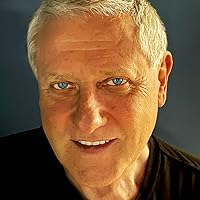
William Finnegan is a staff writer at The New Yorker. He has won several awards for his journalism and the 2016 Pulitzer Prize for Biography or Autobiography for his work "Barbarian Days: A Surfing Life."
The history of Mozambique is complicated, confusing, and often brutally awful, but also extremely important in order to understand the complexities of Mozambique as it is today. This is certainly not an uplifting book, and the structure of dividing the book into geographical areas and then wandering around between different anecdotes is sometimes difficult to follow, but somehow this actually represents Mozambique rather well.
Despite having lived in and studied Mozambique for a year when I read this, I had a sticky note on the map page to place the small towns and areas constantly referred to, as well as another sticky in the endnotes, which were often as revealing as the text itself. I consider this book crucial reading to properly understand Mozambique, but it will probably be very dense and rather difficult to grasp for those unacquainted with the country.
Beggars wont be choosers and there are very few books devoted to the conflict that was in Mozambique. I enjoyed much of Finnegan's analysis but did not care greatly for the narrative, although he certainly had a great amount of firsthand experience in Mozambique. What I disliked the most about the book was Finnegan constantly ridiculing almost every African of European descent he met, especially Afrikaners (who either come across as African hillbillies or remorseless capitalists). Finnegan spends a good portion of the book disparaging South Africa and other right-leaning countries and groups that supported Renamo (or simply were looking for a way to oppose Frelimo), but hardly bats an eye at the strange bedfellows of Frelimo, namely Russia, North Korea, the old eastern bloc, and Castro's Cuba. A bit odd for me.
Another work read, but one that has become one of my favourite works of wartime journalism.
This is a powerful and deeply evocative look at the civil war in Mozambique. It holds to account national, regional and global actors--making sense of the role of apartheid South Africa in supporting guerrilla movements, and Cold War politics in prolonging the war--while paying tribute the incredible resilience of civilians and activists living through violence.
It is highly complex, as this subject deserves, yet compassionately written and accessible. Unlike other conflict reporters, who often centre their own daring, this writer faded in and out of the picture, using his presence only to help track locations, or act as an empathetic set pair eyes for the reader. This will surely inspire and influence my own writing.
Four stars because I wished there was a little more nuance in the author's portrayal of Frelimo, which at times felt overly sympathetic despite their involvement in the war, though this doesn't detract from the read overall.
Though it's a bit outdated now, I still highly recommend this book to anyone looking to learn more about the civil war in Mozambique, or simply anyone curious about how conflict journalism gets one.
The sterile title and boring cover design don't do this book justice. It's a good book, and draws a good balance between journalistic stories and insights and more academic research. A great place to learn about 1980s Mozambique and the post independence civil war.
Anyone who wants to know about Mozambique's recent history must read this book--not just because it's full of names, facts and dates, but because it's a stunning work of exploration and exposure by a journalist who chose to travel through a viciously dangerous countryside to try to understand the reality of a nation devastated by fear. But more than that, this is also a superb piece of writing: engrossing from beginning to end, every page packed with vivid prose and thought-provoking discussion. I read this book in Mozambique in 1992 and it made an enormous difference.
Like the civil war it is trying to describe, Finnegan's book is complicated. The work is one part travel memoir, one part journalistic essay, and one part history book. Although the subject matter is interesting, and the writing is well-researched and very well documented, the book is structured around the geography of the country. While this clearly illustrates the varying circumstances of the war and the vastly different situations, I found it difficult to keep track of the overall historical figures and timeline of the events.
This is a good journalistic take on the civil war in Mozambique from the late 1970s to early 1990s. The book wanders in its topics, but that seems to fit the telling of a Mozambican story like this. It gave me a much deeper understanding of the conflict and its effects. I would label this book a must-read if you are seeking to understand that period in the country's history.