

What do you think?

Cassandra
As a young man of five and twenty, Fitzwilliam meets a young lady who will change his life. After a whirlwind courtship, the couple marry.
But after only a year of marriage, disaster strikes, and Darcy loses his wife in childbirth. Stricken with grief, Darcy is left with a young daughter to raise without his beloved wife by his side.
Darcy is ultimately convinced to return to society by his cousin, Colonel Fitzwilliam, and almost three years later, he returns to London in the company of his sister and his daughter.
Through the assistance of old friends and new, Darcy is once again induced to take an interest in life and move past his heartbreak. And though he is convinced that lightning never strikes twice, perhaps Darcy will be able to find love again.
But after only a year of marriage, disaster strikes, and Darcy loses his wife in childbirth. Stricken with grief, Darcy is left with a young daughter to raise without his beloved wife by his side.
Darcy is ultimately convinced to return to society by his cousin, Colonel Fitzwilliam, and almost three years later, he returns to London in the company of his sister and his daughter.
Through the assistance of old friends and new, Darcy is once again induced to take an interest in life and move past his heartbreak. And though he is convinced that lightning never strikes twice, perhaps Darcy will be able to find love again.
- GenresJane Austen
275 pages, ebook
Published November 29, 2015
About the author
Jann Rowland
103 books199 followersJann Rowland is a Canadian, born and bred. Other than a two-year span in which he lived in Japan, he has been a resident of the Great White North his entire life, though he professes to still hate the winters.
Though Jann did not start writing until his mid-twenties, writing has grown from a hobby to an all-consuming passion. His interests as a child were almost exclusively centered on the exotic fantasy worlds of Tolkien and Eddings, among a host of others. As an adult, his interests have grown to include historical fiction and romance, with a particular focus on the works of Jane Austen.
When Jann is not writing, he enjoys rooting for his favorite sports teams. He is also a master musician (in his own mind) who enjoys playing piano and singing as well as moonlighting as the choir director in his church’s congregation.
Jann lives in Alberta with his wife of more than twenty years, two grown sons, and one young daughter. He is convinced that whatever hair he has left will be entirely gone by the time his little girl hits her teenage years. Sadly, though he has told his daughter repeatedly that she is not allowed to grow up, she continues to ignore him.
Website: http://onegoodsonnet.com/
Facebook: https://facebook.com/OneGoodSonnetPub...
Twitter: @OneGoodSonnet
Mailing List: http://eepurl.com/bol2p9
Though Jann did not start writing until his mid-twenties, writing has grown from a hobby to an all-consuming passion. His interests as a child were almost exclusively centered on the exotic fantasy worlds of Tolkien and Eddings, among a host of others. As an adult, his interests have grown to include historical fiction and romance, with a particular focus on the works of Jane Austen.
When Jann is not writing, he enjoys rooting for his favorite sports teams. He is also a master musician (in his own mind) who enjoys playing piano and singing as well as moonlighting as the choir director in his church’s congregation.
Jann lives in Alberta with his wife of more than twenty years, two grown sons, and one young daughter. He is convinced that whatever hair he has left will be entirely gone by the time his little girl hits her teenage years. Sadly, though he has told his daughter repeatedly that she is not allowed to grow up, she continues to ignore him.
Website: http://onegoodsonnet.com/
Facebook: https://facebook.com/OneGoodSonnetPub...
Twitter: @OneGoodSonnet
Mailing List: http://eepurl.com/bol2p9
Ratings & Reviews
Friends & Following
Create a free account to discover what your friends think of this book!
Community Reviews
Displaying 1 - 30 of 31 reviews

April 19, 2017
“Grief is in two parts. The first is loss. The second is the remaking of life.” Anne Roiphe
We are 22% into the book before we ever hear the name Cassandra. The beginning had a very déjà vu feeling of the Meryton Assembly, with an uncomfortable Darcy at a London ball due to his cousin Fitzwilliam trying to get him to dance. Every nuance was similar to canon except he didn’t insult the lady and decided to talk to her instead. That lead to a dance, and from there it was a whirlwind romance, courtship, marriage, birth of a child and death. Oh, our dear Darcy was destroyed, because we know that when he loved, he loved completely.
“Bad things do happen; how I respond to them defines my character and the quality of my life. I can choose to sit in perpetual sadness, immobilized by the gravity of my loss, or I can choose to rise from the pain and treasure the most precious gift I have – life itself.” Walter Anderson
Our story continues over two years later and our P&P story and timelines have been tweaked a bit. Bingley and Jane are married and Elizabeth lives with them in their London townhouse. Mr. Bennet thought it best that she left Longbourn, thus escaping her mother’s ire over refusing Mr. Collins. Later, when Charlotte wanted to invite Lizzy to Hunsford, Mr. Collins refused. So, that meant no Easter in Kent, no staying at Hunsford, no Lady C and no proposal. What???
Caroline lived with her sister Louisa and Mr. Hurst [I liked him], because she couldn’t abide Eliza and barraged her with snide, cutting remarks. At every turn, Elizabeth was the bulls-eye for Caro’s arrows. She took great delight in cutting down Elizabeth’s confidence and feelings of self-worth. This Caroline was the worst I’ve read of her. She would not listen, did not care to hear any correction in her pursuit of Darcy. She was determined to become Mrs. Mistress of Pemb… um… Mrs. Darcy. I don’t think I have seen her this bad before. Wow!
“Death is not the greatest loss in life. The greatest loss is what dies inside us while we live.” Norman Cousins
Darcy finally decided that he needed to live again and began the slow progress to recovery from his loss. He still had trouble facing his daughter, as she is the spitting image of his deceased wife. Darcy picked up his friendship with Bingley and was introduced to his wife Jane and her sister Miss Elizabeth Bennet. This was where we began watching for the early signs of attraction. We also had those conversations between Bingley and Darcy in regard to Bingley’s choice of wife, her lack of fortune and the Bennet connections and interests.
Lady Catherine de Bourgh: man, that woman was the Queen of Evil. She was bold, brash, and brazen. She wanted what she wanted and was determined to get it. She slashed and burned every bridge between her and the Darcy family and denounced his deceased wife to- his- face.
I loved this Darcy. He knew what he wanted and was just as determined to have it his way. And no one… No One… treated his late wife’s memory with disrespect, let alone tell him who he was going to marry. Lady C met her match that day and paid the consequence. I loved that interaction. How many times I’ve wanted that scene in JAFF. Perhaps it was OOC [out of character]; however, I don’t care. I loved seeing her put in her place.
I love Lord and Lady Matlock, and of course our dear Colonel Fitzwilliam. There were several side stories going on with their sons and their dear mama being the consummate matchmaker. There were several female characters and they did not detract from our story once I realized they were not being matched with Darcy. Whew!
Georgiana was a delight and grew out of her shyness under her friendship with Mrs. Bingley and Miss Bennet. She really liked Elizabeth and was able to learn a few tricks in how to deflect the cloying affection of Miss Bingley. That was so cute and even Darcy approved.
This was a variation, clean and enjoyable to read. Yes, there were hard places. We were dealing with a grieving Darcy; however, I loved how our author helped him get through it. And most of all, there was no disrespecting the memory of the previous wife, it was well done. Too many times we have a character in deep grief and suddenly they are out of it. No, this was handled very well and with respect. For those who have experienced loss, and found love later, they will be able to relate to this story.
Wickham: Oh yes, this was a completely different outcome and I cannot even begin to mention what happened without giving it away. Let’s just say, it was very different than canon. Oh, how I love our dear Colonel.
There was a very nice epilogue and I liked the outcome for several characters. The only problem I had was the longing for more page time between our dear couple.
We are 22% into the book before we ever hear the name Cassandra. The beginning had a very déjà vu feeling of the Meryton Assembly, with an uncomfortable Darcy at a London ball due to his cousin Fitzwilliam trying to get him to dance. Every nuance was similar to canon except he didn’t insult the lady and decided to talk to her instead. That lead to a dance, and from there it was a whirlwind romance, courtship, marriage, birth of a child and death. Oh, our dear Darcy was destroyed, because we know that when he loved, he loved completely.
“Bad things do happen; how I respond to them defines my character and the quality of my life. I can choose to sit in perpetual sadness, immobilized by the gravity of my loss, or I can choose to rise from the pain and treasure the most precious gift I have – life itself.” Walter Anderson
Our story continues over two years later and our P&P story and timelines have been tweaked a bit. Bingley and Jane are married and Elizabeth lives with them in their London townhouse. Mr. Bennet thought it best that she left Longbourn, thus escaping her mother’s ire over refusing Mr. Collins. Later, when Charlotte wanted to invite Lizzy to Hunsford, Mr. Collins refused. So, that meant no Easter in Kent, no staying at Hunsford, no Lady C and no proposal. What???
Caroline lived with her sister Louisa and Mr. Hurst [I liked him], because she couldn’t abide Eliza and barraged her with snide, cutting remarks. At every turn, Elizabeth was the bulls-eye for Caro’s arrows. She took great delight in cutting down Elizabeth’s confidence and feelings of self-worth. This Caroline was the worst I’ve read of her. She would not listen, did not care to hear any correction in her pursuit of Darcy. She was determined to become Mrs. Mistress of Pemb… um… Mrs. Darcy. I don’t think I have seen her this bad before. Wow!
“Death is not the greatest loss in life. The greatest loss is what dies inside us while we live.” Norman Cousins
Darcy finally decided that he needed to live again and began the slow progress to recovery from his loss. He still had trouble facing his daughter, as she is the spitting image of his deceased wife. Darcy picked up his friendship with Bingley and was introduced to his wife Jane and her sister Miss Elizabeth Bennet. This was where we began watching for the early signs of attraction. We also had those conversations between Bingley and Darcy in regard to Bingley’s choice of wife, her lack of fortune and the Bennet connections and interests.
Lady Catherine de Bourgh: man, that woman was the Queen of Evil. She was bold, brash, and brazen. She wanted what she wanted and was determined to get it. She slashed and burned every bridge between her and the Darcy family and denounced his deceased wife to- his- face.
I loved this Darcy. He knew what he wanted and was just as determined to have it his way. And no one… No One… treated his late wife’s memory with disrespect, let alone tell him who he was going to marry. Lady C met her match that day and paid the consequence. I loved that interaction. How many times I’ve wanted that scene in JAFF. Perhaps it was OOC [out of character]; however, I don’t care. I loved seeing her put in her place.
I love Lord and Lady Matlock, and of course our dear Colonel Fitzwilliam. There were several side stories going on with their sons and their dear mama being the consummate matchmaker. There were several female characters and they did not detract from our story once I realized they were not being matched with Darcy. Whew!
Georgiana was a delight and grew out of her shyness under her friendship with Mrs. Bingley and Miss Bennet. She really liked Elizabeth and was able to learn a few tricks in how to deflect the cloying affection of Miss Bingley. That was so cute and even Darcy approved.
This was a variation, clean and enjoyable to read. Yes, there were hard places. We were dealing with a grieving Darcy; however, I loved how our author helped him get through it. And most of all, there was no disrespecting the memory of the previous wife, it was well done. Too many times we have a character in deep grief and suddenly they are out of it. No, this was handled very well and with respect. For those who have experienced loss, and found love later, they will be able to relate to this story.
Wickham: Oh yes, this was a completely different outcome and I cannot even begin to mention what happened without giving it away. Let’s just say, it was very different than canon. Oh, how I love our dear Colonel.
There was a very nice epilogue and I liked the outcome for several characters. The only problem I had was the longing for more page time between our dear couple.

December 18, 2015
This story has the wonderful premise of Darcy as a widower with a daughter, having married for love years before he ever meets Elizabeth. It is told from his point of view, moving from crippling grief almost to the point of madness, finally coming more or less to his senses and trying to live again, resisting Lady Catherine's renewed insistence that he marry Anne, vowing never to remarry at all, and then, of course, falling in love with Elizabeth but resisting it because of both her societal inferiority and the guilt of feeling that he's betraying his dead wife's memory.
I must mention that there isn't much in the story reminiscent of the original Pride and Prejudice - the exceptions being the characters themselves and their relationships to each other, Lady Catherine pushing Anne on Darcy, and Lydia running away with Wickham. While this didn't bother me, some JAFF readers may feel this isn't a true P&P variation - there's a gray area that separates JAFF with extreme departures from canon from non-JAFF Regency romance, and this book probably falls in that gray area.
Mr. Rowland's writing style itself is always excellent, flowing gracefully, and the editing in this book left only a small number of minor errors. My main criticism is that Darcy gets too introspective at times when the point has already been made through previously revealed thoughts or his actions. I wish the author would "show" more than "tell."
As a result, this is more a character study of Darcy throughout rather than much actually happening, especially in the first part of the book. Considering how much he loved his wife, in real life it would, indeed, take a long time for him to recover emotionally, but in a book it felt too dreary and repetitive, and I found I had to struggle to keep reading. The title perhaps should have been "Darcy" rather than "Cassandra" (the name of both his dead wife and his daughter, which isn't revealed until well into the book). Darcy won't even interact with his daughter because she reminds him too much of her mother and it causes him too much pain. Consequently, the child is mostly absent. It's a relief when Lady Catherine shows up, despite how very annoying she is, because she brings some drama to that section of the story.
It becomes somewhat more eventful once Darcy returns to London and is reunited with Bingley, who's already married to Jane. Through them, Darcy meets Bingley's sister-in-law Elizabeth. Once again, the reader has to wade through all his introspection as he fights his attraction to her, despite everyone in his his family pushing him in her direction and his own inability to stay away from her. Caroline Bingley pops in and out of the story in usual wicked witch form, keeping things interesting whenever she appears.
The final section of the book, after Darcy has finally come to the conclusion that he can't live without Elizabeth and that he's going to involve himself in his daughter's daily life, is when things really get hopping as the whole Lydia-and-Wickham storyline emerges.
I must mention that there isn't much in the story reminiscent of the original Pride and Prejudice - the exceptions being the characters themselves and their relationships to each other, Lady Catherine pushing Anne on Darcy, and Lydia running away with Wickham. While this didn't bother me, some JAFF readers may feel this isn't a true P&P variation - there's a gray area that separates JAFF with extreme departures from canon from non-JAFF Regency romance, and this book probably falls in that gray area.
Mr. Rowland's writing style itself is always excellent, flowing gracefully, and the editing in this book left only a small number of minor errors. My main criticism is that Darcy gets too introspective at times when the point has already been made through previously revealed thoughts or his actions. I wish the author would "show" more than "tell."
As a result, this is more a character study of Darcy throughout rather than much actually happening, especially in the first part of the book. Considering how much he loved his wife, in real life it would, indeed, take a long time for him to recover emotionally, but in a book it felt too dreary and repetitive, and I found I had to struggle to keep reading. The title perhaps should have been "Darcy" rather than "Cassandra" (the name of both his dead wife and his daughter, which isn't revealed until well into the book). Darcy won't even interact with his daughter because she reminds him too much of her mother and it causes him too much pain. Consequently, the child is mostly absent. It's a relief when Lady Catherine shows up, despite how very annoying she is, because she brings some drama to that section of the story.
It becomes somewhat more eventful once Darcy returns to London and is reunited with Bingley, who's already married to Jane. Through them, Darcy meets Bingley's sister-in-law Elizabeth. Once again, the reader has to wade through all his introspection as he fights his attraction to her, despite everyone in his his family pushing him in her direction and his own inability to stay away from her. Caroline Bingley pops in and out of the story in usual wicked witch form, keeping things interesting whenever she appears.
The final section of the book, after Darcy has finally come to the conclusion that he can't live without Elizabeth and that he's going to involve himself in his daughter's daily life, is when things really get hopping as the whole Lydia-and-Wickham storyline emerges.

January 21, 2016
This is a very different P&P what if. Firstly it contains almost no Pride Nor Prejudice. Secondly it is set in a universe where Darcy is a widower when he meets Lizzy. Now that alone isn't so unusual, but his bride isn't his sickly, cousin but a vivacious young lady named Cassandra.
When he meets Miss Elizabeth Bennet at the home of her sister, Mrs. Jane Bingley, he is suddenly taken with her. It has been 2 1/2 years since his wife died and he isn't looking for love; but can't resist the charm of Miss Bennet.
In this universe Caroline Bingley, irrationally hates Lizzy. I say that because the only reason she didn't like Elizabeth was that Mr. Darcy had remarked upon her 'fine eyes'. But this Caroline is just borderline psycho. Lady Catherine is also portrayed and a loon. and Wickham never gets near Georgiana.
I found myself not liking this Darcy because of his aversion to his child. There is a an excuse of her having her mother's eyes but I can't rationalize how a man who had raised a younger sister and watched his father shut down after his mother's death could do the same thing.
When he meets Miss Elizabeth Bennet at the home of her sister, Mrs. Jane Bingley, he is suddenly taken with her. It has been 2 1/2 years since his wife died and he isn't looking for love; but can't resist the charm of Miss Bennet.
In this universe Caroline Bingley, irrationally hates Lizzy. I say that because the only reason she didn't like Elizabeth was that Mr. Darcy had remarked upon her 'fine eyes'. But this Caroline is just borderline psycho. Lady Catherine is also portrayed and a loon. and Wickham never gets near Georgiana.
I found myself not liking this Darcy because of his aversion to his child. There is a an excuse of her having her mother's eyes but I can't rationalize how a man who had raised a younger sister and watched his father shut down after his mother's death could do the same thing.

December 12, 2015
In this variation on P&P it may be difficult to accept but Darcy does meet and fall in love with a soul mate other than Elizabeth Bennet. I am not giving anything away here; you have to read book descriptions before you make a decision to buy. And we are told much about “Act 1” in which he meets, marries and then loses his first love. That same book description aka reader feedback tells of a promise he makes to his wife and of the siren call of Bingley's wife's sister and the last paragraph of that description also hints of a courtship of one “Miss Bennet”. So we do have knowledge beforehand of just where this "play" is going.
I found three “acts” in this book. The first is as described and is short: Darcy has a life, a wonderful, loving, complete life, when it is ripped apart by death. And his grief is devastating! He isolates himself from all, stewards carry out their duties on the various properties and he refuses to even look at his offspring. We don't hear the name of wife nor daughter mentioned until 21% on the kindle edition. It is as if to mention her name is to bring back all the torment over again or is it cathartic?
Darcy has very supportive relatives in this book...of course, with the exception of Lady Catherine. And dear, dear Colonel Fitzwilliam, the man who pointed out the perfection of Darcy's first wife to him, also is one who now, not only pushes him to reenter society, pointing out that his sister and his daughter would suffer if Darcy's absence in their lives is gossiped about, but also again does him the favor of saying “…I would say that lightening rarely strikes twice. When it does, it would behoove you to make sure you capture it in a bottle.” The colonel is an observant and wise man.
Ever heart rending is a discussion between Darcy, Bingley and Mr. Gardiners concerning loving a woman dearly and the possibility of losing her in childbirth and whether or not the love is worth the risk or even the loss (in Darcy’s case).
Yes the second part (act) of this book has much introspection on Darcy’s part: thinking about his wife, her perfections, her place in society, and then her wishes for him and for their child. It also has the tormented discussion of the pros and cons of a young woman with no connections, who is unknown to society and whose family out in the wilderness of Hertfordshire is said to be uncouth in their behaviors, for the most part.
There is much ado in a confrontation with Lady C. and with Caroline Bingley’s truly mad attempts to ensnare Darcy…going so far as to show up uninvited to a dinner and actually “setting Miss Bennet straight” as to the type of woman for whom he is suited.
And then in the short third act, an act in which Mr. Bennet enters, we also meet the man in the black hat. Readers, I am sure I do not have to tell you his name. But in the saving of the day we also read of a change in one young lady’s purpose in life. Ah, a promise of change.
My one complaint about this book is that in my knowledge of child development (having studied such in my elementary education courses and having not only three children but also four grandchildren: one age 2 years, 10 months and another, 3 years 6 months) I know that by age 3 normal children are speaking in sentences not in one or two word responses to adults. “I listen,” “Be lady.” are more what one would hear from a younger child.
Other than that I found myself enthralled, with an ache in the vicinity of my chest and blurry vision at times. I can recommend this as a good read.
I found three “acts” in this book. The first is as described and is short: Darcy has a life, a wonderful, loving, complete life, when it is ripped apart by death. And his grief is devastating! He isolates himself from all, stewards carry out their duties on the various properties and he refuses to even look at his offspring. We don't hear the name of wife nor daughter mentioned until 21% on the kindle edition. It is as if to mention her name is to bring back all the torment over again or is it cathartic?
Darcy has very supportive relatives in this book...of course, with the exception of Lady Catherine. And dear, dear Colonel Fitzwilliam, the man who pointed out the perfection of Darcy's first wife to him, also is one who now, not only pushes him to reenter society, pointing out that his sister and his daughter would suffer if Darcy's absence in their lives is gossiped about, but also again does him the favor of saying “…I would say that lightening rarely strikes twice. When it does, it would behoove you to make sure you capture it in a bottle.” The colonel is an observant and wise man.
Ever heart rending is a discussion between Darcy, Bingley and Mr. Gardiners concerning loving a woman dearly and the possibility of losing her in childbirth and whether or not the love is worth the risk or even the loss (in Darcy’s case).
Yes the second part (act) of this book has much introspection on Darcy’s part: thinking about his wife, her perfections, her place in society, and then her wishes for him and for their child. It also has the tormented discussion of the pros and cons of a young woman with no connections, who is unknown to society and whose family out in the wilderness of Hertfordshire is said to be uncouth in their behaviors, for the most part.
There is much ado in a confrontation with Lady C. and with Caroline Bingley’s truly mad attempts to ensnare Darcy…going so far as to show up uninvited to a dinner and actually “setting Miss Bennet straight” as to the type of woman for whom he is suited.
And then in the short third act, an act in which Mr. Bennet enters, we also meet the man in the black hat. Readers, I am sure I do not have to tell you his name. But in the saving of the day we also read of a change in one young lady’s purpose in life. Ah, a promise of change.
My one complaint about this book is that in my knowledge of child development (having studied such in my elementary education courses and having not only three children but also four grandchildren: one age 2 years, 10 months and another, 3 years 6 months) I know that by age 3 normal children are speaking in sentences not in one or two word responses to adults. “I listen,” “Be lady.” are more what one would hear from a younger child.
Other than that I found myself enthralled, with an ache in the vicinity of my chest and blurry vision at times. I can recommend this as a good read.

February 14, 2021
A elegant story of loss and learning to love again from Darcy's POV. This could almost be called Darcy's Soliloquy.
We see glimpses of the P&P story through the people D engages with, but the main part of this book is his process of grieving and learning to live again and allowing life back in to his life.
While mourning is different for everyone, I was struck by the use of 3 years for D to come through the other side. Watching a family member suffer tragedy, it occurs to me that 3 years was just about the time that person started being able to move forward as well.
Not the most exciting P&P variation available, but very worth a read for its lyrical story telling of one man's ability to learn to love himself again and realize that he is deserving to be loved.
We see glimpses of the P&P story through the people D engages with, but the main part of this book is his process of grieving and learning to live again and allowing life back in to his life.
While mourning is different for everyone, I was struck by the use of 3 years for D to come through the other side. Watching a family member suffer tragedy, it occurs to me that 3 years was just about the time that person started being able to move forward as well.
Not the most exciting P&P variation available, but very worth a read for its lyrical story telling of one man's ability to learn to love himself again and realize that he is deserving to be loved.
August 1, 2017
Another great variation by an author who never disappoints. It is a well written novel with a different twist where Darcy finds love the second time which he thought would never happen. At first when I purchased the novel, I thought it was about Jane Austen's sister, Cassandra. Low and behold it was about his daughter by his first wife.
It takes someone special to love another's child and Elizabeth was that special someone! It proves that time heals all wounds, helps to understand loss, and helps to live and love again. It is proven in Darcy's love for his first wife and then goes on to show it in the love and family he has with Elizabeth.
Another great 5 star novel and I encourage everyone to read this touching novel.
It takes someone special to love another's child and Elizabeth was that special someone! It proves that time heals all wounds, helps to understand loss, and helps to live and love again. It is proven in Darcy's love for his first wife and then goes on to show it in the love and family he has with Elizabeth.
Another great 5 star novel and I encourage everyone to read this touching novel.

February 9, 2019
What-if Darcy’s marriage was not to Lizzy
I really enjoyed this book. Darcy married years before he would meet Lizzy, to a wonderful woman. She dies in childbirth but their daughter survives. Just like his father, Darcy is shattered. His daughter looks like his wife and he finds he can’t be around her because his daughter reminds him of his lost love.
Georgiana and the help are raising his daughter.
The rest of the book is about healing, such as it is, and about an unexpectedly appealing sister-in-law of Bingley’s, Miss Elizabeth Bennet.
Very emotional story with some angst. The story of Lizzy and Darcy was just excellent.
I recommend this book highly.
I really enjoyed this book. Darcy married years before he would meet Lizzy, to a wonderful woman. She dies in childbirth but their daughter survives. Just like his father, Darcy is shattered. His daughter looks like his wife and he finds he can’t be around her because his daughter reminds him of his lost love.
Georgiana and the help are raising his daughter.
The rest of the book is about healing, such as it is, and about an unexpectedly appealing sister-in-law of Bingley’s, Miss Elizabeth Bennet.
Very emotional story with some angst. The story of Lizzy and Darcy was just excellent.
I recommend this book highly.

January 31, 2016
Cassandra is a very lovely story, but what I most enjoy reading in JAFF is a story that varies from the original Pride and Prejudice, but still has the basic foundation of Darcy shunning Elizabeth because of her social status and lack of wealth, but eventually realizing his love for her overcomes his pride. And, I expect to see Elizabeth showing some sort of prejudice against him. I then struggle to determine what rating to give when the story is well-written and enjoyable, but these fundamental pieces are missing. This is particularly difficult when there are many aspects of the original in the story, such as Elizabeth turning down Mr. Collins and Lydia running off with Mr. Wickham. Such is my problem in reviewing Cassandra.
Cassandra strays far off the mark from canon with Darcy having first fallen in love with a woman and marrying her prior to even meeting Elizabeth. He believed this to be the love of his life, but she died in child-birth. Darcy is now widowed with a three-year-old daughter named Cassandra, after her mother, who also completely resembles her. This strong resemblance has prevented Darcy from being able to bear being in his daughter's presence and leaves her raising to her nurses, nanny and Georgiana. He makes an attempt to go to London to possibly meet a woman to be Cassandra's mother, but also believes in his heart that he will never remarry. Thus, Elizabeth meets this very broken and dejected Darcy.
In the meantime, Mr. Bingley did take up residence at Netherfield, but Darcy never joined him due to his mourning. Bingley married Jane Bennet and the couple is now staying at their house in London, purchased after their marriage. Due to a very severe reaction to Elizabeth's refusal of Mr. Collins, Mrs. Bennet cannot abide being in Elizabeth's presence. Mr. Bennet has therefore sent her to London to live with the Bingleys. Elizabeth is very hurt by this action, but cannot return to Longbourn. She is having a season in London, when she meets Mr. Darcy and his daughter.
Mr. Darcy finds he is almost immediately drawn to Elizabeth and particularly finds her friendship with his little daughter to be heart-warming. Elizabeth is also drawn to Darcy, but is concerned about his coldness toward the little girl who needs her father's love after losing her mother. Darcy's encounters with Elizabeth allow him to rediscover his life after the devastating loss of his wife, while Elizabeth sees him coming back, especially in his desire to establish a relationship with his little Cassandra.
So, you see my dilemma. Cassandra has a Darcy and Elizabeth similar in nature to canon, all the other players in place such as the Miss Bingley who is trying again to catch Darcy now his wife is out of the picture, Bingley and Jane, Colonel Fitzwilliam, etc. However, having Darcy experience such a strong love for a woman prior to Elizabeth just grates on my JAFF-loving heart.
Jann writes so well, and his stories are always intriguing, I just hate to rate them a bit lower, but in this case it just strays too much for me to say I loved it. Others might just not be as picky. Cassandra is a good romance and I recommend it for those who do not have my personal prejudice.
Cassandra strays far off the mark from canon with Darcy having first fallen in love with a woman and marrying her prior to even meeting Elizabeth. He believed this to be the love of his life, but she died in child-birth. Darcy is now widowed with a three-year-old daughter named Cassandra, after her mother, who also completely resembles her. This strong resemblance has prevented Darcy from being able to bear being in his daughter's presence and leaves her raising to her nurses, nanny and Georgiana. He makes an attempt to go to London to possibly meet a woman to be Cassandra's mother, but also believes in his heart that he will never remarry. Thus, Elizabeth meets this very broken and dejected Darcy.
In the meantime, Mr. Bingley did take up residence at Netherfield, but Darcy never joined him due to his mourning. Bingley married Jane Bennet and the couple is now staying at their house in London, purchased after their marriage. Due to a very severe reaction to Elizabeth's refusal of Mr. Collins, Mrs. Bennet cannot abide being in Elizabeth's presence. Mr. Bennet has therefore sent her to London to live with the Bingleys. Elizabeth is very hurt by this action, but cannot return to Longbourn. She is having a season in London, when she meets Mr. Darcy and his daughter.
Mr. Darcy finds he is almost immediately drawn to Elizabeth and particularly finds her friendship with his little daughter to be heart-warming. Elizabeth is also drawn to Darcy, but is concerned about his coldness toward the little girl who needs her father's love after losing her mother. Darcy's encounters with Elizabeth allow him to rediscover his life after the devastating loss of his wife, while Elizabeth sees him coming back, especially in his desire to establish a relationship with his little Cassandra.
So, you see my dilemma. Cassandra has a Darcy and Elizabeth similar in nature to canon, all the other players in place such as the Miss Bingley who is trying again to catch Darcy now his wife is out of the picture, Bingley and Jane, Colonel Fitzwilliam, etc. However, having Darcy experience such a strong love for a woman prior to Elizabeth just grates on my JAFF-loving heart.
Jann writes so well, and his stories are always intriguing, I just hate to rate them a bit lower, but in this case it just strays too much for me to say I loved it. Others might just not be as picky. Cassandra is a good romance and I recommend it for those who do not have my personal prejudice.

December 9, 2015
Cassandra
Quite an interesting P&P vagary. In this alternative Darcy is married way before he ever meets Elizabeth Bennet. Unfortunately for him his wife dies in child Birth and he is desolate for he loved her dearly and wishes to never marry again! So what is to happen to our beloved couple? Well they do meet through Bingley except Bingley is already married to the lovely Jane Bennet. This story is really the journey of Darcy learning to go on and to learn to love and trust love again. There really wasn't any angst per se in this story. Of course we see Miss Bingley behaving like the witch she is and of course the dragon, Lady Catherine DeBourge makes an appearance. So all in all was a very diverting story and I in joyed it very much.
Quite an interesting P&P vagary. In this alternative Darcy is married way before he ever meets Elizabeth Bennet. Unfortunately for him his wife dies in child Birth and he is desolate for he loved her dearly and wishes to never marry again! So what is to happen to our beloved couple? Well they do meet through Bingley except Bingley is already married to the lovely Jane Bennet. This story is really the journey of Darcy learning to go on and to learn to love and trust love again. There really wasn't any angst per se in this story. Of course we see Miss Bingley behaving like the witch she is and of course the dragon, Lady Catherine DeBourge makes an appearance. So all in all was a very diverting story and I in joyed it very much.

March 31, 2016
I quite enjoyed this. Although it is strange to think of Darcy being married to someone other than Elizabeth, his character in this story is little different to the way he is portrayed in the original. There is very little angst in this story - probably the most disturbing aspect is the way Darcy ignores his child, although it is clear why. I would say it is a charming,very human story with Caroline Bingley providing the comic relief.My only real complaint is that the epilogue rounds up the characters lives in a rather abrupt manner,but this is common in Mr Rowlands books in my experience

January 22, 2024
The aftermath of losing a spouse
This book sees a very different Mr. Darcy who married and lost his wife in childbirth before Bingley leases Netherfield. You learn about his life with his first wife and the effect of her death on him. The storyline picks up after Colonel Fitzwilliam convinces him to return to society for Georgiana's sake. He meets Elizabeth as Bingley is one of the few people he socializes with upon his return to town. Now married, Bingley is more assertive and happy, particularly pleased to have his sister in law Elizabeth living with them instead of his sister Caroline. Elizabeth unintentionally stirs interest from Mr. Darcy and unknowingly helps him to see steps he needs to take to begin living again. Darcy goes through several emotional issues related to his late wife and young daughter, all of which are nature and understandable. The author does an amazing job of rich emotions and normal but difficult situations. It is a very emotional book, somewhat sad but also hopeful. It was well done.
This book sees a very different Mr. Darcy who married and lost his wife in childbirth before Bingley leases Netherfield. You learn about his life with his first wife and the effect of her death on him. The storyline picks up after Colonel Fitzwilliam convinces him to return to society for Georgiana's sake. He meets Elizabeth as Bingley is one of the few people he socializes with upon his return to town. Now married, Bingley is more assertive and happy, particularly pleased to have his sister in law Elizabeth living with them instead of his sister Caroline. Elizabeth unintentionally stirs interest from Mr. Darcy and unknowingly helps him to see steps he needs to take to begin living again. Darcy goes through several emotional issues related to his late wife and young daughter, all of which are nature and understandable. The author does an amazing job of rich emotions and normal but difficult situations. It is a very emotional book, somewhat sad but also hopeful. It was well done.
September 20, 2024
A very good low angst story. There are a couple of firsts for me. One, this is the first book that Darcy's marriage (other than with Elizabeth), is not for duty or family or obligation. Two, this is the first book with a Mrs. Darcy (other than Anne), who had been loyal to Darcy and didn't have an affair with Wickham. I liked this Darcy and Elizabeth and even more their friendship that moves on to courtship. Except for Caroline and Lady Catherine, there are no annoyances. And I wonder why most authors portray Caroline as a stubborn mule who won't ever accept a No from Darcy, though she's not my favourite character quite the opposite, but it makes her look too stupid.

December 8, 2015
To start off the blurb for this book is very misleading. I thought that the young woman he married when he was twenty-five was Elizabeth and that he falls in love with another woman in this book. It's actually quite the reverse. So the name of the book refers to the name of his daughter and his late wife. Of course she is never mentioned by name except when he states that both of them have the same name.
There really isn't a antagonist unless you count Caroline and she's more of an annoyance than anything else. Even Wickham doesn't make an appearance until almost the end of the book and he is stopped fast enough. The majority of the book is just him fighting his feelings for Elizabeth because he hasn't gotten over his wife. Hell he doesn't even spend time with his daughter because she reminds him of his late wife. Cassandra never even got to meet her so it's not like she can miss her but he has no excuse for not spending time with his daughter.
This book is worth a read but it's not my favorite Jann Rowland book. I don't know, I just don't like it when Darcy marries somebody other than Elizabeth even if it was before he met her.
There really isn't a antagonist unless you count Caroline and she's more of an annoyance than anything else. Even Wickham doesn't make an appearance until almost the end of the book and he is stopped fast enough. The majority of the book is just him fighting his feelings for Elizabeth because he hasn't gotten over his wife. Hell he doesn't even spend time with his daughter because she reminds him of his late wife. Cassandra never even got to meet her so it's not like she can miss her but he has no excuse for not spending time with his daughter.
This book is worth a read but it's not my favorite Jann Rowland book. I don't know, I just don't like it when Darcy marries somebody other than Elizabeth even if it was before he met her.

December 6, 2015
Cassandra
A delightful variation of Jane Austen's Pride and Prejudice. While Jann Rowland's story is very different from Austen's, our favorite couple is foremost in his story. Caroline Bingley was even more obnoxious than normal and finally put in her place by Charles, Hurst, and Darcy not to mention Elizabeth. Wickham was in this story too, but only the "elopement" with Lydia was covered. The quick action of Bingley, Darcy, and Colonel Fitzwilliam stopped the elopement from happening. Lydia recognized her mistake and dramatically reforms with the Gardiners' help as well as Jane and Lizzy's. In Jann's variation, Darcy completely cuts ties with Lady Catherine and Rosings. Loved Lord and Lady Matlock and their acceptance of Darcy living his life as he saw fit. Good read. Sorry this review is short without details. Didn't want to give away the story.
A delightful variation of Jane Austen's Pride and Prejudice. While Jann Rowland's story is very different from Austen's, our favorite couple is foremost in his story. Caroline Bingley was even more obnoxious than normal and finally put in her place by Charles, Hurst, and Darcy not to mention Elizabeth. Wickham was in this story too, but only the "elopement" with Lydia was covered. The quick action of Bingley, Darcy, and Colonel Fitzwilliam stopped the elopement from happening. Lydia recognized her mistake and dramatically reforms with the Gardiners' help as well as Jane and Lizzy's. In Jann's variation, Darcy completely cuts ties with Lady Catherine and Rosings. Loved Lord and Lady Matlock and their acceptance of Darcy living his life as he saw fit. Good read. Sorry this review is short without details. Didn't want to give away the story.

March 5, 2016
In this version Darcy meets Elizabeth when he is a widower with a 3 year daughter. Bingley has married Jane and Elizabeth is living with them in London for the season. Elizabeth is the first woman who makes him feel anything resembling attraction or love after his first wife. She even helps him overcome his reluctance around his own daughter whose eyes haunt him as the eyes of his wife. I love how Darcy is portrayed in his novel! He goes from dejected after his wife's death to guilt over his relationship with his daughter to a re-awakening of feelings when he gets to know Elizabeth.

March 20, 2020
Where love was so deep, is it possible after or through grief to find yourself in love with another? Darcy had found his true love only to loose her. Some years later, Elizabeth Bennet comes into his life through his best friend's wife. He must overcome his grief and let himself love again. Elizabeth helps him find not only his romantic love but also of life and family.

May 22, 2026
I had high expectations for this book, but in the end I was somewhat disappointed—though more due to myself than the writing. The author's narrative choices, aimed at highlighting Darcy's journey through grief over his wife's death, make Elizabeth a more idealized figure than a realistic one, differing somewhat from the original Elizabeth. Her actions are almost always correct, selfless, and understanding, with little selfishness, impulsiveness, misunderstanding, or genuine anger. The story is primarily told from Darcy's perspective, leaving us without insight into how Elizabeth came to believe that this grieving widower, so deeply devoted to his late wife, could truly love her.
The novel spends considerable time on Darcy's longing and sorrow for Cassandra, while significantly downplaying the conflicts between Elizabeth and Darcy, resulting in a relationship lacking tension and the distinctive spark that JAFF readers typically appreciate. In other words, I didn't feel a deep connection between Darcy and Elizabeth. There is a very strong sense that Elizabeth's personality and character are playing a role to serve Darcy's.
I don't mean to be disrespectful toward the deceased wife, but after reading it, I couldn't help wondering: if Darcy were to meet both women at the same time, whom would he choose to pursue?
The novel spends considerable time on Darcy's longing and sorrow for Cassandra, while significantly downplaying the conflicts between Elizabeth and Darcy, resulting in a relationship lacking tension and the distinctive spark that JAFF readers typically appreciate. In other words, I didn't feel a deep connection between Darcy and Elizabeth. There is a very strong sense that Elizabeth's personality and character are playing a role to serve Darcy's.
I don't mean to be disrespectful toward the deceased wife, but after reading it, I couldn't help wondering: if Darcy were to meet both women at the same time, whom would he choose to pursue?

September 11, 2024
I enjoyed this a lot. Yes, there is a lot about Darcy's feelings: His misgivings about loving someone after the death of his wife who he had loved so much; and his difficulty connecting with his daughter because she looked so much like his dead wife that it hurt too much just to look at her. There could possibly have been less of the feelings, because some of it was repetitious, but on the other hand, in real life, just because one knows that the feelings are not "logical", that does not make them go away.
After he meets Elizabeth and she befriends Georgiana, he is happy that she helps his sister to become more confidant. Darcy seeing Elizabeth playing with his daughter was very sweet. That, plus some things that she told him, made him realize that he didn't want to miss out on his daughter's life. He made an effort to spend time with her, which was good for both her and him.
Lovely book, and I highly recommend it.
After he meets Elizabeth and she befriends Georgiana, he is happy that she helps his sister to become more confidant. Darcy seeing Elizabeth playing with his daughter was very sweet. That, plus some things that she told him, made him realize that he didn't want to miss out on his daughter's life. He made an effort to spend time with her, which was good for both her and him.
Lovely book, and I highly recommend it.

April 15, 2026
A Delightful Darcy Perspective
I really enjoyed this Pride and Prejudice variation far more than I expected. Getting the story from Darcy’s perspective was such a refreshing change, and I especially appreciated the added depth to his character. The idea that he has loved before, and is working through what it means to open himself up again, made his journey feel more layered and emotionally resonant.
I also loved how key elements of the original story and its beloved characters were thoughtfully retained. It still felt comfortingly familiar while offering something new. Jann is a skilled writer, capturing that Austenesque Regency tone beautifully without it feeling forced or copied.
I really enjoyed this Pride and Prejudice variation far more than I expected. Getting the story from Darcy’s perspective was such a refreshing change, and I especially appreciated the added depth to his character. The idea that he has loved before, and is working through what it means to open himself up again, made his journey feel more layered and emotionally resonant.
I also loved how key elements of the original story and its beloved characters were thoughtfully retained. It still felt comfortingly familiar while offering something new. Jann is a skilled writer, capturing that Austenesque Regency tone beautifully without it feeling forced or copied.
January 15, 2020
Outstanding - Once Again!
Having read most, if not all of Mr. Rowland's P&P variations available on Amazon, it is not surpriseing to give one of my favorite authors a high rating, but Cassandra is exceptional, even for Mr. Rowland. He brings Elizabeth and Darcy to life. My only criticism would be he usually lets Wickham off too easily, however, I didn't miss Mrs. Bennett at all. A highly recommended good read. Don't start reading in the evening of a work night; it's hard to put down.
Having read most, if not all of Mr. Rowland's P&P variations available on Amazon, it is not surpriseing to give one of my favorite authors a high rating, but Cassandra is exceptional, even for Mr. Rowland. He brings Elizabeth and Darcy to life. My only criticism would be he usually lets Wickham off too easily, however, I didn't miss Mrs. Bennett at all. A highly recommended good read. Don't start reading in the evening of a work night; it's hard to put down.
April 14, 2022
Smooth sailing
Darcy has multiple acceptable women to choose from in this variation, even having married one of them, who then conveniently dies to make room for Elizabeth. I think he should be more concerned with losing his daughter to childbirth after she marries, as her mother was otherwise healthy, right up to her quick end. The start of the book is interesting in that the author uses no names and the first wife could easily have been Elizabeth, but for the title of the book.
Darcy has multiple acceptable women to choose from in this variation, even having married one of them, who then conveniently dies to make room for Elizabeth. I think he should be more concerned with losing his daughter to childbirth after she marries, as her mother was otherwise healthy, right up to her quick end. The start of the book is interesting in that the author uses no names and the first wife could easily have been Elizabeth, but for the title of the book.
February 25, 2017
A bit tedious
I found the interactions between Darcy and Caroline Bingley and between Darcy and Lady Catherine de Bourgh fairly engaging. Otherwise I found the novel to be a bit of a yawn and skipped quite a bit.
I found the interactions between Darcy and Caroline Bingley and between Darcy and Lady Catherine de Bourgh fairly engaging. Otherwise I found the novel to be a bit of a yawn and skipped quite a bit.

October 23, 2021
Tearjerker at first!
If you can get through the first couple of chapters without losing it, the rest of the story is delightful. Mr. Rowland’s works are often filled with introspection, a little more than Jane Austen was wont to. Well worth the read!
If you can get through the first couple of chapters without losing it, the rest of the story is delightful. Mr. Rowland’s works are often filled with introspection, a little more than Jane Austen was wont to. Well worth the read!

January 8, 2024
Very Delightful!!
If you love a low angst sweet love story where you can not only see character growth but actually enjoy watching love grow in every believable way, this is a perfect story for you.
If you love a low angst sweet love story where you can not only see character growth but actually enjoy watching love grow in every believable way, this is a perfect story for you.
March 1, 2018
Misnamed, I felt
You get quite a way into the book before discovering who Cassandra is. I wasn't really feeling a deep connection between Darcy and Elizabeth.
You get quite a way into the book before discovering who Cassandra is. I wasn't really feeling a deep connection between Darcy and Elizabeth.

May 14, 2021
Fantastic book! It is written mostly from Darcy’s perspective and I greatly enjoyed the character development.

December 8, 2015
Status: Read April 4, 2016
Rating: ⭐⭐⭐⭐
Edition Read:
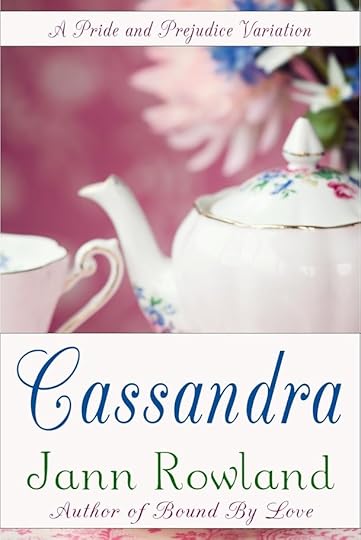
Cassandra: A Pride and Prejudice Variation
by Jann Rowland
Kindle Edition, First Edition, 275 pages
Published November 29, 2015 by One Good Sonnet Publishing
ASIN: B018R29DNC
[ kindle unlimited ]
As a young man of five and twenty, Fitzwilliam meets a young lady who will change his life. After a whirlwind courtship, the couple marry.
But after only a year of marriage, disaster strikes, and Darcy loses his wife in childbirth. Stricken with grief, Darcy is left with a young daughter to raise without his beloved wife by his side.
Darcy is ultimately convinced to return to society by his cousin, Colonel Fitzwilliam, and almost three years later, he returns to London in the company of his sister and his daughter.
Through the assistance of old friends and new, Darcy is once again induced to take an interest in life and move past his heartbreak. And though he is convinced that lightning never strikes twice, perhaps Darcy will be able to find love again.
Rating: ⭐⭐⭐⭐
Edition Read:
Cassandra: A Pride and Prejudice Variation
by Jann Rowland
Kindle Edition, First Edition, 275 pages
Published November 29, 2015 by One Good Sonnet Publishing
ASIN: B018R29DNC
[ kindle unlimited ]
As a young man of five and twenty, Fitzwilliam meets a young lady who will change his life. After a whirlwind courtship, the couple marry.
But after only a year of marriage, disaster strikes, and Darcy loses his wife in childbirth. Stricken with grief, Darcy is left with a young daughter to raise without his beloved wife by his side.
Darcy is ultimately convinced to return to society by his cousin, Colonel Fitzwilliam, and almost three years later, he returns to London in the company of his sister and his daughter.
Through the assistance of old friends and new, Darcy is once again induced to take an interest in life and move past his heartbreak. And though he is convinced that lightning never strikes twice, perhaps Darcy will be able to find love again.

March 4, 2016
This book is an interesting diversion from Pride and Prejudice. In this novel, Darcy married in an earlier season, but lost his wife due to complications while giving birth to their daughter, Cassandra. Thus Darcy ends up missing time at Netherfield, and Georgiana escapes involvement with George Wickham.
I enjoyed the fleshing out of minor characters, like Colonel Fitzwilliam and his family. It makes you wish that Austen had included them more fully in the original novel. Even the few original characters are interesting and you wish to know more. And Lydia gets fairer treatment in this then I often see.
I did have a problem with how harsh this book was towards Caroline Bingley. While Lady Catherine's treatment was understandable (she was not all that different), Caroline is treated as if her only contribution to the story is to be the villain, often when it was not necessary.
I enjoyed the fleshing out of minor characters, like Colonel Fitzwilliam and his family. It makes you wish that Austen had included them more fully in the original novel. Even the few original characters are interesting and you wish to know more. And Lydia gets fairer treatment in this then I often see.
I did have a problem with how harsh this book was towards Caroline Bingley. While Lady Catherine's treatment was understandable (she was not all that different), Caroline is treated as if her only contribution to the story is to be the villain, often when it was not necessary.
May 29, 2016
I quite enjoyed this. Although it is strange to think of Darcy being married to someone other than Elizabeth, his character in this story is little different to the way he is portrayed in the original. There is very little angst in this story - probably the most disturbing aspect is the way Darcy ignores his child, although it is clear why. I would say it is a charming,very human story with Caroline Bingley providing the comic relief.My only real complaint is that the epilogue rounds up the characters lives in a rather abrupt manner,but this is common in Mr Rowlands books in my experience

December 19, 2015
4.5
I didn't think I'd enjoy Elizabeth not being Darcy's first wife but I really enjoyed it. I liked the the authors portrayal of Caroline Bingley and Lydia Bennet. A good read if you like P&P variations.
I didn't think I'd enjoy Elizabeth not being Darcy's first wife but I really enjoyed it. I liked the the authors portrayal of Caroline Bingley and Lydia Bennet. A good read if you like P&P variations.
Displaying 1 - 30 of 31 reviews