

What do you think?

Dust Bowl Girls: The Inspiring Story of the Team That Barnstormed Its Way to Basketball Glory
A thrilling, cinematic story. I loved every minute I spent with these bold, daring women whose remarkable journey is the stuff of American legend. Karen Abbott, New York Times bestselling author of Liar, Temptress, Soldier, Spy
The Boys in the Boat meets A League of Their Own in this true story of a Depression-era championship women s team.
In the early 1930s, during the worst drought and financial depression in American history, Sam Babb began to dream. Like so many others, this charismatic Midwestern basketball coach wanted a reason to have hope. Traveling from farm to farm near the tiny Oklahoma college where he coached, Babb recruited talented, hardworking young women and offered them a chance at a better life: a free college education in exchange for playing on his basketball team, the Cardinals.
Despite their fears of leaving home and the sacrifices that their families would face, the women joined the team. And as Babb coached the Cardinals, something extraordinary happened. These remarkable athletes found a passion for the game and a heartfelt loyalty to one another and their coach--and they began to win.
Combining exhilarating sports writing and exceptional storytelling, Dust Bowl Girls takes readers on the Cardinals intense, improbable journey all the way to an epic showdown with the prevailing national champions, helmed by the legendary Babe Didrikson. Lydia Reeder captures a moment in history when female athletes faced intense scrutiny from influential figures in politics, education, and medicine who denounced women s sports as unhealthy and unladylike. At a time when a struggling nation was hungry for inspiration, this unlikely group of trailblazers achieved much more than a championship season."
The Boys in the Boat meets A League of Their Own in this true story of a Depression-era championship women s team.
In the early 1930s, during the worst drought and financial depression in American history, Sam Babb began to dream. Like so many others, this charismatic Midwestern basketball coach wanted a reason to have hope. Traveling from farm to farm near the tiny Oklahoma college where he coached, Babb recruited talented, hardworking young women and offered them a chance at a better life: a free college education in exchange for playing on his basketball team, the Cardinals.
Despite their fears of leaving home and the sacrifices that their families would face, the women joined the team. And as Babb coached the Cardinals, something extraordinary happened. These remarkable athletes found a passion for the game and a heartfelt loyalty to one another and their coach--and they began to win.
Combining exhilarating sports writing and exceptional storytelling, Dust Bowl Girls takes readers on the Cardinals intense, improbable journey all the way to an epic showdown with the prevailing national champions, helmed by the legendary Babe Didrikson. Lydia Reeder captures a moment in history when female athletes faced intense scrutiny from influential figures in politics, education, and medicine who denounced women s sports as unhealthy and unladylike. At a time when a struggling nation was hungry for inspiration, this unlikely group of trailblazers achieved much more than a championship season."
304 pages, Hardcover
First published January 24, 2017
About the author
Lydia Reeder
2 books120 followersAbout the author
Lydia is the author of the award-winning DUST BOWL GIRLS: THE INSPIRING STORY OF THE TEAM THAT BARNSTORMED ITS WAY TO BASKETBALL GLORY, a thrilling depiction of the birth of women's competitive basketball that takes place in Oklahoma during the Great Depression.
An Oklahoma native, Lydia's roots run deep. Some of her favorite times as a child were spent on her grandfather’s ranch near Chickasha making hay-bale tunnels, fishing for bass, or traipsing through miles of pasture. Today, she lives in Denver with her husband and their five cats. Her outdoor adventures include hiking the long, rocky trails that wind through the mountains of Colorado.
Her upcoming book, THE CURE FOR WOMEN: DR. MARY PUTNAM JACOBI AND THE CHALLENGE TO VICTORIAN MEDICINE THAT CHANGED WOMEN'S LIVES FOREVER (St. Martin's Press, December 2024), reveals the nineteenth-century origin of the pseudo-science that supposedly connects all of women's ills to her reproductive system. It tells the story of the women doctors and suffragists, led by Dr. Mary Putnam Jacobi, who fought back against this attempt to control women's bodies and lives.
PUBLISHERS WEEKLY starred review for THE CURE FOR WOMEN: “[Brilliant] … Reeder’s winsomely written narrative touches on issues strikingly similar to ones widely discussed today, including women’s ongoing frustration with the lack of robust medical study of the female body and the troubling reemergence of reactionary assertions that women are by design not fit for work. It’s an urgent and revealing slice of history.”
Prior to becoming an author, Lydia worked for many years developing eLearing for continuing education in the fields of nursing and healthcare.
Lydia is the author of the award-winning DUST BOWL GIRLS: THE INSPIRING STORY OF THE TEAM THAT BARNSTORMED ITS WAY TO BASKETBALL GLORY, a thrilling depiction of the birth of women's competitive basketball that takes place in Oklahoma during the Great Depression.
An Oklahoma native, Lydia's roots run deep. Some of her favorite times as a child were spent on her grandfather’s ranch near Chickasha making hay-bale tunnels, fishing for bass, or traipsing through miles of pasture. Today, she lives in Denver with her husband and their five cats. Her outdoor adventures include hiking the long, rocky trails that wind through the mountains of Colorado.
Her upcoming book, THE CURE FOR WOMEN: DR. MARY PUTNAM JACOBI AND THE CHALLENGE TO VICTORIAN MEDICINE THAT CHANGED WOMEN'S LIVES FOREVER (St. Martin's Press, December 2024), reveals the nineteenth-century origin of the pseudo-science that supposedly connects all of women's ills to her reproductive system. It tells the story of the women doctors and suffragists, led by Dr. Mary Putnam Jacobi, who fought back against this attempt to control women's bodies and lives.
PUBLISHERS WEEKLY starred review for THE CURE FOR WOMEN: “[Brilliant] … Reeder’s winsomely written narrative touches on issues strikingly similar to ones widely discussed today, including women’s ongoing frustration with the lack of robust medical study of the female body and the troubling reemergence of reactionary assertions that women are by design not fit for work. It’s an urgent and revealing slice of history.”
Prior to becoming an author, Lydia worked for many years developing eLearing for continuing education in the fields of nursing and healthcare.
Ratings & Reviews
Friends & Following
Create a free account to discover what your friends think of this book!
Community Reviews
Displaying 1 - 30 of 399 reviews

November 19, 2016
3.5 stars
As soon as I saw the cover and description for Dust Bowl Girls, I knew I had to read it. Both of my parents are from Oklahoma and still maintain close ties to the state. While my parents grew up in Ardmore, my grandfather lived for a while in Durant, and several of my relatives are buried there. Dust Bowl Girls details the extraordinary success of the women’s basketball team from Oklahoma Presbyterian College in the midst of the Depression. With incredible dedication and commitment, Sam Babb, the school’s basketball coach, traveled all over rural Oklahoma to recruit women to play on his basketball team. Babb offered them an education in exchange for playing basketball at a time when many families were barely scraping by.
Lydia Reeder, the great niece of Sam Babb, writes an exhaustive tale of not only the successful women’s basketball team but also a history of Oklahoma Presbyterian College and the history of women’s basketball. Having spent a lot of time in Oklahoma, the sections related to Oklahoma were very interesting to me. If not from Oklahoma, those sections may not appeal as much to others because it is very detailed. The portions related to the history of women’s basketball did not appeal to me quite as much. However, overall Dust Bowl Girls is an interesting read. The photographs are a great addition to the book and help make the story come to life. Dust Bowl Girls is clearly a labor of love for the author. Thanks to Algonquin Books and NetGalley for the opportunity to read this ARC in exchange for an honest review.
As soon as I saw the cover and description for Dust Bowl Girls, I knew I had to read it. Both of my parents are from Oklahoma and still maintain close ties to the state. While my parents grew up in Ardmore, my grandfather lived for a while in Durant, and several of my relatives are buried there. Dust Bowl Girls details the extraordinary success of the women’s basketball team from Oklahoma Presbyterian College in the midst of the Depression. With incredible dedication and commitment, Sam Babb, the school’s basketball coach, traveled all over rural Oklahoma to recruit women to play on his basketball team. Babb offered them an education in exchange for playing basketball at a time when many families were barely scraping by.
Lydia Reeder, the great niece of Sam Babb, writes an exhaustive tale of not only the successful women’s basketball team but also a history of Oklahoma Presbyterian College and the history of women’s basketball. Having spent a lot of time in Oklahoma, the sections related to Oklahoma were very interesting to me. If not from Oklahoma, those sections may not appeal as much to others because it is very detailed. The portions related to the history of women’s basketball did not appeal to me quite as much. However, overall Dust Bowl Girls is an interesting read. The photographs are a great addition to the book and help make the story come to life. Dust Bowl Girls is clearly a labor of love for the author. Thanks to Algonquin Books and NetGalley for the opportunity to read this ARC in exchange for an honest review.

July 15, 2017
A surprisingly good read. I wish I could remember how it came to my notice -- probably a goodreads friend liked a review. It seemed like something that I should give my attention to, given my interest in historical as well as fictional "college girls." Approaching it with a slightly weary sense of duty, I ended up being engrossed and entertained to a degree I didn't expect at all.
Oklahoma Presbyterian College, in Durant OK, in the year 1931 is far removed physically, culturally, and temporally from the leafy and refined campuses of the seven sisters colleges of the 1890s and 1900s which I more often read about. But a thread that links the different experiences of the students of two different eras and places is a shared passionate interest in basketball. And they also have in common a determination to play the game despite disapprobation from authorities who fear that the sport is unsuitable for women, that it will render them into sexless tomboys, or that delicate feminine nerves will shatter under the strain of intense competition. Reading this book, I saw that more than fifty years after the founding of the earliest American women's colleges so many of the original concerns remained the same!
The basketball matches that one reads about in such books as Smith College Stories: Ten Stories are intramural affairs, played between classes, with no chance of any outside spectators observing the players sweat, cheer, and cry. The young women in Dust Bowl Girls, by contrast, played in crowded gymnasiums filled with raucous people of all stripes who all paid their 50 cents to get in. This was a state of affairs that was deeply shocking to many, including no less a personage than the first lady of the United States, Lou Henry Hoover, who actually crusaded against competitive women's sports in the name of health (she wasn't against girls exercising per se, but thought it should be limited to non-competetive "play days"). Author Lydia Reeder tells us that in the eyes of such people, Samuel Babb, the OPC coach who is the hero of this book, was essentially the equivalent of a cartoonish villain twirling his mustache while tying damsels to railroad tracks.
But for the women in this book, Babb offered a miracle. Most of these teenagers were dirt poor and came from farms that were only one bad crop away from failure -- and there were a lot of bad crops in early 1930s Oklahoma. In such a world, college seemed an abstract impossibility. Being offered a full scholarship to get an education just for playing the game they loved was an astonishing dream come true. Reeder draws on family memories, scrapbooks, newspaper articles, and amazingly, interviews with some of the longer-lived of the players, to recreate the 1931-32 basketball season of the OPC women, which was one for the ages. It wasn't easy. The girls had to rise at 3 AM for practices which were held at a men's gym from 4-6 AM, the only hours it was made available to them. On their barnstorming tour, one of the players had to do the driving, piloting an ancient bus with shot brakes. They struggled to get funding for their uniforms (very spiffy ones, with extremely short shorts of which one can imagine Mrs. Hoover disapproving), and every other expense. When they qualified for the championship tournament and had to travel to Louisiana, lack of funds meant leaving most of their backups behind. There they faced the defending champions, a well-funded corporately sponsored team captained by legendary athlete Babe Didrikson, who would shortly go on to cover herself with Olympic glory in track and field at the Los Angeles games of 1932 (Lou Henry Hoover campaigned against women competing there as well). I admired the grit and determination of the OPC women, and my pulse quickened in reading the accounts of their games. And I'm not even particularly interested in basketball!
At first, I was a little wary of the book, because Reeder tells the story in a novelistic style, with lots of dialogue and very specific details about such events as one particular morning's practice that could never have actually been chronicled so precisely. It reminded me of the sort of nonfiction that's meant for middle-grade readers, that's more or less disguised as a novel (Jefferson's Sons is one example of the sort of book I mean). However, I kept going, and eventually fell under the author's sway -- the rather cinematic portrayal of this story (and I did, in fact keep visualizing it as a movie) might not be the most admirable display of scholarship, but it sure did make for a good read.
Along the way, one picks up a fair amount of interesting cultural history of the 1930s, and also some Oklahoma history. The state was of course shaped by the sad legacy of the displacement of many tribes of Indians. OPC was actually just one division of a larger Indian boarding school -- the girls were given the job of heading tables of Indian children at meals with the aim of teaching them table manners. Some of the players were themselves part Indian. Doll Harris, the stand-out star was a part Irish and part Cherokee. A couple of the other girls were part Choctaw. Reeder describes some of the historical aspects of the story which I find painful, in a matter of fact way, with no editorial comment. Similarly, she describes Babb's childhood, during which he suffered a horrific injury at the hands of his father that resulted in the amputation of one of his legs in a calm, non-censorious way. As it happens, Babb was her great uncle. In one scene, she imagines the teammates staying up late eating illicit candy and speculating as to how their coach lost his leg. At the end of the book, she describes meeting some of the players when their team was belatedly inducted in the Oklahoma Sports Hall of Fame in 2003 (clearly, basketball didn't hurt their health). "Decades later, they were still wondering," she says. She doesn't say if she told them.
Oklahoma Presbyterian College, in Durant OK, in the year 1931 is far removed physically, culturally, and temporally from the leafy and refined campuses of the seven sisters colleges of the 1890s and 1900s which I more often read about. But a thread that links the different experiences of the students of two different eras and places is a shared passionate interest in basketball. And they also have in common a determination to play the game despite disapprobation from authorities who fear that the sport is unsuitable for women, that it will render them into sexless tomboys, or that delicate feminine nerves will shatter under the strain of intense competition. Reading this book, I saw that more than fifty years after the founding of the earliest American women's colleges so many of the original concerns remained the same!
The basketball matches that one reads about in such books as Smith College Stories: Ten Stories are intramural affairs, played between classes, with no chance of any outside spectators observing the players sweat, cheer, and cry. The young women in Dust Bowl Girls, by contrast, played in crowded gymnasiums filled with raucous people of all stripes who all paid their 50 cents to get in. This was a state of affairs that was deeply shocking to many, including no less a personage than the first lady of the United States, Lou Henry Hoover, who actually crusaded against competitive women's sports in the name of health (she wasn't against girls exercising per se, but thought it should be limited to non-competetive "play days"). Author Lydia Reeder tells us that in the eyes of such people, Samuel Babb, the OPC coach who is the hero of this book, was essentially the equivalent of a cartoonish villain twirling his mustache while tying damsels to railroad tracks.
But for the women in this book, Babb offered a miracle. Most of these teenagers were dirt poor and came from farms that were only one bad crop away from failure -- and there were a lot of bad crops in early 1930s Oklahoma. In such a world, college seemed an abstract impossibility. Being offered a full scholarship to get an education just for playing the game they loved was an astonishing dream come true. Reeder draws on family memories, scrapbooks, newspaper articles, and amazingly, interviews with some of the longer-lived of the players, to recreate the 1931-32 basketball season of the OPC women, which was one for the ages. It wasn't easy. The girls had to rise at 3 AM for practices which were held at a men's gym from 4-6 AM, the only hours it was made available to them. On their barnstorming tour, one of the players had to do the driving, piloting an ancient bus with shot brakes. They struggled to get funding for their uniforms (very spiffy ones, with extremely short shorts of which one can imagine Mrs. Hoover disapproving), and every other expense. When they qualified for the championship tournament and had to travel to Louisiana, lack of funds meant leaving most of their backups behind. There they faced the defending champions, a well-funded corporately sponsored team captained by legendary athlete Babe Didrikson, who would shortly go on to cover herself with Olympic glory in track and field at the Los Angeles games of 1932 (Lou Henry Hoover campaigned against women competing there as well). I admired the grit and determination of the OPC women, and my pulse quickened in reading the accounts of their games. And I'm not even particularly interested in basketball!
At first, I was a little wary of the book, because Reeder tells the story in a novelistic style, with lots of dialogue and very specific details about such events as one particular morning's practice that could never have actually been chronicled so precisely. It reminded me of the sort of nonfiction that's meant for middle-grade readers, that's more or less disguised as a novel (Jefferson's Sons is one example of the sort of book I mean). However, I kept going, and eventually fell under the author's sway -- the rather cinematic portrayal of this story (and I did, in fact keep visualizing it as a movie) might not be the most admirable display of scholarship, but it sure did make for a good read.
Along the way, one picks up a fair amount of interesting cultural history of the 1930s, and also some Oklahoma history. The state was of course shaped by the sad legacy of the displacement of many tribes of Indians. OPC was actually just one division of a larger Indian boarding school -- the girls were given the job of heading tables of Indian children at meals with the aim of teaching them table manners. Some of the players were themselves part Indian. Doll Harris, the stand-out star was a part Irish and part Cherokee. A couple of the other girls were part Choctaw. Reeder describes some of the historical aspects of the story which I find painful, in a matter of fact way, with no editorial comment. Similarly, she describes Babb's childhood, during which he suffered a horrific injury at the hands of his father that resulted in the amputation of one of his legs in a calm, non-censorious way. As it happens, Babb was her great uncle. In one scene, she imagines the teammates staying up late eating illicit candy and speculating as to how their coach lost his leg. At the end of the book, she describes meeting some of the players when their team was belatedly inducted in the Oklahoma Sports Hall of Fame in 2003 (clearly, basketball didn't hurt their health). "Decades later, they were still wondering," she says. She doesn't say if she told them.


September 16, 2017
Nowadays, it is seldom that a book pulls me in and forces me to continue turning the pages. “Dust Bowl Girls” was one of those books.
Author Lydia Reeder tells the story of the Oklahoma Presbyterian College Cardinals and their magical year in 1932. The book almost reads like a novel, as Ms. Reeder takes us deep into the history and personality of many of the players and people connected with the school’s female basketball team. Readers are also treated to in-depth histories of the players as well as details of the country’s landscape at that time, including some attitudes towards women’s athletics. While these viewpoints might seem laughable when compared with today’s world, it is interesting to learn how fervently many people fought for these alternate beliefs.
During a long car ride, I listened to the audible version for the first half of this book and finished by reading the second half. Narrator Virginia Wolf kept the story interesting, keeping my attention through both the storyline as well as the historical background.
Ms. Reeder is a perfect person to retell the tale of the Cardinals. Her uncle was Sam Babb, the dedicated coach of the Cardinals. She relates an emotional, inspiring story of a group of women who strove to achieve something special. The author’s notes at the end of the book provide a detailed account of the work she performed to bring this book to fruition. The numerous pictures throughout the book are a perfect accompaniment to this five-star effort.
Author Lydia Reeder tells the story of the Oklahoma Presbyterian College Cardinals and their magical year in 1932. The book almost reads like a novel, as Ms. Reeder takes us deep into the history and personality of many of the players and people connected with the school’s female basketball team. Readers are also treated to in-depth histories of the players as well as details of the country’s landscape at that time, including some attitudes towards women’s athletics. While these viewpoints might seem laughable when compared with today’s world, it is interesting to learn how fervently many people fought for these alternate beliefs.
During a long car ride, I listened to the audible version for the first half of this book and finished by reading the second half. Narrator Virginia Wolf kept the story interesting, keeping my attention through both the storyline as well as the historical background.
Ms. Reeder is a perfect person to retell the tale of the Cardinals. Her uncle was Sam Babb, the dedicated coach of the Cardinals. She relates an emotional, inspiring story of a group of women who strove to achieve something special. The author’s notes at the end of the book provide a detailed account of the work she performed to bring this book to fruition. The numerous pictures throughout the book are a perfect accompaniment to this five-star effort.

April 20, 2019
Swooshing! Girls playing basketball in the 1930’s for the Oklahoma Presbyterian College’s Cardinals – that is the story told. Sam Babb, their agent and all the women who join the team have their backstories unfolded in their order of gathering. It was ok – I’m not sporty, but I spent my childhood at Dad’s bbgames so it was fun to be taken back to squeaky floors, random outfits and the disconcerting way people would shoot up straight to yell and shout advice, barely giving a girl time to hold tight to her place on the bleachers!
Good history of women in basketball. If that’s your cuppa, you should look this one up!
Good history of women in basketball. If that’s your cuppa, you should look this one up!

June 1, 2017
The book tells the story of the 1932 AAU Women's basketball championship and the female students from Oklahoma Presbyterian College who overcame the odds and won the championship in the early years of the depression. In telling this story, the book offers a fascinating account of the politics and debates that engulfed women's basketball in the 1930s: Did strenuous physical activity endanger the overall health of the girls? Did it make girls too mannish? Would anyone watch girls play basketball? What type of uniform was appropriate for girls to wear? Did girls require protection from competitive sports? What game rules should be put in place to keep girls from overexerting? These gender politics are woven seamlessly into the narrative of the PC girls' quest to win the AAU championship. However, the author takes numerous other detours that slow the narrative without adding anything to it. For example, she gives a quite lengthy description of the history of the founding of Oklahoma Presbyterian College that will bore anyone short of the most enthusiastic alumnus. She also provides extensive biographical detail on the coach and the college president, including their health issues Unfortunately, these side stories sometimes detract from what is otherwise a fascinating account of the uphill battle of a small town women's basketball team to earn recognition as serous athletes.

January 10, 2017
This was a little more detailed than what I thought it would be. I assumed it would be about basketball and a basketball team. However, it got into the history of Oklahoma and the Trail of Tears and establishments and settlements. It had a lot of names and how much was paid for what. This would be a great book for someone who is really interested in the history of Oklahoma.
However, that was not the case for me. I had just wanted to read about this basketball team. What I was able to read about them and Coach Babb was very interesting, but having to get through all the other stuff was just not worth it.
I think perhaps a better title would land this book on the shelves of people who would be more interested. I could tell the author did a lot of research, this just wasn't what I was looking for.
Thanks Algonquin Books and Net Galley for providing me with a free e-galley in exchange for an honest review.
However, that was not the case for me. I had just wanted to read about this basketball team. What I was able to read about them and Coach Babb was very interesting, but having to get through all the other stuff was just not worth it.
I think perhaps a better title would land this book on the shelves of people who would be more interested. I could tell the author did a lot of research, this just wasn't what I was looking for.
Thanks Algonquin Books and Net Galley for providing me with a free e-galley in exchange for an honest review.

May 16, 2022
Superb
What a great book! A history of woman's basketball through the lens of an Oklahoma girls AAU team.
These women were true champions. They fought prejudice and bias to prove that woman could play the game.
This would make a great movie.
What a great book! A history of woman's basketball through the lens of an Oklahoma girls AAU team.
These women were true champions. They fought prejudice and bias to prove that woman could play the game.
This would make a great movie.

July 21, 2016
This review originally published in Looking For a Good Book. Rated 5.0 of 5
Dust Bowl Girls, by Lydia Reeder, is one of the most exciting, informative, and thoroughly engaging non-fiction books I've read this year. This is a book that must be optioned for film -- it has all the ingredients for a truly spellbinding movie. Think Hoosiers, A League of Their Own, or The Blind Side.
Author Reeder has done an exhaustive amount of research on the coach, Sam Babb (a great-uncle of the author) and the women of the 1932 Oklahoma Presbyterian College girl's basketball team. She shares the research in a detailed Notes section.
Basketball was different in the 1930's - more-so for women than for men - and there was also the struggle for acceptance of women's sports during this time. Basketball was thought to be especially bad for girls. Despite all this, Sam Babb desired to coach a girl's basketball team at his college and made recruiting trips to rural areas, bringing in young girls who thought they might not otherwise be able to even attend college (this is still the era of the Great Depression) by offering sports scholarships.
The young girls that Babb recruits are all talented athletes in their own right, but Babb's coaching emphasizes teamwork, which can be challenging for a group of stand-outs. But Babb also insists that the girls stay focussed on their school work. On the court, he has the girls learn all the different positions (which seems a bit genius, given the time and the style of play in the 30's) - this gives each girl a respect for what has to happen to create effective teamwork.
What Reeder does extremely well in this book is get into the heads of the players and coach (based on journals of and discussion with the players). She also does an excellent job of building tension over the course of the season. following many of the games and detailing their exploits. I just HAD to keep reading to learn if that would win that next game!
The background on Babb is tremendous, and his personal story along would qualify this book for a movie deal. Add the stories of the girls and their challenge to win a national title and you have a compelling drama, which Reeder lays out before the reader with mastery.
Just over a year ago I watched a very small town boys high school basketball team win a State title, which also had its share of injuries and drama and challenges, and I know first-hand what that excitement and anticipation is like. Reeder's book captures that excitement perfectly and the reader is transported back to 1932 and living those games.
I highly recommend this book to anyone interested in sports, basketball, history, women's sports, biographies, or simply interested in great non-fiction.
Looking for a good book? This is it. Dust Bowl Girls, by Lydia Reeder, has it all: action, biography, athletics, history, and even some romance. This is a book you want first on your "to read" list and then on your "have read" list.
I received a digital copy of this book from the publisher, through Netgalley, in exchange for an honest review.
Dust Bowl Girls, by Lydia Reeder, is one of the most exciting, informative, and thoroughly engaging non-fiction books I've read this year. This is a book that must be optioned for film -- it has all the ingredients for a truly spellbinding movie. Think Hoosiers, A League of Their Own, or The Blind Side.
Author Reeder has done an exhaustive amount of research on the coach, Sam Babb (a great-uncle of the author) and the women of the 1932 Oklahoma Presbyterian College girl's basketball team. She shares the research in a detailed Notes section.
Basketball was different in the 1930's - more-so for women than for men - and there was also the struggle for acceptance of women's sports during this time. Basketball was thought to be especially bad for girls. Despite all this, Sam Babb desired to coach a girl's basketball team at his college and made recruiting trips to rural areas, bringing in young girls who thought they might not otherwise be able to even attend college (this is still the era of the Great Depression) by offering sports scholarships.
The young girls that Babb recruits are all talented athletes in their own right, but Babb's coaching emphasizes teamwork, which can be challenging for a group of stand-outs. But Babb also insists that the girls stay focussed on their school work. On the court, he has the girls learn all the different positions (which seems a bit genius, given the time and the style of play in the 30's) - this gives each girl a respect for what has to happen to create effective teamwork.
What Reeder does extremely well in this book is get into the heads of the players and coach (based on journals of and discussion with the players). She also does an excellent job of building tension over the course of the season. following many of the games and detailing their exploits. I just HAD to keep reading to learn if that would win that next game!
The background on Babb is tremendous, and his personal story along would qualify this book for a movie deal. Add the stories of the girls and their challenge to win a national title and you have a compelling drama, which Reeder lays out before the reader with mastery.
Just over a year ago I watched a very small town boys high school basketball team win a State title, which also had its share of injuries and drama and challenges, and I know first-hand what that excitement and anticipation is like. Reeder's book captures that excitement perfectly and the reader is transported back to 1932 and living those games.
I highly recommend this book to anyone interested in sports, basketball, history, women's sports, biographies, or simply interested in great non-fiction.
Looking for a good book? This is it. Dust Bowl Girls, by Lydia Reeder, has it all: action, biography, athletics, history, and even some romance. This is a book you want first on your "to read" list and then on your "have read" list.
I received a digital copy of this book from the publisher, through Netgalley, in exchange for an honest review.

June 24, 2016
Oklahoma. The Dust Bowl. Women's basketball. The season that made history. The 1930s were a hard time for many, but none so much as the farmers of Oklahoma. At the time, poor families made dresses out of grain sacks, basketball players owned one pair of shoes, and college (especially for girls) was a distant dream. Coach Babb had different ideas. He toured the state, recruiting the strongest players he could find in the high school circuit; endowing those he found with skill, and more importantly, purpose. He coached the Cardinals in the city of Durant, and things were about to change, irreversibly, forever.
Dust Bowl Girls, ten years in the making, is bursting at the margins with the intimate details of the Cardinal team members' lives, providing genuine heart to a narrative only half-recorded in the newspapers of the time. Taking advantage of the scrapbooks and oral stories from the personalities so lovingly portrayed in the text, Lydia Reeder paints the story of a team of hard-on-their-luck teenagers rising up out of the dust of poverty and the Great Depression, bringing hope and honor to their small city of Durant in Oklahoma.
As a sports story, as a memoir, Dust Bowl Girls recreates the atmosphere of the early 1900s, as politics and traditionalism threatened the game that brought Oklahoma Presbyterian College and its basketball team such pride. Throughout the novel, the reader is given ample context, so that she can understand what the team was truly up against. From First Lady Hoover's mission to remove all women from competitive sports, to a run-down team bus that nearly careened off a mountain when its brakes failed. The human moments come from the shy, yet naked windows into the minds of the players and their coach Babb, as personal conflicts and daily drama propel them towards their eventual, highly-unanticipated games at the AAU National Finals.
Reeder writes with hungry excitement, rallying the reader to root for the Cardinals, and doesn't disappoint, with energetic retellings of the key games of the team's most important season. Lovers of sports fiction would find it hard to be disappointed by this delightful and enlightening window into a history that very nearly never was.
Dust Bowl Girls, ten years in the making, is bursting at the margins with the intimate details of the Cardinal team members' lives, providing genuine heart to a narrative only half-recorded in the newspapers of the time. Taking advantage of the scrapbooks and oral stories from the personalities so lovingly portrayed in the text, Lydia Reeder paints the story of a team of hard-on-their-luck teenagers rising up out of the dust of poverty and the Great Depression, bringing hope and honor to their small city of Durant in Oklahoma.
As a sports story, as a memoir, Dust Bowl Girls recreates the atmosphere of the early 1900s, as politics and traditionalism threatened the game that brought Oklahoma Presbyterian College and its basketball team such pride. Throughout the novel, the reader is given ample context, so that she can understand what the team was truly up against. From First Lady Hoover's mission to remove all women from competitive sports, to a run-down team bus that nearly careened off a mountain when its brakes failed. The human moments come from the shy, yet naked windows into the minds of the players and their coach Babb, as personal conflicts and daily drama propel them towards their eventual, highly-unanticipated games at the AAU National Finals.
Reeder writes with hungry excitement, rallying the reader to root for the Cardinals, and doesn't disappoint, with energetic retellings of the key games of the team's most important season. Lovers of sports fiction would find it hard to be disappointed by this delightful and enlightening window into a history that very nearly never was.

January 21, 2017
Lydia Reeder, great-niece of college women's basketball coach Sam Babb, lays out a story that deserved to be told in "Dust Bowl Girls: A Team's Quest for Basketball Glory."
In the midst of the Great Depression, Babb brings together a stellar group of athletes for the Oklahoma Presbyterian College Cardinals women's basketball team. It's a dream come true for these young women - all of them are from families that otherwise wouldn't be able to afford sending their daughters to college.
At a time when organizations like First Lady Lou Henry Hoover's Women's Division tried to place strict regulations on female athletics, the OPC Cardinals managed to play like the champions they were. A three-week barnstorming tour during Christmas break made the Cardinals a household name as they beat one tough opponent after the other. They ultimately went on to the AAU national tournament, facing everyone's fiercest rival - the Dallas Golden Cyclones, made famous by future Olympic athlete Babe Didrikson.
I am by no means a sports guru, so I wasn't sure when I received this book whether I'd enjoy it or not. I'm happy to say that I did. "Dust Bowl Girls" is about more than basketball - it's about fearless females whose greatest opponent wasn't a rival team. They had a lot to prove to naysayers in the media, athletic organizations, etc. Playing for a small private college during an era of extreme economic hardship, they had to worry about things like decent transportation.
Reeder did an excellent job setting the backdrop behind the OPC Cardinals' rise to victory. She provided an in-depth history of the college and the region. She also conducted a lot of research in order to help the reader get to know members of the team, both on and off the court.
This is a must-read for anyone who wants to learn more about the Depression era, regardless of your interest in sports.
I received an ARC from the publisher via a Goodreads giveaway, in exchange for an honest review.
In the midst of the Great Depression, Babb brings together a stellar group of athletes for the Oklahoma Presbyterian College Cardinals women's basketball team. It's a dream come true for these young women - all of them are from families that otherwise wouldn't be able to afford sending their daughters to college.
At a time when organizations like First Lady Lou Henry Hoover's Women's Division tried to place strict regulations on female athletics, the OPC Cardinals managed to play like the champions they were. A three-week barnstorming tour during Christmas break made the Cardinals a household name as they beat one tough opponent after the other. They ultimately went on to the AAU national tournament, facing everyone's fiercest rival - the Dallas Golden Cyclones, made famous by future Olympic athlete Babe Didrikson.
I am by no means a sports guru, so I wasn't sure when I received this book whether I'd enjoy it or not. I'm happy to say that I did. "Dust Bowl Girls" is about more than basketball - it's about fearless females whose greatest opponent wasn't a rival team. They had a lot to prove to naysayers in the media, athletic organizations, etc. Playing for a small private college during an era of extreme economic hardship, they had to worry about things like decent transportation.
Reeder did an excellent job setting the backdrop behind the OPC Cardinals' rise to victory. She provided an in-depth history of the college and the region. She also conducted a lot of research in order to help the reader get to know members of the team, both on and off the court.
This is a must-read for anyone who wants to learn more about the Depression era, regardless of your interest in sports.
I received an ARC from the publisher via a Goodreads giveaway, in exchange for an honest review.

January 1, 2017
I'm not a big sports fan, but I do enjoy an occasional story about outstanding players or teams. I really liked "A League of Their Own," and this book seemed to be a similar type of story. If you have never heard of the OPC Cardinals, you are not alone. But they deserve to have their story shared, and for others to look at them as a source of inspiration. Just the idea that a bunch of farm girls attending a small, Christian college during the Dust Bowl years could actually win a national playoff is amazing! Then, when you take into account the fact that they were playing the reigning champions, who were led by the legendary Babe Didrikson, their success moves into the realm of unbelievable. But they did it, and this book clearly details their time working toward the championship.
Author Lydia Reeder is actually the great niece of the Cardinals coach from that historic time, Mr. Sam Babb. She uses details pulled from family scrapbooks (her own and those of players), newspaper and magazine clippings, interviews, and the accounts maintained by the team's unofficial historian. She manages to do several things at once - paint a backdrop of the economic climate in Oklahoma during the early 1930s, show each of the girls with her own individuality, and build the interest and excitement of readers as the team approaches the playoff. Even those who do not normally read sports can still have a wonderful time reading about the "Cards" and their visionary coach.
Great for historical perspective, sports history and development of girls' basketball, and female role models. Highly recommended.
I read an e-book provided by the publisher through Net Galley.
Author Lydia Reeder is actually the great niece of the Cardinals coach from that historic time, Mr. Sam Babb. She uses details pulled from family scrapbooks (her own and those of players), newspaper and magazine clippings, interviews, and the accounts maintained by the team's unofficial historian. She manages to do several things at once - paint a backdrop of the economic climate in Oklahoma during the early 1930s, show each of the girls with her own individuality, and build the interest and excitement of readers as the team approaches the playoff. Even those who do not normally read sports can still have a wonderful time reading about the "Cards" and their visionary coach.
Great for historical perspective, sports history and development of girls' basketball, and female role models. Highly recommended.
I read an e-book provided by the publisher through Net Galley.

April 28, 2019
This is a true story during WWII and the great depression about a small women's college in Durant OK whose ladies' basketball team was organized and coached by Sam Babb. He recruited girls he saw had talent on the basketball court and gave them all scholarships to the Oklahoma Presbyterian College. His coaching was unique in that he taught them to focus, not only on what they were doing on that court but also to anticipate what their teammates were doing, And what their opponents were going to do. And practice, lots and lots of practice. They win games and go on to play against the bigger schools in tournaments.
The was interesting to learn about women's rules of basketball back then. There were 9 players on each team (so 18 women on the court during the game), but only the 3 (4?) forwards could go past the halfway into the opponents side. The defense had to stay under their basket. And since this game was not a 'lady-like' sport, the uniforms and the rules were archaic in terms of today's teams.
The writing was a little dry, but the book had pictures of Sam, the coach and the players. Learning new stories about our history is always a good thing, thus the 4 stars.
The was interesting to learn about women's rules of basketball back then. There were 9 players on each team (so 18 women on the court during the game), but only the 3 (4?) forwards could go past the halfway into the opponents side. The defense had to stay under their basket. And since this game was not a 'lady-like' sport, the uniforms and the rules were archaic in terms of today's teams.
The writing was a little dry, but the book had pictures of Sam, the coach and the players. Learning new stories about our history is always a good thing, thus the 4 stars.
May 29, 2019
If this book hadn't been a book club book, I doubt I would have finished it. Although it was interesting historically, I found it to be quite boring. It is unbelievable that some people have compared it to The Boys in the Boat!

January 22, 2017
In the depths of the Great Depression, as the Dust Bowl was swallowing farms on the Great Plains, the town of Durant, Oklahoma, was swept up by sports -- women’s basketball, to be specific. The Cardinals of Oklahoma Presbyterian College had what sportswriters often refer to as “a magical season,” putting up a spotless record, beating powerhouse teams from Texas, uniting the town, and winning the 1932 Amateur Athletic Union championship over a Texas team led by noted athlete Babe Didrikson.
Lydia Reeder’s “Dust Bowl Girls: The Inspiring Story of the Team That Barnstormed Its Way to Basketball Glory” tells the story of the Cardinals: the players, the games, the touring -- as well as the historical context and the controversy at the time over women’s athletics. Sam Babb, the Cardinals’ coach, was Reeder’s great-uncle, so she’s well-positioned to tell the story. But she also interviewed several of the players, looked at their scrapbooks and souvenirs, read their letters and diaries, and combed through old newspaper stories and archives for information.
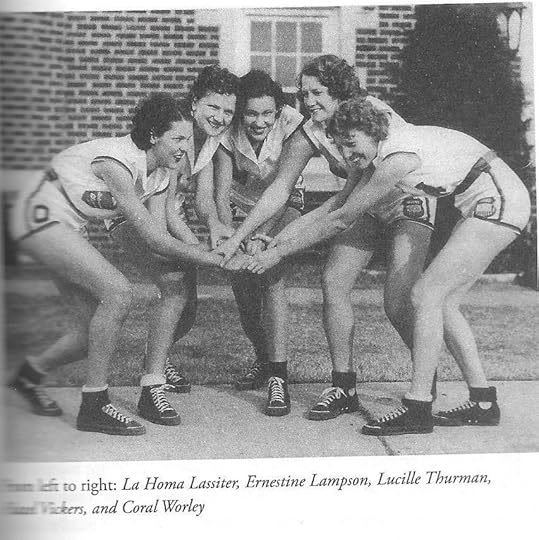
The book reads like a novel sometimes, because the author was able to re-create dialogue, narrate scenes and delve into the personalities of the players. Doll, Lucille, sisters Lera and Vera, Coral, La Homa and the others aren’t just statistics and black-and-white photographs; they come alive as real people.
The team’s route to success wasn’t easy. Women’s basketball -- and women’s sports in general -- had been gaining in popularity in the early 20th century, but many people didn’t think women should be so competitive or physical and wanted to exclude women from “masculine” sports and traveling for games. Reeder spends a chapter discussing the Amateur Athletic Union (which allowed women to compete in basketball and other sports) versus the Committee on Women’s Athletics (which discouraged it), particularly interesting in light of Title IX and the huge participation of girls and women in sports today.
What stands out in the book, though, is the fact that the women on the Cardinals’ team
loved basketball and wanted to compete. They were also well aware that the game was no more physically demanding than the farm work most of them had already been doing for several years. The Cardinals were excellent, highly skilled players with a dedicated coach who believed in them, and became strong contenders in the AAU.
The book successfully evokes a time when "girls' sports" were still a bit of a novelty, but puts names and faces -- and personalities -- to one of the teams. I learned a lot, but got swept up in the story, too.
Lydia Reeder’s “Dust Bowl Girls: The Inspiring Story of the Team That Barnstormed Its Way to Basketball Glory” tells the story of the Cardinals: the players, the games, the touring -- as well as the historical context and the controversy at the time over women’s athletics. Sam Babb, the Cardinals’ coach, was Reeder’s great-uncle, so she’s well-positioned to tell the story. But she also interviewed several of the players, looked at their scrapbooks and souvenirs, read their letters and diaries, and combed through old newspaper stories and archives for information.
The book reads like a novel sometimes, because the author was able to re-create dialogue, narrate scenes and delve into the personalities of the players. Doll, Lucille, sisters Lera and Vera, Coral, La Homa and the others aren’t just statistics and black-and-white photographs; they come alive as real people.
The team’s route to success wasn’t easy. Women’s basketball -- and women’s sports in general -- had been gaining in popularity in the early 20th century, but many people didn’t think women should be so competitive or physical and wanted to exclude women from “masculine” sports and traveling for games. Reeder spends a chapter discussing the Amateur Athletic Union (which allowed women to compete in basketball and other sports) versus the Committee on Women’s Athletics (which discouraged it), particularly interesting in light of Title IX and the huge participation of girls and women in sports today.
What stands out in the book, though, is the fact that the women on the Cardinals’ team
loved basketball and wanted to compete. They were also well aware that the game was no more physically demanding than the farm work most of them had already been doing for several years. The Cardinals were excellent, highly skilled players with a dedicated coach who believed in them, and became strong contenders in the AAU.
The book successfully evokes a time when "girls' sports" were still a bit of a novelty, but puts names and faces -- and personalities -- to one of the teams. I learned a lot, but got swept up in the story, too.

February 23, 2017
For author Lydia Reeder, Dust Bowl Girls is a family story. It was her one-legged great uncle Sam Rabb, the basketball coach and psychology professor at obscure Oklahoma Presbyterian College for women in Durant, OK who scoured the region for talent, offering the hardworking but talented daughters of sharecroppers and miners a free education if they came to OPC and played basketball. Reeder assembled the story of how these diverse (albeit all white) young women came together and through hard work, discipline, and teamwork eventually became the first college team in the history of the AAU to win a national championship from scrapbooks, diaries, news stories, family histories and interviews with the surviving players and their kinfolks.
In addition to the feel-good story of the players, Dust Bowl Girls provides a reminiscence of how women's basketball was played in the 1930s. In those days each team fielded six players, three each on offense and defense with the court divided into separate sectors. No more than one dribble was allowed and there was no shot clock. Scores were low and each point was hard fought.
This was at a time when a national movement headed by no less than First Lady Lou Henry Hoover was campaigning against competitive athletics for women, fearing that it would coarsen them and make them unfit to be wives and mothers, especially since exercise was know to loosen the uterus. Despite this adversity, as well as the Dust Bowl poverty, the Cardinals prevailed and went on to lead productive and influential lives, and, yes, they were able to marry and have children as well as become teachers and coaches of generations of young women.
Reeder provides numerous photos and lists her sources for each chapter in end notes.
In addition to the feel-good story of the players, Dust Bowl Girls provides a reminiscence of how women's basketball was played in the 1930s. In those days each team fielded six players, three each on offense and defense with the court divided into separate sectors. No more than one dribble was allowed and there was no shot clock. Scores were low and each point was hard fought.
This was at a time when a national movement headed by no less than First Lady Lou Henry Hoover was campaigning against competitive athletics for women, fearing that it would coarsen them and make them unfit to be wives and mothers, especially since exercise was know to loosen the uterus. Despite this adversity, as well as the Dust Bowl poverty, the Cardinals prevailed and went on to lead productive and influential lives, and, yes, they were able to marry and have children as well as become teachers and coaches of generations of young women.
Reeder provides numerous photos and lists her sources for each chapter in end notes.

May 23, 2018
This is a charming little book about women's basketball in Oklahoma during the dust bowl and great depression. Oklahoma Presbyterian College, under the direction of Sam Babb, was able to fund small-town, farm girls going to college through basketball scholarship. Throughout the book, the author contextualizes the significance of these women playing ball in the era. From the very dawn of the invention of basketball, women were playing, and they had a very strong fan base. However, organizations aimed at "protecting women", eventually led by the first lady Mrs. Hoover, worked tirelessly to stop women from playing basketball. They thought that women being shown in competition was exploitive, the women would lose their important feminine characteristics (some even believing that women's uteruses would disappear and the women would become infertile due to evidence of menstrual cycles being shorter for athletic women), and that women just couldn't take the heat. Different rules were made for women's games, and funding significantly lagged behind that afforded to men's teams due to the controversial nature of women's basketball. It shows that women's basketball has not always lagged behind men's in popularity and skill, but was forcefully restrained by organizations up to and including the federal government of the US. Regardless, women wanted to play the game, and they were quite good at it. The women outlined in this book were able to help their families by receiving a free education and evade poverty by their athletic abilities.
November 24, 2016
Dust Bowl Girls: A Team’s Quest for Basketball Glory by Lydia Reeder is a rich and delightful read. The book chronicles the history of the Oklahoma Presbyterian College Cardinals' quest for basketball success during a very challenging time in history – The Great Depression. The author’s great-uncle, Sam Babb, coached the Cardinals in the all-girl college (OPC) during the years of their initial success. Babb’s determination and actions offered many young women a life of opportunity. In return the girls were dogged trailblazers in their effort to become one of the best women’s teams in the nation.
Reeder has written an up-lifting, treasure-filled story. The narrative voice is perfect for the story. The many characters are fully developed with rich and varied characteristics. The play-by-play account of some of the games gives readers a court-side seat, and an added bonus is the anecdotal early history of women’s basketball. Dust Bowl Girls is also a testament to the integrity of Sam Babb - a man who had his own share of early adversity, but chose to only look forward and never give up. He was unwavering in his provision of opportunities for young women to become skilled and independent adults.
Reeder has written an up-lifting, treasure-filled story. The narrative voice is perfect for the story. The many characters are fully developed with rich and varied characteristics. The play-by-play account of some of the games gives readers a court-side seat, and an added bonus is the anecdotal early history of women’s basketball. Dust Bowl Girls is also a testament to the integrity of Sam Babb - a man who had his own share of early adversity, but chose to only look forward and never give up. He was unwavering in his provision of opportunities for young women to become skilled and independent adults.

December 3, 2017
This was great. I am not into sports (at. all.) but I found this story so compelling. A group of economically disadvantaged young women from rural Oklahoma defy all the naysayers and even the conventions of their time to become a champion basketball team during the depths of the Great Depression. We get perspective from several of them, including their backgrounds and their worries, and what comes through is their amazing dedication to their sport.
The details about how women's sports were viewed were really interesting, too, including all the differences between the rules in men's basketball versus women's, and how these women went to lengths to prove that they were still 'ladylike' so they wouldn't bring disapprobation down upon themselves or their sport (the team captain always wore satin ribbons in her hair during games so that she would still be pretty- sportswriters of the day would always comment on the athletes' appearance).
I wondered if the author was a sportswriter herself- the blow-by-bow depictions of a couple of the most important games actually had me breathless (as did the description of the harrowing drive down a mountain road when the team bus's brakes had gone out).
The details about how women's sports were viewed were really interesting, too, including all the differences between the rules in men's basketball versus women's, and how these women went to lengths to prove that they were still 'ladylike' so they wouldn't bring disapprobation down upon themselves or their sport (the team captain always wore satin ribbons in her hair during games so that she would still be pretty- sportswriters of the day would always comment on the athletes' appearance).
I wondered if the author was a sportswriter herself- the blow-by-bow depictions of a couple of the most important games actually had me breathless (as did the description of the harrowing drive down a mountain road when the team bus's brakes had gone out).

March 23, 2018
This is the story of women's basketball from it's beginnings in the great depression. Every young lady who ever loved playing the game should read this book to see how it really was in it's early days. Teams played six on six with three players on offense and three on defense. They were not allowed to cross center court. Girls were not allowed to dribble. One below the knee dribble was allowed and then they had to pass. Popular thinking at the time was that physical activity was not healthy for women. This is the true story of teams that played in Oklahoma and Texas during the dust bowl days. Even in those early days, the game was a way out of poverty for the women's who played. College scholarships helped them get their education and improve their lives.

June 25, 2019
Having been raised on a farm myself and having ancestors from rural Nebraska I was intrigued by this era and topic. I highly enjoyed the audiobook! I loved getting to know these talented farm girls who were plucked from their farms after graduating high school by a coach who offered them a free education to play basketball. I loved the storytelling and even the occasional side stories that added depth and background to the era. I had never heard of the OPC Cardinals before and now I will never forget them. I may not be a fan of basketball, yet I was inspired by the story of young women overcoming challenges and finding a way to be strong together when in a troubling time in American History.

October 8, 2016
****Copy from NetGalley in return for an honest review*****
I'm not sure I knew enough about basketball to really get the most out of this, but it was an engaging read, that in places read like a novel. Clearly a lot of research had gone into this and it wore it lightly and easily. It's a fascinating and inspiring story - and even if it got a bit bogged down in some of the history of the various organisations involved you soon got back to the action of the girls' attempt at winning the big prize.
I'm not sure I knew enough about basketball to really get the most out of this, but it was an engaging read, that in places read like a novel. Clearly a lot of research had gone into this and it wore it lightly and easily. It's a fascinating and inspiring story - and even if it got a bit bogged down in some of the history of the various organisations involved you soon got back to the action of the girls' attempt at winning the big prize.
June 26, 2017
My grandmother played basketball as a girl. I knew the rules were different but didn't understand how. Having played basketball in high school I appreciated learning about the young women who paved the way in the male dominated sport and the opposition they were faced with.
I liked learning about the history of women's basketball but there was a little too much history about the towns and individual schools for me. I was surprised that the "Dust Bowl" didn't affect their game too much. Life went on.
A great Cinderella story!
I liked learning about the history of women's basketball but there was a little too much history about the towns and individual schools for me. I was surprised that the "Dust Bowl" didn't affect their game too much. Life went on.
A great Cinderella story!
December 28, 2016
What an interesting book! While on the surface this can seem a too precise examination of a small time basketball team, it actually spoke to larger issues for me. Reeder has done a nice job of pulling details out of history and putting together a highly readable piece of nonfiction that would indeed make a good movie. Team work- always team work. THanks to Netgalley for the ARC.
February 26, 2018
I enjoyed the book. The reason why I gave it 3 stars is that it did not go as in-depth with the players as I thought it was going to. I liked the concept of writing a book on a women’s basketball team. I liked reading about some of the problems that the girls had to go through and the adventures that they took.
February 28, 2019
I enjoyed this true story. I had never heard the story of the OPC Cardinals. I was surprised there was that much Women’s basketball in 1931. Definitely recommend this interesting read about teamwork and hardwork in spite of poverty and society expectations.

December 23, 2024
The information about women's sports and the history period were interesting, but I really did not like the way it was written in a novel form rather than the usual format for sports non-fiction.
First, it made it impossible to know which were real details the author got from her great sources; second, because it reads like a too-long YA book. There are so many details that don't even add historical detail, such as a character wondering if the menu had poached eggs.
The audio reader didn't help as she also sounded amateurish (overly acted.)
But I have a lot of respect for what the author accomplished. She inherited a great primary source of research and wrote a decent book with it; but I think it should have been an in-depth article instead.
First, it made it impossible to know which were real details the author got from her great sources; second, because it reads like a too-long YA book. There are so many details that don't even add historical detail, such as a character wondering if the menu had poached eggs.
The audio reader didn't help as she also sounded amateurish (overly acted.)
But I have a lot of respect for what the author accomplished. She inherited a great primary source of research and wrote a decent book with it; but I think it should have been an in-depth article instead.

August 2, 2026
I absolutely loved this book. Perfect for basketball fans, women’s sports supporters, and history fanatics. Reminded me so much of A League of Their Own. The whole way through, I was rooting for Coach Babb and his amazing roster of players while also enjoying hearing the history of the sport I have come to love the most.
August 23, 2025
Great to read about the very successful Cardinals and learn about the first rules of women’s basketball and how different teams were established.

March 20, 2020
Not sure if this book would appeal to anyone not from Oklahoma, but I loved it. The narrator was marginal. Her Oklahoma accents terrible. And not a clue how to pronounce Chickasha Oklahoma. Probably better to physically read it.
#hoopladigital
#hoopladigital

February 7, 2017
During the Great Depression, many in the nation wanted anything that would give them hope and lift their spirts during that trying time. One of the more unlikely sources of that type of inspiration was a women’s basketball at the tiny school of Oklahoma Presbyterian College. The dreams of their coach, Sam Babb, and their story is captured in this well-written book by Lydia Reeder, the great niece of Coach Babb.
In the book, the reader will learn about the Cardinals’ star player Doll Harris and her teammates as they took their athletic gifts and despite the concerns from the Womens Division (led by the wife of President Herbert Hoover) about the health of female athletes, they practiced, won games and then won the 1932 AAU championship (there was no NCAA basketball tourney for men or women at that time).
There are also passages that describe the Depression-era economy of the time, some history of the area and the college as well as the many references to the scorn of women participating in non-feminine sports. At that time, it was acceptable for women to play sports that would not necessarily make them masculine, such as figure skating and tennis. But basketball was certainly one game that was supposed to be for the men.
One should also keep in mind that at this time the women’s game was a six-on-six sport in which three players for each team were on offense and defense and cannot cross the center court line. These sections that explain this attitude toward female athletes make this book one that anyone interested in women’s sports a must read. It is also recommended for readers who want an inspiring story about a team of determined young women out to show what they can accomplish.
I wish to thank Algonquin Books for providing a copy of the book via NetGalley in exchange for an honest review.
http://sportsbookguy.blogspot.com/201...
In the book, the reader will learn about the Cardinals’ star player Doll Harris and her teammates as they took their athletic gifts and despite the concerns from the Womens Division (led by the wife of President Herbert Hoover) about the health of female athletes, they practiced, won games and then won the 1932 AAU championship (there was no NCAA basketball tourney for men or women at that time).
There are also passages that describe the Depression-era economy of the time, some history of the area and the college as well as the many references to the scorn of women participating in non-feminine sports. At that time, it was acceptable for women to play sports that would not necessarily make them masculine, such as figure skating and tennis. But basketball was certainly one game that was supposed to be for the men.
One should also keep in mind that at this time the women’s game was a six-on-six sport in which three players for each team were on offense and defense and cannot cross the center court line. These sections that explain this attitude toward female athletes make this book one that anyone interested in women’s sports a must read. It is also recommended for readers who want an inspiring story about a team of determined young women out to show what they can accomplish.
I wish to thank Algonquin Books for providing a copy of the book via NetGalley in exchange for an honest review.
http://sportsbookguy.blogspot.com/201...
Displaying 1 - 30 of 399 reviews