

What do you think?

The End of the Road
Its first-person protagonist, Jacob Horner, suffers from nihilistic paralysis: an inability to choose a course of action. As part of a schedule of unorthodox therapies, Horner's nameless Doctor has him take a teaching job at a local teachers college. There Horner befriends the super-rational existentialist Joe Morgan and his wife Rennie, with whom he becomes entangled in a love triangle, with tragic results. The book deals with several issues that were controversial at the time, including racial segregation and abortion. (from wikipedia)
Paperback
First published January 1, 1958
About the author
John Barth
79 books818 followersJohn Barth briefly studied "Elementary Theory and Advanced Orchestration" at Juilliard before attending Johns Hopkins University, received a bachelor of arts in 1951 and composed
The Shirt of Nessus
, a thesis for a Magister Artium in 1952.
He served as a professor at Penn State University from 1953. Barth began his career with short The Floating Opera , which deals with suicide, and The End of the Road on controversial topic of abortion. Barth later remarked that these straightforward tales "didn't know they were novels."
The life of Ebenezer Cooke, an actual poet, based a next eight-hundred-page mock epic of the colonization of Maryland of Barth. Northrop Frye called an anatomy, a large, loosely structured work with digressions, distractions, stories, and lists, such as two prostitutes, who exchange lengthy insulting terms. The disillusioned fictional Ebenezer Cooke, repeatedly described as an innocent "poet and virgin" like Candide, sets out a heroic epic and ends up a biting satire.
He moved in 1965 to State University of New York at Buffalo. He visited as professor at Boston University in 1972. He served as professor from 1973 at Johns Hopkins University. He retired in 1995.
The conceit of the university as universe based Giles Goat-Boy , a next speculative fiction of Barth comparable size. A half-goat discovers his humanity as a savior in a story, presented as a computer tape, given to Barth, who denies his work. In the course, Giles carries out all the tasks that Joseph Campbell prescribed in The Hero with a Thousand Faces . Barth meanwhile in the book kept a list of the tasks, taped to his wall.
The even more metafictional Lost in the Funhouse , the short story collection, and Chimera , the novella collection, than their two predecessors foreground the process and present achievements, such as seven nested quotations. In Letters , Barth and the characters of his first six books interact.
Barth meanwhile also pondered and discussed the theoretical problems of fiction, most notably in an essay, "The Literature of Exhaustion," first printed in the Atlantic in 1967, widely considered a statement of "the death of the novel" (compare with Roland Barthes's "The Death of the Author"). Barth has since insisted that he was merely making clear that a particular stage in history was passing, and pointing to possible directions from there. He later (1979) a follow-up essay, "The Literature of Replenishment," to clarify the point.
Barth's fiction continues to maintain a precarious balance between postmodern self-consciousness and wordplay on the one hand, and the sympathetic characterisation and "page-turning" plotting commonly associated with more traditional genres and subgenres of classic and contemporary storytelling.
He served as a professor at Penn State University from 1953. Barth began his career with short The Floating Opera , which deals with suicide, and The End of the Road on controversial topic of abortion. Barth later remarked that these straightforward tales "didn't know they were novels."
The life of Ebenezer Cooke, an actual poet, based a next eight-hundred-page mock epic of the colonization of Maryland of Barth. Northrop Frye called an anatomy, a large, loosely structured work with digressions, distractions, stories, and lists, such as two prostitutes, who exchange lengthy insulting terms. The disillusioned fictional Ebenezer Cooke, repeatedly described as an innocent "poet and virgin" like Candide, sets out a heroic epic and ends up a biting satire.
He moved in 1965 to State University of New York at Buffalo. He visited as professor at Boston University in 1972. He served as professor from 1973 at Johns Hopkins University. He retired in 1995.
The conceit of the university as universe based Giles Goat-Boy , a next speculative fiction of Barth comparable size. A half-goat discovers his humanity as a savior in a story, presented as a computer tape, given to Barth, who denies his work. In the course, Giles carries out all the tasks that Joseph Campbell prescribed in The Hero with a Thousand Faces . Barth meanwhile in the book kept a list of the tasks, taped to his wall.
The even more metafictional Lost in the Funhouse , the short story collection, and Chimera , the novella collection, than their two predecessors foreground the process and present achievements, such as seven nested quotations. In Letters , Barth and the characters of his first six books interact.
Barth meanwhile also pondered and discussed the theoretical problems of fiction, most notably in an essay, "The Literature of Exhaustion," first printed in the Atlantic in 1967, widely considered a statement of "the death of the novel" (compare with Roland Barthes's "The Death of the Author"). Barth has since insisted that he was merely making clear that a particular stage in history was passing, and pointing to possible directions from there. He later (1979) a follow-up essay, "The Literature of Replenishment," to clarify the point.
Barth's fiction continues to maintain a precarious balance between postmodern self-consciousness and wordplay on the one hand, and the sympathetic characterisation and "page-turning" plotting commonly associated with more traditional genres and subgenres of classic and contemporary storytelling.
Ratings & Reviews
Friends & Following
Create a free account to discover what your friends think of this book!
Community Reviews
Displaying 1 - 30 of 224 reviews

April 10, 2013
The End of the Road is a one way ticket to the blind alley of life.
Every man is a centre of his own world and the entire universe is turning around him. All the other personages, including God, are the secondary figures just serving as an entourage.
Now, not only are we the heroes of our own life stories – we're the ones who conceive the story, and give other people the essences of minor characters. But since no man's life story as a rule is ever one story with a coherent plot, we're always reconceiving just the sort of hero we are, and consequently just the sort of minor roles that other people are supposed to play.
Every man is a centre of his own world and the entire universe is turning around him. All the other personages, including God, are the secondary figures just serving as an entourage.

June 30, 2014
The Existence of Metaphysics Precedes the Essence of Metafiction
Barth’s second novel, "The End of the Road" ("TEOTR"), is now usually packaged as part of one volume with his first novel, "The Floating Opera".
In the introduction to the package, Barth gives the impression that "TEOTR" is the lesser of the two, and that both are inferior to his later, more metafictional works. However, there is much of value in both works and especially in "TEOTR".
It's a deeply philosophical novel. However, what appeals to me is Barth's ability to examine profound philosophical issues within what is ostensibly a realist fictional construction, even if it betrays an occasional black sense of humour or sense of the absurdity of the cosmos.
At the most abstract level, the plot encompasses a grab bag of existential and/or existentialist issues: life, being, nothingness, the abyss, choice, indecision, immobility, remobilisation, progress, advice, depression, treatment, inauthenticity, bad faith, deception, infidelity, adultery, a gun, nausea, abortion and death.
Yet, Barth pulls all of these together into a novel that is both thought-provoking and entertaining.
A Cosmopsist Narrator
The first person narrator is Jacob (Jake) Horner. Sometimes I wondered whether he was supposed to be Little Jack Horner. Others, at a glance, "Horner" looked like "Homer".
His therapist, perhaps an alter ego, remains anonymous, and is known only as "the Doctor".
From the Doctor, he learns that "In a sense, I am Jacob Horner."
As with "The Floating Opera", the narrator falls into a triangular relationship with a married couple, Joe and Rennie Morgan.
An English teacher (grammar), Jake describes himself as a "placid-depressive":
"My lows were low, but my highs were middle-register."
He's afflicted with a cosmic malady Barth calls "cosmopsis":
"When one has it, one is frozen like the bullfrog when the hunter's light strikes him full in the eyes, only with cosmopsis there is no hunter, and no quick hand to terminate the moment - there's only the light."
Jake is unable to make choices, he freezes, becomes paralysed, immobilised, when confronted with a decision. It's as if he is continually standing at the abyss, suspecting that it's all absurd.
A Rational Being
In contrast, Joe's life is driven by logic and what is rationally justifiable:
"I can always explain what I do or say."
At the same time, he's an individualist. While he purports to be objective, he is still essentially subjective:
"In my ethics the most a man can ever do is be right from his point of view...he's got to expect conflict with people or institutions who are also right from their points of view, but those points of view are different from his."
He's not interested in ostensibly absolute values like the greater good or the good of the state: "four things I'm not impressed by are unity, harmony, eternality and universality."
Of all of the characters in the novel, he's the one most capable of making a decision when confronted by a situation. However, his thought processes are so rational that they almost seem irrational from a personal or social point of view.
Joe sees no inconsistency in his predicament:
"...the more sophisticated your ethics get, the stronger you have to be to stay afloat. And when you say good-bye to objective values, you really have to flex your muscles and keep your eyes open, because you're on your own.
"It takes energy: not just personal energy, but cultural energy, or you're lost.
"Energy's what makes the difference between American pragmatism and French existentialism - where the hell else but in America could you have a cheerful nihilism, for God's sake?"
A Self-Sufficient Being
Rennie is self-sufficient, physically strong and private, by and large a common sense type of person, perhaps an authentic, real life, down to earth (non-philosophical) pragmatist. Yet all those around her seem to regard her with condescension and disdain. She comes across as devoid of an ego, "...but you think I'm a zero."
Indeed, Jake treats all of those around him like pawns or cyphers in some absurdist cosmic game. All of the characters in the novel are, or are treated like, beings on the edge of nothingness.
Apart from the Doctor, Rennie has the greatest insight into Jake's condition:
"I think you don't exist at all. There's too many of you. It's more than just masks that you put on and take off - we all have masks. But you...cancel yourself out. You're like somebody in a dream. You're not strong and you're not weak. You're nothing."
An Engagement with the Doctor
The other person who seems to have some insight into Jake's existential problem is the Doctor. He demonstrates his approach by asking how many seats there are in the Cleveland Municipal Stadium:
"Logic will never give you the answer to my question. Only Knowledge of the World will answer it...The world is everything that is the case, and what the case is, is not a matter of logic...but if you have some Knowledge of the World, you may be able to say...[unlike logic,] no choice is involved."
The Doctor elaborates in a way that takes this argument from its Wittgensteinian origins "The world is everything that is the case" to a Sartrean Existentialism ("human existence precedes human essence"):
"Choosing is existence: to the extent that you don't choose, you don't exist. Now, everything we do must be oriented toward choice and action. It doesn't matter whether this action is more or less reasonable than inaction; the point is that it is its opposite [i.e., the opposite of inaction]."
So the Doctor's therapy involves action, movement:
"Above all, act impulsively: don't let yourself get stuck between alternatives, or you're lost...keep moving all the time. Be engagé. Join things...Say something! Move! Take a role!"
The Doctor is not so much concerned with authenticity (whether or not in relation to some underlying essence), as motion rather than paralysis, mobility rather than immobility, engagement rather than disengagement.
It’s a Shame about Rennie
The first role Jake takes is a teaching position at the same institution where Joe teaches. The second involves an adulterous relationship with Rennie. In a way, the two males present her with a choice between Reason and Unreason. However, it's equally possible that Joe is just another double or alter ego that allows Jake to learn about himself.
Rennie is the least satisfactorily drawn of the characters. She seems to be just a board upon which the metaphysical forces play out their game of cause and effect. Yet, she is the one who suffers most from the clash of these pseudo-titans.
Towards a Therapeutic Mythopoesis
If there is any flaw in the novel, it is that, for Jake, Rennie is just a minor character, a bit part in the film of his life.
However, once again, the Doctor might have an explanation:
"Not only are we the heroes of our own life stories - we're the ones who conceive the story, and give other people the essences of minor characters. But since no man's life story as a rule is ever one story with a coherent plot, we're always reconceiving just the sort of hero we are, and consequently just the sort of minor roles that other people are supposed to play...
"This kind of role-assigning is myth-making, and when it's done consciously or unconsciously for the purpose of aggrandising or protecting your ego - and it's probably done for this purpose all the time - it becomes Mythotherapy...
"Mythotherapy is based on two assumptions: that human existence precedes human essence...and that a man is free not only to choose his own essence but to change it at will."
In a sense, we are what we make of ourselves (no matter what we make of others).
The first task is to heal your Self, then you can take care of the Other(s).
Beyond the End of the Road
Ultimately, "TEOTR" documents Jake's course in Mythotherapy, leaving his ego functional enough one day to shave, dress, pack his bags and call a taxi.
His destination? The "terminal”, at the end of the road, from which he can depart his old life and perhaps commence a journey on a new road to being both somewhere and someone else.
Attractatus Barthicus Medico-Logico-Philosophicus
1.1 The World is everything that is the case.
1.2 What the case is, is not a matter of logic.
1.3 Logic involves choice.
1.3.1 A choice requires logic.
1.4 Knowledge of the World does not require choice.
1.4.1 Knowledge of the World does not require logic.
1.5 Choosing is existence.
1.5.1 To the extent that we don't choose, we don't exist.
1.5.2 If we use logic, we exist.
1.6 Action is a choice.
1.6.1 Action is existence.
1.6.2 If we act, we exist.
1.7 Everything we do must be oriented toward choice and action.
1.7.1 It doesn't matter whether any particular action is more or less reasonable than inaction.
1.7.2 Action is the opposite of inaction.
1.7.3 Inaction is not a choice.
1.7.4 Inaction is the failure to make a choice.
1.8 Inaction is nothingness.
1.8.1 If we don't act, we don't exist.
1.9 Don't get stuck between alternatives.
1.9.1 Act logically.
1.9.2 Act impulsively.
1.9.3 Act the goat.
Barth’s second novel, "The End of the Road" ("TEOTR"), is now usually packaged as part of one volume with his first novel, "The Floating Opera".
In the introduction to the package, Barth gives the impression that "TEOTR" is the lesser of the two, and that both are inferior to his later, more metafictional works. However, there is much of value in both works and especially in "TEOTR".
It's a deeply philosophical novel. However, what appeals to me is Barth's ability to examine profound philosophical issues within what is ostensibly a realist fictional construction, even if it betrays an occasional black sense of humour or sense of the absurdity of the cosmos.
At the most abstract level, the plot encompasses a grab bag of existential and/or existentialist issues: life, being, nothingness, the abyss, choice, indecision, immobility, remobilisation, progress, advice, depression, treatment, inauthenticity, bad faith, deception, infidelity, adultery, a gun, nausea, abortion and death.
Yet, Barth pulls all of these together into a novel that is both thought-provoking and entertaining.
A Cosmopsist Narrator
The first person narrator is Jacob (Jake) Horner. Sometimes I wondered whether he was supposed to be Little Jack Horner. Others, at a glance, "Horner" looked like "Homer".
His therapist, perhaps an alter ego, remains anonymous, and is known only as "the Doctor".
From the Doctor, he learns that "In a sense, I am Jacob Horner."
As with "The Floating Opera", the narrator falls into a triangular relationship with a married couple, Joe and Rennie Morgan.
An English teacher (grammar), Jake describes himself as a "placid-depressive":
"My lows were low, but my highs were middle-register."
He's afflicted with a cosmic malady Barth calls "cosmopsis":
"When one has it, one is frozen like the bullfrog when the hunter's light strikes him full in the eyes, only with cosmopsis there is no hunter, and no quick hand to terminate the moment - there's only the light."
Jake is unable to make choices, he freezes, becomes paralysed, immobilised, when confronted with a decision. It's as if he is continually standing at the abyss, suspecting that it's all absurd.
A Rational Being
In contrast, Joe's life is driven by logic and what is rationally justifiable:
"I can always explain what I do or say."
At the same time, he's an individualist. While he purports to be objective, he is still essentially subjective:
"In my ethics the most a man can ever do is be right from his point of view...he's got to expect conflict with people or institutions who are also right from their points of view, but those points of view are different from his."
He's not interested in ostensibly absolute values like the greater good or the good of the state: "four things I'm not impressed by are unity, harmony, eternality and universality."
Of all of the characters in the novel, he's the one most capable of making a decision when confronted by a situation. However, his thought processes are so rational that they almost seem irrational from a personal or social point of view.
Joe sees no inconsistency in his predicament:
"...the more sophisticated your ethics get, the stronger you have to be to stay afloat. And when you say good-bye to objective values, you really have to flex your muscles and keep your eyes open, because you're on your own.
"It takes energy: not just personal energy, but cultural energy, or you're lost.
"Energy's what makes the difference between American pragmatism and French existentialism - where the hell else but in America could you have a cheerful nihilism, for God's sake?"
A Self-Sufficient Being
Rennie is self-sufficient, physically strong and private, by and large a common sense type of person, perhaps an authentic, real life, down to earth (non-philosophical) pragmatist. Yet all those around her seem to regard her with condescension and disdain. She comes across as devoid of an ego, "...but you think I'm a zero."
Indeed, Jake treats all of those around him like pawns or cyphers in some absurdist cosmic game. All of the characters in the novel are, or are treated like, beings on the edge of nothingness.
Apart from the Doctor, Rennie has the greatest insight into Jake's condition:
"I think you don't exist at all. There's too many of you. It's more than just masks that you put on and take off - we all have masks. But you...cancel yourself out. You're like somebody in a dream. You're not strong and you're not weak. You're nothing."
An Engagement with the Doctor
The other person who seems to have some insight into Jake's existential problem is the Doctor. He demonstrates his approach by asking how many seats there are in the Cleveland Municipal Stadium:
"Logic will never give you the answer to my question. Only Knowledge of the World will answer it...The world is everything that is the case, and what the case is, is not a matter of logic...but if you have some Knowledge of the World, you may be able to say...[unlike logic,] no choice is involved."
The Doctor elaborates in a way that takes this argument from its Wittgensteinian origins "The world is everything that is the case" to a Sartrean Existentialism ("human existence precedes human essence"):
"Choosing is existence: to the extent that you don't choose, you don't exist. Now, everything we do must be oriented toward choice and action. It doesn't matter whether this action is more or less reasonable than inaction; the point is that it is its opposite [i.e., the opposite of inaction]."
So the Doctor's therapy involves action, movement:
"Above all, act impulsively: don't let yourself get stuck between alternatives, or you're lost...keep moving all the time. Be engagé. Join things...Say something! Move! Take a role!"
The Doctor is not so much concerned with authenticity (whether or not in relation to some underlying essence), as motion rather than paralysis, mobility rather than immobility, engagement rather than disengagement.
It’s a Shame about Rennie
The first role Jake takes is a teaching position at the same institution where Joe teaches. The second involves an adulterous relationship with Rennie. In a way, the two males present her with a choice between Reason and Unreason. However, it's equally possible that Joe is just another double or alter ego that allows Jake to learn about himself.
Rennie is the least satisfactorily drawn of the characters. She seems to be just a board upon which the metaphysical forces play out their game of cause and effect. Yet, she is the one who suffers most from the clash of these pseudo-titans.
Towards a Therapeutic Mythopoesis
If there is any flaw in the novel, it is that, for Jake, Rennie is just a minor character, a bit part in the film of his life.
However, once again, the Doctor might have an explanation:
"Not only are we the heroes of our own life stories - we're the ones who conceive the story, and give other people the essences of minor characters. But since no man's life story as a rule is ever one story with a coherent plot, we're always reconceiving just the sort of hero we are, and consequently just the sort of minor roles that other people are supposed to play...
"This kind of role-assigning is myth-making, and when it's done consciously or unconsciously for the purpose of aggrandising or protecting your ego - and it's probably done for this purpose all the time - it becomes Mythotherapy...
"Mythotherapy is based on two assumptions: that human existence precedes human essence...and that a man is free not only to choose his own essence but to change it at will."
In a sense, we are what we make of ourselves (no matter what we make of others).
The first task is to heal your Self, then you can take care of the Other(s).
Beyond the End of the Road
Ultimately, "TEOTR" documents Jake's course in Mythotherapy, leaving his ego functional enough one day to shave, dress, pack his bags and call a taxi.
His destination? The "terminal”, at the end of the road, from which he can depart his old life and perhaps commence a journey on a new road to being both somewhere and someone else.
Attractatus Barthicus Medico-Logico-Philosophicus
1.1 The World is everything that is the case.
1.2 What the case is, is not a matter of logic.
1.3 Logic involves choice.
1.3.1 A choice requires logic.
1.4 Knowledge of the World does not require choice.
1.4.1 Knowledge of the World does not require logic.
1.5 Choosing is existence.
1.5.1 To the extent that we don't choose, we don't exist.
1.5.2 If we use logic, we exist.
1.6 Action is a choice.
1.6.1 Action is existence.
1.6.2 If we act, we exist.
1.7 Everything we do must be oriented toward choice and action.
1.7.1 It doesn't matter whether any particular action is more or less reasonable than inaction.
1.7.2 Action is the opposite of inaction.
1.7.3 Inaction is not a choice.
1.7.4 Inaction is the failure to make a choice.
1.8 Inaction is nothingness.
1.8.1 If we don't act, we don't exist.
1.9 Don't get stuck between alternatives.
1.9.1 Act logically.
1.9.2 Act impulsively.
1.9.3 Act the goat.

January 29, 2019
Here is a really ugly novel that takes a handful of then-fashionable philosophical ideas & pins them onto three or four Iris Murdoch-type stick figures and stirs in two or three melodramatic incidents. Result : wretched. But, you know, it has its fans. It’s one of the 1001 Books you Have to Read by next Wednesday! There they say :
This fiction explores what would happen if certain philosophical positions were worked out in reality.
Well, I think I was reading this wrong. During the reading of this novel, my disbelief was not suspended but I’m not sure John Barth even attempted to suspend it. What he gives to us as a plot is either stupid, on the one hand, or really stupid, on the other. But I did see a fair bit of existentialism sloshing around, which I tried to ignore. I mean, look at what Ian Graye, reviewer emeritus, says about the character described as “The Doctor” and also as “a Negro”:
The Doctor elaborates in a way that takes this argument from its Wittgensteinian origins "The world is everything that is the case" to a Sartrean Existentialism ("human existence precedes human essence")*
So the main story, by which I mean contemptuously cursory sketch, is that there is a confused-but-arrogant young teacher who befriends an older teacher and his wife & then has a brief painful affair with the wife which ends very badly. The two guys pontificate for pages about their philosophical positions and about the wife. We note with no surprise that the wife does not get to pontificate.
A RHETORICAL DEVICE
When one of these guys wants to make a strong point to a woman in this book, he hits her. Here is Joe, the husband :
If I straighten Rennie out now and then, or tell her that some statement of hers is stupid as hell, or even slug her one, it’s because I respect her.
And later – this is still the husband :
I don’t apologise for things… there’s no sense in apologizing, because nothing is ultimately defensible. … she [his wife] always apologized to people for not having their point of view. One day she did it more elaborately than usual, and as soon as the company left I popped her one on the jaw. Laid her out cold. When she came to I explained very carefully why I’d hit her. She cried, and apologized to me for having apologized to other people. I popped her again.
I think this is supposed to be funny. (She apologized for apologizing, so he hit her again.)
Now, here’s Jake talking to his girlfriend Peggy.
Peggy burst into nervous laughter.
“You mustn’t laugh at that, Peggy,” I said gravely.
“Oh my God, she laughed. “Oh my God.”
I turned from the wheel and very carefully socked her square on the cheek. The blow threw her head back against the window, and immediately she began crying.
But it’s okay, Peggy immediately does a He Hit Me (And It Felt Like a Kiss) number*.
I smoothed her hair. “I socked you, didn’t I? Nothing’s less chivalrous than that."
“Thank God you did!” She inspected the welt on her cheek in the mirror. “I wish it would never go away.”
BARTHBARF
Back to the main story. The three main characters lie and cheat and threaten suicide, or homicide and because they are stick figures compared to whom the cartoon characters on cereal boxes are Dostoyevskian it packs the same emotional punch as a hastily scribbled shopping list from last week. What kept me reading to the end was it’s only 200 pages. And also you think – how much more grotesque is this going to get?
It’s clear that other readers are thrilled by the workings-out of the theories of human personality here displayed. But I was so glad to be out of there. I probably just walked into the wrong novel. Happens, sometimes.
---------------------
*Ian’s review is here
https://www.goodreads.com/review/show...
** In 1962 Goffin and King found out that their babysitter Little Eva (the very one who sang The Loco-motion) was being beaten up by her boyfriend. Wiki says When they inquired why she tolerated such treatment, Eva replied, with complete sincerity, that her boyfriend's actions were motivated by his love for her. So they wrote a song : He Hit Me (And it Felt Like a Kiss) and took it to Phil Spector who recorded it with The Crystals as the follow-up to “Uptown”. The 100% negative response of radio listeners made Phil realise he’d dropped a clanger, so that single was withdrawn hastily.
This fiction explores what would happen if certain philosophical positions were worked out in reality.
Well, I think I was reading this wrong. During the reading of this novel, my disbelief was not suspended but I’m not sure John Barth even attempted to suspend it. What he gives to us as a plot is either stupid, on the one hand, or really stupid, on the other. But I did see a fair bit of existentialism sloshing around, which I tried to ignore. I mean, look at what Ian Graye, reviewer emeritus, says about the character described as “The Doctor” and also as “a Negro”:
The Doctor elaborates in a way that takes this argument from its Wittgensteinian origins "The world is everything that is the case" to a Sartrean Existentialism ("human existence precedes human essence")*
So the main story, by which I mean contemptuously cursory sketch, is that there is a confused-but-arrogant young teacher who befriends an older teacher and his wife & then has a brief painful affair with the wife which ends very badly. The two guys pontificate for pages about their philosophical positions and about the wife. We note with no surprise that the wife does not get to pontificate.
A RHETORICAL DEVICE
When one of these guys wants to make a strong point to a woman in this book, he hits her. Here is Joe, the husband :
If I straighten Rennie out now and then, or tell her that some statement of hers is stupid as hell, or even slug her one, it’s because I respect her.
And later – this is still the husband :
I don’t apologise for things… there’s no sense in apologizing, because nothing is ultimately defensible. … she [his wife] always apologized to people for not having their point of view. One day she did it more elaborately than usual, and as soon as the company left I popped her one on the jaw. Laid her out cold. When she came to I explained very carefully why I’d hit her. She cried, and apologized to me for having apologized to other people. I popped her again.
I think this is supposed to be funny. (She apologized for apologizing, so he hit her again.)
Now, here’s Jake talking to his girlfriend Peggy.
Peggy burst into nervous laughter.
“You mustn’t laugh at that, Peggy,” I said gravely.
“Oh my God, she laughed. “Oh my God.”
I turned from the wheel and very carefully socked her square on the cheek. The blow threw her head back against the window, and immediately she began crying.
But it’s okay, Peggy immediately does a He Hit Me (And It Felt Like a Kiss) number*.
I smoothed her hair. “I socked you, didn’t I? Nothing’s less chivalrous than that."
“Thank God you did!” She inspected the welt on her cheek in the mirror. “I wish it would never go away.”
BARTHBARF
Back to the main story. The three main characters lie and cheat and threaten suicide, or homicide and because they are stick figures compared to whom the cartoon characters on cereal boxes are Dostoyevskian it packs the same emotional punch as a hastily scribbled shopping list from last week. What kept me reading to the end was it’s only 200 pages. And also you think – how much more grotesque is this going to get?
It’s clear that other readers are thrilled by the workings-out of the theories of human personality here displayed. But I was so glad to be out of there. I probably just walked into the wrong novel. Happens, sometimes.
---------------------
*Ian’s review is here
https://www.goodreads.com/review/show...
** In 1962 Goffin and King found out that their babysitter Little Eva (the very one who sang The Loco-motion) was being beaten up by her boyfriend. Wiki says When they inquired why she tolerated such treatment, Eva replied, with complete sincerity, that her boyfriend's actions were motivated by his love for her. So they wrote a song : He Hit Me (And it Felt Like a Kiss) and took it to Phil Spector who recorded it with The Crystals as the follow-up to “Uptown”. The 100% negative response of radio listeners made Phil realise he’d dropped a clanger, so that single was withdrawn hastily.
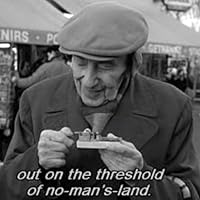
July 12, 2024
Second albums can sometimes be a real pain, for artist and fan alike. If it's not the disappointment of the anticipated (yet still always-depressing-when-it-comes) sophomore slump, it's the dogged, oft-unrewarded, further second-hewing-back of the forest (as with the Talking Heads' More Songs About Buildings and Food, say, or The Clash's Giv'em Enough Rope) in hopes of enlarging a clearing painstakingly opened by all the years of toil that went into the band's path-breaking first LP (The Clash, Talking Heads '77)...
And so only rarely does that Journeyman-like second album, erm, raze that recalcitrant forest altogether, to make way for a gaze, as with Keats's stout Cortez and all his men, upon something truly miraculous, something which really does seem to appear as-if-out-of-Nowhere, as with Amy Winehouse's Back in Black (which abracadabralized a see-through bridge between between jazz-RnB's roots and and those acts who would follow in her train) or with Van Morrison's #2,Astral Weeks (which reveals, as from that peak in Darien, a black monolith in a perfectly circular, wide expanse which was not and surelyu could not be there before—and which could never be returned to, a place simultaneously new and somehow preternatural, sempiternal, self-and-all-else-erasing, sublime.)
None of those analogies will quite do, however, for John Barth's The End of the Road, which is more like, I dunno, Dire Straits' Communiqué ?? —as in a now-largely-ignored, but certainly solid, talent-consolidating second effort, and one which now loiters deep in the back catalogue of a singular voice, awaiting re-appraisal—else oblivion, given that Time is (sings Chrissie Hynde) "the Avenger" indeed. It is the work of one who would really achieve something completely new in outing #3 (Novel: The Sot-Weed Factor / LP: Making Movies).
Unlike that band's frontman, however, Barth has not yet truly encountered his own formal quidditas at this point—Mark Knopfler was already the guitarist he would always be, from the get-go. Here, as in its predecessor and Barth's debut, The Floating Opera, the formal play of metafiction which was soon to come is still entirely absent, and TEOTR seems also to rehash the former's philosophical concerns somewhat—although here, the prior novel's obsession with masks and their forcible removal (the unveiling of self to self to endlessly-discardable self, until some trace of the human is at last possibly, if ambiguously, glimpsed) those oinion-y personas are now replaced with a scorched-earth premise of Jean-Paul Sartre's: that "existence precedes essence", and that humans are nothings until they act, and that after they have done so, they are but the sum of their choices...
But what if one is incapable of acting, or even of choosing? TEOTR asks. What follows from that premise is hardly a novel-of-ideas in the vein of, say a Hermann Hesse or, eek, a Robert Pirsig. No, this narrative comes across as wholly particularized and fully-earned. And while its predecessor displayed that mien which was simultaneously feather-light and deadly earnest, this one somehow feels even lighter (if that is at all possible, but hospitably, swimmingly so for all that, as ever with the novels of...a Kurt Vonnegut: the narrator always makes you feel at home in these environs)—until quite suddenly, and with no going back, the lightness evaporates and it's not earnest, just deadly: everything means nothing until it means everything, too much. The world seems to be all that the case is, until that eggheadishly smug fact/value distinction, something believable only in youth and believed by this particularly callow youth, is forcibly dissolved, without any warning whatsoever by—by life.
A real novel, then, this is (as well as a comparative rarity for a 24-year old—or for anyone). And if you had come to this book before The Floating Opera, or The Sot-Weed Factor, you might even think it a remarkable one, in its own way (the only way to be), and award it a solid "A".
But John Barth's Screamadelica, London Calling, OK Computer, or White Blood Cells is still a few years away from him, waiting patiently to be discovered, like Amy Winehouse's crystaline bridge, to become a testament to that road-otherwise-not-taken, that path towards the monument and witness to its very-own-self, which is in dialogue with the novel's disregarded past, and its possible future.
B+
(3.5*)
And so only rarely does that Journeyman-like second album, erm, raze that recalcitrant forest altogether, to make way for a gaze, as with Keats's stout Cortez and all his men, upon something truly miraculous, something which really does seem to appear as-if-out-of-Nowhere, as with Amy Winehouse's Back in Black (which abracadabralized a see-through bridge between between jazz-RnB's roots and and those acts who would follow in her train) or with Van Morrison's #2,Astral Weeks (which reveals, as from that peak in Darien, a black monolith in a perfectly circular, wide expanse which was not and surelyu could not be there before—and which could never be returned to, a place simultaneously new and somehow preternatural, sempiternal, self-and-all-else-erasing, sublime.)
None of those analogies will quite do, however, for John Barth's The End of the Road, which is more like, I dunno, Dire Straits' Communiqué ?? —as in a now-largely-ignored, but certainly solid, talent-consolidating second effort, and one which now loiters deep in the back catalogue of a singular voice, awaiting re-appraisal—else oblivion, given that Time is (sings Chrissie Hynde) "the Avenger" indeed. It is the work of one who would really achieve something completely new in outing #3 (Novel: The Sot-Weed Factor / LP: Making Movies).
Unlike that band's frontman, however, Barth has not yet truly encountered his own formal quidditas at this point—Mark Knopfler was already the guitarist he would always be, from the get-go. Here, as in its predecessor and Barth's debut, The Floating Opera, the formal play of metafiction which was soon to come is still entirely absent, and TEOTR seems also to rehash the former's philosophical concerns somewhat—although here, the prior novel's obsession with masks and their forcible removal (the unveiling of self to self to endlessly-discardable self, until some trace of the human is at last possibly, if ambiguously, glimpsed) those oinion-y personas are now replaced with a scorched-earth premise of Jean-Paul Sartre's: that "existence precedes essence", and that humans are nothings until they act, and that after they have done so, they are but the sum of their choices...
But what if one is incapable of acting, or even of choosing? TEOTR asks. What follows from that premise is hardly a novel-of-ideas in the vein of, say a Hermann Hesse or, eek, a Robert Pirsig. No, this narrative comes across as wholly particularized and fully-earned. And while its predecessor displayed that mien which was simultaneously feather-light and deadly earnest, this one somehow feels even lighter (if that is at all possible, but hospitably, swimmingly so for all that, as ever with the novels of...a Kurt Vonnegut: the narrator always makes you feel at home in these environs)—until quite suddenly, and with no going back, the lightness evaporates and it's not earnest, just deadly: everything means nothing until it means everything, too much. The world seems to be all that the case is, until that eggheadishly smug fact/value distinction, something believable only in youth and believed by this particularly callow youth, is forcibly dissolved, without any warning whatsoever by—by life.
A real novel, then, this is (as well as a comparative rarity for a 24-year old—or for anyone). And if you had come to this book before The Floating Opera, or The Sot-Weed Factor, you might even think it a remarkable one, in its own way (the only way to be), and award it a solid "A".
But John Barth's Screamadelica, London Calling, OK Computer, or White Blood Cells is still a few years away from him, waiting patiently to be discovered, like Amy Winehouse's crystaline bridge, to become a testament to that road-otherwise-not-taken, that path towards the monument and witness to its very-own-self, which is in dialogue with the novel's disregarded past, and its possible future.
B+
(3.5*)

August 31, 2016
The first quarter of this book was as good as the last was bad. I literally laughed out loud during the first two chapters, which is a state I don't often find myself in while reading. But then my enjoyment started to deteriorate until it reached the bottom with the introduction of THE GUN. Of course all existentialistic novels deal with death in some way or another, sooner or later, however to bring it up just like that, like nothing had happened, with a casual emergance of this silly object that just shows up and occupies all the minds of all the characters, is just too much. The little essence they haven't lost up until this point is gone and all that is left are the maneqines of author's copied philosophical ideas. I always hate when ideas become predominant and make the story itself unimportant and incoherent, yet it is rarely done in such a transparent way.

filmed
January 9, 2015When The People speak, "N.R." listens. This Float which you are experiencing is an Honest Float. There is no cheek and, as Geoff will attest, the tongue is thoroughly chew'd through. On the other hand, I understand that the people (lower case) have already voted to abort this "R"e(re)view. So be it.
So we should take our lead quoting Barth quoting a film critic when that critic declared that while the book ends with an abortion the film is an abortion from beginning to end (durchaus, thoroughly). I don’t think that makes sense. Because an abortion is aorist, not progressive nor enduring through time. But one would assume, the critic being clever, that his(er) intention was for the review reader to pick up upon the assonance of “abortion” with “abomination” and allow the free=mind do the reading. This would either be a good habit or a bad habit for a reader to have. This kind of of associational reading. It’s a really good thing to be in the habit of doing whilst Waking ; but it’s not typically so useful in The Daily World.
At any rate. You’re probably screaming about that up there about how the book ends with an abortion. Well, (aside from saying “screw you”) let me just point out that a) you already know that The End of the Road is a work of “existentialist” fiction and b) all existentialist fictions contain an abortion. Further, in 1958 all abortions (in fiction, in fiction) were traumatic enough (physically, psychically, socially, no matter) such that any fiction which would be somehow representing an abortion would have to center that abortion, either by putting it at the center or at the end. So the only thing I ’ed for you was that the abortion came not at the center.
The other thing about that whole nexus of abortion & existentialist fiction is that it’s structurally analogous to Christian Punk Bands. That is, if you are in a Christian Punk Band, you are obligated to have an anti-abortion song. Here’s one by a band I used to listen to quite hap’ly (I mean of course the band -- hate the song ; it’s like when Zappa comes along and slaps my working-class consciousness with yet another anti-union song. Just cringe.), by
But so then too the question rises about the rhetorical use of ‘abortion’ in a review of a film. It’s really kind of over-the-top? Is it cliche? I mean, aside from there actually being an abortion represented in the film under review, still and all... well, in this case it’s kind of clever. And the clever author (Barth) endorses this particular rhetorical flourish. I mean, it’s not quite as offensive (offending a sense of decency ;; I mean just common average everyday civilized cultured decency) as using ‘rape’ rhetorically. Which can probably be done. But it would likely, at the very least, make you squirm just a little. But the more important question of course is the War Over The Female Body which comes into play when Abortion becomes the token of the type, Ethical Dilemma ; which is about all that existentialist fiction is good for. And in this day and age, is it even very good for that? We have Virtue Ethics, I think, to thank for that -- that ethics can be thought as a way of being in the world rather than about a Choice which can be run through one of several Calculuses leading to a Decision of Action. That approach of course falsifies entirely our experience of actually bumping around in the world.
So where was I? Abortion. Right. To get us up to speed, here’s some stats -- End of the Road is John Barth’s second novel ; so his first set of twins I call pre-Barth, not really being that Barth we know and love, but still pretty damn good. It is the only Barth=book of which a film has been made. For longtime it was unavailable to me, but thanks to the Corporate Entity we give money to, Netflix, I’ve seen it. It’s pretty bad. It’s got some nut=so kind of stuff in it that was kind of common as the typical anti-establishment kind of aesthetic of the time I guess, because there was something (superficial, for sure) resembling that one made of that one Gore Vidal book (which was equally bad?). Anyways, there’s some big names in here -- Stacy Keach, Harris Yulin, James Earl Jones (watch it for his thing alone!), Dorothy Tristan (not a big name to me -- ever hear of her? she’s the only female in this here film --; which kind of makes The Whole Abortion Dilemma little more than.... well, something or other, because clearly the Moral Dilemma is still a Male Dilemma in 1958/1970 ; it is the Female’s Role to merely -- that really is a spoiler. I understand.). At any rate, the movie was released in 1970 thusly relocated more solidly into the 1960’s than the book which could hardly have forescene the coming decade, although it probably kind of did, much like all fiction -- good fiction -- is written several years or several decades before its time. (do I need another close=parenthesis here?).
So. In conclusion and wrapping this thing up by saying again not what was said above but what has been said before by Your Humble Film Criticalist, that The Best Reason to read Barth’s first set of Twin Novels is that they will prepare you for the Absolutely Wrawkus GoodTime which is his LETTERS. For which, the Not=Reading of, life is too short.

December 24, 2018
عالی بود این کتاب. هم شیرین، هم جذاب، هم عمیق.
داستان مردی به نام جیک هورنر که دچار اختلال بیحرکتی شده و بعد از دو سال درمان توسط یک پزشک، به توصیه دکترش در یک شهر شلوغ درخواست شغل تدریس میده. توی جلسه مصاحبه موفق میشه و بعد از جلسه مصاحبه، یکی از مدرسهای دیگه به اسم جو ازش دعوت میکنه برای شام بره به خونش. قبول میکنه، ولی چون آدم انزواطلب و افسرده ای هست، دکترش هم توصیه کرده با کسی رابطه دوستانه بلندمدت یا عاشقانه نداشته باشه، شب قبل از رفتن پشیمون میشه و کنسل میکنه. به هر حال با اصرار جو و همسرش رنی، بالاخره روابط ایجاد میشه، صمیمی میشند و ابعاد چند شخصیتی جیک خودش رو نشون میده. شبهای زیادی جو، جیک و رنی درباره موضوعات عمیقی بحث میکنند (این بحثها اصلا برای خواننده خسته کننده نیست) و در نهایت طی یک حادثه جیک و رنی با هم رابطه جنسی پیدا میکنند.
از اینجا به بعد داستان خیلی تاثیرگذار و جالب میشه.
گاهی این سه نفر تبدیل به نماد خدا، شیطان و انسان میشند، گاهی درباره مسایل عمیق زندگی حرف میزنند، گاهی درباره ارزشها و مطلق و غیرمطلق و خلاصه هرچیزی که فکرش رو بکنید.
البته در تمام زوایای این کتاب، شوخ طبعی آمریکایی همیشه وجود داشت.
به نظرم در حق این کتاب ظلم شده. میتونست شونه به شونه آثار نویسنده هایی مثل ژان پل سارتر باشه.
داستان مردی به نام جیک هورنر که دچار اختلال بیحرکتی شده و بعد از دو سال درمان توسط یک پزشک، به توصیه دکترش در یک شهر شلوغ درخواست شغل تدریس میده. توی جلسه مصاحبه موفق میشه و بعد از جلسه مصاحبه، یکی از مدرسهای دیگه به اسم جو ازش دعوت میکنه برای شام بره به خونش. قبول میکنه، ولی چون آدم انزواطلب و افسرده ای هست، دکترش هم توصیه کرده با کسی رابطه دوستانه بلندمدت یا عاشقانه نداشته باشه، شب قبل از رفتن پشیمون میشه و کنسل میکنه. به هر حال با اصرار جو و همسرش رنی، بالاخره روابط ایجاد میشه، صمیمی میشند و ابعاد چند شخصیتی جیک خودش رو نشون میده. شبهای زیادی جو، جیک و رنی درباره موضوعات عمیقی بحث میکنند (این بحثها اصلا برای خواننده خسته کننده نیست) و در نهایت طی یک حادثه جیک و رنی با هم رابطه جنسی پیدا میکنند.
از اینجا به بعد داستان خیلی تاثیرگذار و جالب میشه.
گاهی این سه نفر تبدیل به نماد خدا، شیطان و انسان میشند، گاهی درباره مسایل عمیق زندگی حرف میزنند، گاهی درباره ارزشها و مطلق و غیرمطلق و خلاصه هرچیزی که فکرش رو بکنید.
البته در تمام زوایای این کتاب، شوخ طبعی آمریکایی همیشه وجود داشت.
به نظرم در حق این کتاب ظلم شده. میتونست شونه به شونه آثار نویسنده هایی مثل ژان پل سارتر باشه.

February 14, 2017
Senryu Review:
Does ‘existential’
have four syllables or five?
How I wish I knew.
Does ‘existential’
have four syllables or five?
How I wish I knew.

July 8, 2014
When Existentialism is not a Humanism anymore
I’m still not sure whether it was a good thing to read The End of the Road immediately after The Floating Opera, even though they are often discussed together and the author himself decided to put them in one volume. Of course, there are some reasons for this decision: not only both novels illustrate the first stage in John Barth’s creation, but they have also some similar themes, motives and structure – existentialism, nihilism, suicide, adulterous triangle etc.
However, the main difference, stressed by the author too in his useful Prologue (I admit using the adjective “useful” in a somehow deprecatory way for the readiness with which he offered his lecture key frustrated me a bit), is the change of tonality, difference that makes (in Barth’s words) “a nihilist comedy” of the first novel and “a nihilist catastrophe” of the second; moreover, it leads to the interpretation of a second theme (also generously revealed in the Prologue) – villainy (the author admits he was obsessed at the time with Shakespeare’s statement, “A man may smile and smile and be a villain.”). Both Todd Andrews and Jacob Horner’s villainy seems to be the result of some fundamental dissonance with humanity, and in the end they successfully severe (to employ Sartre’s terminology) existence from humanism, denying themselves as human beings due to their eerie quality of seeing the two sides of the coin at the same time, thus answering two of the main questions raised by Camus in his oeuvre: is suicide the only important philosophical theme and is human life so meaningless that the only weapon against it is supreme indifference? The first question, answered in The Floating Opera, is in Barth’s view, a variant of the second: neither suicide nor going on living is of any significance whatsoever in the great scheme of things. And the second one, with its own empty Meursault in leading role, as the embodiment of the absurd, takes estrangement to its outer limits.
Interesting enough isn’t it? However, after the delightful and delighted reading of The Floating Opera, The End of the Road, orphan, in great measure, of the black humor that made the first so digestible, was sometimes intolerably grim, although here there is, again, the ironic interpretation of some Existentialist themes and values. One if the bearers is the ultra rationalist Joe Morgan, convinced that he has managed to dictate the meaning of his own life by creating his own values, values that may be not intrinsic but are nonetheless important (I remember Todd in the other novel discovering too the lack of intrinsic value of life, but with the following thought that because of this life itself was meaningless):
Unfortunately, Morgan lives in a fool’s paradise, whose design is ready to be destroyed by one of the absurdities of the world, Jacob Horner, whom Joe befriended because he read in his detachment a deeper meaning. In fact, Horner is incapable of truly reacting to the outside world and he conducts his actions by precepts he learned but did not fully understand. He diagnosed himself as suffering of “cosmopsis”, which physically manifests sometimes as a general paralysis. During one of these crises he met the Doctor, an eccentric individual who leads a shady practice in somehow secret surroundings and who wants to treat him because of medical curiosity. The Doctor, another adept of the Existentialism, believes in the theory that, given the absurdity of life the only way of coping with it is to become aware of and find the best way to handle it. And the way he recommends is Mythotherapy:
Given that, unlike literature, in life every man is the hero of his own story, he has the power to give secondary roles to those around him, an action the Doctor calls myth-making. All relationships are based on the roles assumed and the importance of this role distribution depends on the impact they have for your ego. However, when the circumstances change the only way to survive is to promptly assign other roles in order not to lose themselves. The Morgans’ tragedy begins when Rennie, fascinated by the non-entity of Jacob, is not able to follow the scenario she has forced herself to live her life with anymore. Her incapacity to find a new mask to replace the old, rendered futile, ultimately leads to her destruction:
And the agent of destruction is Jake Horner not because he wants it, on the contrary, he tries, in his amoral way, to prevent and/ or repair it, but because of his habit to always change not only his masks, but also those of the others. His “mytoplastic razors” cut in every direction because he is unable to follow only one script:
I think the “mythotherapy” was the concept I was most fascinated with in this novel. I would have also liked if its first title, What To Do Until the Doctor Comes, were not changed by the editor (who feared it could be mistaken for a first aid treatise). The unabated sarcasm of the abandoned title would have made it by far more appropriate a name for this weird book, which I still don’t know how I feel about.
I’m still not sure whether it was a good thing to read The End of the Road immediately after The Floating Opera, even though they are often discussed together and the author himself decided to put them in one volume. Of course, there are some reasons for this decision: not only both novels illustrate the first stage in John Barth’s creation, but they have also some similar themes, motives and structure – existentialism, nihilism, suicide, adulterous triangle etc.
However, the main difference, stressed by the author too in his useful Prologue (I admit using the adjective “useful” in a somehow deprecatory way for the readiness with which he offered his lecture key frustrated me a bit), is the change of tonality, difference that makes (in Barth’s words) “a nihilist comedy” of the first novel and “a nihilist catastrophe” of the second; moreover, it leads to the interpretation of a second theme (also generously revealed in the Prologue) – villainy (the author admits he was obsessed at the time with Shakespeare’s statement, “A man may smile and smile and be a villain.”). Both Todd Andrews and Jacob Horner’s villainy seems to be the result of some fundamental dissonance with humanity, and in the end they successfully severe (to employ Sartre’s terminology) existence from humanism, denying themselves as human beings due to their eerie quality of seeing the two sides of the coin at the same time, thus answering two of the main questions raised by Camus in his oeuvre: is suicide the only important philosophical theme and is human life so meaningless that the only weapon against it is supreme indifference? The first question, answered in The Floating Opera, is in Barth’s view, a variant of the second: neither suicide nor going on living is of any significance whatsoever in the great scheme of things. And the second one, with its own empty Meursault in leading role, as the embodiment of the absurd, takes estrangement to its outer limits.
Interesting enough isn’t it? However, after the delightful and delighted reading of The Floating Opera, The End of the Road, orphan, in great measure, of the black humor that made the first so digestible, was sometimes intolerably grim, although here there is, again, the ironic interpretation of some Existentialist themes and values. One if the bearers is the ultra rationalist Joe Morgan, convinced that he has managed to dictate the meaning of his own life by creating his own values, values that may be not intrinsic but are nonetheless important (I remember Todd in the other novel discovering too the lack of intrinsic value of life, but with the following thought that because of this life itself was meaningless):
“When Rennie and I were married we understood that neither of us wanted to make a permanent thing of it if we couldn’t respect each other in every way. Certainly I’m not sold on marriage-under-any-circumstances and I’m sure Rennie’s not either. There’s nothing intrinsically valuable about marriage.”
“Seems to me you put a pretty high value on your marriage,” I suggested. (…)
“Now you’re making the same error Rennie made a while ago, before supper: the fallacy that because a value isn’t intrinsic, it somehow isn’t real.”
Unfortunately, Morgan lives in a fool’s paradise, whose design is ready to be destroyed by one of the absurdities of the world, Jacob Horner, whom Joe befriended because he read in his detachment a deeper meaning. In fact, Horner is incapable of truly reacting to the outside world and he conducts his actions by precepts he learned but did not fully understand. He diagnosed himself as suffering of “cosmopsis”, which physically manifests sometimes as a general paralysis. During one of these crises he met the Doctor, an eccentric individual who leads a shady practice in somehow secret surroundings and who wants to treat him because of medical curiosity. The Doctor, another adept of the Existentialism, believes in the theory that, given the absurdity of life the only way of coping with it is to become aware of and find the best way to handle it. And the way he recommends is Mythotherapy:
“Mythotherapy is based on two assumptions: that human existence precedes human essence, if either of the two terms really signifies anything; and that a man is free not only to choose his own essence but to change it at will.”
Given that, unlike literature, in life every man is the hero of his own story, he has the power to give secondary roles to those around him, an action the Doctor calls myth-making. All relationships are based on the roles assumed and the importance of this role distribution depends on the impact they have for your ego. However, when the circumstances change the only way to survive is to promptly assign other roles in order not to lose themselves. The Morgans’ tragedy begins when Rennie, fascinated by the non-entity of Jacob, is not able to follow the scenario she has forced herself to live her life with anymore. Her incapacity to find a new mask to replace the old, rendered futile, ultimately leads to her destruction:
“If the new situation is too overpowering to ignore, and they can’t find a mask to meet it with, they may become schizophrenic – a last-resort mask – or simply shattered. All questions of integrity involve this consideration, because a man’s integrity consists in being faithful to the script he’s written for himself.”
And the agent of destruction is Jake Horner not because he wants it, on the contrary, he tries, in his amoral way, to prevent and/ or repair it, but because of his habit to always change not only his masks, but also those of the others. His “mytoplastic razors” cut in every direction because he is unable to follow only one script:
One of the things I did not see fit to tell Joe Morgan (for to do so would have been to testify further against myself) is that it was never very much of a chore for me, at various times, to maintain with perfect equal unenthusiasm contradictory, or at least polarized, opinions at once on a given subject. I did so too easily, perhaps, for my own ultimate mobility. Thus it seemed to me that the Doctor was insane, and that he was profound; that Joe was brilliant and also absurd; that Rennie was strong and weak; and that Jacob Horner – owl, peacock, chameleon, donkey and popinjay, fugitive from a medieval bestiary – was at the same time giant and dwarf, plenum and vacuum, and admirable and contemptible. Had I explained this to Joe he’d have added it to its store of evidence that I did not exist: my own feeling was that it was and was not such evidence.
I think the “mythotherapy” was the concept I was most fascinated with in this novel. I would have also liked if its first title, What To Do Until the Doctor Comes, were not changed by the editor (who feared it could be mistaken for a first aid treatise). The unabated sarcasm of the abandoned title would have made it by far more appropriate a name for this weird book, which I still don’t know how I feel about.

April 1, 2015
I first read this awful book when I was sixteen and Cole Ingersoll loaned me an old paperback copy which I treasured and tore through and then loaned to someone else, forgetting all about it till my twenties when I stumbled across another old well-worn edition in some little used bookstore in northeast Florida and thought, "Isn't this that awful book?" And so on and so forth, every few years or so I come upon a copy and remember how brutal it is, and wonder if it's still as brutal, and pick it up and reread it through the poor unsettled wide-eyed palimpsest of all my past and former selves, each sef certain the next self won't be able to enjoy this hard little spiteful little sorry little story again, and then thinking back on all our youth and all our idiocy and feeling sentimental towards it until remembering just precisely how exactly grotesque, turning our backs again on it all gently if not to say kindly if not to say sorrowfully, till the next time.

August 21, 2025
• John Barth nasce gemello ed è un dato biografico che diventa una chiave di lettura, la sua narrativa in effetti si muove per coppie, come se ogni romanzo avesse un fratello, un doppio, un’immagine riflessa da un lato simile e dall’altro deformata.
• La fine della strada e L’opera galleggiante sono una di queste coppie e ho voluto perciò leggerli uno di seguito all'altro. Due esperimenti complementari, due variazioni dello stesso impulso creativo.
• L’opera galleggiante esplode in una centrifuga di voci, intrighi e parodia, La fine della strada implode in un silenzio denso e claustrofobico. Il primo è moltiplicazione mentre il secondo è prospettiva unica.
• Entrambi mettono un personaggio di fronte a una situazione limite ma lo trattano come due registi diversi che girano la stessa scena: nel primo caso la macchina da presa gira intorno, scatta da angoli diversi, improvvisa e nel secondo è fissa, frontale, implacabile.
• Il protagonista di La fine della strada soffre di una paralisi decisionale che lo rende spettatore della propria vita. Barth lo piazza in una cornice ordinaria fatta di una piccola scuola, di una coppia di amici e di conversazioni quotidiane. Ne L’opera galleggiante il caos narrativo è una risorsa, qui ogni deviazione è un pericolo, il romanzo infatti è costruito come una serie di mosse inevitabili verso un esito che ci si aspetta, o quantomeno non sorprende, ma comunque atterrisce per la sua logica interna.
• La differenza di tono è netta. L’opera galleggiante gioca con il linguaggio, si concede ironie a più livelli, mentre La fine della strada riduce l’umorismo a un sarcasmo nero e preciso.
• Consiglio di leggere i due romanzi in sequenza perché sono in dialogo tra loro, opposti ma complementari.
• La fine della strada e L’opera galleggiante sono una di queste coppie e ho voluto perciò leggerli uno di seguito all'altro. Due esperimenti complementari, due variazioni dello stesso impulso creativo.
• L’opera galleggiante esplode in una centrifuga di voci, intrighi e parodia, La fine della strada implode in un silenzio denso e claustrofobico. Il primo è moltiplicazione mentre il secondo è prospettiva unica.
• Entrambi mettono un personaggio di fronte a una situazione limite ma lo trattano come due registi diversi che girano la stessa scena: nel primo caso la macchina da presa gira intorno, scatta da angoli diversi, improvvisa e nel secondo è fissa, frontale, implacabile.
• Il protagonista di La fine della strada soffre di una paralisi decisionale che lo rende spettatore della propria vita. Barth lo piazza in una cornice ordinaria fatta di una piccola scuola, di una coppia di amici e di conversazioni quotidiane. Ne L’opera galleggiante il caos narrativo è una risorsa, qui ogni deviazione è un pericolo, il romanzo infatti è costruito come una serie di mosse inevitabili verso un esito che ci si aspetta, o quantomeno non sorprende, ma comunque atterrisce per la sua logica interna.
• La differenza di tono è netta. L’opera galleggiante gioca con il linguaggio, si concede ironie a più livelli, mentre La fine della strada riduce l’umorismo a un sarcasmo nero e preciso.
• Consiglio di leggere i due romanzi in sequenza perché sono in dialogo tra loro, opposti ma complementari.

July 10, 2022
“Animali soli! Per quanto uno cerchi di mettere tutto se stesso in un motivo, o in una decisione, o in una filosofia, ne resta sempre fuori un pezzetto che dubita e si sente solo.”
La prima metà mi è piaciuta molto, da cinque stelle, se vogliamo. Purtroppo non ho amato la scelta di dedicare tutta la seconda parte al melodrammatico e poco credibile ménage a trois tra i personaggi.
La prima metà mi è piaciuta molto, da cinque stelle, se vogliamo. Purtroppo non ho amato la scelta di dedicare tutta la seconda parte al melodrammatico e poco credibile ménage a trois tra i personaggi.
October 27, 2017
Barth breaks your fucking heart and, for me, writes his masterpiece here. Yes, it is a lonely place to be.

Read
October 27, 2021Before a kid from Maryland named John Barth got lost in the funhouse of what later became known as "postmodernism," he was a regional writer of finely honed, mid-century realist prose, often blackly funny, and his work was not too different from what John Updike was doing one state above. His first novel, The Floating Opera, was pretty mediocre, but it showed promise, and in The End of the Road, his technique is refined. It's a small town on the Eastern Shore, in the odd transition from the '50s to the '60s, with a recent graduate getting invited in for... a drink... by a total MILF at the beginning, the transition in popular psychology from the hyper-bourgeois Freudian analysis of men in gray flannel suits to Synanon and stress tests, a whole lot of wondering about what this "segregation" thing is about, and some coat hangers in back alleys. Altogether, a volume that demands rediscovery.

October 17, 2020
I loved this short book so much that I can’t quite believe I’ve not yet read any other Barth books. Its philosophical intelligence reminds me of a Murdoch novel.
April 28, 2018
This book is funny, sad and infuriating, sometimes within the same paragraph. I could see why a reader would consider it a great book, a classic that has and will stand the test of time. I could also see why someone (especially a woman) would consider it sexist tripe that is properly consigned to a time of attitudes in society and in literature that's better left dead.
I think overall it's very good. Not great, though the language sparkles with wit many times, and the author deals with some big issues. My objection to the book is that the two men who are the main characters are so repulsive that nobody would actually like them in real life. I find it impossible to believe that Jacob, a mean neurotic, could pick up a woman on the beach or convince a college to hire him sort of out of the blue. And I find it equally hard that Joe, an arrogant and pompous historian, could control the life of his wife so completely (even granting that the book takes place in the early 1950s when women were much more subservient).
Some of what we consider abhorrent behavior as readers today also was considered abhorrent by Barth when he wrote the book, So I'm guessing that his purpose was to expose the absurdity and cruelty of the men and their philosophies. But I could also agree with someone who has a very different interpretation. (Ironically, the problem for the narrator Jacob is that he can see every side of a debate, and that has left him paralyzed both in life decisions and literally paralyzed occasionally.) Let's put it this way: If you read this as a book group of mixed men and women, you'd have some serious disagreements about the meaning of this book.
The plot goes something like this. Jacob Horner, a smart guy who has debilitating social anxieties, takes a job at a small rural college on the advice of his therapist. (His therapist is a nut, and that's an interesting side story.) He is befriended by the smartest, most ambitious professor at the school, Joe, who sees a fellow intellectual. Jack introduces him to his wife, Rennie. The three have a lot of intellectual sparring, and while they profess friendship, it's definitely a warped friendship. In a moment of weakness, Rennie and Jacob sleep together, and as a result all of Joe's distant philosophizing about life crumbles. And tragedy occurs in the end for all.
Joe, the narrator, is a piece of work. He is smart, or at least pseudo-smart, able to mention Greek mythology or to conjugate a sentence at the drop of a hat. He's very inwardly focused, which isn't surprising given his lack of friends. He muses endlessly about what is real in life, and what are the masks we put on for people. In Joe he meets a kindred spirit, who also wants to remove society's masks. It's Joe who pursues Jacob, not the other way around, as Jacob would rather be left to his own strange existence. But they deeply enjoy the arguments of logic and wit. (And they are done very well, with crisp language that nonetheless feels real, even if it's more erudite than a person can usually be in actual conversation.)
Rennie is a bit of a cipher, intimidated by her husband's brilliance and also by one violent episode in which he punched her in the jaw for being too sentimental. That reinforced the idea, according to Joe, that the marriage is one of mutuality and respect -- not subservience -- because he wouldn't have hit her if it didn't mean so much to him. This, of course, is exactly the opposite of how normal people would see violence. We would see it as a lack of respect, not as an expression of equality. This is one of the ways that Joe is actually a warped character, and the author is showing us how deeply disturbing his philosophy really is. Jacob sees through this aspect of Joe, and he teases Joe about it, and he tells Rennie that Joe is a pompous fool. Remember that Jacob, for his own reasons, is pretty much like Joe -- doesn't care what normal people think or do, and can't help himself from being honest. (In fact, at one point after hearing Joe's story, he punches a woman in the face to show her that he respects her, and, predictably, she responds by hugging him and asking him to sleep with her.)
Anyway, without getting too convoluted about it, the book has a series of back-and-forths in which this philosophy of deep honesty is discussed and put into action -- with dire consequences. I think that's the key to the book, both when it was written and also for a contemporary reader. The idea that nothing has intrinsic value is the core of the philosophy, but that idea doesn't work when real people face real consequences for their actions. (Kind of like idiots today who don't believe in global warming, but who will share the dire consequences with the rest of us.) They fall back on cultural norms for morality, even as they profess to know that those norms are just ideas constructed out of thin air. This is especially the case with Joe, who says he is above all mundane considerations, except when he's shown to just be your typical bullying, jealous husband. And for Jacob, he doesn't care about anyone, except when he sees the wreck he's made of Rennie's life, he literally runs around like a crazy man for several days and humbles himself to ask everyone he knows for favors in order to help her. Sadly, this could be seen as a breakthrough for Jacob, a road to his recovery, but instead it's just fruitless effort that leaves him exhausted.
Ultimately, this is a very sad book. It's a relic of its times in many ways -- takes place in about 1962 -- segregation in Maryland (Jacob's doctor is black so he can't actually advertise as a doctor); sexism in the treatment of Rennie and Jacob's leering at other women in the book; lack of abortion services; and so on. But I think even when it was written, the author's point was to show the evils of those ways of thinking and acting.
I think overall it's very good. Not great, though the language sparkles with wit many times, and the author deals with some big issues. My objection to the book is that the two men who are the main characters are so repulsive that nobody would actually like them in real life. I find it impossible to believe that Jacob, a mean neurotic, could pick up a woman on the beach or convince a college to hire him sort of out of the blue. And I find it equally hard that Joe, an arrogant and pompous historian, could control the life of his wife so completely (even granting that the book takes place in the early 1950s when women were much more subservient).
Some of what we consider abhorrent behavior as readers today also was considered abhorrent by Barth when he wrote the book, So I'm guessing that his purpose was to expose the absurdity and cruelty of the men and their philosophies. But I could also agree with someone who has a very different interpretation. (Ironically, the problem for the narrator Jacob is that he can see every side of a debate, and that has left him paralyzed both in life decisions and literally paralyzed occasionally.) Let's put it this way: If you read this as a book group of mixed men and women, you'd have some serious disagreements about the meaning of this book.
The plot goes something like this. Jacob Horner, a smart guy who has debilitating social anxieties, takes a job at a small rural college on the advice of his therapist. (His therapist is a nut, and that's an interesting side story.) He is befriended by the smartest, most ambitious professor at the school, Joe, who sees a fellow intellectual. Jack introduces him to his wife, Rennie. The three have a lot of intellectual sparring, and while they profess friendship, it's definitely a warped friendship. In a moment of weakness, Rennie and Jacob sleep together, and as a result all of Joe's distant philosophizing about life crumbles. And tragedy occurs in the end for all.
Joe, the narrator, is a piece of work. He is smart, or at least pseudo-smart, able to mention Greek mythology or to conjugate a sentence at the drop of a hat. He's very inwardly focused, which isn't surprising given his lack of friends. He muses endlessly about what is real in life, and what are the masks we put on for people. In Joe he meets a kindred spirit, who also wants to remove society's masks. It's Joe who pursues Jacob, not the other way around, as Jacob would rather be left to his own strange existence. But they deeply enjoy the arguments of logic and wit. (And they are done very well, with crisp language that nonetheless feels real, even if it's more erudite than a person can usually be in actual conversation.)
Rennie is a bit of a cipher, intimidated by her husband's brilliance and also by one violent episode in which he punched her in the jaw for being too sentimental. That reinforced the idea, according to Joe, that the marriage is one of mutuality and respect -- not subservience -- because he wouldn't have hit her if it didn't mean so much to him. This, of course, is exactly the opposite of how normal people would see violence. We would see it as a lack of respect, not as an expression of equality. This is one of the ways that Joe is actually a warped character, and the author is showing us how deeply disturbing his philosophy really is. Jacob sees through this aspect of Joe, and he teases Joe about it, and he tells Rennie that Joe is a pompous fool. Remember that Jacob, for his own reasons, is pretty much like Joe -- doesn't care what normal people think or do, and can't help himself from being honest. (In fact, at one point after hearing Joe's story, he punches a woman in the face to show her that he respects her, and, predictably, she responds by hugging him and asking him to sleep with her.)
Anyway, without getting too convoluted about it, the book has a series of back-and-forths in which this philosophy of deep honesty is discussed and put into action -- with dire consequences. I think that's the key to the book, both when it was written and also for a contemporary reader. The idea that nothing has intrinsic value is the core of the philosophy, but that idea doesn't work when real people face real consequences for their actions. (Kind of like idiots today who don't believe in global warming, but who will share the dire consequences with the rest of us.) They fall back on cultural norms for morality, even as they profess to know that those norms are just ideas constructed out of thin air. This is especially the case with Joe, who says he is above all mundane considerations, except when he's shown to just be your typical bullying, jealous husband. And for Jacob, he doesn't care about anyone, except when he sees the wreck he's made of Rennie's life, he literally runs around like a crazy man for several days and humbles himself to ask everyone he knows for favors in order to help her. Sadly, this could be seen as a breakthrough for Jacob, a road to his recovery, but instead it's just fruitless effort that leaves him exhausted.
Ultimately, this is a very sad book. It's a relic of its times in many ways -- takes place in about 1962 -- segregation in Maryland (Jacob's doctor is black so he can't actually advertise as a doctor); sexism in the treatment of Rennie and Jacob's leering at other women in the book; lack of abortion services; and so on. But I think even when it was written, the author's point was to show the evils of those ways of thinking and acting.

November 15, 2020
Scritto nello stesso anno di L'Opera Galleggiante anche questo in soli tre mesi, Barth dimostra al mondo di essere un talento disumano e prolifico. Quando ci ripenso stento a crederci, ha scritto un capolavoro e un ottimo libro nello stesso anno? In sei mesi!? Meglio abbandonare tutte le mie ambizioni letterarie qui e ora e andare a spolverare le poltrone di un gigante come John Barth.
Il libro prosegue le tematiche del precedente, diventando così una sorta di seguito, meglio definibile come libro gemello. Le due storie in comune hanno la presenza di un ménàge à trois che fa evolvere i personaggi, mettendoli in una condizione che li porta a dimostrare veramente la loro natura.
Barth riprende il suo discorso sull'incoerenza, sulla plasticità dell'identità e scava a fondo attraverso le voci di personaggi come il "Dottore" e Joe Morgan, che sono i pilastri sui quali si sviluppano le identità degli altri personaggi. Questo scavare a cosa porta? A una soluzione? Alla considerazione che la vita non è altro che un incespicante avanzare verso l'assurdo e che siccome nulla ha senso vivere o morire non fa differenza? O forse che i valori in cui crediamo più sono labili meno hanno senso e più hanno senso più sono assoluti quindi anche aberranti quando la posta in gioco è più alta?
Insomma, leggere questo libro è un'esperienza su più livello, che funziona al 99%, qualche stortura verso la fine credo che ci sia ma credo di averne solo intuito l'assenza senza afferrarla del tutto.
L'Opera Galleggiante è un capolavoro, questo invece è un libro di prima categoria. Vale la pena fare un confronto? Forse sì, forse invece no, che importa se nulla ha valore intrinseco e ciò che ci muove forse, dopotutto, è solo un mix casuale e inintelligibile di razionale e irrazionale?
Il libro prosegue le tematiche del precedente, diventando così una sorta di seguito, meglio definibile come libro gemello. Le due storie in comune hanno la presenza di un ménàge à trois che fa evolvere i personaggi, mettendoli in una condizione che li porta a dimostrare veramente la loro natura.
Barth riprende il suo discorso sull'incoerenza, sulla plasticità dell'identità e scava a fondo attraverso le voci di personaggi come il "Dottore" e Joe Morgan, che sono i pilastri sui quali si sviluppano le identità degli altri personaggi. Questo scavare a cosa porta? A una soluzione? Alla considerazione che la vita non è altro che un incespicante avanzare verso l'assurdo e che siccome nulla ha senso vivere o morire non fa differenza? O forse che i valori in cui crediamo più sono labili meno hanno senso e più hanno senso più sono assoluti quindi anche aberranti quando la posta in gioco è più alta?
Insomma, leggere questo libro è un'esperienza su più livello, che funziona al 99%, qualche stortura verso la fine credo che ci sia ma credo di averne solo intuito l'assenza senza afferrarla del tutto.
L'Opera Galleggiante è un capolavoro, questo invece è un libro di prima categoria. Vale la pena fare un confronto? Forse sì, forse invece no, che importa se nulla ha valore intrinseco e ciò che ci muove forse, dopotutto, è solo un mix casuale e inintelligibile di razionale e irrazionale?

August 24, 2017
Qui si narra dell'incontro dirompente tra due opposti, “l'Irrazionale o il Non-Essere” qual è per autodefinizione il narratore, l'insegnante Jacob Horner, e “la Ragione o l'Essere” quale si rivela, con radicalità estrema di pensiero e azione, il suo novello collega di lavoro Joe Morgan: presa in mezzo, sarà la moglie di quest'ultimo, Rennie, a farne le spese... Il romanzo parte in sordina, con rivolti chiaramente paradossali che si impongono via via, quindi procede in crescendo e sfocia in un finale esplosivo. Datata 1958, un'altra ottima prova, dopo l'esordio con “L'opera galleggiante” (1956), dello scrittore - nonché filosofo e psicologo - John Barth.

February 4, 2026
I struggled a bit with the tone and sexism of this book but overall the writing was good enough. I enjoyed the other Barth I have read in the past more than this one.

Read
November 13, 2008In 1951, on the day after his 28th birthday, with his oral exams passed but his master's thesis not even begun, Jacob Horner finds himself in a Baltimore train station, asking the ticket agent where he can go for $30. Cincinnati, Ohio? Crestline, Dayton or Lima, Ohio? He retreats to a bench to make up his mind, but there realizes he has no reason to go anywhere -- not to Ohio, not even back to his apartment. "I simply ran out of motives, as a car runs out of gas," he says. "There was no reason to do anything. My eyes ... were sightless, gazing on eternity, fixed on ultimacy, and when that is the case there is no reason to do anything--even to change the focus of one's eyes."
The following day, a doctor passes Jacob, noting his paralysis, and asks that he return with him to his Remobilization Farm for a course of therapy that includes studying the World Almanac, finding a teaching job at a university, and various other tasks.
"If you aren't courageous enough to hire prostitutes," the doctor says, "then take up masturbation temporarily. Above all, act impulsively: don't let yourself get stuck between alternatives, or you're lost. You're not that strong. If the alternatives are side by side, choose the one on the left; if they're consecutive in time, choose the earlier. If neither of these applies, choose the alternative whose name begins with the earlier letter of the alphabet. These are the principles of Sinistrality, Antecedence, and Alphabetical Priority--there are others, and they're arbitrary, but useful. Good-by."
An existential melodrama of sorts, with a winning and self-conscious narrator, this novel takes all 'isms to the end of the road and shows what happens when you don't see gray areas and acknowledge paradoxes in an absurd world.
In a word, great.
The following day, a doctor passes Jacob, noting his paralysis, and asks that he return with him to his Remobilization Farm for a course of therapy that includes studying the World Almanac, finding a teaching job at a university, and various other tasks.
"If you aren't courageous enough to hire prostitutes," the doctor says, "then take up masturbation temporarily. Above all, act impulsively: don't let yourself get stuck between alternatives, or you're lost. You're not that strong. If the alternatives are side by side, choose the one on the left; if they're consecutive in time, choose the earlier. If neither of these applies, choose the alternative whose name begins with the earlier letter of the alphabet. These are the principles of Sinistrality, Antecedence, and Alphabetical Priority--there are others, and they're arbitrary, but useful. Good-by."
An existential melodrama of sorts, with a winning and self-conscious narrator, this novel takes all 'isms to the end of the road and shows what happens when you don't see gray areas and acknowledge paradoxes in an absurd world.
In a word, great.

September 1, 2017
Un tipico triangolo amoroso sullo sfondo di una cittadina universitaria della East Coast americana è il protagonista del mio primo incontro con John Barth. Un lui, Mister Morgan, inflessibile e autoritario, una lei, Miss Morgan, sciatta e (apparentemente) legata al marito come lo è una striscia di scotch a un pezzetto di carta, e infine lui, il terzo incomodo: Jacob Horner, l'antieore più antieroe, fastidioso, irritante, disfattista, che io abbia mai incontrato nelle mie letture. Un ignavo, che fatica a prendere una scelta, che si nasconde dietro al nulla, che non ha mai un'opione su nulla, che non sa mai cosa fare. All'inizio del libro Jacob Horner viene rinvenuto da uno psicologo (che finirà per diventare il suo alter-ego grottesco) in un parco, inspiegabilmente incapace di muoversi: una paralisi fisica che è specchio di una paralisi esistenziale, di un blocco emotivo e di un'assenza caratteriale. Il romanzo è principalmente la storia dell'infiltrazione di Jacob nella coppia Morgan, con un tragico epilogo che ci ricorderà, per il tema trattato, lo spendido Revolutionary Road di Richard Yates. Solo che, per i miei gusti, qui siamo lontanissimi dal capolavoro di Yates: lo spunto per una vicenda interessante (e più che mai realistica) c'è ma per quasi tutto il libro i personaggi sembrano perdersi in pomposi dialoghi retorici e pesanti speculazioni vicine al filosofico che stridono un po' con la semplicità e il realismo della storia raccontata...e che alla fine rendono il romanzo poco leggibile. Peccato. Comunque più che sufficente.

September 7, 2020
My father loaned me this book, saying it had a strong impact on him when he read it in his youth. I wouldn't recommend this book to everyone and I'm not even sure I consider this a five-star text, but it was an extremely interesting read. It felt extremely of the time of its setting (1953, though it was published in 1969), especially in its treatment of women and the politics of marriage. It felt like a relic of the past but also reminded me of a younger and more stubborn version of myself who might have believed more in trying to live consistently by a philosophy that stopped serving me when it encountered the messy circumstances of life. This is a dark and tragic story in which all three main characters were culpable for their own destruction, whether by being too self-serious, refusing to stand up for themselves, or to practice real empathy for each other, and there's something magnetic about watching everyone involved pen a mutual destruction that doesn't seem foregone until you get to the end. Life has a funny way of carrying the weight of inevitability when you don't know how to get yourself out of something, but living and learning can take you far into living and acting more compassionately. A strange, spiraling, and magnetic read, all in all.

August 30, 2023
Although Barth’s 1958 campus novel is classified as a realist work, its realism is unstable, proto po-mo, both cartoonish and menacing, with absurdist jabs at commercialism and therapy-speak, alongside shocking episodes of sexual violence and cruelty. Aram Avakian’s 1970 cult classic film adaptation—rated X at the time for a notorious abortion sequence, straight from the novel, plus an infamous chicken fucking scene, nowhere to be found in the book—with script assist from Terry Southern, required only minimal agitprop tweaking to transform the story into a post-Easy Rider death-of-the-60s counterculture requiem.

June 3, 2021
RIP to John Barth. I've only read these first two books but thought I'd say something on here. He was definitely a father to my favorite literary movement so I'm planning on dedicating some time to reading his magnum opus, The Sot Weed Factor soon.

March 8, 2025
Ritkán olvasok újra, most sem biztos, hogy jól tettem. Gimnazistaként el voltam ragadtatva tőle, kedvencem lett, de nem is meglepő: ez volt az első posztmodern regény, amivel találkoztam, talán az első antihős is, nem hasonlított semmihez, amit azelőtt olvastam.
Most is érdekes és jó regénynek találtam, rendkívüli módon elgondolkodtatónak. Az abszurditását, humorát és iróniáját még mindig imádom, de azért középtájt már fárasztott és idegesített kicsit. Ennyi mentálisan beteg (fő)szereplő még mindig tud sokkolni – ezt jó jelnek veszem. Négyesnél jobbat ezúttal nem adok neki, de dolgozik bennem az élmény.
Most is érdekes és jó regénynek találtam, rendkívüli módon elgondolkodtatónak. Az abszurditását, humorát és iróniáját még mindig imádom, de azért középtájt már fárasztott és idegesített kicsit. Ennyi mentálisan beteg (fő)szereplő még mindig tud sokkolni – ezt jó jelnek veszem. Négyesnél jobbat ezúttal nem adok neki, de dolgozik bennem az élmény.

May 25, 2024
Linksma- perskaičius pusę, galvoju, ką jie pamatys pro langą, ar tik ne..? Teisingai! Ir panašu, lyg ir filmą mačiau, remiantis romano motyvais. Taip, mačiau ir 10 įvertinau, mėgstu avangardą.
Taigi, dar kartą perskaičiau skaitytą kūrinį :D
Taigi, dar kartą perskaičiau skaitytą kūrinį :D

March 6, 2024
Sono tante le maschere che portiamo. Alcuni le indossano per nascondere la loro personalità debole e non ben definita. Alcuni sono camaleonti che se stanno troppo a contatto con qualcuno ne acquisiscono la gestualità e gli interessi. Altri, come Jacob Horner, sono costretti ad assumere maschere, ruoli codificati, perché diversamente non riuscirebbero ad affrontare la vita. Rimarrebbero paralizzati, immobili su una panchina della stazione, osservando il mondo che va avanti senza di loro.
Jacob soffre di paralisi esistenziale. Dopo un lungo periodo passato in terapia, il Dottore gli consiglia di cominciare ad insegnare grammatica prescrittiva, e nella piccola cittadina di Wicomico Jacob si ritroverà poi nel mezzo di un triangolo amoroso con Rennie, la moglie di Joe, suo collega di lavoro.
Dicono essere il romanzo meno "barthiano" di John Barth. Ci ho ritrovato alcuni aspetti già presenti ne "L'opera galleggiante": il triangolo amoroso, l'idea del suicidio e un protagonista in uno dei momenti cruciali della sua vita.
Questo romanzo è però molto più concreto, meno metanarrativo. I personaggi filosofeggiano sul potere del linguaggio e sulle azioni che definiscono l'essere umano (David Foster Wallace, sei tu?) e leggendo si ha come la sensazione di assistere ad una piece teatrale fatta di situazioni assurde e semiserie.
Appena ho iniziato questa lettura ho tirato un sospiro di sollievo: ero a casa, Barth mi mancava. Ora mi restano solo alcuni racconti.
Ad ogni mercatino però mi guardo sempre intorno, sia mai che io riesca a trovare a 3 euro anche "Il coltivatore del Maryland" o "Giles ragazzo capra" da qualche venditore inconsapevole (o magari
Jacob soffre di paralisi esistenziale. Dopo un lungo periodo passato in terapia, il Dottore gli consiglia di cominciare ad insegnare grammatica prescrittiva, e nella piccola cittadina di Wicomico Jacob si ritroverà poi nel mezzo di un triangolo amoroso con Rennie, la moglie di Joe, suo collega di lavoro.
Dicono essere il romanzo meno "barthiano" di John Barth. Ci ho ritrovato alcuni aspetti già presenti ne "L'opera galleggiante": il triangolo amoroso, l'idea del suicidio e un protagonista in uno dei momenti cruciali della sua vita.
Questo romanzo è però molto più concreto, meno metanarrativo. I personaggi filosofeggiano sul potere del linguaggio e sulle azioni che definiscono l'essere umano (David Foster Wallace, sei tu?) e leggendo si ha come la sensazione di assistere ad una piece teatrale fatta di situazioni assurde e semiserie.
Appena ho iniziato questa lettura ho tirato un sospiro di sollievo: ero a casa, Barth mi mancava. Ora mi restano solo alcuni racconti.
Ad ogni mercatino però mi guardo sempre intorno, sia mai che io riesca a trovare a 3 euro anche "Il coltivatore del Maryland" o "Giles ragazzo capra" da qualche venditore inconsapevole (o magari

May 22, 2019
A psychological, even philosophical short novel of a young man cursed with a bizarre physical immobility and his relationship with a very particular couple. In some ways this book is the precursor or response to the ‘weatherless’ white male protagonists found abound in postmodernism - our narrator is colored by his mood, and perhaps more often by the strong personalities swirling around him at any given time, which is an honest appraisal of the state of pomo main characters overall. There is a sadism in Horner’s glee with his disruption of the marriage he third wheels, and there is strong masochism in the Morgans’ rigid adherence to Joe’s laid out, ‘coherent’ worldview and architecture of living. The sexual undertones are made overt with references to Freud in the text and there is a perversity to the sophist or platonic battles waged within. The solipsism of the book is part theme and part form: by having no world view to adhere to as his own protagonist, Jake unravels the entire life of the ideologue he idealizes and fears, and treats the people closest to him as if they really were unconscious minor characters. Compelling and paranoid novella of ideas.

July 5, 2022
Barth es un narrador que, si no se enrolla mucho, se lee muy bien, es interesante y sus personajes lo son, aunque es verdad que en ciertos aspectos llegan a cansar por sus indecisiones o su psicología, pero cuando empieza a dar vueltas sobre una misma cosa..., bueno. Algunas le funcionan, otras no. Dejaré pasar un tiempo antes de leer su Plantador de tabaco.
Displaying 1 - 30 of 224 reviews