Award winning (Koizumi Yakumo Literary Prize, Japan, 1995), definitive biography of (Patrick) Lafcadio Hearn (1850-1904), the writer of Greek-Irish parentage who thrilled and scandalised America both with his life and writings in the 1870s and 1880s, before spending two years in the French West Indies (1888-90) and, finally, reaching Japan in 1890 where he would spend the rest of his life. In Japan he would personal happiness in marriage, become its greatest-ever interpreter to the West and translate its horror (Kwaidan) tradition in immortal fashion.
Reviews of A Fantastic Journey: The Life and Literature of Lafcadio Hearn “Paul Murray’s new book sets out to reinterpret Hearn in line with his findings. The result is less myth and more man.. . .This reinterpretation is valuable...[as is] the very sane evaluation of the Hearn here uncovered. . . Donald Richie, The Japan Times, 25 January 1994. “It is hard to pick up a biography that shows as much respect for its subject’s character as this one does. . .One of Mr Murray’s important themes is that Hearn’s strange life helped make him free from prejudice in explaining Japan, by comparison with the zealous Christian missionaries and European-minded professors writing about the country at the time - and many commentators since. . .” William Dawkins, The Financial Times, 15 March 1994 “Paul Murray...his turned his cultural diplomacy into a fascinating book about an unfairly neglected writer. . .” Murray Sayle, The Mail on Sunday, 2 January 1994 “Paul Murray's exhaustively researched biography. . .depicts a curiously contradictory man. . .I can think of no other book which retraces Hearn's steps in such depth and with such enthusiasm.” John McLeod, Insight Japan, Vol 3, No 1, June 1994 “A fascinating and scholarly study of the life and times of Patrick Lafcadio Hearn...the book....is already receiving widespread acclaim...” Evening Press, Dublin, 14 December 1993 “And he [Paul Murray] tells the story of Hearn with enough intelligence, fluidity and perception for it to rise to the challenge of moving beyond fact into metaphor... This awareness of Hearn’s significance as an interstitial figure, as a man who was never one thing nor the other, makes Murray’s exploration of his life and work an exemplary exercise in judgment.” Fintan O’Toole, Catholic Herald, 31 December 1993 “It is the first definitive study which will be the essential starting point of Hearn studies for many years to come.” Richard Ryan, Irish Independent, 26 February 1994 “. . .Murray’s account of the writing is as astute as his account of the life. . .Paul Murray’s excellent biography teaches us what Yone Noguchi meant when he wrote of Hearn in 1910: “We Japanese have been regenerated by his sudden magic...” Sean Dunne, The Irish Times, 5 February 1994 “Paul Murray tries to redress the imbalance [of portraying Hearn as a one-dimensional neurotic] by revealing a multifaceted character who gave the world some of the most enduring insights into Japan that have ever appeared.” Geoffrey Murray, Intersect, July 1994. “Murray is at his best when writing of the 14 Japanese years, during which Hearn immersed himself in a wholly alien tradition and eventually become one of the two or three greatest Western interpreters...Murray is no less good in his final chapter, on the events which followed Hearn’s death...Murray has...a striking number of insights. . .” Francis King, The Spectator, 1 January 1994 “A substantial study of a writer who excited much interest in America and elsewhere earlier in this century.
Mr. Murray was born in Carlow, Ireland in 1949. He completed his studies at Trinity College, Dublin, where he received a Masters in history and political science.
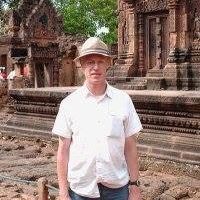
Mr. Murray is author of biographies on Lafcadio Hearn and Bram Stoker. In 1995 he won the Koizumi Yakumo Literary Prize.
He entered the Ministry of Foreign Affairs in 1972 and has since served in London, Tokyo, Ottawa, New York, Paris and Seoul.
From summer 2004 for two years Mr. Murray was the head of the EU Division at the Ministry in Dublin.
Paul Murray was appointed as Permanent Representative of Ireland to the Organization for Economic Co-operation in November 2006.
This biography of Lafcadio Hearn takes us from his difficult childhood to later life in Japan where he became one of the first foreign writers to interpret Japanese culture and legends to a western audience. On the way he experienced poverty and many hardships (some of them seemingly self-inflicted), gradually moving from journalism to his own writing, travellers tales and interpreting fairy tales and ghost stories. He had a fascination with Gothic horror. His writing was probably influenced by Edgar Allen Poe and contemporaries such as Bram Stoker. He was often dependent on his many literary friends and frequently fell out with them. I am attempting to do justice to his life and works in the quick summary that follows in the next paragraph.
Patrick Lafcadio Hearn was born on the Greek island of Lefkada (hence his name) to an Anglo-Irish father, a doctor in the British army, and a Greek mother. The family split up and he was raised by various aunts in Ireland before being sent away to a private school in England. In school he excelled at English, French and Latin but had to drop out due to family bankruptcy. He spent a year in poverty in London before moving to Cincinnati. After early struggles, he befriended a newspaper publisher, which led to a job as a crime reporter. His gruesome accounts of murders were popular with the readers. He always had literary aspirations and translated French romantic literature which was often not to the taste of puritanical readers. He moved to New Orleans, Martinique and then aged 40 to Japan where he spent the last fourteen years of his life. He married Koizumi Setsuko, who helped him translate Japanese fairy stories and legends, which he polished for western readers. He considered Eastern traditional values to be superior to those of the industrialised west. He died in Japan aged 54.
This biography was written by Paul Murray who was Irish ambassador to Japan. In recent years interest in Lafcadio Hearn's life and work has been rekindled in Ireland. A memorial Japanese garden has been created in Tramore, County Waterford where he lived for a while as a boy.
Any foreigner with literary inclinations who spends time in Japan may resent the suggestion that Lafcadio Hearn has said everything that Japanese people want to be told about their ancient culture, although if he did so it was in a late 19th century style that has been out of fashion for a hundred years and can be politicised in terms of the contrast between Hearn's cosmopolitan Irish/Greek/American background and more 'purely' Anglo-American writers. The strength of Murray's biography is that with almost half the pages devoted to Hearn's family and upbringing and life before his fateful arrival in Yokohama on 4th April, 1890, we see all the more clearly how those beautiful temple gardens and tales of the uncanny that aroused his imaginative powers offered a relief from the demons that had been haunting him since childhood, and that his journey could well have continued out of Japan had he lived longer. Murray includes an extraordinary photograph taken just a week before the writer's death that shows him in profile with his eyes slightly downcast amid a sea of earnest Japanese faces, who all look straight at the camera: not so much a fairies-in-the-garden cut and paste job but a disembodied head from one of his stories.