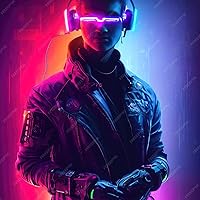
As part of EFF’s 25th Anniversary celebrations, we are releasing “Pwning Tomorrow: Stories from the Electronic Frontier,” an anthology of speculative fiction from more than 20 authors, including Bruce Sterling, Lauren Beukes, Cory Doctorow, and Charlie Jane Anders. To get the ebook, you can make an optional contribution to support EFF’s work, or you can download it at no cost. We're releasing the ebook under a Creative Commons Attribution-NonCommercial-No Derivatives 4.0 International license, which permits sharing among users.
We meet many speculative fiction fans in the course of our work to protect digital civil liberties, and the 21 stories in this collection inspire a sharper sense of the futures we may experience and the role of rights and freedoms there. The authors explore the wonders and perils of technology over the next 25 years and beyond, imagining the consequences of everything from abusive intellectual property lawsuits to out-of-control viral marketing, from over-protective intelligent fridges to violently loyal cyber-pets.
It's also important to know that writers have long been at the forefront of the fight against mass surveillance in the real world. Paranormal romance author Carolyn Jewel is the lead plaintiff in Jewel v. NSA, EFF’s long-running lawsuit against warrantless collection of electronic communications. Her novella, "Free Fall," rounds out the collection.
The full list of contributors includes:
Charlie Jane Anders Madeline Ashby Paolo Bacigalupi Lauren Beukes David Brin Pat Cadigan Cory Doctorow Paul Ford Neil Gaiman "Changes" from Smoke & Mirrors SL Grey Eileen Gunn Charles Human Kameron Hurley Carolyn Jewel James Patrick Kelly Ramez Naam Annalee Newitz Hannu Rajaniemi Rudy Rucker Lewis Shiner Bruce Sterling Charles Yu
We’re very grateful to the authors for contributing stories to this collection, Tessellate Media for tireless formatting and device testing, O’Reilly Media and Troy Mott of Backstop Media for epublishing assistance, and the many others who helped bring this project to fruition. The collection is available in ePub, and MOBI formats, which can be downloaded at https://supporters.eff.org/donate/pwn....
A collection of stories relevant to the effects on freedom of human-machine interaction.
I'm a fan of the Electronic Frontier Foundation, and the things they work toward. I thought an anthology of reprints edited by them could be interesting. (Get it here.) Mostly, that was right.The stories in the anthology deal, as expected, with the interaction between humans and machines, and the freedom interests those can call into questions. As with most anthologies, some of the stories don't quite fit the theme, but mostly, these stay in the lane, and some bring out some interesting concepts.
The best stories of the lot were:
"Be Seeing You" by Madeline Ashby - an enhanced bodyguard meets challenges. Not really novel, and with a weak ending, but strong on character and setting. "I've Got the Music in Me" by Charlie Jane Anders - Who owns that song stuck in your head? A clever and funny idea, though it doesn't move much beyond that. "The Gambler" by Paolo Bacigalupi - How to do serious journalism in the age of sound bites. Not what I was expecting, and a nice, well-balanced story about principles. "The Smartest Mob" by David Brin - The ultimate in virtual flash mobs. An excerpt from a larger piece, and it shows, but well written and considered. "His Master’s Voice" by Hannu Rajaniemi - Animal companions react when their human is locked up. A bit disorganized, but moving. "Hive Mind Man" by Rudy Rucker and Eileen Gunn - The dangers of getting too caught up in social media. A surprisingly nice ending.
There's one bizarre anomaly in the collection - a novella written by the plaintiff in an EFF case that has nothing at all to do with the main theme. Unless you're a fan of demon-porn (actual quote: "It hurt his dick to look at her she was so hot."), you can skip the final 70 pages. Demon-porn. And I only just learned that werewolf-porn was a thing. Two things I wish I didn't know.
All in all, an interesting, but not exciting collection marred by the final story.
Some great stories. Most weren't written specifically for this publication, but almost all tie in with the expected theme (as it was released by the EFF). The only exception was the last story that is really bad and unrelated, being a shallow romance novel type of story. Some of the highlights stories: - "Water" Really made me think about how I think the future should or shouldn't be - "I’ve Got The Music In Me" short and to the point, a great parody about the state of copyright laws. - "Unclaimed" Started out like a drama/noir and turned to a monster bash, fun read.
An anthology of stories by various writers released by the EFF. The quality and themes vary a lot but there are a few stories that stand out for being thoughtful looks at what a future with less freedom could be like. Stories I liked include those by Paolo Bacigalupi, Cory Doctorow, Ramez Naam, Hannu Rajaniemi and a long, sex charged story by Carolyn Jewel.
- “Be Seeing You” by Madeline Ashby: in an enclave, a woman who is tasked with being a bodyguard needs to be fitted out with sensors that reveal her whereabouts. But when she tries to help a friend who is in trouble, being caught in a situation where people can't locate her will bring dangers.
- “I’ve Got The Music In Me” by Charlie Jane Anders: people are being punished for playing songs without paying the artist: even if the song is just one that plays in your head.
- “The Gambler” by Paolo Bacigalupi: when a coup overtakes Laos and it drops off the internet, the refugees do what they can to keep in touch. In this story, a journalist from Laos who prefers to write environmental stories that few people read and is in danger of losing his job is given the chance to get eyeballs by interviewing a well-known Laotian. But will he use it to keep his job or will he keep writing what he wants, in a echo of his dissident father, still caught in Laos?
- “Slipping” by Lauren Beukes: set in a future where exo-skeleton and bio enhancements are up for bidding, the story follows a girl from Africa who loses her legs in a running accident but is now given the chance to show off her abilities. But is it her running abilities on show here or is she just a 'product' showing off her enhancements to the highest bidder?
- “The Smartest Mob” by David Brin: an excerpt from his novel, Existence, it follows a journalist who, while traveling on a floating dirigible, gets a chance to investigate a possible terrorist plot on it. But she will need the help of a networked smart-mob forming around her to help her investigate it.
- “Business as Usual” by Pat Cadigan: people may be told to do or not do certain things that may be bad for their health. But what if this is taken further and home appliances are the ones now telling you to stay healthy; and reinforcing it by monitoring your food intake (and output).
- “Scroogled” by Cory Doctorow: when Google run the Immigration services and gets to see what ads were displayed for your Google searches, your Google mail, etc. you better be careful of what you search for as one woman finds out. Yet the story shows how easy it can be for people to rationalise their decisions, especially after a friend goes on the run for helping her to sanitise her search items.
- “Nanolaw with Daughter” by Paul Ford: in a future where terms and conditions are rampant and you will get sued for not strictly following it, a man helps his daughter to navigate through the letters of demand for payment.
- “Changes” by Neil Gaiman: a story about a future when the cure for cancer can also do other changes on a person, leading to all kinds of social and cultural upheavals.
- “The Light Brigade” by Kameron Hurley: on a devastated Earth, one soldier in a war against aliens finds out that what he has been told about the war isn't the truth; and that he has the power to not only end (or start) the war, but to also save numerous lives.
- “Declaration” by James Patrick Kelly: a group of students working together are tasked to put together a declaration of independence and to spread its message. But the message and its intent has deeper meanings to some students, for in a world where people can be physically or virtually present, some want to be independent of their physical selves.
- “Water” by Ramez Naam: in the future, access to implants comes with a price: ads that implore you to buy their product, unless you can pay for ad-free access. The story follows what happens when a malware causing product rejection is introduced into one company's water product, leading to a world-wide free-for-all as other companies vie to win over that company's customers (including its now unemployed salespeople).
- “Unclaimed” by Annalee Newitz: a story that starts out interesting but has an unsatisfactory ending. A private investigator is asked to search for an author who has hidden herself from the world. The search would end when the investigator find the author in an altered state made murderous when the author discovers what the media companies have done with her books about altered biological beings. But what I find hard to accept is that the author would not know what has happened to her books (made into games, movies, etc.) after all those years, despite having ready and quick access to the world, as made clear near the ending.
- “His Master’s Voice” by Hannu Rajaniemi: a dog and a cat gain intelligence in the hands of a master. But their world comes tumbling down when the master creates an illegal copy of himself and is sent to prison for his troubles. Missing their master, the cat and dog hatch a plan to rescue him.
- “Hive Mind Man” by Rudy Rucker and Eileen Gunn: a man who likes to hook into social networks and other online activities gets more than he bargains for when a deal to become even more connection for commercial purposes gets him really connected with the world.
- “Stompin’ at the Savoy” by Lewis Shiner: a rather dated piece about a cashier who suddenly ends up with a list of things "the government doesn't want the people to know". That leads to a chase and refuge among mutants who want to bring the government down.
- “The Brain Dump” by Bruce Sterling: a day in the life of a hacking community in Eastern Europe.
- “RE: RE: RE: RE: RE: MICROWAVE IN THE BREAK ROOM DOING WEIRD THINGS TO FABRIC OF SPACE-TIME” by Charles Yu: what happens when people don't following email instructions and leave things in the microwave oven that can open time warps.
- “Dance Dance Revolution” by Charlie Human: Soldiers dance to control their weapons. Okay.
- “OMG GTFO” by S.L. Grey: written as a series of snippets, including social media post and comments about people suddenly speaking in tongues and relaying information from dead people who are in hell. It initially causes a drop in crime and misdemeanours and people try to repent but then a further set of dead people in hell make themselves known, leading to a backlash from the still living.
- “Free Fall” by Carolyn Jewel: a long, interesting story about a world where witches, warlocks, mages and demons live among us. In this world is one witch who is aware of her powers but is barely able to contain them as she is untrained. Add to this mix a mage who may be physically and magically abusing her. She wants out of the relationship and calls on the help of the only man she trusts who turns out to be a very horny (in the sexual sense) demon. The mage turns out to have been abusing magical beings to enhance his powers and now wants them dead. Before the climax of the story, there is a long section on sex between the demon and witch which probably is necessary to highlight their relationship so be prepared for a lengthy digression.
Mostly very good stories, as to be expected with such a stellar line-up of authors. The last (and longest) story would have brought it down to 3 stars, but I was alerted by the reviews here, and quit a couple of chapters in.
Much more "being pwned by tomorrow"; these stories are pretty consistently about fighting technology and losing. Not really to my taste, and I didn't finish.
This is a collection of short stories bundled together to support the Electronic Freedom Foundation. Most of them deal with the near future and some sort of commentary on our electronic freedom.
And I liked most of them, some were familiar to me, most weren't, but it was full of entertaining little stories that also made you think. Up until the last one, an urban fantasy short novel or novella (it was the only story I recall with separate chapters at least) that closed the book, and didn't seem like it had much to do with the theme of the collection except that one of the characters was good with computers, and the author was also represented by the EFF in one of their longest-running lawsuits.
Now, I've got nothing against Urban Fantasy as a genre or people who read it. It's simply not my thing most of the time, and the particular subflavor of it is even less my thing (such that I don't even feel I'm able to judge it on its quality within that). As such, making it not only the final story in the collection but also by far the longest, made me leave what was otherwise an entertaining collection on a bad note, with a long slog through a story that not only didn't seem to address any of the ideas that attracted me to the collection as a whole, but also didn't do anything for me aside from that. It's one of the rare cases where I know I probably would have rated a collection higher if a story wasn't included, just because, for me, it was about the only thing I didn't like about it, and the rating is an assessment on the read as a whole. So, three stars, but probably closer to 3.5, just not close enough to round it up to a 4.
Three and a half, really, but rounded up to four because I don't see why not. I didn't have any big problems with it; if I liked sci-fi more than I do, I would probably give it a more enthusiastic set of stars. But...school requirement, what can you do?
My favourites were probably "The Smartest Mob" and "Business as Usual," but off the top of my head I can't remember any that I really hated.
It's a fun, relatively quick read that you can pick up off the EFF website for free or a donation of your choice, so if you like sci-fi and short stories, no harm in investing a bit of time into this one.
I had to read three of these stories for class, and then I ended up reading the rest. Some good, some bad, a couple mind-blowing, and at least one that was much too long and weirdly erotic.
I guess I should have expected a bit of trolling from a book that uses the word 'Pwning' in its title. In general, this collection of Short fiction is very strong, with pieces from Cory Doctorow, Neil Gaiman, Charlie Jane Anders, and many more focused on Science Fiction, especially near future concepts and their extrapolations. The balance of the stories are good to great (David Brin's piece was a near masterpiece, with Charles Yu's email epistolary being a funny second), and the near-future worlds fascinating. Through the penultimate story, this volume was looking to be a strong 4-stars. And then I got to the final story, a novella by Carolyn Jewel. It's not bad, but it's a whiplash change in genre, jettisoning science fiction for urban fantasy erotica, and it takes up the last 20% of the book. Literally three chapters of the story are focused on a single sex scene, which really is not what I wanted to read. Again, the rest of the story isn't bad, but it's so off-topic from the rest of the book that it was even more distracting than it normally would be. So I can give most of the book a good recommendation - just be aware of what you're getting into with the included novella.
This anthology has several previously-published short stories regarding themes of technology items that could go awry. Should consumer protection be dismissed, things can go unexpected ways for our society, creating new dangers. Others also dabble with science-fiction themes that push those boundaries. The stories are definitely made to make you think and question our current technology and the approach we should have with them and especially the regulation. It was a hard read not because the stories were bad, but because there were so many things to absorb. They tried to end in a positive note with a fantastic story about mages and demons which had nothing to do with the overall theme but that I enjoyed too much.
Most of this is pretty neat, and some parts of it are awesome indeed.
The last story, which is also the longest one, is bizarre though, it has seemingly no connection to the theme of the rest of the book, and consists of a graphic story of a sexual relationship between a demon and a witch. Yes really.
Ignore that part unless you feel motivated for a bit of demon-porn.
Good read. Mostly short stories. The last story was longer than the rest and tended more toward demonic romance kind of a story line, which I truly wish would not be lumped in with science fiction. It wasn't a bad story, just doesn't belong in the genre.