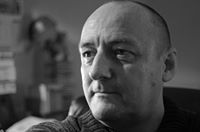
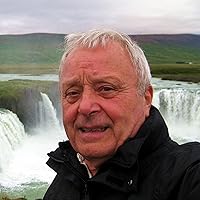
Richard Hunter is a family man working for the NHS in the North East of England. His background saw him being brought up within the military environment. Unsatisfied with his current employment, he often thinks back to his time in the Army. His father had been a soldier and it was Richards decision to follow him on this career path. But the parade ground, torturous PT lessons, adventure training and the military skills tests he would have to endure, are only the start of his journey. He would then have to prove himself to his peers within his Regiment. This would be easier said than done, having such a highly regarded father in the same Regiment. In his first months, he needed to be subservient, and accept the practical jokes played on him. His father had warned him it would happen, and was all part of being a new soldier in the Regiment. In his first few months he would learn his trade as a tank crewman, in camp and on the plains of the Luneburger Heide of Soltau in Germany. The cold winter nights, lack of sleep and being on constant lookout for the infamous drop bears. Yet by the end of his first exercise he would become to be accepted. The experiences of the walled city of Berlin for twenty four months, would last in his memory for years to come. The city’s night life, sporting competitions and continuous ‘crash outs’, would enrich his military and personal life. The cold war in North West Germany, Richard would meet his mentor, and a man he would respect all his life. Yet after only one training season, he would be forced to move on, and begin his search for promotion. The next step on the ladder would be to gain a ‘Class 1’ qualification. The black art of ‘Signals Communications’, was delivered to him in the Royal Armoured Corps Signal School in Bovington. Learning the complexities of both HF and VHF equipment, and how to run a Command Vehicle. These skills were to be essential for the time he would spend in Battlegroup Headquarters. The troubles in Northern Ireland were to be his initiation into ‘Operational Tours’. The realism and authenticity of its training, ensured that he would hopefully return unscathed. By the end of it, the question he had asked himself all those years ago, as a young man in his garden in Germany, would be answered. ‘Would he ever feel this same bond to others as he did now with these three friends?’
I was born in the North East of England, before moving overseas with my parents, my father was a member of the British Army.
After leaving school at 16, I followed my father into the military. I spent my first three months at the Royal Engineers, Junior Apprentices College at Cheptstow. In a short period of time I realised this was not the right career path. It was at this point I transferred to the Royal Armoured Corps, and was badged to the same Regiment as my father.
During my 22 years service, of what could be described as a 'colourful career', I spent most of it overseas. Like everything in life you never appreciate things until they are gone.
After leaving the Forces in March 2003, I began work in the Information Technology Industry. I served my first 2 years at a Secondary School in Durham, as an IT Technician. I have always been one for striving to better myself, I think this was my military upbringing. With no opportunities for advancement, I left the Education system and moved into the Healthcare arena.
For the next 8 years I worked for a Foundation Trust within the NHS in the North East of England. For the first few years it was all exciting and new. It wasn't long before I realised, due to funding of the NHS, things were beginning to become strained. Resources were short, and staff both medical and administrative, were under intense pressure.
With the death of my father in April 2010, I began to question why are we here? He had been a big influence on my life, and I wanted to recount the memories I had of him. This led me into the world of publishing, as a vehicle to not only honour my father, but to try and show some of the hardships that faces the modern soldier. The bond of friendship and brotherhood that binds these modern day knights, cannot be underestimated. It was this very point that was my beginning to my journey into authorship.
The story of 'From Denim to Khaki' started as a one off book. I quickly found out that it would lend itself to a Trilogy. It is fiction, but based on facts that I have experienced, or indeed others who I have served with. It details the life of a young man, from joining the army straight from school at 16. It follows his career from the 'Cold War' of the 1980's, up until the Afghanistan conflict.
Soldiers are required to close with the enemy, possibly in the midst of innocent bystanders, and fight; and to continue operating in the face of mortal danger. This is a group activity,at all scales of effort and intensities. Soldiers are part of a team,and the effectiveness of that team depends on each individual playing his or her part to the full. Success depends above all else on good morale, which is the spirit that enables soldiers to triumph over adversity: morale linked to, and reinforced by,discipline.
General Sir Richard Dannatt Chief of the General Staff
Cracking read. Already waiting for Vol 2. For any ex squaddie this will certainly bring back some memories. A light hearted stroll down memory lane that seems all too familiar. The good the bad and the damn right ugly, presented in a humorous way without detracting from the seriousness underneath. It's how squaddies roll and tells it like it is... warts and all. Well done Mr Varty, get cracking on the next one. Thanks
This book is well set out, easy to read, and takes the reader through army life back in the 70/80's. The author pulls no punches as to the serious side of army life, but it is also sprinkled with humorous anecdotes. Looking forward to reading more of this authors work!