

What do you think?

Pumpkinflowers: An Israeli Soldier's Story
From an award-winning Canadian-Israeli writer comes the true story of a band of young soldiers, the author among them, charged with holding one remote outpost in Lebanon, a task that changed them forever and foreshadowed today's unwinnable conflicts in Iraq, Afghanistan, and elsewhere.
It was small hilltop in a small, unnamed war in the late 1990s, but it would send out ripples that continue to emanate worldwide today. The hill was called the Pumpkin; flowers was the military code word for "casualties." Friedman's visceral narrative recreates harrowing wartime experiences in a work that is part frontlines memoir, part
journalistic reporting, part military history. The years in question were pivotal ones, and not just for Israel. They saw the perfection of a type of warfare that would eventually be exported to Afghanistan and Iraq. The new twenty-first century war is one in which there is never any clear victor, and not enough lives are lost to rally the public against it. Eventually Israel would come to realize that theirs was a losing proposition and pull out. But, of course, by then these soldiers--those who had survived--and the country had been wounded in ways large and small. Raw, powerful, beautifully rendered, the book will take its place among classic war stories such as those by George Orwell, Philip Caputo, and Vasily Grossman. Pumpkinflowers is an unflinching look, like the works of Jon Krakauer and Sebastian Junger, at the way we conduct war today.
It was small hilltop in a small, unnamed war in the late 1990s, but it would send out ripples that continue to emanate worldwide today. The hill was called the Pumpkin; flowers was the military code word for "casualties." Friedman's visceral narrative recreates harrowing wartime experiences in a work that is part frontlines memoir, part
journalistic reporting, part military history. The years in question were pivotal ones, and not just for Israel. They saw the perfection of a type of warfare that would eventually be exported to Afghanistan and Iraq. The new twenty-first century war is one in which there is never any clear victor, and not enough lives are lost to rally the public against it. Eventually Israel would come to realize that theirs was a losing proposition and pull out. But, of course, by then these soldiers--those who had survived--and the country had been wounded in ways large and small. Raw, powerful, beautifully rendered, the book will take its place among classic war stories such as those by George Orwell, Philip Caputo, and Vasily Grossman. Pumpkinflowers is an unflinching look, like the works of Jon Krakauer and Sebastian Junger, at the way we conduct war today.
256 pages, Hardcover
First published May 3, 2016
About the author
Matti Friedman
6 books252 followersMatti Friedman (Hebrew: מתי פרידמן) is an Israeli Canadian journalist and author.
Friedman was born in Canada and grew up in Toronto. In 1995, he made aliyah to Israel and now he lives in Jerusalem.
Between 2006 and the end of 2011, Friedman was a reporter and editor in the Jerusalem bureau of the Associated Press (AP) news agency. During his journalistic career, he also worked as a reporter in Egypt, Morocco, Lebanon, Moscow and Washington, D.C.
Following the 2014 Israel–Gaza conflict, Friedman wrote an essay criticizing what he views as the international media's bias against Israel and undue focus on the country, stating that news organizations treat it as "most important story on earth." He cited the fact that when he was a correspondent at the Associated Press (AP), "the agency had more than 40 staffers covering Israel and the Palestinian territories. That was significantly more news staff than the AP had in China, Russia, or India, or in all of the 50 countries of sub-Saharan Africa combined. It was higher than the total number of news-gathering employees in all the countries where the uprisings of the 'Arab Spring” eventually erupted... I don’t mean to pick on the AP—the agency is wholly average, which makes it useful as an example. The big players in the news business practice groupthink, and these staffing arrangements were reflected across the herd." Israeli newspaper Haaretz reported that the piece went "viral" on Facebook. The Atlantic then invited Friedman to write a longer article.
Friedman's first book, The Aleppo Codex: A True Story of Obsession, Faith and the Pursuit of an Ancient Bible, was published in May 2012 by Algonquin Books. The book is an account of how the Aleppo Codex, "the oldest, most complete, most accurate text of the Hebrew Bible," came to reside in Israel. It was believed the codex had been destroyed during the 1947 Anti-Jewish riots in Aleppo when the Central Synagogue of Aleppo, where the codex was housed, was set on fire and badly damaged. In the book, Friedman also investigates how and why many of the codex's pages went missing and what their fate might be.
The book won the 2014 Sami Rohr Prize for Jewish Literature, was selected as one of Booklist's top ten religion and spirituality books of 2012, was awarded the American Library Association's 2013 Sophie Brody Medal and the 2013 Canadian Jewish Book Award for history, and received second place for the Religion Newswriters Association's 2013 nonfiction religion book of the year.
Friedman was born in Canada and grew up in Toronto. In 1995, he made aliyah to Israel and now he lives in Jerusalem.
Between 2006 and the end of 2011, Friedman was a reporter and editor in the Jerusalem bureau of the Associated Press (AP) news agency. During his journalistic career, he also worked as a reporter in Egypt, Morocco, Lebanon, Moscow and Washington, D.C.
Following the 2014 Israel–Gaza conflict, Friedman wrote an essay criticizing what he views as the international media's bias against Israel and undue focus on the country, stating that news organizations treat it as "most important story on earth." He cited the fact that when he was a correspondent at the Associated Press (AP), "the agency had more than 40 staffers covering Israel and the Palestinian territories. That was significantly more news staff than the AP had in China, Russia, or India, or in all of the 50 countries of sub-Saharan Africa combined. It was higher than the total number of news-gathering employees in all the countries where the uprisings of the 'Arab Spring” eventually erupted... I don’t mean to pick on the AP—the agency is wholly average, which makes it useful as an example. The big players in the news business practice groupthink, and these staffing arrangements were reflected across the herd." Israeli newspaper Haaretz reported that the piece went "viral" on Facebook. The Atlantic then invited Friedman to write a longer article.
Friedman's first book, The Aleppo Codex: A True Story of Obsession, Faith and the Pursuit of an Ancient Bible, was published in May 2012 by Algonquin Books. The book is an account of how the Aleppo Codex, "the oldest, most complete, most accurate text of the Hebrew Bible," came to reside in Israel. It was believed the codex had been destroyed during the 1947 Anti-Jewish riots in Aleppo when the Central Synagogue of Aleppo, where the codex was housed, was set on fire and badly damaged. In the book, Friedman also investigates how and why many of the codex's pages went missing and what their fate might be.
The book won the 2014 Sami Rohr Prize for Jewish Literature, was selected as one of Booklist's top ten religion and spirituality books of 2012, was awarded the American Library Association's 2013 Sophie Brody Medal and the 2013 Canadian Jewish Book Award for history, and received second place for the Religion Newswriters Association's 2013 nonfiction religion book of the year.
Ratings & Reviews
Friends & Following
Create a free account to discover what your friends think of this book!
Community Reviews
Displaying 1 - 30 of 260 reviews

January 3, 2018
It was one small hilltop in a small, unnamed war in the late 1990s, but it would send out ripples still felt worldwide today. The hill, in Lebanon, was called the Pumpkin; flowers was the military code word for “casualties.” Award-winning writer Matti Friedman re-creates the harrowing experience of a band of young soldiers--the author among them--charged with holding this remote outpost, a task that changed them forever and foreshadowed the unwinnable conflicts the United States would soon confront in Iraq, Afghanistan, and elsewhere.
“The idea was not “death before dishonor,” “no surrender,” or anything like that but rather “let’s get through this.”
Pumpkinflowers brought out the most physical and emotional reactions I've had ever since I started reading books. I was so awash in feelings that I tried to desperately shut down, but with every few pages, especially in part one, my eyes welled with tears that would just fall with the blink of an eye.
The traumatic war events exist in such a brief moment on the page but linger for so long in my mind, sometimes so intensely that I found myself fighting off silent tears long after the book was closed.
My eyes felt utterly exhausted and dried out by the time I reached the second part of the book. This feeling of complete mental and physical fatigue was something I'd only experience before with A Little Life by Hanya Yanagihara. Having tragic event upon tragic event upon unprecedented loss, with no warning or breather in between, left me depleted.
There is one moment that stands out, however, where the author tries to lighten the text. That moment when a soldier named Jonah stood guard in the turret:
“...and by this time Jonah was spooked, but he kept reciting the poem as he moved his head back and forth, and that was when he heard a rustle next to the tank and saw the shape scuttling on the ground, and it was real, not his imagination, and his heart stopped and started racing at the same moment, like three heart attacks all at once, and it was a plastic bag. That is a real Pumpkin story, and I wanted to tell it here because I realize that isn’t how most of my stories end, but it is how most ended in real life.”
It's true, most stories shared in this book didn't end on an equal note. Which brings to mind the start of part 1 "about a series of incidents beginning in 1994 at the Israeli army outpost we called the Pumpkin, seen through the eyes of a soldier, Avi..."
The author, Matti Friedman, made the clever writing decision to not introduce Avi's last name till the very end so that we couldn’t Google it prematurely and find out his ending. As soon as the last name was revealed, though, I had chills go down my spine. Since we spent nearly half the book with Avi, I naturally grew attached to him through his thoughts shared from the letters written during his military service.
“Everything here is a kind of illusion. Opposite the place where I am sitting, on a hill, is a beautiful villa with a large garden and red shingles. It’s a pastoral scene. But if you look closely, you see the bullet holes all over the house, and you see that the garden is neglected because no one dares live there, in such dangerous proximity to the outpost.
It’s very hard for me to put my finger precisely on the feeling I have when I’m here. It’s a kind of sadness mixed with longing so deep that sometimes it’s painful. And fear, of course. It’s strange, but the fear doesn’t bother me at all. It’s part of the sadness and the longing. It’s with me all the time, but not directly, kind of sneaking up on me. That’s how it appears when you’re alone. I mean not when you’re literally alone, but when I step away for a second and think about home, about my friends, or about a love story I haven’t started yet.”
...
“I have the feeling that everything is disintegrating, everything is falling, everything I know is changing inexorably and all of the principles of life are collapsing. I need to find some kind of definition for how to proceed, otherwise I don’t think I’ll be able to find any kind of way forward at all.”
My tears are struggling to fall, but I feel them. And so are his words anchored to my core. This irreplaceable individual will soar my mind for days on end.
I wish I had the ability to effectively capture his presence on the page, but I don't. There's only this:
“There is a special language used to describe our dead soldiers, a language that makes them all sound the same, not just because you can’t say anything bad but because most were so young that there isn’t much to say at all. What they really were was potential. So in this language they are always serious students, or mischievous ones, and loving siblings, and good at basketball, and there was a funny thing they did once on a class trip, and in the army they always helped their friends. And they are, forever, “soldiers,” though most thought they were just doing that for a while before their real life resumed. It is said in their honor that they were prepared to sacrifice themselves for the rest of us, but of course they weren’t, not most—they just thought it wouldn’t happen to them, and the lucky ones weren’t given time to realize they were wrong.”
By this point, I had lost the fight and was earnestly crying. Just the mere act of writing about this makes me ache. How can someone possibly live through the emotionally scarring horrors they witnessed and be expected to "move on" and return to life as they knew it?
Like, this passage that keeps resurfacing in my mind of Avi's father, Yossi, who served in the Fighting Pioneer Youth himself:
“There is nothing military about Yossi. He’s a smiling man despite everything, compact like Avi. One day he was back from Suez in his kitchen with Avi’s mother, Raya, and older brother, an infant at the time. The baby’s bottle thumped to the floor, and the young family contemplated Yossi flat on his stomach with his hands covering his head.”
I can hear the fall in my head.
I felt like everything that would follow afterward in the book wouldn't be applicable to the emotional turmoil that is part one. Plus, having read it from midnight till 3am wasn't the brightest decision.
It hit me so devastatingly hard because this read was the first time I had a personal look into the lives of IDF soldiers while in combat, coming from someone who went through what he was describing and researching.
Avi Ofner hasn't left my mind since, and I talk about him to anyone willing to listen. My thoughts just keep going back to how one minute he's there sharing his thoughts and fears on the page, and the next he's slipped out of our grasp into the abyss. It was hard to wrap my frantically upset mind around; it still is.
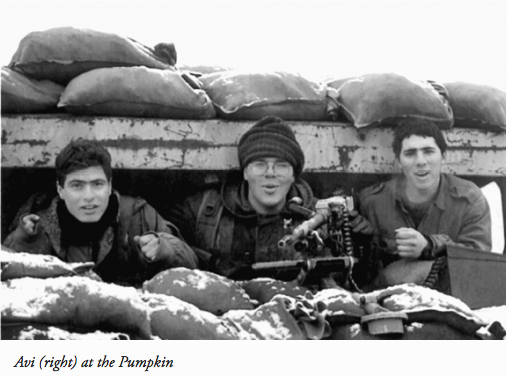
Reading then about Harel, the sole survivor from his platoon and company of seventy-three was all-encompassing.
“Once, in a television interview, Harel was asked how he did it—how he went back to the army after what happened. He looked at the interviewer for a moment. Here was a chance for an expression of ideology or faith, a love of country, all of those generations of Jews looking at him, depending on him not to give up. In the fighting in Jerusalem in 1967 some of the soldiers claim they felt King David himself pushing them through the alleyways. How did Harel go back? There might have been a flicker of disdain in his eyes, but otherwise he betrayed no emotion. “On the bus,” he said. It is one of the great lines.”
On that spot-on note, I think I'll depart my review with saying that though this was a heavy book to digest, I feel like it was a must-read for me to understand.
“May their memory be a blessing.”

Note: I'm an Amazon Affiliate. If you're interested in buying Pumpkinflowers, just click on the image below to go through my link. I'll make a small commission!
Support creators you love. Buy a Coffee for nat (bookspoils) with Ko-fi.com/bookspoils

“The idea was not “death before dishonor,” “no surrender,” or anything like that but rather “let’s get through this.”
Pumpkinflowers brought out the most physical and emotional reactions I've had ever since I started reading books. I was so awash in feelings that I tried to desperately shut down, but with every few pages, especially in part one, my eyes welled with tears that would just fall with the blink of an eye.
The traumatic war events exist in such a brief moment on the page but linger for so long in my mind, sometimes so intensely that I found myself fighting off silent tears long after the book was closed.
My eyes felt utterly exhausted and dried out by the time I reached the second part of the book. This feeling of complete mental and physical fatigue was something I'd only experience before with A Little Life by Hanya Yanagihara. Having tragic event upon tragic event upon unprecedented loss, with no warning or breather in between, left me depleted.
There is one moment that stands out, however, where the author tries to lighten the text. That moment when a soldier named Jonah stood guard in the turret:
“...and by this time Jonah was spooked, but he kept reciting the poem as he moved his head back and forth, and that was when he heard a rustle next to the tank and saw the shape scuttling on the ground, and it was real, not his imagination, and his heart stopped and started racing at the same moment, like three heart attacks all at once, and it was a plastic bag. That is a real Pumpkin story, and I wanted to tell it here because I realize that isn’t how most of my stories end, but it is how most ended in real life.”
It's true, most stories shared in this book didn't end on an equal note. Which brings to mind the start of part 1 "about a series of incidents beginning in 1994 at the Israeli army outpost we called the Pumpkin, seen through the eyes of a soldier, Avi..."
The author, Matti Friedman, made the clever writing decision to not introduce Avi's last name till the very end so that we couldn’t Google it prematurely and find out his ending. As soon as the last name was revealed, though, I had chills go down my spine. Since we spent nearly half the book with Avi, I naturally grew attached to him through his thoughts shared from the letters written during his military service.
“Everything here is a kind of illusion. Opposite the place where I am sitting, on a hill, is a beautiful villa with a large garden and red shingles. It’s a pastoral scene. But if you look closely, you see the bullet holes all over the house, and you see that the garden is neglected because no one dares live there, in such dangerous proximity to the outpost.
It’s very hard for me to put my finger precisely on the feeling I have when I’m here. It’s a kind of sadness mixed with longing so deep that sometimes it’s painful. And fear, of course. It’s strange, but the fear doesn’t bother me at all. It’s part of the sadness and the longing. It’s with me all the time, but not directly, kind of sneaking up on me. That’s how it appears when you’re alone. I mean not when you’re literally alone, but when I step away for a second and think about home, about my friends, or about a love story I haven’t started yet.”
...
“I have the feeling that everything is disintegrating, everything is falling, everything I know is changing inexorably and all of the principles of life are collapsing. I need to find some kind of definition for how to proceed, otherwise I don’t think I’ll be able to find any kind of way forward at all.”
My tears are struggling to fall, but I feel them. And so are his words anchored to my core. This irreplaceable individual will soar my mind for days on end.
I wish I had the ability to effectively capture his presence on the page, but I don't. There's only this:
“There is a special language used to describe our dead soldiers, a language that makes them all sound the same, not just because you can’t say anything bad but because most were so young that there isn’t much to say at all. What they really were was potential. So in this language they are always serious students, or mischievous ones, and loving siblings, and good at basketball, and there was a funny thing they did once on a class trip, and in the army they always helped their friends. And they are, forever, “soldiers,” though most thought they were just doing that for a while before their real life resumed. It is said in their honor that they were prepared to sacrifice themselves for the rest of us, but of course they weren’t, not most—they just thought it wouldn’t happen to them, and the lucky ones weren’t given time to realize they were wrong.”
By this point, I had lost the fight and was earnestly crying. Just the mere act of writing about this makes me ache. How can someone possibly live through the emotionally scarring horrors they witnessed and be expected to "move on" and return to life as they knew it?
Like, this passage that keeps resurfacing in my mind of Avi's father, Yossi, who served in the Fighting Pioneer Youth himself:
“There is nothing military about Yossi. He’s a smiling man despite everything, compact like Avi. One day he was back from Suez in his kitchen with Avi’s mother, Raya, and older brother, an infant at the time. The baby’s bottle thumped to the floor, and the young family contemplated Yossi flat on his stomach with his hands covering his head.”
I can hear the fall in my head.
I felt like everything that would follow afterward in the book wouldn't be applicable to the emotional turmoil that is part one. Plus, having read it from midnight till 3am wasn't the brightest decision.
It hit me so devastatingly hard because this read was the first time I had a personal look into the lives of IDF soldiers while in combat, coming from someone who went through what he was describing and researching.
Avi Ofner hasn't left my mind since, and I talk about him to anyone willing to listen. My thoughts just keep going back to how one minute he's there sharing his thoughts and fears on the page, and the next he's slipped out of our grasp into the abyss. It was hard to wrap my frantically upset mind around; it still is.
Reading then about Harel, the sole survivor from his platoon and company of seventy-three was all-encompassing.
“Once, in a television interview, Harel was asked how he did it—how he went back to the army after what happened. He looked at the interviewer for a moment. Here was a chance for an expression of ideology or faith, a love of country, all of those generations of Jews looking at him, depending on him not to give up. In the fighting in Jerusalem in 1967 some of the soldiers claim they felt King David himself pushing them through the alleyways. How did Harel go back? There might have been a flicker of disdain in his eyes, but otherwise he betrayed no emotion. “On the bus,” he said. It is one of the great lines.”
On that spot-on note, I think I'll depart my review with saying that though this was a heavy book to digest, I feel like it was a must-read for me to understand.
“May their memory be a blessing.”
Note: I'm an Amazon Affiliate. If you're interested in buying Pumpkinflowers, just click on the image below to go through my link. I'll make a small commission!
Support creators you love. Buy a Coffee for nat (bookspoils) with Ko-fi.com/bookspoils

May 9, 2016
This is a very good book into a conflict I think not many people know about or cared about. One could go into politics in a review about this book, but I will only say that it is well written and worth a read. The ending of the book is one of the most interesting and eye-opening endings that I have read.

May 3, 2016
Slowly but steadily, I made my way through Matti Friedman's stunning new book. PUMPKINFLOWERS is a relatively slender volume, and many of its chapters are quite short. But it's powerful and intense, and I read it carefully and in small doses. (I must add that as I read, I was aware of an additional layer of meaning because my reading time coincided with Israel's Memorial Day and Independence Day.)
PUMPKINFLOWERS has already been receiving a lot of excellent attention. See, for example, these reviews. Listen to Matti's conversation with The New York Times Book Review's Pamela Paul. And read a related piece by Matti for TheAtlantic.com.
Then, get your hands on a copy of the book.
PUMPKINFLOWERS has already been receiving a lot of excellent attention. See, for example, these reviews. Listen to Matti's conversation with The New York Times Book Review's Pamela Paul. And read a related piece by Matti for TheAtlantic.com.
Then, get your hands on a copy of the book.

June 10, 2020
I heard him speak about his latest book which triggered me to read this one.
He is an impressive speaker, has a great sense of humor and is passionate about the State of Israel.
He is an impressive speaker, has a great sense of humor and is passionate about the State of Israel.

September 3, 2017
An interesting personal account as well as of some other Israeli soldiers who services in the Pumpkin lookout in Lebanon. Although I served at the time in one of the safe bases, and I can't even imagine how it was for the soldiers up there, the time and atmosphere in Israel resonates from the book. A tough subject and great read.

July 8, 2016
This book is about the lives of young people who finished high school and then found themselves in a war – in a forgotten little corner of a forgotten little war, but one that has nonetheless reverberated in our lives and in the life of our country and the world since it ended one night in the first spring of the new century. Anyone looking for the origins of the Middle East of today would do well to look closely at these events.
“The Pumpkin” was the Israeli code-name for a small fortified structure within the security zone of southern Lebanon (a string of such structures ringed Israel's northern border in the 1990s, originally built at the request of the Lebanese militia in response to Palestinian guerrilla activity in the area), and “flowers” was their code-word for injured soldiers (“oleanders” was used for the dead). While author Matti Friedman doesn't actually say that the IDF ever made a portmanteau out of the two words, this is obviously the source for the title of his memoir about serving his mandatory military service at this outpost, Pumpkinflowers. Friedman does a service to history by writing about this “little war”: not only does this slim book nicely capture the experience of these young soldiers as they were thrown into combat duty, but Friedman makes the case that it was during this standoff that the techniques of the modern terrorist (recording videos for media consumption, the use of IEDs, fighting a long game without clear military objectives) were tested and perfected. I found it to be a really interesting read.
Israel had gone into Lebanon all those years ago because of Palestinian guerrillas attacking across the border, but the Palestinians were long gone. The enemy had changed, and now it was Hezbollah. This group was Lebanese but created by Iran, the rising regional power, with the help of Syria, which controlled Lebanon. Hezbollah took orders from the dictatorship in Syria and from the clerics running Iran. Hezbollah was supposedly fighting to get us out of Lebanon, but Hezbollah leaders made clear later that they had rebuffed Israeli offers for a negotiated withdrawal. They didn't want us to leave; they wanted to push us out, which is not the same thing. By killing soldiers in the security zone they didn't convince Israelis to leave but rather that the security zone was necessary, and we dug in deeper and deeper to justify what we had already lost. This changed only with the helicopter crash, which had nothing to do with Hezbollah. Subsequent events show that they hoped to use their war against us to become the dominant power in Lebanon, which they went on to do with considerable skill. Their war seems to have always been as much for their country as it was against ours.
Pumpkinflowers is divided into four parts. In the first, Friedman describes life at the Pumpkin in the early days of its existence, as preserved in the copious correspondence of one of the soldiers from that time named Avi. In the second, a group of peace-loving kibbutzers form a protest group known as the Four Mothers: as they could see no strategic value to the security zone, they could see no reason for their sons to lose their lives there; as this was an era of optimism with a dovish Israeli government, their message gained a following. When two transport helicopters collided and seventy-three soldiers died, it was the beginning of the end for the Pumpkin. In the third section, Friedman himself is assigned to the Pumpkin right out of high school, and he does a good job of describing the life there, the long stretches of boredom interrupted by alarms: but are those guerrillas crawling through the forest towards the Pumpkin or are they wild boar? Is that tracer fire from the village or fireworks? The atmosphere changes as the days count down to the decommissioning of the Pumpkin: not only does no one want to be the last man to die defending a position that is about to be abandoned, but the soldiers look wistfully towards the seaside Lebanese town they've been observing for years, wondering if they would ever be able to walk its streets in peace. In the fourth section, that's exactly what Friedman does: as he was born in Toronto, Friedman uses his Canadian passport to book a vacation to Lebanon some years later. He discovers a friendly and generous people who love their country and are proud to show it off. He also discovers that the streets are filled with propaganda: with posters of the martyrs who died “fighting for the liberation of Occupied Palestine”, the bookstores prominently displaying the inflammatory Protocols of the Elders of Zion. Friedman is successfully able to pass as a Canadian tourist, but as he travels further and further south, approaching the Israeli border, the Lebanese people become more suspicious, the propaganda more pronounced, the conversations more tricky (one old man asked Friedman if he liked Jews, and when Friedman replied, “Not particularly”, the man nodded and said that was good because they kill small babies, indicating the meagre size with his hands). As was his goal all along, Friedman is able to nonchalantly ask his cab driver to take the interesting looking forest path up the hill, and he arrives at the pile of concrete rubble that is the remains of the Pumpkin. This final section was the most interesting to me, probably because in it Friedman is the most introspective.
On the hill we had been at the start of something: of a new era in which conflict surges, shifts, or fades but doesn't end, in which the most you can hope for is not peace, or the arrival of a better age, but only to remain safe as long as possible. None of us could have seen how the region would be seized by its own violence – the way Syria, a short drive from the outpost, would be devoured, and Iraq, and Libya, and Yemen, and much of the Islamic world around us. The outpost was the beginning. Its end was still the beginning. My return as a civilian was still the beginning. The present day might still be the beginning. The Pumpkin is gone, but nothing is over.
The IDF's years within Lebanon had all the hallmarks of a “war”, but despite 250 dead Israeli soldiers (plus the unreported number killed on the Lebanese side), this conflict was never named, the soldiers involved were awarded no campaign ribbons. I quoted at length in this review, because even after finishing Pumpkinflowers, I still can't keep straight which terrorist group was sponsored by which country and how that has led us to where we are today; with suicide bombers, and trucks full of explosives detonated outside embassies and police stations, and videotaped beheadings reported all too regularly, it's easy to throw up one's hands and say, “Who knows how we got here?”. Friedman does a very good job of linking one to the other, and along the way, tells an interesting story of the traditional soldier's experience with fighting a new type of conflict. Here's my only complaint: some of the material feels merely reported, without the deeper introspection, and I smirked when I saw that Friedman thanked his high school Creative Writing teacher for consulting on his manuscript: if this makes sense to other readers, I'd say that the periodically overwritten/superficial passages felt exactly like a high school Creative Writing project. But that's not to say that this book doesn't have value: I'm glad to have read Pumpkinflowers and I learned much from it.

July 18, 2016
Readiness with Dawn: Things were so quiet that I believe I could hear the hill talking to me. I’m not sure I could understand then what it was saying. But now I believe it was “What are you doing here?” And also “Why don’t you go home?”
That hill is still speaking to me years later. Its voice, to my surprise, has not diminished with the passage of time but has grown louder and more distinct.
I saw this book compared to The Things They Carried so I read them fairly close together and while this didn't have the same impact on me as the O'Brien book it did have some interesting insights in to this particular time in the Middle East.
Freidman served his obligatory duty during the 1990's when Israel was occupying southern Lebanon. He was posted to Pumpkin, one of several hilltop outposts in Lebanon during an odd time;
unfortunately no such history has been written. These events were important when they were going on, and left intense personal memories. But they left barely any collective memory at all. What remains are a few dramatic incidents vaguely recalled, related to each other in ways no longer entirely clear.
The Four Mothers, who started to protest the continued Israeli presence in southern Lebanon;
Few took them seriously. The government ignored them, and public opinion was somnolent. It was common to hear said, by men of course, that the mothers were “speaking from the uterus.” Bruria tries hard not to say where she thought the men were speaking from.
The protests grew as more lives were lost to attacks on the outposts until a fatal crash of two helicopters;
…because though, later everyone came to accept Hezbollah’s claim to be responsible for breaking our will and pushing us from Lebanon, if we are all being honest more credit is due to our air force. People have chosen to accept the enemy’s narrative because that is easier than remembering that the worst wound in all the years of the Lebanon fighting, the decisive blow, was self-inflicted-a self-inflicted wound to end a self-inflicted war.
A couple of powerful thoughts from the author;
It was a week or two after out arrival that I finally heard a hiss in the air above my guard post. I didn’t react because I always thought shells whistled. This was just a soft whisper in the sky, as if the universe were imparting a secret. In a way this was true: the secret, one familiar to Thomas and Archie, was that my continued existence on earth was now a matter of parabolas. The whisper built in volume before ending in a concussion that shook the hill, and then I understood and crouched under the parapet. “Launch, launch,” said our loudspeaker, and the sky leaned toward me again and whispered something in my ear.
We might make good choices, or bad choices, but the results are unpredictable and the possibilities limited. The Middle East doesn’t bend to our dictates or our hopes. It won’t change for us.
7/10
That hill is still speaking to me years later. Its voice, to my surprise, has not diminished with the passage of time but has grown louder and more distinct.
I saw this book compared to The Things They Carried so I read them fairly close together and while this didn't have the same impact on me as the O'Brien book it did have some interesting insights in to this particular time in the Middle East.
Freidman served his obligatory duty during the 1990's when Israel was occupying southern Lebanon. He was posted to Pumpkin, one of several hilltop outposts in Lebanon during an odd time;
unfortunately no such history has been written. These events were important when they were going on, and left intense personal memories. But they left barely any collective memory at all. What remains are a few dramatic incidents vaguely recalled, related to each other in ways no longer entirely clear.
The Four Mothers, who started to protest the continued Israeli presence in southern Lebanon;
Few took them seriously. The government ignored them, and public opinion was somnolent. It was common to hear said, by men of course, that the mothers were “speaking from the uterus.” Bruria tries hard not to say where she thought the men were speaking from.
The protests grew as more lives were lost to attacks on the outposts until a fatal crash of two helicopters;
…because though, later everyone came to accept Hezbollah’s claim to be responsible for breaking our will and pushing us from Lebanon, if we are all being honest more credit is due to our air force. People have chosen to accept the enemy’s narrative because that is easier than remembering that the worst wound in all the years of the Lebanon fighting, the decisive blow, was self-inflicted-a self-inflicted wound to end a self-inflicted war.
A couple of powerful thoughts from the author;
It was a week or two after out arrival that I finally heard a hiss in the air above my guard post. I didn’t react because I always thought shells whistled. This was just a soft whisper in the sky, as if the universe were imparting a secret. In a way this was true: the secret, one familiar to Thomas and Archie, was that my continued existence on earth was now a matter of parabolas. The whisper built in volume before ending in a concussion that shook the hill, and then I understood and crouched under the parapet. “Launch, launch,” said our loudspeaker, and the sky leaned toward me again and whispered something in my ear.
We might make good choices, or bad choices, but the results are unpredictable and the possibilities limited. The Middle East doesn’t bend to our dictates or our hopes. It won’t change for us.
7/10

October 8, 2020
Pumpkinflowers: A Soldier's Story of a Forgotten War by Matti Friedman is an account of the 1990s Israeli occupation of Lebanon. Friedman is an Israeli-Canadian journalist and author. In 1995, he made aliyah to Israel and now he lives in Jerusalem.
I picked this book up thinking it was a Vietnam memoir. The marketing blurb referenced Vietnam and the cover reminded me of a Vietnam scene. I was wrong in fact, however, very close in spirit. It seems that there are many similarities in the occupation of southern Lebanon and the border region and America's involvement in Vietnam. The youth of Israel would have preferred not to be in a firefight much like the Americans decades before. However, they went when called and took part in a military action they knew was essentially fruitless.
The book is divided into three sections. The first is a record of Avi's, a young Israeli soldier, involvement in the war. Avi left details of his service in letters and personal writings. The second part is the author’s account during his time in service and the reactions of the families of soldiers. The third part is again written by the author. He returns back to Canada to "get his accent back" and then travels to Lebanon as a Canadian. There he meets with the people he had pointed his rifle at earlier. There is a world of difference and the only change is which passport he was holding.
Pumpkinflowers is not just an account of the soldiers but also the military experience. The leaders were trained and ready to fight another large scale tank war, but against the Hezbollah that would not happen. Their walled outpost, Pumpkin, was staffed with more than infantry. There was an anti-tank squad with nothing to shoot at. Leadership was determined to fight the war they wanted and not the war they actually faced. The enemy changed tactics learning it was safer to retreat farther back into Lebanon and launch rockets than use men in cross-border attacks.
Friedman writes a valuable history that seems to be repeated over and over again. The Soviets did it in Afghanistan. America did it in Vietnam and almost again in Iraq and Afghanistan. When faced by a superior force the best action is to retreat and fight a guerilla war. Small groups can win against a far superior enemy if they believe in their cause and they fight a non-conventional war with an enemy who does not change its tactics. The last section also presents the human side of war experienced by those in the crossfire. People who grow up seeing their neighbors killed learn to hate those doing the killing, no matter what the reason. Friedman exposes war as something that is not black and white or fought by zealots, and recognizes that things change depending on which side of the line one is standing.
I picked this book up thinking it was a Vietnam memoir. The marketing blurb referenced Vietnam and the cover reminded me of a Vietnam scene. I was wrong in fact, however, very close in spirit. It seems that there are many similarities in the occupation of southern Lebanon and the border region and America's involvement in Vietnam. The youth of Israel would have preferred not to be in a firefight much like the Americans decades before. However, they went when called and took part in a military action they knew was essentially fruitless.
The book is divided into three sections. The first is a record of Avi's, a young Israeli soldier, involvement in the war. Avi left details of his service in letters and personal writings. The second part is the author’s account during his time in service and the reactions of the families of soldiers. The third part is again written by the author. He returns back to Canada to "get his accent back" and then travels to Lebanon as a Canadian. There he meets with the people he had pointed his rifle at earlier. There is a world of difference and the only change is which passport he was holding.
Pumpkinflowers is not just an account of the soldiers but also the military experience. The leaders were trained and ready to fight another large scale tank war, but against the Hezbollah that would not happen. Their walled outpost, Pumpkin, was staffed with more than infantry. There was an anti-tank squad with nothing to shoot at. Leadership was determined to fight the war they wanted and not the war they actually faced. The enemy changed tactics learning it was safer to retreat farther back into Lebanon and launch rockets than use men in cross-border attacks.
Friedman writes a valuable history that seems to be repeated over and over again. The Soviets did it in Afghanistan. America did it in Vietnam and almost again in Iraq and Afghanistan. When faced by a superior force the best action is to retreat and fight a guerilla war. Small groups can win against a far superior enemy if they believe in their cause and they fight a non-conventional war with an enemy who does not change its tactics. The last section also presents the human side of war experienced by those in the crossfire. People who grow up seeing their neighbors killed learn to hate those doing the killing, no matter what the reason. Friedman exposes war as something that is not black and white or fought by zealots, and recognizes that things change depending on which side of the line one is standing.

March 3, 2017
Pumpkin was the name of an Israeli combat outpost on a hill in Southern Lebanon in the 1990's. Flowers is code for casualties. It joins the list of classic books about war and how war is etched in individual and national memory. It's set in four parts: in Part One we meet Avi a young conscript doing his part on the hill in the mid 1990's; Part Two involves the mothers of the soldiers serving in the Israeli Defense Forces deployed to Lebanon in the Security Zone; Part Three is the author's involvement on the hill as a soldier around 1999; and Part Four is the author's return/pilgrimage to the battlefield in mufti-not the Israeli side but the Lebanese side in 2002. Friedman grew up in Canada and has dual citizenship. Pretty ballsy guy.
Although there are many unfamiliar cultural references about Israel to an American reader (the author explains them) in this book one thing that will be familiar to American veterans is the camaraderie of men in harm's way: the boringness, the moments of sheer terror, the homesickness, the remorse, the guilt of surviving-why not me? The language is profound. The sense of time and memory is both sharp and blurry. The base or hill becomes a character with its own personality. Friedman takes us into Israeli society with the peace movement. Lots of interesting observations and commentary on what was happening and the perceptions of what was happening not matching the reality that only retrospection can provide.
My copy of this book omits "of a Forgotten War" in its subtitle. That's a key point of this book. The IDF soldiers who fought in Lebanon feel forgotten. The entire nation has forgotten their sacrifices and wants to as it was so traumatic. There are monuments all over the country from the 1967 and 1973 conflicts but the battlefield for Friedman and his comrades is not even accessible-it's still a hostile place after the withdrawal. It was a different war. No longer Palestinians but Hezbollah, which just believed in killing. It was a proxy war between Iran and the United States one could argue. It was also a dress rehearsal for the Iraq war with its use of suicide bombers and IED's.
This can be a quick read due to its brevity or one to be slowly savored due to its deep insight and candid, emotional storytelling . It took fifteen years for the author to tell this story. It's one to be remembered.
Although there are many unfamiliar cultural references about Israel to an American reader (the author explains them) in this book one thing that will be familiar to American veterans is the camaraderie of men in harm's way: the boringness, the moments of sheer terror, the homesickness, the remorse, the guilt of surviving-why not me? The language is profound. The sense of time and memory is both sharp and blurry. The base or hill becomes a character with its own personality. Friedman takes us into Israeli society with the peace movement. Lots of interesting observations and commentary on what was happening and the perceptions of what was happening not matching the reality that only retrospection can provide.
My copy of this book omits "of a Forgotten War" in its subtitle. That's a key point of this book. The IDF soldiers who fought in Lebanon feel forgotten. The entire nation has forgotten their sacrifices and wants to as it was so traumatic. There are monuments all over the country from the 1967 and 1973 conflicts but the battlefield for Friedman and his comrades is not even accessible-it's still a hostile place after the withdrawal. It was a different war. No longer Palestinians but Hezbollah, which just believed in killing. It was a proxy war between Iran and the United States one could argue. It was also a dress rehearsal for the Iraq war with its use of suicide bombers and IED's.
This can be a quick read due to its brevity or one to be slowly savored due to its deep insight and candid, emotional storytelling . It took fifteen years for the author to tell this story. It's one to be remembered.
January 20, 2021
This book was selected for a book club that I participate in, Israel Between the Pages. This was the second time I joined the group in discussion. The prior book we read was The Lemon Tree, which I didn’t enjoy. However, I was quite excited for this book and would have probably discovered it on my own given that I have read Matti Friedman’s other books and really enjoyed them.
This is all to say that my expectations going into this book were high. Unfortunately, those expectations were not fulfilled.
The book is an overview of the final years of Israel’s war in Lebanon and its occupation of Southern Lebanon. The conflict central to the book is often referred to as Israel’s Vietnam War due to its loose objective and seemingly never-ending status. The book covers the final years of the conflict as well as some years afterwards.
The style of storytelling in this book differs from that of Friedman’s other books. In those books, Friedman is distant from his subject. He is experiencing stories secondhand through interviews or other primary sources. But Pumpkinflowers is partially an autobiography by Friedman about his time in the Israeli Defense Force. He served in a base in Southern Lebanon (called the Pumpkin, hence the title of the book) and a good chunk of the story is devoted to his personal experiences.
Unfortunately, I’m not sure that Friedman is well equipped enough as an author to properly communicate his experiences from that base or his emotions during that time. His prose fails at conveying certain ideas and many of his stories terminate in a “you had to be there” way. To put that more explicitly, there were moments in the book that I didn’t connect to emotionally despite feeling prodded by Friedman to do so. Like stories about the platoon bonding over books, or his strange verbal exchange with a Christian Lebanese fighter at a base, or his personal connection to a bomb-sniffing dog. These are moments that were probably significant to Friedman, but which feel devoid of purpose in the narrative of the book.
However, the book shines when Friedman starts playing to his strengths. The sections of the book that document specific historical events (such as the helicopter crash of 1997 or the formation of the Four Mothers movement), but place them against the backdrop of the wider picture for the region were some of the most memorable moments and best written portions of the book.
In particular, his final section of the book, which documented the fallout of the conflict and its lasting impact on the Middle East was especially insightful. I liked his framing of the Israeli withdrawal as a victory for Hezbollah, and then drawing a direct line from that to the Second Intifada. I also appreciated his digression about the withdrawal as a reformulation of Israel’s identity as a nation, its transition from a country of Zionist dreamers to that of practical realists (this quote was pulled for discussion during the book club meeting, but it resonated with me so much that it is worth including here):
The final section of the book when Friedman, posing as a Canadian tourist, returns to Lebanon and to his former base was also extremely unique and captivating. Despite all other military skirmishes throughout the book, his post-conflict journey into Lebanon felt the most fraught and tense. I was on the edge of my seat while reading this section in anticipation of what might happen or who he might run into.
Overall, the book does a good job of covering certain topics related to Israel’s withdrawal from Lebanon, but fails in making the reader connect with its characters. I’ve heard that Beaufort by Ron Leshem may be a good book for a more emotional take of the conflict, so perhaps I’ll attempt reading that some time in the future.
This is all to say that my expectations going into this book were high. Unfortunately, those expectations were not fulfilled.
The book is an overview of the final years of Israel’s war in Lebanon and its occupation of Southern Lebanon. The conflict central to the book is often referred to as Israel’s Vietnam War due to its loose objective and seemingly never-ending status. The book covers the final years of the conflict as well as some years afterwards.
The style of storytelling in this book differs from that of Friedman’s other books. In those books, Friedman is distant from his subject. He is experiencing stories secondhand through interviews or other primary sources. But Pumpkinflowers is partially an autobiography by Friedman about his time in the Israeli Defense Force. He served in a base in Southern Lebanon (called the Pumpkin, hence the title of the book) and a good chunk of the story is devoted to his personal experiences.
Unfortunately, I’m not sure that Friedman is well equipped enough as an author to properly communicate his experiences from that base or his emotions during that time. His prose fails at conveying certain ideas and many of his stories terminate in a “you had to be there” way. To put that more explicitly, there were moments in the book that I didn’t connect to emotionally despite feeling prodded by Friedman to do so. Like stories about the platoon bonding over books, or his strange verbal exchange with a Christian Lebanese fighter at a base, or his personal connection to a bomb-sniffing dog. These are moments that were probably significant to Friedman, but which feel devoid of purpose in the narrative of the book.
However, the book shines when Friedman starts playing to his strengths. The sections of the book that document specific historical events (such as the helicopter crash of 1997 or the formation of the Four Mothers movement), but place them against the backdrop of the wider picture for the region were some of the most memorable moments and best written portions of the book.
In particular, his final section of the book, which documented the fallout of the conflict and its lasting impact on the Middle East was especially insightful. I liked his framing of the Israeli withdrawal as a victory for Hezbollah, and then drawing a direct line from that to the Second Intifada. I also appreciated his digression about the withdrawal as a reformulation of Israel’s identity as a nation, its transition from a country of Zionist dreamers to that of practical realists (this quote was pulled for discussion during the book club meeting, but it resonated with me so much that it is worth including here):
When [the regional conflicts in Israel’s recent past failed to produce the expected outcome] something interesting occurred. People in Israel didn’t despair, as our enemies hoped. Instead they stopped paying attention. What would we gain from looking to our neighbors? Only heartbreak, and a slow descent after them into the pit. No, we would turn our back on them and look elsewhere, to the film festivals of Berlin and Copenhagen or the tech parks of California. Our happiness would no longer depend on the moods of people who wish us ill, and their happiness wouldn’t concern us more than ours concerns them. Something important in the mind of the country -- an old utopian optimism -- was laid to rest. At the same time we were liberated, most of us, from the curse of existing as characters in a mythic drama, from the hallucination that our lives are enactments of the great moral problems of humanity, that people in Israel are anything other than people, hauling their biology from home to work and trying to eke out the usual human pleasures in an unfortunate region and an abnormal history.
[...] Israel isn’t a place of slogans anymore, certainly not the Zionist classics “If you will it, it is no dream,” or “We have come to the Land to build and be rebuilt.” But if one were needed now, why not recall Harel’s laconic explanation of how he went back to the army after the funerals of every single member of his platoon but him? I don’t think we could do better than “On the bus.” (188-189)
The final section of the book when Friedman, posing as a Canadian tourist, returns to Lebanon and to his former base was also extremely unique and captivating. Despite all other military skirmishes throughout the book, his post-conflict journey into Lebanon felt the most fraught and tense. I was on the edge of my seat while reading this section in anticipation of what might happen or who he might run into.
Overall, the book does a good job of covering certain topics related to Israel’s withdrawal from Lebanon, but fails in making the reader connect with its characters. I’ve heard that Beaufort by Ron Leshem may be a good book for a more emotional take of the conflict, so perhaps I’ll attempt reading that some time in the future.

January 31, 2025
This is a memoir of Friedman’s time as an IDF soldier in a remote Lebanese outpost. Israelis love Friedman, and he completely won me over, too. His quiet, pared back writing was contemplative, moving, humane, and morally lucid. It was riveting from start to finish.
Really good as a standard war memoir, and only made better by his insightful analysis of the Israeli psyche and how it changed over the course of the Lebanon occupation and, separately, in response to the second Intifada.
Perhaps a political aside: Bipartisan analysts pretty widely agree that Israel wasn’t on its best behavior w/r/t Lebanon in this era. Most historians agree that Israel was unnecessarily destructive, causing massive suffering and even scoring an own-goal by contributing to the emergence of Hezbollah. However, Friedman doesn’t address these issues or the seriousness of the devastation Israel had wrought. For those who know the history in Lebanon, this book feels akin to reading the memoir of an American soldier touring a devastated Hiroshima post-WW2 but only commenting upon, say, the mundane army life or recounting details about the dramatic but sporadic and minor one-off battles. Nothing about, you know, the bomb. The massive amount of lives lost or devastated. Etc. Part of me feels that it shows Friedman as somewhat historically irresponsible, or even arguably (and perhaps somewhat embarrassingly) shallow-minded. In this sense, it seems clear to me that he’s writing for an Israeli audience; by large, given their history and persecution (both the real and the dramatized), Israelis simply do not care to engage with earnest alternative perspectives that challenge their dominant narratives. Perhaps I would be the same way if I lived there. I’m not sure if that would make me a lesser person or not, but I do know that my understanding would at least be more accurate — and thus more likely to help me realistically assess the situation — if I were open to entertaining alternative perspectives. Anyway, in that sense, this book largely fails for me. Is it fair to fault Friedman for that? Do I? Does it change how I “rate” the book? As a piece of literature, no. But it hurts my heart to leave this review without mentioning the twinges I felt about how flippant Friedman was about the effects *on the Lebanese* wrought by the IDF.
Rating: 4.5, perhaps 4.75, rounding up because I was honestly kind of struck by his writing style.
Really good as a standard war memoir, and only made better by his insightful analysis of the Israeli psyche and how it changed over the course of the Lebanon occupation and, separately, in response to the second Intifada.
Perhaps a political aside: Bipartisan analysts pretty widely agree that Israel wasn’t on its best behavior w/r/t Lebanon in this era. Most historians agree that Israel was unnecessarily destructive, causing massive suffering and even scoring an own-goal by contributing to the emergence of Hezbollah. However, Friedman doesn’t address these issues or the seriousness of the devastation Israel had wrought. For those who know the history in Lebanon, this book feels akin to reading the memoir of an American soldier touring a devastated Hiroshima post-WW2 but only commenting upon, say, the mundane army life or recounting details about the dramatic but sporadic and minor one-off battles. Nothing about, you know, the bomb. The massive amount of lives lost or devastated. Etc. Part of me feels that it shows Friedman as somewhat historically irresponsible, or even arguably (and perhaps somewhat embarrassingly) shallow-minded. In this sense, it seems clear to me that he’s writing for an Israeli audience; by large, given their history and persecution (both the real and the dramatized), Israelis simply do not care to engage with earnest alternative perspectives that challenge their dominant narratives. Perhaps I would be the same way if I lived there. I’m not sure if that would make me a lesser person or not, but I do know that my understanding would at least be more accurate — and thus more likely to help me realistically assess the situation — if I were open to entertaining alternative perspectives. Anyway, in that sense, this book largely fails for me. Is it fair to fault Friedman for that? Do I? Does it change how I “rate” the book? As a piece of literature, no. But it hurts my heart to leave this review without mentioning the twinges I felt about how flippant Friedman was about the effects *on the Lebanese* wrought by the IDF.
Rating: 4.5, perhaps 4.75, rounding up because I was honestly kind of struck by his writing style.

June 4, 2016
This book was recommended to me by a friend who served in the IDF as a lone soldier just a few years ago. It was an ideal way to spend part of my Memorial Day Weekend. It's a beautifully written glimpse into the experience of being in the military. It's the story of a few individual soldiers who all served at the same station in Lebanon, called the Pumpkin. One of the soldier's story is the writer's own experience in the IDF. The story and writing is very powerful and very personal. When you are fighting it really doesn't matter if you support the right or left, if you believe in the military or are a cynic, if you are a star athlete, an intellect, a medic or all of three. You may bring all of that with you but when the fighting begins, it quickly fades away. Yet for the majority of your time serving, you mostly aren't fighting. You spend your days washing pots and pans, cleaning your living area, reading, training and swapping stories. And then, with no notice, you are suddenly fighting and your only focus is the lives of your buddies by your side, no matter who they are or what they believe.
I kept wondering if this book would be political. And, the author is clearly skeptical of the war in Lebanon but I very much appreciated his willingness to focus the majority of story on the soldiers and not the politics.
Great writers provide a reader the opportunity to feel and experience the events of the story and its characters. Matti Friedman accomplished that with this book. Most of us have no connection to the military. Yet no matter our politics it is our responsibility to support our soldiers and their families. This book will help you understand, just a bit, of what's its like to fight in a war. You will feel a morsel of what a soldier feels, you will experience just a touch of their dilemmas and pain and the pain of their mothers as as a soldier in dress uniform walks towards her to tell her that her son is dead.
I kept wondering if this book would be political. And, the author is clearly skeptical of the war in Lebanon but I very much appreciated his willingness to focus the majority of story on the soldiers and not the politics.
Great writers provide a reader the opportunity to feel and experience the events of the story and its characters. Matti Friedman accomplished that with this book. Most of us have no connection to the military. Yet no matter our politics it is our responsibility to support our soldiers and their families. This book will help you understand, just a bit, of what's its like to fight in a war. You will feel a morsel of what a soldier feels, you will experience just a touch of their dilemmas and pain and the pain of their mothers as as a soldier in dress uniform walks towards her to tell her that her son is dead.

March 1, 2016
I received this book from Goodreads.
I really, really, really wanted to love this book. A nonfiction war memoir is the type book I find at the store and put back a necessity like milk or underwear so I can afford it.
It is inconceivable that I wouldn't be completely infatuated with a book like this. A book telling a story I've been dying to read. A book about the conflict in the Middle East from the soldiers fighting on their home ground. It's impossible to think I wouldn't be crazy for a book like that.
But, unfortunately, it is true.
Pumpkinflowers did not live up to my expectations of it. I racked my brain as to why I dreaded picking up this book as if it was a math textbook, and the answer is in the writing.
It's poetry. The kind that you read with the furrowed brow of concentration and still couldn't tell what any of it meant after you read it. The kind that makes you feel illiterate while reading the language you've known since birth.
I don't enjoy reading books with whole chapters and not being able to tell someone what happened in them.
I don't enjoy dreading the contents of a book I'm reading for pleasure.
I did not enjoy this book and it beaks my heart to say so.
But maybe its just me. Maybe I don't have the head for that type of poetry. (I do like mine simple and with rhymes.) Everyone else enjoyed this book so it probably is just me.
I really, really, really wanted to love this book. A nonfiction war memoir is the type book I find at the store and put back a necessity like milk or underwear so I can afford it.
It is inconceivable that I wouldn't be completely infatuated with a book like this. A book telling a story I've been dying to read. A book about the conflict in the Middle East from the soldiers fighting on their home ground. It's impossible to think I wouldn't be crazy for a book like that.
But, unfortunately, it is true.
Pumpkinflowers did not live up to my expectations of it. I racked my brain as to why I dreaded picking up this book as if it was a math textbook, and the answer is in the writing.
It's poetry. The kind that you read with the furrowed brow of concentration and still couldn't tell what any of it meant after you read it. The kind that makes you feel illiterate while reading the language you've known since birth.
I don't enjoy reading books with whole chapters and not being able to tell someone what happened in them.
I don't enjoy dreading the contents of a book I'm reading for pleasure.
I did not enjoy this book and it beaks my heart to say so.
But maybe its just me. Maybe I don't have the head for that type of poetry. (I do like mine simple and with rhymes.) Everyone else enjoyed this book so it probably is just me.

May 14, 2017
One of the best books I've read this year. It depicts the last stages of the first Lebanon war, focusing on one camp, where the author was stationed in its last days. He tells his own story, but also the story of his father, to show how long this war was, and the story of other soldiers who were stationed in the same place with him and before him. He looks at all of the political and social changes in Israel that brought about the end of the war. This may sound a bit dry, but this book is nothing of the sort. It is moving, full of profound insights, both personal and national, sometimes even universal. The reading flows with ease and pace, and the book reads almost like a thriller. I rarely read and even more rarely enjoy books about wars or the military, but this one is so good and so important that I would recommend it to anyone.
October 18, 2017
Matti Friedman, with other Israeli soldiers, manned an outpost in Lebanon in 1996. A fellow soldier, Avi, along with others, died while assigned to the defense of "the Pumpkin." Friedman survived. His 2002 visit to Lebanon and the Pumpkin while masquerading as a Canadian gives him a new perspective on the battles that took place there. His understanding of Israeli hopes for peace has changed to an acceptance that "The Middle East doesn't bend to our dictates or our hopes. It won't change for us." Atop what was the outpost, "A Hezbollah flag flew at last, but it was just a ragged scrip of fabric that had once been yellow. For a time this hill was worth our lives, but even the enemy seemed to know that now it was worth nothing at all. That seems like a universal lesson for a soldier, knowledge available if you are lucky enough to get through your trials unscathed and able to make it back afterward to whatever hill you were once told to capture of defend - and if you are willing to listen to what these places try to tell about about the insignificance of your decisions, about the way you were borne this way and that by tides beyond your comprehension."
"The second lesson the Pumpkin taught me, and still is teaching me - how flimsy is the border between (life and death), between Avi and me. This is the debt I owe that place, and the reason I am grateful for my time there."
The cost and absurdity of war are Friedman's focus. His own experiences become universal as he shares his increasing understanding of life, war, and death.
"The second lesson the Pumpkin taught me, and still is teaching me - how flimsy is the border between (life and death), between Avi and me. This is the debt I owe that place, and the reason I am grateful for my time there."
The cost and absurdity of war are Friedman's focus. His own experiences become universal as he shares his increasing understanding of life, war, and death.

May 19, 2017
Pumpkin Flowers: A Soldier’s Story of a Forgotten War, Matti Friedman, author
This book is the story of an unknown part of the Israeli/Lebanese conflict. Young men were sent to a remote place called Pumpkin Hill, in order to protect the border between Lebanon and Israel; the conflict cost many lives on both sides over several decades. It also possibly changed the course of history in the Middle East. The book is written in such a way, with an almost casual relating of events, as a reporter would relate them, so that the import of the message is sometimes lost in the fog of the war, but the dedication, loyalty and the sacrifices of the Israeli soldiers is not. In Israel, the injured soldiers are called flowers and the dead are referred to as oleander. The twelve outposts overlooking and securing the Israeli/Lebanese border also had colorful names.
The hill was used as a media tool by Hezbollah. In 1994, they staged a surprise attack on this tiny outpost and filmed it in such a way that Hezbollah could use it for propaganda purposes to recruit soldiers into their ranks. Although the Israelis were afraid, so too were the attackers, who were not filmed running away. The media was complicit in creating their story. It turns out that the media may be the best weapon anyone can use.
The Lebanese conflict may have spawned the suicide bombers and rise of Hezbollah. The Israeli show of force and presence on the border may have inspired further rebellion. The reader will have to judge for themselves exactly what the catalysts are for the expanding Middle East conflict. For sure, the events on that hill inspired the Four Mother’s Movement which finally brought the occupation to an end. With the election of President Barak, Israel pulled out of Lebanon, in 2000.
What happened on Pumpkin Hill, beginning in 1994 and continuing until 2000, is not recorded for public consumption, but the circumstances surrounding the holding of the hill made the Israelis rethink the efficacy of the Lebanese military operation. Matti Friedman participated in the protection of that hill. These are his thoughts and memories coupled with the testimony of others who were witnesses and willing /or unwilling participants. The hill remained with him, even after the outposts were destroyed.
In 2002, he made a trip into Lebanon, concealing his Israeli identity, and revisited the places there that were visible from his watch post on Pumpkin Hill, the places they joked about someday visiting as tourists when peace would come. Now, a decade and a half later, peace has not come as hoped, but he has recorded the story of Pumpkin Hill and its effect on the soldiers who held it, on the Israelis and the Lebanese, the Christians and the Muslims, in essence, on all involved. He has recorded his impression of his clandestine trip back to Lebanon. Was the effort to hold that hill and that border worthwhile? Is it indeed necessary for Israel to take all of the defensive actions it has taken and will continue to take, perhaps, in order to survive?
When the Israelis evacuated their outposts, the South Lebanese Army faded into the background or joined forces with their former enemies; they had no other choice. The world watched the rise of Hezbollah and the suicide attacks on Israel. Will this simply be the way of life in Israel forever? Will they be able to simply go about their daily lives as if the attacks are just a normal part of their lives, as if life is simply portable, one day here, one day not here. If they do, it will not be apathy, but rather it will be a determination to survive, an indication of their strength and fortitude in the face of constant turmoil, living in a place that wants only to reject them and erase their country from the pages of history in much the same way Pumpkin Hill has been wiped from the pages of Israeli history.
I had mixed feelings reading the book. At first I was horrified, thinking that perhaps Israel had instigated the Middle Eastern conflict by their reactions, criticized in all quarters at all times. After all, both sides suffered the loss of life. One side treasured and tried to protect them, though, while the other side sacrificed them in their cause. As I read, I thought, no, this conflict continues because the enemies of Israel refuse to accept its existence as a Jewish state, to accept its historic place there, to acknowledge its holy sites. Whatever the reason for the conflict initially, its perpetuation lies in those facts. Israel usually retaliates to protect itself; the survival of the country is and has always been the prime mover and motive of its leaders. As a Jew, I hope it continues to be. Long live Israel. I pray for a short lived existence of the sponsors of its enemies. I am not too hopeful, but, I too, am determined that it remain a viable democracy in the cradle of civilization. It is up to history to judge the events in the Middle East. Hindsight seems to always be the clearest perception of events.
At the end, the first words of the song “What’s It All About Alfie?” kept playing in my head. “What’s it all about Alfie? Is it just for the moment we live?
I gave the book five stars because it is an honest appraisal of both sides of the issue, the loss of future men and women and the pain left behind by their absence. It humanizes the soldiers, their families and the country, and grounds them all in reality. They were, after all, just boys being told what to do, but they were expected to act like men! They were the country’s human treasure. They persist and prevail still.
This book is the story of an unknown part of the Israeli/Lebanese conflict. Young men were sent to a remote place called Pumpkin Hill, in order to protect the border between Lebanon and Israel; the conflict cost many lives on both sides over several decades. It also possibly changed the course of history in the Middle East. The book is written in such a way, with an almost casual relating of events, as a reporter would relate them, so that the import of the message is sometimes lost in the fog of the war, but the dedication, loyalty and the sacrifices of the Israeli soldiers is not. In Israel, the injured soldiers are called flowers and the dead are referred to as oleander. The twelve outposts overlooking and securing the Israeli/Lebanese border also had colorful names.
The hill was used as a media tool by Hezbollah. In 1994, they staged a surprise attack on this tiny outpost and filmed it in such a way that Hezbollah could use it for propaganda purposes to recruit soldiers into their ranks. Although the Israelis were afraid, so too were the attackers, who were not filmed running away. The media was complicit in creating their story. It turns out that the media may be the best weapon anyone can use.
The Lebanese conflict may have spawned the suicide bombers and rise of Hezbollah. The Israeli show of force and presence on the border may have inspired further rebellion. The reader will have to judge for themselves exactly what the catalysts are for the expanding Middle East conflict. For sure, the events on that hill inspired the Four Mother’s Movement which finally brought the occupation to an end. With the election of President Barak, Israel pulled out of Lebanon, in 2000.
What happened on Pumpkin Hill, beginning in 1994 and continuing until 2000, is not recorded for public consumption, but the circumstances surrounding the holding of the hill made the Israelis rethink the efficacy of the Lebanese military operation. Matti Friedman participated in the protection of that hill. These are his thoughts and memories coupled with the testimony of others who were witnesses and willing /or unwilling participants. The hill remained with him, even after the outposts were destroyed.
In 2002, he made a trip into Lebanon, concealing his Israeli identity, and revisited the places there that were visible from his watch post on Pumpkin Hill, the places they joked about someday visiting as tourists when peace would come. Now, a decade and a half later, peace has not come as hoped, but he has recorded the story of Pumpkin Hill and its effect on the soldiers who held it, on the Israelis and the Lebanese, the Christians and the Muslims, in essence, on all involved. He has recorded his impression of his clandestine trip back to Lebanon. Was the effort to hold that hill and that border worthwhile? Is it indeed necessary for Israel to take all of the defensive actions it has taken and will continue to take, perhaps, in order to survive?
When the Israelis evacuated their outposts, the South Lebanese Army faded into the background or joined forces with their former enemies; they had no other choice. The world watched the rise of Hezbollah and the suicide attacks on Israel. Will this simply be the way of life in Israel forever? Will they be able to simply go about their daily lives as if the attacks are just a normal part of their lives, as if life is simply portable, one day here, one day not here. If they do, it will not be apathy, but rather it will be a determination to survive, an indication of their strength and fortitude in the face of constant turmoil, living in a place that wants only to reject them and erase their country from the pages of history in much the same way Pumpkin Hill has been wiped from the pages of Israeli history.
I had mixed feelings reading the book. At first I was horrified, thinking that perhaps Israel had instigated the Middle Eastern conflict by their reactions, criticized in all quarters at all times. After all, both sides suffered the loss of life. One side treasured and tried to protect them, though, while the other side sacrificed them in their cause. As I read, I thought, no, this conflict continues because the enemies of Israel refuse to accept its existence as a Jewish state, to accept its historic place there, to acknowledge its holy sites. Whatever the reason for the conflict initially, its perpetuation lies in those facts. Israel usually retaliates to protect itself; the survival of the country is and has always been the prime mover and motive of its leaders. As a Jew, I hope it continues to be. Long live Israel. I pray for a short lived existence of the sponsors of its enemies. I am not too hopeful, but, I too, am determined that it remain a viable democracy in the cradle of civilization. It is up to history to judge the events in the Middle East. Hindsight seems to always be the clearest perception of events.
At the end, the first words of the song “What’s It All About Alfie?” kept playing in my head. “What’s it all about Alfie? Is it just for the moment we live?
I gave the book five stars because it is an honest appraisal of both sides of the issue, the loss of future men and women and the pain left behind by their absence. It humanizes the soldiers, their families and the country, and grounds them all in reality. They were, after all, just boys being told what to do, but they were expected to act like men! They were the country’s human treasure. They persist and prevail still.

June 6, 2021
Poignant. A must read for every soldier.

January 21, 2017
This book has made the 2016 RBC Taylor Prize shortlist. The Charles Taylor prize honours Canadian literary non-fiction authors. The full title of this book is called "Pumpkinflowers: a Soldier's Story of a Forgotten War". Matti Friedman writes of his personal experience of the often forgotten Israeli-Lebanese War. From the late 70’s until the end of the 20 century, Israel occupied Lebanon. This book tells about Matti Friedman’s first-hand experience of this occupation and his part in defending a small hill in Lebanon called The Pumpkin. Matti Friedman is an Israeli-Canadian journalist who was born in Canada, and then made aliyah (the immigration of Jews from other countries to the Land of Israel). As part of this pilgrimage he was conscripted to serve in the Israeli army when he was a young man of 20. This book is about Matti’s experiences in this war on this hill. Matti delves into the history of the defence of this hill in his story as well. In a way it is a coming-of-age story about a young man who was forced to grow up on this hill in Lebanon called The Pumpkin. You may ask, “Where does the title come from if it is about a war in Lebanon?” Well, on The Pumpkin, casualties were referred to as “flowers” . This is a story of war and its everlasting effects on the people who fight in them. And is a story of the birth of a new era in the Middle East. The world has seen a totally different war in the 21 century. It is a war that is not confined to a field, or a hill or on the sea. It is a war that is fought on the streets and in the schools, churches and government buildings of countries all over the world. In this book we see the rise of the Hezbollah and what that group and others like it have done to change the Middle East. Friedman’s prose is stark and unrelenting. His story about himself and his fellow soldiers on The Pumpkin is one that will not be forgotten by anyone who reads his book.
October 30, 2024
PUMPKIN is the assigned name of a hill in Lebanon,defended by a few dozen raw recruits in the Israeli army. It is the site of an isolated fortress about the size of a basketball court. Just a few miles from the border, it was considered a vital outpost to prevent incursions into Israel’s northern settlements by the PLO, and later, Hezbollah guerillas.
FLOWER is the military code word for casualties.
It is part history, part memoir by one of the last occupying soldiers before the site and its objective were abandoned by the military. It is sensitive, objective reporting of routine,of personnel, of incidents ; it is an attempt to understand the military mind-set in protecting and securing it’s borders as well as the mothers’ reaction to the senseless loss of their sons.
The book is a compact but well written primer on the Middle East in the 1990’s ; it relates the fear, the hostility and the senseless bloodshed the rest of the world only glimpses in unfeeling news dispatches.
Rated “R” for graphic violence and mayhem.
Not recommended for the faint of heart.
Added note: PUMPKIN FLOWERS was published in 2016. It was recognized as a NewYorkTimes Notable Book and appeared on the Amazon 10 Best Books of the Year.
FLOWER is the military code word for casualties.
It is part history, part memoir by one of the last occupying soldiers before the site and its objective were abandoned by the military. It is sensitive, objective reporting of routine,of personnel, of incidents ; it is an attempt to understand the military mind-set in protecting and securing it’s borders as well as the mothers’ reaction to the senseless loss of their sons.
The book is a compact but well written primer on the Middle East in the 1990’s ; it relates the fear, the hostility and the senseless bloodshed the rest of the world only glimpses in unfeeling news dispatches.
Rated “R” for graphic violence and mayhem.
Not recommended for the faint of heart.
Added note: PUMPKIN FLOWERS was published in 2016. It was recognized as a NewYorkTimes Notable Book and appeared on the Amazon 10 Best Books of the Year.

August 31, 2019
I believe this is a very important book on a very critical time in Israel's brief history. It reflects the complexity of Israel's decision to go to war in Lebanon and the results of that incursion. To me this is a personal story since I have cousins on the Lebanese border that were inundated with rockets fired towards their homes. It was also a time of transition when Israel was able to get the PLO out of Lebanon but then had to deal with the emerging presence of Hezbollah. Finally Israel had to deal with the modern phenomena of mission creep that has doomed so many engagements from Vietnam to Iraq. It provides multiple viewpoints of the story including the futility of possessing a single hill; Pumpkin. The book offers no easy answers but provokes one to think. The 4 mothers anti war movement was successful in getting Israel to leave Lebanon; however, the evacuation was taken as a victory for Hezbollah and only emboldened them. There are no easy answers in the book, only a clear concise portrayal of the complexity of the region.

January 12, 2016
With a wry voice, Matti Friedman explores the Israeli/Lebanon conflict from the point of view of the ordinary soldier.This is a voice that is not explored in depth especially as it relates to the Israeli situation. Pumpkin is one of the remote hilltops between the border that was thought to be established to protect the Israelis from their terrorist neighbors. Matti, a Canadian and Israeli citizen,explores how this mission changed with time and the senseless loss of men for a cause they were no longer sure of. A very thought provoking slim novel..

October 25, 2019
What an accurate description of a life of an Israeli combat soldier! Read the book in 2 days! The whole time reading this book i felt like it would've been very similar to what i would write about my time in Gaza. I love his description of the lives of the soldiers in the FOB's, their reactions and Matti's analysis of the political situation. The sentence "The Israeli Air Force had to do more with leaving the Security Zone in Lebanon then Hezbollah" shocked me with its deep truth.

April 20, 2016
Like an expert twist of the knife, Matti Friedman's words cut and scar.
July 3, 2017
Outstanding. Riveting and tragic. His writing is almost dreamlike, and his exploration of the psychological toll of the conflict was truly enlightening. Highly recommend this book.

October 8, 2022
ספר מצוין, מצליח להעביר את תחושת המוזיקה והטראומה ומחזיק את הקורא מעוניין

July 8, 2017
Pumpkinflowers: A Soldier’s Story of a Forgotten War by Matti Friedman is a memoir of his time holding a small structure on a hill in Lebanon during his time in the Israeli Defense Forces (IDF). Mr. Friedman, a Canadian living in Israel, is an award winning writer and author.
The book is divided into three sections.
The first is about Avi, a young Israeli soldier, his service and writings. The second part is written by the author about his time serving. The third, a most interesting narrative, about the author returning to Lebanon as a Canadian tourist to get a new perspective.
Pumpkinflowers: A Soldier’s Story of a Forgotten War by Matti Friedman is part memoir, part history lesson of the complicated relationship between Israel and Lebanon. Pumpkin (dla’at) was the name of his base, a POS hole in at the end of the world, inside Lebanon. Flowers refers to the code name of injured soldiers (I always assumed, but I don’t’ know, that it’s because when most of us think of the words “soldier” and “flower” together Poppies come immediately to mind due to their World War I significance. And Poppies are red).
Mr. Friedman masterfully captured the environment of defending in a small, front-line hill – not knowing why and maintaining an “us vs. them” attitude to keep sane. The book reminded me of such times, moving from the boredom of kitchen duties and maintaining the status quo, to moments of sheer terror – and back again.
When I served in the IDF, during that same time (late 80s – early 90s) we, the grunts, quickly realized that Hezbollah is not a “terrorist group” as advertised, but an organized force with quality weapons and uniforms. This notion that the IDF is dealing with a ragtag group of imbeciles has led to many mistakes by leadership and almost a disaster not long ago.
This is an important book, but as far as I know, no history has yet been written and this personal memoir, an intense eyewitness, will be an important first hand source. The most interesting part, to me, was the author’s return to Lebanon, as a Canadian tourist. He goes visiting a country he otherwise cannot go in and even try to go back to his old haunting ground (Pumpkin) but this time from a road he feared and was never even allowed to walk on. That part is a strong indication of why the region will never be at peace, everyone he met wants to drive the Israelis into the sea, peace is simply not even an option.
The book is an easy read, I finished it in two days, while not very introspective (which I didn’t mind), I found it to be an accurate, detailed account.
For more reviews and bookish posts please visit: http://www.ManOfLaBook.com
The book is divided into three sections.
The first is about Avi, a young Israeli soldier, his service and writings. The second part is written by the author about his time serving. The third, a most interesting narrative, about the author returning to Lebanon as a Canadian tourist to get a new perspective.
Pumpkinflowers: A Soldier’s Story of a Forgotten War by Matti Friedman is part memoir, part history lesson of the complicated relationship between Israel and Lebanon. Pumpkin (dla’at) was the name of his base, a POS hole in at the end of the world, inside Lebanon. Flowers refers to the code name of injured soldiers (I always assumed, but I don’t’ know, that it’s because when most of us think of the words “soldier” and “flower” together Poppies come immediately to mind due to their World War I significance. And Poppies are red).
Mr. Friedman masterfully captured the environment of defending in a small, front-line hill – not knowing why and maintaining an “us vs. them” attitude to keep sane. The book reminded me of such times, moving from the boredom of kitchen duties and maintaining the status quo, to moments of sheer terror – and back again.
When I served in the IDF, during that same time (late 80s – early 90s) we, the grunts, quickly realized that Hezbollah is not a “terrorist group” as advertised, but an organized force with quality weapons and uniforms. This notion that the IDF is dealing with a ragtag group of imbeciles has led to many mistakes by leadership and almost a disaster not long ago.
This is an important book, but as far as I know, no history has yet been written and this personal memoir, an intense eyewitness, will be an important first hand source. The most interesting part, to me, was the author’s return to Lebanon, as a Canadian tourist. He goes visiting a country he otherwise cannot go in and even try to go back to his old haunting ground (Pumpkin) but this time from a road he feared and was never even allowed to walk on. That part is a strong indication of why the region will never be at peace, everyone he met wants to drive the Israelis into the sea, peace is simply not even an option.
The book is an easy read, I finished it in two days, while not very introspective (which I didn’t mind), I found it to be an accurate, detailed account.
For more reviews and bookish posts please visit: http://www.ManOfLaBook.com

May 28, 2018
Modern warfare, as experienced by young Israelis sent to occupy a random hill in Lebanon. Author Matti Friedman was one of the soldiers. He also tells the stories of those who served before and after his tour of duty. He devotes a lot of thought to the place and comes to some conclusions that have universal relevance. The writing is clear and taut and offers a good sense of the tedium and pointlessness of combat:
"The enemy specialized in the roadside bomb artfully concealed, in the short barrage, in the rocket threaded through the slit of a guard post. We specialized in waiting."
"There was a mood of purposefulness at that hour, an intensity of connection among us, a kind of inaudible hum that I now understand was the possibility of death."
"It turned out that what was happening in Lebanon was both the new Middle East and the new real war. Something important was afoot while everyone looked elsewhere, and marginal events turned out to be the ones of most significance."
"The suicide bomber ... turned out to be the signal innovation of the modern Middle East -- the region's most notable contribution to our times, the perfect illustration of what it has done to itself."
"Looking back on events we impose order, turning them into a story that makes sense to us."
"People have chosen to accept the enemy's narrative because that is easier than remembering that the worst wound in all the years of the Lebanon fighting, the decisive blow, was self-inflicted -- a self-inflicted wound to end a self-inflicted war."
"Subsequent events show that they (Hezbollah) hoped to use their war against us to become the dominant power in Lebanon, which they went on to do with considerable skill."
"The Americans did what we did, which was armor their convoys and become heavier and slower the more men they lost; and dig in and build hilltop outposts to control hostile territory, all of them very important until they were not and were abandoned."
"For a time this hill was worth our lives, but even the enemy seemed to know that now it was worth nothing at all. That seems like a universal lesson for a soldier, knowledge available if you are lucky enough to get through your trials unscathed and able to make it back afterward to whatever hill you were once told to capture or defend."
"On the hill we had been at the start of something: of a new era in which conflict surges, shifts or fades but doesn't end, in which the most you can hope for is not peace, or the arrival of a better age, but only to remain safe as long as possible."
Worth reading by citizens of all nations that practice warfare.
"The enemy specialized in the roadside bomb artfully concealed, in the short barrage, in the rocket threaded through the slit of a guard post. We specialized in waiting."
"There was a mood of purposefulness at that hour, an intensity of connection among us, a kind of inaudible hum that I now understand was the possibility of death."
"It turned out that what was happening in Lebanon was both the new Middle East and the new real war. Something important was afoot while everyone looked elsewhere, and marginal events turned out to be the ones of most significance."
"The suicide bomber ... turned out to be the signal innovation of the modern Middle East -- the region's most notable contribution to our times, the perfect illustration of what it has done to itself."
"Looking back on events we impose order, turning them into a story that makes sense to us."
"People have chosen to accept the enemy's narrative because that is easier than remembering that the worst wound in all the years of the Lebanon fighting, the decisive blow, was self-inflicted -- a self-inflicted wound to end a self-inflicted war."
"Subsequent events show that they (Hezbollah) hoped to use their war against us to become the dominant power in Lebanon, which they went on to do with considerable skill."
"The Americans did what we did, which was armor their convoys and become heavier and slower the more men they lost; and dig in and build hilltop outposts to control hostile territory, all of them very important until they were not and were abandoned."
"For a time this hill was worth our lives, but even the enemy seemed to know that now it was worth nothing at all. That seems like a universal lesson for a soldier, knowledge available if you are lucky enough to get through your trials unscathed and able to make it back afterward to whatever hill you were once told to capture or defend."
"On the hill we had been at the start of something: of a new era in which conflict surges, shifts or fades but doesn't end, in which the most you can hope for is not peace, or the arrival of a better age, but only to remain safe as long as possible."
Worth reading by citizens of all nations that practice warfare.

May 8, 2025
I'm not at all surprised I loved this book. Primarily because I listened to a podcast episode with the author, and already knew that I liked him. However, it was also obvious because of the subjects Pumkinflowers covers: the life of a soldier, the untouchable camaraderie of men who have served, the struggle of Israel to navigate political and ethical decisions, the shocking manner in which histories are forgotten, and the way walls are built up between men and how impossible they are to tear down. Every one of those ideas touches me deeply in both pathos and logos.
The most fascinating thing about The Pumpkin was it's irrelevance. We often consider the great sacrifices, but even in Israel nobody is glorifying the way men held this hilltop. In fact, nobody really knows whether it should have been fortified at all. What do you do with a sacrifice given to no greater purpose, or possibly even to an evil one? This book is my favorite approach to answering that, you look at it for simply what it was.
On that note, I think Friedman is a remarkably excellent historian given that much of the book is firsthand. Men live and die in this book, but their lives and motivations are told as they were. There are very few men of guts and glory in these pages, but instead lost people trying to make sense of their corner of the world.
Without spoiling anything, the end of this book blew me away. I could feel the narrative shifting at around the halfway point, and was afraid things were about to get dry and boring. Then Friedman did something I didn't expect, and it ended up being one of my favorite parts of the book.
Definitely read this!
The most fascinating thing about The Pumpkin was it's irrelevance. We often consider the great sacrifices, but even in Israel nobody is glorifying the way men held this hilltop. In fact, nobody really knows whether it should have been fortified at all. What do you do with a sacrifice given to no greater purpose, or possibly even to an evil one? This book is my favorite approach to answering that, you look at it for simply what it was.
On that note, I think Friedman is a remarkably excellent historian given that much of the book is firsthand. Men live and die in this book, but their lives and motivations are told as they were. There are very few men of guts and glory in these pages, but instead lost people trying to make sense of their corner of the world.
Without spoiling anything, the end of this book blew me away. I could feel the narrative shifting at around the halfway point, and was afraid things were about to get dry and boring. Then Friedman did something I didn't expect, and it ended up being one of my favorite parts of the book.
Definitely read this!

March 24, 2021
A thoughtful and illuminating memoir about Israeli conscripts right out of high school sent to the defense zone in southern Lebanon on the border with Israel. These young soldiers yanked out of their youth, are confronted with an enemy that lives across the valley and erupts out of the bushes to terrorize the Pumpkin (the Israeli camp). Friedman’s book is about the soldiers who lived, fought, died in the Pumpkin. It is a memoir that finds similarity with Tim O’Brien’s Vietnam classic, The Things They Carried.
August 7, 2025
I wasn’t sure what to expect when I picked up this one. The summary on the inside was less than informative. I took a chance on this one, though, and am really glad I did. It’s beautifully written - part novel, part memoir. This review is not doing the book justice in any way. What I will say, is if you are interested in the history of the conflict that exists in the Middle East, this is a must read. It brings you up close and personal with a very specific time and place. It’s not a book that argues a specific viewpoint, simply tells you a story. Highly recommend!
Displaying 1 - 30 of 260 reviews