Er was eens, in een land hier ver vandaan, een meisje dat Olga heette. Olga woonde samen met haar vader in een mooi huis, ze waren heel gelukkig met z’n tweetjes. Tot de vader van Olga weer verliefd werd … Zijn nieuwe vrouw was vals en gemeen. En haar zus Baba Jaga, die ver weg in het donkere bos woonde, was nog veel gemener. Baba Jaga was een echte heks! Er werd zelfs verteld dat ze dol was op kinderen … om op te eten! Op een dag werd Olga door haar stiefmoeder naar Baba Jaga gestuurd. Wat moest ze nu doen?
This is a retelling of Vasilisa the Beautiful and Baba Yaga, a Slavic variation of Cinderella, in which a girl called Olga's father remarries a cruel woman, who mistreats her stepdaughter by forcing her to do hard and humble household chores. The stepmother turns out to be sister to Baba Yaga, where she sends Olga with ill intentions. Baba Yaga is fond of eating children, and sets up some tasks for Olga, which she is able to fulfill with the help of her magical doll, and eventually escapes the hut with the assistance of friendly talking animals along the way, until she's back safe and sound in her father's home. No prince for her in this version, but definitely a happy ending.
Whilst I do like Leysen's style and would otherwise rate this higher on the art alone, I don't think it suited the tale. It doesn't have any Slavic appearance at all, and sometimes directly contradicts the story. For example, why does Olga always hold her large magical doll in her hand for everyone to see when the story says that it's hidden in her pocket? And how come an izba, which is a wooden hut made entirely with wood, has a checkered tile floor which not only doesn't make any sense at all but looks ridiculous given it's a wood cabin on chicken legs and therefore should have a wooden plank floor too? Doesn't look like Leysen bothered to research the tale much, about the only vaguely Slavic-looking thing here is Olga's doll being a matrioshka.
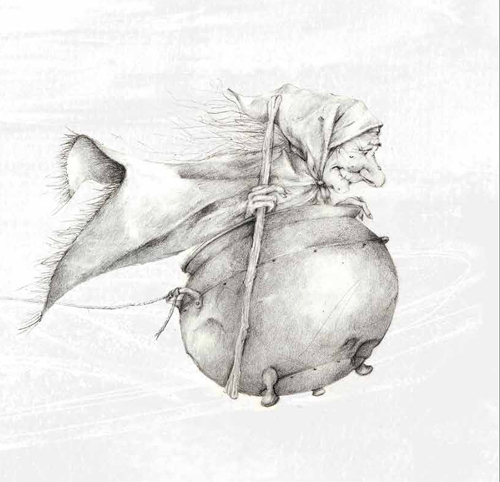
I didn't mind the heroine being renamed Olga instead of Vasilisa, almost all girls in Russian fairy tales are called Vasilisa anyway, but I have to question the Westernisation of Baba Yaga. The quintessential Slavic witch is here stripped of her characteristic mortar-and-pestle means of transportation in favour of the Western stereotype for witches: a cauldron that she steers with an oar and that is followed by a broom that sweeps the air to erase her tracks. Why would Baba Yaga need a broom to hide her tracks in the air is never explained, it's so nonsensical. That her Slavic-ness is erased to replace her with a Hallowe'en type of witch is just as nonsensical.
Additionally, she's also stripped of her characteristic sharp iron teeth and given... only two rotted teeth. Why? Leysen seems also rather obsessed with Baba Yaga's repulsive appearance, to judge by how the book boldens and capitalises UGLY! when describing her.
The ending is also changed, made sweeter for a children's audience because Olga is an infantilised Vasilisa and there's no marriage to a prince by the end. It would've been better to keep to the origins instead of forcing Baba Yaga into a Western mould; all she lacked was a pointy hat and a black cat to be the perfect witchy trope from the West.
Neo chose another interesting tale from far away. The folklore surrounding Baba Yaga is quite spooky, especially for children. A ghastly old hag who chases children around in her cauldron and eats their tender flesh. Young Olga was so happy in her life with her loving father. After her mother died, it was just the two of them, enjoying their days and nights. However, Olga's father met someone and fell deeply in love, not knowing the cruelty that lay behind the eyes of his new bride. Olga was turned into a slave and left to bemoan life. When she is sent to her step-aunt, Olga is worried, more so when she discovers that it is the infamous Baba Yaga. Olga traverses the fields to make it there, sent on a mission, but is soon able to see the heinous nature of this woman in person. With the help of some unlikely friends, Olga escapes and begins her journey homeward, but Baba Yaga is on her trail and hungers for young flesh. It will be up to Olga to save herself, or perish trying. Neo enjoyed this tale, another one that turns out to be quite dark, and learned a great deal. He hopes never to see Baba Yaga, but knows some tricks he might use, if need be. Wonderful illustrations and a captivating narrative, this story will please many listeners throughout.
Belgian author/artist An Leysen retells the classic Russian fairy-tale of Vasilisa the Beautiful and Baba Yaga in this lovely picture-book. In her retelling the heroine is named Olga, but many of the other details are the same: Olga is the daughter of a widower who remarries, and is mistreated by her new stepmother. Determined to get rid of her, the stepmother sends Olga into the woods to visit the fearsome witch Baba Yaga (here the stepmother's sister), but our heroine is aided by the magical doll left to her by her own mother, and triumphs in the end...
Having greatly enjoyed Leysen's retelling of the French fairy-tale of Beauty and the Beast, and having always loved the stories surrounding this fearsome witch of Russian and Slavic folklore, I picked up Baba Yaga with some excitement. Overall I was pleased with what I found, appreciating both the story and the gorgeous artwork. That said, I did question the teller's decision to change Vasilisa's name to Olga, and wondered whether this represented a variant of the story unknown to me, or simply Leysen's own preference. Unfortunately, there was no author's note about sources here, so I could not answer that question. Leaving aside that issue, I also found myself a little less-than-thrilled at the depiction of Baba Yaga herself, who is described as riding a cauldron with attached broom, rather than the more traditional mortar and pestle, and who is unremittingly villainous here, rather than being a fearsomely ambiguous figure, sometimes bad and sometimes helpful. I do greatly enjoy Leysen's artwork, which alternates between deeply colorful spreads and ones done in a sort of sepia-toned outline, and I do recommend this one to fairy-tale fans. That said, readers might also want to check out Baba Yaga and Vasilisa the Brave, which is my absolute favorite retelling of this tale.
This children’s story is a retelling of the original Russian fairy tale of the Baba Yaga.
After her mother dies Olga and her father lived happily together. Then, Olga’s father is bewitched and marries the cruel sister of the evil witch Baba Yaga. When this woman, who is Olga’s stepmother, sends her to Baba Yaga, Olga must outsmart the witch (with a doll given to her by her mom) to avoid being devoured.
This was a beautiful retelling of the original story. The original folktale as I knew it was a little different and much much scarier. But this was written appropriately for children ages 5+. It had a few frightening elements, such as the witch preparing to devour her niece, but nothing that I think would be too much to handle. And as with most fairytales, it has a happy ending.
In addition, this story teaches good lessons such as kindness and helping those in need. It would also be a good introduction for children to learn about different countries and cultures.
The only issue I had with this story was with the dialogue and flow. It seemed clunky and stilted to me. But perhaps that was because this story was translated or because this isn’t the final copy.
Lastly, can we talk about these illustrations? Because holy crap they were gorgeous. I have to give major props on these. They were so…magical? Beautiful? Fantastical? All of the above! Really though, there are no words for how wonderful they were. They brought the story to life. The ebook form of this does not do justice.
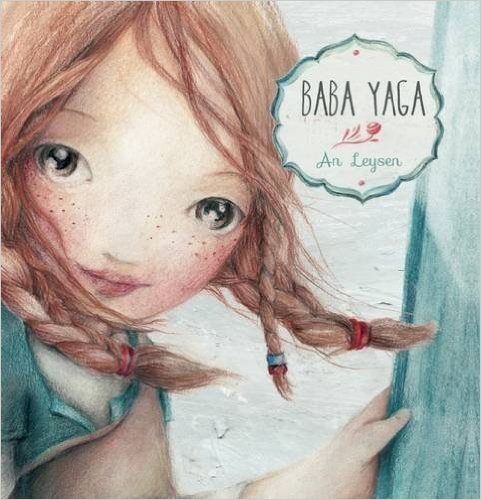
I mean look at this book cover.
Thank you to NetGalley and the publisher for giving me this copy in exchange for an honest review.
Ages 5 & Up. Young Olga and her father live a happy life together. That happiness comes to a halt when Olga's father falls in love with a cruel woman. He is so blinded by love that he cannot see how his new wife mistreats Olga. One day the evil stepmother sends Olga to her sister's house to fetch needle and thread. Unfortunately, Olga's new aunt is Baby Yaga, a witch who is rumored to eat children. Are the rumors true? If so, how is Olga going to make it through this trip alive?
The illustrations are gorgeous and well-composed. Like many fairy tales, the overall tone is somewhat dark and unsettling. However, good prevails over evil! This story shows the power of kindness. It's a beautifully written story that's perfect for a rainy day. ____________________ I received this book for free from Clavis Books in exchange for an honest review. This does not affect my opinion of the book or the content of my review. This title will be released on September 13, 2016.
There is nothing really wrong presenting a traditional folk tale as a new picture book. Perhaps I am jaded, but I always expect more from retellings. A new spin. A new outlook. It is a bit like doing a cover song; make it your own, don't do it the same way the original singer did.
There is not much that changes in this story. The illustrations are nice enough. Nothing special, no beautiful Russian traditional costumes here.
Baba Yaga isn't always evil, and I though this would be a spin on that, but it was not.
So, yeah, it is an ok retelling of one of the Baba Yaga stories.
Thanks to Netgalley for making this book available for an honest review.
Meet Baba Yaga, the witch that flies around in a cauldron hunting children to kidnap and eat. Yes, this is a children's book.
In the pages of this story we meet Olga, a young girl whose mother died leaving her with her father who marries providing Olga with the infamous wicked stepmother! Before Olga's mother died, she gifted her with a special doll that Olga always kept in her pocket. It is this doll who helped Olga outwit Baba Yaga when the good ole evil stepmother sent her off to Baba's house under the premise of getting a needle and thread. But we all know it was so Baba could eat her!
I knew the story of Baba Yaga but had never read the fairy tale. I enjoyed reading the story and especially enjoyed the photos. I feel that reading the actual book instead of on a Kindle will bring the photos and the story to life. The photos are cute and friendly and not horribly scary. (I don't think they are scary at all but I am trying to see them as a 5 year old child would)
This is a fun little book that children who are old enough to understand that it is a fable, and that no cauldron riding witch will be hunting them, will enjoy.
Suggested age is 5 and up.
Thank you to the publisher and Netgalley for providing the free galley of this book.
BABY YAGA Written and Illustrated by An Leysen September 2016; 32 Pages Clavis Genre: fairy tales, picture book, children's book
(I received an ARC from the NETGALLEY in exchange for an honest review.)
★★★★★
"Once upon a time, in a land far away from here, lived a girl named Olga. Olga lived with her father in a beautiful house, and they were very happy together. Until Olga’s father one day fell in love again … His new wife was cruel and mean. And her sister Baba Yaga, who lived in a dark forest, was even meaner. Baba Yaga was a real witch! There was a rumor she was fond of children … on her plate! One day Olga’s stepmother sent her to Baba Yaga. What was she supposed to do now?
Baba Yaga, the witch from Slavonic mythology is coming alive in this fairy tale. An Leysen takes you on a journey in an imaginative story about a wicked witch and a sweet and brave little girl." (From Publisher)
Clavis is soon becoming one of my favourite picture book publishers. The artwork in these books are mind-blowing. I would these pictures up on my wall. The images in this book will have you have mesmerized, as will the story. Some of images and story may scare younger kids. I would say this story is for kids about 5-6 with the aid of an adult. I HIGHLY recommend this book to anyone.
Baba Yaga is a famous Russian fairytale. Olga is a little girl who's mother died and she and her father live happily together. When he falls in love with the sister of Baba Yaga (a witch who loves to eat children) he is under her spell. She treats Olga terribly and wants to be rid of her. She sends her to see Baba Yaga, supposedly to get a needle and some thread. The little doll that Olga's mother made her before she died tells her to bring certain things with her. Off she goes and uses the things that she brought to help her once she arrives at Baba Yaga's cottage. As in most fairytales, there is a happy ending.
The illustrations in this book are wonderful. They make the story seem magical and Olga is such a beautiful little girl. A great book when studying fairytales, especially if looking at ones from various cultures and lands. I would recommend this book to public, school and class libraries.
I received a copy of this book from the publisher via netgalley in exchange for an honest review.
'Baba Yaga' by An Leysen is a classic story told with beautiful pictures. The lesson is timeless as well.
Young Olga lost her mother when she was even younger. Now she lives with her widowed father and things are not perfect, but they aren't bad. That changes when her father remarries a cruel stepmother who has a witch, or Baba Yaga, for a sister. The stepmother would like nothing better than to have Olga out of the way, so she sends Olga on an errand to get some needle and thread from her aunt, the Baba Yaga. Her new aunt likes to eat children, so Olga will have to be smart if she is to stay off the menu.
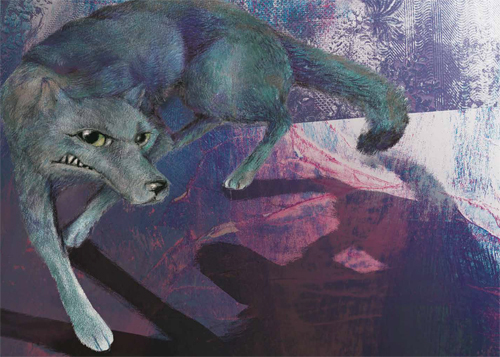
The story shows that kindness can win the day. This is a lesson we could all learn. The illustrations by An Leysen are beautiful and sometimes frightening. There are snarling dogs and cats and scary Baba Yaga, but at the center is Olga who stays brave and kind.
I received a review copy of this ebook from Clavis Books and NetGalley in exchange for an honest review. Thank you for allowing me to review this ebook.
I absolutely loved this book. It's exactly the kind of picture book I'd love to write. It had just the right balance of adventure, magic, and creepy/scary that children will love. Baba Yaga is terrifying but I don't think it will worry young children too much - plus, the happy ending will be sure to put them at ease.
I'd not heard of this fairy-tale before, and I'm desperate to read the original now. But what I loved most of about this book is the stunning illustrations. They took my breath away, really! Perfect!
This is a retelling of the tale of Baba Yaga with illustrations by An Leysen. The illustrations are adorable, but the book is very text-heavy for a picture book and it changes parts of the original story for seemingly no reason at all. There are many retellings of Baba Yaga and I simply don't think this one is as good as it could be. At least it does a happy ending with the father being protective and not tolerating the evil stepmother.
Note: I received a free copy of this book from NetGalley. I was not compensated in any other fashion for the review and the opinions reflected below are entirely my own. Special thanks to the publisher and author for providing the copy.
Baba Yaga is a wicked witch from Slavonic mythology.
While Olga is a good person, in the black-and-white world of this story. The bruised-and-battered maid is also a good person. Aw, when these two ill-treated characters smile at each other through their tears....
You just know there is going to be a happy ending. And there is.
FIVE STARS, in honor of all those who love fairy tales like this one.
This fairy tale is similar in some ways to Cinderella and Hansel & Gretel. Olga's mother dies and her father marries an evil stepmother who makes Olga work hard and treats her poorly. She sends her on an errand to the witch in the forest but Olga manages to escape and it all ends happily ever after. The illustrations are soft, colorful, and beautiful.
Saya selalu kagum bagaimana bisa An Leysen membuat ilustrasi yang seindah ini. Terpesona. Ini jenis buku anak-anak yang membuat orang dewasa jatuh cinta dan ingin mengoleksinya untuk dirinya sendiri.
Charming Illustrations and a Story That's Suitable for Kids
(Full disclosure: I received a free electronic ARC for review through NetGalley.)
A long time ago, in a land far away, lived a young girl named Olga. Ever since her mother passed away, it'd just been Olga and her father. But he filled her days with games and stories, and they always had food to eat and a place to sleep; things were generally pretty good. That is, until dad remarried.
Olga's stepmother wasn't just evil; she was a straight-up witch. Or the sister of one, anyway. Olga's stepmother fed her scraps and made her do all the chores, all by herself. But Olga never complained, which caused her stepmother to hate her even more. One day, she sent Olga to her sister's house to fetch a needle and some thread. What might otherwise be a mundane chore was actually a suicide mission: for Olga's step-aunt was none other than the storied Baba Yaga, child-meat connoisseur. Luckily, Olga didn't go into battle unarmed: she had a magical doll, gifted her by her late mother, to help guide the way.
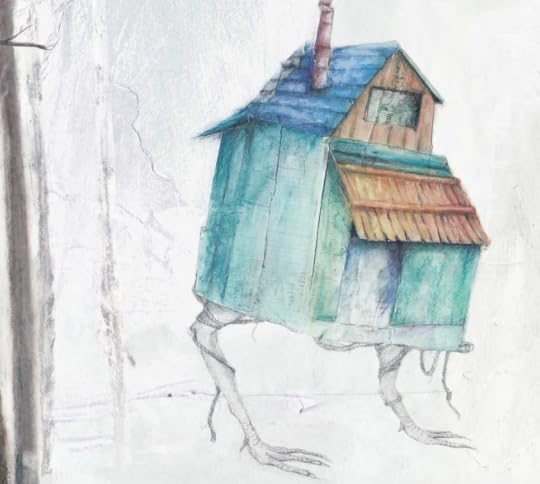
I'm not super-familiar with the Baba Yaga fairy tale but, from my limited knowledge, An Leysen's version seems pretty faithful. All the staples are present and accounted for: a flying cauldron (mortar) steered by a broomstick (pestle); a house that sits on chicken legs; multiple witchy sisters (possibly all named Baba Yaga; we never do learn stepmom's real name); and the ever-present threat of child cannibalism. Despite these more maudlin plot points, the story is rather tame and suitable for children.
In fact, Baba Yaga looks more like a kindly old grandmother - a babushka or nonna, perhaps - than a mean old witch.
The artwork is really quite charming, with a textured feeling that resembles oil paints on canvas.
The colors are rich and vibrant, except when they're not: some pages are much more muted and somber than others, which makes for a rather interesting contrast. Sometimes a single object is imbued with color, as if to draw attention to its import. Likewise, there are variations in the size and style of the text as well, to emphasize tone and volume.
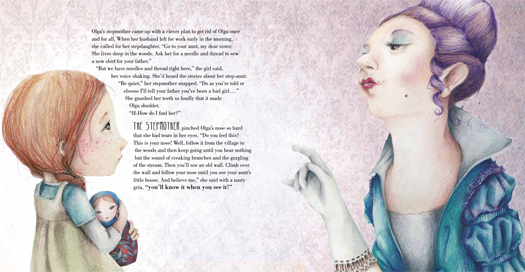
Olga is adorable as all get-out - but my eye was really drawn to the stepmother who, with her purple, upswept hair and seemingly painted-on mole, bears an uncanny resemblance to Marie Antoinette.
Between Baba Yaga's slighted maid, cat, and dog, the story imparts a simple yet important message: always treat others the way you yourself wish to be treated, lest it come back and bite you in the ... stomach.
I can't ever decide whether I like huge head Holly Hobbie type illustrations or whether they thoroughly creep me out. I think I fall on the liking side this time. Leysen does an especially good job with the witch's craggy, warty face. This is *based* on Baba Yaga, while not an actual folktale.
I was generously given this arc from Netgalley in exchange for an honest review
This book is beautiful. My love for Russian folk tales is no secret, and this evocative book was able to bring alive the fearsome tales of Baba Yaga through impressive pictures. I read this book to my baby cousin, and I was delighted to see the magic of the words and the pictures take ahold of her. With reminiscence of Hayao Miyazaki, I was also delighted to see that the magic of this book took ahold of me too.
It is impossible not to fall in love with such vivid and imaginative artistry. Each page held a treat, often, my cousin and I would spend moments in complete silence (a feat for her!) absorbing the pictures.
The plot was also fast-paced, with new vocabulary words I was able to introduce to my cousin. She could not get enough, and would ask for ‘just one more page’, till we were reading way past her bedtime (clever girl!). I didn’t mind, though, because this book tells a very impressive moral about kindness and treating others with respect. A valuable lesson, that even I need reminding of sometimes.
This book also taught me that fairy tales are not only for children, that their teachings can, and should, be cherished in adulthood.
I hope, that when my cousin is all grow up she will not forget about Baba Yaga, and her cousin who would stay up half the night reading to her. But I hope, most of all, that my grown-up cousin does not forget the magic of reading.
You can read this review and others on my website:
Het sprookje zelf bestaat al langer en is gebaseerd op een verhaal uit de Slavische mythologie waarin Baba Jaga ook een soort heks is. Het verhaal is in diverse variaties bekend. De ene keer wordt het meisje de slavin van de heks, de andere keer is er geen sprake van een meisje maar een jongen die Baba Jaga op zijn pad treft.
En nu heeft An Leysen het verhaal ook bewerkt en voorzien van prachtige afbeeldingen in haar bekende, betoverende, fantasievolle stijl. Olga is een innemend liefelijk meisje met vlechten en rode wangen met sproetjes maar het zijn vooral de twee grote, bruine kijkers die gelijk je hart veroveren. Baba Jaga is natuurlijk best griezelig maar niet supereng en haar huis op kippenpoten is helemaal geweldig om te zien. Ook de afbeeldingen bij de handeling die Olga uitvoert in opdracht van haar pop zijn bijzonder. Alles is in mooie zachte tinten weergegeven. De ene keer is de afbeelding helemaal ingekleurd, de andere keer zijn het sepiakleurige tekeningen met her en der een kleuraccent. Alle voorkomende figuren zijn een bijzonder perspectief geplaatst zodat je nog meer het verhaal ingetrokken wordt. Het zijn stuk voor stuk kleine kunstwerkjes.
Net als de meeste sprookjes is het verhaal zelf vrij lang het kan niet even snel voorgelezen worden. De tekst zelf is op een grappige manier bewerkt. Als iets tussendoor of op een fluistertoon wordt gezegd dan zijn de letters ook klein. Enkele andere woorden staan dikgedrukt weergegeven om dingen extra te benadrukken. Dat werkt goed het geeft het belang van de - soms boze - woorden prima weer.
Kortom, het is opnieuw een prachtig boek van deze veelzijdige, kunstzinnige vrouw. Ik kijk nu al uit naar haar volgende boek.
Thank you to Netgalley, the author and publisher for this digital ARC in exchange for an honest review.
This is a beautifully written and illustrated version of a classic folk tale. I don't think it is that well known but we had read this before in a collection of folk tales. This was by far the superior version.
The story (if you don't know it) tells the tale of Baba Yaga, a child eating witch who flies around in a cauldron terrifying the countryside. Her creepy house in the woods is especially creepy as rather than been set on foundations or stilts it's set on moving chicken legs – not sure that one would make Grand Designs but each to their own. She’s your typical ugly witch, unbelievably old with warts etc. Now Baba Yaga has a sister who is a fair but more attractive and has managed to saddle herself a widower. Unfortunately for her this widower has a daughter Olga, a sweet child, who despite her stepmothers ill treatment manages to stay kind and cheerful. This is obviously unacceptable so she sends Olga into the woods to her sister.
This is quite a creepy story, I read it to my 5 year old who loved it in a hiding behind the teddy sort of way – her first words were 'now that I liked!'. I wouldn't read it to a younger or more sensitive child though. The pictures as I mentioned before are beautifully illustrated so I think that this book would be far better read as a physical copy rather than in digital to get the full experience.
Baba Yaga is a picturebook that was written and illustrated by An Leysen. Once upon a time, in a land far away from here, lived a girl named Olga. Olga lived with her father in a beautiful house, and they were very happy together. Until Olga’s father one day fell in love again but his new wife was cruel and mean. And her sister Baba Yaga, who lived in a dark forest, was even meaner. Baba Yaga was a real witch! There was a rumor she was fond of children on her plate! One day Olga’s stepmother sent her to Baba Yaga. What was she supposed to do now?
Baba Yaga is a retelling of the classic Slavonic myth. Olga is a sweet girl put in a bad situation, a common start to fairy tales world wide. I have heard different tales about Baba Yaga over the years, and I found this version to be simple enough to share with younger readers than most of the versions I have read. The illustrations are lovely and add a great deal to the atmosphere of the story, and included details that enrich the story. This would be a wonderful addition to a classroom unit of fairytales and legends, or just for sharing. It is a little text heavy, which is necessary to tell the story, so I would label this an older picturebook or one to share.
Baba Yaga is a wonderful version of this classic tale. I think the illustrations are what really sold it to me, with their soft ethereal feel. A delightful book for sharing a fairy tale that some might not be familiar with.