

What do you think?

The Hippocrates Code: Unraveling the Ancient Mysteries of Modern Medical Terminology
In this book lies a key for decoding modern medical terminology, a living language that, despite some quirks, is best approached as an ordered system. Rather than presenting a mere list of word elements to be absorbed through rote memorization, The Hippocrates Code offers a thorough, linguistically-centered explanation of the rules of the terminological game, both for the language of medicine and for scientific vocabulary in general. Its careful exposition of Latin and Greek linguistic principles—along with a healthy dose of innovative exercises—empowers students to successfully employ the word elements that are the building blocks of modern medical terminology. Along the way, fascinating discussions of the practice of medicine in the ancient world provide an integral aid to the understanding of medical vocabulary. Code-breakers drawn to language, history, and medicine will be as stimulated as they are enlightened. The Hippocrates Code The Hippocrates Code companion
400 pages, Paperback
Published March 1, 2016
About the author
J.C. McKeown
13 books3 followersJ. C. McKeown is Professor of Classics at the University of Wisconsin, Madison, and the author of Ovid's Amores.
Ratings & Reviews
Friends & Following
Create a free account to discover what your friends think of this book!
Community Reviews
Displaying 1 - 1 of 1 review
January 5, 2026
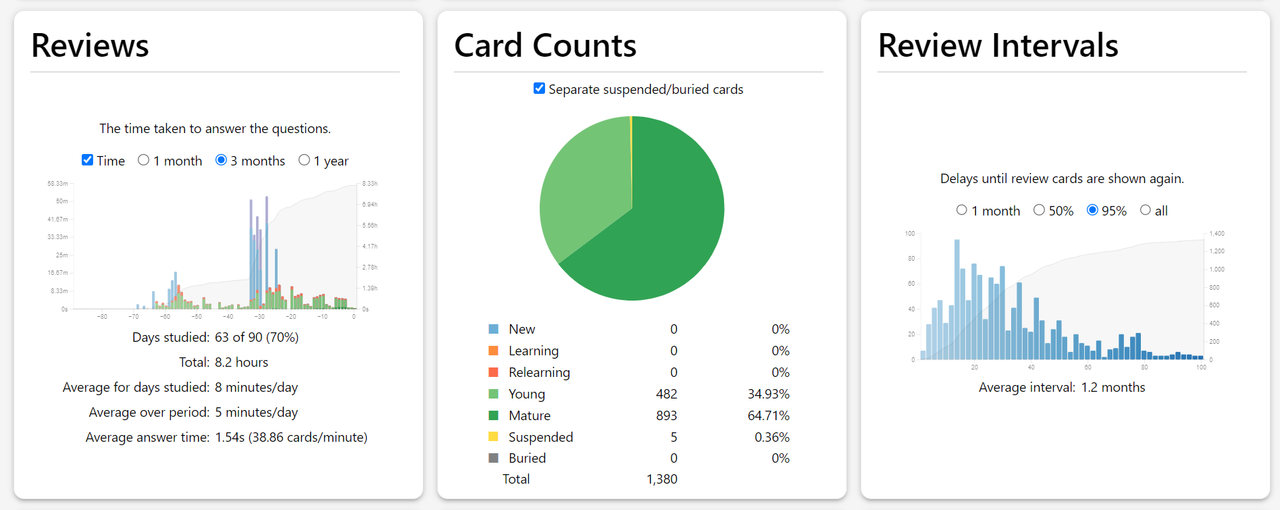
I memorized The Hippocrates Code front to back. If you are curious how I did it, see (my deck made slight modifications, dividing cards such as front:"quadr-, quadra-, quadri-, quadru-"; back:"four" into four unique cards for each word on the front).
Medical terminology workbooks are not hard to come by. J.C. McKeown compiles a fairly sizeable corpus of stems that serves as a decent starting point for beginners. Like other such workbooks, McKeown concludes each chapter with a series of exercises left to the reader, so as to rehearse what they've learned. This is utterly useless. The text constitutes roughly 1,400 words of Greek and Latin. Any diligent reader who wastes time with this folly will have forgotten everything he read in Chapter 1 after quizzing himself on the contents of Chapter 2.
That being said, the content itself is well selected, and the stems chosen appear frequently in medical jargon. To no fault of McKeown (but undoubtably to the frustration of many future students) several stems have numerous disparate meanings. Such "non-functional" words offer a single input but countless dissimilar outputs. This gripe has less to do with the book than the nature of language, and can't exactly be counted against it. I'm sure there are another half dozen suitable workbooks on medical terminology, but if you are interested for yourself and don't care to continue searching, this one will suffice.
Medical terminology workbooks are not hard to come by. J.C. McKeown compiles a fairly sizeable corpus of stems that serves as a decent starting point for beginners. Like other such workbooks, McKeown concludes each chapter with a series of exercises left to the reader, so as to rehearse what they've learned. This is utterly useless. The text constitutes roughly 1,400 words of Greek and Latin. Any diligent reader who wastes time with this folly will have forgotten everything he read in Chapter 1 after quizzing himself on the contents of Chapter 2.
That being said, the content itself is well selected, and the stems chosen appear frequently in medical jargon. To no fault of McKeown (but undoubtably to the frustration of many future students) several stems have numerous disparate meanings. Such "non-functional" words offer a single input but countless dissimilar outputs. This gripe has less to do with the book than the nature of language, and can't exactly be counted against it. I'm sure there are another half dozen suitable workbooks on medical terminology, but if you are interested for yourself and don't care to continue searching, this one will suffice.
Displaying 1 - 1 of 1 review