A book about being a teenager in Pakistan and India. Through letters we follow the lives of four girls, two wealthy and two poor, two Pakistani and two Indian. Two who know exactly what their future holds and two who are convinced that they will never measure up.
Last night there was a snowstorm that made my window disappear. I woke up gasping at the heater. This is my first letter in three years. First letter since I left Pakistan. First letter since Nusrat. Tanya Tania is a story about two young women coming of age in two countries that are coming of age. Tanya Talati in Karachi and Tania Ghosh in Bombay, daughters of college best friends, write to each other of what cannot be said to anyone a mother who has gone from quiet to silent, sex that has become a weapon, a servant with unforgettably soft hands and a country beginning to play with religion. When Tanya’s brother receives a kidnapping threat, she sets in motion what no one could have predicted, least of all Tania, who finds herself alone in a forbidden bazaar in Bombay, listening to the sounds of a riot torn city coming closer and closer and closer . . . Written in letters that span six years, Tanya Tania is a story of what it means to be between childhood and adulthood at a time when two countries are struggling with what it means to be Indian and Pakistani, rich and poor, confident and lonely. A story of love between girls, between families and between countries, Tanya Tania , is, at its heart, a love story about what it means to be human.
Thanks to Bloomsbury India for sending me a copy. However, it does not affect my review in any way. All opinions stated below are mine and 100% honest.
I enjoyed reading Tanya Tania but I didn't like the way it ended. It's an interesting novel which raises questions in your mind. It's about two girls named Tanya from Karachi and Tania from Bombay, who are very different from each other yet quite similar. They are bonded by sharing letters with each other and the story is told through these letters. What I love about Tanya Tania is how real and honest it was. Tanya & Tania are just a little older than me, and they both seem likes girl we see around us. Tanya is the intelligent and Tania is the badass one. (Albeit when Tania made a very stupid decision, I wanted to bang my head in the wall. ) I also loved how sensitive things (like sex, religion, standing up to your parents, etc) were so cautiously handled. I would give this book to any teen because it's an eye opener and makes you realize about yourself a lot.
However, ending is such an important part of a book! It was absurd and left me very confused. Therefore, I decreased my rating to 3 stars. :( Overall I recommend it, so go purchase your own copy. :D
Tanya Tania is a story composed in letters from the daughters of two college best friends, one living in Bombay and the other in Karachi. It contains a raw emotions of developing adults. Antara Gangli made sure that there was unfiltered and a real portrayal of being a teenager and figuring out yourself and your aspirations. The two girls are trying to navigate through changing times and situations. Friendship is a main theme along with a culture, family and traditions. This book teaches a lot of things, like understanding people and their decisions even though you might not agree with them and in the end you are emphasizing with the protagonists. Different family structures and Friendships across all sort of borders are represented. Overall "Tanya Tania" is a great read. I have mixed feelings about the ending though. The writing is quite poetical.
“Thank you Bombay and Karachi for being the beautiful, ugly, horror-ridden, life-giving cities that you are, stubbornly holding onto the banks of the grey Arabian, promising everything, giving everything and taking everything. No riot will destroy you and no one idea will overpower you. Here’s to you and here’s to the children who grow up in you.”
Tanya Tania, Tanya Talati and Tania Ghosh, two girls who grew up suddenly into adolescence thanks to the ongoing political turmoil in their countries, India, and Pakistan and another turmoil, deeper inside both. A story that kept me hooked for 18 hours and by the end, I was holding my breath. But it's not just about two countries, It's about two girls sharing their life with each other, their sorrows, their happiness and their darkest secrets.
Antara Ganguli's first novel Tanya Tania revolves around two girls, Tanya Talati who resides in Karachi and Tania Ghosh who lives in Bombay. A time when violence was exploding in Pakistan and in India, a 16th Century mosque was about to be demolished by Kar Sevaks. But these girls were far away from such turbulence. They were busy in their own world, their boyfriends, parental issues, school-queen titles, and upcoming college life.
Both the protagonists mothers were good friends once upon a time. Out of boredom, Tanya Talati writes a letter to Tania Ghosh, sharing that her leg is broken and she couldn't find anything else to do. And after a swift reply, their friendship takes off. They start exchanging letters, sharing about a mother who has fallen silent, household bills that are not being paid, sex dominating and becoming a weapon slowly, and servants who act like a better support system than parents. A friendship so unique and innocent that you drown in those letters, reminiscing the time when friendship was simple, and could even be shown via letters.
But then both the countries, India, and Pakistan were on the cusp of achieving power. And with power comes arrogance and ignorance. When Tanya's brother receives a kidnapping threat, she sets a chain of events that no one could have predicted. Not even Tania, who was left alone in a city that was burning, riot-torn and flames that were coming closer and closer to her home.
Tanya Tania is a book that will leave you spellbound. As a debutante, Antara Ganguli's writing is confident, fluent and very engaging! I loved the way she explained innocence of teenage of both the girls, their issues, their desperation, their love for their families and their frustration. It is a story that will quickly draw you into the world of friendship, living across the border. Different yet similar in so many ways.
Another main aspect of the book is the 1992 Babri Masjid Riots. Though I was just born at that time, but growing up I have heard many grotesque stories from my parents. How Advani decided in a swift moment that a Ram Mandir was supposed to be built, how they should demolish a mosque, and even Tanya Tania ask the same thing, that how come one man has so much power to demolish something so serene in one swift blow of his words. Babri Masjid was a debate topic in every home, even in Tania Ghosh's home, where her father used to side with BJP and mother was free from any alliances. From the beginning only you could see signs of an upcoming tragedy.
By the end of the book, Antara Ganguli has shared what had befallen on the residents of Muslim areas in Bombay in a short yet horrific account. No regard for human life, only religion prevailing and cutting into people! 900 people massacred in the fight to prove which religion is better and pious. Even some residences were burned to the ground. Swords in hands and blood in eyes, Shiv Sena also jumped into the fight, to remove the Muslims forever from Bombay. 33 jurisdictions were under curfew, and in one of those jurisdictions, a girl was fighting to save her best friend, a scene that doesn't go from my mind even after finishing the book.
All in all, Tanya Tania is a book that you will love and it will leave you in an awe. And it is something that you should definitely devour into this July. For Antara Ganguli, now I am patiently waiting for your next book, sipping my tea and reminiscing the letters of Tanya Tania.
Thank you Bloomsbury India for sending me a review copy of this book.
Things I liked about this book:
• For the past few years, I have read almost nothing by any Indian author. I have always had a prejudice against them (you can't blame me, because the prime examples of Indian authors seem to be Chetan Bhagat and Durjoy Dutta, and I have tried readingtheir books. Enough said) . But recently I came across a few other books which totally changed my perspective. Antara Ganguli's Tanya Tania is one such example.
• Tanya Talati and Tania Ghosh, both were extremely well-constructed and realistic characters.
• The concept of a book through letters is something I loved. The only other time I have come across this concept was Cecelia Ahern'sLove Rosie, I had loved it then, I love it now.
• Tanya Tania also taught me some parts of the history of our country, about the last decade of the 20th century.
Things I didn't like about this book:
• The ending was sort of anticlimactic. It just wasn't enough, because the whole book was built towards the ending, but it just fell flat there.
• I couldn't relate to either Tanya or Tania. They were supposed to be normal teenagers I am guessing? But I couldn't relate.
Overall:
Even though the story falls slightly flat, the writing style and the small and big lessons you learn from this book cannot be ignored. If you ask me whether you should read it, I'd say yes, definitely.
Wow! I don't know how to begin honestly. Thank you Bloomsbury books for proving me an ARC ( paperback) of the book signed by the author. Tanya Tania is an epistolary novel written in the form of letters exchanged by two girls, Tanya and Tania. Their mothers are best friends and while their nationality is different , they soon become pen pals. There is a parallel drawn between their lifestyles and their behaviour and they have so much in common. They are struggling with their lives and find solace in the letters they write. Both of them have a servant friend and while Nusrat is Tania's best friend , Choti Bibi wants to please Tanya at all times. I could see how the cultural differences had shaped their behaviour as I felt myself connecting more and more with Tanya. Teenage emotions have been subtly brought out throughout the novels. The difference in the education system in the two countries. I genuinely felt myself sympathising with both the girls. The writing style was amazong and worked pretty well for me. The shift from 1992 to 1996 had me curious and I thought I had the story figured out but apparently I hadn't. I was horrified and totally shocked when The ending was,...... well a lot of it was left to my imagination and some parts not clear but honestly I am fine with the anonymity. I judged the characters in the beginning but they turned out to be quite opposite. The book also addresses the issue of Hindu-Muslim fights and it is quite a sensitive issue shown through the teengers' eyes . Overall, I loved the book and for a debut novel I think the book was amazing. Looking forward to reading more from the author. ** I won this book in a Goodreads Giveaway**
Had read an excerpt of this on Scroll and immediately ordered it, and not disappointed at all. It's a simple work about two teenage girls writing to each other back and forth, the only catch being one is in Karachi and the other in Bombay, in the backdrop of the '92 riots. It's about how these girls deal with the age old issues of family, identity, sexuality, careers and friendship. The writing style is simple and gripping. I was happy that you could clearly make out the differences in writing styles of the two girls, along with their personalities and flow of thoughts. However, the ending does seem a little out of the blue and the editing isn't great. Could make out 'she's instead of 'he's and 'him's instead of 'her's that kept distracting me. All in all, a good read. And a good first novel by an Indian author in English after a quite some time.
A quick read. 2/3 of the book has shallow content (as its based on letters written by two teenagers from Bombay and Karachi). From the introduction of the book, I expected to get more information on lifestyle in Indo-Pak during early 90s, however, the book or characters lacked that depth, especially writer's knowledge about Karachi is quite superficial and she knowingly does not touch that in the book. Characters had their limited boundaries as is the case with upper class. The book gets intense in last 30-40 pages after demolition of Babri Masjid and thats the better part of the book, where writer does not take side based on religion or country. Overall a good read.
Nothing quite like opening up a novel and finding a soul mate. We learn a bit about two major cities in the world and tumultuous times in each. But most importantly these two narrators are so honest and vulnerable. When they share insights about their own lives, they also help us reflect on our own. I didn't want to put it down.
A touching, heart-wrenching, and innocently tragic walk back through the memories of being a teenage girl and not knowing your place in an increasingly tumultuous world. Ganguli’s characterizations of Tania and Tanya are riveting: both girls are absorbing in how flawed and changeable they are, at this time in their lives and as a consequence of their parents’ struggling relationships. They bare their hearts to one another via melodramatic letters, which are dead-on for the uniquely teenage girl balance of angst & poetic insight. Loved how the structure of alternating Tania’s letters from the present with both of their correspondance from the past created narrative tension; really couldn’t put this book down!
Credit to Ganguli for choice of the 1992 Bombay riots as a historic setting relatable to a modern audience. I had mistakenly thought this novel would be based in the time of Partition, which - although more horrific - risked minimizing the two characters’ interpersonal conflicts to make a moral point. Have seen this happen in novels like Koinange’s Havoc of Choice on Kenyan post-election violence or, dare I say, Thiong’o’s Weep Not Child: the characters serve as cogs in an allegory but not convincingly as conduits for the reader in their own right. Instead - à la Doerr’s legendary All The Light We Cannot See - the conflict that unfolds behind Tanya Tania speaks to what it’s like to face your own issues against the backdrop of violent and uncertain society… a situation no less common for youth today than when Ganguli published this novel in 2016.
I disagree with other reviewers that the ending was somehow unexpected or unfulfilling. I found the final « twist » to be suitably foreshadowed such that although I knew the inevitable outcome, I still was so drawn to the characters that I needed to know how it happened. The presumed rift in Tanya and Tania’s relationship at the book’s close seemed, although tragic, appropriate to the growth both required to shed their deepest flaws. Would highly recommend this book and Ganguli’s storytelling.
'I asked my dad if being hot matters as much when you're grown up and he said that when you're an adult, money replaces looks. Actually he said, 'Money replaces everything.'
I heard Antara Ganguli moderate a discussion at the Jaipur Literary Festival 2017 and she pulled it off well with 3 other accomplished authors. I saw her nifty little book in the JLF bookstall and bought it hoping that it will be as interesting as she speaks.
The format of the book is laid out interestingly. It is in the form of exchange of letters between two teenaged girls – one in Mumbai – India and the other in Karachi – Pakistan – coincidentally with the same name albeit spelt differently but bound by a common pedigree – both their mothers were classmates in the US in the early seventies and encourage their daughters to get to know each other thru letters.
Think that the book was fraught with fascinating possibilities but got lost somewhere by the author who might not have been too sure as to what she intended the book to be.
Is it a chic-lit with two teenaged girls in different countries sharing their dreams, anxieities and ambitious in an environment which is so different – of an India which was showing its early signs of a right wing Hindu tilt and a Pakistan slowly sowing its early seeds of a failed state. Or is it a story of two middle aged couples – a Pakistani doctor with an American wife trying to establish a hospital ( shades of Imran Khan here) and their tangled relationship and an Indian couple – very go-go and corporate type and to add a twist – the wife is more successful than the husband and all the related issues of male angst that goes with it. Or is it the story of the burden of expectations that parents have on their children ( both mothers what their children to go to US and study) and how children cope with it. Or is it a story of contrasts about comparisons in two metropolitan cities – so near to each other but so different – bound as a common nation just some 50 years ago - about the lives of teenagers and their concerns.
To the pot-pourri are thrown in some more characters – of a male sibling and the attendant extra attention that he gets – so typical in Asia and more so in South Asia - this itself has the scope for a full book, of maids who have been dealt a wrong had by destiny and their struggles to punch above their weight – There were too many sub-stories that gets you tangled in a book which is less than 200 pages. And far too many pages dedicated to a stud of a boyfriend for the Indian Tania – insensitive and boorish and who comes in with his own entitled mindset and behavior.
The young author writes well. But writers should be clear what they want book to accomplish. One cannot stuff all that we want to convey into one single book and leave the reader….a tad confused as to what is it that they are reading ? Possibly if she were to go granular and drill the book into multiple books…..thematicallyt focused with an over-arching framework - she would have interesting stories to tell.
Also I am wondering how much of the book about the Indian Tania is loosely part autobiographical. Overall avoidable.
About a year ago, I think, this book was doing the rounds of social media. It is published by Bloomsbury, yes, the same publisher who published our beloved Harry Potter series. I picked this up during a visit to our local bookstore, Rachna Books. I had high expectations from it, but it felt a bit short of it.
First of all, I really liked how the author navigated from past to present. The transition is clear as the present is in italics and the past is in normal font. The language is simple and lucid, but this being a literary fiction, I expected a more lyrical approach to writing that is characteristic of this genre.
The characterization is good. Several traits of the protagonists are explored, and it is easy to differentiate between them. The two families and the complex relationships between the family members are described well. However, I couldn't bring myself to like both the characters. They were unlikable most of the time, and when I would begin to start liking them, they would do or say something that would put me off once again. Also, I kept getting confused between Nusrat and Chhoti Bibi, the two servants and very important characters of the story. I did like Nusrat, though. She was written well, and I could empathize with her.
The other thing I didn't like was the use of letters for 90% of the book. I know this is a letter-oriented book, but if parts of it were prose, the writing quality would have been better and the story would have been much more engaging. That fact gets proven in the final chapter. It is narrated so well. There is an actual scene going on, the descriptions are wonderful, and there is an air of tension all around. The letters were good and the story was never too predictable, but I personally would have liked some scenes and dialogues and drama and tension instead of just casual letters exchanged between teenagers.
Also, because of the letters, there is too much telling rather than showing. Only in a few letters are some scenes shown, but still they feel incomplete and unsatisfying. Another major problem for me is the punctuation, or in fact, the absence of them in all of Tania's letters. I can understand that it has been done to make the book more realistic, but it should not be forgotten that this is an actual book by an international publisher. 50% of the book is littered with punctuation errors, which I don't think is acceptable. Also, the overuse of the colloquial words 'like', 'man', 'shit', etc. and many other cuss words seemed really out of place in an otherwise well-written literary fiction.
However, the pace of the story is really good, and it kept me turning the pages. The political elements are weaved in the narrative with expertise, and it never felt artificial or unnecessary. The ending, as I mentioned earlier, is beautifully written and it did move me a bit. However, seasoned readers would be able to predict the ending, I feel.
One final thing before I end the review. I don't think it is a spoiler, but still, if you don't want to take a risk, please DON'T READ this paragraph. It's about one strange thing I noticed in the final few pages. It is narrated in the second person by Tanya. However, although it is mentioned that Tania told all that happened to Tanya via a phone call, it is difficult to believe. When a person is full of hatred towards the other, it is difficult to believe how they would give a detailed scene by scene narration to the other. And what about what happened next, as Tania sits by the seashore. If they are not in contact, how can Tanya know that detail? It is impossible. This part convinced me to arrive at a lower rating.
Despite all these small issues, Tanya Tania is a good one-time read. 3.3 stars from my side.
Tanya Talati and Tania Ghosh, being two sides of one coin called story, will take the readers on a journey in a train, which travels through the series of letters exchanged between them. It often passes through the tunnels of normal conflicts, soothing and relieving the readers' mind at resolution. But suddenly it gives a shock with a splash of water at the end, like a roller coaster. And then, what remains is the smiling face of the character named "Nusrat". This is the reason why Antara Ganguli, can be considered as a brilliant writer. In terms of story and narration, she has a simple and the most effective subject in hand that not only shows the realistic situations, faced by the above-mentioned characters in their everyday life, but also the rawness and the wild freedom of expressions, enjoyed by them, in their communication. This is also a reason why readers may sometimes think that the story is moving off-the-track, but will later realize it isn't. Ultimately, "Tanya, Tania", excluding the tiny loopholes and some typos (if the readers can find them), is a brilliant novel that has a lasting impression on the readers.
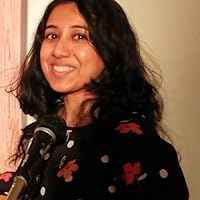
Antara Ganguli is a Gender and Development Specialist with UNICEF. She is also a writer. He debut novel is Tanya Tania.
Tanya, a Pakistani-American in Karachi starts to write letters to Tania, an Indian in Bombay, now Mumbai. The story is set in the times of Babri Masjid issue, 1992. The two girls are poles apart in characteristics, yet they connect with each other as they continue to exchange letter. The story is in epistolary form, but in two timelines. 1992 and after three years. The girls write to each other in 1992 but stop writing after a few months. Why? Not because of the Babri Masjid issue and the fact that Tanya is a Muslim. Then why do they stop writing to each other? Only Tanya keeps writing to Tania after three years only to stop after a few letter. Why? You will get your answers only from Tania.
Antara creates characters that are too real. Though the story is set during a real-life incident, it is a fictitious story but difficult to believe so. Tanya’s and Tania’s mothers are best friends since college in the USA. Tanya is your typical Miss Goody Two Shoes, trying to study well and get into a good university back in the USA. Tania is also your typical Queen Bee, trying to keep her boyfriend to herself and be more famous in school. Tanya has Chhoti Bibi whom she treats just the way she has to treat a servant. Tania has Nusrat whom she considers her best friend but is also her servant. Tanya has a twin brother. Tania has an elder brother already studying in the States. Tanya’s parents, American mother and Pakistani father, once very much in love with each other, don’t quarrel but don’t talk to each other either. Tania’s parents quarrel often but love each other. So different from one another, yet so relatable.
Tanya starts writing to Tania because of her mother’s suggestion. After stopping to write in a few months, Tanya again starts to write to Tania because of her psychiatrist’s suggestion after three years. I felt like Tanya is a blinded horse. Tania has a mind of her own and knows what she wants. I could relate to Tanya throughout the story, but in the end, I could not. I was able to imagine the narration of Antara Ganguli, as if I was watching a movie and not reading a book. I can’t tell you more than that. You have to read the book. YOU HAVE TO!
It took me four days to finish it. It was intriguing. I felt that as I read the book it was important to remember the details from the previous letters because it all got connected towards the end.
It's a beautiful book written in the form of letters. I loved how the character of Tania Ghosh developed over the course of the book and her friendship with Tanya grew deeper. I did forsee the ending, it was sad but to me, it didn't feel incomplete. I liked the ending. I liked how the book has been written - how the future and past are interlinked in all the chapters.
It is wonderful how a story of friendship and loss could be written in the back drop of Bombay Riots and the 'Clean Out operation' that went on in Pakistan in the early 1990s.
The story is about two girls Tania and Tanya, who live on each side of The Arabian Sea, Bombay and Karachi. The write letters to each other across the border.
Average epistolary fic buoyed by an unexpectedly emotional ending. I think the epistolary format let this one down somewhat. The character voices were jarringly modern and the first, oh, four-fifths went nowhere.
This is an epistolary novel featuring two teenage girls—Tanya Talati and Tania Ghosh—sharing their lives with each other.
Because it was written as a series of dated letters, there came a point in the novel where the dates didn't match up. For example, one of the girls wrote two letters in the same day and wondered why the other didn't respond to the one written earlier. Even more, it would be quite the bummer to expect a letter from a friend for it to say something along the lines of, "Did you even read my last letter?" There were many times where these girls disregarded each other and never felt like friends. I was expecting more of a connection over time and bigger reactions to certain events
The author crammed all of the chaos into the final chapters, and I wish it was spread out a bit more. I didn't mind the suddenness of it, but it would have been nice to not have experienced so much of it in a single chapter.
I expected this novel to go in one direction and was disappointed when it didn't.
I would like to know how audiobook listeners were able to keep track of who wrote who. I would certainly recommend reading this physically or electronically if you don't want to be confused.
Tanya Tania is a story about two teenagers in two countries that are coming of age. Tanya Talati in Karachi and Tania Ghosh in Bombay, daughters of college best friends, start writing letters to each other when Tanya falls and injures her leg. This starts a series of letters between them - they write to each other confiding and sharing things that cannot be said to anyone else. And then, there was that one letter which changed everything!
Written in letters that span over a few years, Tanya Tania is a story of what it means to be between childhood and adulthood at a time when two countries are struggling and amidst political turmoil, what it means to be Indian and Pakistani, rich and poor, confident and lonely.
A story about power, and love between two girls, between families and between countries. At its heart, it is a story about what it means to be human - to want to belong, to want to be loved, and how in that one weak moment you do something that you may regret forever.
Picked up as a random reco. The last two chapters were the clinchers for me. Worth a read.
The book is fast-paced and laid out as a series of letters and replies. Goes through lives of two girls who share their feelings through letters and then teaches us something about humanity, compassion, friendship. In essence, it shows us the humane side in adverse times.
The ending left a lump in my throat and some unanswered questions, which is why I rated it 4 out of 5.