

What do you think?

The Eastern Front #3
Russia's Last Gasp: The Eastern Front 1916–17
In Russia's Last Gasp, Prit Buttar looks at one of the bloodiest campaigns launched in the history of warfare--the Brusilov Offensive, sometimes known as the June Advance. With British, French and German forces locked in a stalemate in the trenches of the Western Front, an attack was launched by the massed Russian armies to the east. The assault was intended to knock Austria-Hungary out of the war and divert German troops from the Western Front, easing the pressure on Russia's allies. Russia's dismal military performance in the preceding years was forgotten, as the Brusilov Offensive was quickly characterized by innovative tactics. Most impressive of all was the Russian use of shock troops, a strategy that German armies would later use to great effect in the final years of the war.
Drawing on first-hand accounts and detailed archival research Buttar gives a dramatic retelling of final years of the war on the Eastern Front, with the Russian Army claiming military success at a cost so high that it was never able to recover.
Drawing on first-hand accounts and detailed archival research Buttar gives a dramatic retelling of final years of the war on the Eastern Front, with the Russian Army claiming military success at a cost so high that it was never able to recover.
496 pages, Hardcover
First published September 20, 2016
About the author
Prit Buttar
21 books134 followersPrit Buttar studied medicine at Oxford and London before joining the British Army as a doctor. After leaving the army, he has worked as a GP, first near Bristol and now in Abingdon. He is extensively involved in medical politics, both at local and national level, and served on the GPs’ Committee of the British Medical Association. He appears from time to time on local and national TV and radio, speaking on a variety of medical issues. He contributes regularly to the medical press. He is an established expert on the Eastern Front in 20th century military history.
Ratings & Reviews
Friends & Following
Create a free account to discover what your friends think of this book!
Community Reviews
Displaying 1 - 30 of 31 reviews

October 30, 2023
‘’The conditions for defeating an enemy presupposes great physical or moral superiority or else an extremely enterprising spirit, an inclination for serious risks. When neither of these is present, the object of military activity can only be one of two kinds: seizing a small or larger piece of enemy territory, or holding one's own until things take a better turn.’’
On War, Carl von Clausewitz
Russia's Last Gasp: The Eastern Front 1916–17 is the penultimate volume in Prit Buttar’s The Eastern Front Series. The second series in this book, Germany Ascendant: The Eastern Front 1915, deals with the Galician campaigns of the joint German-Austrian army, which had the primary objective of recapturing the Przemyśl fortress and the Galician capital, Lemberg. In that respect, The Gorlice–Tarnów offensive was the chief offensive effort of 1915 in the east, much like Tannenberg was in 1914. With the Russians in constant retreat towards the east, subsequent battles lasted until June 1915 around the River San. Tsar Nicholas II entered the fray as the supreme commander of his army by September 1915. Serbia exited the war in defeat, and Italy entered it with ambitions of gaining territory from the Austria-Hungary Empire in Trentino and on the Adriatic coast. All armies were facing the cold reality that they must manage their ambitions due to dwindling army recruits, increasingly deteriorating domestic economies and ammunition shortages. It was the common consensus that 1916 was not about to bring a thaw in the fighting.
This book begins by detailing the army and territorial reshuffles that were taking place by the end of 1915 and the unsuccessful Lake Naroch Russian Offensive in March 1916. Germany’s dominance over its partner Austria was becoming increasingly clear, as exemplified by its exploitation of natural resources in the Bulgaria occupied Serbian region. Russia for its part reorganised its army into three fronts by adding two new fronts called Western Front and Northern Front from the fragments of the previous Northwest Front, while retaining the already existing Southwest Front. At the home front, Russians were getting increasingly frustrated with the assignment of the unpopular Tsarina as a regent in the absence of the Tsar, the immense influence Rasputin was having on the royal family and the huge profits industrial elites were grossing from the war. Russia was priming for yet another revolution. In a note by the British military attaché in Russia, Alfred Knox, included in this book, it’s written;
‘’If there has ever been a government that richly deserved a revolution, it is the present one in Russia. If it escapes, it will only be because the members of the Duma are too patriotic to agitate in this time of crisis. The mistrust of authority was penetrating all classes of society.‘’
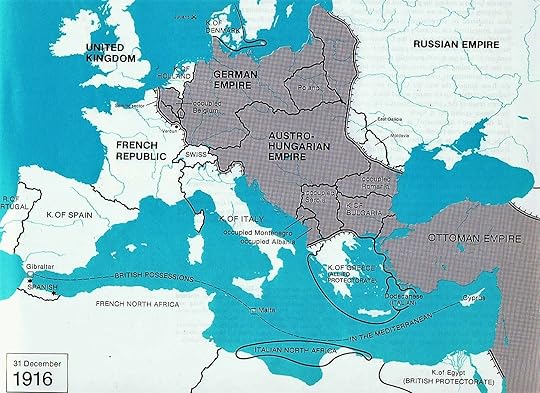
As agreed upon by the Second Chantilly Conference, Russia was to start offensives by May 15, 1916 with the rest of the allies joining in about two weeks time on their respective fronts. This coordination was of course designed to limit the Central Powers’ ability to transport reserves from one front to another. By February 1916, it was clear the main focus of the Germans was Verdun in the west, rather than Russia in the east, while Austria-Hungary’s focus shifted towards Italy on The Isonzo Front. Verdun would of course go on to occupy German resources for the entire calendar year.
After the failure of The Lake Naroch Russian Offensive to divert German troops away from Verdun, the Eastern Front stabilised, much to the satisfaction of The German General Staff, Erich von Falkenhayn. Falkenhayn’s strategy had always been to keep the Russian’s quite enough in the East to focus the bulk of German resources on the Western Front. But that stability was short-lived. Much like Tannenberg in 1914 and Gorlice–Tarnów in 1915, The Brusilov offensive would define 1916 on The Eastern Front.
The Brusilov offensive, named after the Russian General who led the offensive, Aleksei Alekseyevich Brusilov, was launched on 4 June 1916. Buttar focuses on three key elements, Brusilov improved upon standard Russian offensive practices of prior years. These improvements are, hiding signs of an imminent attack from enemy reconnaissance, organising attacking manoeuvres in a series of smaller waves rather than massive formations, and better coordination between artillery and infantry units inside fortified enemy zones. Alexander Winogradsky, who worked closely with Brusilov, wrote the following in a note included in this book.
‘’.... We had the opportunity to study the most effective means of providing support in the realities of time and terrain, instead of having to rely on probabilities. At the beginning of May, we commenced detailed artillery planning using the results of extensive reconnaissance. This mode of work, where nothing was left to chance or to improvisation at the last moment before action but instead in which all the important details had been considered and reviewed in advance, was something new to us.’’
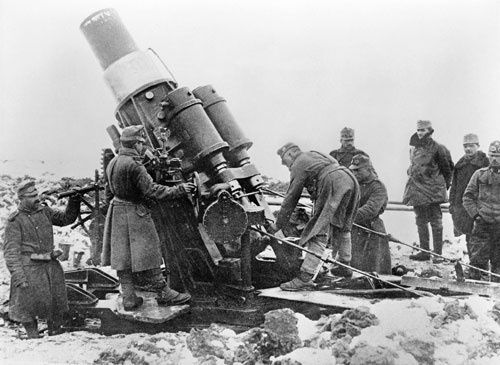
The Central Powers were poorly prepared for the coming attack. Buttar attributes this to two important factors. Firstly, the Central Powers were showing signs of complacency due to the ease with which they crushed Russian attacks earlier in the year. This was despite all military and diplomatic sources indicating an impending massive Russian offensive on a scale unseen before on that front. Secondly, Germany and Austria were prioritising The Western Front and The Italian Front respectively, rather than The Eastern Front. This fact dictated the allocation of resources and personnel away from the extensive frontlines with Russia.
The first phase of Brusilov’s offensive was very successful. Buttar favourably compares Brusilov’s attention to detail and organisation to August von Mackensen’s triumphant 1915 offensives. However, the main Russian offensive of the year was supposed to be on the Northern flank of Brusilov’s army by the army under Aleksei Ermolaevich Evert on The Western Front. Without the success of Evert’s offensive, Brusilov’s army couldn’t keep up its offensive, as it would leave its Northern flank exposed. Evert was reluctant to start his offensive on schedule, despite having more resources at his disposal than Brusilov. With the arrival of German reinforcement units to bolster Austrian defences, by the end of the summer Brusilov’s armies would count half a million casualties.
After a few chapters on the circumstances that led to Romania joining The Entente and the capture of Bucharest by the Central Powers, Buttar goes on to describe the poor condition each army found themselves in by the end of 1916. But of course Russia was in the worst condition of them all, not only because of events on the frontline but also because of a quickly deteriorating internal politics. The quandaries that had plagued Tsarist Russia since the 1905 revolution were reaching near boiling point. This was clear to any close observer of events in Russia. The French ambassador to Petrograd, Maurice Paléologue, wrote;
‘’....I have learned from a reliable source that Admiral [Konstantin] Nilov, Aide-de-Camp General to the Tsar, recently had the courage to point out to the Tsar the peril of the situation; he went as far as to beg him to send the tsarina away - as being the only thing which could save the empire and the dynasty. [Tsar] Nicholas II, who is chivalrous and worships his wife, rejected the suggestion with intense scorn.’’
Similarly, the British ambassador to Petrograd and a very close friend of Tsar Nicholas II, Sir George William Buchanan wrote;
‘’Revolution was in the air, and the only moot point was whether it would come from above or below….…it was a mere question whether both the Tsar and Tsarina or only the latter would be killed. On the other hand, a popular outbreak, provoked by the prevailing food shortage, might occur at any moment.’’
The inevitability of the Empire crumbling had massive ramifications that went way beyond the war. It was about to introduce the world to one of the most turbulent periods in Russian history; a period of over six years worth of bloody revolutions and civil wars.
As with the first two volumes in this series, this one is also a highly technical military history book. It provides a spectacular on-field analysis of the strategies, tactics and logistics, delving down to division levels. It is testament to Prit Buttar’s almost unrivalled authority when it comes to the Eastern Front of the First World War. Similar to the previous volumes, it has wonderful first-hand accounts, especially from Alfred Knox, Erich Ludendorff and August von Mackensen. The next volume will be the last book in this series. Although I am eager to pore over it, it kind of feels a bit bitter-sweet that this excellent series will be over.

November 4, 2017
For the past five years I have been reading books about World War One as part of the 100th year anniversary of the Great War. I found this book about the Eastern Front and decided that it would help fill in my lack of knowledge about this part of WWI. It is great to find a book covering the Eastern Front as I found most of the historians concentrate on the West.
Prit Buttar was a physician in the British Army and now has turned to writing. This book “Russia’s Last Gasp: The Eastern Front 1916-17” is Buttar’s third book in a four-volume series on the Eastern Front. The four books span over 2,000 pages. The series is exhaustively researched and lucidly written.
Both fronts fought trench warfare, but the infrastructure was primitive in the East. Buttar states the Russian soldier in 1914 was poorly trained and undersupplied and badly led. But by 1916 the Russian’s industry was making reasonable quantities of weapons and supplies had improved. The author also states that the senior generals had achieved basic competence. Buttar says the German Army was better, but the Russians were no longer pushovers.
This book is primarily about the Brusilov Offensive, launched in June 1916 to relieve pressure on France and then defend Verdun. The Russian commander, Aleksey Brusilov, rejected the traditional artillery barrage and general advance against defenders who knew what was coming. He began with short, targeted barrages and sent his best units against the weak points of an Austro-Hungarian Army far less formidable than that of the German Army. He persuaded Romania to enter the war on the Russian side.
Buttar goes into a lot of detail of the fighting while also following academic tradition of listing every commander and unit’s name in the operation.
I read this as a hard cover book. The book is 472 pages long and is published by Osprey Publishing, Oxford in 2016.
Prit Buttar was a physician in the British Army and now has turned to writing. This book “Russia’s Last Gasp: The Eastern Front 1916-17” is Buttar’s third book in a four-volume series on the Eastern Front. The four books span over 2,000 pages. The series is exhaustively researched and lucidly written.
Both fronts fought trench warfare, but the infrastructure was primitive in the East. Buttar states the Russian soldier in 1914 was poorly trained and undersupplied and badly led. But by 1916 the Russian’s industry was making reasonable quantities of weapons and supplies had improved. The author also states that the senior generals had achieved basic competence. Buttar says the German Army was better, but the Russians were no longer pushovers.
This book is primarily about the Brusilov Offensive, launched in June 1916 to relieve pressure on France and then defend Verdun. The Russian commander, Aleksey Brusilov, rejected the traditional artillery barrage and general advance against defenders who knew what was coming. He began with short, targeted barrages and sent his best units against the weak points of an Austro-Hungarian Army far less formidable than that of the German Army. He persuaded Romania to enter the war on the Russian side.
Buttar goes into a lot of detail of the fighting while also following academic tradition of listing every commander and unit’s name in the operation.
I read this as a hard cover book. The book is 472 pages long and is published by Osprey Publishing, Oxford in 2016.

January 7, 2018
Volume 3 of Mr. Buttar's magnum opus on the Eastern Front of the Great War.
1916 was the year that both sides determined to win the war, a war that if it lasted any longer would destroy the old order and usher in an age of chaos and revolution. The Entente hoped to drag the Central Powers, namely Germany, into destructive attrition battles with major planned offenses by the French, British, Italians and Russians. Germany looked to bleed France white in a planned strike at Verdun, and already considered Russia all but knocked out of the war by her disastrous defeats the previous year.
The KuK (Kaiserlich und Koenigsreich Armee, or Austro-Hungarian Army) hoped to launch a knockout blow against Italy in the Asiago-Veneto region, drawing forces from the Eastern Front to do so.
And all the while, both sides looked to lure Romania, while a small nation she could field up to three quarters of a million men in arms, to their side.
However, all of these plans were for naught, and the focus for this work is the Eastern Front, specifically the amazing resurgence of the Russian Army. Pritt Buttar's research is top notch and his narrative is a joy to read as he showcases the command difficulties within the Czarist Officer Corps, the Russian economic reforms and the attempts by some of the more brilliant Russian generals to refine and reform their tactical doctrine.
Alexie Brusilov was the shining star of the Russian Army in the Great War, and his reforms to Southwest Front, specifically 8th Army, would reap huge rewards when in June he would launch Russia's major attempt to turn the tide in the East.
The subsequent Brusilov Offensive as it has become known focused it's devastating power on a weakened front held by the KuK. Earlier in the year, at Czernowitz, the KuK had won a tremendous defensive victory against the Russians, leading them to believe that their lines could easily hold. Further Russian disasters northwards against the Germans at Lake Naroch only reinforced this belief.
Conrad von Hotzendorf, Chief of the KuK General Staff, duly transferred divisions from the East to the Italian theater, in a bid to knock Italy out in a crushing blow. Erich von Falkenhayn, Chief of the German General Staff, argued strenuously against Conrad doing just that, as the Germans were aware of Russian offensive preparations throughout the spring.
However Conrad was adamant, and the Austro-Hungarian offensive, the Strafexpedition, went in despite German warnings. Not long after this offensive bogged down in the mountainous terrain, after early great success, and Italian reinforcements from the Isonzo sector shored up the lines, Brusilov fell like the wrath of God Himself in the East.
The Russian offensive under Brusilov utilized new tactics that would later be copied and refined by the Germans to great effect elsewhere in the war.
Assault squads, Russian proto-stormtroopers, led the advance which was preceded by newer, far more effective artillery tactics as well as well planned reserves to assist in exploiting breakthroughs. Not to mention the use of armored cars as a mechanized component to assist in forcing mobility to the battlefield.
The Russians broke through.
Here was the crisis of the war, thus far, for the Central Powers.
The KuK was very nearly knocked out of the war by the jubilant Russians who were on a string of successes from June through into August of 1916. The crisis amongst the KuK forced the Germans to spread themselves even thinner in order to shore up their crumbling allies, and halt the Russian offensive which threatened Austro-Hungarian territory itself, so far did it advance.
However, as the author details wonderfully, the Russian successes in the south were not repeated in the north as the supporting offensives against the Germans were badly timed, delayed by lazy commanders, and featured none of the new tactical innovations. These only led to the Germans, yet again, slaughtering Russian manhood on the field of battle.
Likewise, as summer waned, Russian losses in the south mounted to the point where replacements were not up to the same standards as the men lost, and by the middle of autumn, the heretofore wildly successful Russian offensives were called off, at the gates of Kovel.
All the while Romania was hemming and hawing over wether or not to actually join the war. The desire to seize ethnically Romanian Transylvania from the Hapsburg Empire decided which side Bucharest would fall on, and the French especially were eager to have a new ally to further stretch the Germans.
And yet Romania brought no benefits to the Entente.
Russia refused to support Romania properly, the Romanian Army was poorly led, equipped and trained, and a supporting offensive from Salonika against the Bulgarians by the Anglo-French forces there was pre-empted by a Bulgarian blow that pushed back the Anglo-French, and put paid to that idea. However, the Romanian dream to seize Transylvania was too great to ignore and in late summer, early autumn the Romanian Army attacked.
The Romanians were rapidly defeated in Transylvania and a joint German/KuK/Bulgarian/Turkish offensive under von Mackensen the Great plowed into southern Romania and began to drove towards Bucharest as von Falkenhayn (demoted to a field command following the Verdun bloodbath) battered through the Carpathians to squeeze Romania in a vice.
The year ended with yet more stalemate, and both sides had to deal with internal turmoil, food shortages and economic troubles.
However, especially for Russia, all of these would spell an Armageddon like end to the Czarist Imperium.
A magnificent look at 1916 on the Eastern Front written by a master military historian who, hopefully, has quite a few more books left within him.
Highest recommendations.
1916 was the year that both sides determined to win the war, a war that if it lasted any longer would destroy the old order and usher in an age of chaos and revolution. The Entente hoped to drag the Central Powers, namely Germany, into destructive attrition battles with major planned offenses by the French, British, Italians and Russians. Germany looked to bleed France white in a planned strike at Verdun, and already considered Russia all but knocked out of the war by her disastrous defeats the previous year.
The KuK (Kaiserlich und Koenigsreich Armee, or Austro-Hungarian Army) hoped to launch a knockout blow against Italy in the Asiago-Veneto region, drawing forces from the Eastern Front to do so.
And all the while, both sides looked to lure Romania, while a small nation she could field up to three quarters of a million men in arms, to their side.
However, all of these plans were for naught, and the focus for this work is the Eastern Front, specifically the amazing resurgence of the Russian Army. Pritt Buttar's research is top notch and his narrative is a joy to read as he showcases the command difficulties within the Czarist Officer Corps, the Russian economic reforms and the attempts by some of the more brilliant Russian generals to refine and reform their tactical doctrine.
Alexie Brusilov was the shining star of the Russian Army in the Great War, and his reforms to Southwest Front, specifically 8th Army, would reap huge rewards when in June he would launch Russia's major attempt to turn the tide in the East.
The subsequent Brusilov Offensive as it has become known focused it's devastating power on a weakened front held by the KuK. Earlier in the year, at Czernowitz, the KuK had won a tremendous defensive victory against the Russians, leading them to believe that their lines could easily hold. Further Russian disasters northwards against the Germans at Lake Naroch only reinforced this belief.
Conrad von Hotzendorf, Chief of the KuK General Staff, duly transferred divisions from the East to the Italian theater, in a bid to knock Italy out in a crushing blow. Erich von Falkenhayn, Chief of the German General Staff, argued strenuously against Conrad doing just that, as the Germans were aware of Russian offensive preparations throughout the spring.
However Conrad was adamant, and the Austro-Hungarian offensive, the Strafexpedition, went in despite German warnings. Not long after this offensive bogged down in the mountainous terrain, after early great success, and Italian reinforcements from the Isonzo sector shored up the lines, Brusilov fell like the wrath of God Himself in the East.
The Russian offensive under Brusilov utilized new tactics that would later be copied and refined by the Germans to great effect elsewhere in the war.
Assault squads, Russian proto-stormtroopers, led the advance which was preceded by newer, far more effective artillery tactics as well as well planned reserves to assist in exploiting breakthroughs. Not to mention the use of armored cars as a mechanized component to assist in forcing mobility to the battlefield.
The Russians broke through.
Here was the crisis of the war, thus far, for the Central Powers.
The KuK was very nearly knocked out of the war by the jubilant Russians who were on a string of successes from June through into August of 1916. The crisis amongst the KuK forced the Germans to spread themselves even thinner in order to shore up their crumbling allies, and halt the Russian offensive which threatened Austro-Hungarian territory itself, so far did it advance.
However, as the author details wonderfully, the Russian successes in the south were not repeated in the north as the supporting offensives against the Germans were badly timed, delayed by lazy commanders, and featured none of the new tactical innovations. These only led to the Germans, yet again, slaughtering Russian manhood on the field of battle.
Likewise, as summer waned, Russian losses in the south mounted to the point where replacements were not up to the same standards as the men lost, and by the middle of autumn, the heretofore wildly successful Russian offensives were called off, at the gates of Kovel.
All the while Romania was hemming and hawing over wether or not to actually join the war. The desire to seize ethnically Romanian Transylvania from the Hapsburg Empire decided which side Bucharest would fall on, and the French especially were eager to have a new ally to further stretch the Germans.
And yet Romania brought no benefits to the Entente.
Russia refused to support Romania properly, the Romanian Army was poorly led, equipped and trained, and a supporting offensive from Salonika against the Bulgarians by the Anglo-French forces there was pre-empted by a Bulgarian blow that pushed back the Anglo-French, and put paid to that idea. However, the Romanian dream to seize Transylvania was too great to ignore and in late summer, early autumn the Romanian Army attacked.
The Romanians were rapidly defeated in Transylvania and a joint German/KuK/Bulgarian/Turkish offensive under von Mackensen the Great plowed into southern Romania and began to drove towards Bucharest as von Falkenhayn (demoted to a field command following the Verdun bloodbath) battered through the Carpathians to squeeze Romania in a vice.
The year ended with yet more stalemate, and both sides had to deal with internal turmoil, food shortages and economic troubles.
However, especially for Russia, all of these would spell an Armageddon like end to the Czarist Imperium.
A magnificent look at 1916 on the Eastern Front written by a master military historian who, hopefully, has quite a few more books left within him.
Highest recommendations.

December 24, 2016
The Brusilov offensive in 1916 was as successful of any other incomplete victory in World War I--and one of the few major offensives by the Russian Army.
This book puts that offensive into a context--what transpired before, the offensive itself, and what happened afterwards. Previous Russian efforts--even before 1916--had often been disastrous (think the German army's decisive defeat of two whole Russian armies, with the fight at Tannenbeg typifying the poor performances, under the command of Hindenberg and Ludendorf. After that major defeat, Russian forces often floundered, while taking extremely large casualties.
Brusilov entered to command the Russian forces, facing both German and Austro-Hungarian forces. The latter did not fare very well. But Brusilov even tested German troops. Brusilov used a more imaginative approach than prior Russian generals. For one thing, he used artillery much more effectively; he worked to coordinate operations. The Russian forces actually advanced significantly. The book gives the reader a sense of the good, the bad, and the ugly commanders of the various forces.
As seemed inevitable in WWI, the offensive finally ground down and attrition took place. The book also described the larger combat situation in the area, including the foolish entrance of Romania into the war. And, of course, the Russian problems waging war were a part of the picture leading to the Bolsheviks taking power.
A well done work, with much detail to guide the reader not familiar with the subject. The book is more functionally written than elegant. But thne writing style serves the purpose.
This book puts that offensive into a context--what transpired before, the offensive itself, and what happened afterwards. Previous Russian efforts--even before 1916--had often been disastrous (think the German army's decisive defeat of two whole Russian armies, with the fight at Tannenbeg typifying the poor performances, under the command of Hindenberg and Ludendorf. After that major defeat, Russian forces often floundered, while taking extremely large casualties.
Brusilov entered to command the Russian forces, facing both German and Austro-Hungarian forces. The latter did not fare very well. But Brusilov even tested German troops. Brusilov used a more imaginative approach than prior Russian generals. For one thing, he used artillery much more effectively; he worked to coordinate operations. The Russian forces actually advanced significantly. The book gives the reader a sense of the good, the bad, and the ugly commanders of the various forces.
As seemed inevitable in WWI, the offensive finally ground down and attrition took place. The book also described the larger combat situation in the area, including the foolish entrance of Romania into the war. And, of course, the Russian problems waging war were a part of the picture leading to the Bolsheviks taking power.
A well done work, with much detail to guide the reader not familiar with the subject. The book is more functionally written than elegant. But thne writing style serves the purpose.

May 13, 2022
A rich and well-written history of the Eastern Front from 1916 to 1917.
The narrative is clear and very detailed, and reads a bit slower than the other volumes. Much of the book, of course, deals with the Brusilov offensive, and Buttar does a great job putting it into context. He describes how imaginative Brusilov was as well as his effectiveness at employing artillery and coordinating his forces. Buttar also covers the difficulties faced by the Central Powers by problems as basic as language differences. Like the other volumes, Buttar does a good job demonstrating how much more maneuverable the armies were on this massive front.
A balanced, well-researched work, although some better maps would have helped.
The narrative is clear and very detailed, and reads a bit slower than the other volumes. Much of the book, of course, deals with the Brusilov offensive, and Buttar does a great job putting it into context. He describes how imaginative Brusilov was as well as his effectiveness at employing artillery and coordinating his forces. Buttar also covers the difficulties faced by the Central Powers by problems as basic as language differences. Like the other volumes, Buttar does a good job demonstrating how much more maneuverable the armies were on this massive front.
A balanced, well-researched work, although some better maps would have helped.

May 31, 2020
The third book of Dr. Prit Buttar's four-volume series on the Eastern Front in the First World War, this work sets its sights on the battles fought there in 1916. As per the title, the focus is on Russia's Brusilov Offensive, which was tactically successful but strategically pointless, other than causing vast numbers of casualties to both the attackers and the defenders, especially the army of Austria-Hungary, which had shipped large numbers of troops to the Italian front. Not so pointless was the Central Power's offensive and conquest of Romania which, with exquisitely bad timing, joined the Entente just as the aforementioned Brusilov Offensive was petering out, allowing Germany, Austria, Bulgaria and even Turkey to concentrate troops against their new foe and make short work of her. At this point in the war, many of the combatants were suffering from food and other shortages, and the internal situation of the Russian home front was especially dire and would soon lead to revolution and civil war, as the title of the book suggests. As usual, Dr. Buttar writes about these complicated military and political issues with aplomb and verve. I look forward to the final volume.

February 1, 2021
Pretty good history of the forgotten part of World War I. While most histories focus on the Western Front, Mr. Buttar sheds light on the Eastern Front of the war and frankly, after reading this book, probably a lot more interesting considering all the different dynamics at play. Mr. Buttar combines the military detail with pinpoint accuracy of every battle and offensive with context as to why it was happening, what was going through the minds of every solider, commander, and politician, and what context it meant for the war and world history outside the battles. Few military histories do that, and this is a great work. Might have to find a way to read the whole set to see how the entire war played out on the eastern front. Geoffrey Wawro gives a great summation regarding the Austro-Hungarian Empire, but Mr. Buttar gives a more detailed assessment of the entire situation. Good book just don't read this before going to bed.

July 19, 2026
Another great entry in this series.

April 8, 2023
Truly one of the worst-managed wars in history

June 11, 2020
This is an excellent history of an important year on the Eastern Front in the First World War.
It could be a bit better. It is often somewhat difficult to keep track of who is who, and which units are involved, but nonetheless the overall pictures emerge clearly. The maps don't help much unless you are already quite familiar with Eastern European geography (which I am not); the need to show a bit more context, and more detail.
On the other hand, there are frequent quotes from diaries or memoirs which bring a more personal level to the high-level action.
Highly recommended for history buffs who want a deep dive into the Eastern Front.
It could be a bit better. It is often somewhat difficult to keep track of who is who, and which units are involved, but nonetheless the overall pictures emerge clearly. The maps don't help much unless you are already quite familiar with Eastern European geography (which I am not); the need to show a bit more context, and more detail.
On the other hand, there are frequent quotes from diaries or memoirs which bring a more personal level to the high-level action.
Highly recommended for history buffs who want a deep dive into the Eastern Front.

June 26, 2016
The centenary of World War One has seen an avalanche of books on the subject and among the best and most valuable must be Prit Buttar's series on the Eastern Fronts. This series has quickly become essential reading on the war for anyone with more than a general interest.
And that is 'fronts' rather than 'front'. In his previous books, Buttar gave ample coverage to the campaigns in Serbia and here the conquest of Rumania is covered better than in any other book I've read.
And that is 'fronts' rather than 'front'. In his previous books, Buttar gave ample coverage to the campaigns in Serbia and here the conquest of Rumania is covered better than in any other book I've read.
October 4, 2026
Got lazy there for a bit. Anyways, solid book, though I was really hoping for more focus on Russia. Buttar’s case isn’t too bad, but he has the usual pop-milhist Prussia obsession. Yes yes, the new officers weren’t real Prussian Junkers who cared for their men, etc. It really dampens the mood with military history when this stuff is in there all the time. However, the campaign history was good, there were sections devoted to the Russian staff and operations, and so I can’t fault him too much. But it is grating.
January 25, 2019
Although it’s not really that long ago (101 years) the events of 1916-17 seem to come from a different epoch, and in many ways they do. Who now in the West ever heard of Ruthenia, Bessarabia, or a host of long-departed geo-social distinctions? But besides “choosing side for Round 2,” WWI shattered age old foundations leaving empty lots upon which much of our modern world was built. I have the same criticisms as I had of Germany Ascendant, e.g, bewildering maps and too much (for me) detail re which units were involved in battles. But he has an eye for the charming details, such as the Romanian order that only those above the rank of major could wear make-up! Or how the Austrian-Hungarians retreated from Sibiu and when the mayor offered its surrender to the Romanian commander, he declined saying he had to obtain permission first and further delays occurred whilst a victory march was organized.
Those mildly amusing anecdotes are welcome interludes in the continuing horrors of war. Buttar does a fine job quoting various first-hand accounts of the sad caravans of refugees, fleeing from both sides. WWII and Uncle Joe Stalin finished the ethnic cleansing of areas where the diversity was amazing. In a part of Transylvania, one town had been a German (Saxon) center for almost 800 years, but the 1914 census showed 26% German, 29% Romanian, and the rest a mix, largely Hungarian.
And the politics were bewildering, Mackensen’s victorious army in southeastern Romania was comprised of German, Austrian, Hungarian, Turkish, and Bulgarian troops – and each of the “sponsoring” countries had their own post-war designs. The Bulgarians expected to get the majority of commercial concessions in the conquered Romanian territory, but the Germans had other plans. And this was fairly straightforward compared to the Allies, e.g., Romania signing secret treaties with Russia and the other Entente powers, in return for entering the war on their side, they would get areas they considered “Romanian” from Hungry and Bulgaria, and even Russia. Unbeknownst to the Romanians, the 3 major Entente powers had another secret agreement that basically denied the Romanians any Russian territory after the war. You are also introduced to figures who would reappear in the next war, e.g., Rommel and Paulus. Overall, I preferred this volume to the 1915 one as it dealt with smaller units and more of the political issues, but they are both very worthy reads.
Those mildly amusing anecdotes are welcome interludes in the continuing horrors of war. Buttar does a fine job quoting various first-hand accounts of the sad caravans of refugees, fleeing from both sides. WWII and Uncle Joe Stalin finished the ethnic cleansing of areas where the diversity was amazing. In a part of Transylvania, one town had been a German (Saxon) center for almost 800 years, but the 1914 census showed 26% German, 29% Romanian, and the rest a mix, largely Hungarian.
And the politics were bewildering, Mackensen’s victorious army in southeastern Romania was comprised of German, Austrian, Hungarian, Turkish, and Bulgarian troops – and each of the “sponsoring” countries had their own post-war designs. The Bulgarians expected to get the majority of commercial concessions in the conquered Romanian territory, but the Germans had other plans. And this was fairly straightforward compared to the Allies, e.g., Romania signing secret treaties with Russia and the other Entente powers, in return for entering the war on their side, they would get areas they considered “Romanian” from Hungry and Bulgaria, and even Russia. Unbeknownst to the Romanians, the 3 major Entente powers had another secret agreement that basically denied the Romanians any Russian territory after the war. You are also introduced to figures who would reappear in the next war, e.g., Rommel and Paulus. Overall, I preferred this volume to the 1915 one as it dealt with smaller units and more of the political issues, but they are both very worthy reads.
June 25, 2022
(Audiobook) This work looks at the Eastern Front of WWI, from the German position of strength on the Eastern Front at the start of the year, to the signs of collapse at the highest levels of Russian command coming into 1917. 1916 was a brutal year on many fronts (war and otherwise) and action in Eastern Europe was no exception. Russia did have the Burislov offensive, but they did not have the forces or equipment to take advantage. There was massive turnover in the German and Austro-Hungarian commands, but the fighting in the East, while showing more maneuver than the West, did not show many signs of a decisive change. The author does foreshadow the pain that 1917 will bring Russia, but until the next work, the war does not show signs of ending in the East.
While mostly military focused, the political and some social aspects play a factor in the East. Romania enters the fighting, but loses badly, yet it diverts forces for other fronts, with impacts in other places. It is a hard war, but even here, it is apparent that the old order, especially with Austro-Hungary, will not last. Germany is the strongest for leadership, but they are straining under fighting on two fronts. Russia has the material, but their overall leadership is poor. A rough, bloody combination.
A solid read. It does cover a part of WWI that few in the West know of, so there is a valuable service here. The rating is still the same regardless of format.
While mostly military focused, the political and some social aspects play a factor in the East. Romania enters the fighting, but loses badly, yet it diverts forces for other fronts, with impacts in other places. It is a hard war, but even here, it is apparent that the old order, especially with Austro-Hungary, will not last. Germany is the strongest for leadership, but they are straining under fighting on two fronts. Russia has the material, but their overall leadership is poor. A rough, bloody combination.
A solid read. It does cover a part of WWI that few in the West know of, so there is a valuable service here. The rating is still the same regardless of format.

November 8, 2021
This is the third book on Buttar's series on the Eastern Front. Starting with a summary of the two earlier books up to the year 1916, it continues with a known pattern. Against German forces the Russian Army failed to achieve a decisive victory around Lake Naroch in early 1916. This attack was hastily organized to relieve pressure on the French around Verdun. Very different is the outcome later in the year against the Austrian-Hungarian Army. Near collapse the Habsburg forces needed again support from the Germans to avoid destruction. As it turned out though this was mainly due to the removal of their best units and artillery to the Italian front. Amazingly, never did the Austrian-Hungarians and Germans actually work together as Allies and quite often actually against each other. While millions of Russian soldiers were on their Eastern front, Conrad rather sent his troops first against the Serbians and then later against the Italians. His actions were guided by personal revenge rather than military necessity. For Falkenhayn the Eastern Front was a distracting side show anyway to the fighting in the West. The book is ending with the Romania's entry on the side of the Entente and it subsequent defeat by the Central Powers. Another sold book with the usual criticism on the maps.
June 25, 2017
I've read all three books in this series thus far and I have to say I believe it's the best one so far. The same minor criticisms remain. The first criticism is that while there are many maps, they are too small to adequately see and the second is incorrect conversions of distances from miles to kilometers throughout the text. I also vaguely remember a trivial grammatical mistake as well.
These insignificant issues aside, the author does a great job in not only explaining what happened on the Eastern Front of World War I but also discusses the overall strategic situation and puts it all into context. While I previously knew of the Brusilov Offensive, Romania entering the war, the Sommes battles, several battles along the Isonzo River, the Austrian offensive into Italy and the battle of Verdun I didn't know they all occurred in 1916.
The book goes into great detail about the Brusilov Offensive and provided me with so many small aspects and facts about what happened in 1916 that I was left very impressed with Mr. Buttar's research.
These insignificant issues aside, the author does a great job in not only explaining what happened on the Eastern Front of World War I but also discusses the overall strategic situation and puts it all into context. While I previously knew of the Brusilov Offensive, Romania entering the war, the Sommes battles, several battles along the Isonzo River, the Austrian offensive into Italy and the battle of Verdun I didn't know they all occurred in 1916.
The book goes into great detail about the Brusilov Offensive and provided me with so many small aspects and facts about what happened in 1916 that I was left very impressed with Mr. Buttar's research.

November 1, 2018
Meticulously detailed account of the less-documented eastern front (in the mainstream sense) in WWI. This book is part three of a soon-to-be-completed four-part narrative of the eastern front, which I did not know when I read this one. I’ve got some catching up to do!
The switching between order-of-battle narrative and the larger political undertones of command and leadership tell an engrossing tale. Great use of quotations from direct participants, often “live” to the referenced event and not from memoirs created after the fact, from the highest positions in leadership to front-line troops.
The eastern front shows additional shocking examples of the futility of mass conflict in the modern age and the inevitable waste of life. Given the setting of this book (1916-17), it is unsettling how little the tactics shown to be so cruel and wasteful on the western front from the beginning of the war, still used on the eastern front. It is as if each country had to experience such terrible costs for themselves before learning the dreadful lessons.
The switching between order-of-battle narrative and the larger political undertones of command and leadership tell an engrossing tale. Great use of quotations from direct participants, often “live” to the referenced event and not from memoirs created after the fact, from the highest positions in leadership to front-line troops.
The eastern front shows additional shocking examples of the futility of mass conflict in the modern age and the inevitable waste of life. Given the setting of this book (1916-17), it is unsettling how little the tactics shown to be so cruel and wasteful on the western front from the beginning of the war, still used on the eastern front. It is as if each country had to experience such terrible costs for themselves before learning the dreadful lessons.
January 20, 2020
This is the 3rd of the 4-volume series on the Eastern front during World War I. This volume focuses mainly on the Brusiloff offensive in 1916 and the disastrous entry of Romania into the war on the side of the Allies. The description of the offensive shows how close the Russians came to knocking Austria-Hungary out of the war in 1916. How would world history have changed if that had happened? The desired entry of Romania into the war actually proved a millstone around the Allies necks. This volume concludes with a chapter on the economic difficulties in the home front in Germany, Austria Hungary, and Russia.
These books are not really for the general reader and more pointed to the person deeply interested in WWI history. I find the discussions of political issues the most interesting and accessible to the reader. The maps are fairly plentiful, but in the black and white small pages they are hard to decipher. The volume include numerous photographs which are extremely interesting.
These books are not really for the general reader and more pointed to the person deeply interested in WWI history. I find the discussions of political issues the most interesting and accessible to the reader. The maps are fairly plentiful, but in the black and white small pages they are hard to decipher. The volume include numerous photographs which are extremely interesting.

September 15, 2019
A very detailed book.
Like the first two books before this one, Buttar's third book was highly informative and very detailed. So much death, so much destruction, and all for nothing. The elusive break through that both western and eastern front commanders were looking for never materialized. Now things are spiraling out of control for Russia, and it seems there is no light at the end of the tunnel.
Like the first two books before this one, Buttar's third book was highly informative and very detailed. So much death, so much destruction, and all for nothing. The elusive break through that both western and eastern front commanders were looking for never materialized. Now things are spiraling out of control for Russia, and it seems there is no light at the end of the tunnel.

September 24, 2019
I've always had a strong interest in the first World War, but the majority of works seem to focus on the Western front. When I stumbled upon Prit Buttar's year by year accounts of the Eastern front I was immediately enagaged in discovering the details of the infamous campaigns that cost so many lives. Prit does a solid job detailing the progress of the war from various perspectives, and succeeds in delivering an engaging and informative account.

November 18, 2017
A serious book of the history of the East Front in the Great War for the year of 1916. This is the third book in a four book series. These books are not really meant to be stand alone books and should be read in order as there are references to the previous books but the author does not really go over things again for those who are not familiar with the events covered in the previous books.
October 23, 2020
The thrilling sequel to Buttar's previous book, we once again see the total incompetence of Conrad and the gang. The Eastern Front in WW1 is honestly fascinating, and one of the biggest takeaways I obtained from this book was how close the Brusilov Offensive came to ending the war. This book is extensively researched and well written.

September 1, 2025
Very detailed analysis of the fighting on the Eastern Front in World War 1. Blow by blow with lots of maps. Quite easy to follow but well annotated and includes lots of quotes from the people involved (famous and not famous). This is volume 3 of a series. Can be read as part of the series or as a stand-alone book as the author does not assume prior knowledge of earlier volumes.

March 8, 2026
Maybe I’m to harsh? What get me really irritated where two „favourite” leitmotifs: Conrad and cavalry. First as the godfather of k.u.k army and all it’s misfortunes, second as obsolete waste of resources. I bet that in the 4th volume author will change his mind: 1920 Polish war with bolsheviks proved otherwise.
But all of the quotations - priceless! - possibly worth of the 4th star.
But all of the quotations - priceless! - possibly worth of the 4th star.

August 3, 2019
on the background of horrors of ww1, the story of the events on the eastern front stands out as a particularly horrendous trainwreck of bad planning, bad execution, bad faith and clashing personalities
this book is a very detailed review, and id recommend following the developments on a map
this book is a very detailed review, and id recommend following the developments on a map
March 2, 2021
An excellent series
Mr Butter continues with his 3rd book dealing with the eastern front in World War one. I like his work as they deal with operational level of the war with an adequate number of maps.
Mr Butter continues with his 3rd book dealing with the eastern front in World War one. I like his work as they deal with operational level of the war with an adequate number of maps.

January 13, 2023
A perfect combination of Top Down accounting, Buttar is like a Google Earth zoom taking us from Strategic, to Operational, to sharp Tactical accounts of the theater. I love it. Can’t give this guy enough stars.
December 9, 2023
Another good, exhaustive overview of the eastern front. 1916 had some of the more interesting military actions of the war. Notably the Brusilov offensive and Von Mackensen’s destruction of Romania. More interesting than 1915, but less interesting than 1917-1921

July 18, 2019
Excellent. A forensic analysis of this neglected front.

March 23, 2022
Clear and detailed, but many points - e.g. the language problems of the Austrian-Hungarian army - are repeated so often that it becomes annoying
Displaying 1 - 30 of 31 reviews