Not that I am an expert on short stories, but the volumes I’ve read so far went in two directions: either a compilation of stand-alone tales or a collection of interwoven accounts, connected by characters, events or setting. But… How about both? Seriously, why not have both? Because that is what “Fallensteller” does in all its glory!
This unbridled spark of emotion and observation, of outrageous enthusiasm and modest demeanour makes it possible for these stories to combine two opposites, to consist in equal parts of pure joy and of quiet contemplation, held together in a realm where make-believe and reality can exist only sustained by each other. But since I’m not the brightest little light in the Christmas tree, I had to finish the entire book before coming to that realisation.
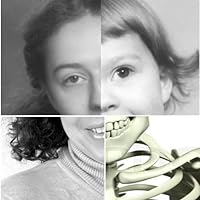
You see, I should’ve realised it sooner. This volume opens with a magic trick. Not deception or evil sorcery, but one of those benevolent illusions that challenge you to look again from a different angle and change perspective. And that’s it really: There is just more to everything (and everyone) than meets the eye, it’s all in the layers and hints and in the unspoken.
Now you’re set and ready to wade through a river in order to talk to a hipster girl at a fundraising party, or to travel to Scandinavia and steal a shitty painting for a good cause, or for a tender friendship second only to Legolas’ and Gimli’s.
And while we’re at it: You know that there is a man overwhelmed by words, all the wrong ones and all the right ones? And he’s not the first to have his world constructed and deconstructed by language (wink wink, nudge nudge, look for a Gramophone for hints). There are also five sisters near the Norwegian-Russian border whose names sound like the most beautiful runic spell and Stabreim there ever was: Anea, Anniken, Amalie, Askild, Aurora. I wish my name was Askild. I think I at least have the right hair for an Askild, if I may say so myself. But I do want a sword and shield to go with that.
And then there is this thing that every single opera protagonist with multiple stab wound takes far longer to die that Wolverine with his healing powers. I’m actually glad that I’m not the only Kunstbanause bothered by that. Also: Can I please read that James Bond fanfiction, but with the mittens?
When the time comes to find out who the Fallensteller is, you have to slip to Uckermark behind the looking-glass, with yet another conversation in verse and rhyme – Have we met before, gentle sir? – and with the hero of the story turned author, so that the real author could become an additional character, to watch the protagonist write about the path he laid out for them to walk on in another reality. The Fallensteller is threatening and noble and gave me the same tingle and uneasy I’ve been getting from the Rattenfänger von Hameln since I was four.
But there is also the question whether a piece of dreck obliges you to consider it a genuine work of art because it’s based on human tragedy, and if there’s a point when awareness becomes intimate pain on sale. And remember that it’s not fear that counts, but being afraid. And that art has to tell you something you wouldn’t have thought of.
In the end there’s yet another magic trick. And if the first one gave me a content smile, than this second one gave me the crushed, heavy heart that can only come from alleged light-heartedness. It’s the trick of a blue shirt that makes you all the more present when you’re not there, a life that is not yours but is all that you are, a fear that makes you deal out pain in the name of a principle. I don’t have a blue shirt, but I do have a boxset of fairy tales, one particular boxset, that made me into what I am.
I think I get it now. This dichotomy might be somewhat of Saša Stanišić’s trademark. His prose is half everything I ever wanted from literature, and half far beyond my habitual spectrum. And I love his work all the more for it.