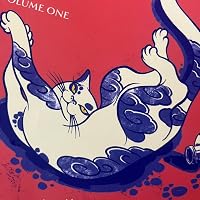
As sisters they share an everlasting bond; As queens they can break each other’s hearts.
“There is only one bond that I trust: between a woman and her sisters. We never take our eyes off each other. In love and in rivalry, we always think of each other.”
When Katherine of Aragón is brought to the Tudor court as a young bride, the oldest princess, Margaret, takes her measure. With one look, each knows the other for a rival, an ally, a pawn, destined—with Margaret’s younger sister Mary—to a sisterhood unique in all the world. The three sisters will become the queens of England, Scotland, and France.
United by family loyalties and affections, the three queens find themselves set against each other. Katherine commands an army against Margaret and kills her husband James IV of Scotland. But Margaret’s boy becomes heir to the Tudor throne when Katherine loses her son. Mary steals the widowed Margaret’s proposed husband, but when Mary is widowed it is her secret marriage for love that is the envy of the others. As they experience betrayals, dangers, loss, and passion, the three sisters find that the only constant in their perilous lives is their special bond, more powerful than any man, even a king.
DR PHILIPPA GREGORY studied history at the University of Sussex and was awarded a PhD by the University of Edinburgh where she is a Regent and was made Alumna of the Year in 2009. She holds an honorary degree from Teesside University, and is a fellow of the Universities of Sussex and Cardiff. Philippa is a member of the Society of Authors and in 2016, was presented with the Outstanding Contribution to Historical Fiction Award by the Historical Writers’ Association. In 2018, she was awarded an Honorary Platinum Award by Neilsen for achieving significant lifetime sales across her entire book output. In 2021, she was awarded a CBE for services to literature and to her charity Gardens for the Gambia. and was elected as a Fellow of the Royal Historical Society.
I would have loved if this focused more on the sister relationship. Margaret, while an interesting narrator, got to be a bit tiresome at times as she was veeeery whiny and jealous. I feel like I only got 1/3 of the story since it was only from her perspective. It would have been great to get Mary and Katherine’s perspectives, which based on the title I thought I would be getting. So not terrible, but a bit more dull than it should have been
Philippa Gregory is a historian capable of crafting beautiful stories from her research and imagination. I rather enjoyed The Other Boleyn Girl, which had a full, fascinating ensemble of characters with many viewpoints.
The title Three Sisters, Three Queens deceived me. I thought this book to be about the three queens and how their lives intertwined. A tale told from each of their perspectives. It was not. Very disappointing.
Gregory's fictional portrayal of Margaret Tudor is one that is obsessed with hierarchy and being above her sisters, Mary Tudor and Katherine of Aragon. She is proud, entitled, full of jealousy and contempt. Her "woe is me" attitude fills the pages and she repeats her thoughts often, over and over. So, when there is only one narrator and one point of view, Margaret Tudor's, the story quickly becomes tiring and dull.
It’s not until the coup d'état at Holyrood House in 1524 that I sat up. The Queen Regent makes a true move for survival and I thought, “Finally a strong Queen revealed!” However, the coup lasted one measly chapter and the whining continued the next. I would have enjoyed reading more detail about the coup, or the attempted abductions of James, or anything historically interesting, but alas, details are glossed over.
I’m completely aware Three Sisters, Three Queens currently has a rating of 4.26 and obviously more than not are truly enjoying this novel. It just wasn’t for me.
Philippa Gregory has written numerous wonderful books about the Tudors. Unfortunately this isn't one of them. The narrator here is Henry VIII's older sister, Margaret. When the book opens, she is a whiny, self-centered 12 year old. Eventually she becomes a whiny, self-centered teenager, then a whiny, self-centered adult. Rather than shaping history, poor Margaret is mostly left sitting on the sidelines. I can't imagine a less interesting person through whom to explore this fascinating period.
If you enjoy audiobooks, I would highly recommend listening to THREE SISTERS, THREE QUEENS, because Bianca Amato's narration is outstanding. This book has a big cast of characters with different voices and accents, and Ms. Amato handled it beautifully. Very entertaining and well done!
So, the title refers to sisters Margaret and Mary Tudor, and their sister-in-law Katherine of Aragon. The book focuses mainly on Margaret, from her girlhood days in the Tudor court, to her years as Queen of Scotland, though Mary and Katherine are always there on the sidelines to annoy, betray, and support, like sisters can do.
I enjoyed Philippa Gregory's portrayal of Margaret, though she wasn't easy to like at first. Her character makes quite a transformation from a spoiled princess obsessing over the best gowns and titles to a struggling Regent holding the crown for her only son. She was a fascinating woman whose life was almost as turbulent as that of her granddaughter, Mary, Queen of Scots.
It was interesting to read about Margaret's life (though, yes, a fictional account) and her rivalry and friendship (frenemies?) with pious Katherine and beautiful Mary. I love Ms. Gregory's storytelling, didn't want this one to end. THREE SISTERS, THREE QUEENS is book #8 in The Plantagenet and Tudor Novels, though it can easily be read standalone. 4.5 stars!
Disclosure: I received a copy of this audiobook from the publisher in exchange for an honest review.
Fickle, vapid, vacillating – these are just a few words that can be used to describe the voice of Philippa Gregory’s Three Sisters, Three Queens. Don’t get me wrong; Margaret Tudor the real life woman of history is an intriguing figure. But the Margaret Tudor of this novel is greedy, spiteful, and vindictive. For those who were misled into thinking this would be a tripartite novel from the perspectives of Katherine of Aragon, Mary Tudor, and Margaret Tudor – it isn’t. Margaret is the sole, first person narrator, and she is just so insupportably vicious that reading felt like a soul-sucking, wearisome endeavour. Early on in the book you persuade yourself to persist nonetheless because initially Margaret is a 12 year old girl and her petty, juvenile attitudes are explicable, if unpalatable. However, Margaret’s mean-spiritedness extends from the first page of the book to the last. This is without a shadow of a doubt the single biggest reason why I disliked this book.
It wasn’t however the only reason. Gregory is As You Know Bobbing harder than ever in TSTQ. Main characters who we know well and have been mentioned frequently over the course of hundreds of pages are still nonetheless referred to by full name, titles, and a length list of familial connections. Even Margaret’s only surviving son, who we know full well is her last living boy because of the attention and detail about her other son’s death earlier in the book, is referred to as “my son, the king”, as if we needed to be reminded of this – oh which one was that again? I’ve been reading 300+ pages about Margaret’s life and her deep sadness at losing her other sons, but even though she only has one son left, I just can’t seem to remember what his role in the story is. Ah, of course! He’s the most important person in Scotland! How could I forget?
It also does the book no favours that it retreads a lot of old ground. It covers a lot of the same events that we read about in Gregory’s previous novels, The Constant Princess, The King’s Curse, and The Other Boleyn Girl. And Gregory just can’t resist the lure of throwing in all the old chestnuts: the Sweat came from Henry VII’s mercenary army from France to England (no evidence); the Tudors are cursed and apparently everyone knows it and Elizabeth Woodville was totally a witch and magic was real dontcha know (no evidence, not to mention the laws of physics and simple common sense); and Anne Boleyn is a horrid, horrid slut and her family are all pimps (because the king couldn’t possibly be an all-powerful tyrant who is determined to always get his own way, the poor fellow must be being manipulated by a villainous woman! Can’t trust any of these sneaky low-born women with their Renaissance educations and their thoughtful opinions, you know!). I've provided links in previous reviews of Gregory’s novels, but every time a new book comes out she drags up the same old ridiculous drivel, so I can't be bothered to do so again here. Needless to say these portrayals are insupportable.
To cap it all off, the book ends on a real low note – inasmuch as it just ends, suddenly and without explanation, at a point that is neither Margaret’s death nor a natural stopping point. It simply stops in what feels like the middle of the story and leads us straight into the author’s note. I flipped between the pages a couple of times to make sure that really was it and I hadn’t inadvertently skipped a couple of pages. I think this has to be amongst Gregory's worst novels.
I really wanted to like this book. I was one of the first people to have it from the public library and I was so excited! Then I started reading, and this is the least interesting heroine I've read since a V.C. Andrews novel. Margaret is a whiny, self-centered person who judges EVERYONE. Gregory writes the book as though we are reading Margaret's journal or listening to the thoughts in her head so the only point of view we read is Margaret's. It is a very limiting point of view. The reader does not get an idea of what anyone else in Margaret's world is doing, thinking, or feeling. Margaret's marriage to King James IV is practically glossed over. I wish I liked this book, but it's just too slow-moving and the narrator is an insufferable bore. A great disappointment.
Another great installment from Philippa Gregory with Three Sisters, Three Queens, the 8th of 15 books in her Plantagenet and Tudor series. She weaves wonderful details into the setting and character descriptions, and while I always worry when I dive in that it'll be more than I need, it also always keeps me invested. As typical from prior ones, the books are about 15% too long, meaning I begin to lose a bit of interest given some duplication of sentiments or scenes. That said, it's minor, and I will keep reading the remainder of the ones in this series.
In this installment, Margaret, the sister of King Henry VIII, is betrothed to the much older King James of Scotland. Her younger sister, Mary, entertains several suitors before marrying another king who passes away. And Henry's first wife, Katherine of Aragon, is the third sister, more a sister-in-law. Most of Margaret's life is covered, at least from about 13 until her 40s before she too later dies. The focus is on the various men the women love, and the games they must play to survive. Times were tough, and while I'm sure Gregory over-exaggerated pieces, she likely under-exaggerated things too... a fine balance, even if some might be untrue. This is fiction, and if I wanted a completely 100% accurate account, I'd find a history book. Which I've done... so this is an opportunity to consider alternative ideas and options.
As a character, Margaret is flighty and temperamental. Many times, I wanted to take her aside and knock a bit of sense into her. (It's okay, that was allowed in the 16th century - just kidding) I'm merely saying that she was childish and said too much. She hated her sisters. She loved her sisters. She confessed secrets to them, became angry when they used that information to their advantage, and then told them more secrets. She cursed them publicly, then begged for forgiveness, then plotted against them again. She used various men to advance her own person agenda, which was to put her son on the throne, understandably. In the end, I did not like the woman much at all. From reading biographies on Margaret, little is known about her, but she did have some of these tendencies. I can only imagine how she survived!
Looking forward to the next book, which turns to the Boleyn sisters and Henry's foray into the first of his serial killing schemes against his wives... LOL
Aceasta este cea de-a patra carte pe care am citit-o de la Phillippa Gregory și pot să spun că nu m-a dezamăgit. Romanul urmărește viața celor trei regine-surori: Margaret, regină a Scoției prin căsătoria cu regele Iacob al IV-lea al Scoției, Caterina de Aragon, prima soție a regelui Henric al VIII-lea al Angliei și Mary, regină a Franței, prin căsătoria cu regele Ludovic al XII-lea al Franței. Ceea ce m-a atras foarte mult la această carte a fost faptul că autoarea a descris și copilăria celor două regine-surori, cu excepția Caterinei. Mă așteptam să fie reușit și interesant acest roman, deoarece îmi place foarte mult cum scrie Phillippa. La un moment dat, soțul Margaretei, regele Iacob al IV-lea (în carte numele său este James) este omorât de armata engleză în bătălie, iar relațiile dintre Anglia și Scoția se deteriorează; Margaret face tot posibilul să mențină pacea, în schimb Caterina dorește cu orice preț capitularea Scoției. Pe lângă acestea, Mary, sora Margaretei și a lui Henric al VIII- lea se căsătorește cu regele Ludovic al XII-lea al Franței doar pentru puțin timp, pentru că acesta moare la câteva luni de la căsătorie.
"Bunica îmi spune că moartea mamei este modul Lui Dumnezeu de a-mi arăta că în fiecare bucurie există durere și că titlurile și fastul lumesc sunt plăceri trecătoare." "-O căsătorie nu poate fi desfăcută pentru că oameni cu rang înalt doresc ca o femeie să fie liberă. O căsătorie nu poate fi desfăcută din cauză că un soț a fost atât de nechibzuit și atât de slab încât să se îndrăgostească de altă femeie. O căsătorie adevărată, făcută în fața Lui Dumnezeu, nu poate fi desfăcută niciodată."
I find it odd that Philippa Gregory reminds us in her author's note that she writes fiction to flesh out the backgrounds of these noble women whom history has either glossed over, or left very unflattering impressions of. This novel does not show Margaret Tudor as having more complex emotions, she is entirely one-sided in her view of her sisters. She consistently suffers from jealousy of her sister and sister-in-law, and the constant inner narrative of her jealousy becomes tediously repetitive, especially since we do not see Margaret mature beyond those jealousies as she ages. The theme of women wanting to put each other down and are constantly jealous of each other is not exactly a novel, or pro-women view of history. The one time she was reprimanded by her husband for her envy, I thought to myself, yes! this is the part of the book where she realizes her new family in Scotland is more important that petty girlhood rivalry, and the book will get better, but sadly no. This would not be too bad if there was a strong historical basis for her obsession, but there appears to be none.
Altogether the novel would have been improved if it included the point of views of Mary Tudor and Catherine of Aragon as well, to temper out the repetitiveness of Margaret's obsessive thoughts.
This is the eighth book in the Plantagenet and Tudor novels. The story is about the sisterhood between Margaret, Dowager Queen of Scotland, Mary, The Queen of France, and Katherine of Aragon, The Queen of England. The Story is told from Margaret's perspective.
The protagonist is the sister of King of England, Henry VIII Tudor. Her character must be the weakest among all Phillipa Gregory's protagonists. Though her mother Elizabeth of York was a weak character and annoying at times, unlike Margaret she was not jealous and foolish! The sisterhood that the three shared was not all love and warmth. Many times you'd see the protagonist acting like a jealous teenager when something good happened to her sister Mary or sister in law Katherine. Funnily she even said that as long as Katherine was in sorrow she'd loved her but as soon as something good was happening to her then she hated her!
Margaret had lots of ambitions like her grandmothers Margeret Beaufort and Elizabeth Woodville, two of Gregory's strongest characters. But unlike them, she was not clever and did not measure her actions and decisions carefully. Many times I felt she acted foolishly when it came to dealing with her first husband, the King of Scotland, or her second husband, Archibald. With her second husband, there were lots of love and hate games going on. This marriage resulted in a baby girl and later a bitter divorce. I enjoyed the format of the book which is told from the perspective of Margaret and the letters she kept receiving from her sisters, Katherine and Mary. Though the main character might sound as unlikable one it is not Philippa Gregory's fault in that because this is not a fictitious character and the author needed to match her fiction to the many changing facts about the decisions of the real-life person.
The sisterhood between the three women is not of blood even though Margaret and Mary were sisters. But this sisterhood was formed by the author because of the many factors that they shared and how that made their life events intertwined. All the three had arranged marriages and became widows and then remarried men of their choice. At one point, all three became queens. All the three were depended on Henry VIII and were threatened by the rise of Anne Boleyn. Also, the three ladies at some point of time experienced debt and poverty. So there are many similarities between them which made the author write about them from the eyes of Margaret Tudor.
I will not recommend this book for someone who did not read anything for Philippa Gregory before. This is not suitable as a start to read for the author. The story sometimes can get repetitive with the main character's endless jealousy and at times irritating due to her whining but still, it is a solidly written one when it comes to the major events that affected the three queens. For Philippa Gregory's fans, it is highly recommended. They won't be disappointed.
This is the first book I’ve read by author Philippa Gregory but it certainly won’t be my last. I love history (my BA is in history) and I especially enjoy Tudor history. Three Sisters, Three Queens was an enjoyable book that centers around Katherine of Aragon, Margaret Tudor and her sister Mary Tudor. Told through Margaret’s “voice”, it details the events and drama that unfold throughout their lives. I’ve read various reviews that stated that Margaret isn’t a very likable character-she’s spoiled, shallow, and ambitious but for whatever reason, I liked her character. I’d recommend this book to readers that enjoy historical fiction books. Good thing I bought The Other Boleyn Girl to read next :)
I really enjoyed this historical fiction from the perspective of Margaret Tudor, mother of James V of Scotland. I listened to the audio, and it was well done especially considering all the different accents.
Margaret Tudor, the first Tudor princess comes with all the pompous entitlement one might expect and then some. The power dynamics between the sisters became vindictive and mean spirited, but I don't think that is far off the dog-eat-dog nature of medieval royals. Her self-centeredness was incessant, but also believable. Her growth as a character took a long time, and the relationships between the sisters does not come to a conclusion, as I doubt it did in history. This story is about the pain, horror and loneliness of being a princess. She was all but discarded by her brother Henry V and had to forge her own way. Her line went on to become Kings of Great Britain.
I think I enjoyed listening to the audio much better than I would reading the hard copy. The narrator did a great job with Scottish, French, English, and Spanish accents.
Man labai patiko autorės knyga "Potvyniai". Vis dar tikiuosi, kad leidykla išleis ir sekančias dalis, o kol jų laukiu, čiupau tai, kuo Gregory ir išgarsėjo - jos karališkas knygas. Karališkas, visiškai tikra to žodžio prasme, mat žymieji jos romanai pasakoja istorines dramas apie tikrus, kadaise gyvenusius monarchus.
Ir nors čia yra 8 Tiudorų serijos dalis, nesijaučiau kažką praleidusi, mat istorija pasakoja grynai apie trijų karalienių, trijų seserų gyvenimus. Margarita ir Marija Tiudor, bei Kotryna, atkeliavusi iš Ispanijos ištekėti už vieno iš Tiudorų. Kiek čia spalvų, kiek rūmų intrigų, karų, meilių ir nemeilių, melo ir tragedijos, gimstant su karūna. Nuo mažų dienų esi įtikintas, kad tavo asmeninis gyvenimas yra niekas: svarbu tik valdžia, galia, žemės, statusas. Ne jausmai, ne šeima, ne ištikimybė. Tik galia. Santuoka dėl jos, vaikai dėl jos, kova dėl jos.
Labai įtraukė, daug veiksmo, daug netikėtumų, daug veikėjų ir jų painių santykių. Panirau į tą kilmingą gyvenimą ir vien gailestį jutau toms turtingoms karalienėms, kurios savo statusą prarast gali greičiau nei jų vyrai nosis išsipūs. Patiko tvirtas Margaritos charakteris ir kaip vaizdingai Gregory atkūrė 16 amžiaus kasdienybę ir anuometinius įsitikinimus. Patiko, kad probėgšmiais ir Bolin istorijos buvo, nors dabar noriu ir visą romaną apie ją perskaityti. Ir šiaip, daug googlinau skaitydama, žiūrinėjau minimų veikėjų portretus, pilis, vietas. Labai greit ir lengvai skaitėsi. Puikus reikalas.
"- Barbatul e creat dupa chipul si asemanarea lui Dumnezeu; nici o femeie, care a fost facuta dupa ce Dumnezeu si-a desavarsit cea mai de seama creatie, nu e potrivita sa critice, imi zice Thomas Howard de parca ar fi papa. - O, amin, spun eu bosumflata."
In acest roman Philippa Gregory continua cu prezentarea epocii dinastiei Tudor. Ne este relevata povestea celor doua surori ale lui Henry al VIII-Lea, Margaret Tudor, Mary Tudor si povestea printesei spaniole Caterine de Aragon. Toate 3 vor ajunge regine. Caterine va ajunge regina Angliei, Margaret va ajunge regina Scotiei, iar Mary va fi regina vaduva a Frantei. Desi titlul face referire la faptul ca ar fi surori, de multe ori vor fi rivale si se vor dusmani, insa toate 3 vor avea ceva vital in comun, vor trebui sa supravietuiasca domniei lui Henry al VIII-lea, cand orice femeie ajungea pe esafod cu usurinta. Daca cititorul se asteapta sa avem opinia celor 3 femei asupra perioadei si povestii, atunci va fi dezamagit, pentru ca ni se relateaza doar viziunea Margeretei Tudor si despre celelalte doua femei aflam doar din scrisori. In ceea ce priveste actiunea, ne aflam in anul 1501 cand printesa Margaret Tudor are 12 ani si o cunoaste pe Caterine, cumnata ei, care se cununa cu Arthur, printul de Wales si fratele mai mare al lui Henry al VIII-lea. Intre timp se aranjeaza si casatoria Margaretei Tudor cu regele James al Scotiei, cu scopul de a consolida pacea dintre cele doua tinuturi. La scurt timp Arthur moare si Caterine, ramanand vaduva, ii este promisa lui Henry al VIII-lea, care devine succesor la tron. Margaret se casatoreste cu regele Scotiei si are o serie de copii pe care ii pierde, precum si Caterine, casatorita cu Henry, este si ea incapabila sa ofere un mostenitor. Se pare ca blestemul Plantagenetilor ii urmareste pe Tudori si asa cum Elisabeta Woodville a prezis, dinastia Tudor nu va avea un urmas si se va sfarsi cu o mostenitoare stearpa. Cat timp Henry este plecat sa lupte in Franta, James al Scotiei ataca Anglia si oamenii ducelui Thomas Howard il omoara. Margaret ramane astfel vaduva, insa isi pune sperantele in fiul ei James pe care trebuie neaparat sa-l aseze pe tron. Intre timp Mary Tudor se va casatori si ea cu regele Frantei. Total nechibzuita, Margaret se casatoreste cu Archibald Douglas, contele de Angus, gest care va nemultumi lorzii si-si va pierde statutul de regenta. Va fi nevoita sa fuga pe ascuns din Scotia, calatoria de cosmar fiind foarte bine descrisa in carte. In timpul ei va naste o fetita, pe Margaret Douglas. Mama ei va fi tradata de sotul sau Archibald Douglas si va fi nevoita sa se lupte cu el pentru fiul ei James, care cade in mainile acestuia. Cu mare greutate reuseste sa obtina divortul de la Papa si il incoroneaza pe James ca rege al Scotiei, iar mai apoi se casatoreste cu Henry Stewart. Intre timp si Henry al VIII-lea anuleaza casatoria lui cu Caterine si se insoara cu Anne Boleyn. Asa cum am mentionat, din scrisorile pe care le poarta de-a lungul timpului, cele 3 par a se invidia si uri mai mult decat a fi surori si abia la sfarsit, la ultima scrisoare pe care o primeste de la o Mary aflata pe moarte, aceasta ii scrie: "Ce rost are dragostea daca nu ne face mai buni? Ce rost are sa fim surori daca nu ne ocrotim una pe alta?" In incheiere, va recomand romanul mai ales pentru ca ofera multe amanunte despre domnia tiranica a lui Henry al VIII-lea. Am atasat in continuare si cateva citate care mi s-au parut interesante: "Singurele lucruri pe care te poti baza in lumea asta sunt tronul si averea..." "Nimeni nu poate sa te ierte pentru prostie si pacat, chiar daca in vine iti curge sange albastru. Trebuie sa ai grija sa nu comiti niciodata o prostie sau un pacat." "Sper sa nu se instraineze de tine niciodata, indiferent unde traieste, zice ea. Este o suferinta cumplita cand barbatul care are in maini iubirea si fericirea ta uita de tine." "Am fost crescuta de o femeie al carei sot i-a frant inima de mai multe ori. Sunt intotdeauna de partea femeii. Chiar daca femeia imi este rivala." "Asa sunt tratate femeile: cand actioneaza in interes propriu, sunt numite pacatoase, cand se bucura de succes, sunt numite tarfe."
Auch ein starkes Buch mit einer interessanten Protagonisten, allerdings haben mich die letzten 100 Seiten ein wenig genervt, das Hick-Hack hat sich die Klinke in die Hand gegeben und es war etwas lang, aber trotzdem ein sehr lesenswertes Buch. Aus der Reihe bisher aber der Band, für den ich etwas länger gebraucht habe.
I have to say this for Gregory--she's not afraid to write an unlikable character. I also appreciate that she likes to throw a light on women that have been largely lost to history beyond a name--I certainly had no idea what Margaret Tudor's life was like after her widowhood. Considering that I found Margaret Beaufort to be appropriately insufferable, it feels right that her granddaughter should also be stubbornly more interested in her own precedence than true matters of state. It makes the reading hard sometimes, as the character gets rather repetitive in her obsessed whining, but it also feels believable. However, for all Margaret's concern with her own importance, Gregory does show Margaret's growing maturity as she is faced with adversity, with the whining about gowns slowly transitioning to more genuine concern about her son's inheritance. I think she does well in representing a woman fighting a hard as she can against the nearly impenetrable wall of sanctimonious patrimony, using every weapon in her arsenal to do the best she can for herself and her son. That said, I also found it interesting that Margaret seemed to fall in the same trap as her own granddaughter, choosing a husband for lust and coming to regret it since he was obviously just playing her for his own gain, leading to the need to keep trying to dig herself out of her own hole for the rest of her life. However, I also have to say that I found the purported theme of three sisters and their "special bond" felt a bit misleading. Certainly there's a study of the parallels of their lives here, but given that the entire book is from Margaret's viewpoint, and she's pretty much petty and bitter (not always unjustifiably) towards Katherine and Mary the entire time, you don't get much feeling of a bond. Even when she expresses sympathy, it never feels genuine because it's always immediately followed by gloating. The other two sisters' feelings are expressed in the form of letters, but they are also so bound up in their own concerns that very little genuine affection towards Margaret seems to come through. Again, it's not that I find those characterizations to be unbelievable, it just doesn't quite accomplish what I expected from the cover text.
Special thanks to Goodreads for a free copy of this novel, received in exchange for an honest review. “Three Sisters, Three Queens” by Philippa Gregory, tells the story of Katherine, Margaret and Mary, the three sisters of (whom we come to know as) Henry the VIII. Katherine, the wife of Henry, is envied by Margaret and adored by Mary, three sisters in constant power struggles with each other as the three countries they represent (England, Scotland, France) also face power struggles of their own. Gregory tells a “real life” fairy tale, and she does it so well. The “princesses” in this story are riddled with strife, trying to usurp each other while being unable to express themselves in their own courts because of their gender. I loved the "girl power" storyline and the volatile relationships the sisters had with each other-- definitely a tale of empowerment, virtue (or lack thereof) and overcoming family strife. The story is narrated from the perspective of Margaret, who initially is spoiled, jealous and vindictive, but slowly develops into nothing less than a hero, someone who champions for herself, her sisters and for women everywhere. Margaret will find a fan in every female reader. The fact that there is truth in this novel, both in the time period and in the characters, makes this an even more fascinating read. Gregory’s short segments make it a very easy book to read (also- I really loved the paper the book was printed on! Is that weird? It made it very enjoyable). Her characters were equal parts likable and despicable (Ard and Henry being the absolute worst offenders in my opinion) but they were never boring! The Tudors, especially developed in this way by Gregory, make every novel fascinating. I love Gregory and am always enthralled by how she creates masterpieces that her readers can live in- even if the time period was hundreds of years ago.
Just feeling more recently with her books that they don't feel as exciting maybe its time to move onto a different period of history to excite us again
Аз съм влюбена. Обичам когато някоя книга надмине очакванията ми. Именно това стана тук.
Първият ми исторически роман и съм доста изненадана. Честно ви казвам, не съм предполагала, че някога ще имам желанието да прочета нещо подобно, но след 2–3 месеца четене само на романтични романи, изобщо не ми се отрази добре и се чудех защо изпаднах в reading slump.
Историята проследява живота на Маргарет Тюдор - обичната принцеса на Англия, превърнала се в кралица на Шотладния, като не спестява трудностите, които героинята ѝ среща, за да запази трона си като владетел. Много ми хареса, това че са вплетени исторически факти и художествена измислица. Аз самата се разрових в интернет за да проуча хората, които са в романа. Научих много за биографиите им и реално точно за това успях да вникна повече в сюжета и ми стана интересно.
Маргарет Тюдор е главното действащо лице и през нейните очи се развиват всички действия. Тя претърпя трансформация и се забелязва, защото в началото на романа, тя е бих казала “разглезена принцеса”, която иска всички възможни скъпоценности, рокли и тем подобни глезотийки, но с напредъка на историята, тя е изправена пред препядствия; пред това че трябва да запази трона си, любовта към съпруга ѝ и трудните взаимоотношения със сестрите ѝ и помагат да се превърне в момиче, което цени повече важните неща в живота.
Двете сестри на Маргарет- Мери и Катерина Арагонска. Мери е представена като леко глуповата, много наивна и красива, а Катерина е сестрата, с която Маргарет постоянно е в различни отношения. Аз лично харесах Катерина, въпреки че далеч не е идеална и добра.
I always enjoy Gregory’s historical fiction novels. She has a unique way of grabbing my interest from the first page and truly bringing historical figures to life. I appreciate that at the end of her novels she briefly addresses fact vs fiction (typically because the truth is unknown for these areas). Finally, I love that when I read her novels, I find myself researching more about the characters and events in her novels – always a sign of high engagement.
This one was also inclusive of those wonderful things, though Mary Tudor, Queen of Scotland, could alternate quickly between being a progressive strong woman and a catty selfish flake, which was jarring at times. Is this inconsistent characterization or a more accurate reflection of human nature? At the end you are left contemplating how much the three queens truly shared in common with their life experiences. ------------------------------------------- Favorite Quote: When men have authority over women, women can be brought very low—and they will be brought very low. We spent our time admiring and envying each other and we should have been guiding and protecting each other.
First Sentence: I am to wear white and green, as a Tudor princess.
It takes an exceptional storyteller to craft a novel whose ending is already known, and Philippa Gregory is one such remarkable woman. She has made the Tudor kings and queens her subject matter over and over again, and I, for one, never get tired of reading her work.
I read this EARC courtesy of Edelweiss and the publisher.
Margaret is temporarily paralyzed from her race to escape from Scotland by horse. Then she has a baby. She thinks she can never travel again.... until she learns she has new treasures and gowns waiting for her at the next castle. Yeah new clothes inspire me too
Loved the intertwining of the three profiles. I never really thought about how these three women affected each other and overlapped.
I've read almost of all of Philippa's novels, but this was my first audio, and I really enjoyed the experience. The narrator, Bianca Amato, does an amazing job. What an interesting life Margaret Tudor lived, and I loved learning more about Scotland in this era. I absolutely adored her first husband, King James IV of Scotland, and will try and get more books on his reign. I realize this is historical fiction and that we can never really know why anyone acted the way they did, but I thought Philippa did an wonderful job portraying Margaret as an intelligent, passionate and sometimes conceited queen. Another aspect I found very refreshing was seeing Henry's rule from afar, to realize how other countries would have perceived his actions and decisions. The only reason this loses a star is because I sometimes thought that there was too much emphasis placed on the relationship of the three queens, but it allowed me to get a clearer picture of all three of them through each others correspondence, especially Katherine - I ended up shedding a few tears for her at the end of the book. The afterword also explains why the author focused so much on their sisterly bond. As with all of her novels, I highly recommend this one.
The Story: When Katherine of Aragon is brought to the Tudor court as a young bride, the oldest princess, Margaret, takes her measure. With one look, each knows the other for a rival, an ally, a pawn, destined—with Margaret’s younger sister Mary—to a sisterhood unique in all the world. The three sisters will become the queens of England, Scotland, and France.
I haven't been all that impressed with Philippa Gregory's books lately: most of her Cousins' War series was pretty boring (a lot of "This exciting event is going on while I sit here and stew over the same things I've been stewing over for the past 300 pages), and Taming of the Queen was just odd. But I was still eager to read Three Sisters, Three Queens - Henry VIII's sisters are fascinating people who don't get a lot of attention, and merging their stories with that of Katherine of Aragon's seemed like a stroke of genius.
So what was this book about? It takes place solely from the POV of Margaret Tudor, Henry VIII's elder sister, as she marries the King of Scotland, goes through births and deaths of friends and family, marries for love, and struggles to keep power in Scotland. One of the most difficult things for me when reading about Margaret Tudor in biographies is keeping track of all the shifting relationships, politics, and power struggles between Scottish lords, and to Philippa Gregory's credit, she actually makes it somewhat manageable and easy to read. I also liked how she interpreted much of Margaret's obsession with wealth as being her only way of being in control, and that she made it clear that a lot of her mentality was due to feelings of inferiority (though I thought it could be done better - more on that in a bit). In the last quarter of the book, as Margaret fights to regain power, she becomes a pretty sympathetic character. It was also nice to read about Mary Tudor, Henry VIII's younger sister, and to return to Katherine of Aragon's story, even if both were much more minor characters than Margaret.
So why 3 stars? The main problem is that I felt like there was a lot of potential for interesting things, but a lot of it was wasted or done poorly. For example, Margaret needing wealth to feel in control? It was basically spelled out for readers in a completely obvious way:
"But God does not succeed in teaching me to disdain worldly show; on the contrary, the death of my mother, coming so soon after the loss of my brother, makes me long for the safety of wealth and my own crown more than ever before. I feel as if everyone I love best has gone from the world and no one can be trusted. The only reliable thing in this world is a throne and a fortune. The only thing I have left is my new title. The only things I trust are my jewel box, the wardrobe for my wedding, and the enormous fortune that will come to me on marriage.... This is something I can count on: this fortune and my crown. Everything else, even my mother’s love, can vanish overnight. I know this now."
Argh... show, don't tell! Don't just *say* Margaret now feels only safe around wealth and leave it, show it! Show her fussing over her jewels and dresses and always wanting to know when her rents are coming in and wanting her goods spread around her to feel happy! This isn't difficult as quite a bit of it is part of the historical record, and Gregory, to her credit, does do some of this. But it's a fine interpretation with some wonky execution.
Another thing is that Gregory tries to show Margaret's inferiority complex, but what this comes out to is 450 pages of Margaret complaining, complaining, complaining - most especially about her precedence and how she doesn't want any of her family members over her, even thought I had the feeling that literally nobody else cared about that except for her. It made for *very* slow reading and makes Margaret come off as petty and unsympathetic. As I say above, it does change eventually, but almost 3/4 of the book is just this and it got very tiring, very fast. Furthermore, around the same point, Margaret attempts to divorce her husband, only for her sisters to go against her. She spends several chapters going, "Betrayal! Betrayed by my fellow sister-queens!" and so on, which would be emotional if we had actually seen the three being friendly for more than a few pages. Instead, I just ended up thinking, "Margaret, you've been whining about them the entire book, what did you expect?"
Which leads me to the next point... I had actually expected this book to have 3 POVs like in The Boleyn Inheritance and The Other Queen. I thought I would be reading the perspectives of Margaret, Mary, and Katherine. Me being disappointed in this is admittedly my fault, but as I read on, I couldn't help feeling that having 2 other POVs would greatly enliven the book. Some of it would be redundant with The Constant Princess, and Gregory would probably end up making Mary a slightly sweeter and less superficial Katherine of Howard, while Katherine remains her usual "Oh Arthur was so wonderful and perfect but now I am stuck with his spoiled childish brother" self, but it would still provide some interesting contrasts. A lot of Three Sisters, Three Queens is Margaret mulling over the motivations of her sister queens - when they oppose her divorce for example, she thinks that Katherine needs to make sure Henry doesn't think divorce is possible and that Mary just wants to stay out of a fight. This is pretty brilliant, I thought! And it does show Margaret's intelligence. But wouldn't it be so much more interesting to see that directly *from* each person's perspective, rather than just have Margaret *telling* it to us?
It might also have facilitated all those parallels Gregory wanted us to see. Why not show us Katherine in penury and then rocketing up to Queen of England, while Margaret is enjoying it as Queen of Scotland and Mary is safe and cossetted at home, and their conflicting feelings over Katherine's ordeal and triumph? Or compare Margaret's reaction to her husband's illegitimate children, to Mary's reaction to Charles Brandon's children from another marriage, to Katherine's reaction to Henry Fitzroy and the Carey children. Why not show us Mary in huge debt to her brother, Katherine's possible commiseration because she had similar experiences, and Margaret's "I've been through worse" reaction? Or show the three sisters in competition as Margaret and Mary jockey to have their sons acknowledged as their brother's heir, and Katherine's reaction. Or (yes, I had a lot of thoughts) contrasting Katherine, Margaret, and Mary's reactions as their husbands, in one way or another, betray them.
And finally, we got to the ending, which I thought was too abrupt and too tacked on. There's this theme of "the men are against us, so as sisters we should stick together", which felt a bit like Gregory had just looked over her summary and thought, "Oops, I need to emphasize the friendship and not just the rivalry aspect of sisterhood, and also quick feminist lesson!" Weirdly, it was *Mary*, not Margaret, who reaches this epiphany - at the end, Margaret's *still* thinking, "You know, I'm actually more successful than my sisters after all." Margaret, honey, have you learned nothing?? It was so sudden an ending that I kept thinking I had missed an epilogue somewhere. In fact an epilogue would have been really good, showing Margaret perhaps reflecting on her two dead sisters (she outlived both Mary and Katherine) and going forward with that whole "women must work together" lesson to meet Mary of Guise (her daughter-in-law with whom it's said she had good relations with). It would also be apt, since Margaret's third husband ends up betraying her as well, which neither the ending nor the author's note really acknowledged.
Other than that, the usual Gregory problems: too much repetition of titles and relationships ("my brother the King of England", "my son the king", and my favorite, "our sister - Katherine, the queen" - Gregory, trust your readers to remember these relationships!) and too many adverbs (on one page I saw "I say flatly", "he says bluntly", and "I say sharply" - I don't think adverbs are the devil but you *can* overuse them). But most of all, this was a book that I thought was all right, but had a whole lot of potential to be better.
This entire review has been hidden because of spoilers.
Ši autorė man tikras atradimas. Užburia savo rašymo stiliumi ir jos dėka gali tapti istorinių romanų mėgėja! Didžiulį įspūdį palikusi knyga, jau pradedant savo viršeliu. Labai karališka ir lapų šonai išmarginti spalvotais raštais - nuostabus leidyklos darbas.
Knyga labai Moteriška, toks jausmų pliūpsnis, och.. puikybė, savimyla, pavydas.. Myli ir nekenčia vienu metu. Seserys Karalienės ir aršiausios konkurentės tarpusavyje, nenusileidžiančios viena kitai. Kai viskas sekasi - žiūri iš aukšto, kai viskas slysta iš rankų - meldžia atleidimo.. ir tokie kalneliai be perstojo. Sprendimai, likimai, kova už būvį, valdžios išlaikymas, nuolatinos laviravimas tarp troškimų ir atsakomybės. Visko čia tiek daug ir apimtis knygos didelė, o neprailgo visiškai.
Tai mano pirmoji šios autorės knyga, nerimavau kad tai tęstinumas kitų knygų, gal taip ir yra, bet puikiai skaitėsi kaip visiškai atskiras kūrinys. Labai žavi, kad autorė rašydama rėmėsi tikrais istoriniais įvykiais. Be galo patiko 💛
🖋 Kiekvienai moteriai patarčiau stengtis kaip galint labiau siekti kaip įmanoma daugiau ir padaryti viską, kad tai išlaikytų.
Three Sisters, Three Queens is a first person account of the life of Margaret, Dowager Queen of Scots, the older sister of Henry VIII of England. The two other queens are her sister, Mary, younger than Henry, and her sister-in-law, Katherine of Aragon. Knowing the events of the English court so well, it was very interesting to imagine what might have been going on in the mind of a related queen who was so far away from the drama, but immersed in a drama of her own.
No one handles historical fiction with more elan than Philippa Gregory. I always feel I am there and know these people intimately. I have to remind myself frequently that this is fiction and that the historical person may have felt none of these emotions and carried few of these convictions. But, Gregory can pull me right into her view most of the time.
I do think it would be beyond difficult to be raised as a favored daughter, indulged, praised, and then to be sent away for a marriage of political convenience, left widowed, treated poorly by both your adopted country and your birth nation. From where inside themselves did the women of this time pull the courage and fortitude to keep on defying the odds and surviving the hardships? Everyone seems to have wanted to be royal, but I would have been praying for myself that I might occupy a well-respected position much further down the chain. Being a man would mean constantly being called out to war, brutal war at that; being a woman would mean having no control over your future, your children, your wealth or your life, and being often at just as much risk as the men.
I have been working my way through the Tudor and Lancaster/Plantagenet novels for some years now. I have switched sides in the ongoing struggle as often as Gregory has, and while I do not like all of these people, I feel they are real in her hands and require us to consider that history is, at its base, the story of people, of their lives, and of what happens to them, and to them alone.
Philippa Gregory puts the reader right in the middle of the lives of the rich and famous, even when it's over five hundred years ago. She makes historical figures come alive, giving them believable personalities, putting words in their mouths. We can watch a movie about historical figures accepting an actors interpretation without comment, yet when it is put in writing we somehow expect the author to know exactly what they were thinking. Gregory has created viable personalities for the famous women dotting the English monarchy and aristocracy. She does it with insight, making them feel like flesh and blood, rather than flat, boring characters. Margaret Tudor is no exception. She is haughty, conceited, jealous and quite full of herself. She was entitled, indulged,and spoiled. Not surprising when you read about her brother's personality in all the history books. I enjoyed this book. Gregory breaths life into the Tudor court, giving believable personalities to the players. Margaret Tudor was sent into Scotland as a child. She ended up being the ancestor of the current ruling dynasty, and it seems that most of the attention landed upon her grandson James Stewart, nieces, brother, and even her sister eclipsing both Margaret and her husband. Little Jane Grey, the nine day queen even gets more press. There is not much known about Margaret and the spotlight shining on the Tudor court seemed rarely to catch her. I think Gregory brings her into the warmth of that spotlight with an understanding of what a teenager might be feeling when left out in the cold.
Ревю => http://justonebooklover.blogspot.bg/2... ~ ~ ~ Втора среща с Филипа Грегъри и отново останах удовлетворена! "Три сестри, три кралици" проследява живота на Маргарет Тюдор - обичната принцеса на Англия, превърнала се в кралица на Шотладния, като не спестява трудностите, които героинята ѝ среща, за да запази трона си, възходите и паденията ѝ, загубите, сложните взаимоотношения с двете ѝ "сестри" и последствията от това да следваш сърцето си. Емоционално наситена книга, в която умело са вплетени исторически факти и художествена измислица. И едно пояснение, ако за пръв път се захващате с Филипа Грегъри - книгата е осма подред в поредицата ѝ за Плантагенетите и Тюдорите, но спокойно може да се чете и самостоятелно.