

What do you think?
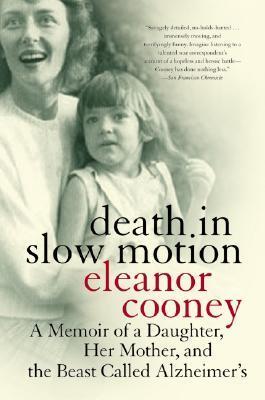
Death in Slow Motion: A Memoir of a Daughter, Her Mother, and the Beast Called Alzheimer's – A Raw and Unsentimental Story of Caregiving
A raw, unsentimental and passionately written memoir about trying to care for a parent with Alzheimer’s When her once-glamorous and witty novelist-mother got Alzheimer's, Eleanor Cooney moved her from her beloved Connecticut home to California in order to care for her. In tense, searing prose, punctuated with the blackest of humor, Cooney documents the slow erosion of her mother's mind, the powerful bond the two shared, and her own descent into drink and despair. But the coping mechanism that finally serves this eloquent writer best is writing, the ability to bring to vivid life the memories her mother is losing. As her mother gropes in the gathering darkness for a grip on the world she once loved, succeeding only in conjuring sad fantasies of places and times with her late husband, Cooney revisits their true past. Death in Slow Motion becomes the mesmerizing story of Eleanor's actual childhood, straight out of the pages of John Cheever; the daring and vibrant mother she remembers; and a time that no longer exists for either of them.
272 pages, Paperback
First published January 1, 2003
About the author
Eleanor Cooney
23 books17 followersEleanor Cooney is the coauthor (with Daniel Altieri) of three novels set in 7th-century China: IRON EMPRESS (formerly DECEPTION)--A Novel of Murder and Madness in T'ang China; THE COURT OF THE LION: A Novel of the T'ang Dynasty; and SHORE OF PEARLS--A novel of Murder, Plague and the Prison Island of Hainan.
Her critically-acclaimed memoir DEATH IN SLOW MOTION, My Mother's Descent Into Alzheimer's (HarperCollins), was published in 2004 to rave reviews and was translated into four languages. She's recently completed a dark-but-funny literate thriller called THE DEVIL YOU KNOW, set in Wisconsin in the present and in the 1890s. In Oct. of 2019, her true-life memoir MIDNIGHT IN SAMARRA, The True Story of WMD, Greed, and High Crimes in Iraq was published by Skyhorse, NYC.
Her work has appeared in Harper's and Mother Jones magazines. She lives in Mendocino, California.
Daughter of Mary Durant
Her critically-acclaimed memoir DEATH IN SLOW MOTION, My Mother's Descent Into Alzheimer's (HarperCollins), was published in 2004 to rave reviews and was translated into four languages. She's recently completed a dark-but-funny literate thriller called THE DEVIL YOU KNOW, set in Wisconsin in the present and in the 1890s. In Oct. of 2019, her true-life memoir MIDNIGHT IN SAMARRA, The True Story of WMD, Greed, and High Crimes in Iraq was published by Skyhorse, NYC.
Her work has appeared in Harper's and Mother Jones magazines. She lives in Mendocino, California.
Daughter of Mary Durant
Ratings & Reviews
Friends & Following
Create a free account to discover what your friends think of this book!
Community Reviews
Displaying 1 - 30 of 41 reviews

January 18, 2013
This was a difficult and sad book to read – the story of the author’s experiences with her mother and Altzheimers. Not only did her mother have this terrible illness, which wipes out short term memory, but she had a painful ongoing stomach problem – which doctors were unable to alleviate. She also continually mourned the loss of her beloved husband. It was as if the Altzheimer's had disrupted the normal process of bereavement. She also frequently complained of feeling lonely – this in spite of her being with her daughter for many hours of every day. There was so much unhappiness....
Her family had rallied round her: her daughter brought her over from Connecticut to live in her house in California, with her and her partner, whist her brother took charge of financial affairs. But even with all the good will in world, her mother’s illness fought them every inch of the way. She sometimes woke them up at 6.30 in the morning, thinking it was 6.30 in the evening, or walked round and round the kitchen repeatedly slamming doors and drawers, because she didn’t know where anything was any more. She asked the same questions over and over again, and finally, further down the line, she was expelled from nursing homes because her behaviour was violent and disruptive. The author shows us clearly her levels of worry and anxiety about her mother. Not only did she have the illness to cope with, on top of that there were the money worries and concerns about insurance, and finally, big worries about finding her a decent place to live, once the author could no longer cope with her at home.
The author didn’t just give us negatives though – the book is rich with passages about what her mother was like when younger – a beautiful, intelligent woman who was also a writer. She becomes to us a fully rounded person. It is only her final years which are so appalling.....but those years are so very appalling.
There were a few highlights. Allen, the wonderful paid carer who looked after her mother every morning with kindness and patience, Jenny, from an organisation which supports carers, who came into her life like a ball of fire to help her sort things out when everything seemed hopeless, and finally there was Sheffield House a wonderfully designed home with caring staff – where her mother eventually settled down.
I found this book a very difficult read. There is nothing about Altzheimer’s which is redeeming. It did however for me bring home with passion the very simple message that we need be kind and patient when dealing with people. You never know what is going on in their lives.
Her family had rallied round her: her daughter brought her over from Connecticut to live in her house in California, with her and her partner, whist her brother took charge of financial affairs. But even with all the good will in world, her mother’s illness fought them every inch of the way. She sometimes woke them up at 6.30 in the morning, thinking it was 6.30 in the evening, or walked round and round the kitchen repeatedly slamming doors and drawers, because she didn’t know where anything was any more. She asked the same questions over and over again, and finally, further down the line, she was expelled from nursing homes because her behaviour was violent and disruptive. The author shows us clearly her levels of worry and anxiety about her mother. Not only did she have the illness to cope with, on top of that there were the money worries and concerns about insurance, and finally, big worries about finding her a decent place to live, once the author could no longer cope with her at home.
The author didn’t just give us negatives though – the book is rich with passages about what her mother was like when younger – a beautiful, intelligent woman who was also a writer. She becomes to us a fully rounded person. It is only her final years which are so appalling.....but those years are so very appalling.
There were a few highlights. Allen, the wonderful paid carer who looked after her mother every morning with kindness and patience, Jenny, from an organisation which supports carers, who came into her life like a ball of fire to help her sort things out when everything seemed hopeless, and finally there was Sheffield House a wonderfully designed home with caring staff – where her mother eventually settled down.
I found this book a very difficult read. There is nothing about Altzheimer’s which is redeeming. It did however for me bring home with passion the very simple message that we need be kind and patient when dealing with people. You never know what is going on in their lives.

January 26, 2015
When Eleanor Cooney's once-brilliant mother could no longer manage in her Connecticut home because of her dementia, her daughter moved her to California in order to care for her. The slow erosion of her mind was a devastating experience for both of them. This is an honest and powerful memoir, beautifully written.
"Alzheimer's," Cooney writes, "you'll never be the same once it's paid you a visit." I recommend it highly.
"Alzheimer's," Cooney writes, "you'll never be the same once it's paid you a visit." I recommend it highly.
May 27, 2015
I think there's a special club for those of us who have lost our mothers. There's something so devastating about that loss that I don't think you truly appreciate it until you're faced with it yourself. And there's a particularly devastating pain in watching your mother suffer and die before your eyes.
For me, that devastation came in watching my mother suffer physical deterioration as she fought against metastatic breast cancer. I remember every detail of our last couple conversations and wince in pain when I think of her weary eyes as she confessed to me in one of our last conversations, "I just want to fall asleep and never wake up again." But there were good moments too - like when a bird landed nearby as we sat on her rural California deck. "What's that?" I asked her, having long ago taught her all the native birds. "A titmouse," she replied. "I still remember everything you taught me."
Ah yes, memories. Towards the end of my mother's life, I pried her memories, desperately trying to capture every little tidbit about her life. Even on that last day of her life, I showed her photos from the family album, and asked her to share her remembrances. The thought of losing her mind, her memories, our common experiences, was the most frightening thing to me.
I've been thinking a lot about my mother's death lately, as I have been reading Eleanor Cooney's masterful memoir, Death in Slow Motion, and I realize how lucky I was to be able to capture memories from my mother during those final weeks. Eleanor wasn't so fortunate: her mother, a vibrant, intelligent author (Mary Durant), ending up dying a slow, torturous, dignity-shredding death from Alzheimer's disease. Many years before her body died, Durant lost her ability to store and retrieve memories, her personality disintegrating before Cooney's eyes. Can anything be more terrifying?
One of the things I most appreciate about Death In Slow Motion is Cooney's unflinching honesty about her own guilt, frailty, and regret in the way she handled her mother's decline. After initially trying to care for her mother herself, she realized the strain of being a primary caretaker was destroying both her relationship and her sanity. She turned to care homes for help and then was faced with intense guilt and regret when she discovered they weren't taking such great "care" after all. At one point, she looks at a photograph of her mother gazing up at her with trust in her eyes and contemplates how she shattered that trust, and - the guilt, the unimaginable guilt! Oh, how I know that guilty feeling - like the guilt I feel every time I think of my mother showing me her scraped knees that she suffered trying to walk down to the laundry room beneath the house only a couple of weeks before she died. Why wasn't I doing the laundry for her? Why did I let her down??? Oh, Regret - you merciless ghost!
That's not to say that Death In Slow Motion is a book of regret. Cooney spends a large amount of the book painting a vivid portrait of her younger mother as an intelligent, witty woman who lived, by and large, a full, inspiring, and happy life. Although early relationships were rocky, Durant found the love of her life when she met environmentalist Michael Harwood, with whom she researched and penned their masterpiece, On The Road with John James Audubon. However, Harwood's death at the age of just 55-years-old was a heartbreak that she could not overcome; this tragedy very likely hastened her decline. It actually came as a warped sort of blessing when Durant reached an advanced stage of dementia and no longer seemed tormented by constant thoughts of Harwood's death.
It may seem strange to say, but I didn't find Death In Slow Motion to be a depressing read, despite its subject matter. It's very sad, yes, but more than anything, I found the book inspiring. It's like a literary version of the old tombstone inscription:
Passenger stop as you pass by
As you are now, so once was I
As I am now, so you shall be
Prepare for death and follow me.
Stories like this remind us that life is short, the future is uncertain, and we should all do what makes us happy while our precious minds and limbs are still under our control.
For me, that devastation came in watching my mother suffer physical deterioration as she fought against metastatic breast cancer. I remember every detail of our last couple conversations and wince in pain when I think of her weary eyes as she confessed to me in one of our last conversations, "I just want to fall asleep and never wake up again." But there were good moments too - like when a bird landed nearby as we sat on her rural California deck. "What's that?" I asked her, having long ago taught her all the native birds. "A titmouse," she replied. "I still remember everything you taught me."
Ah yes, memories. Towards the end of my mother's life, I pried her memories, desperately trying to capture every little tidbit about her life. Even on that last day of her life, I showed her photos from the family album, and asked her to share her remembrances. The thought of losing her mind, her memories, our common experiences, was the most frightening thing to me.
I've been thinking a lot about my mother's death lately, as I have been reading Eleanor Cooney's masterful memoir, Death in Slow Motion, and I realize how lucky I was to be able to capture memories from my mother during those final weeks. Eleanor wasn't so fortunate: her mother, a vibrant, intelligent author (Mary Durant), ending up dying a slow, torturous, dignity-shredding death from Alzheimer's disease. Many years before her body died, Durant lost her ability to store and retrieve memories, her personality disintegrating before Cooney's eyes. Can anything be more terrifying?
One of the things I most appreciate about Death In Slow Motion is Cooney's unflinching honesty about her own guilt, frailty, and regret in the way she handled her mother's decline. After initially trying to care for her mother herself, she realized the strain of being a primary caretaker was destroying both her relationship and her sanity. She turned to care homes for help and then was faced with intense guilt and regret when she discovered they weren't taking such great "care" after all. At one point, she looks at a photograph of her mother gazing up at her with trust in her eyes and contemplates how she shattered that trust, and - the guilt, the unimaginable guilt! Oh, how I know that guilty feeling - like the guilt I feel every time I think of my mother showing me her scraped knees that she suffered trying to walk down to the laundry room beneath the house only a couple of weeks before she died. Why wasn't I doing the laundry for her? Why did I let her down??? Oh, Regret - you merciless ghost!
That's not to say that Death In Slow Motion is a book of regret. Cooney spends a large amount of the book painting a vivid portrait of her younger mother as an intelligent, witty woman who lived, by and large, a full, inspiring, and happy life. Although early relationships were rocky, Durant found the love of her life when she met environmentalist Michael Harwood, with whom she researched and penned their masterpiece, On The Road with John James Audubon. However, Harwood's death at the age of just 55-years-old was a heartbreak that she could not overcome; this tragedy very likely hastened her decline. It actually came as a warped sort of blessing when Durant reached an advanced stage of dementia and no longer seemed tormented by constant thoughts of Harwood's death.
It may seem strange to say, but I didn't find Death In Slow Motion to be a depressing read, despite its subject matter. It's very sad, yes, but more than anything, I found the book inspiring. It's like a literary version of the old tombstone inscription:
Passenger stop as you pass by
As you are now, so once was I
As I am now, so you shall be
Prepare for death and follow me.
Stories like this remind us that life is short, the future is uncertain, and we should all do what makes us happy while our precious minds and limbs are still under our control.

March 30, 2022
I found this book 19 years after its initial printing. The story is tough, one my family has experienced first hand. I also volunteer with a local hospice and many of the patients I spend time with have dementia as part of their diagnosis. Despite its difficult subject, it was an easy read for me. Ms. Cooney is an exceptional writer, something she inherited from her mother. Thank you for sharing this story. It's important that we shed light on this horrible disease that robs the patient and their family of so much.
August 25, 2011
I knew after I read The End of Your Life Book Club that I needed to pick up this book and read it. I have had it on my bedside stand for about a year and a half but my to read pile is so monstrously huge full of have to read review books that it kept getting pushed back. My dad got lung cancer and died 5 years ago. It was a time beyond words for all of my family. Let it be said that the 5 months we cared for him were tragic but also magical at the same time . He trusted my mother and my siblings and me to care for him entirely. It was a time that brought us closer as a family in laughter and tears. I grew up truly into an adult when my dad died. I miss him every day. After he died, my mom was noticeably depressed. The sibs and I chalked it up as grief - that was why she never wanted to see her friends or read. Her broken heart was why she had sudden mood swings and forgot conversations. We talked about what we should do for her and denied any harsh realities. Our mom was just really sad. We all were. Soon enough events began to escalate and we couldn't deny anymore there was a real problem. I'll never forget the drs appt. when her doctor handed me the pamphlet - Alzheimer's. We all knew it really, but that night my sisters and brother and I gathered and grieved again, this time for a living parent whose mind was slowly becoming a void.
Cancer is harsh- it emaciated my father, turned him into a skeleton and robbed him of his strength. He fought hard, but in the end he gave himself up to our care, never losing his wit and intelligence. Alzheimer's is, as Cooney calls it, a beast. It has taken my mother and eaten up everything good about her and left us with a combative, confused changeling who needs our constant care yet fights us at every turn.
Cooney says at one point in the book, "do not judge, reader.". I don't. Every emotion from every transaction she shares in the memoir is relevant. I do not have a docile victim of Alzheimer's, much like Cooney's mother. Maybe it has something to do with the fact that both these women were incredibly intelligent and independent. Mom still wants control, even when she had lost he reason and logic and forgets she has neither.
Thank God for our faith. The one problem I had with this book was the author's atheism. I just feel sad for people without faith. I guess atheists feel sorry for the faithful though. I just know that my family's spiritual beliefs are one of the cornerstones of our strong commitment to each other.
Both my sisters ate waiting to read this. Misery loves company And this book showed me we are not alone.
Cancer is harsh- it emaciated my father, turned him into a skeleton and robbed him of his strength. He fought hard, but in the end he gave himself up to our care, never losing his wit and intelligence. Alzheimer's is, as Cooney calls it, a beast. It has taken my mother and eaten up everything good about her and left us with a combative, confused changeling who needs our constant care yet fights us at every turn.
Cooney says at one point in the book, "do not judge, reader.". I don't. Every emotion from every transaction she shares in the memoir is relevant. I do not have a docile victim of Alzheimer's, much like Cooney's mother. Maybe it has something to do with the fact that both these women were incredibly intelligent and independent. Mom still wants control, even when she had lost he reason and logic and forgets she has neither.
Thank God for our faith. The one problem I had with this book was the author's atheism. I just feel sad for people without faith. I guess atheists feel sorry for the faithful though. I just know that my family's spiritual beliefs are one of the cornerstones of our strong commitment to each other.
Both my sisters ate waiting to read this. Misery loves company And this book showed me we are not alone.

February 18, 2014
The writing style is really delightful, so this isn't just a sad story, it's a pleasing work of art. I appreciate the author's letting us in to the darkest moments of her struggle, which makes me loathe to criticize. I learned so much from her, anticipating the day when I may be called to the task of caring for my own mother... her fierce loyalty and compassion are things I hope I can emulate. I wished she hadn't suffered such guilt. I wanted to plant some of the responsibility at the feet of the mother,for I noticed that the mother threw a tea bag at someone before she actually succumbed to dementia and was not the easiest person to please. I think this author persevered heroically. I do wonder if the alcohol and meds may have exacerbated her hardship, but, as she asked, I won't judge her.

October 21, 2010
A difficult read, to be sure, but so poignant and beautiful. Cooney is one of the few memoirist I've read (of late) that simply tells it like it is: She's honest about the pain that Alzheimer's has brought to her life (as well as her mother's), but also the joy that her mother's life brought to others. There's no sugar-coating here. This is definitely a wake-up call for all of us who will cope with aging parents, and a great book to begin that dialogue. But it is also a testament to living a fulfilled life. Recommended.

May 6, 2010
I just had to read this again, since things are not going so well with my mom and her dementia. Eleanor wrote my thoughts exactly.....I am experiencing the same emotions as she, but she was able to put them into words beautifully. I highlighted quite a few passages, so I can go back to them and read them when I need to.
This remains one of my favorite memoirs of all time and it has a place on my book shelf permanently.
This remains one of my favorite memoirs of all time and it has a place on my book shelf permanently.

January 29, 2020
In an affecting story, Eleanor Cooney regales the reader with tales of her mother, comparing the vibrant woman she once was to the sick, angry, helpless woman she becomes after Alzheimer's strikes. Mary Durant was one-of-a-kind, a brilliant writer and an irresponsible mother (at times). Since she lived in Connecticut, her disease progressed considerably before Eleanor, a Californian, became aware of it. This made it more difficult for Cooney and her obliging partner Mitch to arrange for proper care and led to round-the-clock nursing and terrible scenes as the three adjusted to their new situation.
Cooney provides a great deal of welcome emotional context. One returning theme is that of trust. Mary once abandoned her and her brother as children to the care of family friends while she gallivanted off to Europe with her second husband. Eleanor feels that she is abandoning Mary to a variety of assisted living institutions, especially because of the subterfuge involved in actually bringing her to these places. The guilt she feels requires frequent sips from a flask. There's considerable drinking after Mary arrives--another sign of Cooney's stress, how desperate her situation feels. I also appreciated Cooney's musings about Alzheimer's progression in a patient. She has a clear-eyed vision of what it entails.
The book is extremely well-written and lyrical. She doesn't cram the book full of medical facts as often occurs in other memoirs about medical issues. I found it difficult to engage emotionally with the story, mostly because I could not identify with its characters, despite my own familiarity with Alzheimer's. And one scene simply horrified me towards the end when Eleanor cleaned out Mary's study. She destroyed primary sources, letters, journals, that could have been donated to a historical collection, but saved books, calling them sacrosanct. Books can be replaced. Remember that, dear readers. The documentation of your parents' lives in the form of unique personal items is of much more worth. Scholars of the future may find them invaluable. Even love letters. Or maybe especially love letters.
I give the book four stars for the quality of the writing and for the vulnerability Eleanor reveals.
Cooney provides a great deal of welcome emotional context. One returning theme is that of trust. Mary once abandoned her and her brother as children to the care of family friends while she gallivanted off to Europe with her second husband. Eleanor feels that she is abandoning Mary to a variety of assisted living institutions, especially because of the subterfuge involved in actually bringing her to these places. The guilt she feels requires frequent sips from a flask. There's considerable drinking after Mary arrives--another sign of Cooney's stress, how desperate her situation feels. I also appreciated Cooney's musings about Alzheimer's progression in a patient. She has a clear-eyed vision of what it entails.
The book is extremely well-written and lyrical. She doesn't cram the book full of medical facts as often occurs in other memoirs about medical issues. I found it difficult to engage emotionally with the story, mostly because I could not identify with its characters, despite my own familiarity with Alzheimer's. And one scene simply horrified me towards the end when Eleanor cleaned out Mary's study. She destroyed primary sources, letters, journals, that could have been donated to a historical collection, but saved books, calling them sacrosanct. Books can be replaced. Remember that, dear readers. The documentation of your parents' lives in the form of unique personal items is of much more worth. Scholars of the future may find them invaluable. Even love letters. Or maybe especially love letters.
I give the book four stars for the quality of the writing and for the vulnerability Eleanor reveals.

October 27, 2019
Devastating read. Shows the wound and pulls it open, wider, for you to see. Lovely language but some moments veering into hyperbole. The story itself is honestly enough.

August 9, 2020
Insight into dementia through the eyes of the family . Also reminds us of how short our life is. Very sad and painful story , especially for those who have experienced this!
November 26, 2009
This was a good book in that it was much a memoir and review of the incredible impact of Alzheimer's on family caregivers as it was a review of the author's mother's descent into the crevasse that is Alzheimer's. At times, however, the strength of the story was overshadowed by a little too much jumping around in timeframe as well as the author's own alcoholism. All in all, though, I would still recommend it to anyone who has a friend or family member with this disease. Warning: don't ever think "It can't happen to me, OR I would never become like that" because this books shows you that you never know what would happen in those circumstances.

August 27, 2011
Poignant images, humor and personal relevance drove me to devour this book. The similarities between Cooney's mother and mine were often uncanny and I wanted to get to the end to see what she ended up doing, how they solved the problem of how to take of mother. There are no answers.
The end, when Cooney and her brother emptied out their mother's home and left it forever, was thick with darkness and sorrow. They left their childhood, their home...they erased it. Almost every emotion of which Cooney wrote, I see in my life and that of my siblings. Alzheimer's Disease is, indeed, a beast.
The end, when Cooney and her brother emptied out their mother's home and left it forever, was thick with darkness and sorrow. They left their childhood, their home...they erased it. Almost every emotion of which Cooney wrote, I see in my life and that of my siblings. Alzheimer's Disease is, indeed, a beast.
August 13, 2013
Not bad...slow and hard to stay with.

June 11, 2014
Review to come...

January 13, 2017
Harrowing, honest and brutally frank with a side of black humour. Eleanor Cooney has inherited her mother's gift for writing.

June 27, 2020
Having worked with dementia/memory/Alzheimer's patients for a long time, I would say this memoir of a daughter dealing with her mother's Alzheimer's disease is true to life. You can tell the author loves her mother a great deal but at times it is just too much to deal with. Her mother led an interesting life and loved her husband so much that when he died her dementia escalated. Kudos to the author for trying to keep her mother out of a facility for as long as she could and not giving up until she found the best place for her mother. If someone is dealing with this horrible disease in their life I would recommend this book as an affirmation that they are not alone in dealing with this disease. Sometimes it helps just to know you are not the only one.
July 20, 2021
A true life story written by El Cooney about her famous author mother.
She was a fabulous author and gregarious lovable personality.
She married three times and finally found the love of her life, Mike.
After Mike died she developed Alzheimer’s. This book honors her mother
and describes how the disease stole her away,as well as the struggles &
guilt she goes through trying to care for her mother. Touching.
She was a fabulous author and gregarious lovable personality.
She married three times and finally found the love of her life, Mike.
After Mike died she developed Alzheimer’s. This book honors her mother
and describes how the disease stole her away,as well as the struggles &
guilt she goes through trying to care for her mother. Touching.
February 15, 2025
Not what I thought it would be. Much more of her mother’s life, not just the part of her life with Alzheimer’s. Unfortunately written through a lense without having the hope of God, which leaves everything in darkness and without purpose or hope.

June 20, 2018
This book is the clearest I’ve read about the difficulties of coping with someone who has been diagnosed with Alzheimer’s

March 6, 2019
Excellent! Honest, raw and real. It took guts for the author to write such a powerful, memoir. I admire her courage and appreciate her style. She is truly her mother's daughter.

May 19, 2021
A painfully honest memoir about a daughter caring for her mother with Alzheimer’s. What a cruel disease.

March 4, 2023
I wasn’t a fan of this authors writing style, but she does a great job of describing the impact Alzheimer’s had on her and her mother

January 9, 2024
I needed something this book didn’t give me. The writing was done well….the way the author chose to tie things up left me lost.
February 14, 2024
I couldn’t finish it. Got through two chapters. I didn’t enjoy her writing style.

December 16, 2014
If you ever doubted that Alzheimer's introduces chaos into extended families, this book will make you a believer. Eleanor describes how her mother's Alzheimer's not only damaged her memory, but Mary Durant's emotions and her relationships with others. Eleanor and her partner Mitch move Mary from Connecticut to live near them in California.
As I have read in various memoirs, there is never a quick fix with Alzheimer's. The ground is always shifting, so the family caregivers must constantly adjust the type of care the person with dementia receives. After moving her mother to California, Eleanor has to change her mother's housing multiple times to various types of facilities. So much paperwork.
Eleanor's mother spent decades as an intelligent, passionate and independent woman. This made her unwilling to follow anyone's lead as her dementia took away her ability to function independently. Eleanor spent hours caring for her mother, but it was never enough. This took its toll on Eleanor, her partner and their relationship. This lead to an increase dependency on Valium and alcohol to face the challenges of being a caregiver.
Interspersed in the account of Mary's time in California are flashbacks to her life in New York and Connecticut. Mary worked primarily as an editor and writer but also did some modeling. She was married three times and had numerous lovers as well. She in you younger years was part of a jet set crowd and mingled with the likes of director John Huston. For 25 years, she was married to a mature, grounded and 12-years-her-junior environmentalist activist named Mike Harwood. They lived in a small town in Connecticut. Mike dies and a few years later she moves to California. She never finds her equilibrium after losing the love of her life and her familiar surroundings.
As I have read in various memoirs, there is never a quick fix with Alzheimer's. The ground is always shifting, so the family caregivers must constantly adjust the type of care the person with dementia receives. After moving her mother to California, Eleanor has to change her mother's housing multiple times to various types of facilities. So much paperwork.
Eleanor's mother spent decades as an intelligent, passionate and independent woman. This made her unwilling to follow anyone's lead as her dementia took away her ability to function independently. Eleanor spent hours caring for her mother, but it was never enough. This took its toll on Eleanor, her partner and their relationship. This lead to an increase dependency on Valium and alcohol to face the challenges of being a caregiver.
Interspersed in the account of Mary's time in California are flashbacks to her life in New York and Connecticut. Mary worked primarily as an editor and writer but also did some modeling. She was married three times and had numerous lovers as well. She in you younger years was part of a jet set crowd and mingled with the likes of director John Huston. For 25 years, she was married to a mature, grounded and 12-years-her-junior environmentalist activist named Mike Harwood. They lived in a small town in Connecticut. Mike dies and a few years later she moves to California. She never finds her equilibrium after losing the love of her life and her familiar surroundings.

January 8, 2011
Tough book; pretty heavy at times. Couldn't help but have deep sympathy for the author as she relayed living through this. The bulk of the book centers mostly on where her mother should live, but the author is also extremely candid and brutally honest about her own emotions through the ordeal. It was a tough read because as a person who's family is steeped in alcohol and addiction issues, I cringed at the author's dependency to "get through" situations with alchol and valiums. Driving take swigs of alcohol during long road trips made my heart sink. She claimed it was for her sanity, and that "trust me, you would have done the same". No. I wouldn't have. Risking killing yourself in a DUI is one thing. But you always risk killing others as well, and that included her own mother. Yes, the author was brutally honest, but she was also irresponsible and selfish in relying on dangerous forms of self-medicating. As someone who has been there, you take the high road and grit your teeth through the wicked pain and work through it. Not numb it and hope it goes away.

July 23, 2008
Since my mother's struggle with dementia, I've been wanting to read some memoirs about how people live through these experiences. Death in Slow Motion by Eleanor Cooney is--with its apt but oddly treacly title--fantastic. If you like a good memoir, this book is worth reading even if Alzheimer's isn't touching your life.
Cooney's mother was an amazing woman whose life story would have been worth telling even without the epically tragic end. Her mother was a unique thinker, a spirit, a fascinating person, and a terrific writer--and Eleanor inherited the writing gene.
The book is in no way maudlin. It's honest, clear-eyed, witty, loving, irascible and intelligent. (And this book has a great ending, one I'll never forget.)
Cooney's mother was an amazing woman whose life story would have been worth telling even without the epically tragic end. Her mother was a unique thinker, a spirit, a fascinating person, and a terrific writer--and Eleanor inherited the writing gene.
The book is in no way maudlin. It's honest, clear-eyed, witty, loving, irascible and intelligent. (And this book has a great ending, one I'll never forget.)

January 1, 2013
I enjoyed the book, it's well written and an honest account of grief. Although I cannot relate to her exact situation, I can relate to her feelings of loss in a different way. It was nice to read a book about grief that wasn't religious.
I enjoyed reading the book but what preventing me from giving it a full five stars was I found the side stories detracted from the main story of her mother and her. I believe the reasoning was to help readers understand what her mother was like before the Alzheimer's but it often left me more confused than anything else.
I enjoyed reading the book but what preventing me from giving it a full five stars was I found the side stories detracted from the main story of her mother and her. I believe the reasoning was to help readers understand what her mother was like before the Alzheimer's but it often left me more confused than anything else.
May 17, 2013
This is a great book relating the experiences of taking care of someone you love who has Alzheimer's. The writing was good and the emotions were honest. I would have given it 5 stars except I did not like all the side stories, in fact I started skipping the flashbacks entirely. It seemed like a lot of name-dropping, recalling famous people her mother knew. The stories did not add to the main story at all. I found them boring and disruptive to the flow of the book.
Displaying 1 - 30 of 41 reviews