

What do you think?

Hip Hop Family Tree #1
Hip Hop Family Tree Vol. 1
The lore of the early days of hip hop has become the stuff of myth, so what better way to document this fascinating, epic true story than in another great American mythological medium - the comic book? From exciting young talent and self-proclaimed hip hop nerd Ed Piskor, acclaimed for his hacker graphic novel Wizzywig, comes this explosively entertaining, encyclopedic history of the formative years of the music genre that changed global culture. "This is the comic of all time." - Biz Markie
114 pages, Kindle Edition
First published October 10, 2013
About the author
Ed Piskor
84 books202 followersEd Piskor had been cartooning professionally in print form since 2005, starting off drawing American Splendor comics written by Harvey Pekar. The duo continued working together on 2 graphic novels, Macedonia, and The Beats. Ed began self publishing Wizzywig after developing a huge interest in the history of Hacking and Phone Phreaking. 3 volumes, making up 3/4 of the full story, have been published to date.
Recently Ed had designed the characters for the new Adult Swim series, Mongo Wrestling Alliance.
Recently Ed had designed the characters for the new Adult Swim series, Mongo Wrestling Alliance.
Ratings & Reviews
Friends & Following
Create a free account to discover what your friends think of this book!
Community Reviews
Displaying 1 - 30 of 286 reviews

June 15, 2014
The rise of hip hop in New York City during the late 1970s and early 1980s makes for a fascinating topic, and Ed Piskor's meticulously researched Hip Hop Family Tree Volume 1 approaches it with a lot of fanboy enthusiasm. While this approach can be very enjoyable, it is arguably also the book's weakest link, as the dutiful mention of everyone and their mother comes at the expense of in-depth characterization and narrative flow. What is more, Piskor completely ignores hip hop's broader social context, most notably its political and economic roots (that also contributed to the rise of other youth subcultures, such as punk, around the same time).
Still, as a "who's who" of early hip hop in comic-book form, I thought this was pretty cool and unique. The kind of book you enjoy in part because the author clearly cares for the subject.
Still, as a "who's who" of early hip hop in comic-book form, I thought this was pretty cool and unique. The kind of book you enjoy in part because the author clearly cares for the subject.

February 18, 2018
Like a physicist approaching the Big Bang or a biologist approaching the moment the word became flesh, Ed Piskor delves into the most primordial moments of Hip-Hop. Innumerable details of people and place are overwhelmingly displayed alongside a foundational story just as convoluted. The characters and settings that have forged the latest and most powerful trend in universal music are all there. Disappointingly, the same width of attention to detail cannot be said of internal cohesion.
More strings of narrative are thrown down than those in a bowl of Spaghetti. While the previously mentioned dish coalesces into something tasty for our bellies, the dish that is Hip-Hop Family Tree, is overwhelmed with substance. Lost in the details, it froths over from an excessiveness with not enough thematic sauce (as it were) to bind the collection together.
From the very beginning, emphasis is placed on details that characterize people and places but not the data to demonstrate where we are chronologically. Even though the presentation is (presumably) linear, clearly certain events occur contemporaneously. (What worked marvelously in Pulp Fiction - does not function here) It's not until the very end of the issue (nigh '82) that we find out that most everything has occurred in a mere few years. Simple letter heads denoting the years when certain pivotal moments would have helped tremendously.
Just as vague as it is in regards to a timeline, so too does this Family Tree suffer from a dearth of internal cohesion. With no chapters, this vast panorama of primordial Hip-Hop ends up more jumbled than not. Important developments and occurrences just happen happenstance and are depicted in the story as the author sees fit. For example, a few pages introducing a new character will be randomly inserted next to another unconnected story and then this person will pop again pages later for no particular reason. This (hop-scotch-esque) approach happens again and again. Its irritating as it is confusing.
This is pure opinion, sure, but I would have much preferred either a thematic or character driven collation demarcated by individual arcs. My illusory examples would have included: Chapter I/Afrika Bambatta's story, Chapter II/Hip-Hop-Art-Graffitti tales, etc... But that's not the case so I must digress.
Next something must be said about the sources used. Although seemingly presented almost from an internalized recollection of someone who was there at the time and/or based upon further eyewitness accounts (to Piskor's credit who created a world that feels as if the author and the reader themselves were/are in it) that's not quite the case. The last few pages reveal a surprisingly thin bibliography of sources including local histories, musical anthologies, and a publication by the (now disgraced) man of Def Jam - Russell Simmons. So instead of a tale by people who were there, we're getting a white boy's filtered perspective of what was where he was not. How disappointing.
What it Is.
One Thumb Up
More strings of narrative are thrown down than those in a bowl of Spaghetti. While the previously mentioned dish coalesces into something tasty for our bellies, the dish that is Hip-Hop Family Tree, is overwhelmed with substance. Lost in the details, it froths over from an excessiveness with not enough thematic sauce (as it were) to bind the collection together.
From the very beginning, emphasis is placed on details that characterize people and places but not the data to demonstrate where we are chronologically. Even though the presentation is (presumably) linear, clearly certain events occur contemporaneously. (What worked marvelously in Pulp Fiction - does not function here) It's not until the very end of the issue (nigh '82) that we find out that most everything has occurred in a mere few years. Simple letter heads denoting the years when certain pivotal moments would have helped tremendously.
Just as vague as it is in regards to a timeline, so too does this Family Tree suffer from a dearth of internal cohesion. With no chapters, this vast panorama of primordial Hip-Hop ends up more jumbled than not. Important developments and occurrences just happen happenstance and are depicted in the story as the author sees fit. For example, a few pages introducing a new character will be randomly inserted next to another unconnected story and then this person will pop again pages later for no particular reason. This (hop-scotch-esque) approach happens again and again. Its irritating as it is confusing.
This is pure opinion, sure, but I would have much preferred either a thematic or character driven collation demarcated by individual arcs. My illusory examples would have included: Chapter I/Afrika Bambatta's story, Chapter II/Hip-Hop-Art-Graffitti tales, etc... But that's not the case so I must digress.
Next something must be said about the sources used. Although seemingly presented almost from an internalized recollection of someone who was there at the time and/or based upon further eyewitness accounts (to Piskor's credit who created a world that feels as if the author and the reader themselves were/are in it) that's not quite the case. The last few pages reveal a surprisingly thin bibliography of sources including local histories, musical anthologies, and a publication by the (now disgraced) man of Def Jam - Russell Simmons. So instead of a tale by people who were there, we're getting a white boy's filtered perspective of what was where he was not. How disappointing.
What it Is.
One Thumb Up

July 7, 2014
Second read of this after a decade or so. I'm really no more informed about early hip-hop than I was back then!
I grabbed the list of songs Piskor references and make a playlist for myself while reading. That's probably the best way to get into this.
It's a Family Tree not really a history - Piskor doesn't get into the economics, culture, racism, etc. It's mostly just about the actual men and women who started making hip-hop and were highly influential on its development. Sugarhill Gang, Kurtis Blow, Funky 4 + 1, Grandmaster Flash and the Furious Five, and many more.
I grabbed the list of songs Piskor references and make a playlist for myself while reading. That's probably the best way to get into this.
It's a Family Tree not really a history - Piskor doesn't get into the economics, culture, racism, etc. It's mostly just about the actual men and women who started making hip-hop and were highly influential on its development. Sugarhill Gang, Kurtis Blow, Funky 4 + 1, Grandmaster Flash and the Furious Five, and many more.

December 3, 2013
Damn fantastic. And *huge*. I just want to dive right into it. If only it came with a mix tape and the original material Piskor is working with.

August 11, 2014
Very fun! A history of hip hop in comics form. This is only volume one, so it only covers up to the early 80's or so. I admit this is history I'm largely unfamiliar with, but it has the ring of truth about it. I certainly recognize lots of names, and even recall hearing a song or two. I was previously familiar with Piskor's work from his collaborations with Harvey Pekar. He can seemingly draw anything--the cover, in particular, is quite striking. The production on this book is top notch, going for an intentionally retro look that suits the material well. Not only does this look like a treasury-sized comic book from the late 70's, but the paper has even been given the correct shade of brown to make it look old, and the coloring intentionally uses visible Ben Day dots. There are some pinups by other artists in the back of the book, and these pages are not "aged" like the rest of the book; the effect is quite jarring. I enjoyed this book immensely, and look forward to Volume 2.

September 15, 2017
Hip Hop Family Tree is Ed Piskor's illsutrated book of Hip-Hop history. It's an okay read if you're into the music in question, but that's pretty much it. It's not strictly a comic book, it's more like an illustrated collection of facts — it doesn't have any sort of coherent narrative, it's literally just 24 pages of drawn panels, each with a narration box that tells about the events and artists from the 70's and 80's Bronx Hip-Hop scene and how they related to each other. I am not very familiar with that culture or those artists, so for me this dry encyclopaedic style of information bombing was a bit of a bore, not to mention how abridged the facts feel — you can't get very detailed with only three or four lines of text. Which is a shame, because Piskor's art is amazing, and I think with a bit more coherent storytelling, this could become an absolutely fantastic comic book. Just based on the facts in this comic it's obvious how many fascinating things were going on in that time, in that place. Now I can't help but imagine a The Wire-type HBO show which covers the same ground, but with a straight narrative — now that would be rad, and I would watch it in a heartbeat. Please let me know if such a thing exists already!

August 3, 2015
I knew absolutely jack shit about hip hop before reading this, so the learning curve was tough. But Piskor does a great job of aping the dynamic color and fun of the old giant-sized comic books so most of the information goes down smooth. I don't know why this was so much more appealing to me than the work Piskor did on "the Beats," which I absolutely fucking hated, but it is.
I had the pleasure of seeing Piskor read and talk in Gainesville last Spring I can tell he knows his shit and is a bit of a workaholic. I'd say he's going places but it looks like he's already there.
I had the pleasure of seeing Piskor read and talk in Gainesville last Spring I can tell he knows his shit and is a bit of a workaholic. I'd say he's going places but it looks like he's already there.

July 22, 2020
Loved illustrations and writer is super knowledgeable. Wished it focused a little more on the social, political and economic context

September 3, 2018
This is a work of genius. Five starts are not enough to rate it. And yet, it took me a long time to read it, more than most non-comics books. The art would probably go in my top 10. The style addresses the subject even more than text. The reading of it was tough, since I am very close to a complete ignorant when it comes to hip-hop. It felt, most of the times, like reading a (brilliantly) ilustrated wiki. And it goes to 1981. It's the 90's jazz rap that I know (a little) and love (a lot). So, so far, none of A Tribe Called Quest, Disposable Heroes of Hiphoprisy, Souls of Mischief, Brand Nubian, The Pharcyde, Digable Planets and others. Definitely, I need to read the whole series. And be once again dazzled by the style. Hip-hop culture, some say, manifests in three ways. Maybe they now can start thinking about adding comics to rap, graffitti and breakdancing.

September 19, 2014
Ed Piskor has done the impossible. He wasn’t even born during the course of his HIP HOP FAMILY TREE VOLUME 1: 1970s-1981, but has managed to deliver an intimate biography of the time and place with attention to detail and insider knowledge so pitch perfect that I thought he had to have been a player on the scene. I grew up in that time and place, and still this book is eye-opening informative and just plain fun. That it’s done in a Marvel Comics style reminiscent of that era is an ideal fit for a story of real-life urban superheroes, more colorful than any offset printer.

March 21, 2016
I had only dabbled in rap/hip hop before reading this and I was blown away by the richness of the history of the genre. Of course I couldn't just read through it because I had to stop and check out youtube videos of the songs I was reading about and read wikipedia articles to fill in the gaps Piskor didn't elaborate on. I was so taken with the material that I dedicated my last radio show to hip-hop tracks released in 1979. I love it when a nonfiction book motivates me to do my own exploring on the topic. Highly recommended.

August 11, 2020
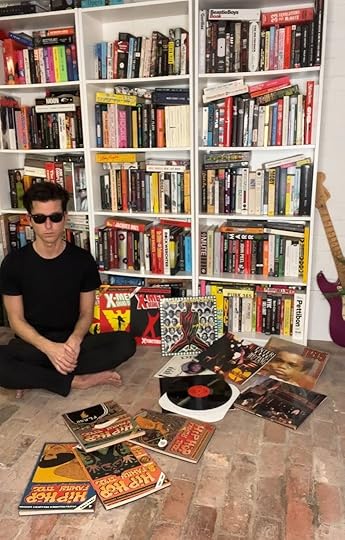
R.I.P. Ed Piskor
https://youtu.be/ayv1q5KCDrs

February 3, 2023
Don't expect a narrative arc here or cohesion or even much context for understanding if you don't really know the territory already...I'm sure you can find other books in your local library about the early days of hip hop which will ease you into the subject matter a little more smoothly. And if that's what you're looking for, then great. But none of those books will have the style and grace and humor of Ed Piskor's comic book tribute to these early pioneers of hip hop, each panel a mini-masters class in the subject and funny as hell to boot.
Piskor's recurrent portrayal of Russell Simmons as a lisping, wall-eyed goof may be my favorite part of the book, but Hip Hop Family Tree packaged in the trappings of a giant-sized Marvel Treasury Edition comic has got it all: Kurtis Blow, Afrika Bambaataa and the Zulu Nation, Grand Master Flash on the Wheels of Steel, Sylvia Robinson, Wonder Mike, Fab Five Freddy, Kool Moe Dee besting Busy Bee, a pubescent Rick Rubin, Charlie Ahearn, DJ Hollywood, Darryl McDaniels and Joseph Simmons as young'uns, the Campbell's Soup train, the Funky Four Plus One More, and you don't stop.
Piskor even includes an index and discography in the back to help you keep score. It's butter.
Piskor's recurrent portrayal of Russell Simmons as a lisping, wall-eyed goof may be my favorite part of the book, but Hip Hop Family Tree packaged in the trappings of a giant-sized Marvel Treasury Edition comic has got it all: Kurtis Blow, Afrika Bambaataa and the Zulu Nation, Grand Master Flash on the Wheels of Steel, Sylvia Robinson, Wonder Mike, Fab Five Freddy, Kool Moe Dee besting Busy Bee, a pubescent Rick Rubin, Charlie Ahearn, DJ Hollywood, Darryl McDaniels and Joseph Simmons as young'uns, the Campbell's Soup train, the Funky Four Plus One More, and you don't stop.
Piskor even includes an index and discography in the back to help you keep score. It's butter.

October 21, 2019
O que salva neste quadrinho é a arte. O roteiro não funciona. Parece uma colcha de retalhos de fatos históricos. Parece que cada uma ou duas páginas, o gibi conta alguma parte da história do Hip Hop. Mas estas partes não se conectam. Com isso, você não cria empatia nenhuma com os personagens. Sem contar que aparecem muitos, mas MUITOS nomes durante o quadrinho. Acabei ficando perdido no mar de referências que foram apresentadas. Foi um dos quadrinhos mais difíceis de terminar. Quase parei no meio. O termo que define para mim: enfadonho.

June 16, 2020
Very entertaining. Highly recommended if you want to learn, or refresh your knowledge, about early Rap.
Note: you can get the whole series on Comixology Unlimited. You can get a free one-month trial. I am taking full advantage of it.
Note: you can get the whole series on Comixology Unlimited. You can get a free one-month trial. I am taking full advantage of it.

April 28, 2021
I really thought I’d love this more, but my narrative-starved brain really struggled with some of this. It’s best to think of it as “hip hop family snapshots”, perhaps. Some great art and fun moments, just don’t expect much of a clear story or throughline here.

September 12, 2014
I love the subject, but I was a bit confused by the lack of a clear timeline. What years were covereed exactly? I grew up listening to some of this music. This book is best read with a laptop up so you can look up the music, the pictures of the people involved, and able to search more on topics mentioned. Since, it's a history of several people and events, there no strong narrative thread, which sometimes made it easier for me to forget about the book.
I did love the asides and reference to events outside of New York City and foreshadowing of people who would be important later in hip hop like Andre Young and Carlton Ridenhour.
The texture of the page was authentically textured and yellowed like comic books of that time period and the artwork was done in a accessible indie style. I didn't like the visual short hand of most people being drawn visually the same (all kids have dot eyes, so many afros of roughly the same length, etc.). It made it hard to keep track of who was doing what. Only a few characters had a distinct look, like Russell Simmons.
I also loved the inclusion of other hip hop artists by other artists. I want a poster print of the Salt-N-Pepa one. My sister and I loved them.
I did love the asides and reference to events outside of New York City and foreshadowing of people who would be important later in hip hop like Andre Young and Carlton Ridenhour.
The texture of the page was authentically textured and yellowed like comic books of that time period and the artwork was done in a accessible indie style. I didn't like the visual short hand of most people being drawn visually the same (all kids have dot eyes, so many afros of roughly the same length, etc.). It made it hard to keep track of who was doing what. Only a few characters had a distinct look, like Russell Simmons.
I also loved the inclusion of other hip hop artists by other artists. I want a poster print of the Salt-N-Pepa one. My sister and I loved them.

November 7, 2015
L'epica ai tempi della pop-art.
Potrebbe risultare un banalità, anzi certamente lo è, ma giudicare un fenomeno artistico senza analizzare la realtà storica contingente a quel fenomeno è una sciocchezza. Eppure.
Eppure sembra un’operazione estremamente difficile, pensando a cosa sia diventato adesso l’hip hop – un’industria culturale globale dal valore di miliardi di dollari – cercare di circoscriverlo a una determinata area e a un determinato momento storico, senza tornare indietro e indagarne le origini.
Ma è quello che sta tentando di fare il fumettista Ed Piskor, con il suo Hip Hop Family Tree, pubblicato dal 2011 come striscia settimanale su Boing Boing.
Come? Scavando attraverso le montagne di denaro, gli infiniti kilobyte di video su You Tube e canzoni in streaming, le correnti estetiche e quelle stilistiche, le diverse forme assunte in tutto il mondo, le lingue in cui viene raccontato e giù ancora, tra gli avvenimenti che ne hanno cambiato il volto per sempre, le (poche) flessioni del mercato discografico e le (tante) rinascite, anche dovute all’incredibile spirito di adattamento allo zeitgeist che contraddistingue il genere, fino ad arrivare finalmente a quell’unico punto spazio-temporale dove tutto è nato, e da lì ripartire (...)
Potrebbe risultare un banalità, anzi certamente lo è, ma giudicare un fenomeno artistico senza analizzare la realtà storica contingente a quel fenomeno è una sciocchezza. Eppure.
Eppure sembra un’operazione estremamente difficile, pensando a cosa sia diventato adesso l’hip hop – un’industria culturale globale dal valore di miliardi di dollari – cercare di circoscriverlo a una determinata area e a un determinato momento storico, senza tornare indietro e indagarne le origini.
Ma è quello che sta tentando di fare il fumettista Ed Piskor, con il suo Hip Hop Family Tree, pubblicato dal 2011 come striscia settimanale su Boing Boing.
Come? Scavando attraverso le montagne di denaro, gli infiniti kilobyte di video su You Tube e canzoni in streaming, le correnti estetiche e quelle stilistiche, le diverse forme assunte in tutto il mondo, le lingue in cui viene raccontato e giù ancora, tra gli avvenimenti che ne hanno cambiato il volto per sempre, le (poche) flessioni del mercato discografico e le (tante) rinascite, anche dovute all’incredibile spirito di adattamento allo zeitgeist che contraddistingue il genere, fino ad arrivare finalmente a quell’unico punto spazio-temporale dove tutto è nato, e da lì ripartire (...)

March 12, 2014
Let's say four and a half stars.
Visually this series is amazing, from the treasury edition large format, to the the muted color palette to the yellowed pages meant to emulate old comics.
It begins a little scattered, and at first the lack of really developed narrative structure made it seem a little too haphazard, but Piskor gets into a groove and soon we spend enough time with people to get a sense of how stuff is developing on the individual level.
I love the little Easter eggs thrown into some panels (for example when we are introduced to Laurence Parker - destined to become KRS-ONE one day, a little caption inside tell us, "His brother's name is Kenny, that's Kenny Parker - referencing lyrics from a song on By All Means Necessary) - also love that Piskor is not afraid to throw a little shade at people (he seems to have little love for Russel Simmons, for example).
Overall, fantastic and I can't wait for Volume 2.
Visually this series is amazing, from the treasury edition large format, to the the muted color palette to the yellowed pages meant to emulate old comics.
It begins a little scattered, and at first the lack of really developed narrative structure made it seem a little too haphazard, but Piskor gets into a groove and soon we spend enough time with people to get a sense of how stuff is developing on the individual level.
I love the little Easter eggs thrown into some panels (for example when we are introduced to Laurence Parker - destined to become KRS-ONE one day, a little caption inside tell us, "His brother's name is Kenny, that's Kenny Parker - referencing lyrics from a song on By All Means Necessary) - also love that Piskor is not afraid to throw a little shade at people (he seems to have little love for Russel Simmons, for example).
Overall, fantastic and I can't wait for Volume 2.

January 3, 2019
O ile początkowo trochę mnie brak typowej fabuły niepokoił, to już po skończeniu uważam, że jest to fantastyczne. Pięknie pokazany rozwój hip-hopu z kultury ulicznej do pierwszych teledysków w MTV (chociaż początki gatunku to dla mnie egzotyka i znam raczej dźwięki z lat 90). Kilka kluczowych artystów sprawdziłem na tubce i chyba będę w tym grzebał, bo są tam rzeczy wielkie. Fajne są motywy, o których nie wiedziałem, dotyczące wsparcia całego tego ruchu ze strony The Clash i Blondie. W ogóle po przeczytaniu mam wrażenie, że historia jest bardzo spójna i się świetnie zazębia. No i wydanie jest super. Krzywiłem się, że będzie rozbite na 4 części, ale pomijając, że obejmują zamknięte czasowo okresy, to przy tym formacie jest to bardzo wygodne. No i właśnie format, ten komiks - w tej cudnej retro stylistyce - zasługiwał na niego

May 22, 2014
I've had this and have been meaning to read it for awhile, and I finally did...kicked into gear partly because we're reviewing the second volume on the podcast. I really enjoyed this, and not being a fan of rap or hip hop culture, I found it very approachable and educational. I wonder, though, about the different take-aways readers will get, depending on their knowledge and awareness of hip hop. There were a number of references (I'm assuming), that went past or fell flat with me, and which I would assume would resonate more with readers who had some appreciation of hip hop.

October 30, 2014
It's an impressive effort. Slices of the hip hop story, featuring the beginning of a new art form. I definitely learned a lot, but missed context, since it's such a broad effort. I wanted to know more about the lives of these artists, and found myself thinking back to what I know about history a lot. Great illustrations, of course.

January 3, 2014
So awesome. Amazing level of detail. The whole way through I was keeping a mental list of the songs I would need to look up later. Then realized Piskor made an impressive bibliography/index of all that. Also? Bonus portraits of hip hop icons by graphic darlings Jeffrey Brown, Nate Powell, etc.

July 25, 2021
É muito difícil escrever qualquer coisa sobre Hip Hop Genealogia após ler a apresentação que o Emicida preparou pra edição brasileira. Apesar disso, deixo alguns comentários sobre a minha leitura, trazendo contrapontos à única resenha em português até o momento - negativa, mas com bons pontos.
Pensando em forma, o trabalho da Editora Veneta ficou muito bom, indo além do volume grande, com muitas anotações e extras, e preparando playlists temáticas para cada volume publicado, no Spotify!
Um dos poucos detalhes negativos é que as lombadas dos volumes 1 e 2 são diferentes.
Olhando para o conteúdo eu acho que faz sentido enxergar como uma "colcha de retalhos de fatos históricos" em um primeiro momento.
Hip Hop Genealogia não é um gibi convencional. Originalmente foi publicado como imagens em posts no site Boing Boing por um artista fortemente influenciado pela estética underground e old school dos quadrinhos - como pode ser visto na obra em si, mas também encontrado em entrevistas recentes dele no próprio Boing Boing.
Compilar essas postagens em 90epoucas páginas sem alguma sinalização que permita entender como foram publicadas originalmente acaba prejudicando um pouco a leitura, é verdade.
Feitas essas considerações e ponderações, me sinto pronto pra rasgar todo meu estoque de seda: o valor jornalístico e histórico desse trabalho do Ed Piskor é zika! É o tipo de leitura que precisa ser ativa porque cada quadrinho acaba sendo verdadeira janela para o passado!
Por exemplo, já nas duas primeiras páginas há um quadro com uma visão do passado do Afrika Bambaataa, como líder das gangues no Bronx. A esse simples quadro está anexado um enorme e complexo recorte da história dos Estados Unidos, que é rica suficiente para ser contada em uma história própria - como de fato foi, no trabalho Ghetto Brother: Warrior to Peacemaker, também publicado no Brasil pela Veneta.
O exemplo do Afrika Bambaataa é só o primeiro que lembrei. Tudo tem lastro na história! A aparição do Kurtis Blow no Soul Train, o duelo entre Kool Moe Dee e Busy Bee Starski, a reportagem sobre Hip Hop exibida no canal ABC, etc Tudo isso está registrado no gibi, aconteceu de verdade e pode ser visto ou ouvido com algumas pesquisas simples.
Por fim, acho que esse trabalho merece um olhar carinhoso especialmente de quem se interessa pelo Hip Hop e seus elementos.
No final de julho de 2021 o DJ KL Jay participou de um podcast e falou muito sobre suas influências e sobre o papel do DJ, ontem e hoje. A sintonia entre o que foi dito por ele e esse primeiro volume de Hip Hop Genealogia foi o que me motivou a deixar esse texto aqui.
Pra mim esse é o poder desse gibi, não se trata tanto da narrativa ou arte, tem mais a ver com onde cada quadro tem potencial de levar a pessoa interessada pela cultura Hip Hop.
Pensando em forma, o trabalho da Editora Veneta ficou muito bom, indo além do volume grande, com muitas anotações e extras, e preparando playlists temáticas para cada volume publicado, no Spotify!
Um dos poucos detalhes negativos é que as lombadas dos volumes 1 e 2 são diferentes.
Olhando para o conteúdo eu acho que faz sentido enxergar como uma "colcha de retalhos de fatos históricos" em um primeiro momento.
Hip Hop Genealogia não é um gibi convencional. Originalmente foi publicado como imagens em posts no site Boing Boing por um artista fortemente influenciado pela estética underground e old school dos quadrinhos - como pode ser visto na obra em si, mas também encontrado em entrevistas recentes dele no próprio Boing Boing.
Compilar essas postagens em 90epoucas páginas sem alguma sinalização que permita entender como foram publicadas originalmente acaba prejudicando um pouco a leitura, é verdade.
Feitas essas considerações e ponderações, me sinto pronto pra rasgar todo meu estoque de seda: o valor jornalístico e histórico desse trabalho do Ed Piskor é zika! É o tipo de leitura que precisa ser ativa porque cada quadrinho acaba sendo verdadeira janela para o passado!
Por exemplo, já nas duas primeiras páginas há um quadro com uma visão do passado do Afrika Bambaataa, como líder das gangues no Bronx. A esse simples quadro está anexado um enorme e complexo recorte da história dos Estados Unidos, que é rica suficiente para ser contada em uma história própria - como de fato foi, no trabalho Ghetto Brother: Warrior to Peacemaker, também publicado no Brasil pela Veneta.
O exemplo do Afrika Bambaataa é só o primeiro que lembrei. Tudo tem lastro na história! A aparição do Kurtis Blow no Soul Train, o duelo entre Kool Moe Dee e Busy Bee Starski, a reportagem sobre Hip Hop exibida no canal ABC, etc Tudo isso está registrado no gibi, aconteceu de verdade e pode ser visto ou ouvido com algumas pesquisas simples.
Por fim, acho que esse trabalho merece um olhar carinhoso especialmente de quem se interessa pelo Hip Hop e seus elementos.
No final de julho de 2021 o DJ KL Jay participou de um podcast e falou muito sobre suas influências e sobre o papel do DJ, ontem e hoje. A sintonia entre o que foi dito por ele e esse primeiro volume de Hip Hop Genealogia foi o que me motivou a deixar esse texto aqui.
Pra mim esse é o poder desse gibi, não se trata tanto da narrativa ou arte, tem mais a ver com onde cada quadro tem potencial de levar a pessoa interessada pela cultura Hip Hop.

July 3, 2023
This is a cool idea, exploring the birth of hip hop as a comic book, but either goes into too much detail or not enough.
The book, particularly in the first half, hits you with a tsunami of names some of which go on to become major players, some of which appear half the book later, and some of which are never mentioned again (in this first volume). I get that hip hop had many founding influences and you don't want to leave any out but it made it hard to track what was actually important to the narrative (is this a recurring character or just someone who came up with an innovation everyone else then copied/perfected?)
However, it was really cool to see how this byproduct of DJ'ing (you need an emcee to hype the crowd up) evolved into a major genre of music that superseded the thing it was supposed to support. Particularly the fact that when hip hop groups (generally some rappers and a DJ) went to record, they would rap over live music and the DJ would do nothing, despite the fact that, at live shows, they were nominally there to support the DJ.
This first volume covers a decade while the subsequent volumes only cover a year or two each, so I have hopes those might be better.
Summer book bingo square: hip hop
The book, particularly in the first half, hits you with a tsunami of names some of which go on to become major players, some of which appear half the book later, and some of which are never mentioned again (in this first volume). I get that hip hop had many founding influences and you don't want to leave any out but it made it hard to track what was actually important to the narrative (is this a recurring character or just someone who came up with an innovation everyone else then copied/perfected?)
However, it was really cool to see how this byproduct of DJ'ing (you need an emcee to hype the crowd up) evolved into a major genre of music that superseded the thing it was supposed to support. Particularly the fact that when hip hop groups (generally some rappers and a DJ) went to record, they would rap over live music and the DJ would do nothing, despite the fact that, at live shows, they were nominally there to support the DJ.
This first volume covers a decade while the subsequent volumes only cover a year or two each, so I have hopes those might be better.
Summer book bingo square: hip hop

September 10, 2023
I found this to be extensive and thorough. This book throws a lot of different names at you, and it can be a bit hard to keep track of everyone. This might make a big impact on a serious early hip hop fan. For a more casual fan (like myself), I might recommend The Rap Year Book: The Most Important Rap Song From Every Year Since 1979, Discussed, Debated, and Deconstructed. It also jumps around between different scenes, often in the middle of a page. I also found at points I felt like I was just reading the captions, instead of enjoying it as a comic. Still, it was interesting to learn more about this topic.

October 12, 2019
For me this book was great,
but
I don't know that it's a 5 star book for everyone. Ed Piskor is someone who wound up on my radar after working with Harvey Pekar and his underground influences can be felt in the art. He is one of those guys who took inspiration from R. Crumb and makes things are either personal or he finds personally interesting and seemingly creates them without worry about audience reception.
For me this is a cross-section of things I enjoy: hip hop history, underground art/comics, deeply nerdy deep cuts. This book pairs well the the Netflix series "Hip-Hop Evolution" and if you're looking for a good primer on the early days of the art form. Both are really interesting and entertaining, but the series probably does a better job clearing up the historical timeline with first person accounts and interviews. This book is visually fun and engrossing. It may be lighter on firm timelines and hard facts, but it's first a graphic-novel: it excels at creating a rouges gallery of characters who are all unique and mesmerizing in their own way. Can't wait to read the next one!
For me this is a cross-section of things I enjoy: hip hop history, underground art/comics, deeply nerdy deep cuts. This book pairs well the the Netflix series "Hip-Hop Evolution" and if you're looking for a good primer on the early days of the art form. Both are really interesting and entertaining, but the series probably does a better job clearing up the historical timeline with first person accounts and interviews. This book is visually fun and engrossing. It may be lighter on firm timelines and hard facts, but it's first a graphic-novel: it excels at creating a rouges gallery of characters who are all unique and mesmerizing in their own way. Can't wait to read the next one!

May 8, 2021
As someone who knows little about hip hop, I can't speak to the accuracy of the book, but I found it immensely fascinating. It's nice to finally understand who some of these people were like Grandmaster Flash and Zulu Nation. Also, the art is great, especially because it's printed on manila paper so it looks like an old comic book.
The only drawback is that the book is really dense so it's hard to keep track of everything, but I don't think it was too bad.
Overall, I'm really glad I read this and am excited to read the next few volumes and do me some learnin'
The only drawback is that the book is really dense so it's hard to keep track of everything, but I don't think it was too bad.
Overall, I'm really glad I read this and am excited to read the next few volumes and do me some learnin'

April 16, 2017
I think this graphic is great for hip hop and rap fans. I'm not really a fan of either music genres, nor am I familiar with the people. I'm sure the 90's volume will be more my speed. I wish the transitions between the characters and each story was a little more clear. This is a dense book with a lot of players and a lot of things happening. With all that being said, it was a solid graphic and I learned some fascinating things about the history of hip hop.

February 27, 2023
I loved the art, and I learned a lot about the beginnings of hip-hop, but the whole book just completely lacked a narrative structure. People were introduced without any story arc, no pauses in the story to explain who they were, or that we were switching to a new person. Things happened in the panels without any explanation as to what was going on, and then that narrative thread was just dropped. It just became exhausting after a while trying to figure it all out.
Displaying 1 - 30 of 286 reviews