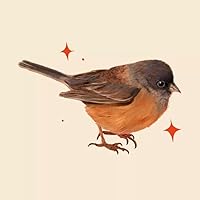
The Fly is often heralded as one of Katherine Mansfield's finest short stories. First published in 'The Nation & Athenaeum' in 1922, it was later included in The Doves' Nest and Other Stories (1923).
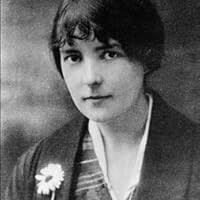
Kathleen Mansfield Murry (née Beauchamp) was a prominent New Zealand modernist writer of short fiction who wrote under the pen name of Katherine Mansfield.
Katherine Mansfield is widely considered one of the best short story writers of her period. A number of her works, including "Miss Brill", "Prelude", "The Garden Party", "The Doll's House", and later works such as "The Fly", are frequently collected in short story anthologies. Mansfield also proved ahead of her time in her adoration of Russian playwright and short story writer Anton Chekhov, and incorporated some of his themes and techniques into her writing.
Katherine Mansfield was part of a "new dawn" in English literature with T.S. Eliot, James Joyce and Virginia Woolf. She was associated with the brilliant group of writers who made the London of the period the centre of the literary world.
Nevertheless, Mansfield was a New Zealand writer - she could not have written as she did had she not gone to live in England and France, but she could not have done her best work if she had not had firm roots in her native land. She used her memories in her writing from the beginning, people, the places, even the colloquial speech of the country form the fabric of much of her best work.
Mansfield's stories were the first of significance in English to be written without a conventional plot. Supplanting the strictly structured plots of her predecessors in the genre (Edgar Allan Poe, Rudyard Kipling, H. G. Wells), Mansfield concentrated on one moment, a crisis or a turning point, rather than on a sequence of events. The plot is secondary to mood and characters. The stories are innovative in many other ways. They feature simple things - a doll's house or a charwoman. Her imagery, frequently from nature, flowers, wind and colours, set the scene with which readers can identify easily.
Themes too are universal: human isolation, the questioning of traditional roles of men and women in society, the conflict between love and disillusionment, idealism and reality, beauty and ugliness, joy and suffering, and the inevitability of these paradoxes. Oblique narration (influenced by Chekhov but certainly developed by Mansfield) includes the use of symbolism - the doll's house lamp, the fly, the pear tree - hinting at the hidden layers of meaning. Suggestion and implication replace direct detail.
Does time always heal our wounds? It is often believed that time is the best healer as it soothes and assuages our wounds through profound balmy indifference by burying them deep in the recesses of our memories. Does this premise hold its ground against the test of time, appears to survive at least in case of physical wounds, which (or seemingly) subside with passing of time. But what about psychological wounds, which stem from traumas of our lives and etch so deep in our consciousness that they become parts of it and keep manifesting themselves by reliving our ‘wounded’ memories.
Grief management has been one of our most significant and fundamental survival mechanisms, since it allows human beings to ‘actively’ process overwhelming emotional pain for repairing and rebuilding our lives around the memories of those wounds, through a complex system of adaptation, cohesion, restoration and resilience. Is it so effortless and undemanding to manage the grief? But if it is, why do we often encounter unresolved grief then when an individual keeps on lingering on the wounds of past through profound longing for the loss of bygone times. The unresolved grief and repressed pain pop out of the comforts of indifference any trigger event, which may throw things out of proportions.
And what happen when we find ourselves amidst the storm of grief as if getting stuck there itself without finding any harmonious, quiet shore having the sacred peace so much we seek for. There is ‘amnesia of grief’ too that is often been associated with our (failure of) grief management. It may be a temporary situation caused by extreme stress that arises out of some profound loss leading to a short-term (or at times even long-term) forgetfulness; the extreme stress may manifest through various issues, one of which could be losing control over life as it operates in an auto mode and arbitrary manner.
The short story, we have been able to lay our hands upon today, is Katherine Mansfield’s The Fly that touches upon vagaries of humanity in the light of grief management or rather unresolved grief. The story hovers around Mr. Woodifield, a frail, retired former colleague and the boss, a powerful, grieving man. It focusses on their shared trauma of losing sons in World War one and how they deal with its subsequent impact on their lives.
Human beings always devise purpose of their lives and keep that purpose so close to their heart that they strive to live as per that defined purpose till their last breath. We carefully construct our world around it and define our beings as per that, in a way our existence comprises of everything emanating from it. What happen to our lives when the very foundation of our purpose annihilates to nothingness, a destruction so profound that even our memories are reduced to nonexistence? How do we cope with it, if at all, we could cope? We devised a seemingly infallible mechanism to put the cosmic obliteration under the carpet, concealing it from our own selves through an air of grand indifference and ignorance. And do we succeed in it, it not then what are its ramifications?
A trigger event may rob us off from all our comforts conceived out of passive detachment and naïve ignorance, and the traumatic wounds of our psyche from the bygone times spring up from dungeons of nothingness to stare with raw maliciousness in our unguarded eyes. We feel as if life is slipping out of our hands, and all the solaces and grounds, out of which we have carved out our existence, go for a toss throwing us in a state of extreme misery, unhappiness and suffering characterized by a kind of wretchedness. Suddenly a hazy fog surrounds our consciousness making us losing the sense of morality in light of our loss of purpose and reason in life, and weakening our grip on our judgement of sanity and abruptly we find ourselves in the grasp of arbitrariness without ourselves being aware of it, trodding the dangerous boundaries of good-evil, moral-immoral and human-devil.
The story masterfully showcases how arbitrariness takes over our reason and transforms our seemingly kindness to cruelty and turning us to random and despotic machines of savagery, underlining our attempt to regain a sense of power after losing the purpose by establishing an order amidst chaos of life. It also symbolises the tyrannical power machines and institutions such as war, governments and various organizations which trample upon the feeble humanity. Moreover, The Fly acts as a brilliant reminder to draw our attention towards modern warfare acting in the pursuit of shifting the balance of power at the cost of lives of innocent civilians.
The ‘godlike’ figures who rise through the cruelty of power stand indifferent to the helplessness of poor individuals, it symbolises the indifference of leaders and army heads who throw young men into unforgiving fire of death in World War on their whims and fancies, as if the cries and screams of these young men fall on their deaf ears and unable to move their hearts; the soldiers and powerless normal individuals are represented by the fly in the story.
The boss in the story thinks that he has been able to repress his emotions and grief under the pile and heap of work and yet finds himself stranding amidst his unresolved grief from his past, which reflects his frustration and inability to cope with mortality. It draws our attention to unexpressed desire of humanity to control life and death through stretching oneself to the limits of human existence by savouring a divine, celestial omnipotence. In contrast, the story also forces us to contemplate upon the misery of human condition, since though resilience underlines human existence but eventually, we fall victim to arbitrary conditions of life or decisions of someone in power highlighting the fragility of human life.
The story is written in modernist style by focussing on what goes inside the heads of its characters rather than their acts emphasizing upon their emotional depths. It could be said as a unsettling portrayal of human behaviour in the light of post war trauma. The story roots in the author’s personal experience of loss over the death of her brother and her own health while battling tuberculosis. It could be very well categorized as a brilliant critique of war and cruelty of power while underlining our grief management. The short story ends with an existential void accentuating the need for the holy journey in grief management from indifference to acceptance of our traumas, and highlighting the importance of mourning, grieving, and sharing amidst the taboos of modern society and our psychological conditioning; thereby transforming the wounds on our psyche into accommodating memories and vitalizing our will to survive.
A simple short story filled with great sadness. Extremely well written. Thanks to my Goodreads friend, walkingfortheloveofbooks for the recommendation. 😊
La mosca, Katherine Mansfield. Relectura Top 10 mejores cuentos 4/10 (no siguen orden)
Complicado hacer un diagnóstico de este relato breve que nos hace tres cambios de dirección en muy poco recorrido. Katherine Mansfield nos pone en un camino, para a continuación pegar dos volantazos que nos hacen dudar de las intenciones de la autora. Eso es lo mejor de este relato breve clásico, la capacidad para hacerte reflexionar al lector temporalmente, para ir sacándote de las historias y meterte en otras, a veces tan absurdas como la del final.
Aquí está presente la guerra y como afecta a las relaciones familiares y amistades y en especial, el dolor por las ausencias que la guerra trae. Y más importante todavía, como voltea una vida, unas expectativas y unos intereses la pérdida como consecuencia de la guerra. También creo que habla de lo complejo de los hombres de ese momento histórico y la imposibilidad para asimilar lo terrible del momento, o dicho de otra forma, la impasibilidad y lo complejo de aproximarse humanamente a esa tragedia.
Creo que también nos trata de poner de relieve el egoísmo propio de la vejez, cuyo interés radica únicamente en ellos mismos, cada uno de los protagonistas tiene un rol, pero ambos ajenos a nada que no sea su propia vanidad, achaques y en definitiva sus propias necesidades y miserias.
Esa mosca final del relato, creo que es punto justo que nos da la clave de hasta que punto deja de ser importante nada para un hombre anciano, en especial todo aquello que no sea su propia supervivencia.
He’d rise before natural light. Sweat baptized the sheets.
At the kitchen counter slow breaths bent lips. Dentures rose from water, sealing into curved gums. His reflection in the black window glass shuddered at every exhale.
“Snap and shit,” he said.
To his right was a rotten bowl of fruit: bananas brown, apples soft and punctured, grapes wrinkled.
Fruit flies swarmed.
She loved fruit: loved to taste. Each piece was carefully cut and placed on a porcelain plate. She’d put a piece in his mouth, watch him chew, then kiss him on the lips.
“Delicious,” she’d say.
“Delicious,” he whispered.
The fruit flies rambled and he watched. Watched until light warmed the kitchen counter. Watched and wondered what fruit used to taste like.
Mansfield wrote the story in February 1922 at the Victoria Palace Hotel in Montparnasse, Paris. It was first published in the The Nation and Athenaeum on 18 March 1922 and in the The Doves' Nest and Other Stories in 1923.
The story relates to the death of a soldier in World War I. In October 1915, Mansfield's younger brother, Leslie Beauchamp, was killed during a grenade training drill while serving with the British Expeditionary Force in Ypres Salient, Belgium. He was 21. Like the soldier in the story, before enlisting Leslie had worked for his father's firm. Leslie and Mansfield's father Harold Beauchamp owned an importing company.
He doesn't want to remember: six years ago, the death of his only son, his grave somewhere in the battlefields of Belgium, during the Great War.
But then, inadvertently, a friend reminds him, tells him both their dead sons graves are near each other, in Belgium, flowers growing on the ground over them.
The memory of his greatest loss comes back to him. He braces himself--expects and wishes even--for that familiar, unbearable sorrow he thinks will remain forever. But it doesn't come. He then sees a fly, struggling to get out of his broad inkpot. He watches it succeed in clambering out of the dark ink and prepares itself to live its second life.
What he did to the fly, what he felt, and what he could no longer remember. ..
I don't know what my emotions are doing after reading "The Fly." It's such a short story, and a simple one, that of a father grieving the loss of his child in World War I — but the ending, where the titular fly comes in, is what threw me off balance. At the very least, the story explains complex human emotions and proves that it's never easy to simplify what's going through your mind at any given point.
It's a story of two men, one who is at the end of his life, the other who has forgotten about the end of his son's life in the war for many years. The grieving father has forgotten his sorrow until he is reminded of it, and needs a few moments in his office by himself, only some ink and a fly to distract him. The ending is obviously quite symbolic, the ink being grief and resistance to moving forward after his son's death; the old man also of course serving as the agent to bring all of those feelings back up again. It's a simple story, but there is so much depth behind it that it makes "The Fly" a quick and touching read.
The Fly is a tale of loss, of loss of feeling, and of cruelty and hope. It's a beautifully written story which deals with growing old, the end of a dynasty, the aftermath of the Great War and the way mettle can be tested by challenges - admirably at times, destructively at others.
Interesting read. I interpret the ending to mean that the boss is as careless with life (exemplified by his torture and killing of the fly) as politicians/generals are with sending young men off to war to be brutally killed. Although the boss seems to believe that he misses his selfless son because of the person his son was, it seems that the truth is more selfish: his son was to take the boss's place at his company and continue his legacy. Before torturing the fly, the boss was thinking of his son. After the fly dies, the boss cannot remember what he was thinking of.
Förtränga och avleda sina känslor av sorg med hjälp av konsumtion, whiskey eller genom att plåga ihjäl en fluga kanske fungerar på kort sikt men hur blir det i längden...?
Om förmannen läses som Gud (ödet, livet) och flugan som människan menar kanske Mansfield att vi kan överleva ett visst antal motgångar om vi har rätta andan, men vi klarar inte inte hur många och stora bläckdroppar som helst.
This entire review has been hidden because of spoilers.
The Fly, by Katherine Mansfield, is a short story written about an aged man who struggles with finding meaning with his life after the loss of his only son. This story can be re-read over and over again each with its own different interpretation. Having your own interpretation of a story reflects what you see in a story. Granted, creating an interpretation for every story does not work, however in this case it does.
The Fly is an allegory describing the relationship between God and man. In the story we see three main characters: Mr. Woodifield, the boss, and the fly. The story begins with both of the men reclining in the boss’s newly furnished office. In an attempt to make conversation, Mr. Woodifield told the boss all about his daughter’s visit to a cemetery the past week. He explained that the graves were all kept tidy and decorated ornately, even the grave of the boss’s son was decorated with flowers. On hearing the news, the boss was filled with grief. He bottled it up until Mr. Woodifield had left his quarters. After struggling to find a way to lament he notices a fly stuck in his inkwell. He plucked the fly out and began to watch it clean the ink off. The boss, impressed by the fly’s perseverance, dropped another blot of ink on top of the fly. The fly began to work harder, cleaning itself even more than before. Just when it finished up another blot of ink would hit it. The boss found the cycle to be amusing and repeatedly dropped blobs of ink on the fly.The fly eventually drowned in the thick puddle of ink. The boss felt remorse for the fly. As he disposed of the carcass he sat back down and forgot all about it. As if nothing ever happened.
This story is about God messing in the affairs of human life. The god figure is represented by the boss and the mere human, the fly. We begin the story by finding God in a lush state, a place of comfort and luxury. He takes pride in it too, for what god does not like the glory? However, his mood turns sour when he is reminded about his son’s death. the upset god tries to find ways to cope and that is when he saw the fly trapped in his inkwell. Curious with the fly, he rescued it from its likely death and began watching it. We, as the fly, struggle in life. God helps us out and saves us in times of need. But once we are “saved” are we really saved? Life’s problems are like ink blots that continually fall on our wings and prevents us from taking off. Once we work off all of our problems something hits us on the back of our head. Sometimes it feels like God sets us up to fail and ultimately drowns us in troubles. And the only way out is to just give up. For God truly does not care since we are just a fly caught in the world’s web.
This entire review has been hidden because of spoilers.
Very meaningful story. The fly might symbolize the dead son or soldiers who died in the war, or represent "the boss" himself, struggling to survive after having lost his son.
3.75 Noveller är svåra. De är så korta så jag hinner inte känna något, dock allt är denna sorglig. Mr. Woodifield är nedstämd, han har förlorat en son i andra världskriget (ett återkommande tema i alla noveller tydligen). Han har även fått en stroke som han läker från. Hans chef är betydligt mer överklass och vi träffar han dricka en fin flaska whiskey, han har även förlorat en son till kriget. Den korta novellen hinner reflektera mycket om sorg och att läka. Sedan kommer den annorlunda delen, vi får en flugas perspektiv också. Flugan dör i bläck på grund av chefen, flugan fastnade i bläcket men lyckades torka av sig själv och var redo att fly när chefen tog pennan och lade bläck på flugan ännu en gång, och flugan accepterar sitt öde och dör. Precis som soldater i krig, som deras båda söner gjorde för 6 år sedan.
A very short book about an old, and increasingly senile, man who is at loss over his son’s death in the war. This unfortunate state of mind makes him torture and kill a fly. End of story.
Okaaay. Another what-the-fuck-did-I-just-read experience. It’s all about gaining control, by kicking someone down the ladder, I guess. But I’m not sure.
A man slowing drowning a fly in ink. Yay. I was forced to read this by a teacher who didn't believe anything with a happy ending could be considered good literature.
Katherine Mansfield knew grief and loss well, and this is another one of her ways of expressing it. What I took from it was something like this: great loss can manifest itself into cruelty.
"But all that was over and done with as though it never had been. The day had come when Macey had handed him the telegram that brought the whole place crashing about his head. " Deeply regret to inform you ..." And he had left the office a broken man, with his life in ruins."
I heard about this short story reflecting on the horror of WWI on a History of Literature podcast and immediately read it. How the powerful crush the lives of those under their thumb with so little thought for the craters they create in the lives of the survivors.
I Love Katherine Mansfield , but this short story is just too boringly and insipidly written, as if with no traces of inspiration ... Something that Mansfield could have done only to meet some last minute deadline or as a chore possibly , and so does not , in me, evoke any compassion or sympathy for the character of the boss . Well , the guy is going through an excruciating pain inside , but it makes no sense to perform sadistic experiments on an innocent bystander fly to comprehend your own soul . That's just downright cruel , and has no beauty to it , at all !!
I love katherine Mansfield's short stories a lot. This one was deftly written which extracts deep meaning but I didn't like the killing of innocent fly.
A beautiful story about resilience, and how it cannot last forever. I felt the second part of the story was rushed. Better pacing near the end would have done wonders to it.
I had to read this short story for my drama class. When I first read it, it was hard to understand. After annotating and rereading the story, I appreciated the perspective the author was coming from and how the characters especially the boss displayed their emotions.