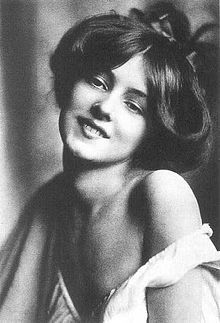
The scandalous story of America's first supermodel, sex goddess, and modern celebrity, Evelyn Nesbit, the temptress at the center of Stanford White's famous murder, whose iconic life story reflected all the paradoxes of America's Gilded Age
Known to millions before her sixteenth birthday in 1900, Evelyn Nesbit was the most photographed woman of her era, an iconic figure who set the standard for female beauty. Women wanted to be her. Men just wanted her. When her life of fantasy became all too real, and her jealous millionaire husband, Harry K. Thaw, killed her lover, celebrity architect Stanford White, builder of the Washington Square Arch and much of New York City, she found herself at the center of the Crime of the Century, and the popular courtroom drama that followed, a scandal that signaled the beginning of a national obsession with youth, beauty, celebrity, and sex.
The story of Evelyn Nesbit is one of glamour, money, romance, sex, madness, and murder, and Paula Uruburu weaves all of these elements into an elegant narrativethat reads like the best fiction - only it's all true. American Eve goes far beyond just literary biography; it paints a picture of America as it crossed from the Victorian era into the modern, foreshadowing so much of our contemporary culture today.
Nice news to share—The New York Times Book Review will be featuring AMERICAN EVE in Paperback Row in the May 10th issue.
My book, AMERICAN EVE (Riverhead Penguin) is a biography of the first "It" girl Evelyn Nesbit and her role in the crime of the century. An English Prof. at Hofstra University, I love the Gilded Age, the Gothic and Grotesque, pop culture, and photography/film history. I've consulted for A&E, PBS, + the History Channel. Of Basque Irish descent, my roots are in Brooklyn, Bilbao, County Cork and Massapequa (which Jerry Seinfeld says its Native American for"by the mall”) I live in a haunted house on Long Island and hope I don't end up in the touring "Bodies" exhibition any time soon.
So after a sleepless night of guilty twisting in my sheets (really) plagued by nightmares about having been so horrid and rude to someone on the Internet, today I sat down and finally finished this book.
Oh, American Eve. I was so primed and eager to fall in love with you! Over the years my father had mentioned Evelyn Nesbit's bizarre love triangle on afternoon walks from Penn Station or in front of the Farragut memorial in Madison Square Park.... (In case anyone reading this isn't familiar with the story, Stanford White was a brilliant, glamorous architect with hedonistic, predatory appetites who built the original Madison Square Garden and a lot of the rest of Manhattan. He deflowered gorgeous teenage model/chorine/"It girl" Evelyn Nesbit, who went on to marry psychotic sociopath millionaire Harry Thaw. Thaw became obsessed with White's ruination of his young wife's innocence and wound up shooting him dead during a performance at Madison Square Garden's rooftop theater. Thaw's lurid trial, where Evelyn was the major focus, became a 1900s predecessor to the O. J. Simpson case in terms of media frenzy and public captivation.) I'd always been fascinated by this piece of NYC lore, and when I saw your fetching cover design and thrilling title, I felt we were destined to fall in love. Yes, American Eve, it was clear in my mind: I was prepared for wooing and romance, for stars in our eyes, and I'd pictured us moving to a warm, gentle climate, where we'd breed adorable babies who'd grow up to be rich, and support us in our dotage so we could lie around in hammocks on a beach together, growing old gracefully and doing the crossword....
Alas, it was not to be. And it's easy in these situations to blame you and your failings. Yes, American Eve, your unnecessary cliches (police tried to clear away spectators, but "it was like herding cats." Why? Why? AARGGHHHH!), confusing sentence structures, superfluous literary references, clunky word choice, overuse of adjectives, and failed metaphors were trying at times, and having to hear you tell me yet again what a bad mother "Mamma Nesbit" was did sometimes make me want to fling myself (or you) off the roof of the Flatiron building....
And yet, if the prose was not always beautiful, the pictures of Evelyn Nesbit certainly were. This book clearly was researched extensively, and it's very possible that the writing style I've criticized as overwrought did create a more vivid sense of time and place than I would've gotten from a more restrained approach. There were some very tangible descriptions of scenes in here that could probably not have been evoked with the bloodless kind of writing I like to think I prefer.
Oh, it may be due to a simple lack of chemistry between us; or it may even be -- though I'm loathe to admit it -- that some of the issues here were my own. It could be the case that I don't really like biographies (unless they're by Robert Caro): I haven't read many, and I was frustrated or disappointed by my experiences with Dare Wright's and Jacqueline Susann's. It could also be that I'm more generally just not into popular narrative histories. I like some heavy footnotes with my history, and I really don't like most narrative nonfiction that reads at all like a novel. For example, I hated The Devil in the White City so much I couldn't even get through it, and everyone else in the world was just nuts about that book. So it could all just be me.
Anyway, I struggled a lot reading this book -- we just didn't get along, I guess -- but the subject matter is fascinating, and there's a lot of information in it. Probably someone who doesn't have the same fairly narrow and intolerant tastes that I do would find the whole thing a pure creamy delight -- if, like every other living human except me, you liked The Devil in the White City, you'd probably love the hell out of American Eve. As it is, I'm personally glad to be done with it, but pleased to know much more than I did about Gilded Age NYC and Evelyn Nesbit, so I don't consider this time wasted and I'm sorry I was so harsh on this book's perceived faults while I was reading it. I'm sure this book will move on and find the reader it deserves; I myself have already started reading some other books, and I know that soon our troubled time together will be little more than a vague, blurring memory.
Oh, American Eve. Things just didn't work out between us, but I do wish you well and hope we can be friends. You're young -- really young -- and I'm sure you'll find plenty of other readers after me.
------ You know how when you're really hungry and sitting around someplace and there's some kind of sick-tasting dessert or something set there on the table in front of you, and since you're just sitting there and all hungry you keep taking bites out of it, because it's really not that sick, it's technically edible, but then each time you taste it you remember, "ew, this is kind of gross," but then a few minutes pass and you forget what it tastes like and take another chance that maybe it'll be better than you thought the last time, so you have another bite but -- well, it's still not that good.
But then, well, after long enough of all this you don't actually develop a taste for it really, but it does become slightly more palatable. Or bearable, anyway.
That's kind of how I feel about this book. The story's so great that I can't stop reading it, and the more I do the more I'm convinced that the writing's not actually terrible, it's just not to my taste. (Oh God Paula Uruburu, Goodreads Author, please understand this is all highly subjective and I know lots of other people would love your writing style. There's really nothing wrong with it at all, as I'm sure you know. I'm probably just jealous because you trumped MY in-progress biography of Evelyn Nesbit, which is written in choppy-Hemingwayesque haiku, with an anticipated release date of June 2012.) I guess I just wish this had been written by a historian instead of an English teacher.... And I feel like she might have secretly wished she were writing a historical novel instead of nonfiction, but who wants to go up against Doctorow? Oh, but I bet a lot of people would like this. Really. Mostly I just think she uses too many adjectives, awkward cliches, clunky and self-conscious literary references, forced metaphors, and ungracefully long sentences, which probably bothers me so much because I'm guilty of all these sins myself.
What I really wish is that this book had been co-written by the ghosts of Norman Mailer and Edith Wharton, but it wasn't, so this is what we got. Really, though, Gilded Age sex scandals are a tough topic, and it's difficult for me to think of a writer who could rise to that challenge. Personally, I would've preferred a much more spare and understated style.
It's a great story, anyway, for those who don't know it, and timely as New York plummets from another depraved age of hedonism, excess, and underaged-model fucking. Again, though, the best prose is in the excerpts from Evelyn Nesbit's own memoirs, which makes me think I should just skip the middle-woman and track those down instead.
Honestly, though, this book's worth the price of admission just for the photographs of Evelyn Nesbit. You can sort of overlook a lot of flaws in the text just for those.
Some years ago, long before I started receiving student loan bills, I took a college course called "The History of American Architecture." Having been assured that this was a humanities course, and that no engineering or mathematics would be involved, I settled in to learn about gables, cornices, and dentils.
My professor was intensely passionate about the subject. He took us on a walking tour of Omaha, Nebraska, in a vain attempt to convince us that Omaha had interesting architecture. Once, he sang "America the Beautiful", just so he could talk about "thine alabaster cities" gleaming "undimmed by human tears". At the time, I thought he was a nut, but that's to be expected from a college kid. Youth always mistakes passion for madness, because when we are young, the only thing we can be passionate about is ourselves. It takes time for us to look outward, and appreciate life beyond the tips of our noses.
I first learned about Evelyn Nesbit from this professor. He took great joy in telling us the story of Stanford White's red velet swing, and little Evelyn kicking at paper parsols with her little feet. He told us to check out the movie, The Red Velvet Swing, which featured a young Joan Crawford. We didn't, of course.
Years later, though, when I came across the title of this book, something clicked. I recalled my professor's fractured tale with renewed interest.
Evelyn Nesbit was an otherwordly beautiful girl (the book has plenty of pictures to back this up) who lifted herself out of poverty by modeling. Though her career was initially modest, she eventually became ubiquitous. Her angelic mug was on advertisements and postcards and even served as the model for an angel on a stained glass window in church. She was like the Olsen Twins of her day, if the Olsen Twins were attractive.
Admirers reached deep into pulpy romance novels to come up with words to describe her (think "smokey eyes", skin like a "gossamer veil," and a mouth like "crumpled rose petals"). She may have been the most photographed woman of her day. Except she wasn't a woman. She was a girl.
(This is where I tried to find a workable Chris Hanson/To Catch A Predator joke but failed).
Evelyn eventually fell into the clutches of Stanford White, the famous architect, who also happened to be a rapacious pedophile. White raped Evelyn one night after she passed out at his house. For whatever reason, Evelyn didn't immediately tell anyone, and actually became White's lover. Later, she drifted into the orbit of crazy Harry Thaw, heir to a vast fortune. Harry also raped Evelyn, and in a case of heightened Stockholm syndrome, ended up marrying him. She also made the mistake of telling Harry what Stanford White had done to her.
Harry took his revenge on White at the Madison Square Garden Rooftop Theater. The killing took place in 1906 and was the first in a long line of crimes of the century.
The story is gripping in and of itself. It gives truth to the old saying that the "difference between fiction and nonfiction is that fiction has to make sense." Here, you have a tug-of-war between two pedophiles over the most famous female in America, which starts with a velvet swing and ends with three gunshots and a circus of a trial.
Somehow, though, this book was a disappointment. It scores as high as it does simply because the story is so entertainingly cracked (I suppose we could debate the ethics of murder as entertainment, but it's been over a hundred years, and seriously, there's a red velvet swing involved).
The problems I had with the book are numerous. It's clear that the author is well-versed in Evelyn's life. However, most of the details seem to come from Evelyn's own memoirs. This means that the account is necesarily one-sided and biased. Yes, there are a few points where the author compares her differing accounts, but mostly Evelyn's version is accepted as truth, without a lot of critical analysis. And while we're talking sources and citation, I found the endnotes section to be quite lacking. For instance, author Paula Uruburu writes that State of New York v. Thaw was the first trial in American history where the jury was sequestered. That's an interesting factoid, and as a lawyer, I intended to walk into the office the next morning and wow all my lawyer friends. But when I looked for some sort of citation to back up this pronouncement, I didn't find anything.
Then there is the writing style. American Eve is overwritten and stuffed with purple prose, grandiloquence, and exaggerated metaphors (Harry Thaw as Jekyll and Hyde? Really?). I suppose this style might be a subtle nod to New York's famous penny press, which paved the way for today's National Enquirer, but that doesn't make it any more readable.
The subtitle of the book is "Evelyn Nesbit, Standford White...and the Crime of the Century." However, this is totally Evelyn's story (which goes back to the reliance on her memoirs). You don't learn anything about Stanford White. Oh, there are bits and pieces, but these tidbits about his life - that he was an architect, that he was married, that he liked little girls - are all given indirectly. I never got a sense of the man; the author told me he was rich and famous without ever telling why.
There is a long, portentous build-up to the murder, and when it finally happened, I was suitably impressed with the gruesome depiction.
Then, however, Uruburu skims through the two trials in what seemed a race to the finish. The author claimed this was the crime - and by extension - trial of the century, but the book's description of the proceedings lacks detail, clarity, and drama. Harry changes lawyers so many times in so few pages it's hard to keep up. I got no real understanding of the proceedings, the strategy, or the participants. I would have welcomed a real discussion on Harry's trials, including court excerpts, since it presented myriad legal issues that are relvant today but were in their infancy in 1906. For instance, the author mentions alienists without ever detailing what an alienst did (good thing I read The Alienist by Caleb Carr).
I also have to ask publishers: please, please stop calling every crime the "crime of the century." Stanford White's murder was not the crime of the century. Heck, it came five years after William McKinley was murdered. And he was the president! And what about Leopold & Loeb, Sacco & Vanzetti, Bruno Hauptman & the Lindbergh Baby, JFK & Oswald, OJ & Nicole, or Shakespeare in Love stealing the Oscar from Saving Private Ryan? All these crimes were also the "crime of the century." So just stop this shameless ploy.
Oh, who am I kidding. I will buy any book with that tag line.
In a brief epilogue, the reader learns that Evelyn was cut of from the Thaw fortune, had a child, divorced Harry, got remarried, and lived to a ripe old age. On the final page, there is a picture of Evelyn in the full bloom of her youthful beauty.
When I reached that point, I was strangely moved. I noticed there wasn't a picture of Evelyn in her later years, but for once my insatiable curiosity did not compel me to go searching. She exists almost as a legend, an eternal beauty, and I didn't want to disrupt that image. I wondered about what it must have been like for her, to have lived such an extraordinary life in 21 years, and then to spend 60 years in what must have amounted to an extended anticlimax. Weighing this response against my criticisms, I would have to conclude I liked the book almost in spite of it.
You probably think all I do is read. Well, if that were the case, maybe that wouldn't be such a bad life, right?
As it happens, I got on a history kick and checked out these three books from my Library. All bring a touch of mystery, intrigue, and a sneak peak at a time not taught in our history classes.
Do we wonder when the super model came to be and how she was a part of a sensational murder case (American Eve)...
or that our first United States President, George Washington had slaves - and how enraged and upset he was when one escaped (Never Caught)...
or that "more than any other American, John Marshall set the foundations of the Republic that have guided the nation for more than two centuries?" (Without Precedent).
Would it interest you more if you new that these non-fiction books read like fiction? They do.
If interested in finding out more about these times in history, check these amazing reads out from your local library:
Never Caught - The Washingtons' Relentless Pursuit of their Runaway Slave, Ona Judge by Erica Armstrong Dunbar.
Without Precedent - Chief Justice John Marshall and His Times by Joel Richard Paul.
I have read about many great people who had many great gifts including courage, vision, and persistence among others. Evelyn Nesbit had however, what I consider, a rare quality. The quality is: being seen almost universally as beautiful. This is an attribute that I believe most people would love to have. But being so beautiful is not always a blessing as Evelyn Nesbit would discover.
Evelyn had a normal early child hood in the suburbs of Pittsburgh. She evidently had a wonderful father who was making every effort to see that his daughter receive a college education. However when he unexpectedly died, Evelyn’s family plunged into poverty. So when a painter saw Evelyn’s stunning teenage face he offered money to paint a portrait. Evelyn’s mother readily agreed. As Evelyn’s name caught on more painters and photographers would paint or photograph her for a small fee.
Evelyn’s mother knew that more money could be made in a larger city. So she packs up the family and moves to Philadelphia. Evelyn finds more modeling work there. Her mother realizes that there was more opportunities in New York City. So she obtains references for a New York photographer and they go off to New York.
Evelyn finds lots of work there. She eventually winds up in stage plays. When the famous architect Stanford White discovers her he becomes enthralled with her beautiful face. The clever and devious White embraces the poor Nesbit family. He sets them up in nice apartment and lavishes them with food and presents. He also pays for her brother to go to college. He would act fatherly (he was 48, she was 15), for what seems, for months. He ensured Evelyn and her mother were well fed and would take care of any problem either of them came across. This enabled both Evelyn and her mother to learn to like and trust him. All the while though Stanford White was married and was seducing other very young underage actresses. But with their trust he develops a devious plan. He talks Evelyn’s mother into taking a vacation back to Pittsburgh paying the bill and leaving Evelyn in his care.
He then takes Evelyn to a lavish hotel room, gets her drunk and rapes her. The author states all along that Stanford White was a known molester of young teenage girls. He then proceeds to threaten the 15 year old Evelyn not to tell anyone. Evelyn obliges and, in my eyes, oddly starts treating him like a boyfriend.
Her life continues as she acts on stage and continues her relationship with Stanford White. Being the very busy man he was he was, he became absent from Evelyn for a few days. In steps a young 21 year old beau named John Barrymore. He was the son of a famous actor and he swept her off her feet. Her mother quickly ends this relationship by notifying Stanford White. White and Mrs. Nesbit plan to breakup the pair by shipping Evelyn to a school in New Jersey.
Then an odd twist occurs in Evelyn’s tough life. Evelyn was released from her New Jersey school when White and Mrs. Nesbit thought Barrymore had given up on her. Evelyn goes back to New York and starts to work again when a mega millionaire 32 year old comes into her life. His name was Harry Thaw. Harry was from a coke and steel business back in her home town surroundings of Pittsburgh. What we find out about him is almost as freakish as Stanford White’s string of pedophile seductions. But one of the bizarre things about him is that he hated Stanford White, even before he knew of Evelyn. White had somehow snubbed Thaw at a party while Thaw was visiting New York. This may have been the reason behind his hatred.
Thaw continues to pursue Evelyn and his persistence eventually led to Evelyn’s acceptance of him. He was close enough to her that when she got sick, Thaw paid for her hospitalization and medical care. He then convinces her mother that a cruise on a ship followed by a European vacation would do wonders for Evelyn’s recovery. Thaw would pay for it and sail in a separate ship. He meets them in Europe and plans their itinerary. Using a clever ploy he moves Evelyn and her mother to different European cities. But in each city he would make Evelyn and her mother switch hotels multiple times. This drove Mrs Nesbit crazy leading to her demand to be sent home, just as Thaw likely hoped. The good natured happy-go-lucky Evelyn wanted to stay. His plan worked perfectly.
Now that he has Evelyn alone, his plan is executed. He rents a castle in a remote part of the Alps; he dismisses the two assigned servants and takes Evelyn there. One night when after Evelyn went to bed, Thaw walks in, beats and rapes her. This is the second time in her young life that she has to endure such harsh brutality. But in a somewhat characteristic manner she forgives him and enjoys his company throughout the rest of their vacation.
In the meantime, Evelyn’s irate mother gets back to New York and reports to White that Thaw has kidnapped Evelyn. White proceeds to get all the details. When Evelyn returns to New York White shows up at the Nesbit apartment and demands that Evelyn see his lawyer. The lawyer interrogates her and records the whole castle incident. He gives it to White. White does nothing with the evidence because he was fearful that his pedophilic life would be exposed if he did.
Evelyn however still kept seeing Harry Thaw. When she turned 18, he proposes. She accepts. They marry in Pittsburgh and live at the Thaw mansion with Harry’s mother. Harry seemed like a decent husband while there but after a while his anger at White flared up.
He decides to take Evelyn on another European vacation. They would go to New York for a short stay and then board a ship bound to Europe. Harry takes Evelyn out while in NYC. What is odd is that he takes her to a restaurant designed and often frequented by his pedophile nemesis Stanford White. White shows up there but leaves before Harry notices. Evelyn was pleased. However when Harry takes Evelyn to the Madison Square Garden Restaurant, Harry spots Stanford at a table sitting with his son. Harry then excuses himself, sneaks off to Stanford White’s table and shoots him.
Harry is arrested and the book describes a very detailed circus over the trial. It was in every newspaper. People could not bear to not know what was going on with it. It was known as the trial of the century up until the Fatty Arbuckle trial. Harry considered himself a “savior” of young women. Harry’s mother hires a very capable lawyer from San Francisco after the original lawyer failed. This lawyer goes for the temporary insanity plea. As part of his plan, he makes Evelyn describe her brutal rape by Stanford White on the jury stand. It worked. He was able to obtain a hung jury with this strategy. Harry would be charged with temporary insanity in a later trial.
Evelyn divorced Harry and led interesting life afterwards. She would marry and divorce again. She would party with popular prizefighters. She became an alcoholic and drug addict. She would improve her life though. She wrote two memoirs and became an advisor in the movie based upon her life “The Girl in the Red Velvet Swing.” She retired quietly teaching ceramics. She lived to the age of 82 and after a very tough life she survived and that’s what counts!
The first thrid reads like a romance novel, if the author cut out half the redundant sentences she would loose about 30 pgs from the whole book. Also it was like the author wrote this book while constantly using her thesaurus. I was reminded of an English professor who used two many adjectives to explain one point, so the style starts to wear down the reader to almost boredom. The book really picks up after the first 130 pages then the story takes off. The ending is really packed with facts as if she was running out of time to finish the novel. It was overall a really strange pace given the historical events happened only over a few years and one important night. I was slightly disappointed. I can't say how it could have been better but it really isn't that great of a read. Very slow then very fast like when you receieve bad service at a resturant. I was slightly bored until the crime actually happened.
I have been enthralled with the Evelyn Nesbit story for years and was very excited to read this biography to learn what was really what, and who was really who.
Paula Uruburu is certainly the expert on Evelyn Nesbit, her terrible story and why it's been fascinating to so many of the morbidly curious. I have to say that her writing style vacillates between bombastic and cloying - a little too much and a little too little.
I also had a hard time with the fact that Uruburu completely overlooked some of the main facts in Nesbit's history. The affair with John Barrymore was glossed over as a school-girl whim, and while most historians agree that Nesbit aborted two pregnancies by him, Uruburu does not even mention this as a footnote. Instead, she follows the "appendicitis" cover story that was spread at the time. Also, Evelyn Nesbit's son Russell Thaw is known to NOT be Harry Thaw's son - by Nesbit's own admission. Uruburu likewise does not even mention this.
Overall a good, entertaining (if twisted) read of a very tragic history. I just found it surprising that the author omitted so many of the known facts, or if not facts, cited the "rumors" and then dispelled them with the truth.
It is reviewed in the April 2008 Vogue, May O!, May 11th LA Times. It's in the June 1st New York Times Summer Reads Book Review. You can hear my podcast with the Washington Post BookTalk on their website.
Young Evelyn Nesbit was raised in poverty and brought to New York City by a really horrible mother who left her to become a millionaire's mistress and later another's wife. The decadence of the era where the young model and showgirl became the face of womanhood for her generation led to a tragedy and media circus.
This was an interesting book in many ways. It is a period of American history I know little about for one. Though I have heard of Stanford White and his architectural accomplishments, I had not heard of his proclivities for young showgirls or that he was murdered. The entire subculture was conveyed very well by the author and she definitely brought life to the players for me. At many times I was outraged or saddened by the events in Evelyn's life.
I found the story compelling and feel I learned something in the process. Recommend.
It has some pretty "poppy" writing. For example, I am not fond of how Ms. Uruburu's sentences end. But then there's just one more thing.
Sex. A one-word sentence like that is too melodramatic a device to employ in a serious history book.
And extended metaphors equating 1900 to the Garden of Eden are very pretty, but here I feel Ms. Uruburu succumbed to some fork-tongued serpent's sophistry in introducing this forbidden fruit to the verdant prelapsarian prose that might otherwise have characterized her work.
American Eve by Paula Uruburu is the quintessential documentation of the first "crime of the century" which occurred in 1906. This painstakingly researched book on the murder of the famous gilded age architect, Stanford White, by Harry K. Thaw, the playboy son of a multi-millionaire pious Pittsburgh family. The murder centers on the honor and affections of Evelyn Nesbit to whom Harry was married at the time of the murder. Evelyn, as a young girl, found herself in the position of possessing an extraordinary beauty and a need to use those good looks to support her entire family upon the sudden death of her beloved father. She ends up in New York where she has a huge success modeling for products, famous photographers, illustrators and painters. Additionally, she creates a budding stage career for herself. Stanford, many years her senior, arranges a meeting with her after admiring her from afar. He immediately takes over the paternal role that was missing in her life. Stanford, of course, had ulterior motives and set up the opportunity to drug and rape Evelyn while she was still a virginal 16 years of age. She came to forgive and then to love Stanford and subsequently became his lover. She, of course, believed that he loved her as well, but we all know how that story ends. She was just another conquest and he eventually moved on. Stanford White had a felonious obsession with "little" girls and his money along with his professional and social position protected him from ever being prosecuted. Enter Harry K. Thaw, a self appointed moral crusader and in his role as protector eventually persuades Evelyn to marry him. Harry is, as it turns out, a sadist, a heroine and cocaine addict, and a raging psychopath who again, because of his fortune is able to brutally beat and whip young women and boys, including Evelyn, abuse people and destroy property without suffering any consequences. Harry, in his psychotic hatred of Stanford, pulls out a gun one night in Madison Square Garden and shoots Stanford several times killing him in front of hundreds of witnesses. Stanford is dead; Evelyn becomes penniless, loses her career, her friends, and her family; and Harry gets off relatively free!
This book is very well written. One hundred years later the story is still tragic, titillating and mesmerizing as told by Ms. Uruburu. I also have a personal interest in the book. Harry Thaw bought a large home and farm in Winchester, VA where I live. He lived here for several years after he got done doing all his "time". He did spend a couple of years in an insane asylum in Fishkill, New York for Stanford Whites's murder, but then when he was released he savagely whipped a young man in a hotel in Pennsylvania and ended up doing 8 years in another insane asylum for that crime. He came to the farm in Virginia to live after he was finally released. I know the owners and have been in the house. It is a large antebellum home with wonderful out-buildings (ice house and smoke house along with barns) and beautiful property. The owners told me that the story is that the train stopped at both the north and south ends of the farm so that he could get away easily anytime he wanted, which was frequently.
I also note a piece that appeared in Time Magazine in March of 1937. stating that Mr. Thaw left his Winchester farm to go to Washington, D.C. (it is outside of Winchester, VA) to contest a $10,000 damage suit brought by the headwaiter of the Shoreham Hotel in D.C. for Mr. Thaw's attack on him in 1937 by grinding his cigarette ashes in his eyes after the waiter presented him with his dinner bill. The waiter prevailed in the suit.
I believe that Evelyn is the only one in this story who comes out a winner. She, in the end, spent her years in the loving company of her son and daughter-in-law and surrounded by wonderful grandchildren who loved her. I truly believe that if she hadn't gotten out of his clutches that at some point Evelyn would have been killed by Harry Thaw's hand. I enjoyed this book immensely and recommend it highly.
THE DISHEARTENING TALE OF HOW ONE GIRL'S INNOCENT BEAUTY BECAME HER CURSE.
Exploited by those closest to her and by enamored strangers alike.
She had the misfortune of being tempted with fortune…
It was so sad to witness the story telling of the conniving and manipulations that went on behind the scenes when Evelyn was just a trusting girl who was tempted by rich foods, toys, and books which then progressed to jewels, furs, and clothing once she was prematurely “made a woman” at the hands of one Stanford White. "But as time went on, Evelyn came to see that the majority of White’s other girls fit a disturbingly familiar pattern. They were invariably underage, from poverty-stricken or disadvantaged families with dead or absent fathers; they were usually naive or emotionally needy, starved for attention, many feeling abandoned and sometimes desperately alone in the city.”
Still knowing what White did to take advantage of poor Kittens (Evie) it was nothing on what was coming for her, “Then fate played yet another nasty trick on Evie. As if the scenario weren’t melodramatic enough, what with two men half in and half out of her life, neither of whom could give her wholly what she wanted or needed, a third emerged from out of the shadows. He had simmered there for nearly a year, plotting and pining, sending notes and keeping tabs, then materializing, like some haunted doppelgänger in a bad Gothic thriller, in the form of Harry K. Thaw. The unseen watcher.” Boy, in hindsight this is the scariest line of the book…sends chills up the back of my skull knowing just what I know now about this skulking, doe eyed varmint.
I just hate how she couldn’t catch a break with the kinds of people she attracted and how this Thaw guy knew how to get to her… “One series of anonymous letters that arrived daily for an entire week actually did make an impression upon Evelyn as having been evidently written by a “man of some refinement” who talked at length about books and animals, two of Evelyn’s favorite subjects.” It’s just so sad that inside she was remaining quite childlike but the paradox of the outward appearance brought drooling, dirty older men hunting after her with wicked intentions…though in Thaw’s case…under the guise of being her “rescuer” and it was frustrating to witness him claiming to save this poor “child” from the clutches of her benefactor [White] that was rumored to “destroy” the purity of pubescent girls. When ironically it was ultimately Thaw that brought about her complete destruction. It angers me that he claimed to hate what White was getting away with but he defiled her way worse than what White committed. It was the most disturbing portion of the book I’ll tell you that much…to hear of what he did to her in the name of him being “upset” at what White did to his “Boofuls”.
This truly was an exciting (though at times disturbing) read. Each time I picked it up, no matter where I was, I was always drawn right back into Evelyn’s sordid life. It’s just too bad that her life was fraught with so much scandal when she was just a pawn for so many perverse, selfish people.
Some of my favorite highlights are:
“Herself a product of the Victorian past but with an approach to life that was unconsciously and uncannily modern, Evelyn Nesbit unwittingly embodied the country’s paradoxes and ambiguities at its trembling turn into the twentieth century.”
“Women wanted to be her; men wanted to own her. She became a maddening object of desire, and tragically, a victim of her own beguiling beauty during the “gaudy spree,” which she would help bring to a stunningly shameful end.”
“Irvin S. Cobb, a well-known syndicated columnist and social critic, described her as “the most exquisitely lovely human being I ever looked at—[she had] the slim quick grace of a fawn, a head that sat on her flawless throat as a lily on its stem, eyes that were the color of blue-brown pansies and the size of half dollars; a mouth made of rumpled rose petals.” Yet even as her startling testimony helped push an unsuspecting and unprepared America into the modern age, while canny entrepreneurs sold hastily manufactured little red velvet swings on the street outside the courthouse, as quickly as Evelyn’s star rose, it fell victim to the very culture that created and consumed her.”
“In the girl’s graceful, undeveloped figure, boyish in its thin, lean lines, she saw the perfect embodiment of a kind of ambivalent, classically androgynous spirituality wrestling with the sensuality of her face.”
“Florence Evelyn was dubbed the “modern Helen” by one columnist, and her evocative and soon familiar face launched any number of advertising campaigns as canny entrepreneurs began to capitalize on her uncanny ability to appeal to both sexes and appear chaste and alluring at the same time.”
I am familiar with this story, but it is much crazier than I realized. It has elements of both Brooke Shields (another model/actress with a negligent mother who allowed her daughter to be placed in situations that did not seem appropriate for her age) and Monica Lewinski (publicly shamed and forced to share her embarrassing story for years). Of course, neither were involved in a sensational murder trial on top of everything else.
Much of the story is taken from Nesbit's own memoir that she wrote in 1935. She comes off as much more literate than you would expect from a model who did not graduate high school. She claimed that Stanford White was the only man who was good to her, and though she seems to have acquired a great deal of culture through his tutelage; in this day and age, he more closely resembles Jeffrey Epstein.
His method of recruiting underage girls through the theater had been finely honed over the years. He always lured the girls into a false sense of security by acting like a generous uncle who bought them gifts and fine food. In Evelyn's case, he did the same for her mother and her brother (even sending him to an elite boarding school). Then when the inevitable seduction came, there was no other choice but to keep quiet and go along.
Having said that, he did sound better than Harry Thaw whom she probably would never have married (despite his millions because he really was that crazy). However, a tarnished woman back in 1905 did not have too many options (and she knew that White never going to divorce his wife). She might have become an honest hausfrau, but she had no desire to sink that low. In that sense, she was very much ahead of her time.
At times, especially when introducing her subject, the author's writing sounded like a script from a Bruce La Bruce film. By that I mean I was reminded of this snatch of dialogue: "fledgling starlet, Peg Entwhistle leapt from the letter H [of the Hollywood sign], only to land in a bed of cacti and die of exposure three days later. Her cries for help lost amidst the cacophony of the creative city."
In turn of the century New York, Pennsylvania-born Florence Evelyn Nesbit was a famous teen beauty. Her waterfall of dark red hair, heart-shaped face, and expression of unawakened sexuality put her in hot demand as a model, therefore her image graced calendars, sheet music covers, and printed ads. Canadian author Lucy Maud Montgomery used one of Nesbit's photos as inspiration for the heroine of her bestseller "Anne of Green Gables". She shone in the Floradora chorus and her stage-door admirers included some of the wealthiest men in New York. She had her pick of suitors, and could have married well. Instead, she attracted two moral lepers disguised as rich gentlemen, and let them use her alternately as a sex toy and a pawn.
The first was famed architect Stanford White, who drugged and deflowered her. The second was Pittsburgh millionaire and raging sadist Harry Kendall Thaw, who beat and raped her in a remote European castle, and married her partly out of mad infatuation, partly from a determination that his hated enemy Stanford White should never have her again. Thaw made sure the latter event could never come to pass when he shot and killed White in June 1906. Thaw's trial for murder dominated headlines throughout the world and made Evelyn a universal object of lust and fascination.
When Thaw's family cast her adrift after he was sentenced to an asylum for the criminally insane, Nesbit returned to the stage. She became a vaudeville performer, silent film actress and cafe manager. In 1910 she bore a son, whom she always insisted was the result of a conjugal visit with Harry, but Thaw denied paternity. Evelyn spent years fighting alcoholism and morphine addiction, and attempted suicide more than once. She seems to have regained control of her life in her twilight years: she acted as a technical adviser on the 1955 movie "The Girl in the Red Velvet Swing". Nesbit died in Santa Monica, California, in January 1967.
I wasn't prepared to like this book because I simply don't find Evelyn Nesbit to be a sympathetic figure. She let herself be used by two wealthy and powerful degenerates, and married a man who'd whipped her bloody not too long before. While I retain my negative opinion about her moral standards, "American Eve" has shown her to be quick witted, intelligent, and sensitive. In reconstructing the early years of this `child woman', Paula Uruburu relies heavily on Nesbit's two published memoirs, therefore injecting a lot of her subject's voice and personality into the book. She also interviewed Evelyn's grandson, Russell. The result is a well-written biography that may be the closest we will ever come to knowing Evelyn Nesbit personally. Even if you're not too fond of her, you can't help but enjoy "American Eve".
When I first started reading this book, I had to find a way to get past the author's writing, which prevents me from giving this anything more than 3 stars. The complexity of the language and obscure references to things only experts on this time period would understand were frustrating to me. Rather than a novel at times it felt like an academic experiment, which I think it sort've started out as anyway.
But beyond that I found the story to be astonishingly mesmerizing. I had no more knowledge of Ms. Nesbit than most people, I feel--which is the very short inclusion of her character in Ragtime, the book and subsequent musical. So I only vaguely knew how the story was going to turn out, but I had no idea of the twists and turns and mistakes that were made along the way. I can't help but come out of this extravaganza feeling helplessly sorry for the girl, despite her own complicity in the actions. She was so young and had such a useless mother, I really blame the mother for not helping her find her way, and not being there to support her daughter in her times of need. Beyond that, everyone in the story has something going for them and something terrible behind it all, so everyone's to blame. The morbid fascination that was felt at the turn of the 19th century when this all happened still continues to this day, and I found myself inevitably drawn to it to find out the conclusion.
I was fascinated by Evelyn Nesbit's story after seeing a television documentary about the Thaw/White trial a few years ago (American Experience: Murder of the Century). What a joy it is to now have this sad, dramatic life explored in depth. The overall tone is very sympathetic to Evelyn, while maintaining a critical eye on the facts, whether they play in her favor or not. The narrative flows in an easy, conversational manner, often reading more like a novel than nonfiction, but this only serves to draw the reader even deeper into this fascinating bit of history.
This book has everything I love in a biography. Granted, I have a soft spot for actressesindistress; but that fact not withstanding, I still thought it was excellent! Recommended.
"She was not-so-plain Flo to her family and 'Flossie the Fluss' to the chorus. She was 'Kittens' to Stanford White, 'Evie' to John Barrymore, and 'Boofuls' to Harry Thaw. She was 'Mrs. Thaw the younger' in London, 'Le Bébé' in France, and 'Mrs. Harry' when in Pittsburgh. Schoolgirl. Florodora girl. Gibson girl. 'Angel-child'. 'Snake-charmer'. Vixen. Victim. The ur-Lolita. The very first 'It' girl before anyone knew what 'It' was. She could be what anyone wanted her to be. And inevitably was, even if it wasn't what she wanted."
4,5/5!
In American Eve, Paula Uruburu tells the story of Evelyn Nesbit, one of the most famous and notorious women of the early years of the 20th century in America. She was a model and an actress, a woman whose beauty was seen as unparalleled and near unearthly, and the unwilling rope in the years-long tug of war between the man who became her husband, Harry Thaw, and Stanford White, her abuser and lover – a rivalry which ended in murder and made all three of them household names for decades.
I had not heard of the murder of Stanford White (or of Stanford White the man – the millionaire architect in charge of so many iconic New York landmarks) or Evelyn Nesbit before picking this book up randomly one day in a store because a) I have recently been getting more into criminal history and the cover promised to cover "the crime of the century" and b) I was in a nonfiction mood and wanted to read about something completely new to me. I am so glad I decided to give this book a chance because I ended up really enjoying and becoming rather captivated by Evelyn Nesbit's peculiar, wild life. I liked how the book always kept its focus on her, her feelings, her experiences and what all that happened was for her. Uruburu depicted her not simply as "the cause of it all" (the reason Thaw murdered White) or a beautiful face, but as a complex woman, a human. She is one of those women who seems more myth than reality because of just how unbelievably dramatic and cinematic her life was, but she was, underneath all the glamor and drama when all this happened, just a young woman, first a teen and then barely an adult. I liked how Uruburu dismantles this romantic notion of her life as some kind of Cinderella story: hers was a much darker tale than that.
I felt like I got to know Evelyn quite well when reading this book, even though, obviously, a nonfiction book can never really capture the nuances of its subject (that's impossible). What helped me to connect with Evelyn when reading was not just Uruburu's impressive research and captivating writing style but also the fact that, because Evelyn wrote two biographies and tons of letters, and because court transcripts were published, Uruburu is able to give the reader Evelyn's own words, direct thoughts and musings about everything. It was so fascinating to read exactly what she said at court and what was asked of her. Evelyn's own voice made the book and Evelyn herself feel alive. I grew to, in a way, care about this young woman who was an active, curious child who loved reading and performing, who mesmerised everyone who met her, and who struggled with intense poverty after the sudden death of her father, worked from a young age, became a model sensation at 14 and an actress not much later. The quotes from her memoirs and letters also revealed her to be witty, clever and someone with a rather dry sense of humour. Her comments often made me laugh. And then of course there are the pictures: time and time again, the reader is faced with Evelyn in different poses, guises and roles. Considering how important her looks were to her life and the way people treated her (it seemed no one, truly no one, could resist her) it made sense that the book is brimming with her enigmatic eyes and smiles.
The book focuses a lot on the two men who shaped her life: Stanford White, the genius architect serial predator, and Harry Thaw, a mentally unstable rich boy with an obsession with White and a tendency to get violent. Uruburu described Thaw in one memorable sentence as: "– a zigzaffing contradiction, part gentleman, part boor, part prude, part playboy (it is alleged that he was the person for whom the term as we know it was coined). He could be charming and tyrannical, sincere and pretentious, solicitous and sadistic." Evelyn herself, on the other hand, referred to White as "a benevolent vampire". These two men both sickened me. The way they both used such similar (and still uncomfortably familiar) tactics to lure and manipulate Evelyn, to make themselves integral to her life and well-being (they funded her and her family, kept them from the poverty they had fought so hard to escape) and then used the power they had gained to assault and violate her was so, so horrifying. One of the central reasons as to why Thaw ended up killing Stanford was that he had raped Evelyn when she was 16 (and he in his 50s) and he couldn't get over it (or fully "forgive" her for letting it happen), and Evelyn's testimony regarding what Stanford White did to her (though she remained his lover after the assault and even referred to him, later on, as the only man she ever truly loved) was one of the most talked of moments of the two-year long trial. Thaw depicted himself as his wife's defender, and a champion of girls and women and purity, but in reality, he too raped Evelyn and brutalised her in his anger (he beat, whipped and hurt many people over the years without consequences because, surprise surprise, he and his fam could buy his way out of near anything). I became so angry reading about both him and Stanford, about how Evelyn was forced to recount her trauma in court and in front of the whole world, and how shamelessly both men took and took from her.
I think Uruburu handled these touching subjects with sincerity, honesty and a lack of sensationalising, letting Evelyn herself express her own thoughts and feelings in many occasions – she, for example, says of White: "He dominated me by his kindness and by his authority. He abused the sacred trust which had been put into his hands. Nothing else matters." Uruburu doesn't try and make Evelyn a simple, easily understood victim. She does not judge Evelyn for staying as White's lover or marrying Thaw after he assaulted her on their trip to Europe. She explores, with empathy, just how without support Evelyn was, how dependent she was on these men, how she feared poverty deeply due to her childhood and how insidiously our culture's tendency to blame women for the crimes done to them wormed its way into her mind and made her doubt whether she had somehow been to blame for what happened. And, as she stated many times in her memoirs, she did love both men, despite what they did. It is baffling to think how she could, but people are complex and cases of sexual violence can be extremely nuanced and hard to grasp from the outside. Uruburu never judges her, even when she makes decisions that would be easy to judge, and I appreciated that.
So much of this book and of Evelyn's life felt acutely, uncomfortably familiar to me and modern (American) society. Rich people use their wealth and status to avoid consequences for their heinous actions (rape, abuse, grooming and so on) and bitter, angry people resort to gun violence to solve their personal vendettas and issues. Groomers and sexual predators still use the same "tricks" (they isolate their victim from others, swear them to secrecy, make them feel like they are special, refer to teen girls as "mature for their age" and as temptresses who bewitch innocent men and so on). Evelyn's mother used her daughter and pushed her to White in hopes of money (she was not the first or last show business parent to live off of their child and not protect them from the world they cannot yet hope to understand). What was especially familiar was the way young teenage Evelyn was treated by the public and the people around her: she was made into a commodity (yes, she wanted to model and act, but it all became something so much bigger than she could ever have hoped to control). She was oversexualised from the get-go, made into this sexy and mystical figure whose pictures covered everything from ads to postcards to calendars and people revelled in reading about her scandalous life, her trauma and her fall from grace. The fact that she was referred to as a snake was especially familiar: whenever, say, a female pop star ends up in any kind of scandal, minor or major, someone, I bet, will call them a snake. Evelyn said later in life that becoming so famous so young was not a happy time and this is also something many former child-stars still talk about. Her worries about having somehow made Harry assault her or at least aggravated him to that point, and the way she kept what he and White did to her quiet, out of shame and fear for her reputation, is also something that many, I hate to say, can relate to to this day. Evelyn Nesbit's story is not just a story of scandal in the Gilded Age; it's a story that continues to haunt our modern world.
I know the basic beats of the early 20th century but I had never read a book this focused on this turning point between old Victorian sensibilities and the wild new age of technological development, industry and new moral codes, this changing of centuries that many saw as the beginning of a hopeful new future. I loved the exploration of this tumultuous time and the way Evelyn's story was tied to it, how she became something of a face for the wild early years of the new century. The trial also reflected interestingly how divided people were between the "proper old ways" and the more modern sensibilities: the prosecutor, for example, tried to make Evelyn seem suspicious by highlighting her past as an actress and model, her friendships with "theatre folk" and even the fact that she had once been to a café where people danced a certain type of dance popular in black communities. It was intriguing how Uruburu explored the way the murder of Thaw fuelled the already ongoing re-evaluation of class dynamics in America. This case gave the less fortunate even more reason to mistrust the rich and the powerful, and it was seen as evidence that financial and social superiority, having a fancy family name, did not mean moral superiority. The time period's stigma against mental illness also played a key role in the trial. Thaw, clearly a mentally ill man, had suffered from all kinds of tics, seizures and irrational, violent behaviour ever since childhood, but his family fought for a long time to avoid the label of "insane" because, well, at that point mental illness was understood even less than it is now. It was seen as shameful, a stain upon a family's reputation.
The final chapters following Evelyn's life after all of this was quite surprising. I was not taken aback by her struggling with addiction and even making attempts on her life because, well, what she went through with White and Thaw and the trial was near inhumanly painful and she was so young and alone when it all happened, but I was happily surprised that she ended up living until 82 and spending, after some attempts at rekindling an acting and modelling career, launching cosmetic lines and so on, a decade of peace and quiet as a ceramics teacher and sculptor while living with her son and his family. Even though she was put through so much horror, she survived and lived a long life. I hope she found contentment and peace, even if she didn't quite end up living the grand show biz life she dreamed of when she was young.
I would recommend American Eve to anyone interested in the American Gilded Age, criminal history, Evelyn Nesbit's life story or reading a well-written biography of a truly fascinating woman whose wild, often painful life, acts as an intriguing mirror to her time, its values and its desires. This is not always an easy book to read – I had to put it down a few times in the chapters were Uruburu focused on the sexual violence she experienced – but it is worth the read.
Here are some interesting facts from the book:
- Harry Thaw was the first car owner who ended up in the papers for driving, on purpose, through a shop window.
- Thaw hated Stanford White before either met Evelyn: he saw White as a sex pest (true) and the reason why he never truly made it in New York society.
- Pittsburgh had, in the late 19th century, the dubious honor of being known as the dirtiest city in America.
- In the early 1900s women's genitalia had many "fun" nicknames such as Daisy Den, Bluebeard's Closet (kill me) and Cupid's Crown.
- President McKinley, assassinated in 1901, did not die of the gunshot wound itself but because of the botched medical operation right after it: he died of gangrene.
- Evelyn's short-time boyfriend, John "Jack" Barrymore, a scion of the famous actor family, is Drew Barrymore's grandpa!
- Evelyn's mom lied about her daughter's age so many times over the years whenever it was "necessary" so that Evelyn didn't know her exact birth-year.
- One of the biggest sexual morality debates of the time surrounded the Diana statue on top of the tower of Madison Square Garden: Anthony Comstock, this grumpy morality leader and Civil War general, hated it because the statue was nude and wanted it taken down. Stanford White, designer of the Garden, eventually made sure it was lit at night so it was always visible.
- Theodore Roosevelt, president after McKinley, wanted to ban the printing and selling of court transcripts because he worried that people would become demoralised because of the Thaw/Stanford-case and because he worried their preoccupation with the murder kept them from their jobs.
- Evelyn's mother provided information to the prosecutor, against Thaw and her daughter, but even after this (and so many other abandonments and arguments over the years) Evelyn and her mom eventually reconciled. Her mom was quite the character and someone I wanted to shake a lot of the time for just how carelessly she acted with young Evelyn and lived off of her.
- Up until his death, Harry Thaw denied being Russel Thaw's father.
- Alienists (aka early psychiatrists) were referred to as "bug-doctors".
- Thaw had countless spies he used to keep track of Evelyn's movements before and after they got married. He was not just violent, but also controlling to the max.
- During the trial, in 1907, postcards of Evelyn sold like hot cakes – about half a million in a month.
- Thaw, upset that his family had, in the 2nd trial, pleaded insanity, spent seven years trying to get the insanity verdict removed (something Evelyn fought against) and eventually succeeded.
- Harry, jealous that White had "perfected" Evelyn by paying for her dentist appointments, sent her to a dentist once and had the doctor, without informing her, take away all that White's money had bought and then fix it all back up again: this way he was her beneficiary, not him. This caused permanent issues for Evelyn's teeth.
I was always interested in the Evelyn Nesbitt/Stanford White scandal so when this book showed up in my book club, I bought it. It was insightful although I felt that Ms. Nesbitt was whitewashed just a bit. That aside, it is still a good read.
Interesting - but incredibly sad - story, I didn't realize this was the famous "Gibson Girl".
A turn-of-the-century story of loss, survival, depravity, insanity and ultimately tragedy. This girl never had much of a chance at being happy. Everyone in her life used her, and then tossed her aside.
i love a five-star book. I LIVE for five-star books. Salacious, sensational, pathetic and shocking. And sympathetic. True story of a woman pulled between two horrible men it the turn of the 20th century, and without much choice in the matter.
Ever since reading E.L. Doctorow’s wonderful RAGTIME and then seeing the motion picture, I have been intrigued by Evelyn Nesbit. I especially remember that she was depicted as being the model for the nude and golden Diana figure displayed at the top of one of Stanford White’s buildings. She wasn’t. That figure had already stirred controversy before Evelyn Nesbit made her appearance in New York City. However, it was a great device as the focus of her husband’s outrage ... “How dare he display a nude figure of my wife on the top of a building for all to see!”
The real story about what induced “Harry K. Thaw of Pittsburgh” to commit “The Crime of the Century” is much more fascinating and so much more scandalous. In fact, now that I’ve finished the book, I feel a desire to revisit the film again ... this time, for comparison purposes.
AMERICAN EVE provides the Reader with the many details of Evelyn Nesbit’s life, focusing primarily on her entry on the scene as an artist’s model while a teenager to her work in musical reviews, her relationship with Stanford White (including a lurid seduction), and her international prominence as the star witness in her husband’s murder trials. The book also includes many excellent photographs that help to bring Evelyn and her environs to life.
I will admit to being troubled by two things:
* After the trials, the writer spends a remarkably brief amount of time covering Evelyn Nesbit’s later life. This is especially surprising considering the “brief sketch” details of what occurred ... several of which strongly raised my curiosity. Why so little coverage, particularly after the fine detail presented earlier? Was there too little information? It felt as if the writer had lost interest in the work and was trying to wrap things up.
* I don’t know what to think of the writing style. Sometimes it is a fact-based narrative. At other times, it has the breathless quality of “sensationalist” writing. Most of the time, it is somewhere in the middle. I found that to be occasionally distracting.
However, I read AMERICAN EVE because I wanted to know more about Evelyn Nesbit, and the book delivered that. With the exception of the most famous (or infamous) part of her experiences, I feel as if I may have read the “Cliff’s Notes” version.
I stumbled on this book on the library shelf and thought it might be a "fun" true crime story. It was. And it was not. First, I have to criticize Uruburu's writing. Oftentimes it is obtuse and unnecessarily complex; fairly early on I wished that I had come across one of Evelyn's own books (apparently she wrote two), rather than picked up this one.
The story itself, however is fascinating (and horrible). Evelyn is really the first American supermodel; even 100+ years later many of the photos in this book were familiar to me. I had seen lots of these ads on antiques throughout my life and always assumed they were different people. The image in my head of the "typical" Victorian model is simply Evelyn...we all have seen her face everywhere; it is not images of many women, it is many images of one woman.
Uruburu does a good job of being sympathetic to Evelyn: presenting her own innate intelligence and capabilities along with the obvious praises over her physical appearance. Unfortunately, the story is one of abuse and deperonsalization: despite her intelligence, charms, and beauty, Evelyn is seen as simply a possession to be fought over by two rich and powerful men. Both rape her (quite violently), both control her with their money, and neither considers her as anything much other than a prize to be won and an emblem of their own status and power.
It left me considering reading more (but things actually written by Evelyn) and with an amazing sense of her resilience and strength, but not an appreciation for Uruburu's writing talent.
Evelyn Nesbit. Look at her. No wonder men desired her and women wanted to be her. She was not only the first "It" girl, she was the template for the modern woman. Take away the trappings and her face could grace the covers of today's tabloids and magazines.
Breezy, gossipy, intimate, and casual, American Eve tells the tragic and riveting tale of America's first pin-up girl, Evelyn Nesbit – artist's model, showgirl, Gibson Girl – her involvement with Stanford White, literally the architect of New York City, and Harry K. Thaw, nouveau riche and totally off his rocker. This twisted triangle of lust and mania was called “The Crime of the Century” for a reason: Not only did its participants become rallying points for social reform, either as villains or heroes, the story behind the drama – inside the courtroom and out – fueled the explosion of yellow journalism and America's obsession with celebrity, sex, beauty, and scandal.
The ten years Uruburu put into this book shows, as the reader is immersed in the hedonistic excesses and rampant poverty of the Gilded Age with details pulled from period newspaper articles, personal letters, postcards, as well as autobiographies written by Evelyn Nesbit and Harry K. Thaw. However, Uruburu is not an historian, but an English professor, which shows: occasionally those details can become a bit overwhelming and her prose has a tendency to be flowery and overly metaphorical; not to mention, at times, Uruburu comes up with quite the tangled sentence, requiring mental convolutions to straighten out its meaning. However, she does have a knack for channeling the lingo of the the era in such phrases as “He went into a purple frenzy...” or “...a particularly dull way to end an otherwise spiffy evening.” She also does a fine job of letting the story tell itself; while Uruburu is obviously on Evelyn's side (and, really, once you get to know her, who wouldn't be?), she doesn't make Evelyn out to be an innocent angel. That said, Evelyn's is the most prevalent voice, coming to us down the years through her two autobiographies, though Uruburu does manage to give us a glimpse into the minds of the other two big players in the story, Stanford White and Harry K. Thaw (whose autobiography Uruburu also relied on, though with more grains of salt than Evelyn's, considering the rather twisted mind from which the book came). All in all, it's a well-researched tome and it's certainly the first to truly bring to life, that I know of, all of Evelyn's story. However, while I'm not the expert on Evelyn Nesbit Uruburu claims to be, I did notice a couple of inconsistencies: When Evelyn meets Jack Barrymore, Uruburu puts him at being 21-years-old at the time. However, from all the sources I've checked, even official Barrymore sources, Jack was 19 when he first met Evelyn, having been born in 1882 to Evelyn's 1884. Also, I thought it was weird that Uruburu wrote that Evelyn was not quite five feet tall, yet, once again, all the sources I've looked at place her at being around 5' 3” tall. Small things and I could be wrong about them, but they still stuck out for me.
What the reader notices, though, is that there is truly nothing new under the sun. The story of Evelyn, her rise and fall, the notoriety of her involvement with Stanford White and the fallout from the trial mimics the trajectory of so many starlets who came after Evelyn, right up to Paris Hilton, Lindsay Lohan, and other “It” girls who have hypnotized the masses, sometimes with nothing more substantial than the willingness to be in the spotlight, and fallen from their pedestals when it was revealed they had feet of clay. While American Eve may not be what you might call a substantial history, it is a revelational one, giving us a glimpse into the creation of cult of celebrity and, in a way, the loss of innocence. Once the seamy underbelly of their lives of decadence and debauchery was revealed, which the scions of the American power landscape tried to desperately to keep hidden for so many years, the blinders fell away; whether they liked it or not, the American public saw these men, these former idols, for the utterly human and utterly fallible beings they were. And nothing would ever be the same again.
Paula Uruburu’s AMERICAN EVE: EVELYN NESBIT, STANFORD WHITE, THE BIRTH OF THE “IT” GIRL AND THE CRIME OF THE CENTURY is a first-rate, spirited and entertaining chronicle involving sex, celebrity, murder, media frenzy and a dead hippo.
Uruburu’s exhilarating tale begins in NYC during the final hours of 1899—an “Eden” where Nesbit, the titular Eve and “Little Sphinx,” rises from poverty and obscurity to become the preeminent model and pin-up girl of the day. Part Ophelia, part Salome, the inscrutable Nesbit (also an actress and Gibson girl) captures the fancy of famed architect Stanford White, the “Pharaoh of Fifth Avenue” whose contributions to the “priapic city” included the gilded bronze weathervane of a scandalously nude Diana—appropriately, the goddess of the hunt and chastity—that sat atop the second Madison Square Garden (which White designed).
Notorious for plucking ripe “tomatoes” from the stage to add to his Garden, the married, lustful and predatory “Great White” (who was three times Nesbit’s age) fawns over Nesbit, wooing her with money, charm and a red velvet swing. Although Nesbit was only 16, White initiates the fall of this Eve during a night of lights, mirrors, a canopied bed and too much champagne. Awakening in “an abbreviated pink undergarment” and with a nude White next to her, Nesbit is told by the architect, “Don’t cry kittens. It’s all over. Now you belong to me.”
Not quite. Enter Mad Harry—Harry K. Thaw of Pittsburgh—with a carnivorous appetite and penchant for forbidden fruit as well. The heir-apparent to a $40 million coke and railroad fortune, Thaw was a puritanical vigilante with a history of mental illness and a hatred for White. Nesbit is initially wary of Thaw’s dichotomous personality—he could be charming and tyrannical, solicitous and sadistic—and her instincts (which she ignores) unfortunately prove sound, as the 17-year-old Nesbit suffers another violation, and one night is raped and beaten with a leather riding crop by Thaw.
Nesbit’s relationship with Thaw and White—both men are hedonistic, controlling and bitter rivals—is compelling and, ultimately, sad, as Thaw’s virgin complex and mounting obsession with White’s despoilment of Nesbit leads to murder and Nesbit’s downfall in White’s Garden: On June 25, 1906, three shots ring out during a performance of Mamzelle Champagne. As White drops dead to the floor, Thaw shouts in defense, “I did it because he ruined my wife!”
AMERICAN EVE then chronicles the “Crime of the Century” and the media storm that followed—an explosion of yellow journalism and the defamation and assassination of Nesbit’s character—the woman who “put one man in the grave and another in the bughouse.” Uruburu’s depiction of the protracted court case is tiptop and accentuates her greatest strength as a biographer: the ability to inject verve, vitality and narrative flair into a historical account. AMERICAN EVE is peppered with colorful prose, humor and élan that spring off the page. Those wary of dreary, stuffy biographies weighted down by tedious storytelling and a profusion of facts and footnotes need not worry. Uruburu’s confident, consistent and dynamic voice is the perfect complement to this lurid, page-turning piece of American history.
Uruburu places these events in their historical context, delineating an America in transition, while also drawing comparisons to today’s culture. But the story always returns, as it should, to Nesbit. This is her story, and Uruburu is in no way ambiguous about that. She does not paint this tragic beauty as a flawless saint, nor does she shy away from her subject’s sometime inconsistent (and inaccurate) testimony. What Uruburu does, and does well, is give voice to Nesbit’s side of the story. It is only fitting that the epilogue is entitled “The Fallen Idol” and underscored by this 1934 quotation from Ms. Nesbit: “The tragedy wasn’t that Stanford White died, but that I lived.”
Whatsherface married whatshisface, and they get their own television speical this fall. Neither one seems to have done anything to earn the fame or the reality show. But hey, at least whatsherface is better looking than Paris Hilton.
Society obessess about celebrities, even when they have done nothing to earn thier celebrity. Even those of us who look down on the gossip magazines have our weakness (Who cares about the earthquake as long as Will and Jada are fine!). We like putting them on an impossibly high pedstal and than laugh as they fall. Even if thier fall is something that other people suffer from. Take for instance, Britney Spears and her meltdown - fodder for the comdedians, but maybe it was post-partum depression, isn't that serious? Take, for instance, Linsay Lohan who has gone from cute child star to train wreck, but she is blamed not her parents who used and, in the case of her father, abused her. He gets his own star; she gets jail time. Take, for instace, the Eagles football player who showed up late to training camp because he was struggling with depression. I can't believe he was brave enough to voice the illness, and then people make fun of him. If you're famous, everything is played out as everyone -family, friends, managers, fans - tries to use you.
Paula Uruburu writes about the first big case of such celebrity in this book, such a case that ended with a murder.
Nesbit was a beautiful woman - her photos done before the camera could fully lie prove this. The sole support for her family, she started as an artist's model, then photographer's model, and then tried her hand at acting. Her mother wasn't so much a stage mom, but a sell off, pass around mom. As an actress, Nesbit was introduced to Standford White, who liked them young, and who she eventually had a relationship with. Then enters Harry Thaw who for his own reasons wants to possess Nesbit as well.
I had heard about this scandel, but didn't know much about it. I'm not sure how in keeping with other histories this book is. At the very least, Uruburu raises some good, and still timely, questions about celebratity and gender.
Part of Nesbit's sorrow seems to be the fact that she had to be what everyone else wanted her to be. She was projected upon, and in some ways this undermines the book a little for it is hard to see the real Evelyn Nesbit. It is to Uruburu's credit that she seems note to project too much onto Nesbit, letting Nesbit speak about the relationships with her own voice, and Nesbit doesn't come across as solely a victim. But Uruburu has a point. Society wanted Britney Spears to be the sexual teenage fantasy, but also the teen role model. Her sexuality (any female pop star's) must be expressed differently than Justin Timberlake's (or other male pop star). Lady Gaga is the only one who bypasses this by simply being strange. Today, Miley Cryus is in the spotlight (or was), tomorrow, who knows?
What this book does is show such issues as fame, gender, sex, and press are things we are still wrestling with. Here, is where they started, at least in the modern sense.
My goodness, what a seriously tragic tale. Born into a rather ordinary Victorian family, her world was rocked when her father died when she was ten or eleven (her age was always in question, as her mother rarely gave out her true age), leaving her mother, her brother, and herself in dire financial straits. Finally, one fateful day in Philadelphia, a stranger asked her to model for her -- and there began her slow slide into notoriety.
While Evelyn's modeling career started off innocently enough, it is clear from her later portraits and photographs that she was being asked to reveal far more than a young teenager should be. It boggles my mind that Mrs. Nesbit would stand by and allow her daughter to be used in such a way, but then I suppose she was blinded by the almighty dollar.
After becoming quite a success in New York, Evelyn attracts the notice of Stanford White, a man who eventually rapes her and holds her in thrall as his mistress. When later she finally caves into Harry Thaw's insistent marriage proposals and confesses what White had done to her when she was just 16, Thaw becomes enraged and murders White in cold blood, and in public.
The thing that really gets me about this whole story is how absolutely unfair it all is. Evelyn Nesbit didn't ask to be born beautiful. She didn't ask for a mother who turned a blind eye to what some of her male photographers and artists were asking her to do. She didn't ask for Stanford White, whom she saw as a second father (her own having passed away several years before), to groom her and take advantage of his position with her in order to rape and deflower her. She didn't ask for the responsibility of White's murder to be thrust upon her shoulders, even though it was the act of a man driven mad by pathological jealousy. And from my modern point of view, it is absolutely INSANE that the court of opinion would hold Evelyn Nesbit, a young, fairly innocent girl in her mid to late teens, and up to her early twenties, as responsible for any of it. She had no one looking out for her best interest, and she had her childhood horrifically ripped away from her. And yet, by all accounts, she was just one of many whom these men preyed upon. Because of their wealth and their standing in society, they were above the law, and no one would dare attempt to punish them.
But as far as this book goes, I wanted to like it more than I did. Uruburu does an excellent job showing us who Evelyn Nesbit is, and included quite a few gorgeous photos of her from the era with an excellent description of how dissipated the era actually was. But by the time Thaw murders White, I had already grown rather tired of the story, and the chapters devoted to the trial just dragged on a little too long.
Evelyn Nesbit once said that plain girls are happiest, and in her case she was most definitely speaking from experience. Her beauty was her downfall; it was what drew her into a career where she was constantly in the eye of men older, richer and more powerful than her; it was what attracted Stanford White, the famous architect, who initially cast himself in the role of paternal protector before raping Evelyn and keeping her as his mistress, all before she even turned seventeen; and it was what impelled Harry K. Thaw to obsess over, marry, abuse and dominate her, and to later murder Stanford White in a mad fit of jealousy.
Uruburu paints a vivid picture of New York at the turn of the century, the lifestyles of the rich and famous in the Gilded Age. That said, I would have enjoyed this book more had it not been written in such an overly melodramatic tone. The story itself is dramatic enough than it didn't need any further embellishment, and Uruburu's prose verged on the purple on many an occasion. I found it served to distance me from the story and the people involved, instead of drawing me in.
Evelyn is the true tragedy of this book; yes, Stanford White was murdered, but it's near impossible to feel any sympathy at all for a man who so relentlessly and systematically preyed on young, innocent, helpless girls; and Evelyn's professions of love for him sound little more than the sadly predictable delusions of abuse victims. She led a sad life, packing a ridiculous amount of heartache and upheaval into a few short years and spending the next sixty trying to outlive and outrun her own past. Her beauty was most definitely her curse.
A biography of Evelyn Nesbit, the beauty who became the symbol of the Gilded Age. Often 'beauties of the age' don't stand the test of time, but Evelyn is just as beautiful now as she was considered to be back in 1901. At 16, Evelyn became one of the first 'super models'. At 21, Evelyn became the center of the 'crime of the century' when her husband Harry Thayer murdered the famous architect Stanford White, who had been her lover at the tender age of 16.
White later would be vilified as a man who ruined young girls, and he certainly took advantage of Evelyn, drugging her and robbing her of her 'virtue', but Thayer, was no better, a jealous and mentally unstable man who raped and beat Evelyn after she confessed her 'loss of innocence' at White's hands.
It's a story that illustrates very harshly just how powerless a young girl could be - and indeed still can - in the hands of vicious, brilliant men, with no one to guide her and a life that offered her no concept of normalacy.
Evelyn's story was gripping - I couldn't put the book down - but at the same time it's very, very disturbing. This is Definitely not an easy read. I couldn't stop thinking about it. The whole time I was reading it, I felt like I was trapped in a nightmare. I literally lay awake at night, unable to stop thinking about it. I told Evelyn's story to everyone I talked to, trying to make sense of it, trying to lose that sense of horror.
A sympathetic and ultimately beautiful book of turn of the century beauty Evelyn Nesbit.
Things I learned about how this love triangle impacted modern culture:
1) she was the first pin-up -- arguably first super model too 2) first sequestered trial 3) first use of term playboy 4) could make a strong case--and I think the author does--that this scandal kickstarted off the twentieth century
Was interesting looking at photos of Nesbit at how timeless her looks/appeal are. With maybe a change of clothing, she would not have been out of place from Vogue ads in the 60s or Calvin Klein.
What I didn't like was few and far between: there were a couple of occasions where I thought things were overhyped or too many obvious references to the trouble looming ahead. And I would have liked a brief synopsis of what happened to Thaw at the end. Nesbit got much more a recap (like I know he was rearrested later for whipping some boy, so he continued to get in trouble). Would have also been nice to read some on what happened to Mrs. Stanford White. Seems like the book did a very good job detailing the powerless of women in turn of the century America--Nesbit really had no way of averting what happened; her mother ducked out at first possible moment; so I think having the wife that looked the other way in exchange for an easy life (though who knows, maybe she had no clue and really loved White) would have been an interesting third aspect.
AN INCREDIBLE STORY. But NOT a quick and easy read.
“Less than an hour after the crime, rogue reporters alerted to the murder and hungry for immediate gratification grew to a fearsome pack. They began prowling throughout the city, ‘scavenging for the puniest morsel of information’, ‘purveyors of salacious and demoralizing minutiae of vice’.” --pg. 289
A hundred and two years later and they still prowl. It’s a fascinating story, set in an equally fascinating time and place.
Paula Uruburu’s, American Eve: Evelyn Nesbit, Stanford White; The Birth of The “It” Girl and the Crime of the Century is perhaps a tad bit overwritten. I has a hard time getting into sync with the her style and rhythm. It was worth the effort, though. She tells a very comprehensive and captivating tale of madness and mayhem, on a larger-than-life scale.
Some of the best reading were the quotes from Ms. Nesbit’s memoirs from 1915 and 1934. It might pay to look into going directly to the source.
Recommendation: If you find that beautiful, charismatic, mega-wealthy and wacky, people, with amazing lifestyles, make for interesting reading you might find this biography of America’s (the world’s really) first supermodel celebrity, Evelyn Nesbit, to your liking. I did.